
Indulge in the exquisite simplicity of Mahalabia, a beloved Middle Eastern milk pudding that promises a silky, creamy texture and a delicately sweet flavor. Also known by its Turkish name, Muhallebi, this traditional dessert holds a cherished place in Arab culture, gracing tables from festive gatherings to everyday family meals. What makes Mahalabia truly remarkable is its effortless preparation: requiring just four staple ingredients and a mere ten minutes of active cooking, it stands out as one of the quickest and most satisfying desserts you can whip up for any occasion. Forget complicated techniques and lengthy ingredient lists; Mahalabia delivers luxurious taste with unparalleled ease, making it a perfect choice for both novice cooks and seasoned dessert enthusiasts alike.
For those who appreciate classic creamy delights, you might also enjoy trying this easy creme brulee recipe, offering a different yet equally satisfying dessert experience.
Mahalabia is truly bound to captivate even the most discerning palates with its inherently creamy and luxurious character. Its smooth, melt-in-your-mouth consistency makes every spoonful a delight. But its true magic unfolds when you enhance it with thoughtful garnishes. Imagine topping this simple milk pudding with a sprinkle of your favorite chopped nuts, such as pistachios or almonds, adding a delightful crunch. Or elevate its elegance with vibrant, edible flowers and a delicate drizzle of rose or orange blossom water, transforming it from a simply good dessert into an insanely delicious and utterly decadent treat. The subtle floral notes or nutty textures can drastically enhance the overall sensory experience, proving that sometimes, the simplest foundations lead to the most exquisite results.
I find myself reaching for this Mahalabia recipe whenever a sweet and creamy craving strikes, especially when my pantry supplies are modest. With its reliance on just four fundamental ingredients, this recipe can effortlessly be prepared on the stovetop, often before I even begin cooking dinner. The beauty of it is that once cooked, it can chill in the refrigerator while we enjoy our meal, patiently awaiting its grand reveal. By the time dinner concludes, an amazing, perfectly set milk pudding is ready to be savored, offering a delightful and satisfying end to any meal without demanding excessive time or effort.
What is Mahalabia? A Taste of Tradition
Mahalabia, often interchangeably called Muhallebi, is more than just a dessert; it’s a culinary emblem of the Middle East, with roots stretching back centuries. This delicate milk pudding is believed to have originated in Persia before making its way across the Arab world, evolving with regional twists and preferred flavorings. Its core remains simple: milk, sugar, and a thickener (traditionally rice flour, but cornstarch is common today), creating a smooth, custard-like consistency. It’s cherished for its versatility, serving as a light yet satisfying treat after a heavy meal or a refreshing snack on a warm day. The inherent elegance of Mahalabia lies in its purity of flavor and texture, often enhanced by fragrant additions like rose water, orange blossom water, or vanilla, which evoke the rich aromatic tapestry of Middle Eastern cuisine. It’s a dessert that connects generations, a comforting classic that signifies hospitality and celebration.
Why This Mahalabia Recipe Is a Must-Try
- Incredibly Quick Preparation: This recipe demands only 10 minutes of active cooking on the stovetop, followed by about an hour in the refrigerator to perfectly set. This rapid turnaround time makes it an ideal dessert for busy weeknights or unexpected guests, allowing you to whip up a sophisticated treat without sacrificing precious time. It’s the perfect solution when you need something delicious, fast.
- Effortless Pantry Ingredients: You’ll likely find all the necessary ingredients already stocked in your kitchen. Milk, sugar, cornstarch, and vanilla extract are common staples, eliminating the need for special grocery runs. This accessibility makes Mahalabia a spontaneous indulgence, always within reach whenever a craving for something sweet and creamy strikes.
- A Canvas for Endless Creativity: Mahalabia is wonderfully adaptable, providing a fantastic base for myriad variations. It’s an excellent dessert for involving children, who love to customize their own bowls with various toppings. From different flavorings stirred into the pudding itself to a vast array of garnishes, it encourages culinary exploration and personalization.
- Looks Impressively Elegant: Despite its simple preparation, Mahalabia has an undeniably luxurious and fancy appearance, especially when beautifully garnished. A scattering of chopped edible rose petals, vibrant pistachios, or a dusting of cinnamon can transform this humble pudding into a show-stopping dessert. Your guests will be convinced you’ve spent hours toiling in the kitchen, making it perfect for entertaining or special occasions.
This Middle Eastern milk pudding is the epitome of convenience meeting deliciousness. Whether you’re pressed for time or simply desire a creamy, satisfying treat to round off your meal, Mahalabia delivers every time. Its smooth texture and delightful flavor profile are sure to become a beloved addition to your dessert repertoire.
Essential Ingredients for Your Mahalabia
Creating this delightful Mahalabia requires just a handful of straightforward ingredients, each playing a crucial role in achieving its signature creamy texture and sweet flavor. The core components include fresh milk, which provides the rich base; granulated sugar, to sweeten the pudding to perfection; cornstarch, the essential thickening agent that gives Mahalabia its characteristic silken consistency; and vanilla extract, for that classic, comforting aroma and taste. These simple elements come together to form a truly satisfying dessert that is both easy to prepare and deeply flavorful. For specific measurements, please refer to the detailed recipe card below.
Step-by-Step Instructions for a Perfect Mahalabia
- Combine Ingredients: Begin by adding the specified amounts of milk, granulated sugar, and cornstarch into a medium-sized, heavy-bottomed saucepan. Using a heavy-bottomed pan helps distribute heat evenly and prevents scorching.
- Whisk Until Smooth (Cold): Before applying any heat, thoroughly whisk all the ingredients together until the sugar and cornstarch are completely dissolved in the cold milk. This crucial step prevents lumps and ensures a perfectly smooth, silky pudding. A wire whisk works best for this.
- Heat and Thicken: Place the saucepan over medium-low heat. Continue to stir the milk mixture constantly as it gradually heats up. This continuous stirring is vital for preventing the cornstarch from settling at the bottom and burning, and for achieving that desirable creamy texture without lumps. Keep stirring until the mixture begins to bubble gently and thickens significantly, coating the back of a spoon.
- Flavor Infusion: Once the pudding has reached the desired thickness and is bubbling, remove it immediately from the heat. Stir in the vanilla extract or your chosen flavoring agent (such as rose water or orange blossom water). This ensures the delicate flavors are preserved and don’t evaporate with prolonged heat.
- Pour and Cool: Allow the mixture to cool slightly for a few minutes before carefully pouring it into individual small bowls, elegant dessert glasses, or a large communal serving bowl, depending on your preference.
- Set at Room Temperature: Let the poured Mahalabia sit on your countertop for approximately 30 minutes to cool down to room temperature. This initial cooling helps prevent excessive condensation when transferred to the refrigerator.
- Chill to Perfection: Transfer the bowls to the refrigerator and chill for at least one hour, or until the pudding is perfectly set and thoroughly cold. For the best results and a firmer set, you can chill it for several hours or even overnight.
- Garnish and Serve: Just before serving, adorn your Mahalabia with your favorite toppings. This could include a sprinkle of chopped nuts, a medley of dried fruits, fresh berries, or a dusting of cinnamon. The garnishes not only add visual appeal but also enhance the flavor and texture of this delightful dessert.
Pro Tips for a Flawless Mahalabia
- Start with Cold Milk: Always combine the cornstarch with the milk while the milk is still cold. This is paramount to prevent the cornstarch from clumping and forming lumps when heat is applied. If you add cornstarch to hot milk, it will seize up instantly, resulting in a grainy, undesirable texture. Ensure a smooth start for a smooth finish.
- Constant Stirring is Key: As the milk mixture heats up, it’s essential to stir continuously. This constant agitation prevents the cornstarch from settling at the bottom of the pan and burning, which can impart an unpleasant taste. More importantly, it ensures the pudding thickens evenly, resulting in that wonderfully smooth and silky consistency that Mahalabia is famous for. Don’t step away from the stove!
- Serving Temperature Preference: While traditionally, Mahalabia is served chilled and refreshing, some individuals (myself included!) find immense pleasure in eating it warm, or even slightly hot, especially on a cold evening. Experiment to discover your preferred temperature, but for an authentic Middle Eastern experience, a well-chilled serving is the norm.
- Quality of Milk Matters: The richness of your Mahalabia greatly depends on the milk you use. Full-fat whole milk will yield the creamiest, most decadent pudding. While lower-fat milks can be used, they may result in a slightly less rich texture.
- Sweetness Adjustment: The ½ cup of granulated sugar is a good starting point, but feel free to adjust it to your personal taste. Some prefer a sweeter dessert, while others might opt for a more subtle sweetness, especially if adding sweet garnishes.
- Preventing a Skin Layer: To prevent a “skin” from forming on the surface as the pudding cools, gently press a piece of plastic wrap directly onto the surface of the Mahalabia immediately after pouring it into serving dishes. This creates a barrier that keeps it smooth.
Exciting Variations and Customization Ideas for Mahalabia
- Garnish Galore: The simplest way to transform Mahalabia is through garnishes. Beyond traditional pistachios and rose petals, consider a sprinkle of cinnamon, toasted shredded coconut, juicy raisins, or a vibrant mix of fresh fruits like berries, pomegranate seeds, or sliced mango. A drizzle of honey, date syrup, or even a light dusting of cocoa powder can add another layer of flavor and visual appeal.
- Boost the Creaminess with Heavy Cream: For an exceptionally rich and indulgent Mahalabia, you can substitute a portion of the milk with heavy whipping cream. Use a 1:1 ratio for the substitution. For example, replace 1 cup of milk with 1 cup of heavy cream. This adds an unparalleled level of creaminess and a more luxurious mouthfeel.
- Traditional Richness Enhancements: Some traditional recipes call for adding 3-4 tablespoons of table cream (like sour cream or clotted cream) or a knob of unsalted butter to the mixture off the heat. These additions melt seamlessly into the pudding, contributing a profound depth of richness and a velvety texture that truly elevates the dessert.
- Exploring Thickeners: While cornstarch provides a wonderfully smooth and silky texture, some authentic Mahalabia recipes utilize rice flour or a combination of rice flour and cornstarch. Rice flour tends to yield a slightly denser, more opaque pudding with a subtly different mouthfeel. While I personally prefer the simplicity and silkiness of cornstarch-only versions, experimenting with a mix of flour and cornstarch can be an interesting culinary adventure if you’re curious about traditional variations.
- Aromatic Flavorings: Don’t limit yourself to vanilla extract. The Middle Eastern palate often favors floral waters. Infuse your Mahalabia with a teaspoon of fragrant rose water or orange blossom water for a truly authentic taste. Other delightful additions include a pinch of ground cardamom, a touch of saffron steeped in a little warm milk, or even a hint of almond extract for a nutty aroma.
- Baked Mahalabia with a Caramelized Top: For a delightful twist, once your Mahalabia is poured into oven-safe individual ramekins or a larger baking dish, you can lightly broil it for a few minutes. This creates a beautiful, slightly caramelized golden-brown layer on top, similar to crème brûlée, adding a wonderful textural contrast.
Storage and Make-Ahead Tips for Mahalabia
- Refrigeration: Mahalabia is an excellent make-ahead dessert. Once cooled to room temperature, cover individual servings or the main bowl tightly with plastic wrap, ensuring the wrap touches the surface of the pudding to prevent a skin from forming. Refrigerate for up to 5 days. It will remain perfectly delicious and refreshing.
- Skin Formation: It’s entirely normal for a thin, delicate layer to form on the surface of Mahalabia as it chills, especially if not covered directly with plastic wrap. This skin is harmless and can be gently stirred back into the pudding or simply discarded if you prefer.
- Garnish Considerations: If you plan to refrigerate your Mahalabia for an extended period (more than a few hours), it’s best to add nut garnishes just before serving. Nuts that sit in the refrigerator on top of the moist pudding for too long will absorb moisture and lose their crispness, becoming softer in texture. Fresh fruits can also be added closer to serving time to maintain their freshness and vibrant appearance.
Frequently Asked Questions About Mahalabia
Absolutely! While traditionally made with whole milk for its rich flavor and creamy texture, Mahalabia is highly adaptable. You can successfully substitute dairy milk with a variety of plant-based alternatives. Almond milk, soy milk, and even coconut milk are popular choices. Each will impart a slightly different flavor profile and texture – almond milk offers a mild, slightly nutty note; soy milk provides a neutral base; and coconut milk lends a distinct tropical richness. I encourage you to experiment with different non-dairy milks to discover which one you like best. Given how easy it is to prepare, trying out a few versions is simple and rewarding.
The beauty of Mahalabia is its versatility in presentation! I personally love serving it in small, elegant glass cups, as this allows the beautiful creamy texture and colorful garnishes to be showcased. However, you are only limited by your imagination and what you have on hand. Consider using stylish glass bowls, small cocktail glasses, quaint coffee cups, or even individual ramekins. When entertaining guests, glass containers often lend an extra touch of sophistication and make the dessert appear even more inviting and visually appealing. For a casual family meal, any small bowl will do perfectly. The key is to present it attractively to enhance the dining experience.
Garnishing Mahalabia is where you can truly express your creativity and personal preference. Traditionally, it’s often adorned with a sprinkle of crushed pistachios and delicate rose petals, which add both color and a subtle fragrance. Chopped almonds are another classic and pleasant option, offering a slightly different texture and nutty flavor. For a warm spice blend, a combination of finely ground cardamom seeds and a dusting of cinnamon works wonderfully. Beyond these traditional choices, feel free to explore: chopped fresh fruits like strawberries, blueberries, or pomegranate seeds add a burst of freshness and color. Dried fruits such as apricots or figs, finely diced, can provide a chewy contrast. For a decadent touch, a light drizzle of melted chocolate or caramel sauce can transform the dessert into something truly extraordinary. Don’t hesitate to mix and match to create your perfect Mahalabia masterpiece!
Yes, Mahalabia is an ideal dessert for making ahead! In fact, it often tastes even better after it has had ample time to chill and for the flavors to fully meld. You can prepare the pudding entirely, pour it into your serving dishes, let it cool, and then refrigerate it for up to 5 days. Just remember to cover it tightly with plastic wrap to prevent a skin from forming and to keep it fresh. Adding your desired garnishes right before you plan to serve will ensure they retain their texture and vibrant appearance.
Lumps in Mahalabia usually occur if the cornstarch wasn’t fully dissolved in cold milk before heating, or if the mixture wasn’t stirred continuously during cooking. If you find your pudding has lumps, don’t despair! You can often remedy this by carefully straining the warm mixture through a fine-mesh sieve into your serving dishes. Alternatively, you can use an immersion blender to quickly smooth out the lumps before pouring it. For future batches, ensure thorough whisking of cold milk and cornstarch, and maintain constant stirring while heating.
More Delightful Recipes From the Blog
- Should you find yourself with leftover Mahalabia and wish to transform it into a new creation, consider giving it a new life by using it as a component in desserts like Kunafa, Qatayef, or these super easy Lebanese desserts.
- Om Ali, a traditional Egyptian bread pudding, is a comforting dessert featuring layers of flaky puff pastry mixed with nuts, plump raisins, and shredded coconut, all generously soaked in sweetened milk. It’s typically cherished as a winter dessert and is a highly popular sweet treat during the holy month of Ramadan.
- Discover Basbousa, a beloved traditional Egyptian dessert crafted from semolina flour, enriched with coconut and yogurt, and finally soaked in a sweet, simple syrup. It’s incredibly delicious and surprisingly straightforward to prepare!
More Creamy Desserts to Savor
- This easy creme brulee recipe will make you wonder why you haven’t indulged in this classic, elegant dessert before! It’s simpler than you think to achieve that perfect crackly sugar top.
- If your heart yearns for creamy, no-bake desserts, be sure to try this Strawberry Jello Mold. It’s a fun, beautiful, and effortlessly easy way to serve a layered strawberry jello and cream cheese dessert in a festive bundt shape.
I sincerely hope you enjoy making and savoring this delightful Mahalabia recipe! If you do create this creamy Middle Eastern pudding, please take a moment to snap a picture and share it with the hashtag #amiraspantry. I absolutely love seeing your wonderful culinary creations on Instagram, Facebook, and Twitter! Your feedback and shared photos truly inspire me.
To ensure you never miss out on a delicious new recipe, sign up for the FREE Amira’s Pantry newsletter, delivered directly to your inbox with a plethora of cooking tips, delightful surprises, and exclusive content! And for all the latest updates, behind-the-scenes glimpses, and engaging content, stay connected with me on Facebook, Twitter, Pinterest, and Instagram.
If you’ve enjoyed this recipe, don’t forget to show your appreciation by giving it a ⭐⭐⭐⭐⭐ star rating and, if possible, attaching a photo of your finished dish. It brings me immense joy to see your photos and discover your unique take on the recipe. Your support means the world to me. Thank you!
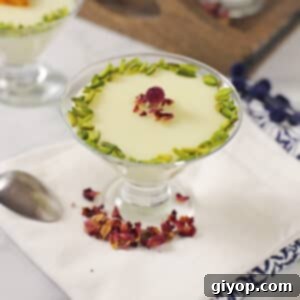
Mahalabia (Middle Eastern Milk Pudding)
Mahalabia is a wonderfully delicious and easy Middle Eastern dessert or snack, requiring only 4 ingredients. This simple milk pudding makes for a delightful and sweet conclusion to any meal, offering a taste of authentic tradition with minimal effort.
Course: Dessert, Snack
Cuisine: Middle East, Middle Eastern
Diet: Halal
Prep Time: 2 minutes
Cook Time: 8 minutes
Servings: 5 servings
Calories: 240 kcal
Author: Amira
Ingredients
- 4 cups milk
- ½ cup granulated sugar (100g or to taste)
- 6 Tablespoons cornstarch (60g)
- 2 teaspoon vanilla extract
For Garnishing:
- Dried fruits, nuts, edible flowers or ground cinnamon
Instructions
- In a saucepan, combine milk, sugar, and cornstarch.
- Whisk everything together while cold, ensuring the sugar and cornstarch are fully dissolved to prevent lumps.
- Heat the mixture over medium heat, stirring continuously until it thickens and begins to bubble gently.
- Remove from heat and stir in the vanilla extract or your chosen flavoring.
- Allow it to cool slightly, then pour into individual dessert glasses or a large serving bowl.
- Let it cool down to room temperature on your countertop for approximately 30 minutes.
- Refrigerate for at least one hour to allow it to set completely.
- Garnish with nuts or dried fruits just before serving.
Notes
- Always mix cornstarch with the milk while it is cold to avoid lumps and ensure a smooth texture.
- Keep stirring constantly while the mixture is heating up to ensure it becomes smooth and silky, preventing any sticking or burning.
- While traditionally served chilled, some prefer to enjoy Mahalabia warm or even hot. Feel free to serve it at your preferred temperature.
- Variations:
- Garnish Mahalabia with cinnamon, various nuts (like pistachios, almonds), raisins, or serve it plain for classic simplicity.
- For extra richness, substitute a portion of the milk with heavy whipping cream, using a 1:1 ratio.
- Some traditional methods suggest adding 3-4 tablespoons of table cream or a small amount of butter to further enhance the richness and texture of the Mahalabia.
- Experiment with different thickeners; some recipes use a mixture of flour and cornstarch, but this simple cornstarch-only version is a family favorite for its superior silkiness.
- Flavor Mahalabia with your favorite aromatics like orange blossom water, rose water, ground cinnamon, or ground cardamom for an authentic Middle Eastern taste.
- For a visually appealing and slightly caramelized top, pour the pudding into an oven-safe dish and briefly broil until golden.
- Storage:
- Cover the Mahalabia tightly with plastic wrap and refrigerate for up to 5 days. A thin layer may form on top, which is perfectly normal and harmless.
- Please note that if you refrigerate Mahalabia garnished with nuts, the nuts may soften over time. For best results, add garnishes just before serving.
Nutrition (per serving)
Carbohydrates: 39g |
Protein: 6g |
Fat: 6g |
Saturated Fat: 4g |
Polyunsaturated Fat: 1g |
Monounsaturated Fat: 2g |
Cholesterol: 20mg |
Sodium: 86mg |
Potassium: 264mg |
Fiber: 1g |
Sugar: 30g |
Vitamin A: 321IU |
Calcium: 224mg |
Iron: 1mg