Master the Art of Juicy Pork: The Ultimate Pork Shoulder Brine Recipe
Unlock the secret to incredibly moist, tender, and flavorful pork with our simple yet effective pork shoulder brine recipe. While specifically designed for a pork shoulder (also known as pork butt), this versatile brine can elevate almost any cut of meat, ensuring a succulent result every time. The magic lies in the humble ingredient: salt, combined with a blend of basic yet powerful aromatics that infuse your pork with deep, rich flavor.
Why Brining is a Game-Changer for Your Pork Shoulder
Have you ever cooked pork shoulder, only to find it dry and lacking moisture despite your best efforts? The solution is simple: brining. Brining meat is a time-honored technique that transforms lean or tough cuts into remarkably juicy and tender masterpieces. It’s particularly essential for larger cuts like pork shoulder, which often undergo long cooking times (think smoking or slow roasting) that can lead to significant moisture loss.
At its core, brining is more than just soaking meat in salty water. It’s a scientific process that fundamentally changes the meat’s structure, allowing it to retain moisture more effectively during cooking. Without getting too technical, here’s what happens:
- Moisture Retention: The salt in the brine penetrates the meat, causing the muscle proteins to unravel and form a loose, net-like structure. This newly formed structure traps water molecules within the meat fibers. When the pork is cooked, this trapped moisture is less likely to escape, resulting in a noticeably juicier outcome.
- Flavor Infusion: Beyond moisture, the brine acts as a carrier for all the delicious aromatics and spices you add. As the salt and water move into the meat, they bring these flavors along, ensuring that your pork is seasoned not just on the surface, but all the way through to the core. This deeper flavor penetration is something a simple surface rub cannot achieve.
- Enhanced Tenderness: The protein denaturation caused by the salt also contributes to a more tender texture. This is especially beneficial for tougher cuts like pork shoulder, which are rich in connective tissue. The brine helps to break down some of these tissues, making the cooked meat more tender and easier to shred or slice.
In essence, brining prevents dehydration while cooking, which means a much moister, more flavorful, and tender piece of meat. It’s a small investment of time that yields monumental results, making it an indispensable step for truly exceptional barbecue, roasts, or any slow-cooked pork dish.
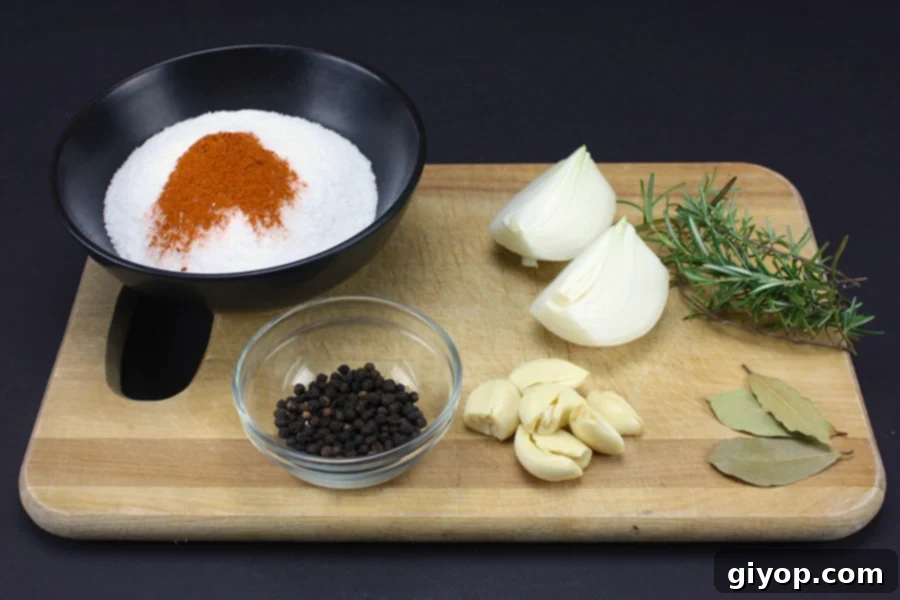
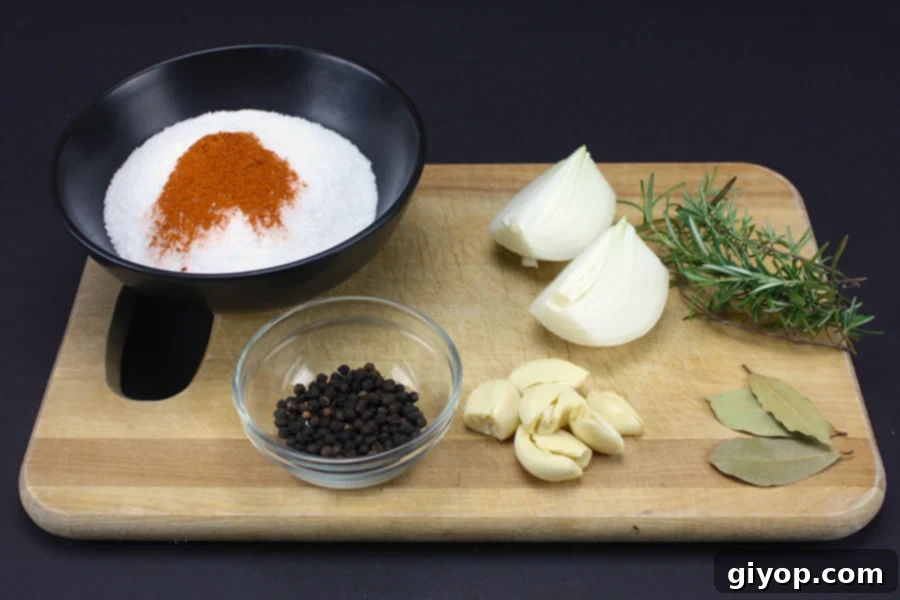
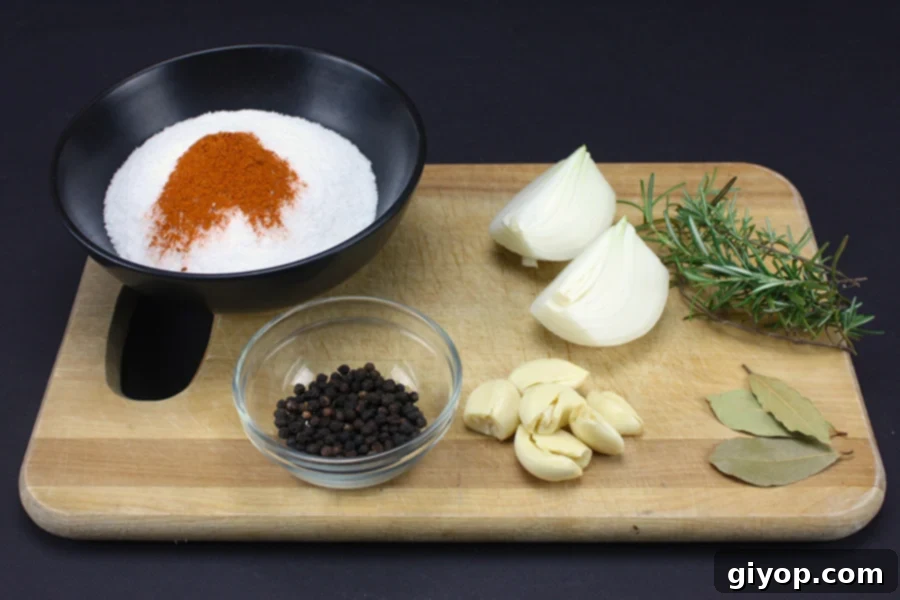
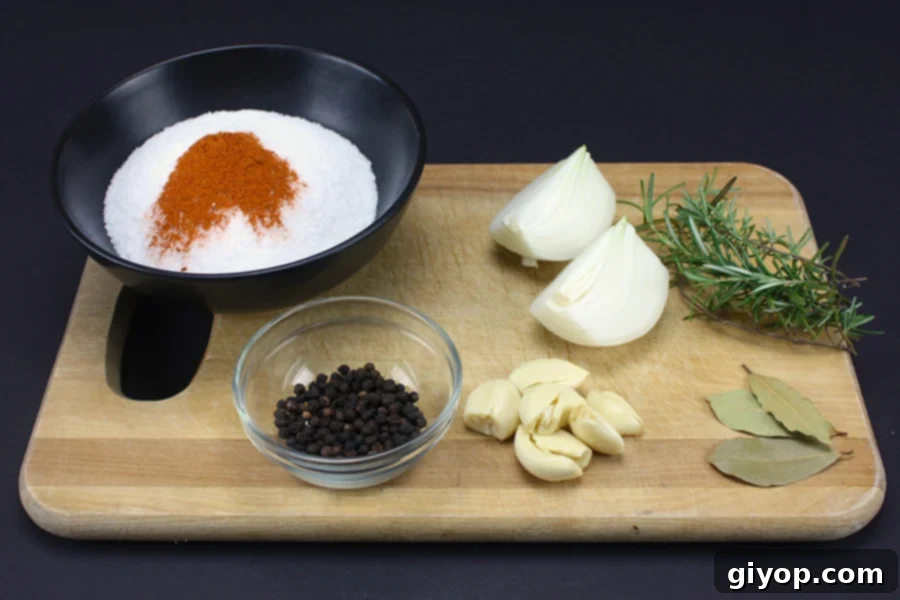
Our basic pork shoulder brine recipe focuses on classic aromatics known to complement pork beautifully: fresh rosemary, pungent onion, aromatic bay leaf, robust peppercorns, sweet paprika, a touch of cayenne for subtle heat, and fragrant cracked garlic cloves. This combination creates a well-rounded flavor profile that enhances the natural taste of the pork without overpowering it. However, the beauty of brining lies in its adaptability; you are always free to customize the flavor profile to your personal preference or the specific cuisine you’re aiming for.
Crafting Your Perfect Pork Brine: A Step-by-Step Guide
Preparing a brine is incredibly straightforward and requires minimal effort for maximum reward. While some recipes suggest using hot water to dissolve salt and sugar quickly, it’s not strictly necessary. Both ingredients dissolve perfectly fine in room-temperature water. If you do opt for hot water, remember that you absolutely must allow the brine to cool completely before adding your meat to prevent partial cooking and ensure food safety.
How to Prepare The Brine
- Dissolve the Base: In a large bowl or pot, combine 10 cups of water with 3/4 cup of kosher salt and 1/2 cup of sugar. Stir vigorously until both the salt and sugar are completely dissolved. This forms the essential foundation of your brine.
- Add Aromatics: Once the base is prepared, introduce the remaining flavor-enhancing ingredients: 4 sprigs of fresh rosemary, 2 tablespoons of whole peppercorns, 2 bay leaves, 1/2 a chopped onion, 6 cracked garlic cloves, 1 tablespoon of paprika, and 1/4 teaspoon of cayenne pepper. Give everything a good stir to ensure the flavors begin to meld.
- Submerge the Pork: Now, it’s time to add your pork shoulder. For best results, choose a receptacle that allows the meat to be fully submerged in the brine. A large, food-grade ziplock bag is an excellent choice as it allows you to remove excess air, ensuring complete contact between the meat and the brine. Alternatively, a large pot or roasting pan will work, just ensure the pork is completely covered.
- Refrigerate Safely: Once the pork is in the brine, cover your container (or seal the bag) and refrigerate. If using a plastic bag, always place it inside a larger bowl or roasting pan to catch any potential leaks and prevent cross-contamination in your fridge.
- Brining Duration: For an 8-pound pork shoulder, we recommend brining for 18 to 24 hours. “Overnight” is a good general guideline. Smaller cuts of meat will require less brining time; typically, 6-12 hours is sufficient for smaller pieces. It’s generally not recommended to brine for more than 24 hours, as this can result in meat that is overly salty for some palates.
- Prepare for Cooking: After the brining period, remove the pork from the brine and pat it thoroughly dry with paper towels. Discard the spent brine. Do not rinse the meat; rinsing can wash away some of the infused flavor and the beneficial salt solution that helps with moisture retention. Patting it dry is crucial for achieving a good crust or “bark” if you’re planning to sear or smoke the meat.
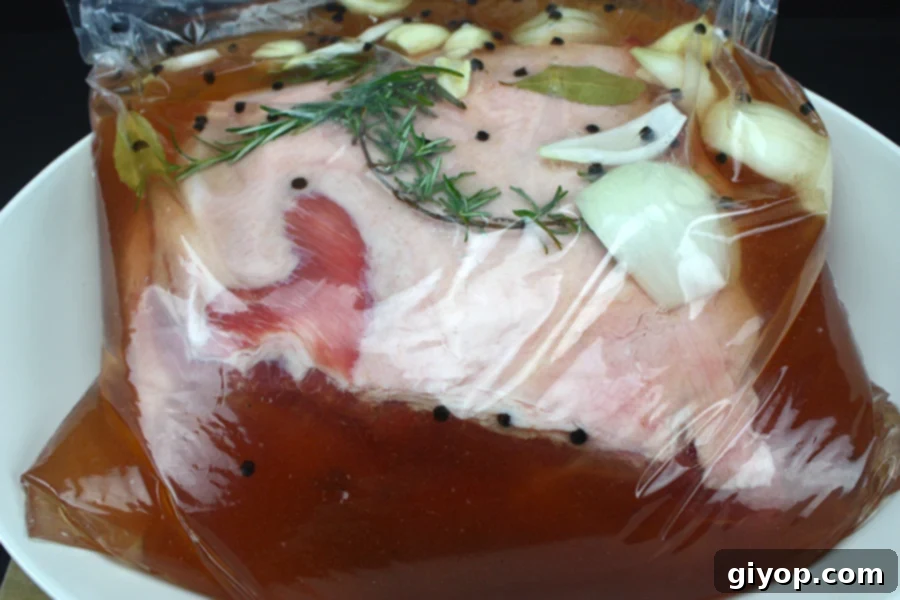
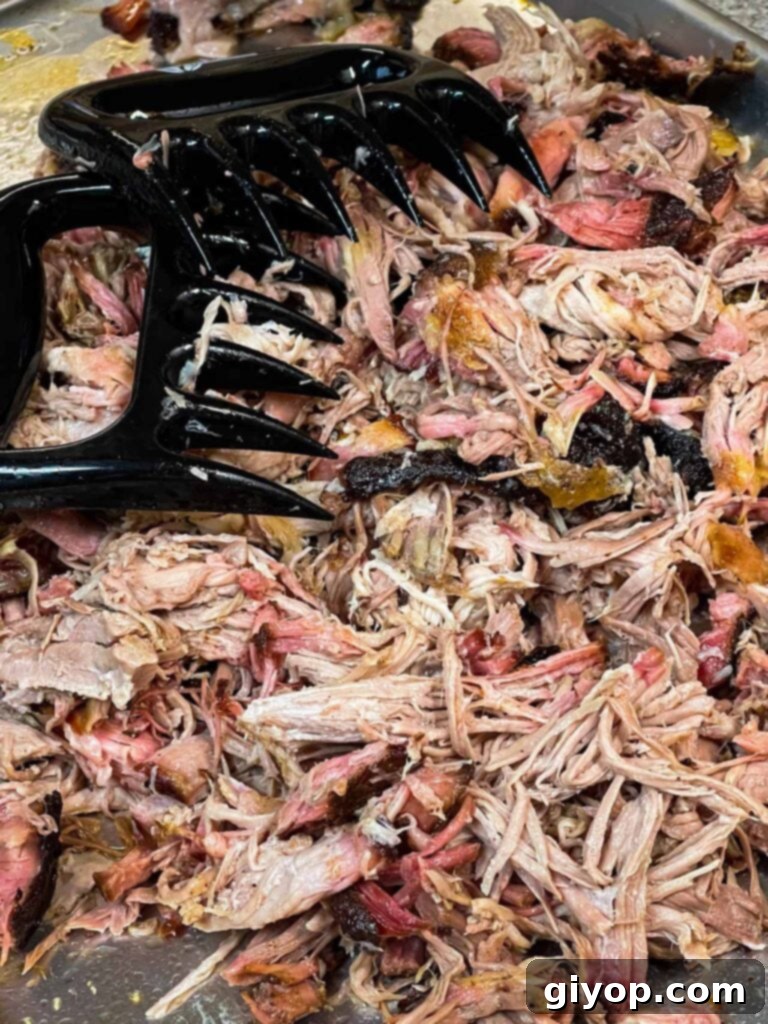
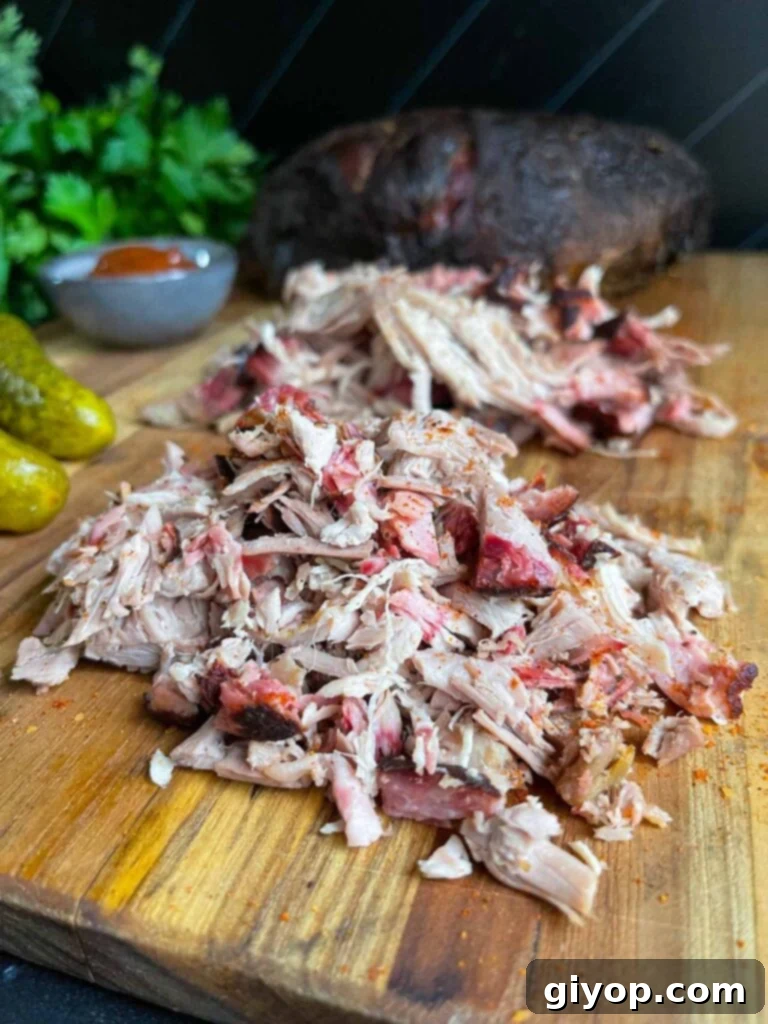
Once your pork shoulder has finished brining and is patted dry, it’s ready for its next culinary adventure. For us, that means applying a very tasty rub and preparing a fabulous smoked pork butt. Whether you’re smoking, roasting, or slow-cooking, the brine will ensure your pork is the most flavorful and moist you’ve ever had.
Unleashing Creativity: Brine Variations and Flavor Profiles
While salt is undeniably the foundational ingredient of any effective brine, preventing moisture loss and tenderizing the meat, the real fun begins with customizing the flavor profile. The additional ingredients you add to your brine are what will truly set your pork apart, infusing it with unique and complex tastes. Think of the salt as the vehicle, and the aromatics as the passengers, each bringing their own distinct character to the journey. Experimentation is highly encouraged!
Here are some exciting brine variations to inspire your culinary creations, perfectly suited for pork shoulder:
- Herbes de Provence Infusion: For a taste of the Mediterranean, swap out some of the individual herbs for a generous amount of Herbes de Provence. This classic French spice blend, typically featuring savory, marjoram, rosemary, thyme, and oregano, adds an aromatic, earthy, and slightly floral note that pairs beautifully with pork. Imagine your pulled pork with a subtle hint of the south of France!
- Zesty Citrus & Herb Brine: Brighten up your pork with a citrus-forward brine. Incorporate fresh orange and lemon slices, along with their zest, for a tangy kick. Complement the citrus with fresh thyme and a few crushed coriander seeds. This variation is particularly good for pork destined for grilling or lighter preparations.
- Spicy Creole Kick: If you love bold flavors, a Creole-inspired brine will make your taste buds dance. Build on the traditional “holy trinity” of Creole cooking by adding finely diced celery and green bell pepper alongside the onion. Amp up the spice with extra cayenne, black pepper, and perhaps a touch of smoked paprika or a dash of your favorite hot sauce. This brine delivers a vibrant, savory, and spicy profile perfect for a robust pulled pork sandwich.
- Sweet Heat Harmony: For those who appreciate a balance of sweet and spicy, consider adding brown sugar, maple syrup, or honey to your brine alongside a heat source like habanero peppers (sliced, seeds removed for less heat) or a generous pinch of red pepper flakes. The sweetness will caramelize beautifully during cooking, while the heat provides an exciting contrast. A hint of apple cider vinegar can also enhance this profile.
- Asian-Inspired Umami Brine: Explore flavors from the East by adding soy sauce (or tamari for gluten-free), ginger slices, garlic, star anise, and a touch of five-spice powder to your brine. A splash of mirin or rice wine vinegar can add complexity. This brine will give your pork a rich, savory, and aromatic depth perfect for stir-fries or Asian-style tacos.
Remember, the goal is to create a brine that complements your final dish. Don’t be afraid to experiment with different types of peppercorns, dried chilies, whole spices like fennel seeds or mustard seeds, or even a touch of beer or apple juice in place of some water for added depth. Always taste your brine (before adding raw meat, of course!) to adjust seasoning to your liking.
Frequently Asked Questions About Brining Pork
The ideal brining time for pork depends heavily on the cut and size of the meat. For a large pork butt or shoulder (typically 5-10 lbs), an overnight brine, ranging from 18 to 24 hours, is generally recommended. This allows sufficient time for the salt and flavors to fully penetrate the dense muscle fibers. For smaller cuts of pork, such as chops or tenderloins, 6 to 18 hours should be sufficient, with thinner cuts needing less time. Going beyond 24 hours for a pork shoulder or 18 hours for smaller cuts can result in overly salty meat, so it’s best to stick within these guidelines.
Brine performs two primary functions for pork: it significantly increases moisture retention and infuses the meat with flavor. The salt in the brine alters the muscle proteins, allowing them to hold onto more water during the cooking process, which directly translates to juicier meat. Simultaneously, the brine solution, along with any added aromatics and spices, penetrates deep into the meat fibers, ensuring that the pork is seasoned from the inside out, rather than just on the surface.
No, generally you do not need to rinse the meat after brining. Rinsing can wash away some of the flavorful surface seasoning and the beneficial salt solution that helps retain moisture. Instead, simply remove the meat from the brine and pat it thoroughly dry with paper towels. This dry surface is also important for developing a good crust or “bark” during cooking. You may, however, remove large items like peppercorns, bay leaves, or rosemary sprigs if you prefer.
Absolutely, yes. Refrigeration is essential throughout the entire brining process. Meat should never be left at room temperature for extended periods, especially when in a liquid solution, as this creates a prime environment for bacterial growth. Always ensure your brining container is covered and kept at a safe temperature of 40°F (4°C) or below in your refrigerator.
No, brine should never be reused. Once raw meat has been submerged in the brine, the liquid is considered contaminated with bacteria from the meat. Reusing it would pose a significant food safety risk and could lead to foodborne illness. Always prepare a fresh batch of brine for each brining session and discard used brine safely.
Kosher salt is highly recommended for brining. Its larger crystal size makes it easier to dissolve and measure accurately, and it typically does not contain iodine or anti-caking agents that can sometimes impart an off-flavor. Table salt can be used in a pinch, but you’ll need to use about half the amount by volume compared to kosher salt due to its finer grain and denser packing.
Other Delicious Recipes to Explore
Smoked Pork Shoulder (Pork Butt)
Pork Butt Burnt Ends Recipe
Double Bone-In Smoked Pork Chops
Simple Pork Shoulder Brine Recipe
Serve moist and delicious meat every time with this simple pork shoulder brine. Perfect for smoking, roasting, or grilling, this brine guarantees tender, flavorful results.
Course: BBQ, Grilling, Main
Cuisine: American
Prep Time: 5 minutes
Cook Time: 0 minutes (brine preparation)
Brine Time: 12-18 hours
Total Time: 12 hours 5 minutes
Servings: 8
Calories: 63 kcal
Author: Brad Harris
Ingredients
- 10 C Water
- 3/4 C Kosher Salt
- 1/2 C Sugar
- 4 Rosemary Sprigs
- 2 tbsp Peppercorns
- 2 Bay leafs
- 1/2 Onion, chopped
- 6 cloves Garlic, cracked
- 1 tbsp Paprika
- 1/4 tsp Cayenne
Instructions
- Dissolve salt and sugar in 10 cups of water in a large bowl or pot. Stir until completely dissolved.
- Add the remaining ingredients: rosemary sprigs, peppercorns, bay leaves, chopped onion, cracked garlic cloves, paprika, and cayenne. Stir to combine.
- Place your pork shoulder (or other meat) into a large food-safe container, such as a large ziplock bag or a non-reactive pot.
- Pour the brine over the meat, ensuring it is fully submerged. If using a bag, remove as much air as possible before sealing. If using a pot, cover it tightly.
- Refrigerate the brining pork for 12-18 hours. For an 8-pound pork shoulder, 18-24 hours is ideal. Adjust brining time for smaller cuts accordingly (e.g., 6-12 hours). Do not exceed 24 hours.
- Once brining is complete, remove the pork from the brine and discard the liquid. Pat the meat thoroughly dry with paper towels before proceeding with your desired cooking method.
Notes
You can brine overnight for up to 24 hours for a pork shoulder. The longer it brines (within recommended limits), the more flavor you introduce to the meat. Salt is the key ingredient for keeping the meat moist during cooking. Any other aromatics you add will enhance the flavor. Feel free to mix it up with your favorite flavor profiles!
Nutrition
Carbohydrates: 16g |
Protein: 1g |
Fat: 0.3g |
Saturated Fat: 0.1g |
Polyunsaturated Fat: 0.1g |
Monounsaturated Fat: 0.04g |
Sodium: 10627mg |
Potassium: 77mg |
Fiber: 1g |
Sugar: 13g |
Vitamin A: 474IU |
Vitamin C: 1mg |
Calcium: 35mg |
Iron: 1mg