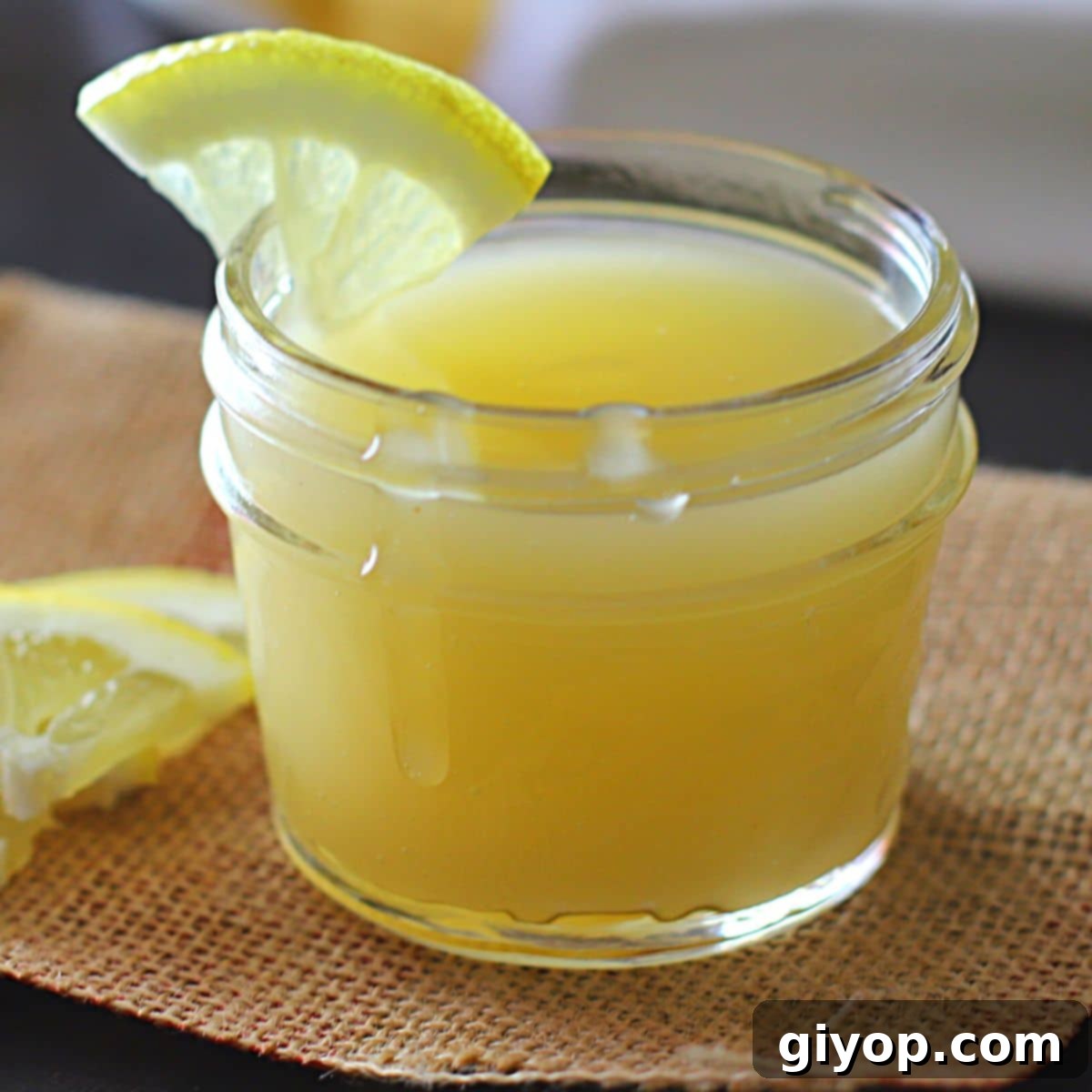
Unlock the secret to a bright, tangy, and incredibly versatile dessert with this remarkably easy microwave lemon curd recipe. Crafted in mere minutes from just four essential ingredients, this homemade lemon curd is a game-changer for bakers and dessert enthusiasts alike. Its rich, velvety texture and vibrant citrus flavor make it the perfect accompaniment for an array of sweet treats – from elevating simple cakes and delicate cookies to filling elegant tarts, enriching creamy ice cream, or even just enjoyed by the spoonful. Forget the fuss of traditional methods; this microwave marvel delivers exquisite results with minimal effort, promising a burst of sunshine in every bite.
Looking for another delightful topping? Try our easy marshmallow buttercream for a sweet, fluffy finish.
Prepare to impress yourself and everyone fortunate enough to taste this delightful, effortlessly crafted lemon curd.
Table of Contents
- The Ultimate Easy Lemon Curd
- Why This Microwave Lemon Curd Recipe is a Must-Try
- Essential Ingredients for Microwave Lemon Curd
- Adaptable Recipe – Make It Your Own!
- Before You Begin: Essential Tools
- Step-by-Step Instructions for Perfect Microwave Lemon Curd
- Expert Tips for Flawless Lemon Curd
- FAQs and Troubleshooting
- Storing and Freezing Your Lemon Curd
- Creative Ways to Serve Lemon Curd
- More Lemon-Inspired Recipes
- Delightful Dessert Pairings
The Ultimate Easy Lemon Curd
Homemade lemon curd might sound like a project reserved for experienced bakers, involving delicate tempering and constant stirring over a double boiler. However, this revolutionary microwave lemon curd recipe shatters that perception. It is, without a doubt, the simplest and fastest lemon curd you will ever prepare, delivering gourmet quality with everyday convenience. This method drastically cuts down on active cooking time and cleanup, making luxurious lemon curd accessible to everyone, regardless of their baking prowess.
Our recipe is carefully calibrated for a rich, buttery flavor and a pleasantly mild lemon tang, with just the right amount of sweetness. Unlike many traditional recipes that can be overly sugary, we’ve opted for a slightly reduced sugar content, allowing the natural brightness of the lemon to truly shine. Of course, you have the flexibility to adjust the sweetness to perfectly match your personal preference.
One of the brilliant aspects of this recipe is its zero-waste approach to eggs. It ingeniously utilizes both egg yolks and whites, ensuring no part of the egg is left unused and you won’t be left wondering what to do with leftover whites or yolks. This creates a beautifully balanced and smooth curd that’s ideal for all your culinary adventures.
Why This Microwave Lemon Curd Recipe is a Must-Try
- Unparalleled Ease: This isn’t just an easy lemon curd recipe; it’s the easiest. The microwave method eliminates the need for a tedious double boiler setup or continuous stirring, transforming a traditionally fussy process into a simple, quick task.
- Perfectly Balanced Flavor: We’ve specifically developed this recipe to be buttery and to have a delightful, mild lemon flavor that isn’t overpowering. The sugar content is intentionally lower than many recipes, resulting in a less cloyingly sweet curd that truly highlights the fresh citrus notes. Feel free to fine-tune the sugar to your taste.
- Minimal Effort, Maximum Reward: Say goodbye to standing over a hot stove! This recipe requires minimal active cooking time, no specialized equipment beyond a microwave-safe bowl, and cleanup is an absolute breeze.
- No Waste, All Flavor: By utilizing both egg yolks and whites, this recipe is incredibly efficient. You won’t have the dilemma of what to do with leftover egg components, and the combination contributes to the curd’s luxurious texture.
- Incredibly Versatile: This microwave lemon curd is your secret weapon for a myriad of baking and dessert needs. Use it as a luscious filling for cakes and cupcakes, a tangy topping for lemon curd cookies, a vibrant layer in lemon cheesecakes, or even as a delightful accompaniment to toast, pancakes, and yogurt.
- A Thoughtful Homemade Gift: Beyond its culinary uses, this homemade lemon curd makes for an exquisite and thoughtful gift. Jarred beautifully, it’s a gourmet present that shows you care – if you can resist eating it all yourself first!
Essential Ingredients for Microwave Lemon Curd
Crafting exceptional microwave lemon curd requires only a handful of high-quality ingredients. Here’s a closer look at what you’ll need and why each component is crucial for achieving that perfect balance of tang and sweetness:
- Eggs: Large eggs are recommended for consistency in volume. Using them at room temperature is key, as they mix more smoothly and integrate better with other ingredients, preventing a grainy texture and promoting a more homogenous curd. The combination of both yolks and whites contributes to a richer flavor and a more stable, luscious consistency.
- Butter: Unsalted butter is preferred as it allows you to control the overall saltiness of your curd. Butter is vital for adding a luxurious creaminess and rich mouthfeel, contributing significantly to the curd’s decadent texture and flavor. If you only have salted butter, simply omit any additional salt in the recipe. Ensure it’s melted before adding to the egg mixture.
- Granulated Sugar: This recipe intentionally calls for a slightly reduced amount of granulated sugar compared to many traditional recipes. Our goal is to achieve a bright, tangy lemon curd that isn’t overly sweet, allowing the natural citrus flavor to truly shine. However, taste preferences vary, so feel free to adjust the amount of sugar slightly to suit your personal palate.
- Lemon: The star of the show! You’ll need both freshly squeezed lemon juice and lemon zest. Freshly squeezed lemon juice is absolutely non-negotiable for the best, most vibrant flavor. Bottled lemon juice often contains preservatives and lacks the bright, authentic taste that fresh lemons provide, which can significantly compromise the final product. The zest, rich in essential oils, further intensifies the lemon aroma and flavor without adding extra tartness.
Adaptable Recipe – Make It Your Own!
While classic lemon curd is a beloved treat, this microwave method makes it incredibly easy to experiment with different citrus flavors and aromatic additions. Don’t be afraid to customize and create your unique curd variations:
- Zesty Lime Curd: For a vibrant and refreshingly zesty twist, simply substitute fresh lime juice and lime zest for the lemon. The process remains exactly the same, yielding a brilliant green-hued curd with an irresistible tropical zing. This is fantastic in a key lime pie or as a topping for coconut desserts.
- Sweet Orange Curd: Explore the sweeter, milder side of citrus by using fresh orange juice and orange zest. This creates a delightfully fragrant orange curd that pairs wonderfully with chocolate, almond cakes, or as a filling for crepes. Consider a blend of orange and a touch of lemon for a more complex profile.
- Aromatic Infusions: Elevate your curd with a splash of your favorite extracts or spices. Add a teaspoon of pure vanilla extract for warmth and depth, a pinch of ground cardamom or ginger for an exotic, spicy note, or a few drops of rose water for a delicate floral aroma that transforms the curd into an elegant dessert component. Other delightful additions include almond extract, a hint of lavender, or even a touch of finely grated fresh ginger for a subtle kick.
🥣 Before You Begin: Essential Tools
One of the many benefits of this microwave lemon curd recipe is its simplicity in terms of equipment. You won’t need any fancy gadgets, but a couple of key items will ensure your success:
- Large Microwave-Safe Bowl: Choose a bowl with enough capacity to prevent spills as the mixture heats and expands in the microwave. Glass or ceramic bowls are ideal as they are non-reactive and retain heat well.
- Whisk: A good sturdy whisk is essential for thoroughly combining the ingredients and ensuring a smooth, lump-free consistency throughout the cooking process.
- Fine Mesh Sieve (Strainer): This tool is highly recommended for achieving the silkiest, most professional-grade lemon curd. It removes any tiny bits of cooked egg, lemon pulp, or zest, resulting in an impeccably smooth finish.
- Rubber Spatula: Useful for scraping down the sides of the bowl and ensuring all ingredients are incorporated, as well as for pressing the curd through the sieve.
- Liquid Measuring Cup: For precise measurement of lemon juice and melted butter.
- Microplane Zester: While not strictly essential, a microplane zester makes getting fine, flavorful zest from your lemons incredibly easy, avoiding the bitter white pith.
Don’t forget to check out my Amazon storefront for some of my favorite kitchen products that make baking and cooking a joy!
Step-by-Step Instructions for Perfect Microwave Lemon Curd
Making this luscious lemon curd in the microwave is incredibly straightforward. Follow these simple steps for a velvety smooth and flavorful result:
- Combine Eggs and Sugar: In a deep, microwave-safe bowl (preferably glass or ceramic), whisk together the room-temperature eggs and granulated sugar. Whisk continuously for about 1-2 minutes until the sugar is almost entirely dissolved. This initial whisking is crucial for preventing a grainy texture and ensuring even cooking.
- Melt the Butter: Melt the unsalted butter in the microwave in 20-second intervals until fully liquefied. Be careful not to overheat it.
- Integrate Butter: Slowly pour the melted butter into the egg and sugar mixture while continuously whisking. This gradual addition and constant whisking help emulsify the butter into the egg mixture, preventing it from separating during cooking.
- Add Lemon: Stir in the freshly squeezed lemon juice and, if using, the lemon zest. Ensure everything is well combined. The zest will infuse the curd with an intense lemon aroma and flavor.
- Microwave and Stir: Microwave the mixture on high (full power) in short intervals, typically 30 seconds at a time. After each interval, remove the bowl from the microwave and whisk thoroughly. This continuous whisking and short bursts of cooking are essential to cook the eggs gently and prevent scrambling, promoting a smooth, consistent curd.
- Check for Doneness: Continue microwaving and whisking until the curd thickens to a spoon-coating consistency. You’ll know it’s ready when it coats the back of a metal spoon and a finger drawn through it leaves a clear trail. An instant-read thermometer will register between 170-175°F (77-79°C). Be patient, as this process can take several minutes, depending on your microwave’s power.
- Strain for Silkiness: For an incredibly smooth and lump-free lemon curd, immediately pour the hot mixture through a fine-mesh sieve into a clean bowl or jar. Use a rubber spatula to press the curd through the sieve, leaving behind any tiny bits of cooked egg or zest.
- Cool and Refrigerate: Allow the lemon curd to cool completely at room temperature, stirring occasionally to prevent a skin from forming. Once cooled, cover the surface directly with plastic wrap (to prevent a skin) and refrigerate until thoroughly chilled and set. The curd will continue to thicken as it cools.
Expert Tips for Flawless Lemon Curd
- Always Use Fresh Lemons: The success of your lemon curd hinges on the quality of your lemons. Freshly squeezed lemon juice is paramount for an authentic, bright, and vibrant flavor. Avoid bottled lemon juice, which often contains preservatives and lacks the essential oils and zestful punch of fresh citrus.
- Adjust Sweetness to Taste: Our recipe suggests ¾ cup of lemon juice and ¾ cup of granulated sugar for a perfectly balanced curd that’s less sweet than many store-bought varieties. However, if you prefer a sweeter or more tart curd, feel free to adjust these amounts. You can go up to 1 cup of each if you like. Taste a small amount of the mixture before microwaving to gauge the sweetness.
- Microwave in Short Bursts: Microwave ovens vary significantly in power. To prevent overcooking and scrambling the eggs, always cook in 30-second intervals (not 1-minute increments). Whisk thoroughly after each interval to distribute the heat evenly and ensure a smooth, consistent texture. This meticulous approach minimizes the risk of lumps.
- Don’t Skip the Straining: Even if you whisk diligently, running the cooked curd through a fine-mesh sieve is crucial for achieving that signature velvety, lump-free consistency. This step removes any minuscule bits of cooked egg or lemon pulp, resulting in a beautifully smooth and professional-looking curd. An immersion blender can also be used if you don’t have a sieve, but straining is generally superior for texture.
- Patience is Key for Thickening: Remember that lemon curd will continue to thicken considerably as it cools. Don’t be tempted to overcook it in the microwave trying to achieve a very thick consistency. It should be thick enough to coat the back of a spoon when hot; it will firm up beautifully in the refrigerator.
- Proper Cooling Prevents Skin: To prevent a skin from forming on the surface of your cooling lemon curd, press a piece of plastic wrap directly onto the surface before refrigerating. This keeps the curd moist and smooth.
FAQs and Troubleshooting
Lumps in lemon curd usually indicate that the eggs have overcooked and scrambled slightly. This often happens if the mixture isn’t whisked frequently enough during microwaving or if cooked for too long in each interval. Don’t worry, it’s fixable! Simply strain the curd immediately through a fine-mesh sieve to remove any lumps, and you’ll still achieve a smooth result.
If your curd becomes too thick after cooling, it might have been slightly overcooked. To loosen it up, whisk in a tablespoon or two of fresh lemon juice, or even a tiny bit of melted butter, until it reaches your desired consistency. Add gradually and mix well after each addition.
The curd is ready when it coats the back of a spoon thickly and a finger drawn through the coated spoon leaves a clear trail (known as “nappe”). It will also register around 170-175°F (77-79°C) on an instant-read thermometer. Remember, it will continue to thicken significantly as it cools.
Yes, absolutely! Lemon curd freezes beautifully. Pour the cooled curd into freezer-safe containers, leaving about ½ inch of headspace to allow for expansion. It can be stored in the freezer for up to 3 months. Thaw it overnight in the refrigerator before using, and give it a good whisk to restore its smooth consistency.
If your lemon curd is too thin, it simply needs more cooking time. Return it to the microwave in 30-second intervals, whisking vigorously after each, until it reaches the desired thickness (coats the back of a spoon). Be patient, as undercooking is much easier to fix than overcooking.
While lemon zest adds a wonderful depth of flavor and aroma, you can omit it if necessary. However, for the most vibrant and intensely lemon-flavored curd, we highly recommend including it. The zest contributes essential oils that enhance the overall citrus profile.
Storing and Freezing Your Lemon Curd
Proper storage is essential to maintain the freshness and quality of your homemade microwave lemon curd. Once you’ve mastered this easy recipe, you’ll want to ensure it lasts as long as possible for all your culinary endeavors:
Refrigerate: After your lemon curd has cooled completely to room temperature, transfer it into clean, airtight jars or containers. For best results and to prevent a skin from forming, press a layer of plastic wrap directly onto the surface of the curd before sealing the jar. Stored correctly in the refrigerator, your homemade lemon curd will remain fresh and delicious for up to 3-4 weeks.
Freeze: Lemon curd is highly freezer-friendly, making it perfect for meal prepping or extending its shelf life. Pour the cooled curd into freezer-safe containers, leaving about ½ inch of space at the top to allow for expansion as it freezes. Label the containers with the date. Frozen lemon curd can be kept for up to 3 months without significant loss of quality. To use, simply thaw the curd overnight in the refrigerator. Once thawed, give it a good whisk to restore its smooth, creamy texture before serving.
Creative Ways to Serve Lemon Curd
The beauty of this easy microwave lemon curd lies not only in its simple preparation but also in its incredible versatility. Its bright, tangy flavor and silky texture make it a fantastic addition to both breakfast and dessert. Here are just a few ideas to inspire you:
- Breakfast & Brunch Enhancer: Slather it generously over warm toast, flaky croissants, fluffy pancakes, or crispy waffles for a delightful morning treat. It’s also heavenly stirred into plain Greek yogurt or oatmeal for a burst of citrus flavor.
- Dessert Filling: Lemon curd is an ideal filling for cakes, cupcakes, and pastries. Layer it between cake sponges for a vibrant taste, fill delicate tarts, or use it as a base for an impressive lemon meringue pie. It’s also a fantastic addition to cheesecakes, adding a tangy counterpoint to the rich cream cheese.
- Topping & Dollop: A dollop of lemon curd can instantly elevate almost any dessert. Spoon it over vanilla ice cream, fresh berries, or even a simple bowl of fruit salad. It’s also a classic topping for elegant pavlovas, complementing the crisp meringue and fresh cream beautifully.
- Baking Ingredient: Incorporate lemon curd into other baking projects. Use it to make thumbprint cookies, swirl it into muffin batter, or create stunning puff pastry raspberry tarts for a quick and impressive dessert. Its rich flavor can even be mixed into glazes or frostings.
- Simple Pleasure: Don’t underestimate the simple joy of eating it straight from the jar with a spoon! Its irresistible flavor is often best enjoyed in its purest form.
More Lemon-Inspired Recipes
- Cranberry Lemon Bars
- Lemon Poke Cake
- Blueberry Lemon Ricotta Pancakes
- Blueberry Lemon Bars
You’ll Also Love These Dessert Pairings
- Chantilly Cream (French Whipped Cream)
- Simple Cream Cheese Frosting
- Marshmallow Buttercream Frosting
- Cherry Sauce
I absolutely adore citrus desserts, especially when they’re as effortlessly delicious as this microwave lemon curd. They infuse any table with a joyous, bright flavor that’s simply irresistible. Have you tried this recipe? Pop your feedback in the comments below and let me know how it went!

Microwave Lemon Curd
Print
Pin
Rate
Ingredients
- 3 large eggs
- ¾ – 1 cup granulated sugar (adjust to taste)
- ¾ – 1 cup fresh lemon juice (freshly squeezed for best flavor)
- ½ cup unsalted butter (1 stick, melted)
- 1 Tablespoon lemon zest (optional, for enhanced flavor)
Instructions
- In a deep, microwave-safe bowl, combine the eggs and granulated sugar. Whisk continuously and vigorously for 1-2 minutes until you feel the sugar is almost completely dissolved. This helps ensure a smooth texture.
- Melt the butter in the microwave in 20-second intervals until it is fully liquid. Be careful not to let it brown or burn.
- Slowly pour the melted butter into the egg mixture while whisking non-stop. This gradual addition helps to emulsify the butter with the eggs, preventing separation.
- Stir in the fresh lemon juice and lemon zest (if using). Ensure all ingredients are well combined before proceeding to microwaving.
- Microwave on high (full power) for 30-second intervals. After each 30-second burst, remove the bowl and whisk the mixture thoroughly. Repeat this process until the curd thickens.
- The curd is done when it is thick enough to coat the back of a metal spoon, and a line drawn through it with your finger holds its shape. It will also register around 170-175°F (77-79°C) on an instant-read thermometer.
- Immediately run the hot mixture through a fine-mesh sieve into a clean bowl or jar to remove any small lumps of cooked egg or zest, ensuring a perfectly smooth and creamy curd. Use a rubber spatula to press it through.
- Allow the lemon curd to cool completely at room temperature, stirring occasionally to prevent a skin from forming. Once cooled, cover the surface directly with plastic wrap and refrigerate until thoroughly chilled and set. The curd will thicken considerably as it cools.
Video
Watch our video tutorial on how to make this easy microwave lemon curd!
Click here to watch the video!
Notes
- For the most vibrant and authentic flavor, always use fresh lemons. Bottled lemon juice will not yield the same bright, zesty results.
- This recipe uses ¾ cup of lemon juice and ¾ cup of granulated sugar for a balanced, not-too-sweet curd. Feel free to adjust these amounts (up to 1 cup each) to suit your personal preference for sweetness and tartness.
- Microwave power varies. To prevent overcooking and lumps, cook the curd in 30-second intervals, whisking thoroughly after each burst of heat. This gentle, consistent stirring helps achieve a smooth texture.
- Straining the mixture through a fine-mesh sieve is crucial for ensuring a creamy, lump-free lemon curd, removing any tiny bits of cooked egg or pulp.
- Don’t be alarmed if the curd seems a bit thin when hot; it will continue to thicken significantly as it cools and chills in the refrigerator.
- To Store: Once completely cooled, refrigerate the lemon curd in clean, airtight jars for up to two to three weeks.
- To Freeze: For longer storage, freeze cooled lemon curd in freezer-safe containers for up to 3 months. Thaw in the fridge before use.
- How to Use: This versatile lemon curd is perfect slathered on toast, waffles, or a dollop on ice cream or yogurt. It makes a fantastic filling for cakes and pies, cheesecakes, easy puff pastry raspberry tarts, or as a topping for pavlova.
- Please check our nutrition disclaimer policy for more information.
Nutrition Information (per Tablespoon serving)
Carbohydrates: 4g |
Protein: 1g |
Fat: 4g |
Saturated Fat: 3g |
Polyunsaturated Fat: 0g |
Monounsaturated Fat: 1g |
Trans Fat: 0g |
Cholesterol: 31mg |
Sodium: 9mg |
Potassium: 28mg |
Fiber: 0g |
Sugar: 4g |
Vitamin A: 151IU |
Vitamin C: 7mg |
Calcium: 6mg |
Iron: 1mg
First published Apr 8, 2017. Last updated March 14, 2023 with important tips, clear step-by-step instructions, and improved readability.