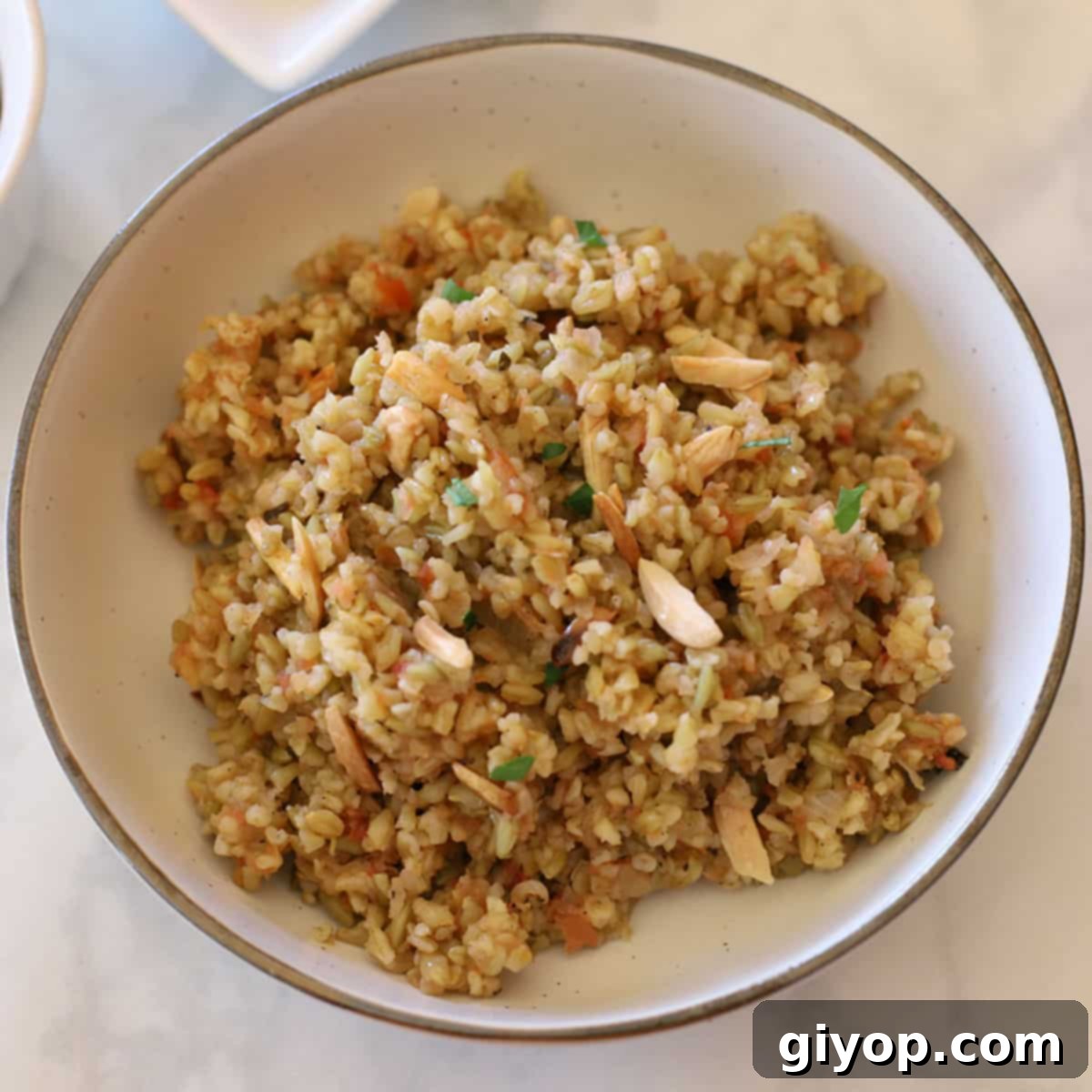
Discover the ancient grain sensation that is Freekeh Pilaf, a deliciously healthy, chewy, and nutty dish perfect for any meal. Often referred to as freeka or freek, this versatile grain originates from the Middle East and brings a unique smoky flavor to your table. Our vegan Freekeh Pilaf recipe, infused with earthy, warm spices, offers a simple yet profoundly satisfying side dish that will quickly become a family favorite.
If you enjoy the rich flavors of Freekeh, be sure to also try this classic Freekeh Stuffed Chicken, a Middle Eastern staple that showcases the grain’s incredible versatility.
Why You’ll Love This Freekeh Pilaf Recipe
This Freekeh Pilaf is more than just a recipe; it’s an invitation to explore vibrant flavors and embrace wholesome eating. Here’s why you’ll absolutely adore adding this dish to your culinary repertoire:
- A Healthy and Flavorful Alternative: Move beyond traditional rice and pasta with this incredibly healthy side dish. Freekeh is a nutrient powerhouse, boasting high levels of fiber, protein, and essential minerals, making it a smart choice your family will genuinely enjoy. Its unique texture and smoky notes offer a delightful departure from everyday grains.
- Effortless Preparation with Simple Ingredients: You don’t need exotic components or complicated techniques to create this gourmet-tasting pilaf. Made with readily available, wholesome ingredients, this recipe is designed for ease. Perfect for busy weeknights or when you need a simple yet impressive dish.
- Perfect for Meal Prepping and Any Occasion: This hearty Freekeh Pilaf is an excellent make-ahead dish. Prepare a larger batch and enjoy it throughout the week for quick lunches or dinners. Its robust flavors and satisfying texture make it suitable for casual family meals, elegant dinner parties, or as a vibrant addition to any potluck spread.
- Incredibly Versatile Pairing: Much like rice, Freekeh Pilaf pairs beautifully with an array of main dishes. Its earthy and subtly spicy profile complements everything from grilled meats and roasted vegetables to hearty stews and delicate fish, making it a truly versatile companion to your culinary creations.
Unveiling the Wonderful World of Freekeh
Before diving into the recipe, let’s talk about freekeh. This ancient grain, celebrated for centuries in Middle Eastern and Mediterranean cuisines, is made from young, green durum wheat that is harvested while still tender. The grains are then parched, roasted, and rubbed, imparting a distinctive smoky flavor and a firm, chewy texture. Freekeh is often lauded as a superfood due to its impressive nutritional profile, including its high fiber content (up to four times that of brown rice) and significant protein, making it an excellent choice for those seeking to boost their intake of whole grains and plant-based nutrients. It’s a wonderful ingredient for creating wholesome, satisfying, and deeply flavorful dishes like this pilaf.
Ingredients for Your Flavorful Freekeh Pilaf
Crafting this Freekeh Pilaf requires a blend of simple, fresh ingredients and aromatic spices that come together to create a truly unforgettable dish.
Ingredient Notes and Essential Tips
The following are affiliate links. We are a participant in the Amazon Services LLC Associates Program, an affiliate advertising program designed to provide a means for us to earn fees by linking to Amazon.com and affiliated sites.
- Freekeh Selection: When choosing freekeh, you’ll find it in both whole and cracked varieties. For this pilaf recipe, cracked freekeh is often preferred as it cooks faster and offers a slightly softer, yet still wonderfully chewy, texture. There are many excellent brands available; this is the one I used and highly recommend for its quality and consistent results. Always check the packaging for any cooking instructions specific to the brand, as cooking times can vary.
- Tomatoes: I utilized a couple of ripe Roma tomatoes, weighing approximately 7 ounces combined, for their balanced sweetness and acidity. However, feel free to use any fresh tomatoes you have on hand. Cherry tomatoes or vine-ripened tomatoes would also work beautifully, just adjust the quantity to achieve a rich tomato base. The goal is a fresh, vibrant tomato flavor that brightens the pilaf.
- Dry Mint: This might seem like an unconventional addition, but dry mint lends a truly special, earthy, and aromatic characteristic to this recipe. It infuses the pilaf with a subtle coolness that perfectly balances the warm spices. Try not to skip it, as it’s a key component that elevates the traditional Middle Eastern flavor profile. If you don’t have dry mint, a small amount of fresh mint could be used as a garnish or stirred in at the end, though the flavor will be different.
- Olive Oil: A good quality olive oil is crucial for sautéing the onion and toasting the freekeh, adding a foundational richness to the dish.
- Onion: Finely chopped onion provides a sweet and savory base. Yellow or white onions are suitable.
- Spices: Freshly ground black pepper, cardamom powder, and cumin powder are the heart of this pilaf’s warm, inviting aroma. Cardamom offers a sweet, floral note, while cumin provides depth and warmth. Adjust to your preference.
- Salt: Essential for bringing out all the flavors. Start with the recommended amount and adjust to taste at the end of cooking.
- Water or Vegetable Stock: While water works perfectly, using vegetable stock (or chicken stock for non-vegans) will significantly deepen the flavor profile of your pilaf, adding another layer of savory richness.
Step-by-Step Instructions to Master Freekeh Pilaf
Creating this delicious Freekeh Pilaf is straightforward, following these detailed steps:
- Prepare the Freekeh: Begin by carefully inspecting your uncooked freekeh. Freekeh, being a natural grain, can sometimes contain small debris or husks. Pick through it to ensure it’s clean. Next, place the freekeh in a fine-mesh colander and rinse it thoroughly several times under cold running water until the water runs clear. This step is crucial for removing any remaining impurities. Transfer the rinsed freekeh to a bowl and cover it generously with cold tap water. Let it soak for at least 30 minutes. Soaking helps to soften the grains and significantly reduces cooking time, ensuring a tender and chewy final product.
- Sauté the Aromatics: In a medium-sized pot or Dutch oven, heat the olive oil over medium-high heat. Add the finely chopped onion and sauté for 2-3 minutes, stirring occasionally, until it becomes translucent and fragrant. Avoid browning the onion too much; we want its sweetness to shine through.
- Toast the Freekeh: Drain the soaked freekeh thoroughly. Add the drained freekeh to the pot with the sautéed onions. Stir continuously for 2-3 minutes to lightly toast the grains. This crucial step enhances freekeh’s natural nutty and smoky flavors, adding depth to the pilaf. You’ll notice a subtle aroma developing.
- Prepare and Add Tomatoes & Spices: While the freekeh is toasting, cut your Roma tomatoes into quarters and process them in a mini food processor until you achieve a rustic puree. The texture should still have a bit of bite, not completely smooth. Add this tomato puree to the pot with the toasted freekeh and onions. Immediately follow with all the spices: freshly ground black pepper, dry mint, cardamom powder, cumin powder, and salt.
- Combine and Simmer: Mix everything well in the pot, ensuring the freekeh and onions are fully coated with the tomato-spice mixture. Pour in the water or vegetable stock. Bring the mixture to a vigorous boil over medium-high heat. Once boiling, reduce the heat to its lowest setting, cover the pot tightly, and let it simmer gently for about 25 minutes. During this time, the freekeh will absorb the liquid and cook to perfection.
- Rest and Serve: After 25 minutes, turn off the heat but keep the pot covered. Let the pilaf rest undisturbed for an additional 5 minutes. This allows the grains to steam further and achieve an ideal, fluffy texture. Serve your flavorful Freekeh Pilaf garnished with toasted pine nuts or blanched almonds for an extra layer of crunch and richness.
Expert Tips for Perfect Freekeh Pilaf Every Time
- Embrace the Tomato Texture: When processing the tomatoes, do not strain the puree. The pulp and natural juices are essential for the pilaf’s texture and flavor, contributing to its rustic charm and a deeper tomato essence.
- Flavor Boost with Broth: While water will suffice, using vegetable broth will significantly amplify the savory notes of your pilaf. For non-vegan options, chicken stock also works wonderfully, adding an extra layer of richness and depth.
- Don’t Skip the Toasting: Toasting the freekeh for a couple of minutes before adding the liquid is a game-changer. This step brings out its inherent nutty and smoky flavors, creating a more complex and satisfying pilaf.
- Adjust Water for Texture: I typically use ¾ to 1 cup of water for 1 cup of freekeh to achieve a slightly firm, al dente texture that I prefer. If you desire a softer pilaf, you can increase the liquid amount slightly, adding up to 1¼ cups of water or broth. Freekeh absorbs liquid uniquely, so personal preference plays a role.
- Garnish for Elegance and Flavor: Elevate your pilaf with a sprinkle of toasted pine nuts or sliced almonds just before serving. These additions provide a delightful crunch and a buttery flavor that complements the earthy freekeh beautifully. Fresh parsley or cilantro also adds a burst of freshness.
- Check Seasoning: Always taste and adjust the seasoning before serving. You might find a pinch more salt or a dash of black pepper enhances the overall flavor to your liking.
Delightful Serving Suggestions for Freekeh Pilaf
Freekeh Pilaf is incredibly versatile and can be served much like rice, making it an ideal side dish for virtually any main course. Its rich, earthy, and mildly spiced profile pairs wonderfully with a variety of Middle Eastern and Mediterranean inspired meals:
- With Grilled Meats: It’s an exceptional accompaniment to grilled Kafta Kabobs, tender Shish Kebab, or juicy Shish Tawook chicken skewers. The robust flavors of the meat find a perfect balance with the light and fluffy pilaf.
- As a Vegetarian Main: For a hearty vegetarian meal, serve it alongside roasted vegetables like bell peppers, zucchini, or eggplant. A dollop of plain yogurt or a squeeze of lemon can add a refreshing contrast.
- With Stews and Curries: Its ability to soak up rich sauces makes it an excellent bed for lentil stews, chickpea curries, or savory tagines.
- Salad Base: Once cooled, Freekeh Pilaf can be transformed into a vibrant salad base by adding fresh herbs, chopped cucumbers, tomatoes, and a light lemon-tahini dressing.
Storage and Reheating Tips
This Freekeh Pilaf is perfect for meal prepping. Store any leftovers in an airtight container in the refrigerator for up to 4 days. For longer storage, it freezes exceptionally well. Simply transfer the cooled pilaf to a freezer-safe bag or container and freeze for up to 3 months. To reheat, thaw overnight in the refrigerator (if frozen), then gently warm on the stovetop with a splash of water or broth to restore its moisture, or microwave until heated through.
Frequently Asked Questions About Freekeh Pilaf
Freekeh is an ancient grain derived from young, green durum wheat. It is harvested while the grains are still soft and milky, then parched, roasted, and rubbed to remove the husk. This unique process imparts its characteristic smoky flavor and firm, chewy texture. It is a very popular staple in Middle Eastern cuisines.
No, freekeh is made from durum wheat, which is a type of wheat, and therefore contains gluten. It is not suitable for individuals with celiac disease or gluten sensitivity.
Freekeh stands out with its high fiber content, often containing up to four times the amount found in brown rice. It’s also a good source of protein and essential minerals like iron, calcium, and zinc, making it a highly nutritious whole grain option, comparable to quinoa in its nutrient density but offering a distinct flavor and texture.
Yes, freekeh pilaf can be adapted for both an Instant Pot and a slow cooker. For an Instant Pot, pressure cooking significantly reduces the cooking time. For a slow cooker, it would require a longer cooking duration on low heat, but provides a hands-off approach. You would need to adjust liquid amounts and cooking times accordingly for each method.
Freekeh pilaf is healthy due to freekeh’s rich nutritional profile, including high dietary fiber, which aids digestion and promotes satiety; plant-based protein, essential for muscle health; and various vitamins and minerals. The recipe also incorporates fresh vegetables and healthy fats from olive oil, further enhancing its nutritional value.
Explore More Related Middle Eastern Recipes
If you’ve enjoyed this Freekeh Pilaf, you’ll love exploring these other delightful Middle Eastern grain-based dishes:
- Roasted Rice with Nuts is a wonderfully festive side dish, especially popular in Egypt, offering a rich and aromatic experience.
- This Creamy Chicken and Rice Casserole (Roz Meammar) is so rich and satisfying, it can easily be a meal all by itself, perfect for comfort food cravings.
- Mujadara is a classic, easy-to-make rice and lentil dish elevated with crispy caramelized onions, offering a comforting and flavorful vegetarian option.
- Try this delicious and easy-to-follow Lebanese Rice recipe, an ideal side dish for any Middle Eastern meal. Garnish with fresh herbs or toasted pine nuts to boost its delicate flavors.
- Koshari is a beloved Vegetarian Egyptian dish featuring a harmonious blend of rice, pasta, and lentils, all crowned with a spicy, garlicky tomato sauce. Learn how to make Koshari like a pro with this authentic recipe.
I genuinely hope you cherish this Freekeh Pilaf recipe as much as I do. If you make this recipe, please take a moment to snap a pic and hashtag it #amiraspantry — I adore seeing your culinary creations on Instagram, Facebook, and Twitter! Don’t want to miss a single delicious recipe? Sign up for the FREE Amira’s Pantry newsletter, delivered directly to your inbox, packed with helpful tips and delightful surprises! Stay connected with me on Facebook, Twitter, Pinterest, and Instagram for all the latest updates and culinary inspirations.
If this recipe brought joy to your kitchen, please don’t forget to give it a ⭐⭐⭐⭐⭐ star rating and share a photo of your finished dish. It is always a pleasure for me to see your photos and discover your unique take on the recipe. Your feedback and creations truly make my day. Thank you!
Freekeh Pilaf
Ingredients
- 1 cup of uncooked freekeh 150g
- 2 Tbs olive oil
- 1 medium onion. finely chopped
- 2 Roma tomatoes
- ¼ teaspoon freshly ground black pepper
- 1 teaspoon dry mint
- ¼ teaspoon cardamom powder
- ½ teaspoon cumin powder
- 1 teaspoon salt more or less depending on your liking
- ¾ – 1 cups water
Instructions
- Carefully pick freeka looking for inedible things and debris then wash under running cold water.
- Cover with about two cups of cold tap water and let it soak for 20 -30 minutes.
- In a pot over medium heat add oil and saute onion until fragrant, 2-3 minutes.
- Drain the freekeh and add to the pot, keep stirring for another 2-3 minutes.
- Cut tomatoes in quarters and process in a mini food processor.
- Pour tomato puree over the freekeh and add the spices.
- Pour in water or broth and mix everything well.
- Bring the mixture to a boil, reduce heat and cover. Let it simmer on low for about 25 minutes or until all water is absorbed.
- Turn heat off and let it set in the pot for another 5 minutes before serving.
Notes
- Do not strain the tomatoes we need it as is.
- You will get about 1 cup (8oz) of tomato puree after processing.
- I like freekeh to be a little firm. I usually use ¾ cup of water, use more if you would like it softer.
- Use vegetable stock or chicken stock (not vegan) if you would like to.
- Toasting the freekeh for a couple of minutes before adding the rest of the ingredients give it an extra nutty and pleasant flavor.
- To store: Store leftover in an airtight container in the fridge for up to 4 days. Freeze for longer storage.
- Serve with: Freekeh pilaf is used as much as you use rice as a side dish to any main dish you have. Works wonderful with kafta, grilled shish kebab and shish tawook.
Nutrition
First published Mar 17, 2015. Last updated February 3, 2022 with important tips, clear step by step instructions and readability.
The Comfort and History of Freekeh Pilaf
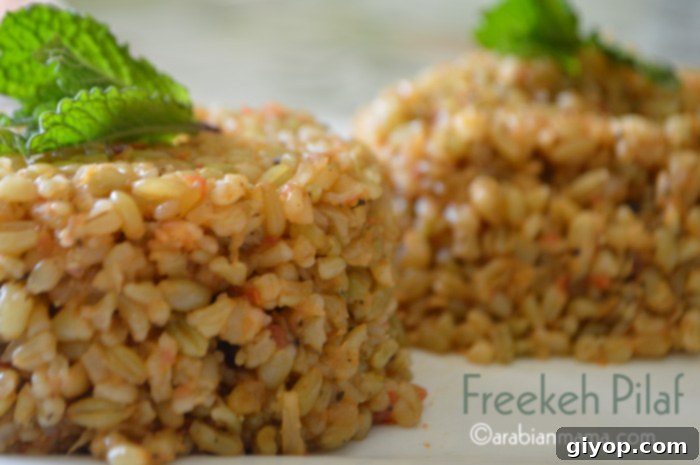
Beyond its incredible flavor and nutritional benefits, Freekeh Pilaf holds a special place in my heart as a true comfort food. There’s something deeply satisfying about preparing a dish that connects you to ancient culinary traditions, especially during stressful times. Just like many of us, I often find solace in food – usually a decadent treat. However, the wholesome nature and warming spices of this Freekeh Pilaf have surprised me, earning it a permanent spot on my comfort food list.
This grain, known for its resilience and nourishing qualities, is a testament to the enduring power of simple, wholesome ingredients. Egyptians, for example, have long cherished freekeh pilaf, famously using it to stuff small birds like pigeons and chickens for festive occasions. Its versatility, however, extends far beyond stuffing, making it a healthy and exciting replacement for everyday rice and pasta in countless meals.
The journey of freekeh from ancient fields to our modern kitchens is a fascinating one. Its smoky aroma is a result of a process passed down through generations, where the young wheat is burned to remove the chaff, preserving the grain’s nutritional integrity and distinctive taste. This tradition ensures that each bite carries a piece of history, a flavor profile that is both unique and deeply comforting.
In a world that often feels fast-paced and overwhelming, taking the time to prepare and enjoy a meal like Freekeh Pilaf offers a moment of grounding. It’s a dish that celebrates health without compromising on taste, proving that wholesome eating can also be incredibly delicious and soul-satisfying. Whether you’re seeking a nutritious side, a flavorful vegetarian main, or simply a comforting meal, this Freekeh Pilaf is sure to deliver.