
Unlock the secrets to baking the most divine, airy, and flavorful focaccia right in your own kitchen with this incredibly easy overnight recipe. Imagine a golden-brown crust, subtly crisp on the outside, giving way to a wonderfully soft and bubbly interior – a bread that effortlessly elevates any meal. This overnight focaccia isn’t just a recipe; it’s a game-changer for homemade bread, making baking accessible and enjoyable even for busy schedules. Its light, cloud-like texture and irresistible chewiness make it a universal crowd-pleaser, perfect for dipping, sandwiches, or simply savoring on its own. The beauty of this method lies in its simplicity, requiring minimal hands-on time and allowing the magic of slow fermentation to develop complex flavors and a superior texture.
Before diving into the full details, consider saving this recipe to your favorites! You can easily do so by clicking the ❤️ heart icon on the right-hand side of your screen or within the comprehensive recipe card below. This ensures you’ll always have this fantastic focaccia recipe at your fingertips.
Why This Overnight Focaccia Will Become Your New Go-To Bread Recipe
- **Unbeatable Convenience with Overnight Prep:** One of the most significant advantages of this no-fuss focaccia recipe is the ability to prepare the dough the night before. This clever trick leverages cold fermentation, not only saving you a substantial amount of time in the kitchen the next day but also allowing the dough to develop richer, more nuanced flavors and an incredibly airy structure. Wake up to perfectly proofed dough, ready for its final rise and bake!
- **Simple, Accessible Ingredients:** You won’t need to hunt for obscure specialty items. This recipe relies on basic, readily available pantry staples. This not only makes it an economical choice but also ensures you can whip up a batch whenever the craving for fresh, homemade bread strikes without a special trip to the grocery store. It’s proof that extraordinary results can come from humble beginnings.
- **Incredible Versatility for Any Meal:** This homemade focaccia bread is astonishingly adaptable. Its subtle, savory flavor profile pairs beautifully with almost any dish. While my family particularly enjoys it alongside hearty pasta dishes, it’s equally delightful with fresh salads, robust soups, charcuterie boards, or as the foundation for gourmet sandwiches. Its soft crumb and crispy crust make it ideal for dipping into olive oil or your favorite sauces.
Beyond its primary role as a delicious bread, this recipe also excels as a base for pizza. If you’re a fan of focaccia pizza – that thick, airy crust layered with your favorite toppings – then this recipe is an absolute must-try. Consider making a double batch for your next homemade pizza night; you won’t be disappointed by the light, chewy base it provides for your culinary creations.
Essential Ingredients for Your Perfect Overnight Focaccia
Note: This section provides a brief overview of the ingredients. For precise measurements and step-by-step instructions, please refer to the detailed printable recipe card located at the bottom of this page.
Ingredient Deep Dive & Flavor Variations
- **Warm Water:** The temperature of your water is crucial for activating the yeast. It should be comfortably warm to the touch, ideally between 100-110 degrees Fahrenheit (38-43°C). Water that’s too hot can kill the yeast, while water that’s too cold will inhibit its activation, leading to a sluggish or non-existent rise.
- **Granulated Sugar:** A small amount of sugar serves as food for the yeast, helping it to activate and proof effectively. It also contributes to the beautiful golden-brown color of the crust and a subtle sweetness that balances the savory notes of the bread.
- **Active Dry Yeast:** This recipe specifically calls for active dry yeast. It needs to be “proofed” (activated in warm water with sugar) before being combined with the other ingredients. Avoid using instant yeast, as it behaves differently and might not yield the same fluffy texture and slow-rise benefits.
- **All-Purpose Flour:** For the lightest, fluffiest focaccia, plain all-purpose flour is your best friend. Its moderate protein content allows for a tender crumb without making the bread too dense or overly chewy, which can happen with high-protein bread flour in this context.
- **Sea Salt & Flaky Sea Salt:** Sea salt is incorporated into the dough to enhance its flavor. Flaky sea salt, sprinkled generously on top before baking, is essential for that signature focaccia crunch and burst of briny flavor, adding a delightful textural contrast to the soft interior.
- **Extra Virgin Olive Oil:** High-quality extra virgin olive oil is key to the authentic flavor and texture of focaccia. It’s used in the dough, for oiling the bowl, dimpling the dough, and as a final brush after baking to impart a rich, aromatic finish and a beautiful sheen. Don’t skimp on this ingredient; it makes a significant difference.
- **Unsalted or Salted Butter (for the pan):** While olive oil is central, a layer of butter in the bottom of your casserole dish provides an extra layer of richness and helps create an incredibly golden, crispy, almost fried-like crust on the base of the focaccia, adding another dimension of texture and flavor.
Gather Your Essentials: Tools for Effortless Focaccia Making
You won’t need an elaborate collection of kitchen gadgets for this recipe. The tools required are common items often found in a well-equipped kitchen, ensuring the process remains straightforward and approachable.
- **Large Bowl:** Essential for mixing your dough and providing ample space for its overnight rise. A bowl with a capacity of at least 4 quarts is recommended to prevent overflow as the dough expands.
- **Spatula or Wooden Spoon:** Ideal for gently combining your ingredients, especially since this is a no-knead dough. It helps to achieve that sticky, shaggy texture without overworking the gluten.
- **13×9 Baking Dish:** This standard size is perfect for achieving the desired thickness and surface area for your focaccia, ensuring a consistent bake and characteristic shape.
For more of my favorite kitchen essentials and culinary recommendations, feel free to explore my Amazon storefront!
Mastering the Art of Overnight Focaccia: A Step-by-Step Guide
Note: This is a summarized overview of the instructions. The full, detailed instructions with precise timings and additional tips are provided in the comprehensive recipe card below.
- **Activate the Yeast:** In a large 4-quart bowl, combine the warm water, sugar, and active dry yeast. Give it a gentle stir a couple of times to dissolve the sugar and ensure the yeast is well distributed. Let this mixture sit undisturbed for about 5 minutes. You’ll know the yeast is active and healthy when a foamy layer forms on the surface, indicating it’s ready to work its magic.
- **Combine Dry Ingredients:** In a separate bowl (or directly in the yeast mixture if your bowl is large enough), whisk together the all-purpose flour and sea salt. Once combined, pour the activated yeast mixture into the dry ingredients.
- **Form the Dough:** Using a spatula or a sturdy wooden spoon, mix the ingredients until just combined and no dry pockets of flour remain. Resist the urge to overmix or knead vigorously, as this is a no-knead recipe designed for minimal handling. The dough will be noticeably sticky and shaggy – this is exactly the desired consistency for an airy focaccia.
- **Prepare for Overnight Rise:** Drizzle 1 tablespoon of olive oil over the surface of the sticky dough. Gently rub the oil all over the dough with your hands, creating a thin, protective layer. Cover the bowl tightly with plastic wrap or a damp kitchen towel, then transfer it to the refrigerator. Allow the dough to ferment and develop flavor overnight, or for up to 5 days, for optimal results. The longer the cold rise, the more complex the flavor and the more pronounced the signature focaccia holes will be.
- **Prepare the Baking Dish:** On baking day, generously butter a 13×9 inch glass baking dish, ensuring the bottom and sides are thoroughly coated. Pour an additional 2 tablespoons of olive oil into the center of the prepared dish. This combination of butter and oil will contribute to an incredibly crispy and flavorful bottom crust.
- **Second Rise & Shaping:** Gently transfer your cold, fermented dough ball from the refrigerator into the center of the buttered and oiled baking dish. Resist the urge to punch it down aggressively. Cover the pan loosely with plastic wrap or a damp tea towel and let it rise in a warm spot in your kitchen until it has expanded significantly and nearly fills the pan. This second rise typically takes 3-4 hours, depending on your kitchen’s ambient temperature.
- **Dimpling and Seasoning:** Once the dough has sufficiently risen, preheat your oven to 475°F (245°C). Uncover the dough. Lightly oil your fingertips with a little olive oil to prevent sticking. Press your fingers firmly into the dough, creating characteristic dimples all over the surface. These divots are crucial for catching the olive oil and flaky salt, and they contribute to the focaccia’s signature airy texture. Generously sprinkle flaky sea salt over the entire surface.
- **Bake to Golden Perfection:** Carefully place the baking dish into the preheated oven. Bake for approximately 20-25 minutes, or until the focaccia is beautifully golden brown on top and cooked through. Once removed from the oven, immediately brush the surface with the remaining tablespoon of olive oil. This final touch adds gloss, flavor, and ensures a tender crust. Allow the focaccia to cool in the pan for about 10 minutes before carefully transferring it to a cutting board. Let it cool slightly further before slicing and serving warm.
Creative Toppings & Flavor Variations to Customize Your Focaccia
One of the joys of making homemade focaccia is the endless possibilities for customization. Once you have the basic dough down, you can experiment with a myriad of toppings to match your mood or meal. Remember to add most toppings *after* the initial drizzle of olive oil on the dimpled dough, so they adhere well.
- **Herbs and Cheese Infusion:** Elevate the classic flavor profile by adding fresh rosemary, finely chopped basil, or fragrant oregano. For a cheesy twist, sprinkle a generous layer of grated Parmesan cheese over the top before baking. A combination of herbs and cheese is also exquisite. You could also try crumbled feta or goat cheese for a tangy Mediterranean flair.
- **A Touch of Spice:** If you enjoy a bit of heat, a sprinkle of red pepper flakes over the dough before it goes into the oven will add a subtle, warming kick. For a more intense spice, consider drizzling with a chili-infused olive oil after baking.
- **Vibrant Vegetable Medley:** Create a visually stunning and delicious focaccia by adorning it with thinly sliced vegetables. Halved cherry or grape tomatoes burst with sweetness when roasted. Thinly sliced caramelized onions add a savory depth, while strips of colorful bell peppers offer a fresh crunch. Olives, particularly Kalamata or Castelvetrano, pressed into the dough, are also fantastic. Even thinly sliced potatoes or roasted garlic cloves can be wonderful additions.
- **Savory Spreads:** For a Middle Eastern twist, generously spread a layer of za’atar mixed with olive oil over the dough before dimpling. Pesto, either homemade or store-bought, can also be swirled into the dimples for a vibrant, herbaceous flavor.
- **Sweet Focaccia (a delightful deviation):** While less traditional, a slightly sweeter focaccia can be a delightful treat. Drizzle with honey or maple syrup after baking, or add fresh figs and a sprinkle of sugar before baking for a unique dessert bread.
Expert Tips for Focaccia Success
Achieving a truly remarkable focaccia is within your reach, and these expert tips will guide you towards a perfect bake every time. Paying attention to these small details can significantly impact the final texture and flavor of your bread.
- **The Importance of an Oiled Bowl:** When the dough is resting overnight, it will be quite sticky, which is perfectly normal and desired for focaccia. To prevent it from adhering stubbornly to the bowl and making removal difficult, always use a generously oiled bowl. This ensures easy transfer the next day and helps create that signature airy structure.
- **Proper Dough Covering:** During its rising periods, your focaccia dough needs a moist environment to prevent it from drying out and forming a crust too early. A damp tea towel draped loosely over the bowl or baking pan works wonderfully. Alternatively, covering it closely with plastic wrap, ensuring a good seal, is also effective at trapping humidity and allowing the dough to rise without developing a dry surface.
- **Damp Hands for Dimpling:** When it’s time to create those beautiful dimples in your proofed dough, lightly wetting your fingers with a little olive oil or plain water is a simple yet effective trick. This prevents the sticky dough from clinging to your hands, making the dimpling process much cleaner and more enjoyable. It also helps create cleaner indentations that will hold your toppings and oil beautifully.
- **Don’t Overmix:** Focaccia is a “no-knead” bread, meaning minimal mixing is key. Overworking the dough can develop too much gluten, leading to a denser, chewier texture rather than the desired light and airy crumb. Mix only until the flour is just incorporated.
- **Trust the Sticky Dough:** It’s natural to want to add more flour if your dough feels very sticky. However, resist this urge! The high hydration is what contributes to focaccia’s characteristic open, airy crumb. A sticky dough is a happy dough for focaccia.
- **High Heat is Essential:** Baking focaccia at a high temperature (475°F/245°C) is crucial for achieving that wonderfully crispy exterior and tender interior in a relatively short baking time. Ensure your oven is fully preheated before placing the focaccia inside.
- **Cool Before Slicing:** While it’s tempting to slice into a warm loaf immediately, allowing your focaccia to cool for at least 10-15 minutes helps the internal structure set. This results in cleaner slices and a better overall texture.
Next time, for another delightful bread experience, try this classic Irish Soda Bread with Raisins recipe—it’s simple, hearty, and perfect to complement a wide array of meals or enjoy with a cup of tea.
Storing & Reheating Your Delicious Focaccia
While focaccia is undoubtedly at its peak freshness when enjoyed straight out of the oven, any leftovers can be stored and reheated to maintain their deliciousness. Proper storage ensures your homemade bread stays enjoyable for days.
**Refrigerate:** To keep leftover focaccia fresh, allow it to cool completely before storing. Place the cooled bread in an airtight container or a resealable plastic bag. Stored in the refrigerator, your focaccia will maintain its quality for 3-4 days. This method is ideal for short-term storage.
**Freeze:** For longer storage, focaccia freezes exceptionally well. Once completely cooled, wrap individual slices or larger portions tightly in plastic wrap, then place them in a freezer-safe bag or an airtight container. Frozen focaccia can retain its quality for up to three months. This is a great way to always have homemade bread ready for unexpected guests or quick meals.
**Reheat:** The best method for reheating focaccia to bring back its tender interior and crispy crust is in the oven. Preheat your oven to 350°F (175°C). If reheating a whole piece, wrap it loosely in aluminum foil to prevent it from drying out. Bake for 10-15 minutes, or until the bread is thoroughly warmed through and the crust has regained some of its crispness. For individual slices, you can place them directly on a baking sheet for 5-7 minutes. A toaster oven also works well for slices.
The Beauty of Make-Ahead Focaccia: Overnight Fermentation
The “overnight” aspect is not just a suggestion for convenience; it’s a fundamental part of what makes this focaccia so exceptional. The extended cold fermentation period, often referred to as a “slow rise,” allows for several crucial developments in the dough that are simply not achievable with a quick rise. During this time, the yeast slowly works on the sugars in the flour, breaking them down and producing organic acids. This process significantly deepens the flavor profile of the bread, creating complex, nuanced notes that are often described as slightly tangy or more “yeasty.” Furthermore, the slow fermentation strengthens the gluten network without the need for extensive kneading, leading to a more elastic dough and, ultimately, a more open, airy crumb structure with those beautiful, large air pockets characteristic of classic focaccia. So, embrace the make-ahead nature of this recipe; whip up the dough the day before, and you’ll not only save time at dinner but also enjoy a bread with unparalleled flavor and texture.
More Mediterranean Bread Recipes
If you’ve fallen in love with the comforting aroma and taste of fresh, homemade bread, and especially enjoy the rich culinary traditions of the Mediterranean, then you’ll definitely want to explore these other delicious recipes for your family.
- Simit (Turkish Sesame Bagel)
- Lebanese Pita Bread
- Sweet Bread Rolls (Shoreek)
- Taboon Palestinian Bread
Serving Suggestions: What to Enjoy with Your Homemade Focaccia
This incredible no-knead focaccia bread is far more than just a simple side dish; its tender crumb and rich flavor make it a perfect accompaniment to a vast array of meals and occasions. Its versatility means it can seamlessly fit into nearly any dining experience, from casual family dinners to more elaborate gatherings.
My family adores pairing it with a comforting main dish like this Baked Ziti with Ground Beef, where the bread is perfect for soaking up rich sauces. For a balanced meal, a simple green side dish such as this Brussels Sprouts Appetizer provides a lovely contrast. Beyond these, consider serving your focaccia alongside a robust minestrone soup, a fresh caprese salad, or as part of a Mediterranean-inspired mezze platter with hummus, olives, and roasted vegetables.
While perhaps not traditionally Italian, focaccia pairs beautifully with many Mediterranean pasta dishes. A particular family favorite is serving it with this iconic Macarona Bechamel, where the bread acts as an excellent vehicle for enjoying the creamy sauce. And, of course, no meal is truly complete without a sweet finish; these Raspberry Thumbprint Cookies offer a delightful contrast to the savory bread.
Think beyond dinner too! Focaccia makes an incredible base for breakfast sandwiches, toasted with a fried egg, or simply enjoyed with a strong cup of coffee. It’s also fantastic for soaking up the juices from grilled meats or complementing a fresh seafood spread.
Your Focaccia Questions Answered: FAQs
What is the secret to making great focaccia?
The absolute secret to the best focaccia bread recipe is allowing the dough to have a long, slow rise, ideally overnight in the refrigerator. This extended cold fermentation process works wonders. It not only deepens the flavor of the bread but also allows a complex gluten structure to develop naturally, creating an abundance of air bubbles. These bubbles are what contribute to the exceptionally soft, airy, and fluffy interior texture that focaccia is renowned for. Patience truly is a virtue in focaccia baking.
Is focaccia better the next day?
Focaccia is undoubtedly at its absolute best when enjoyed freshly baked, preferably still warm from the oven. The crust is at its crispiest, and the interior is at its most tender and aromatic during this period. However, don’t worry if you have leftovers! While the crust might soften slightly, focaccia still tastes wonderfully delicious the next day. A quick reheat in the oven can help revive some of its original texture and warmth, making it almost as good as fresh.
Should I use bread flour for this recipe?
For this particular overnight focaccia recipe, using plain all-purpose flour is highly recommended. Bread flour has a higher protein content, which can lead to a chewier, denser crumb in focaccia, sometimes making it less airy and fluffy than desired. All-purpose flour, with its moderate protein level, provides the perfect balance for a tender yet structured interior, giving you that wonderfully light and pillowy focaccia texture that we all love.
Can I use instant yeast instead of active dry yeast?
While instant yeast can sometimes be substituted for active dry yeast, this recipe is specifically designed for active dry yeast and its initial proofing step. Active dry yeast benefits from being activated in warm water and sugar first, which ensures it’s alive and ready to work. If you only have instant yeast, you can try using it by mixing it directly with the flour, but the rise times and final texture might vary slightly, and you’ll miss the visual confirmation of yeast activity.
What if my focaccia dough doesn’t rise?
Several factors could prevent your focaccia dough from rising. The most common issues include using water that was either too hot (killing the yeast) or too cold (inhibiting activation), expired yeast, or an insufficiently warm environment for the second rise. Ensure your water temperature is between 100-110°F, check your yeast’s expiration date, and allow ample time in a warm spot for the final rise. Patience is key with yeast doughs!
Is it necessary to use olive oil?
Absolutely! Olive oil is a cornerstone ingredient for authentic focaccia, contributing significantly to its characteristic flavor, aroma, and texture. It’s used in the dough, for oiling the pan and your hands, and as a finishing drizzle. While other oils could be used, extra virgin olive oil imparts a distinct richness and Mediterranean essence that is integral to the focaccia experience. It contributes to both the crispness of the crust and the tenderness of the crumb.
We’d love to hear your thoughts! Please leave your review in the comments section below. If you enjoyed preparing and tasting this recipe, don’t forget to give it a 5-star rating. Your feedback is greatly appreciated!
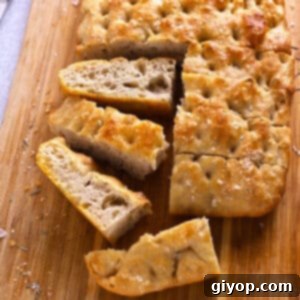
Overnight Focaccia
Italian Focaccia is a delicious, airy flatbread that is incredibly adaptable and versatile. This Overnight Focaccia recipe is one of the easiest you can make, requiring only about 5 minutes of active preparation time to achieve a truly remarkable loaf.
Print Recipe
Pin Recipe
Rate This Recipe
Ingredients
- 2 cups warm water (100-110°F)
- 2 teaspoons granulated sugar (8 g)
- 2 ¼ teaspoons active dry yeast (¼ oz envelope)
- 4 cups all-purpose flour (500 g)
- 1 teaspoon sea salt (5g)
- ¼ cup extra virgin olive oil, divided
Topping:
- Flaky sea salt
Instructions
- In a 4-quart bowl, pour the warm water, then add sugar and active dry yeast. Stir gently a couple of times and let it proof for 5 minutes until foamy.
- In a separate bowl, mix the all-purpose flour and sea salt. Then, pour the activated yeast mixture into the dry ingredients.
- Mix all ingredients with a spatula or wooden spoon until the flour disappears and a sticky, shaggy dough forms. Avoid overmixing.
- Pour 1 tablespoon of olive oil over the dough and gently rub it all over the dough’s surface with your hands. Cover the bowl tightly and refrigerate overnight, or for up to 5 days.
- On baking day, wet your fingers with a little oil and gently deflate the dough by pulling it from the sides of the bowl to the center to form a loose ball.
- Generously butter a 13×9 inch glass baking dish, ensuring the bottom and sides are well coated. Pour 2 tablespoons of olive oil into the center of the dish.
- Place your dough ball in the center of the prepared baking dish. Cover loosely and let it rise in a warm spot until it visibly grows and fills the pan. This typically takes about 3-4 hours, depending on your kitchen’s temperature.
- Preheat your oven to 475°F (245°C).
- Uncover the dough, lightly oil your fingers, and gently dimple the dough all over its surface, pressing down to create indentations.
- Generously sprinkle flaky sea salt on top of the dimpled dough.
- Bake in the center of your preheated oven for 20-25 minutes, or until the focaccia is golden brown.
- Remove from the oven and immediately brush with the remaining tablespoon of olive oil.
- Carefully remove the focaccia from the baking dish and let it cool on a wire rack for at least 10 minutes before slicing and serving.
Notes
- The longer you leave the dough in the refrigerator, the more pronounced the holes and complex the flavor your focaccia will develop. I highly recommend a minimum of 24 hours for the best results, but if you’re in a hurry, 12 hours will still yield a delicious loaf.
- Experiment with toppings! Fresh rosemary, olives, cherry tomatoes, or a sprinkle of Parmesan cheese can be added after dimpling for extra flavor.