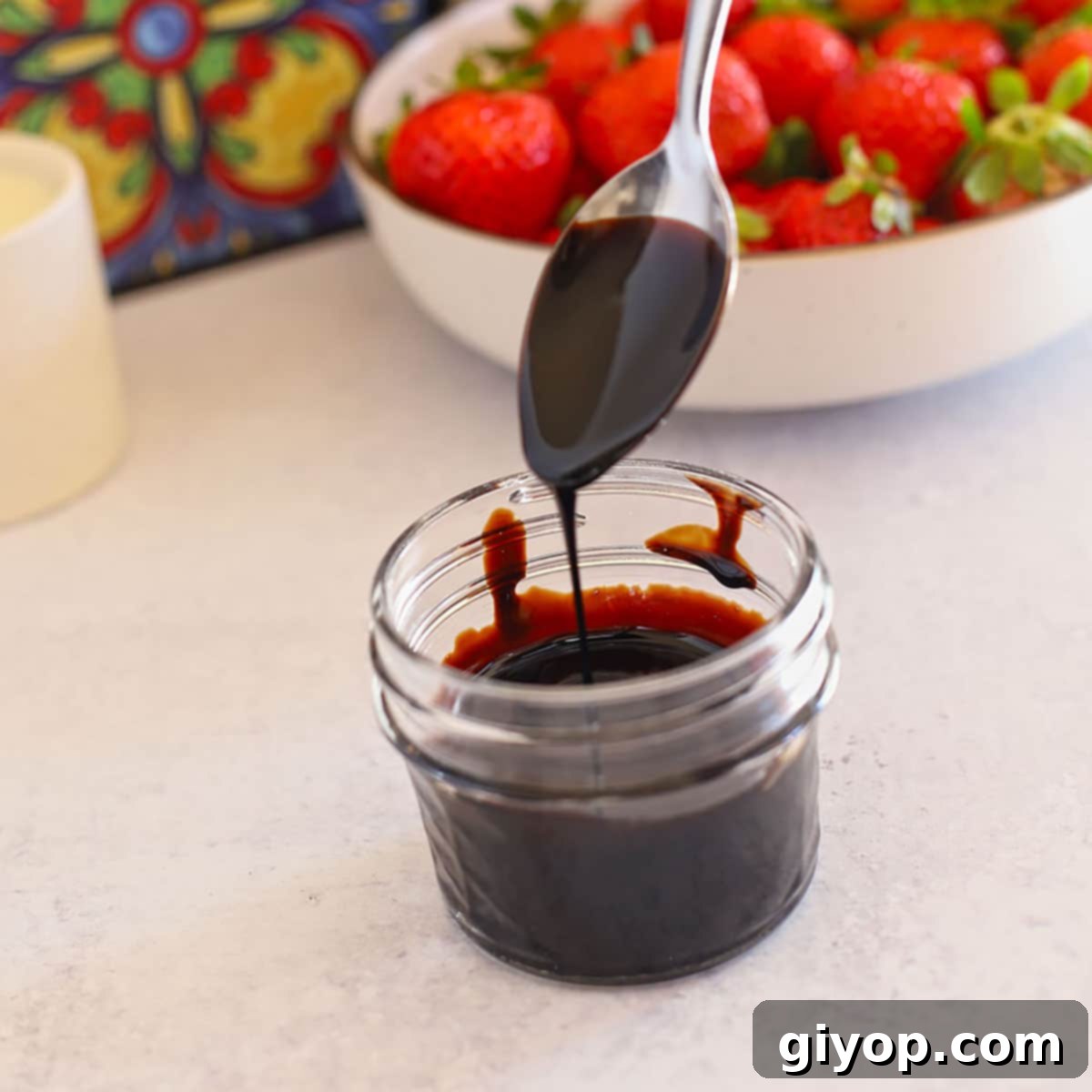
Welcome to the ultimate guide for creating a truly exceptional Honey Balsamic Glaze! This remarkable condiment effortlessly combines the rich, complex tang of balsamic vinegar with the golden sweetness of honey, transforming ordinary meals into culinary masterpieces. Forget store-bought alternatives laden with preservatives; this homemade balsamic reduction is not only quick and incredibly easy to prepare but also a healthier choice that allows you to control every ingredient.
In just a few minutes, with minimal fuss and only a handful of staple ingredients, you can craft a versatile sauce that will become your new go-to for elevating a wide array of dishes. Whether you use it as a flavorful marinade for proteins, a vibrant drizzle over roasted vegetables, a sophisticated dressing for salads, or even a unique topping for desserts, this honey balsamic glaze promises to impress with its depth of flavor and luscious, syrupy texture.
Don’t forget to save this incredible recipe! You can bookmark it for later or pin it to your favorite recipe board.
Why This is the Best Honey Balsamic Glaze Recipe
This particular recipe stands out as the best honey balsamic glaze for several compelling reasons:
- Unmatched Flavor Harmony: The careful blend of balsamic vinegar and honey achieves a perfect equilibrium between sweet and tangy. The vinegar’s inherent acidity and subtle wood notes are beautifully mellowed by the natural floral sweetness of honey, creating a rich, profound flavor profile that tantalizes the taste buds. This balance makes it incredibly adaptable to both savory and surprisingly sweet applications.
- Remarkable Versatility: This glaze is a true kitchen MVP. It’s not just a sauce; it’s a culinary chameleon. Use it as a tenderizing marinade for meats, a vibrant dressing for fresh salads, a sophisticated finishing drizzle for gourmet dishes, or a simple yet elegant dip for appetizers. Its ability to complement a vast range of ingredients makes it an indispensable component in your cooking repertoire.
- Effortless Preparation: In today’s fast-paced world, convenience is key. This glaze requires only a few simple, readily available ingredients and comes together in a matter of minutes. Its straightforward process makes it an ideal choice for busy weeknights when you want to add a touch of gourmet without the time commitment.
- A Healthier Homemade Alternative: Unlike many store-bought glazes and sauces that often contain artificial additives, excessive sugars, and preservatives, this homemade version offers a clean, wholesome option. By making it yourself, you gain complete control over the ingredients, ensuring a fresher and healthier condiment for your family.
- Customization at Your Fingertips: This recipe provides an excellent foundation, but it also invites personalization. You can easily adjust the ratio of balsamic vinegar to honey to suit your preference for a sweeter or tangier glaze. Furthermore, incorporating additional ingredients allows for endless flavor variations, making each batch uniquely yours.
Embrace the simplicity and sophistication of this homemade honey balsamic glaze, and discover how effortless it is to elevate your everyday cooking.
Essential Ingredients for Your Glaze
Creating this delightful honey balsamic glaze requires only two primary ingredients, with a few optional additions to enhance its flavor. This section provides an overview; detailed measurements and instructions are available in the printable recipe card further down the page.
📋 Ingredient Notes and Expert Tips
- Balsamic Vinegar: The quality of your balsamic vinegar significantly impacts the final taste of your glaze. For the richest, most profound flavor, seek out aged balsamic vinegar. Traditional Balsamic Vinegar of Modena, aged for many years, offers unparalleled depth, sweetness, and complexity. However, a good quality commercial balsamic vinegar will also yield excellent results. Look for bottles labeled “Aceto Balsamico di Modena IGP” or “Tradizionale,” which indicate certain quality standards. A thicker, more syrupy vinegar to start with will reduce faster and create a more luxurious glaze.
- Honey: Honey is the essential sweetener in this recipe, balancing the vinegar’s acidity and contributing to the glaze’s luscious texture. While any honey will work, opting for organic and raw varieties can add more nuanced flavors and retain beneficial enzymes. Different types of honey, such as clover, wildflower, or even a dark buckwheat honey, will impart subtle differences to your glaze. Experiment to find your favorite!
- Optional Enhancements: While simple is often best, a tiny pinch of sea salt can enhance all the flavors. A grind of fresh black pepper adds a subtle warmth.
Adaptable Recipe: Creative Variations!
One of the beauties of this honey balsamic glaze recipe is its incredible adaptability. Once you master the basic technique, you can easily customize it to suit your palate or complement specific dishes. Here are some fantastic variations to inspire your culinary creativity:
- Garlic and Herb Infusion: For an aromatic boost, add a finely minced garlic clove to the saucepan along with the vinegar and honey. You can also introduce fresh or dried herbs like rosemary, thyme, or oregano during the simmering process. These herbs will infuse the glaze with savory notes, making it an even better pairing for roasted meats and vegetables.
- Spicy Kick: If you enjoy a touch of heat, a pinch of red pepper flakes or a dash of your favorite hot sauce can be added to the glaze as it simmers. Start with a small amount and adjust to your desired spice level.
- Mustard Magic: A tablespoon or two of grainy mustard or Dijon mustard can add a delightful piquant tang and a slight emulsifying quality to the glaze. This variation is particularly excellent for salad dressings or brushing onto grilled chicken or pork. The mustard’s sharpness beautifully cuts through the sweetness, adding another layer of complexity.
- Alternative Sweeteners: While honey is central to this recipe, you can certainly experiment with other sweeteners if you prefer. Pure maple syrup will lend an earthy, robust sweetness, while brown sugar offers a deeper, molasses-like flavor. For those on a sugar-restricted diet, your favorite sugar-free sweetener can also be used, though you might need to adjust the quantity to achieve the desired sweetness and consistency.
Don’t hesitate to experiment with these variations, or even create your own! The possibilities are endless, and each tweak can lead to a uniquely delicious glaze.
Before You Begin: Essential Tools
Preparing this exquisite honey balsamic glaze is straightforward, and you’ll only need a few basic kitchen tools to get started. Having the right equipment ensures a smooth cooking process and the best possible results.
The following are affiliate links. We are a participant in the Amazon Services LLC Associates Program, an affiliate advertising program designed to provide a means for us to earn fees by linking to Amazon.com and affiliated sites.
- Saucepan: A small to medium-sized non-reactive saucepan is crucial for this recipe. Stainless steel is an excellent choice as it won’t react with the acidic balsamic vinegar, preventing any metallic off-flavors. Avoid aluminum or cast iron, as they can react with acidic ingredients.
- Whisk or Spoon: A heat-resistant whisk or wooden spoon will be essential for stirring the glaze as it simmers, ensuring even reduction and preventing scorching.
- Storage Container: An airtight jar or container, such as a glass mason jar, is perfect for storing your finished glaze in the refrigerator.
- Measuring Cups and Spoons: Accurate measurements are key for the perfect balance of flavors.
For more of my favorite kitchen essentials and cooking gadgets, be sure to check out my Amazon storefront. It’s curated with tools that make cooking a joy!
Step-by-Step Instructions: Crafting Your Glaze
Making your own honey balsamic glaze is surprisingly simple and deeply rewarding. Follow these clear steps to achieve a perfectly balanced, syrupy reduction. Remember, the detailed instructions and full recipe are available in the recipe card below.
- Combine Ingredients and Bring to a Simmer: In your small, non-reactive saucepan, combine the balsamic vinegar and honey. Place the saucepan over medium heat. Stir continuously to ensure the honey fully dissolves into the vinegar. Continue heating until the mixture comes to a gentle boil, with small bubbles forming consistently across the surface.
- Reduce to Perfection: Once bubbling, reduce the heat to medium-low. This is the crucial reduction phase. Allow the mixture to simmer gently, uncovered, stirring occasionally to prevent it from sticking to the bottom or sides of the pan. The goal is to reduce the volume by approximately half, or until the glaze has thickened to a consistency that coats the back of a spoon. A good visual cue is when the bubbles become larger and slower, and the liquid starts to cling to the spoon. This process typically takes about 10-20 minutes, depending on the heat level and the size of your saucepan.
- Cool and Store: Once your glaze has reached the desired consistency, remove the saucepan from the heat. Allow the glaze to cool completely to room temperature before transferring it. As it cools, it will continue to thicken significantly. Once cooled, pour the luscious honey balsamic glaze into a clean, airtight jar or container for storage.
Patience during the simmering stage is key to achieving a perfectly thick and flavorful glaze. Avoid rushing the process with high heat, which can lead to burning and an undesirable taste.
Beyond the Glaze: Discover More Sweet Sauces
While our Honey Balsamic Glaze shines with its versatile sweet and tangy profile, there’s a world of other delicious sweet sauces that can elevate your desserts, breakfasts, and even some savory dishes. These sauces are the perfect final touch, adding moisture, flavor, and a touch of elegance.
- Cherry Sauce
- Strawberry Coulis
- Whipped Honey
- Easy Hot Fudge Sauce
Your Questions Answered: Frequently Asked Questions (FAQs)
Here are some common questions about making and using honey balsamic glaze, along with helpful answers to ensure your success:
The versatility of this glaze means you can enjoy it both warm and cold, depending on your intended use. For applications like marinating meats or vegetables, it’s best to allow the glaze to cool completely before use. This prevents cooking the exterior of your ingredients prematurely. When drizzling over roasted vegetables, grilled proteins, or fresh salads, serving it warm can enhance its aromatic qualities and allow it to coat more easily. For dessert toppings or cheese platters, room temperature or slightly chilled is often preferred.
If your glaze has thickened too much in the refrigerator, you can easily restore its pourable consistency. Gently reheat it in a small saucepan over low heat, stirring continuously until it loosens up and warms through. Alternatively, you can microwave it in 15-20 second intervals, stirring well after each interval, until it reaches your desired temperature and consistency. If it’s too thick after reheating, a tiny splash of water or extra balsamic vinegar can help thin it out.
Yes, honey balsamic glaze can be frozen, though it is often best enjoyed fresh or refrigerated. To freeze, pour the cooled glaze into an airtight, freezer-safe container or even ice cube trays for convenient portioning. It can be stored in the freezer for up to 3 months. When ready to use, thaw it completely in the refrigerator overnight. You may then need to gently reheat it in a saucepan over low heat or briefly microwave it, whisking vigorously to restore its smooth, consistent texture after thawing.
Chef’s Notes & Expert Tips
Achieving the perfect honey balsamic glaze is easy with these insider tips and considerations:
- Never Leave Unattended: Balsamic vinegar, especially when combined with honey, contains sugars that can easily burn if left unsupervised. Keep a close eye on your sauce while it’s simmering, particularly during the last few minutes of reduction.
- Frequent Stirring is Key: To prevent the glaze from scorching at the bottom of the pan and to ensure an even reduction, stir it often, especially as it begins to thicken. This will also help achieve a smooth, consistent texture.
- It Thickens as it Cools: This is a crucial point to remember when judging the doneness of your glaze. It will appear thinner while hot on the stove than its final consistency. Aim for a slightly thinner-than-desired consistency when you remove it from the heat, knowing it will set up perfectly as it cools. If it becomes too thick after cooling, simply warm it gently with a splash of water or vinegar.
- Use Non-Reactive Cookware: As mentioned, a stainless steel saucepan is highly recommended. The acidity of balsamic vinegar can react with certain metals, like aluminum or cast iron, leading to a metallic taste in your glaze.
- Adjust Consistency with Ease: If your finished glaze is thicker than you prefer, don’t worry! You can easily thin it out by adding a small splash of warm water or a bit more balsamic vinegar, stirring until you reach your desired pourable consistency.
- Consider Pan Size: A wider saucepan will allow for faster evaporation and quicker reduction times compared to a narrower, deeper pot. Adjust your cooking time accordingly.
Optimal Storage and Reheating Techniques
Proper storage is essential to maintain the freshness and quality of your homemade honey balsamic glaze. This section provides guidance on how to store and reheat your delicious creation so you can enjoy it for longer.
Refrigerate: Once completely cooled, transfer your homemade balsamic honey glaze into a clean, airtight glass jar or container. Stored properly in the refrigerator, it will remain fresh and flavorful for up to 2 weeks. Be sure the lid is sealed tightly to prevent any absorption of refrigerator odors.
Reheat: The glaze’s consistency will naturally thicken when chilled. If you prefer to serve it warm or need to restore its pourable texture, you have a couple of options. For stovetop reheating, place the desired amount in a small saucepan over very low heat, stirring constantly until it reaches your preferred warmth and consistency. Alternatively, you can microwave it in a microwave-safe dish for 15-30 seconds, stirring well before serving. If the glaze becomes too thick, a small splash of water or balsamic vinegar can be stirred in to achieve the desired texture.
Freezing: While best enjoyed fresh, you can extend the shelf life of your glaze by freezing it. Pour the cooled glaze into an airtight, freezer-safe container or individual ice cube trays. It can be frozen for up to three months. To use, thaw the frozen glaze completely in the refrigerator overnight, then reheat gently and whisk to restore its smooth consistency, as outlined above.
Smart Time-Saving Tips for Busy Cooks
This honey balsamic glaze recipe is already a quick endeavor, but with a few clever strategies, you can make it even more convenient, especially for meal prep or entertaining:
Make Ahead: This glaze is an excellent candidate for advance preparation. You can easily make a larger batch over the weekend and store it in the refrigerator. Having a jar of this delicious condiment ready to go means you can effortlessly elevate weeknight meals without any last-minute fuss. Just remember to give it a good stir (or gentle reheat if necessary) before serving, as it tends to thicken when chilled.
Batch Cooking: Double or triple the recipe! Since the active cooking time is minimal, increasing the quantity doesn’t significantly add to the preparation time. A larger batch ensures you have enough on hand for multiple meals throughout the week or for spontaneous culinary inspiration.
Perfect Pairings: What to Serve Your Glaze With
The versatility of honey balsamic glaze knows no bounds, making it an ideal companion for a diverse range of dishes. Its sweet and tangy profile enhances both savory and even some sweet applications. Here are some of our favorite pairings:
- Roasted Vegetables: A drizzle over Mediterranean Roasted Vegetables or simple roasted brussels sprouts transforms them into a gourmet side dish. The glaze caramelizes beautifully, highlighting their natural sweetness and adding a vibrant tang. It’s also fantastic with asparagus, carrots, bell peppers, or sweet potatoes.
- Grilled or Baked Proteins: Brush it onto grilled chicken, fish like this Air Fryer Tilapia, pork tenderloin, or even steak during the last few minutes of cooking. The glaze creates a beautiful, caramelized crust and infuses the protein with incredible flavor.
- Fresh Salads: This balsamic sauce makes a phenomenal salad dressing. Drizzle it over a classic caprese salad with fresh mozzarella, tomatoes, and basil, or use it to elevate a simple mixed greens salad with goat cheese, walnuts, and berries.
- Cheese Boards and Appetizers: Serve a small bowl of honey balsamic glaze alongside your next cheese and charcuterie board. It pairs wonderfully with creamy cheeses like brie, fresh mozzarella, or pungent blue cheese. It’s also delicious drizzled over crostini with ricotta or goat cheese.
- Fruits and Desserts: For an unexpected delight, drizzle a small amount over fresh berries, sliced peaches, or even a scoop of vanilla ice cream. The sweet-tart combination is surprisingly delightful.
- Sandwiches and Wraps: Add a layer of this glaze to your favorite sandwiches or wraps for an extra burst of flavor. It’s particularly good with turkey, chicken, or vegetarian options.
Let your imagination guide you! This glaze is designed to inspire creativity in the kitchen.
Explore More Savory Sauces
Just as a good sweet sauce can elevate a dessert, savory sauces are the backbone of many fantastic main courses and appetizers. They add depth, moisture, and an explosion of flavor to any dish. If you enjoyed creating this versatile glaze, you might also love these other savory sauce recipes:
- Szechuan Sauce – A spicy, sweet, and savory sauce perfect for stir-fries and noodles.
- Lebanese Garlic Sauce (Toum) – A creamy, potent garlic emulsion that’s a staple for grilled meats.
- Lemon Herb Tahini – A refreshing and earthy dressing ideal for falafel, salads, or roasted vegetables.
- 3-Ingredient Stir Fry Sauce – An incredibly easy and versatile sauce for quick weeknight stir-fries.
- Bang Bang Sauce – A creamy, spicy, and sweet sauce, famously paired with shrimp or chicken.
- Olive Oil Bread Dip – A simple yet elegant appetizer, perfect with crusty bread.
Sauces are truly a wonderful addition to any dish, whether sweet or savory. What’s your personal favorite sauce or condiment? Leave me a comment below – I’d love to hear your recommendations!
Honey Balsamic Glaze
One of the best homemade condiments with a tangy flavor to elevate almost everything. From Caprese salad to fresh fruit, this balsamic reduction sauce is so simple and is more economical than store-bought varieties.
Average Rating: 5 from 3 votes
Print Recipe |
Pin Recipe |
Rate This Recipe
Course: Condiment | Cuisine: Italian | Diet: Halal
Cook Time: 15 minutes
Calories: 291 kcal | Author: Amira
Ingredients
- 1 cup balsamic vinegar
- 1 Tablespoon honey
Instructions
- In a small saucepan over medium-high heat, add vinegar and honey, stir to combine and heat until bubbling.
- Reduce heat to low and let it simmer until reduced to half of the original volume or it coats the back of a spoon.
- Let it cool down and pour into a jar.
Notes
- Cooking time depends on several factors, including the size of your pan (a wider skillet will reduce faster) and your preferred consistency. Mine took around 13 minutes.
- Remember that the sauce thickens significantly as it cools.
- If the sauce becomes thicker than you prefer, mix in a small splash of water and stir until you reach your desired consistency.
- Please check the nutrition disclaimer policy.
Nutrition
Calories: 291kcal | Carbohydrates: 61g | Protein: 1g | Sodium: 60mg | Potassium: 301mg | Fiber: 0.04g | Sugar: 56g | Vitamin C: 0.1mg | Calcium: 71mg | Iron: 2mg
Tried this Recipe? Pin it for Later! Mention @AmirasPantry or tag #AmirasPantry!