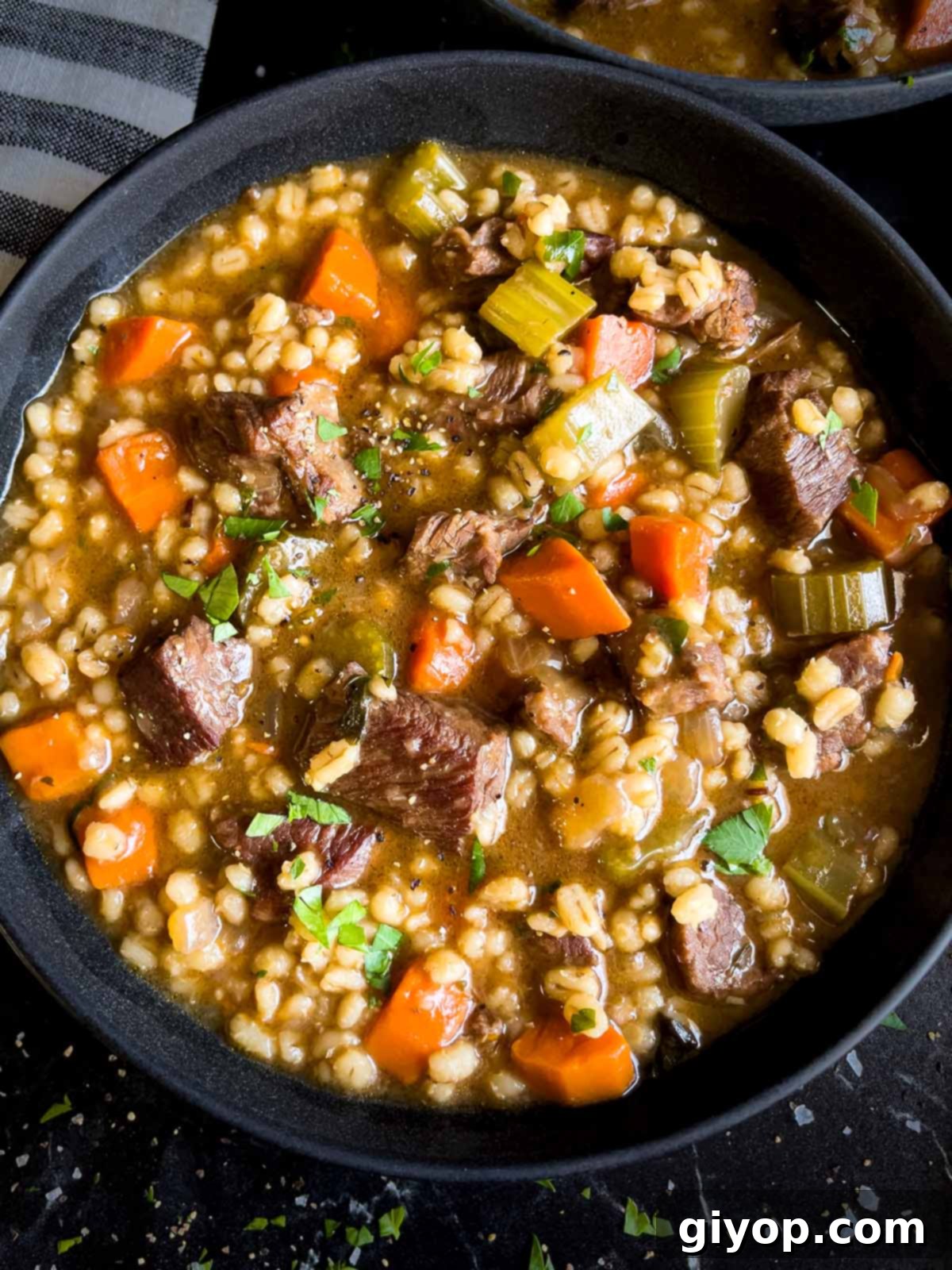
Hearty Beef Barley Soup: The Ultimate Comfort Food Recipe
Warm your soul with a bowl of this classic Beef Barley Soup. This isn’t just any soup; it’s a profoundly satisfying meal packed with tender chunks of beef, wholesome pearl barley, and a vibrant assortment of perfectly cooked vegetables. Every spoonful delivers a rich, savory flavor that evokes a sense of comfort and home, making it the perfect antidote to chilly evenings or a long day.
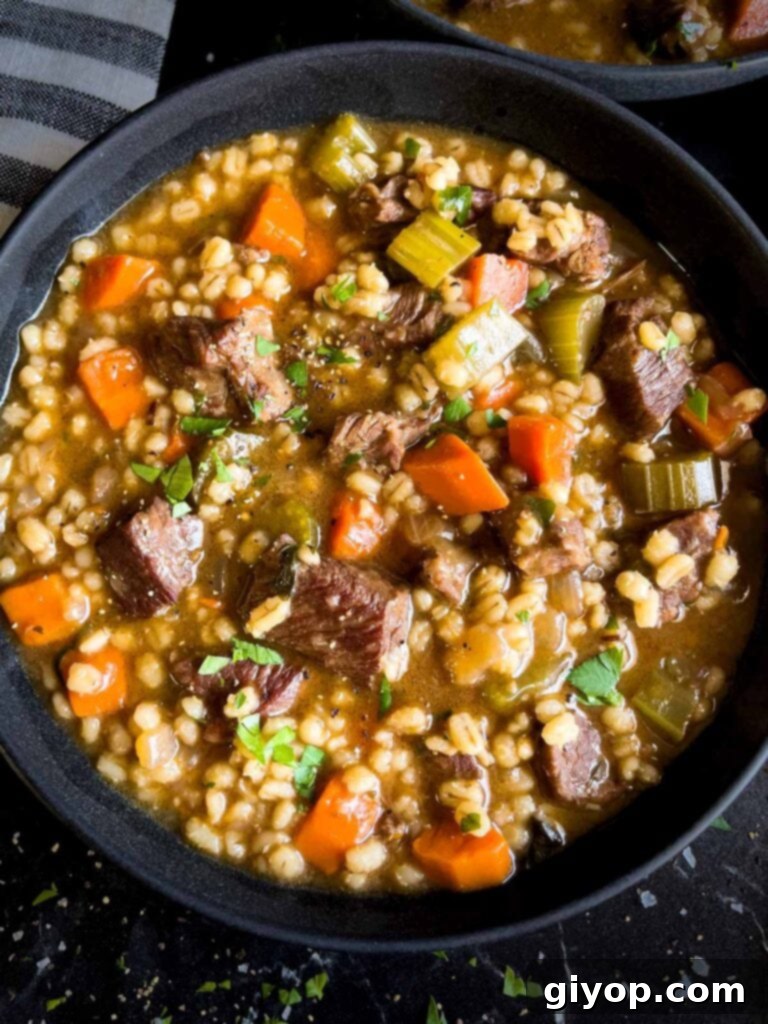
Why This Beef Barley Soup Will Be Your New Favorite
There’s a reason beef barley soup has stood the test of time as a beloved classic. It’s more than just a dish; it’s an experience. Here’s why this particular recipe is destined to become a staple in your kitchen, offering unparalleled comfort and convenience:
- Unrivaled Beef Flavor: We meticulously build an incredible depth of beef flavor right from the start by expertly browning the meat and thoughtfully deglazing the pot. This crucial step ensures that every bite is imbued with a rich, savory essence, a hallmark of truly exceptional beef soup.
- Packed with Nutritious Vegetables: A generous helping of carrots, celery, and onions (the classic mirepoix) forms an aromatic, flavorful base. These vibrant vegetables provide essential vitamins, fiber, and an earthy sweetness that beautifully complements the beef and barley, enhancing the soup’s overall complexity and nutritional value.
- Hearty & Satisfying: This is not a thin, watery broth. Our beef barley soup is wonderfully thick, robust, and incredibly filling, making it a complete meal that truly satisfies. The combination of melt-in-your-mouth tender beef and plump, chewy pearl barley ensures a delightful texture and a profound sense of satiety.
- Budget-Friendly: Crafting this exquisite soup is also kind to your wallet. By utilizing economical cuts of beef like chuck roast and readily available, seasonal vegetables, you can create a luxurious meal perfect for feeding the family without overspending.
- One-Pot Wonder: Say goodbye to mountains of dishes! This entire recipe conveniently comes together in a single Dutch oven or heavy-bottomed pot. This minimal cleanup makes it an ideal choice for busy weeknights or when you simply want to enjoy a delicious meal without the extra fuss.
- Perfect for Meal Prep: One of the best qualities of beef barley soup is that it tastes even better the next day! The flavors meld and deepen overnight, making it super easy to prepare ahead of time. It stores beautifully in the refrigerator, ready to be reheated for quick and effortless lunches or dinners throughout the week.
- Freezer-Friendly: For ultimate convenience, this soup freezes exceptionally well. Stock your freezer with individual portions, and you’ll always have a delicious, homemade, comforting meal ready whenever you need a quick fix, without compromising on taste or quality.
Craving more comforting and robust soup ideas to warm you from the inside out? Explore some of our other cherished soup recipes, each crafted to deliver maximum flavor and comfort. Try our incredibly satisfying Thick & Hearty Homestyle Chili, indulge in a luxurious Slow Cooker Beef Stew, experience the authentic flavors of Shrimp and Sausage Gumbo, savor our creamy Creamy Bean Soup with Smoked Sausage, or opt for the wholesome goodness of our Root Vegetable Soup.
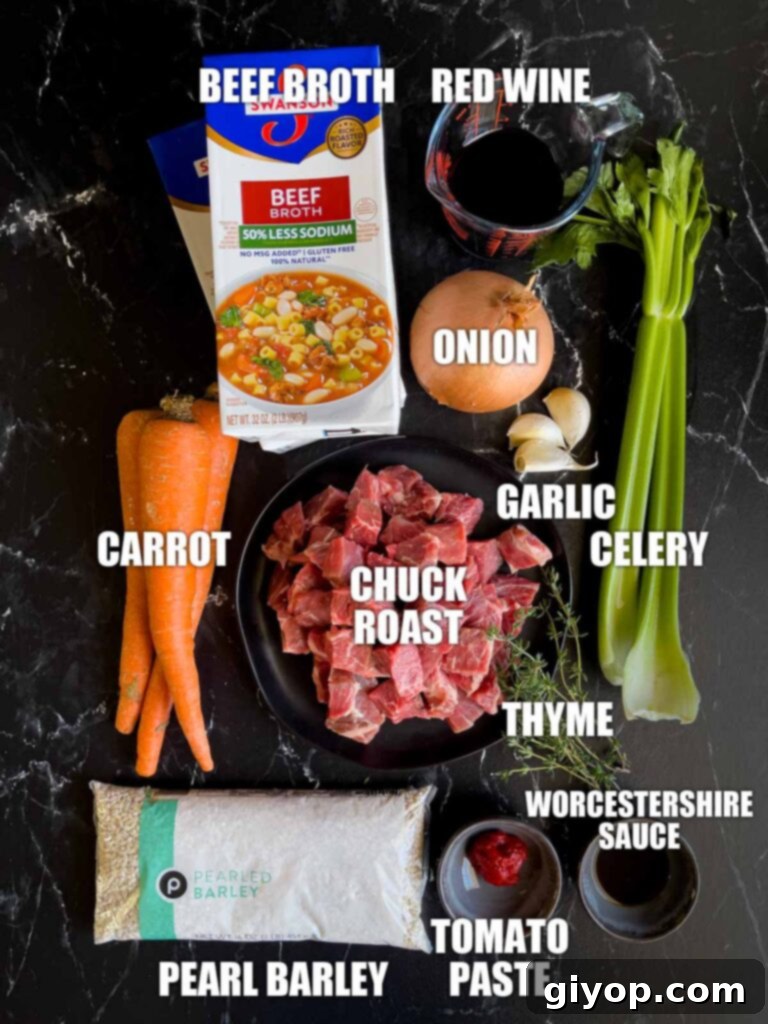
Essential Ingredients for a Flavorful Beef Barley Soup
Crafting an exceptional beef barley soup begins with selecting the right ingredients. Each component plays a vital role in building the layers of flavor and achieving that perfect comforting texture. Here’s a detailed breakdown of what you’ll need and why each element is crucial:
- Beef: The undisputed star of this hearty soup! For the most profound flavor and irresistibly tender texture, we highly recommend using a boneless beef chuck roast. This particular cut, often found pre-cubed and marketed as stew meat, is inherently tough. However, its rich marbling and abundant connective tissue transform beautifully with slow, moist cooking, resulting in melt-in-your-mouth, fall-apart perfection. This process also infuses the broth with a deep, robust beefy essence. For optimal control over the size and quality, consider purchasing a chuck roast and cutting it into uniform 1-inch cubes yourself.
- Classic Mirepoix (Aromatic Vegetables): This timeless trio forms the essential aromatic foundation of many great soups, stews, and sauces.
- Carrots: These naturally sweet root vegetables add a lovely sweetness and a vibrant pop of color to the soup, balancing the savory notes.
- Celery: Contributes a subtle, earthy, and distinctly savory note that is indispensable to the classic flavor profile. A pro tip: if your celery comes with leaves attached, don’t discard them! Finely chop the leaves and add them along with the stalks for an intense boost of concentrated celery flavor.
- Yellow Onion: Provides a pungent sweetness that mellows and caramelizes beautifully during sautéing, forming the fundamental savory core of the soup’s base.
- Flavorful Seasonings: These key ingredients elevate the soup from merely good to truly extraordinary, adding layers of complexity and depth.
- Garlic Cloves: Essential for its pungent, aromatic, and savory kick. Always opt for fresh garlic and mince it just before cooking for the most potent flavor and aroma.
- Fresh Thyme: Its earthy, slightly floral, and peppery notes are a perfect complement to beef and hearty vegetables. You can add whole sprigs to infuse the broth and remove them before serving, or substitute with dried thyme (using about half the amount).
- Worcestershire Sauce: Often considered a secret weapon in beef dishes, this condiment delivers a powerful punch of umami flavor. Its complex profile—a blend of savory, tangy, sweet, and spicy notes—adds a wonderful zest and deepens the savory character of the entire soup.
- Tomato Paste: Provides a concentrated burst of rich tomato flavor and a beautiful reddish hue. When sautéed, it caramelizes, contributing to the soup’s body and adding a touch of balancing acidity that cuts through the richness of the beef.
- Kosher Salt & Black Pepper: The fundamental seasonings. It is crucial to taste and adjust these throughout the cooking process. Starting with low-sodium beef broth gives you precise control over the final salt content, allowing you to season to your exact preference.
- Rich Liquids: These form the comforting, flavorful backbone of your soup.
- Red Wine: Employed for deglazing, red wine adds a sophisticated layer of depth and acidity to the broth. It’s instrumental in scraping up all those delicious, caramelized brown bits (known as “fond”) from the bottom of the pot, which are packed with concentrated flavor. A dry red wine such as Cabernet Sauvignon, Merlot, or Pinot Noir works wonderfully. If you prefer to omit alcohol, simply replace it with an equal amount of low-sodium beef broth.
- Low-Sodium Beef Broth or Beef Stock: This is a critical choice for managing the overall saltiness of your soup. Sodium levels vary significantly between brands, so starting with a low-sodium option allows you to carefully season the soup to your taste preferences without the risk of over-salting. Beef stock generally provides a richer, more gelatinous mouthfeel due to its higher collagen content compared to broth.
- Barley: The namesake grain that gives this soup its unique texture and hearty character.
- Pearl Barley: This is the ideal type of barley for this recipe. Pearl barley has its tough outer husk and some of the bran layer removed, which allows it to cook more quickly and results in a softer, yet still satisfyingly chewy, texture compared to hulled barley. It contributes a wonderful hearty bite and a subtle, earthy, nutty flavor to the soup. It’s absolutely essential to avoid quick-cooking barley, as it will break down and become mushy long before the beef has had a chance to become tender.
Step-by-Step Guide to Making the Best Beef Barley Soup
Creating this comforting and flavorful soup is a straightforward process, but paying attention to a few key techniques will guarantee maximum flavor extraction and an exceptionally tender result. Follow these detailed steps to achieve a truly memorable meal:
1. Prepare and Sear the Beef to Perfection
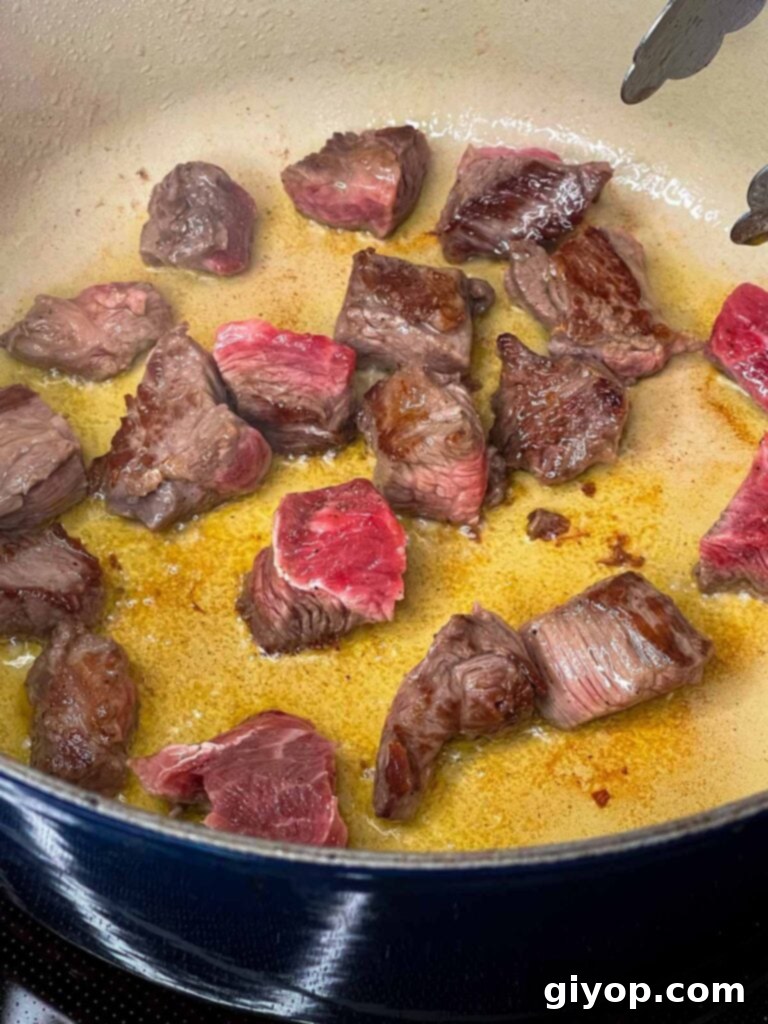
Begin by heating a large Dutch oven or a sturdy, heavy-bottomed stockpot over medium-high heat. Add two tablespoons of olive oil, allowing it to shimmer and heat thoroughly. While the oil is heating, prepare your beef: pat the cubed beef chuck roast thoroughly dry with paper towels. This seemingly small step is crucial, as it helps remove surface moisture, allowing the beef to brown beautifully rather than steam. Generously season the dried beef cubes with kosher salt and freshly ground black pepper. Carefully place the seasoned beef into the hot pot in batches, ensuring you do not overcrowd the pan. Overcrowding reduces the pan’s temperature and prevents proper searing, leading to grey, steamed meat instead of a rich, caramelized crust. Brown the beef on all sides until a deep, flavorful crust forms. Once perfectly browned, remove the seared meat to a clean plate and set it aside.
NOTE
The Power of Browning: A Flavor Essential! This step of browning the beef is absolutely paramount—do NOT skip it! Those delectable caramelized bits that cling to the bottom of your pot, known as “fond,” are intensely flavorful. When you proceed to deglaze, these savory morsels release into your liquid, forming an unparalleled depth of flavor for your rich broth. Additionally, if your celery stalks come with their vibrant green leaves, finely chop them and add them to the pot along with the stalks. Celery leaves offer a more concentrated, bright celery flavor, significantly enhancing the overall taste profile of your soup.
2. Sauté the Aromatics and Deglaze the Pot
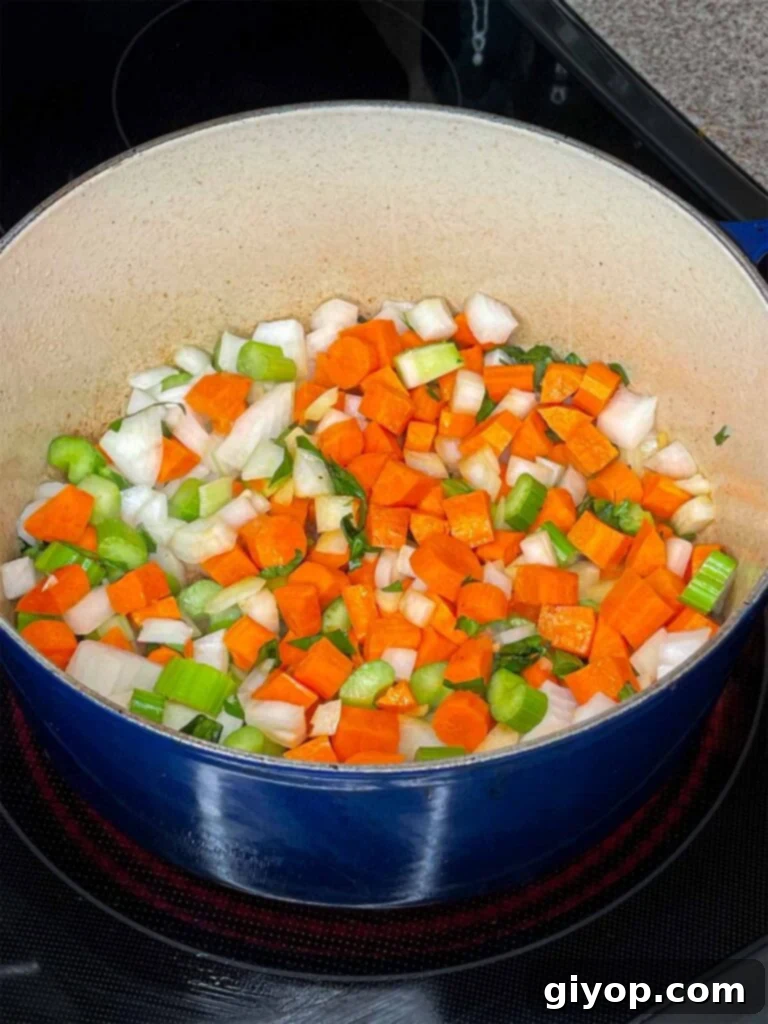
With the beef removed, add the remaining tablespoon of olive oil to the same pot, utilizing all the delicious browned bits. Add your diced carrots, celery, and onions (the mirepoix). Sauté these aromatic vegetables over medium heat for approximately 5 minutes, stirring occasionally, until they begin to soften and release their sweet, savory aromas. Next, stir in the concentrated tomato paste and the minced garlic. Continue to sauté for another 30 seconds, allowing the tomato paste to caramelize slightly and the garlic to become wonderfully fragrant. Be vigilant here to avoid burning the garlic, which can turn bitter.
Now, pour in the red wine. Immediately begin scraping the bottom of the pan vigorously with a wooden spoon or spatula to release all those flavorful brown bits (the fond). As the wine simmers, these bits will dissolve, enriching your soup base. Bring the wine to a boil and let it simmer for about 2 minutes, allowing the alcohol to cook off and the complex flavors to meld and concentrate. This deglazing process is fundamental for capturing all the caramelized goodness and integrating it into your broth.
3. Simmer the Beef to Tender Perfection
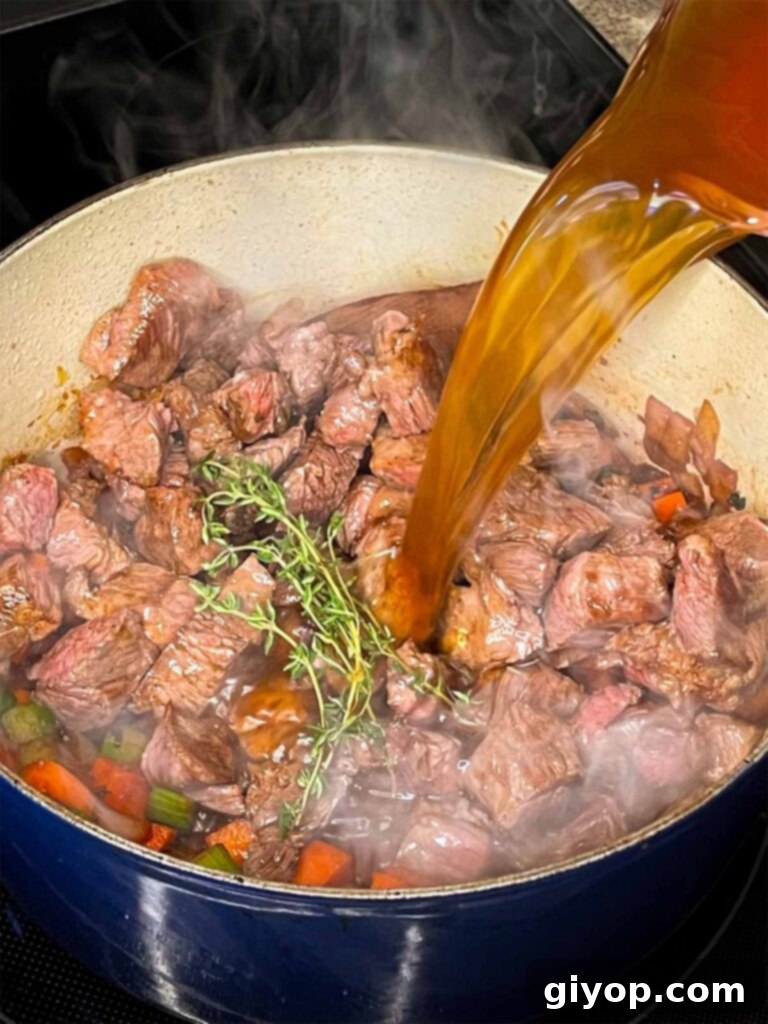
Return the beautifully browned beef cubes to the pot, nestling them among the aromatic vegetables. Add the fresh thyme sprigs (or dried thyme), a generous tablespoon of Worcestershire sauce, and the low-sodium beef broth. Give everything a good stir to combine all the ingredients thoroughly. Bring the entire mixture to a rolling boil over medium-high heat. Once boiling vigorously, reduce the heat significantly to a gentle simmer, cover the pot tightly, and let it cook undisturbed for 45 minutes. Stir occasionally during this period to ensure even cooking and prevent anything from sticking to the bottom. At this initial stage, the beef cubes will not yet be fall-apart tender, but they are steadily on their journey to becoming exquisitely soft.
4. Introduce Barley and Finish Cooking
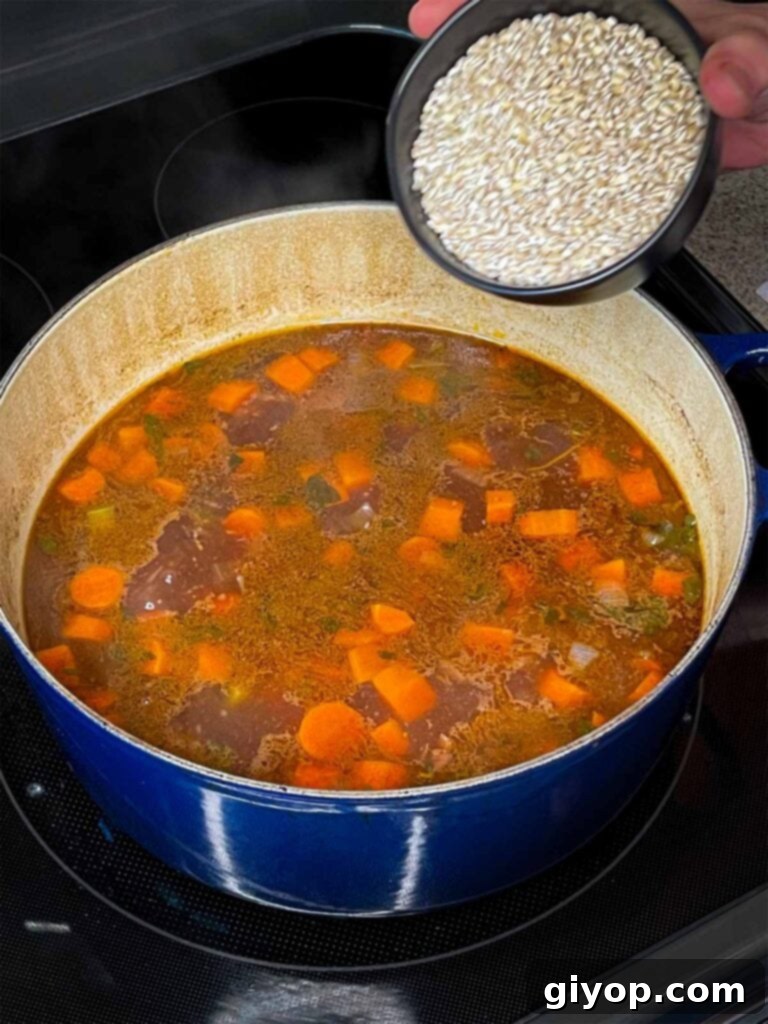
After the initial 45-minute simmering period for the beef, it’s time to incorporate the pearl barley. Stir the barley into the soup, ensuring it is well distributed. Cover the pot again and continue to simmer for an additional 45-60 minutes. It’s important to stir occasionally during this phase to prevent the barley from clumping or sticking to the bottom of the pot. The barley is perfectly cooked when it’s tender but still retains a pleasant, slightly chewy bite. By this point, the beef should have reached its peak tenderness, easily shredding with a fork, and the vegetables will be perfectly soft and infused with flavor.
5. Final Seasoning and Serving Suggestions
Once the soup has cooked to perfection, it’s time for the final, crucial step: tasting and seasoning. Taste the soup carefully and adjust the seasoning generously with kosher salt and freshly ground black pepper to your exact preference. Remember, the precise amount will vary based on your personal taste and the inherent sodium content of your beef broth. For a vibrant finish and a burst of fresh flavor, stir in the fresh minced parsley. Before serving, remember to remove any thyme stems that were added whole.
As a general guideline, we often find that 1/2 teaspoon of kosher salt and 1/2 teaspoon of black pepper is a good starting point for seasoning after the long simmer, but your palate is the ultimate judge. Taste, adjust, and taste again until it’s perfectly balanced to your liking!
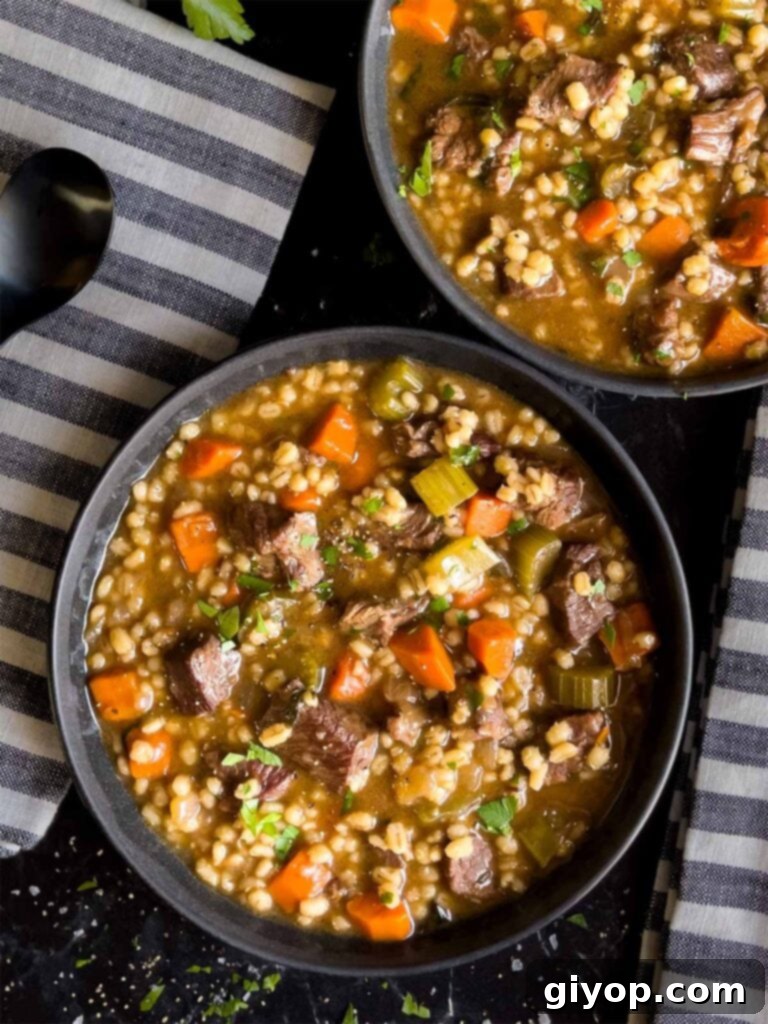
For an extra touch of freshness and appealing visual contrast, garnish each bowl with additional minced parsley just before serving. A warm, crusty piece of bread or a homemade biscuit is the quintessential accompaniment, perfect for soaking up every last drop of the rich, deeply flavored broth.
What to Serve with Your Hearty Beef Barley Soup
This classic beef barley soup is so robust, filling, and nutritionally complete that it truly shines as a stand-alone meal. However, if you’re looking to enhance your dining experience or simply love pairing your soup with delectable sides, here are some excellent serving suggestions that complement its hearty nature:
- Crusty Artisan Bread: A warm, crusty bread is almost a non-negotiable accompaniment. Its sturdy texture is perfect for soaking up all the savory, rich broth. Consider serving with a slice of our homemade No-Knead Skillet Bread, or for a savory treat, some fluffy Cheddar Chive Biscuits. A simple sourdough baguette or a rustic whole-grain loaf also works wonderfully.
- Fresh Green Salad: A light, crisp green salad with a simple vinaigrette dressing offers a refreshing contrast to the richness and warmth of the soup. It adds a touch of freshness, acidity, and a welcome balance to the meal, making it feel complete.
- Golden Cornbread: For a delightful touch of Southern comfort, a warm slice of slightly sweet cornbread provides an excellent pairing. Its crumbly texture and subtly sweet flavor create a wonderful counterpoint to the savory soup.
- Roasted Root Vegetables: While the soup is already packed with vegetables, a side of simply roasted asparagus, green beans, or even additional root vegetables like parsnips or sweet potatoes can add extra texture, visual appeal, and nutritional value.
- Cheese Platter: For a more refined touch, a small cheese platter featuring aged cheddar, gouda, or a robust blue cheese can be a sophisticated pairing, complementing the deep flavors of the beef and broth.
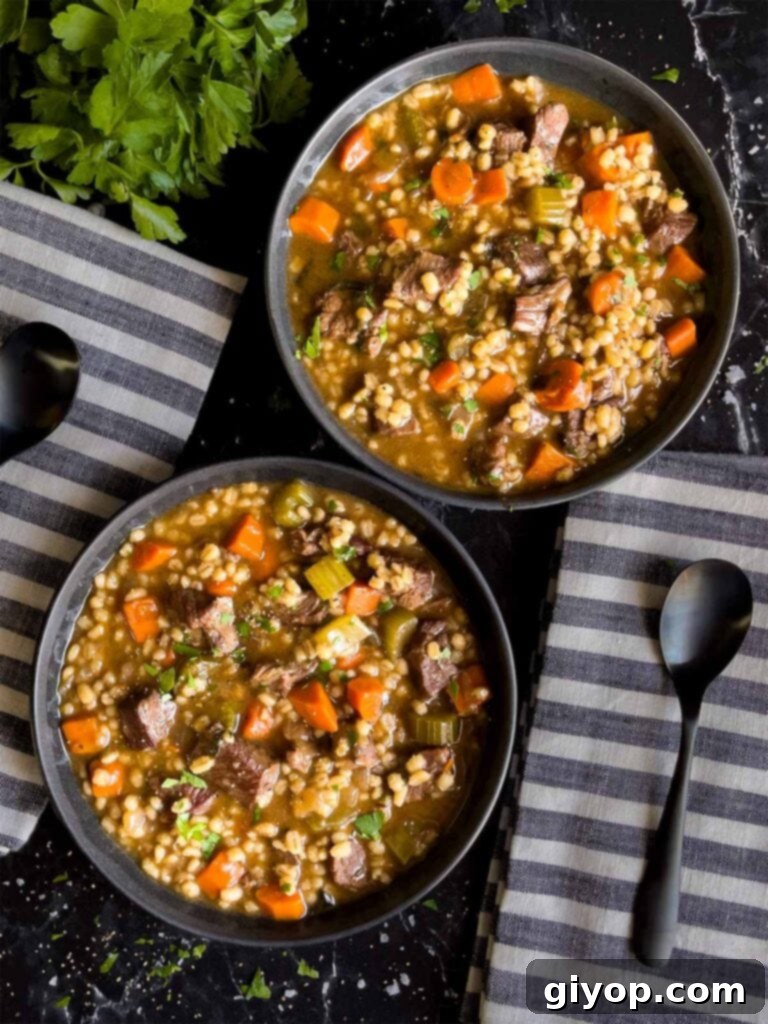
Expert Tips for the Best Beef Barley Soup Every Time
Crafting a consistently delicious beef barley soup is straightforward when you keep these expert tips in mind. They’ll help you maximize flavor and achieve the perfect texture every time:
- Source and Cut Your Own Chuck Roast: While pre-cubed stew meat offers convenience, purchasing a boneless chuck roast and cutting it into uniform 1-inch cubes yourself allows for superior control over the size and quality of the meat. This is my preferred method, ensuring even cooking and ultimately, perfect tenderness in every bite.
- Maintain Uniform Vegetable Dicing: Aim to dice your mirepoix (carrots, celery, and onions) into consistent 1/2-inch chunks. Because this hearty vegetable beef barley soup simmers for a significant duration, uniformly sized pieces are crucial. They will cook evenly, hold their shape beautifully, and prevent some vegetables from turning to mush while others remain undercooked.
- Select the Correct Barley Type: It is absolutely paramount NOT to use quick-cooking barley in this recipe. The tenderizing process for stewing beef demands a long, slow cooking period (typically 1.5 to 2 hours). Quick-cooking barley, which cooks in a mere 10 to 12 minutes, would completely disintegrate and become unpleasantly mushy long before your beef is tender. Always opt for pearl barley for the ideal chewy-tender texture.
- Adjust Thickness to Your Preference: This recipe is designed to yield a wonderfully thick, robust soup, almost akin to a hearty stew. If you prefer a thinner consistency, gradually add more low-sodium beef broth until you achieve your desired texture. I strongly advise against adding water, as it will dilute the rich, deeply developed savory broth flavor you’ve worked hard to create.
- Embrace the Browning Process: As emphasized earlier, properly browning the beef is foundational to the soup’s incredible flavor profile. Ensure your pan is sufficiently hot and avoid overcrowding the beef cubes. Patience during this step pays off immensely in the depth and richness of the final broth.
- Taste and Adjust Seasoning Throughout: The flavors of the soup will deepen and evolve as it simmers. Always taste your soup at various stages and, most importantly, right before serving. Adjust the salt and pepper as needed to ensure a perfectly balanced and seasoned dish.
- Fresh Herbs Elevate Flavor: While dried thyme can be used successfully, fresh thyme sprigs truly infuse the soup with a more vibrant, aromatic, and nuanced flavor. If using dried herbs, remember they are more concentrated, so use roughly half the amount specified for fresh.
- Consider a Rest: Like many stews and hearty soups, this beef barley soup often tastes even better the next day. A resting period allows the flavors to meld and deepen further, making it an excellent meal prep option.
Creative Variations to Customize Your Beef Barley Soup
This classic beef barley soup recipe is wonderfully versatile, offering numerous opportunities for customization to suit your dietary preferences, available ingredients, or simply to explore new flavor dimensions. Feel free to get creative with these delicious variations:
- Introduce Potatoes: For an even more substantial and comforting soup, consider adding potatoes. It’s crucial to select waxy varieties such as Yukon gold, red potatoes, or new potatoes, cut into uniform 1-inch cubes. Russet potatoes contain more starch and tend to break down and absorb excessive liquid during long cooking, which can result in a cloudy broth and a mushy texture. Add them during the last 30-45 minutes of the simmering process.
- Incorporate Earthy Mushrooms: Mushrooms make a fantastic addition, lending an earthy, umami depth that complements the beef beautifully. Sauté sliced Baby Bella (cremini) mushrooms or white button mushrooms along with the mirepoix to build their flavor.
- Experiment with Diverse Herbs: While thyme is a classic choice, don’t hesitate to experiment with different fresh herbs. Sprigs of rosemary, a single bay leaf, or even a touch of marjoram added during the simmering phase can introduce new aromatic dimensions. Always remember to remove bay leaves and woody herb stems before serving.
- Alcohol-Free Option: If you prefer to cook without alcohol, it’s an easy substitution. Simply replace the 1/2 cup of red wine with an equal amount of low-sodium beef broth. The soup will still maintain its incredible depth and savory profile.
- Boost with More Vegetables: Enhance the nutritional content and texture by adding other root vegetables such as parsnips, turnips, or rutabaga, cut into similar 1/2-inch pieces. For a pop of fresh color and a slight crunch, stir in some green beans or frozen peas during the last 10-15 minutes of cooking.
- Add a Spicy Kick: If you enjoy a bit of heat, introduce a pinch of red pepper flakes along with the garlic and tomato paste for a subtle warmth, or offer a dash of your favorite hot sauce at the table for individual customization.
- Swap Grains: While pearl barley is traditional, you could experiment with other hearty grains like farro or wheat berries if you’re looking for a different texture, though cooking times may vary.
Frequently Asked Questions About Beef Barley Soup
Barley is an ancient and nutritious cereal grain, known for its hearty, slightly nutty flavor and delightfully chewy texture, which is often compared to brown rice. There are several different types of barley available, but for this particular soup recipe, we specifically use pearl barley. Pearl barley has been processed to remove its fibrous outer hull and a portion of its bran layer. This processing makes it cook faster and gives it a softer consistency while still retaining a satisfying, distinctive chew. It’s an excellent source of dietary fiber and various essential nutrients, making it a wholesome and delicious addition to any meal.
While quick-cooking barley offers undeniable convenience for certain dishes, we strongly advise against using it for this particular beef barley soup recipe. The beef chuck roast, which is key to the soup’s tender meat and deep flavor, requires a significant amount of slow, moist cooking—typically an hour and a half to two hours in total—to break down and become wonderfully tender. Quick-cooking barley, true to its name, cooks in a mere 10-12 minutes. If you were to add it at the beginning of the cooking process, it would disintegrate into an unpleasant mush long before your beef had a chance to tenderize. If quick-cooking barley is the only variety you have on hand, we recommend cooking the soup with the beef and vegetables for at least 1.5 hours first, and then stirring in the quick-cooking barley for only the specified 10-12 minutes until it is tender.
For a truly rich and tender beef barley soup, the best choice of beef is a boneless chuck roast. This cut, which originates from the shoulder of the cow, is often sold pre-cubed and labeled as “stew meat” in many grocery stores. Chuck roast is inherently rich in connective tissue and marbling. These elements, when subjected to a low and slow cooking process, break down beautifully, resulting in incredibly tender, succulent meat that practically melts in your mouth. Furthermore, the marbling contributes significantly to the broth’s deep, beefy flavor profile. While other cuts like round roast can be used, chuck roast consistently delivers superior tenderness and flavor for stewing applications.
Yes, you can certainly adapt this recipe to incorporate ground beef if that is your preference or what you have available. To do so, begin by browning approximately 1.5 to 2 pounds of lean ground beef in your Dutch oven over medium-high heat, breaking it apart with a spoon as it cooks. Once fully browned, drain off any excess fat to prevent a greasy soup. Remove the browned ground beef to a plate and set it aside. Then, proceed with the recipe as written, starting with sautéing the vegetables. Once the beef broth and seasonings have been added, return the browned ground beef to the pot, cover, and simmer for about 30 minutes to allow the flavors to meld. Finally, add the pearl barley and continue to simmer for an additional 45-60 minutes until the barley is tender. This is also a fantastic recipe to utilize leftover roast beef, simply shredding or cubing it and adding it in the last 30 minutes of cooking for a speedy option.
Absolutely! Beef barley soup is an outstanding candidate for making ahead, as its flavors tend to deepen, develop, and improve significantly over time. If your intention is to prepare the soup several days in advance, we highly recommend cooking the soup entirely *without* adding the barley initially. Once the beef and vegetables are tender, allow the soup to cool completely to room temperature. Then, transfer it to an airtight container and store it in the refrigerator for up to 3 days. When you are ready to serve, simply bring the soup back to a gentle boil on the stovetop, then add the pearl barley, cover, and reduce to a simmer for 45-60 minutes, or until the barley is perfectly tender. This method prevents the barley from absorbing too much liquid and becoming overly mushy during storage.
Yes, this recipe is wonderfully adaptable for a slow cooker, making it perfect for hands-off cooking and a comforting meal awaiting you after a long day! First, it is still crucial to brown the beef in a skillet or your Dutch oven on the stovetop. This step is essential for locking in those crucial deep, savory flavors. Once the beef is beautifully browned, transfer it to your crock pot. Add all the remaining ingredients—including the prepared vegetables, seasonings, liquids, and pearl barley—to the slow cooker. Cook on the LOW setting for 7 to 8 hours, or on the HIGH setting for 3-4 hours, until the beef is incredibly tender and the barley is cooked through to your liking. As always, ensure you use pearl barley, not quick-cooking, so that it cooks perfectly alongside the meat. For an even more convenient morning, you can brown the meat and dice the vegetables the night before, refrigerating them in separate airtight containers, and then simply assemble everything in the slow cooker the next morning.
Leftover beef barley soup stores exceptionally well. Once the soup has cooled completely to room temperature, transfer it to an airtight container. It will keep beautifully in the refrigerator for up to 4 days. When you go to reheat it, you may notice that the barley has absorbed a significant amount of the broth, causing the soup to thicken considerably. Simply add a splash more low-sodium beef broth or a little water to achieve your desired consistency while reheating it gently on the stovetop or in the microwave.
Beef barley soup is an excellent candidate for freezing, making it perfect for stocking up on future quick and easy meals. Once the soup has cooled completely after cooking, portion it into freezer-safe airtight containers or heavy-duty freezer bags. Be sure to leave a little headspace at the top for expansion during freezing. The soup can be safely frozen for up to 3 months. To reheat, the best method is to thaw the soup overnight in the refrigerator. Then, gently reheat it on the stovetop over medium-low heat, stirring occasionally, or warm it in the microwave. Similar to refrigerated soup, the barley will likely have absorbed a lot of the liquid, so you may need to add additional beef broth or water to achieve the desired consistency during reheating.
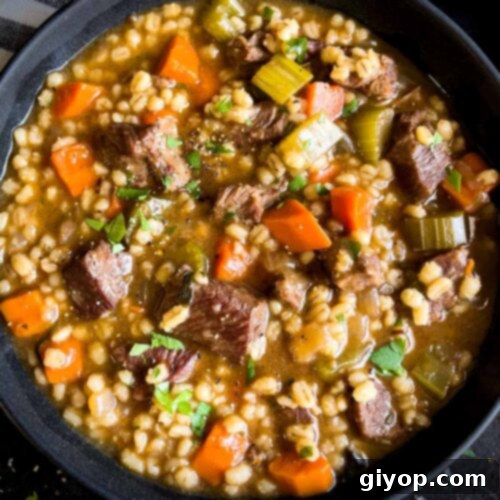
Classic Beef Barley Soup Recipe
★
★
★
★
Print Recipe
Pin Recipe
Ingredients
- 3 tbsp Olive oil (divided)
- 2 lbs Chuck roast (cut into 1-inch cubes)
- 3 medium Carrots (diced into 1/2-inch pieces)
- 2 large Celery ribs (diced into 1/2-inch pieces)
- 1 medium Onion (diced)
- 1 tbsp Tomato paste
- 4 cloves Garlic (minced)
- 1/2 cup Red wine
- 1 tbsp Worcestershire sauce
- 6 cups Low-sodium beef broth
- 4 sprigs Fresh thyme (or 1/2 tsp dried thyme)
- 3/4 cup Pearl barley
- 1/2 tsp Kosher salt (more or less to taste)
- 1/2 tsp Black pepper (more or less to taste)
- 1/4 cup Fresh parsley (minced, plus extra for garnish)
Instructions
- Heat a large Dutch oven or heavy-bottomed stock pot over medium-high heat, and add 2 tablespoons of olive oil. Pat the beef cubes dry with paper towels. Season them generously with salt and pepper.
- Brown the beef on all sides in batches, ensuring you don’t overcrowd the pan. Remove the browned meat to a plate, and set aside.
- Add the remaining tablespoon of olive oil to the pot. Add the diced carrots, celery, and onions and sauté for about 5 minutes until they begin to soften. Stir in the tomato paste and minced garlic and sauté for about 30 seconds until wonderfully fragrant.
- Pour in the red wine, and bring to a boil for about 2 minutes, scraping the flavorful brown bits from the bottom of the pan with a wooden spoon to deglaze.
- Add the browned beef back to the pan along with the fresh thyme sprigs, Worcestershire sauce, and low-sodium beef broth. Bring the mixture to a boil, then reduce the heat to a gentle simmer, cover, and cook for 45 minutes, stirring occasionally. The beef cubes will still be firm, but tenderizing.
- Stir in the pearl barley, cover, and continue to simmer for an additional 45-60 minutes, stirring occasionally. Cook until the barley is tender yet slightly chewy, and the beef is ultra tender and easily falls apart.
- Season the soup to taste with kosher salt and black pepper. Stir in the fresh minced parsley and remember to remove the thyme stems before serving.
Recipe Notes
If you wish to omit red wine from the recipe, you can easily substitute it with an additional 1/2 cup of low-sodium beef broth without significantly impacting the overall flavor profile.
Make Ahead: For comprehensive instructions on how to best prepare this soup in advance for optimal flavor and texture, please refer to the detailed FAQ section above.
Storing: Once the soup has cooled completely, transfer any leftovers to an airtight container and store it in the refrigerator for up to 4 days. Keep in mind that the barley will likely absorb more liquid as it sits, so you may need to add extra beef broth or water when reheating to restore the desired consistency.
Freezing: This soup is an excellent candidate for freezing! Allow it to cool completely before portioning into freezer-safe airtight containers or heavy-duty freezer bags. It can be frozen for up to 3 months. To reheat, thaw overnight in the refrigerator and then warm gently on the stovetop, adding more broth or water as needed to achieve your preferred consistency.
Nutrition Information (Approximate Per Serving)
Carbohydrates: 27g |
Protein: 36g |
Fat: 25g |
Saturated Fat: 9g |
Polyunsaturated Fat: 2g |
Monounsaturated Fat: 14g |
Trans Fat: 1g |
Cholesterol: 104mg |
Sodium: 842mg |
Potassium: 1283mg |
Fiber: 5g |
Sugar: 3g |
Vitamin A: 5414IU |
Vitamin C: 9mg |
Calcium: 64mg |
Iron: 5mg