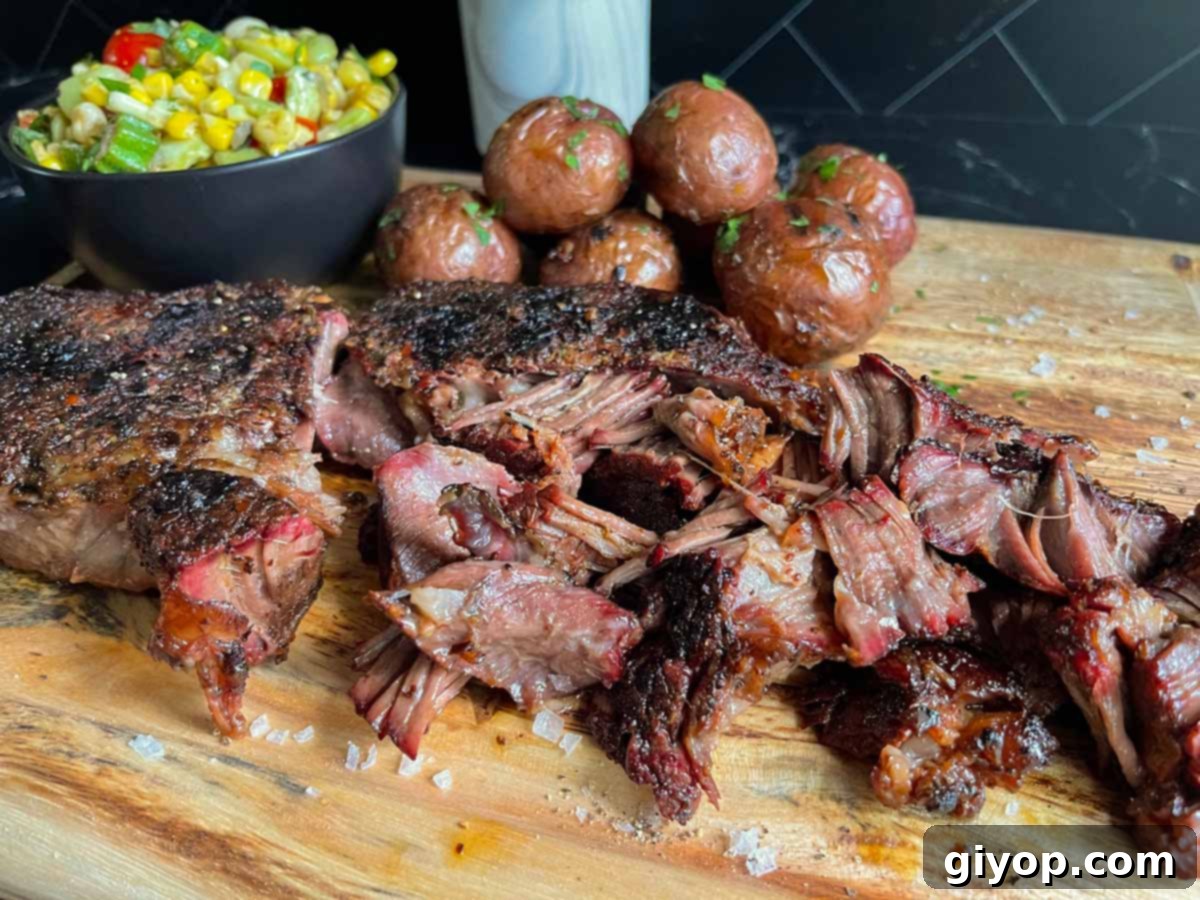
Mastering the Smoked Chuck Roast: Your Guide to Tender, Flavorful BBQ Perfection
In the realm of backyard barbecue, the smoked chuck roast stands out as a true culinary triumph. Often overlooked in favor of its more famous cousin, the brisket, chuck roast offers an unparalleled experience: a profoundly beefy flavor, succulent moisture, and a melt-in-your-mouth tenderness that will have everyone reaching for seconds. Best of all, it achieves this smoky perfection in a fraction of the time and at a lower cost, making it the ideal choice for both seasoned pitmasters and enthusiastic beginners. Prepare to discover your new favorite smoked beef recipe.
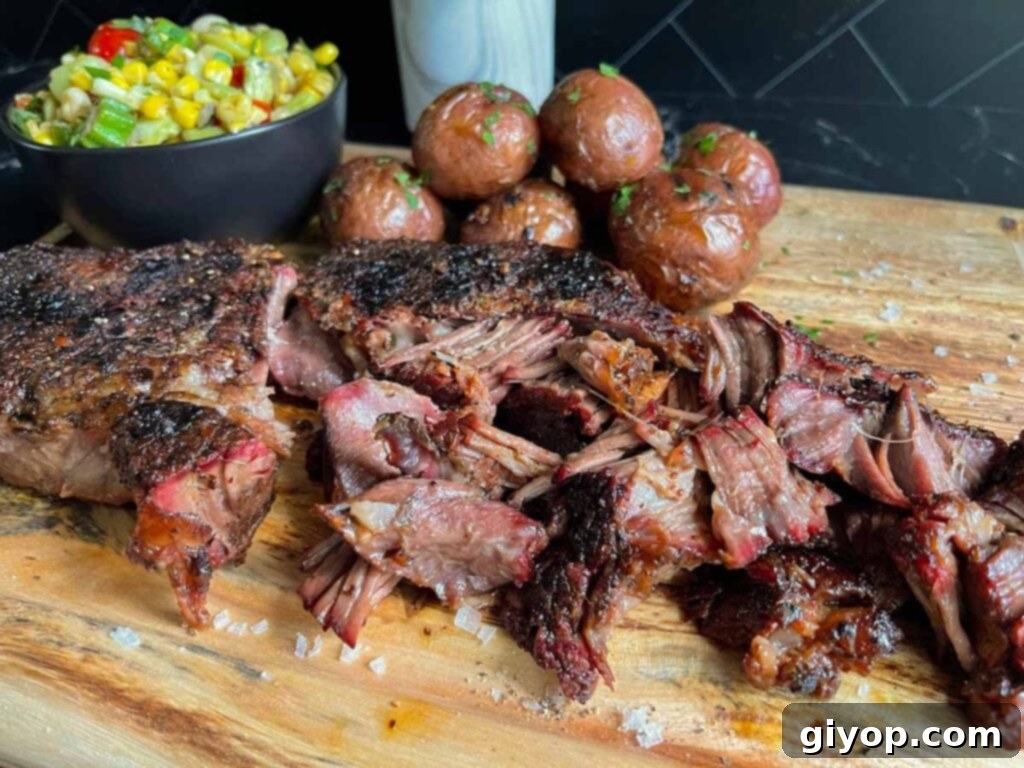
Why Smoked Chuck Roast is Your Next BBQ Obsession
When you seek that rich, deep smoked beef flavor, this recipe delivers it in spades. A properly smoked chuck roast isn’t just tender; it’s *fall-apart* tender, imbued with a pronounced smoky essence, and remarkably moist. If you’ve never experienced the magic of smoked chuck roast, prepare for a revelation. Unlike a traditional brisket that demands a 12-14 hour commitment, this succulent cut is typically ready in approximately 6 hours, making it perfect for a leisurely weekend cook without sacrificing your entire day.
This recipe is not merely a delicious meal; it’s a fantastic solution for those seeking a superb brisket substitute. Its lower cost per pound, coupled with a significantly shorter cooking time, makes it incredibly appealing. You still achieve that sought-after, unbelievably moist and flavorful smoked beef, but with far greater convenience and affordability. Imagine tossing it on the smoker in the morning and having it perfectly cooked for an afternoon barbecue, or even enjoying a well-deserved lie-in on the weekend before starting your cook for a late afternoon feast. Many a time, I’ve risen before dawn to get a pork butt or other large cut onto the smoker. While those cooks are always rewarding, there’s no denying the ease and flexibility this chuck roast recipe offers.
One of the greatest advantages of this smoked chuck roast recipe is its adaptability. Whether you own a pellet smoker, an offset smoker, or even a simple Weber charcoal grill configured for indirect heat, the techniques outlined here will yield outstanding results. While I have a particular fondness for my Masterbuilt smoker, the principles remain universal. Serve this delightful smoked beef with vibrant sides like rosemary garlic grilled baby potatoes and a refreshing fresh summer succotash, and you’ll have a backyard barbecue bonanza! For those who appreciate classic accompaniments, these BBQ baked beans are a personal favorite and come highly recommended.
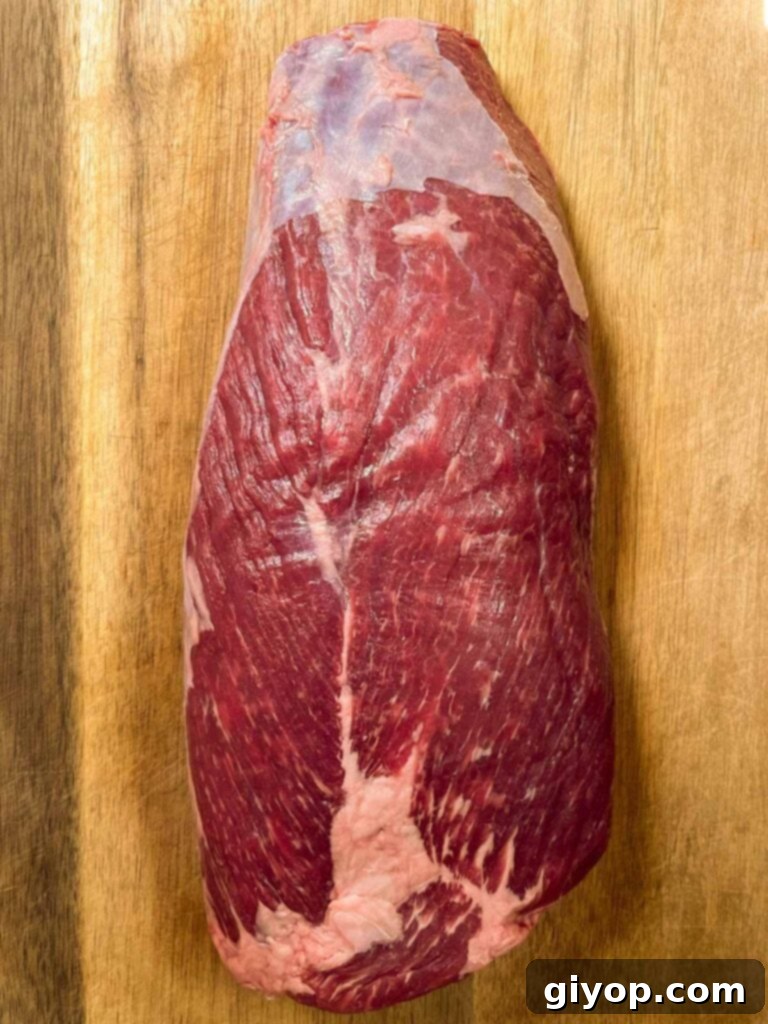
Chuck Pot Roast Versus Chuck Tender: Understanding Your Cut
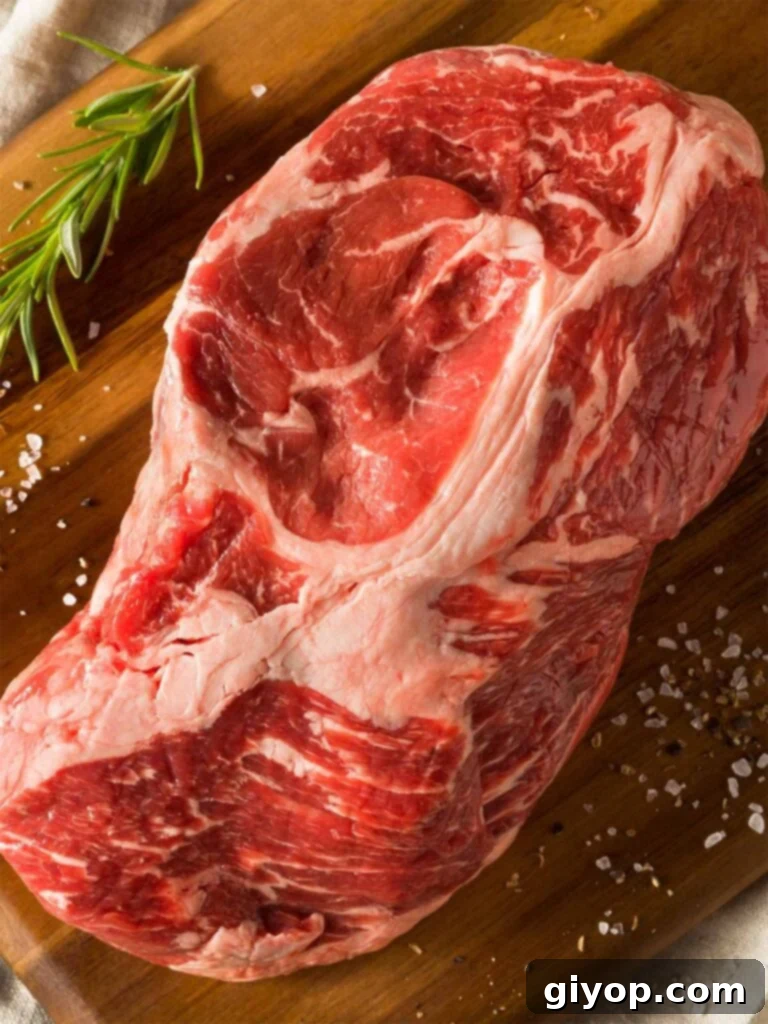
Navigating the meat section at the grocery store can sometimes be confusing, particularly when encountering cuts like “chuck tender.” While we have experimented with smoking chuck tender, and it certainly achieved a very tender texture, it consistently resulted in a drier outcome compared to the chuck roast. The key difference lies in the fat content. Chuck tender is a significantly leaner cut, meaning it contains less intramuscular fat to render down and keep the meat moist during the extended smoking process. The absence of this essential fat limits its ability to retain juiciness.
Despite being leaner, chuck tender still offers a robust flavor and remarkable tenderness, but its structure lends itself better to slicing rather than being pulled apart. I’ve personally used smoked chuck tender to create fantastic sliced meat sandwiches, often basting them with the reserved “jus” (meat drippings) from the cook to enhance moisture. However, for a truly succulent, pull-apart smoked beef experience, my strong recommendation is always the chuck roast. Its generous marbling and connective tissue break down beautifully during low-and-slow cooking, yielding that desirable moist and tender texture that makes smoked chuck roast so exceptional.
Don’t Sweat The Recipe is supported by its readers. We may earn a commission if you purchase through a link on our site. Learn more.
Essential Ingredients for Your Smoked Chuck Roast
One of the beauties of a truly great smoked chuck roast recipe is its simplicity in terms of ingredients. You don’t need a pantry full of exotic spices to achieve incredible flavor. The stars of this show are undeniably the chuck roast itself and your chosen rub.
For beef, I consistently find that a Texas-style rub, primarily consisting of coarse salt and coarse black pepper, yields the most authentic and robust flavor profile, allowing the natural beefiness to shine through. However, if you’re looking for an excellent all-around option that requires no blending, Montreal steak seasoning is a fantastic go-to. It offers a balanced blend of salt, pepper, garlic, and other spices that complement beef perfectly without overpowering it. While I enjoy crafting my own custom rubs for various meats, Montreal steak seasoning proves that sometimes, the simplest solutions are the best, saving you time without compromising on taste. For planning purposes, anticipate needing approximately two tablespoons of rub per chuck roast to ensure a thorough and flavorful coating.
- 3 lbs Chuck Roast (a quality cut with good marbling is key)
- 2 tablespoons Montreal Steak Seasoning (or your favorite beef rub – a good quality coarse grind is recommended)
- 1 tablespoon Worcestershire sauce – this acts as a binder, helping the rub adhere better to the meat, and adds an extra layer of savory depth. It’s optional but highly recommended.
As you can see, the ingredient list is wonderfully minimal. Don’t hesitate to smoke two (or more!) chuck roasts if you have the space. They are excellent for feeding a crowd and even better for enjoying delicious leftovers.
Preparing Your Chuck Roast for the Smoker
The preparation phase for your chuck roast is straightforward but crucial for maximizing flavor and ensuring the rub adheres perfectly. I always advocate for using a binder, even though it’s technically optional. A light, even coating of Worcestershire sauce, approximately one tablespoon per roast, provides a subtle tang and creates an ideal surface for your rub to cling to. It also aids in developing a beautiful bark during the smoking process.
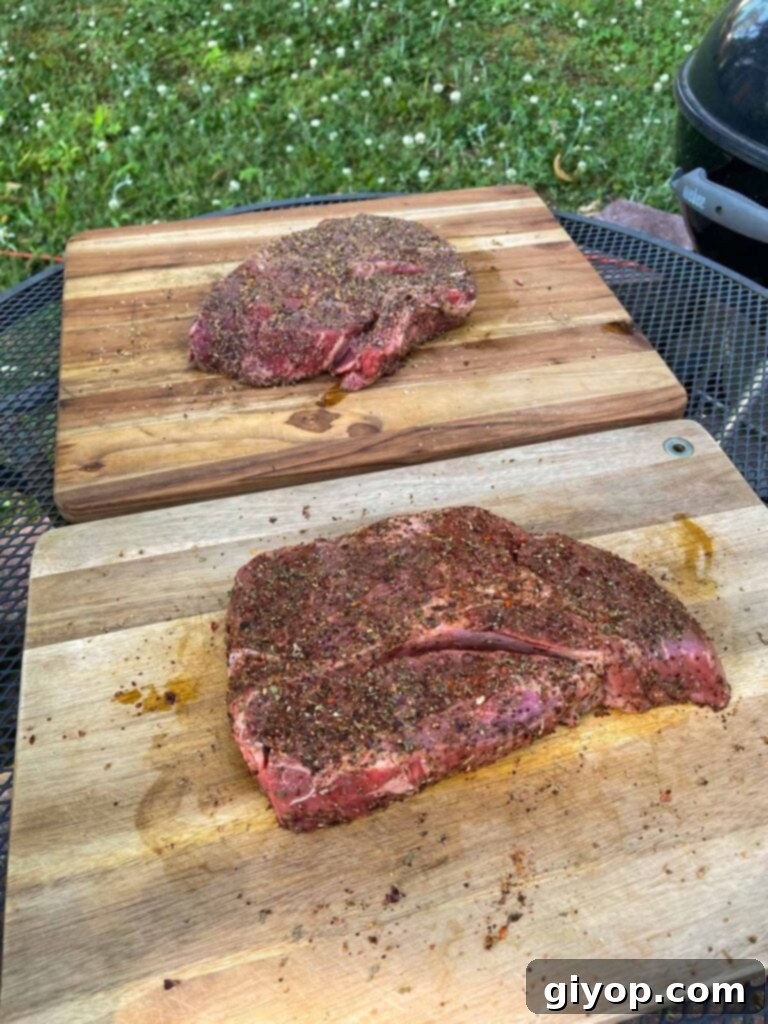
Once your binder is applied, generously season the chuck roast with your chosen rub. Don’t be shy; ensure the entire surface, including all sides and edges, is thoroughly coated. This generous application is key to developing that incredible flavor and a robust, savory bark. After applying the rub, allow the seasoned roast to rest. A minimum of one hour at room temperature allows the salt in the rub to draw out moisture from the meat, dissolve, and then reabsorb, essentially creating a “dry brine.” This process helps to tenderize the meat and enhances moisture retention during cooking. For an even deeper flavor infusion, you can apply the rub several hours in advance or even the night before, storing the seasoned roast in the refrigerator. If you choose this longer dry brine, remember to remove the chuck roast from the refrigerator about an hour before smoking to allow it to come closer to room temperature, promoting more even cooking.
The Art of Smoking a Chuck Roast: Step-by-Step Guide
The true magic of a fall-apart tender chuck roast unfolds in the smoker. While I frequently reference my Masterbuilt 1050, please remember that the fundamental techniques outlined here are universal and can be successfully applied to any type of smoker—be it a pellet smoker, an offset smoker, or even a kettle grill set up for indirect heat. The goal is consistent low-and-slow heat and robust smoke.
Begin by preheating your smoker to a stable 250 degrees Fahrenheit. The choice of wood is paramount, as it deeply influences the final flavor profile of your smoked beef. For this cook, I enjoy a blend of hickory and cherry. Hickory provides that classic, assertive smoky flavor, while cherry adds a beautiful reddish hue to the bark and a subtle sweetness. Other excellent options for beef include pecan, post oak, and even mesquite if you prefer a bolder smoke. If you’re unsure, you can never go wrong with a combination of hickory, pecan, or oak.
If you’re using a gravity-fed smoker like the Masterbuilt 1050, I typically load the hopper with a layer of charcoal, then intersperse generous chunks of hickory and cherry wood, topping it off with more charcoal. Additionally, I place a handful of wood chips directly into the ash bin to generate an extra burst of clean, flavorful smoke—a preference that significantly enhances the smokiness of the final product.
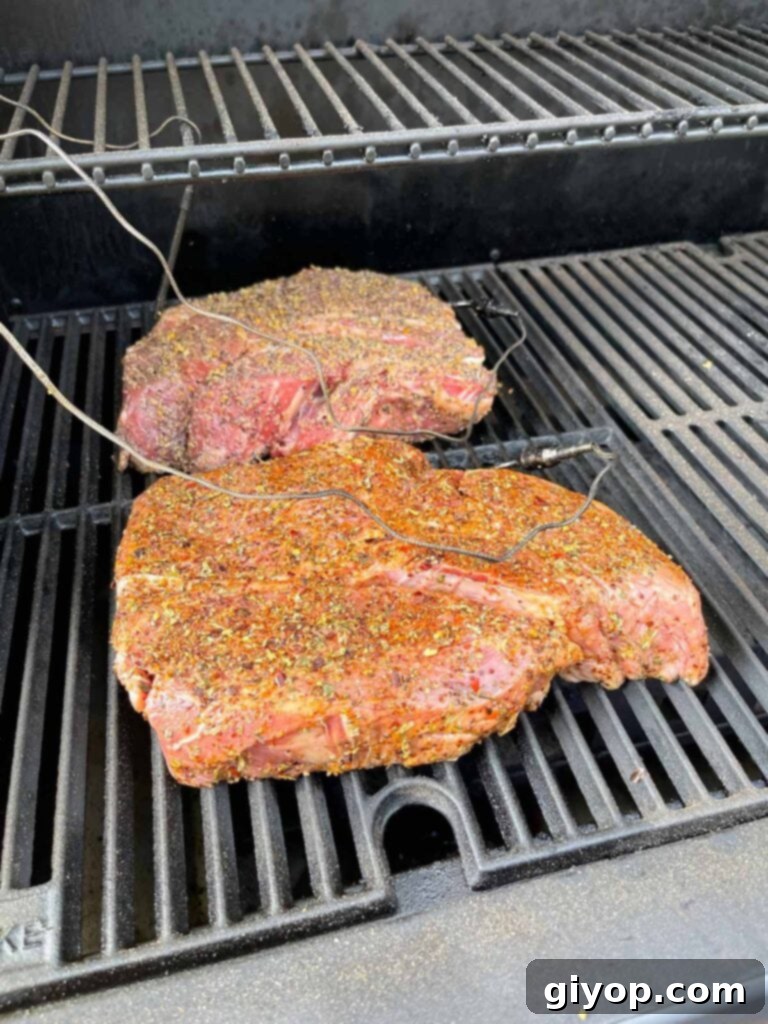
Once your smoker reaches the target temperature of 250F and is producing consistent smoke, carefully place your seasoned chuck roast(s) directly onto the grill grates. If you have a remote meat thermometer with probes, insert one into the thickest part of each roast, ensuring it doesn’t touch bone. Close the smoker and let the magic begin.
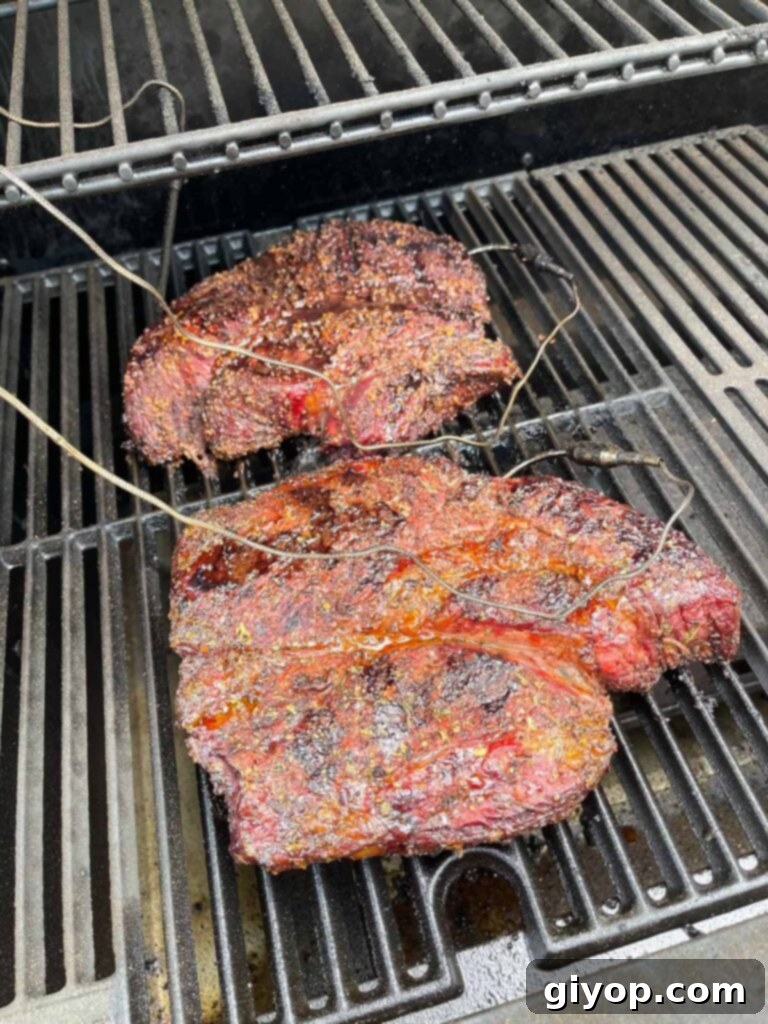
The initial smoking phase will continue until the internal temperature of the chuck roast reaches between 155 to 160 degrees Fahrenheit. This typically takes around 3 hours, but remember: always cook to temperature, not time. If you don’t have built-in probes, regularly check the internal temperature using a reliable instant-read thermometer—it’s an indispensable tool for perfect barbecue.
At this stage, you’ll notice a beautiful bark beginning to form. Carefully remove the roast(s) from the smoker. Prepare a couple of large pieces of heavy-duty aluminum foil for each roast. Place the meat onto the foil, add a few tablespoons of butter over the top (this adds moisture and richness), and wrap the roasts tightly, creating a sealed packet. Wrapping helps to push the meat through the “stall” – a period where the meat’s internal temperature plateaus due to evaporative cooling – and ensures maximum moisture retention. While aluminum foil is excellent, you can also use butcher paper if you prefer a slightly drier bark; however, be aware that butcher paper allows more evaporation, potentially extending the stall phase.
Some pitmasters like to spritz their roasts during the initial smoke, often with a 50/50 mix of apple cider vinegar and water. This can help keep the surface moist and potentially aid in bark development. While I sometimes do this, I honestly don’t find a significant difference in the final product for chuck roast, as it tends to be forgiving and naturally moist.
Return the wrapped chuck roast(s) to the smoker. Continue cooking at 250 degrees Fahrenheit until the internal temperature reaches approximately 205 degrees Fahrenheit. This phase typically takes an additional 2 hours. The goal here is to break down the connective tissues and collagen within the meat, transforming it into that incredibly tender, pull-apart texture.
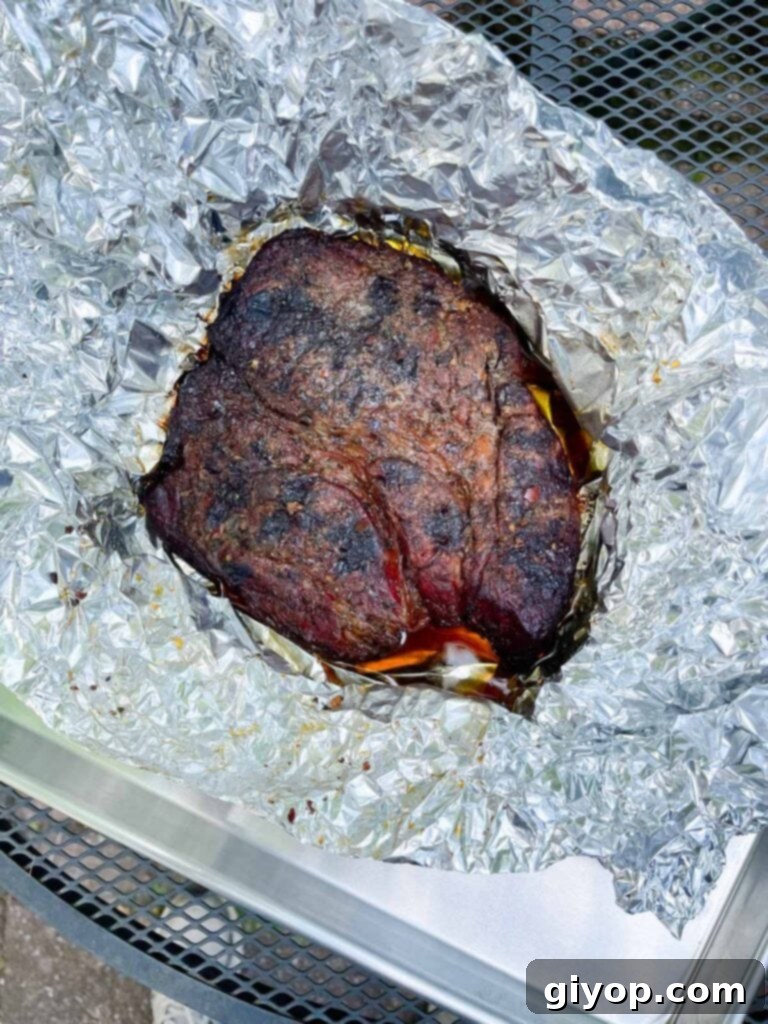
Once the chuck roast hits its target temperature, remove it from the smoker. This next step is critical: allow the roast to rest. Leave it wrapped and let it rest on your counter (or in a cooler for even longer warmth) for at least an hour, ideally ninety minutes. Resting allows the internal juices to redistribute throughout the meat, preventing them from escaping when you cut or pull it, resulting in a significantly juicier and more tender final product.
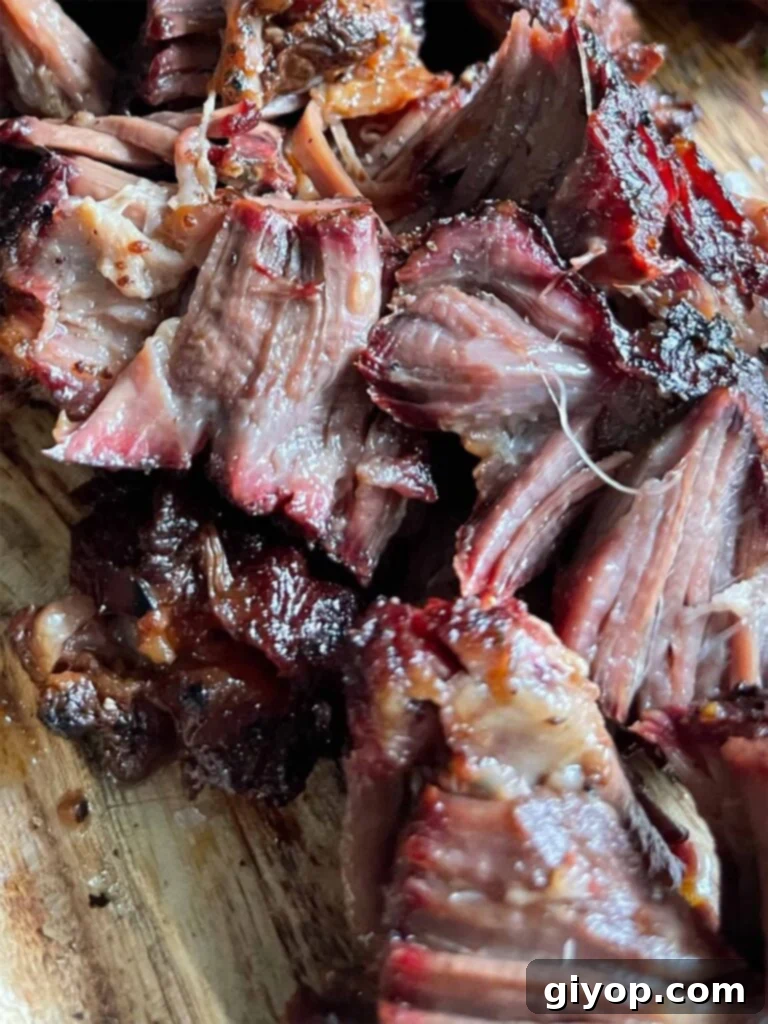
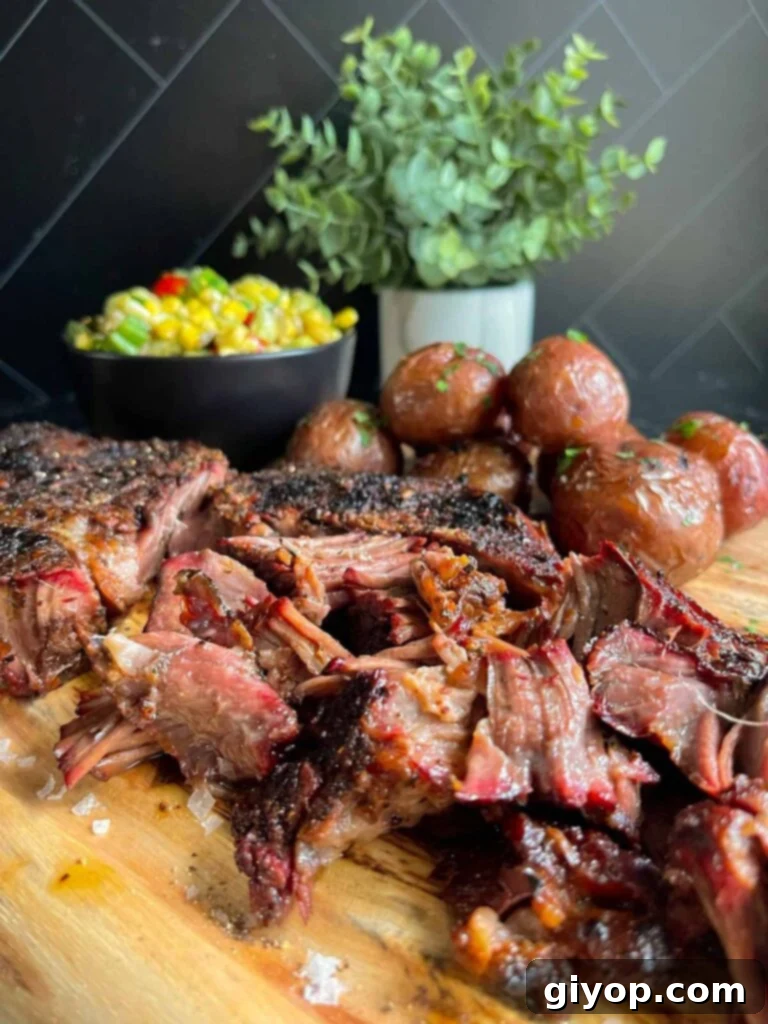
Finally, unwrap the gloriously smoked chuck roast. Using your hands (protected by heat-resistant gloves, if necessary) or a couple of sturdy serving forks, gently break apart the meat into your desired size of flavorful morsels. Serve immediately with your favorite barbecue sides and savor the incredible results of your patience and skill.
The Irresistible Appeal of Smoked Chuck Roast
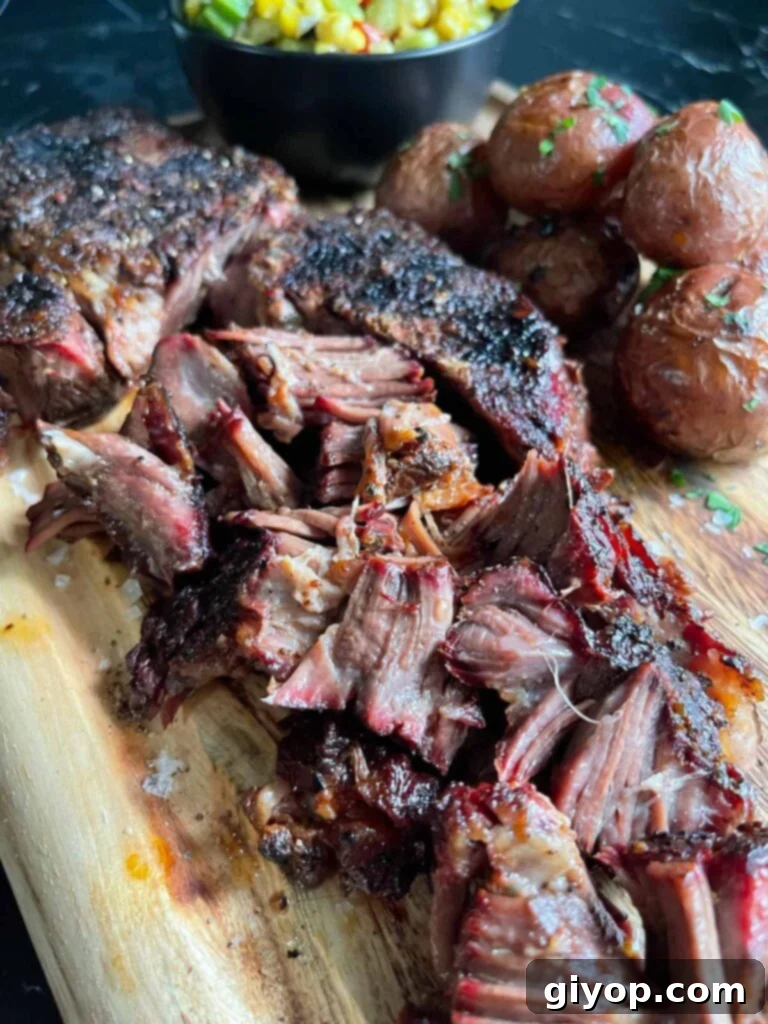
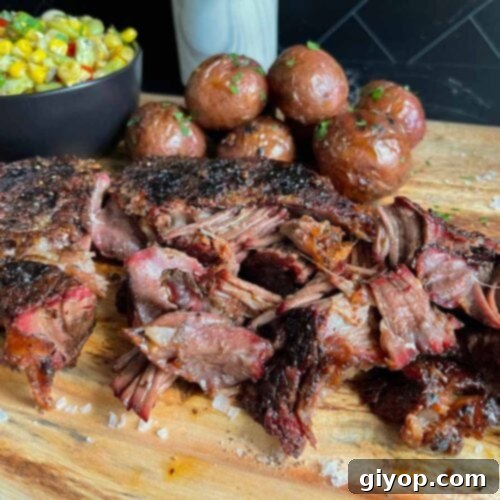
In conclusion, the smoked chuck roast is truly one of the most rewarding and straightforward barbecue experiences you can create. It consistently delivers on its promise of deliciousness and will undoubtedly impress your family and any guests you host. The meat emerges from the smoker incredibly moist, infused with an amazing smokiness, and so tender it practically melts in your mouth. The simple yet effective rub works in perfect harmony with this cut of beef, bringing all the elements together for a culinary masterpiece. Every bite showcases a beautiful bark and a pronounced smoke ring, indicating a perfectly executed cook.
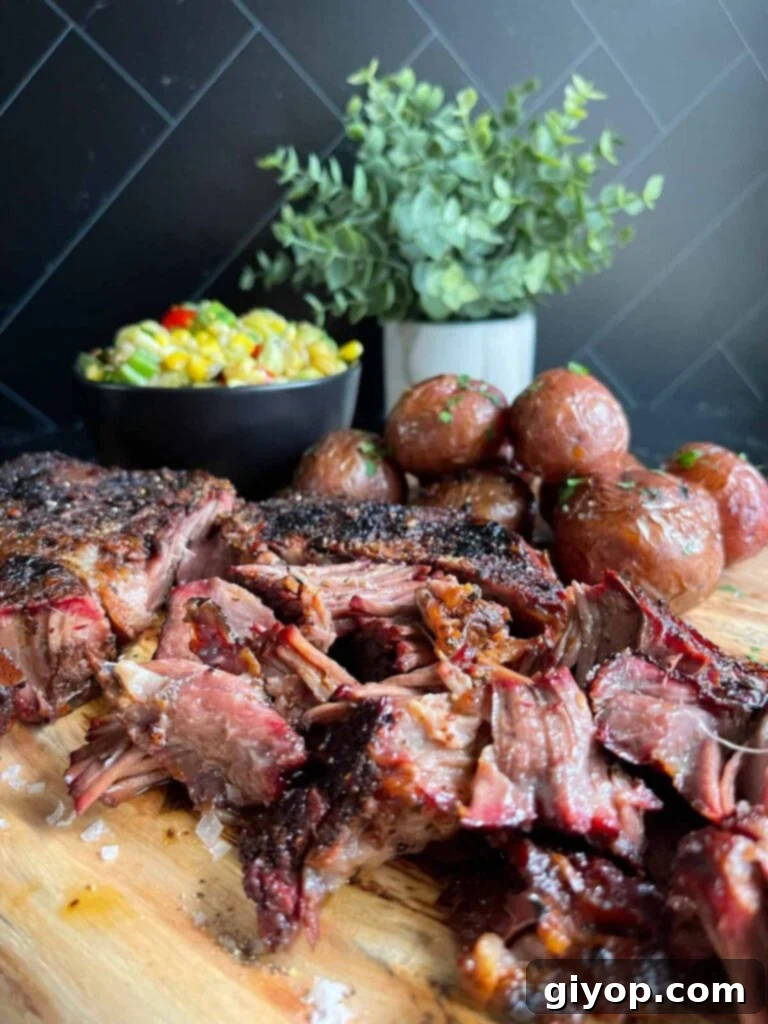
You will be absolutely thrilled with the results when you try this recipe. And we haven’t even talked about the incredible versatility of the leftovers!
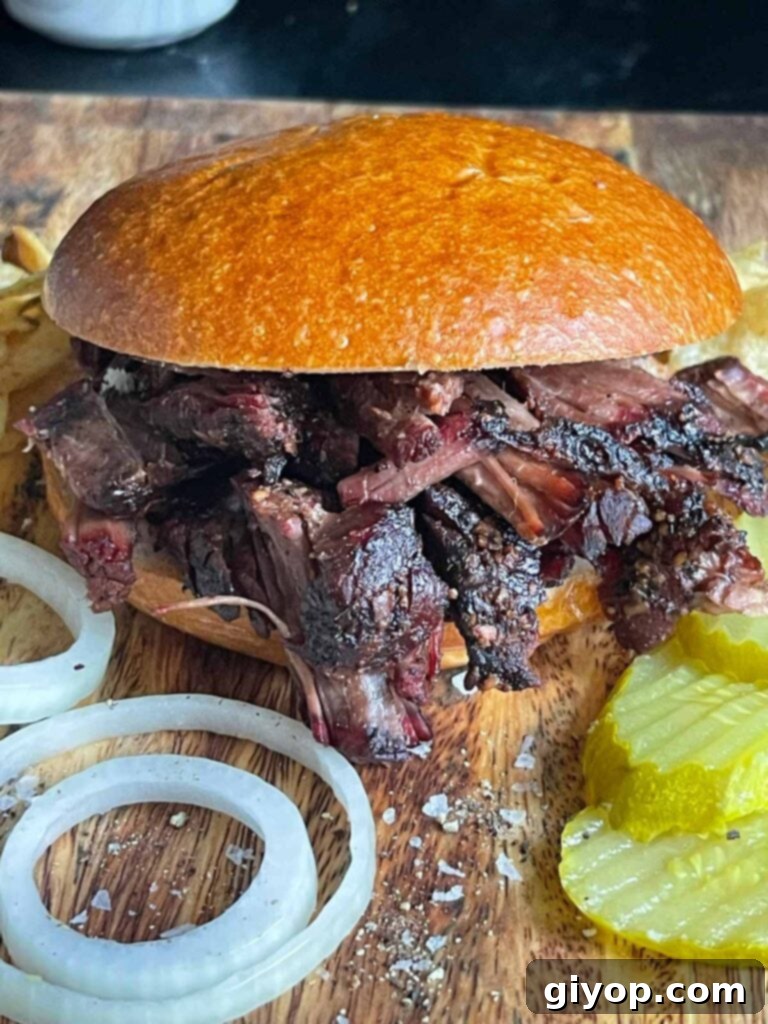
First and foremost, leftover smoked chuck roast is destined to become a heavenly pulled beef sandwich. Piled high on a bun with some crisp onion slices and tangy pickles, it’s so flavorful you might even skip the barbecue sauce! The possibilities extend far beyond sandwiches. The very next day, I transformed some of those remaining grilled potatoes, diced them up, and combined them with shredded chuck roast to create a hearty and delicious breakfast hash. Later that evening, the last remnants of the tender smoked beef found their way onto a generous plate of loaded smoked chuck roast nachos, proving just how adaptable this meat can be.
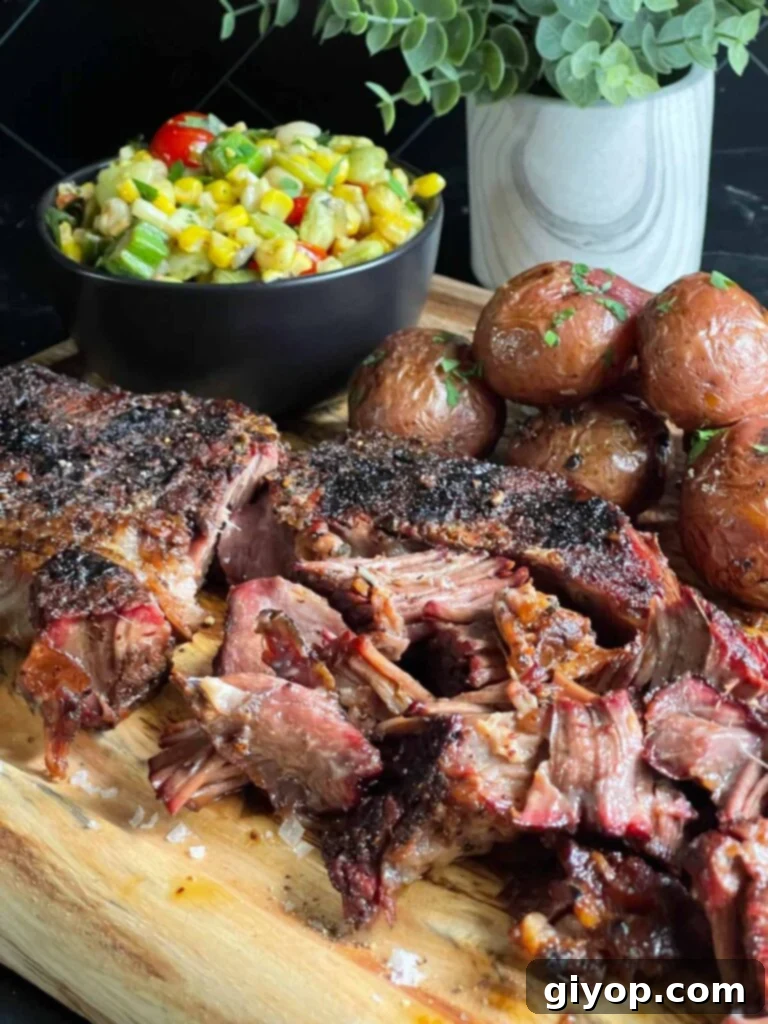
Don’t underestimate the potential for culinary creativity and pure enjoyment that this affordable cut of beef offers. Give it a whirl and elevate your barbecue game!
Expert Tips and Creative Variations
- **Customize Your Rub:** While I favor a purist approach to beef with simple salt and pepper, feel free to experiment with your favorite rubs. Sweet and spicy rubs, or those with a hint of garlic and onion powder, can create exciting new flavor profiles that pair wonderfully with chuck roast.
- **Always Cook to Temperature, Not Time:** This is the golden rule of barbecue. While approximate cooking times are provided, many factors like the actual thickness of your roast, the stability of your smoker’s temperature, and even ambient weather can affect cooking duration. Use a reliable meat thermometer to ensure perfect doneness.
- **Explore Wood Varieties:** Don’t limit yourself to one type of wood. This smoked chuck roast recipe is incredibly versatile and works well with almost any smoking wood. Try a subtle fruitwood like apple or peach for a milder smoke, or a bold wood like oak or mesquite for a more intense flavor. Blending different woods can also create unique and complex tastes.
- **Consider a Braise Post-Smoke:** For an even richer, gravy-like experience, after the initial smoke (before wrapping), you can place the chuck roast in a pan with some beef broth, onions, and garlic, then cover tightly with foil and return to the smoker (or oven) until fork-tender. This creates a “smoked pot roast” effect with incredible pan juices.
- **Serving Ideas Beyond the Plate:** Leftover pulled chuck roast is fantastic in tacos, quesadillas, sliders, chili, or even a hearty smoked beef stew. Its rich flavor base is perfect for a multitude of dishes.
Frequently Asked Questions About Smoked Chuck Roast
For a 3 lb chuck roast smoking at a temperature between 225-250 degrees Fahrenheit, you can expect it to take approximately 5 to 6 hours. However, it’s crucial to cook until the internal temperature reaches 205°F and the meat is probe-tender, rather than strictly adhering to a time limit.
Absolutely! Chuck roast is an excellent cut for smoking. Its rich marbling and connective tissues break down beautifully during the low-and-slow smoking process, resulting in incredibly flavorful, juicy, and fall-apart tender smoked beef. It’s often praised for being a faster and more affordable alternative to brisket.
“Better” is subjective and often comes down to personal preference. Smoked chuck roast boasts more marbling and connective tissue than the flat of a brisket, which can result in a more consistently tender and unctuous bite. It achieves this desirable texture in a fraction of the time required for a full brisket. Brisket offers a distinct flavor and texture, particularly the fatty “point” end. Both are fantastic, but chuck roast provides a quick, flavorful, and incredibly tender alternative.
Brining, particularly dry brining, is always an excellent idea for any meat you plan to smoke, including chuck roast. A dry brine involves liberally salting the meat and letting it rest for several hours or overnight. This process draws out moisture, which then reabsorbs, helping the proteins retain moisture during cooking and contributing to a juicier, more flavorful final product.
The ideal smoking temperature for chuck roast is typically between 225°F and 250°F. This low-and-slow approach allows the connective tissues to slowly break down into gelatin, resulting in that desired tender, pull-apart consistency without drying out the meat.
A prominent smoke ring is a hallmark of good barbecue and occurs when nitric oxide and carbon monoxide from wood smoke react with myoglobin in the meat. To achieve a good smoke ring, ensure your smoker is producing clean, thin blue smoke (not thick white smoke) and place the meat directly into the smoker while it’s still relatively cool (before it reaches 140°F internally) to maximize the chemical reaction. Maintaining proper airflow in your smoker also helps.
Other Amazing Barbeque (BBQ) Recipes
Pork Butt Burnt Ends Recipe
Double Bone-In Smoked Pork Chops
Smoked Turkey Breast Easy And Perfect
Smoked Chuck Roast Recipe
Print
Pin
Rate
Equipment
- Smoker
Ingredients
- 3 lb Chuck Roast
- 2 tbsp Montreal Steak Seasoning or preferred rub
- 1 tbsp Worcestershire sauce optional
Instructions
- Apply Worcestershire sauce over the chuck roast evenly, approximately 1 tablespoon, to act as a binder for the rub.
- Generously apply Montreal steak seasoning (or your preferred beef rub) to all surfaces of the chuck roast, ensuring complete coverage.
- Allow the seasoned roast to rest at room temperature for at least 1 hour before smoking. For deeper flavor, you can refrigerate it for several hours or overnight, then bring it to room temperature for 1 hour before cooking.
- Preheat your smoker to a stable 250 degrees Fahrenheit. Load it with your favorite smoking wood, such as a mixture of hickory and cherry, or your preferred combination.
- Once the smoker is at temperature and producing clean smoke, place the chuck roast(s) directly onto the grill grates. Insert a meat thermometer probe if desired, and close the smoker lid.
- Smoke the chuck roast until its internal temperature reaches between 155 to 160 degrees Fahrenheit. This typically takes approximately 3 hours, but rely on temperature readings rather than strict timing.
- Remove the roast(s) from the smoker. Place each piece of meat onto a couple of large sheets of aluminum foil. Add a few tablespoons of butter over the roast, then wrap the roasts tightly in the foil to create a sealed packet.
- Return the wrapped chuck roast(s) to the smoker and continue cooking until the internal temperature reaches approximately 205 degrees Fahrenheit. This final phase usually takes about 2 additional hours.
- Once the target temperature is achieved, remove the chuck roast(s) from the smoker (still wrapped) and allow them to rest for at least an hour to ninety minutes. This crucial step ensures juicy and tender meat.
- Finally, unwrap the smoked chuck roast. Using your hands or sturdy serving forks, break the meat into tender, desired-sized pieces. Serve immediately with your preferred side dishes.
Notes
If you have leftovers, allow the meat to come down to room temperature. Store it in an air-tight container and refrigerate for up to three days. It’s excellent for sandwiches, tacos, or hash!