Embark on a delightful baking journey this holiday season with our ultimate Panettone recipe. This traditional Italian Christmas bread, famed for its rich, buttery flavor and incredibly light, airy texture, is generously studded with a vibrant mix of candied fruits. While many consider it a challenging bake, our meticulously developed recipe simplifies the process, making it accessible even for ambitious home bakers. Prepare to create a show-stopping Panettone that surpasses any store-bought version, filling your home with the irresistible aroma of festive cheer.
Panettone is more than just a sweet bread; it’s a symbol of Italian Christmas, a culinary tradition savored across generations. For many, its distinct dome shape and aromatic blend of citrus and dried fruits evoke fond memories of holiday gatherings and family feasts. However, this delightful bread wasn’t always a staple in my own Italian-American family. When I first mentioned attempting to bake Panettone to my aunts, I was met with puzzled looks and a collective, “What is that?” It became clear that if I wanted this rich tradition in my home, I’d have to forge my own path.
Without a cherished family recipe passed down through generations, my quest for the perfect Panettone began with extensive research and countless test bakes. This recipe, which I am thrilled to share with you today, is the culmination of that dedicated effort. It’s a testament to perseverance and the joy of bringing a new, delicious tradition to life in your kitchen. If you love this, be sure to try our Chocolate Orange Panettone recipe for a delightful variation!
Why You’ll Love This Homemade Panettone Recipe
There’s an undeniable magic to homemade Panettone that simply can’t be replicated by store-bought versions. Fresh from your oven, it offers unparalleled freshness and a depth of flavor that will truly impress. Imagine slicing into a soft, sweet, brioche-like bread, each bite bursting with plump dried fruits and fragrant citrus zest. Beyond its incredible taste, making Panettone can be a deeply rewarding experience, especially when you master the techniques involved.
While this recipe demands patience and a little planning, the effort is well worth it. I’ve spent countless hours refining this recipe, experimenting with various methods and ingredients, so you don’t have to. All that’s required from you is a willingness to follow the steps and embrace the process. Once you understand the rhythm of making this delightful bread, you’ll find it incredibly satisfying, and it makes for truly exceptional, heartfelt holiday gifts for friends and family.
For more festive baking inspiration, explore some of our other cherished Christmas recipes: delightful cut-out eggnog cookies, classic Italian sesame cookies, traditional Italian fig cookies, a decadent Panettone French Toast for a special breakfast, and a creamy eggnog cheesecake with a gingersnap crust.
How to Achieve a Light and Fluffy Panettone
I must admit, sharing this particular recipe comes with a slight hesitation, not because it’s difficult, but because it truly tests one’s patience and requires careful planning. This is an authentic Panettone bread recipe that unfolds over three days, a testament to the slow fermentation that builds its complex flavor and signature texture.
You’ll also discover that the Panettone dough is quite sticky and can be somewhat cumbersome to handle, especially at first. However, if you approach it with determination – as I did during my extensive testing – you too can achieve a beautifully light and fluffy Panettone. Trust me, I lost count of how many Panettones I baked and refined to get this recipe just right. There were moments when my husband suggested it was “time to put a bow on this one,” but giving up was never an option. The pursuit of the perfect, homemade Italian Christmas bread was a mission I was dedicated to completing for you.
Don’t Sweat The Recipe is supported by its readers. We may earn a commission if you purchase through a link on our site. Learn more.
Day One: Crafting the Panettone Starter (The Night Before)
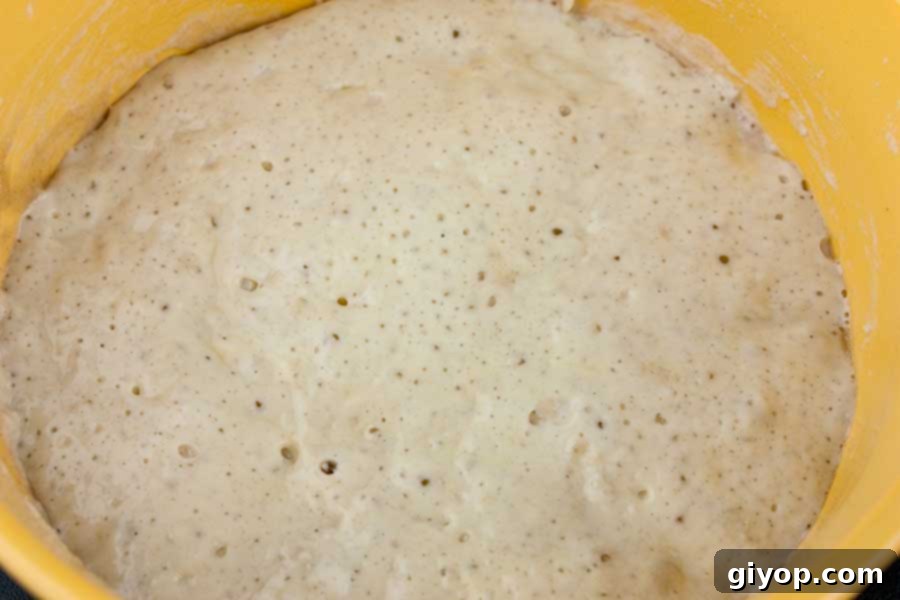
The secret to Panettone’s incredible depth of flavor and extended freshness lies in its starter. This simple, overnight pre-ferment acts as the foundation for your bread, adding a subtle tang and enhancing the overall structure. To begin, combine 3/4 cup of all-purpose flour, 1/3 cup of water, and 1/8 teaspoon of active dry yeast in a medium-sized bowl. Mix these ingredients thoroughly until a thick, somewhat wet consistency is achieved – it shouldn’t be as stiff as a dough. Once combined, cover the bowl loosely with plastic wrap and allow it to rest at room temperature overnight. This slow, overnight fermentation process is crucial for developing the starter’s activity and flavor, preparing it for the main dough.
By morning, your starter will transform, becoming wonderfully bubbly and significantly risen, indicating its readiness to infuse your Panettone with its distinctive character. This visible activity is a clear sign that the yeast is alive and well, primed to contribute to a successful bake.
Day Two: Preparing the Enriched Panettone Dough
Day two is dedicated to assembling the main Panettone dough, an enriched mixture that requires careful attention and kneading. Begin by precisely measuring your all-purpose flour into a medium-sized bowl – remember to aerate it first, then spoon it into your measuring cup and level it off. Whisk the salt into the flour, then set this mixture aside.
In the bowl of your stand mixer, proof the active dry yeast: combine 2 1/4 teaspoons of yeast with 1/4 cup of warm water (around 115°F). Allow this mixture to sit for 5-10 minutes until a frothy layer appears on top, indicating the yeast is active and ready. To this activated yeast, add the room-temperature eggs, fragrant vanilla, granulated sugar, and the bright zests of orange and lemon. Whisk these wet ingredients together until well combined, creating an aromatic base for your dough.
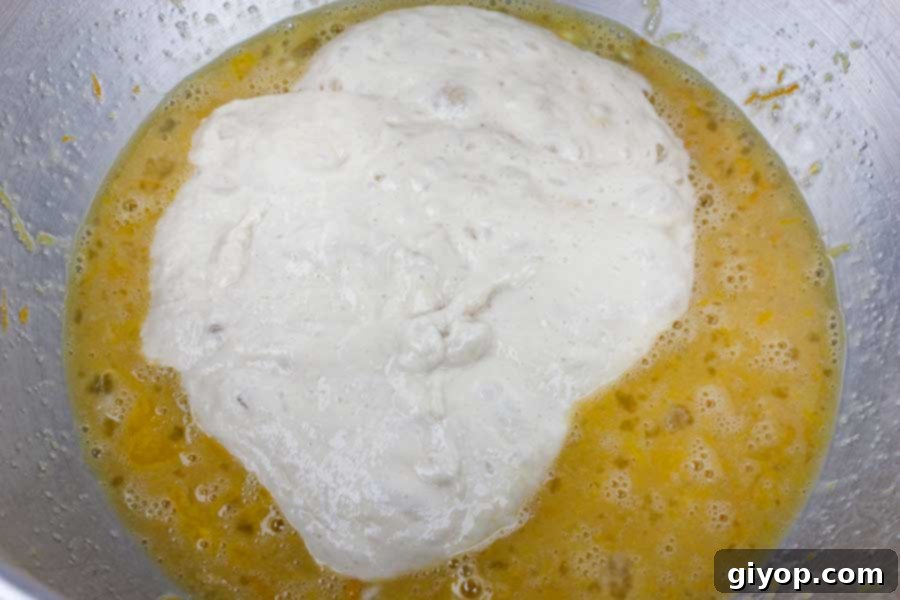
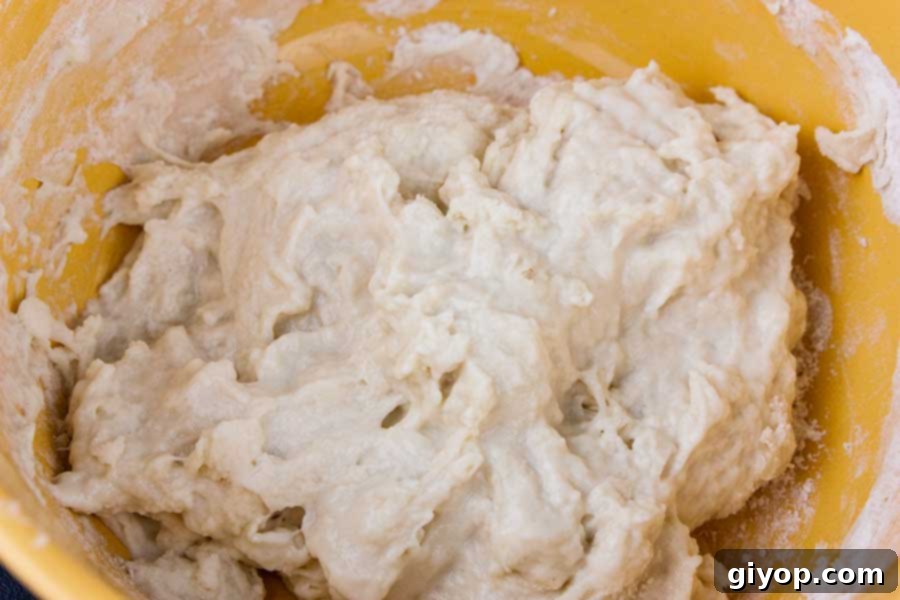
Now, add the entire starter mixture from day one and the measured flour to your stand mixer bowl. Attach the dough hook and mix on low speed until the ingredients just come together and the dough begins to pull away slightly from the sides of the bowl. Increase the mixer speed to medium and knead for 10-15 minutes, or until the dough appears smooth and elastic. Be prepared to stop the mixer occasionally and scrape down the sides to ensure all ingredients are thoroughly incorporated. It’s important to note that this enriched dough will not behave like a standard white bread dough; it will remain quite sticky and won’t completely detach from the bowl, which is perfectly normal for Panettone.
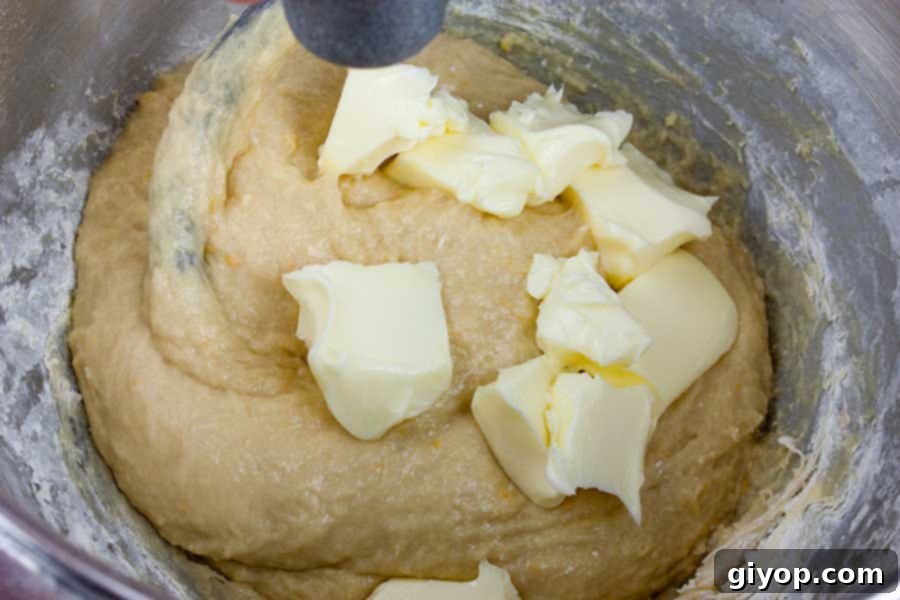
Next, incorporate the softened, room-temperature butter into the dough, continuing to knead for another 10-15 minutes. This extended kneading time is essential for the butter to be fully absorbed, enriching the dough and developing its characteristic tender crumb. Again, don’t hesitate to scrape down the sides of the bowl as needed to facilitate even mixing. The dough should now be smooth, elastic, and still quite sticky, a key characteristic for a light Panettone.
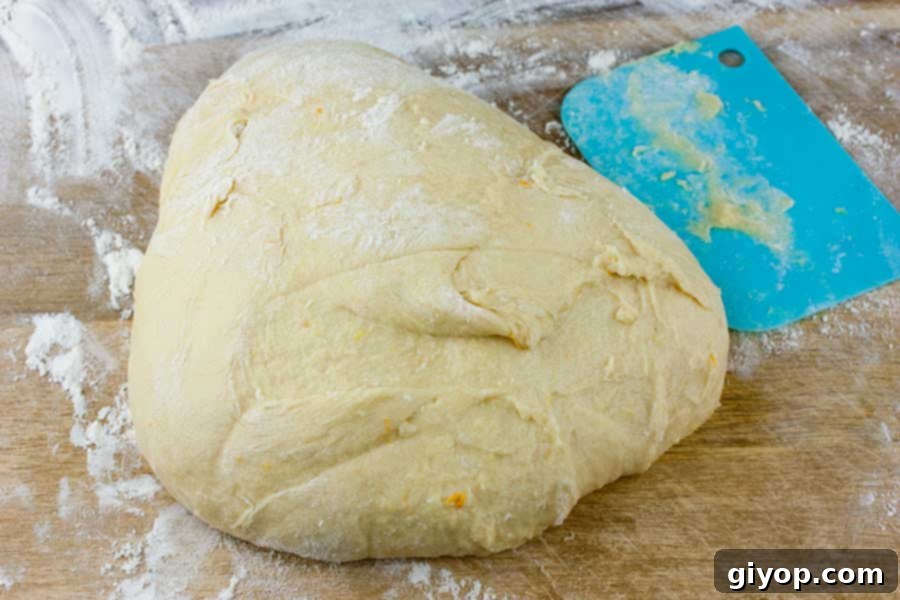
Gently scrape the sticky dough onto a lightly floured surface. At this stage, resist the urge to add excessive flour; only knead in just enough to make the dough slightly easier to handle, reducing its extreme stickiness. The less flour you incorporate here, the lighter and fluffier your finished Panettone will be. A bench scraper will prove invaluable for managing this soft dough. Remember, patience is your best friend during this process.
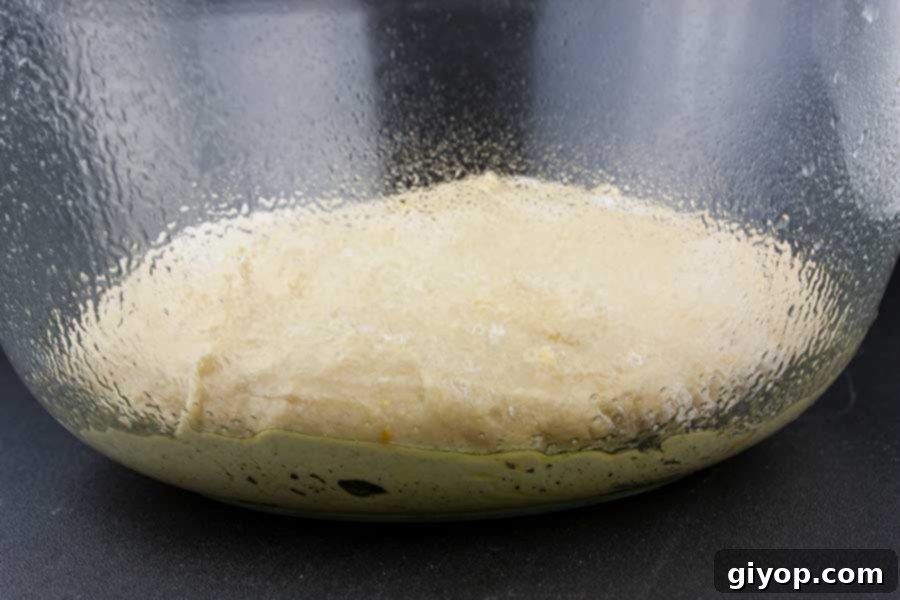
Transfer the dough to a large, oiled bowl, ensuring the top of the dough is also lightly oiled. Cover the bowl tightly with plastic wrap and allow the dough to rise in a warm spot for 3 to 4 hours, or until it has tripled in size. This first bulk fermentation is quite lengthy, so patience is absolutely paramount. Don’t rely solely on the clock; instead, observe the dough closely, moving to the next step only when it has visibly tripled.
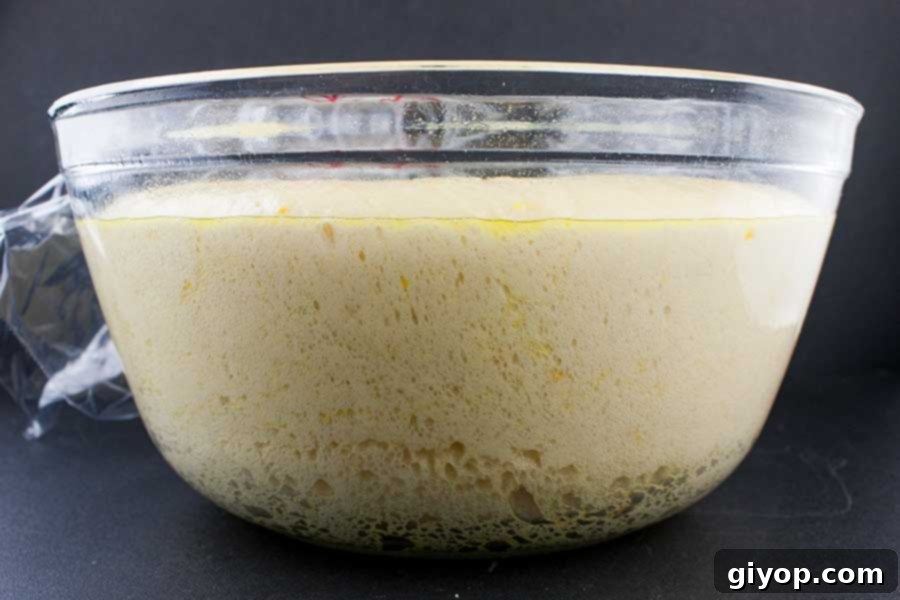
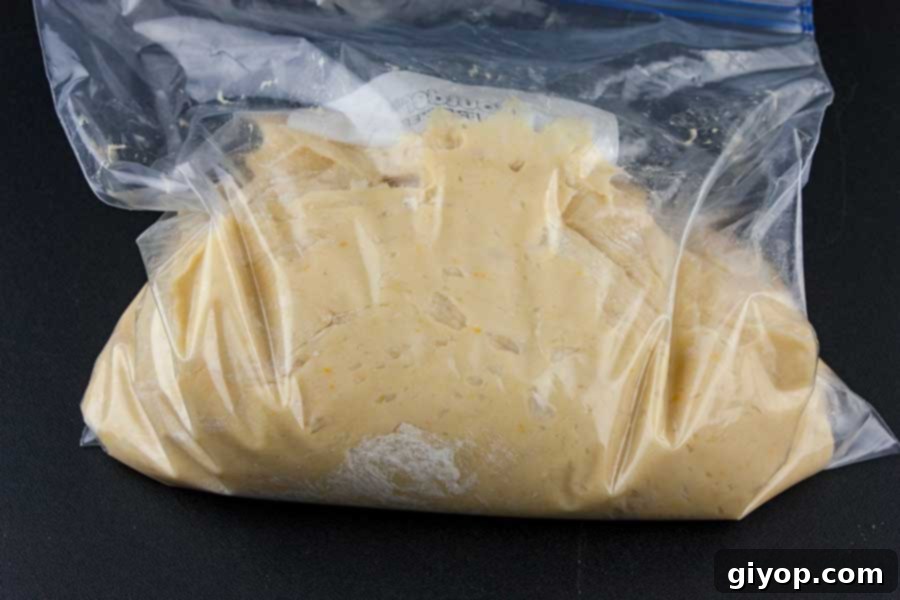
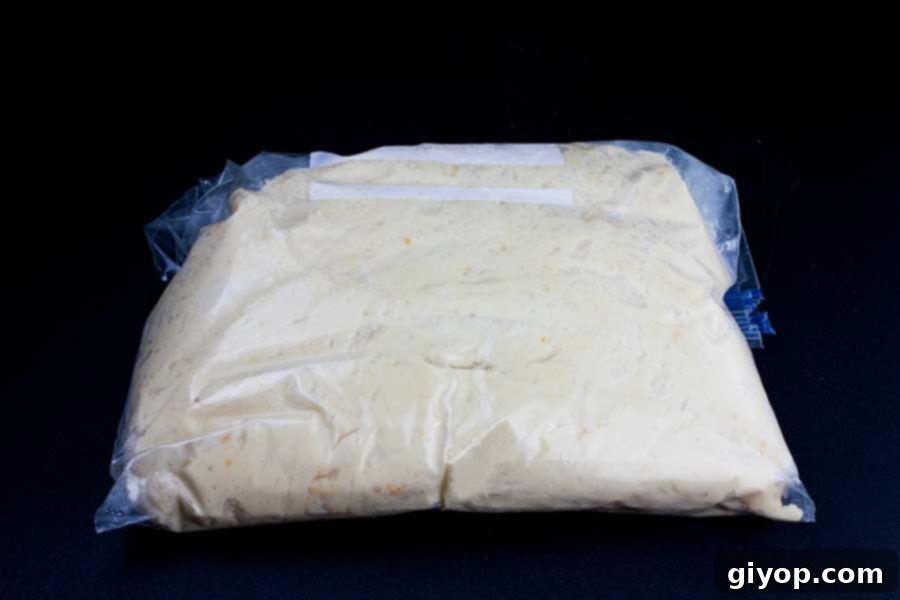
Once the dough has tripled, gently punch it down to release the air. Scrape it out onto a very lightly floured surface. Again, use minimal flour, just enough to make it slightly easier to handle. Now, transfer the dough into a one-gallon zip-top bag or another bowl covered tightly with plastic wrap. This is a crucial step: refrigerate the dough overnight. This slow, cold fermentation not only deepens the Panettone’s flavor profile but also makes the dough significantly easier to shape on day three.
Simultaneously, prepare your dried fruits: in a small bowl, combine the golden raisins, dark raisins, and candied orange peel with the orange liqueur (Grand Marnier is an excellent choice for its rich flavor). Allow the fruits to soak overnight. This infuses them with moisture and a delightful boozy flavor that complements the Panettone beautifully. I personally find the zip-top bag much more convenient for refrigerating the dough, as it takes up less space and can simply be torn open the next day for easy dough removal.
UPDATE: While developing this recipe, I successfully tested a two-day version. If time is a constraint, you can adapt the process. Make the starter early on day one, allowing it to rise for at least 6 hours until it’s visibly bubbly and active. Then, proceed with making the main dough and let it undergo its first rise for 3-4 hours. After punching it down, transfer it to a plastic zip-top bag and refrigerate overnight, or for a minimum of 12 hours. From there, continue with the remaining steps as outlined for day three.
Day Three: Shaping, Final Rise, and Baking Your Panettone
On day three, your Panettone dough, after its cold fermentation in the refrigerator, will have risen further and will possess a wonderful elasticity and enhanced flavor. This overnight chill is key to its superior texture. If you used a plastic bag, simply tear down the sides to easily remove the cold dough and place it on a very lightly floured surface. Because the dough is cold, it will be significantly easier to handle and shape, requiring minimal, if any, additional flour. In fact, I’ve successfully shaped it without any extra flour at all, yielding superb results.
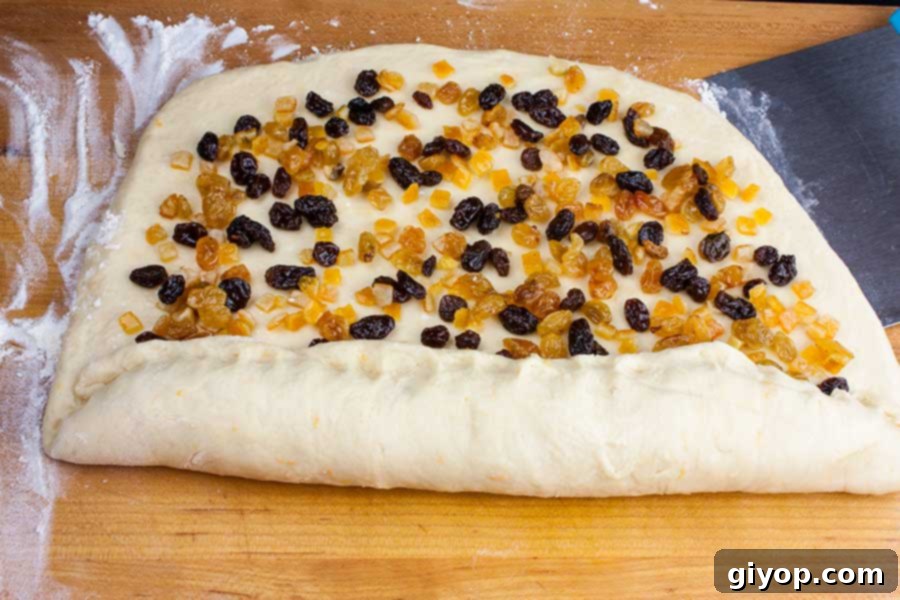
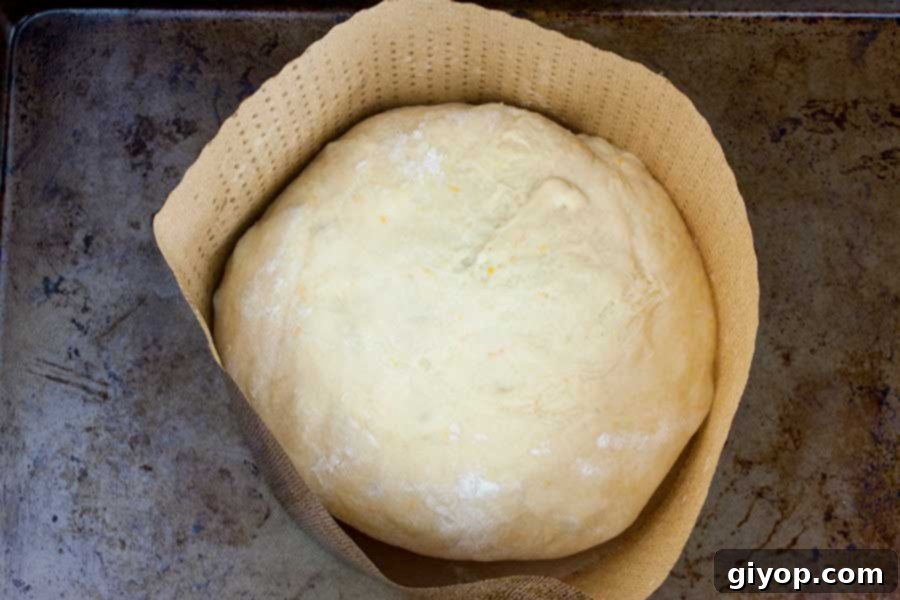
Gently press and roll the cold dough out into a rectangular shape. Drain any excess orange liqueur from your soaked fruits and evenly sprinkle the golden and dark raisins, along with the candied orange peel, over the entire surface of the dough. Carefully roll the dough up tightly into a log, then fold the ends inwards. Once rolled, gather the ends into the center and tuck the dough around itself to form a smooth, round ball, ensuring a good portion of dough remains on top to create that classic Panettone dome. Transfer this shaped dough into a greased panettone paper mold (easily found on Amazon) or a metal panettone pan, placing it on a baking sheet.
Cover the mold loosely with oiled plastic wrap and allow the dough to undergo its final rise in a warm spot. This rise will take approximately 3 to 4 hours, or until the dough has nearly reached the top of the paper mold and almost tripled in size again. Remember, since the dough is cold, this final rise will take a little longer. For optimal rising conditions, especially in a cooler home (mine typically stays between 65°-68°F), I preheat my oven to about 150°F, then turn it off and switch on the oven light. This creates a perfectly warm, draft-free environment for the dough to rise consistently. In my most recent Panettone tests, this method helped the dough rise completely in about 2.5 hours.
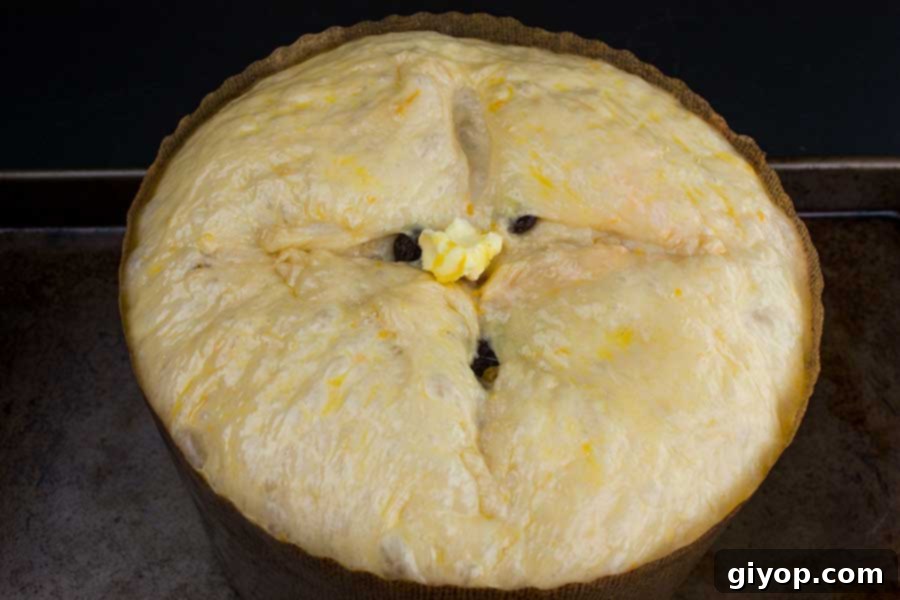
Just before the dough finishes its final rise, gently remove it from the oven (if using it for proofing) and preheat your oven to 350°F. Prepare an egg wash by whisking one large egg with one tablespoon of water. Carefully brush this egg wash over the entire surface of the risen dough. Using a very sharp knife, make a shallow “cross” cut (about 1/4 to 1/2 inch deep) into the center of the top of the dough. Place a small dab of softened butter precisely in the middle of this cross. This crucial step helps the Panettone rise properly in the oven, encouraging it to develop its iconic, beautiful dome shape and a wonderfully golden crust.
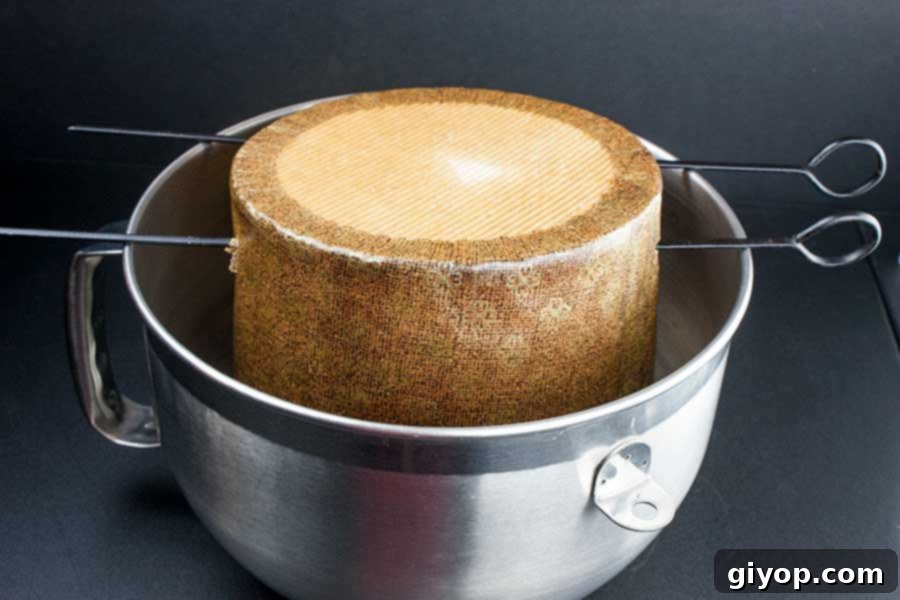
Bake the Panettone for 40-45 minutes, or until a wooden skewer inserted into the center comes out clean. Keep an eye on the browning; if the top starts to get too dark, lightly tent it with a piece of aluminum foil to prevent over-browning while allowing the inside to cook through. While your bread bakes, prepare a setup to hang it upside down for cooling. This is perhaps the most unique and critical step for Panettone, preventing it from collapsing and ensuring its light, fluffy texture is maintained. I use the deep bowl from my stand mixer, making sure it’s deep enough so the top of the bread won’t touch the bottom of the bowl when inverted. I’ve heard of people ingeniously hanging their Panettone between two chairs, but for me, the sturdy bowl offers peace of mind!
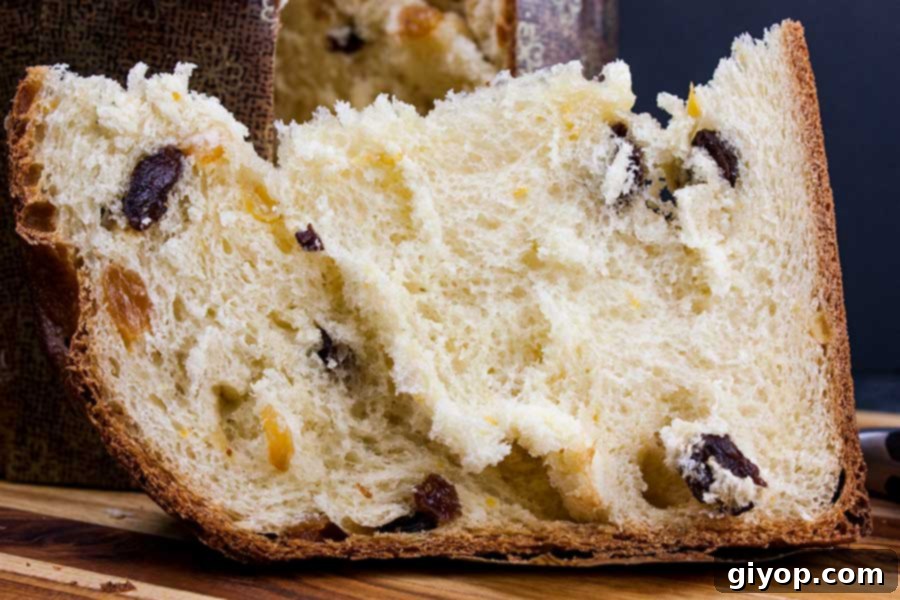
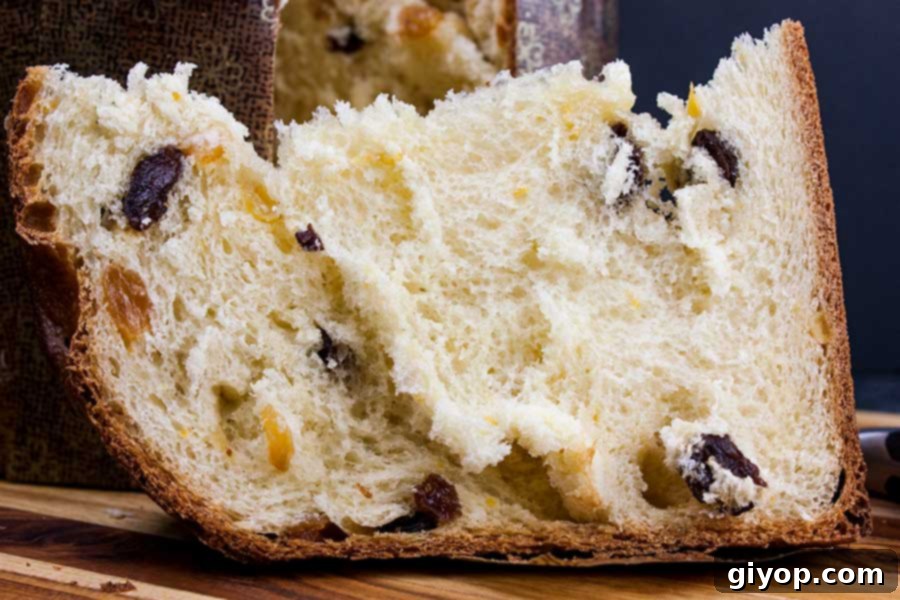
Once baked, carefully slide two long metal skewers horizontally through the bottom half of the bread, about 1 inch from its base. Then, gently invert the Panettone and suspend it from your prepared cooling setup for at least 2 hours, or until it has completely cooled. This unusual cooling method is what gives Panettone its signature tall, airy structure. Finally, slice into your magnificent creation and savor the incredible fruits of your three-day baking adventure. Just look at that beautifully light, fluffy crumb, perfectly studded with juicy raisins and delightful candied orange peel (or candied citron)!
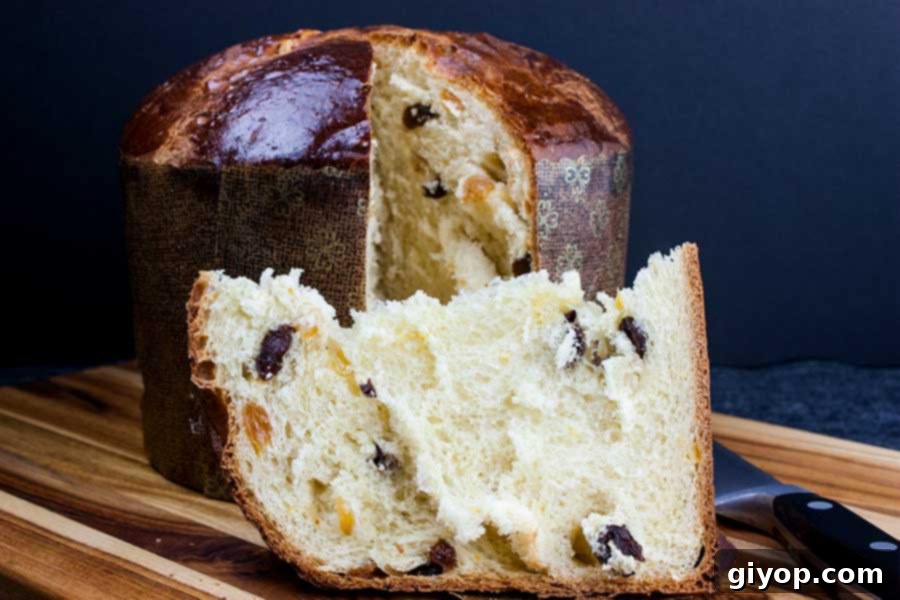
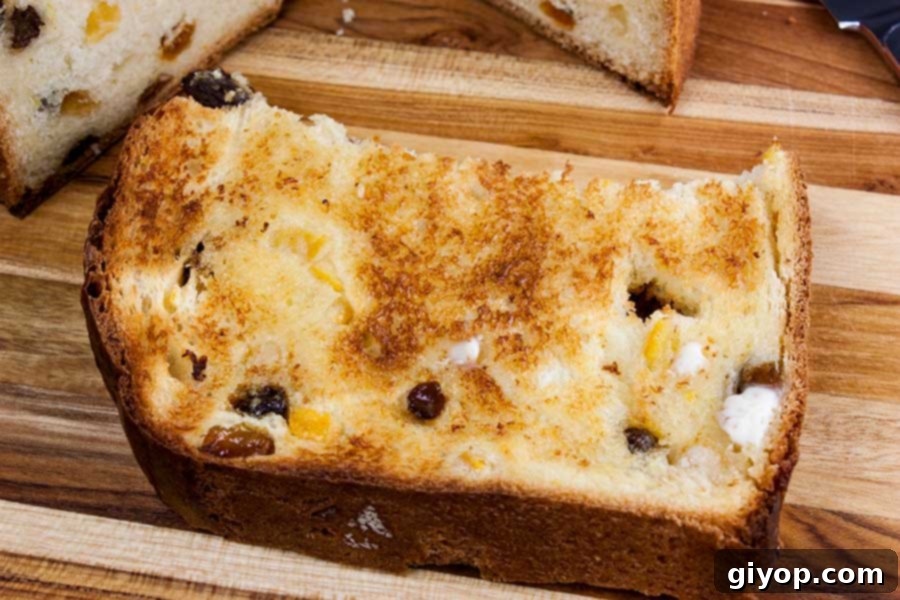
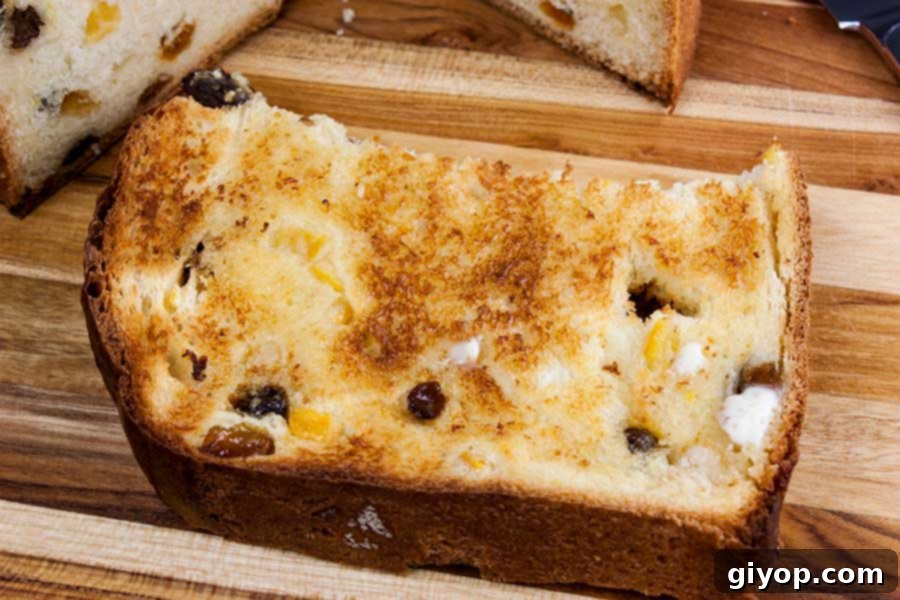
I genuinely enjoyed making this bread countless times during my testing, and while it’s a traditional Christmas bread, I doubt I can wait for just once a year to indulge. Our absolute favorite way to savor Panettone is to toast a thick slice until golden and then slather it generously with rich butter. The warmth enhances its sweetness and the butter adds an extra layer of decadence, making it a truly unforgettable treat.
Expert Baking Tips for the Best Panettone
- Starter Matters: Panettone is traditionally a long-fermented or sourdough-based bread. The starter recipe provided in the recipe card is excellent, but if you have an active sourdough starter, feel free to use it for an even deeper, more complex flavor. Both methods yield fantastic results.
- Flour Measurement is Key: Avoid adding too much flour at any stage, as this is the quickest way to end up with a dense Panettone instead of a light and airy one. Always measure your flour correctly: aerate it by fluffing it with a fork, then spoon it gently into your measuring cup and level it off with a straight edge.
- Room Temperature Ingredients: Ensure your eggs and butter are at room temperature. This allows them to incorporate smoothly and evenly into the dough, leading to a more consistent and well-developed texture.
- Quality Butter for Quality Bread: If you’re going to invest the time and effort into making homemade Panettone, use good quality European butter. Its higher fat content and superior flavor will significantly enhance the richness and texture of your finished bread.
- Cold Fermentation for Flavor: Refrigerating the dough overnight for a slow rise and fermentation truly develops a remarkable depth of flavor, adding complexity that cannot be achieved with a quicker proof.
- Sturdy Skewers for Cooling: When hanging your Panettone upside down to cool, always use long, sturdy metal skewers. I learned this the hard way during my first test bake when wooden skewers started to crack under the weight of the bread, causing a moment of panic! Metal skewers provide the necessary support to prevent collapse.
- Prevent Over-Browning: To prevent the bottom of your Panettone from browning too much during baking, consider using double pans. Simply place your baking sheet with the Panettone mold on another inverted baking sheet. If the top starts to darken too quickly, lightly tent it with aluminum foil.
- The Upside-Down Cool: Piercing the baked Panettone with two long metal skewers about 1 inch from the base and hanging it upside down is absolutely crucial. This prevents the delicate, enriched structure from collapsing under its own weight as it cools, ensuring that beautiful, tall, and fluffy crumb you worked so hard to achieve.
Delicious Panettone Variations
- Alternate Flour: Bread flour works wonderfully in this recipe, offering a slightly chewier texture due to its higher protein content.
- Custom Fruit Mix: Get creative with your dried fruits! Mix and match any combination you desire, such as cranberries, apricots, figs, or a blend of different citrus peels.
- Chocolate Indulgence: For a decadent twist, fold in some high-quality semi-sweet chocolate chips or chunks with the dried fruit.
- Sweet Topping: Before baking, sprinkle the top of the Panettone with pearl sugar for a beautiful, sparkling finish and an extra touch of sweetness.
Frequently Asked Questions About Panettone
Panettone is definitively more bread than cake. It’s an enriched, sweet bread, traditionally made with a long fermentation process and studded with raisins and other dried fruits. Its brioche-like texture is characteristic of bread, not cake.
Panettone is incredibly versatile. You can slice it into thick or thin wedges and enjoy it warm or at room temperature. A popular method is to toast a slice until lightly golden and then slather it with butter, which enhances its flavors beautifully. It’s also delicious with mascarpone cheese or a dollop of whipped cream.
Leftover Panettone is a gift that keeps on giving! It’s fantastic sliced for toast, perfect for making decadent French toast, or can be transformed into a rich and comforting bread pudding. Its unique flavor adds a special touch to these dishes.
Once your Panettone has completely cooled, wrap it tightly in plastic wrap to maintain its freshness. It can be stored at room temperature for up to 5 days, or in the refrigerator for up to a week. Keeping it airtight is key to preserving its moisture.
Yes, Panettone freezes beautifully! After it’s completely cooled, wrap the bread tightly in plastic wrap, then an additional layer of aluminum foil. It can be frozen whole or as individual slices for up to 2 months. Thaw it overnight in the refrigerator before enjoying.
More Delicious Pastry Recipes
Morning Buns
Chocolate Orange Panettone Recipe
Easy Pistachio Walnut Baklava Recipe
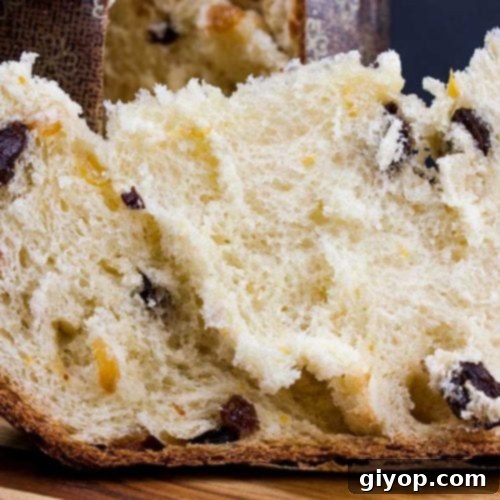
Easy Panettone Recipe (Italian Christmas Bread)
A sweet Italian bread, traditionally enjoyed during Christmas. Rich, buttery bread, light in texture and studded with a mixture of dried fruit.
Rating: 5 out of 5 stars from 4 votes
Print Recipe |
Pin Recipe |
Rate This Recipe
Cuisine: Italian
Cook Time: 45 minutes |
Total Time: 1 day 8 hours 45 minutes
Calories: 261kcal |
Author: Leigh Harris
Ingredients
For the Starter
- 3/4 cup all-purpose flour
- 1/3 cup water
- 1/8 teaspoon dry active yeast (a pinch)
For the Dough
- 1/4 cup warm water
- 2 1/4 teaspoons dry active yeast
- 3 large eggs, room temperature
- 1/2 cup granulated sugar
- 1 1/2 teaspoon vanilla
- 1 tablespoon freshly grated orange zest
- 1 tablespoon freshly grated lemon zest
- All the starter from above
- 3 cups all-purpose flour (plus more for dusting)
- 1 teaspoon salt
- 6 tablespoons unsalted butter, softened
For the Fruit
- 1/2 cup golden raisins
- 1/2 cup dark raisins
- 1/3 cup candied orange peel
- 1/4 cup orange liqueur (such as Grand Marnier)
For the Egg Wash
- 1 large egg, beaten
- 1 tablespoon water
A dab of butter for the top just before baking
Instructions
The Starter (Day One)
- Mix 3/4 cup of all-purpose flour, 1/3 cup water (or a little more to make the starter thick and somewhat wet but not like a dough consistency), and 1/8 teaspoon yeast in a medium-size bowl. Cover and let rise overnight.
The Dough (Day Two)
- Measure the flour properly (spoon and swoop) into a medium-size bowl. Whisk the salt into the flour and set aside. In the bowl of a stand mixer, proof the 2 1/4 teaspoons of yeast with the 1/4 cup of warm (115ºF) water for about 5-10 minutes until frothy on top. Add the eggs, vanilla, sugar, and orange and lemon zest to the yeast mixture and whisk together.
- Add the starter and flour, attach the dough hook and mix until it comes together and starts pulling away from the bowl slightly. Turn the mixer to medium speed and knead for 10-15 minutes or until smooth and elastic. You may need to stop the mixer and scrape down the sides a few times.
- Add the butter and knead for about 10-15 minutes more or until it’s fully incorporated. Again, you may need to scrape down the sides of the bowl. The dough should be smooth and elastic but will still be sticky.
- Scrape the dough out onto a lightly floured surface and knead JUST ENOUGH flour into it until it’s not EXTREMELY sticky and slightly easier to handle. The less flour you can use, the lighter and fluffier your Panettone will be once baked.
- Place the dough in a large oiled bowl. Oil the top of the dough, cover with plastic wrap, and allow to rise for 3 to 4 hours or until tripled in size. Once tripled in size, gently punch the dough down, remove the dough from the bowl to a very lightly floured surface. Again, only knead in enough flour to help you handle the dough a little easier. Place it in a one-gallon zip-top bag or another bowl covered with plastic. Place in the refrigerator overnight.
- In a medium-size bowl, marinate the dried golden raisins, dark raisins, and candied orange peel with the orange liqueur. Cover with plastic wrap, set aside, and stir occasionally.
Day Three
- Remove the dough from the refrigerator and place on a lightly floured surface. Press and roll the dough out into a rectangle. Sprinkle the marinated fruit evenly over the dough. Roll the dough up tightly into a log shape. Fold the ends into the center and fold and tuck it around to form a smooth ball. Transfer the dough into a greased Panettone mold.
- Cover with oiled plastic wrap and let rise until almost to the top of the paper mold (about 3 to 4 hours). It should almost triple in size again. Remember, the dough is cold so it will take a while to rise.
- Just before it’s completely risen, preheat the oven to 350ºF degrees. Brush the dough gently with the egg wash over the entire surface. With a very sharp knife, gently cut a cross on the top about 1/4-1/2″ deep and again in the other direction. Place a dab of softened butter in the center of the cross.
- Bake for 40-45 minutes or until a wooden skewer comes out clean. If it starts to brown too much, lightly tent it with a piece of aluminum foil.
- While the bread is baking, prepare a way to hang it upside down to cool. Once baked, carefully slide two skewers through each side of the bottom of the bread. Flip it over into the prepared place to let cool for at least 2 hours.
Notes
UPDATE: While in the process of writing this post, I decided to try to make this in 2 days. It worked perfectly. So if you don’t have the time to do 3 days, make the starter early in the morning. Let it sit for at least 6 hours. It needs to be bubbly and risen.
Then make the dough and let it rise for 3-4 hours. Transfer to a plastic zip-lock bag and refrigerate overnight. Then continue with the rest of the steps.
Weigh the ingredients for more accuracy, but using the cup measurements also works. Just be sure to aerate, spoon, and swoop level.
Avoid adding too much flour; it will make the bread dense. Measure the flour correctly, aerate, spoon, and swoop level.
Using double pans when baking helps to prevent the bottom from browning too much. If it starts to brown too much, lightly tent it with a piece of aluminum foil.
Storing – Let the bread cool completely, wrap tightly in plastic wrap, and store it at room temperature for up to 5 days. Or refrigerate it for up to a week.
Freezing – Wrap completely cooled bread tightly in plastic wrap, then in aluminum foil, and freeze for up to 2 months. You can wrap it whole or wrap individual pieces. Thaw in the refrigerator overnight.
Nutrition
Serving: 15g | Calories: 261kcal | Carbohydrates: 43g | Protein: 6g | Fat: 6g | Saturated Fat: 3g | Cholesterol: 68mg | Sodium: 185mg | Potassium: 147mg | Fiber: 2g | Sugar: 14g | Vitamin A: 222IU | Vitamin C: 1mg | Calcium: 18mg | Iron: 2mg