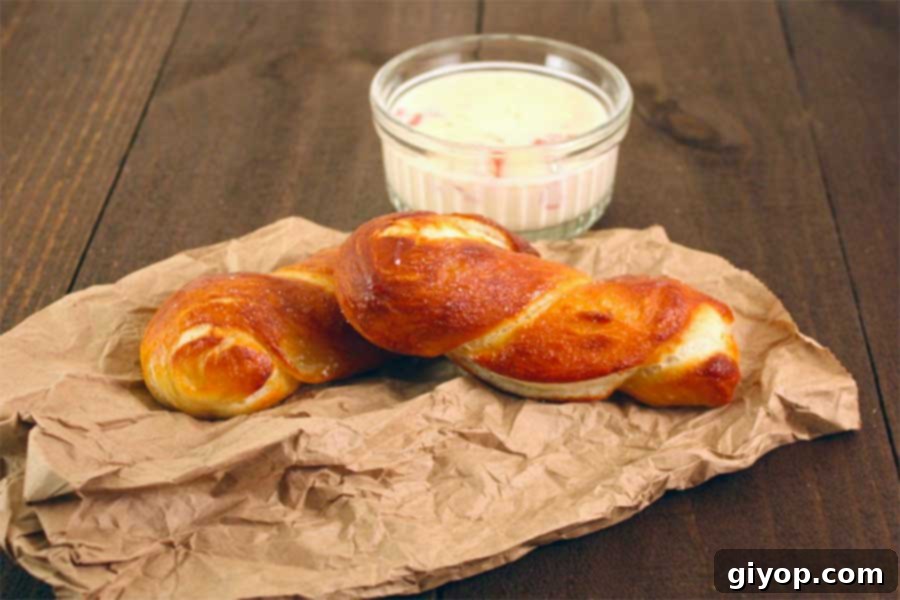
Imagine biting into a warm, soft, and impossibly chewy pretzel, perfectly seasoned with a hint of salt and a rich, buttery finish. Forget those bland, dry imitations you find elsewhere; we’re talking about the kind of pretzel dreams are made of. And guess what? Crafting these delectable delights right in your own kitchen is far simpler than you might imagine. This comprehensive guide will walk you through an incredibly easy soft pretzel recipe that promises a bakery-quality experience every single time.
There’s an undeniable joy in baking, and few things bring as much immediate satisfaction as pulling a tray of homemade soft pretzels from the oven. The aroma alone is enough to gather everyone in the kitchen! This recipe allows for complete creative freedom – you can stick to the classic pretzel knot or experiment with more playful shapes. During our testing, we experimented with a few designs and the clear winner, for both ease and deliciousness, was the twisted stick pretzel. Its elongated shape provides more surface area for that irresistible salty crust and makes dipping an absolute breeze.
The magic of a truly great soft pretzel lies in its delicate balance: a golden-brown exterior giving way to a light, airy, yet satisfyingly chewy interior, all complemented by a hint of sweetness from the brown sugar and the critical crunch of coarse sea salt. Sharing these hot-from-the-oven treats with neighbors, still warm and fragrant, often results in gasps of delight and requests for the recipe. It’s a gratifying experience that proves homemade truly is superior, and you’ll likely surprise yourself with how effortlessly you master this seemingly complex pastry.
Whether you’re planning a casual family snack, a game day spread, or simply craving a comforting treat, these homemade soft pretzels are guaranteed to impress. Get ready to transform basic pantry staples into a batch of warm, golden perfection that will have everyone reaching for more.
Essential Soft Pretzel Ingredients
Crafting the perfect soft pretzel begins with understanding the role each ingredient plays. While the list is simple, the quality and preparation of these components are key to achieving that ideal chewy texture and rich flavor.
- All-purpose flour: This forms the foundational structure of your pretzels. While bread flour can be used, it typically results in a denser, chewier interior due to its higher protein content. For the soft, fluffy, yet still delightfully chewy crumb that characterizes a classic soft pretzel, all-purpose flour is ideal. It provides the perfect balance.
- Warm water, active dry yeast, and light brown sugar: This trio is responsible for the dough’s rise. The warm water (ideally between 105-115°F or 40-46°C) activates the yeast, while the brown sugar acts as food for the yeast, encouraging it to bubble and ferment. This fermentation process produces carbon dioxide, which creates the airy pockets within the dough and gives the pretzels their characteristic texture. Light brown sugar also adds a subtle depth of flavor.
- Unsalted butter: Incorporated directly into the dough, unsalted butter enriches the flavor, contributes to a tender crumb, and adds to the overall softness of the pretzel. Using unsalted butter allows you to control the total sodium content in your recipe.
- Baking soda: This is a crucial component of the boiling bath, not the dough itself. When added to the boiling water, baking soda creates an alkaline solution. This environment is essential for achieving the pretzels’ signature deep golden-brown crust and promoting that distinct chewy texture. It reacts with the starches on the dough’s surface, accelerating the Maillard reaction during baking, which is responsible for the browning and unique flavor.
- Coarse sea salt or kosher salt: Applied liberally to the pretzels before baking, this coarse salt provides the iconic salty crunch that perfectly contrasts the soft interior. The larger crystals adhere better to the wet dough after boiling and deliver a burst of flavor with every bite.
Before you begin mixing, gather all your ingredients. This practice, known as “mise en place,” ensures a smooth and enjoyable baking process, allowing you to focus on each step without interruption.
Step-by-Step Guide: How to Make Irresistible Soft Pretzels
Follow these detailed instructions to create soft pretzels that rival your favorite bakery. Precision and patience are your best tools in achieving perfect results.
1. Activating the Yeast and Preparing the Dough Base
Begin by combining the warm water, light brown sugar, active dry yeast, and melted unsalted butter in the bowl of your stand mixer. If you don’t have a stand mixer, a large mixing bowl and a sturdy spoon will work, followed by hand kneading. Use the dough hook attachment if using a mixer, and mix on a low speed until all ingredients are well combined. It’s important that the water is warm, not hot, to avoid killing the yeast. After mixing, let the mixture sit undisturbed for about 5 minutes. During this time, the yeast will begin to activate, and you’ll observe small bubbles forming on the surface, indicating it’s alive and ready to work its magic.
2. Kneading to Perfection
Once your yeast mixture is frothy, add the sea salt (or kosher salt) and 4½ cups of all-purpose flour to the bowl. Start mixing on low speed, allowing the ingredients to come together gradually. As the dough forms, increase the speed to medium. Continue kneading for approximately 3 to 4 minutes. The goal is to achieve a smooth, elastic dough that pulls away cleanly from the sides of the bowl. This indicates proper gluten development, which is crucial for the pretzel’s chewiness. If the dough appears overly sticky or wet, add additional flour one tablespoon at a time until it reaches the desired consistency. Conversely, if it seems too dry, a tiny bit of warm water can be added. Once kneaded, remove the dough from the bowl and briefly knead it into a neat ball by hand on a lightly floured surface.
3. The First Rise: Allowing the Dough to Double
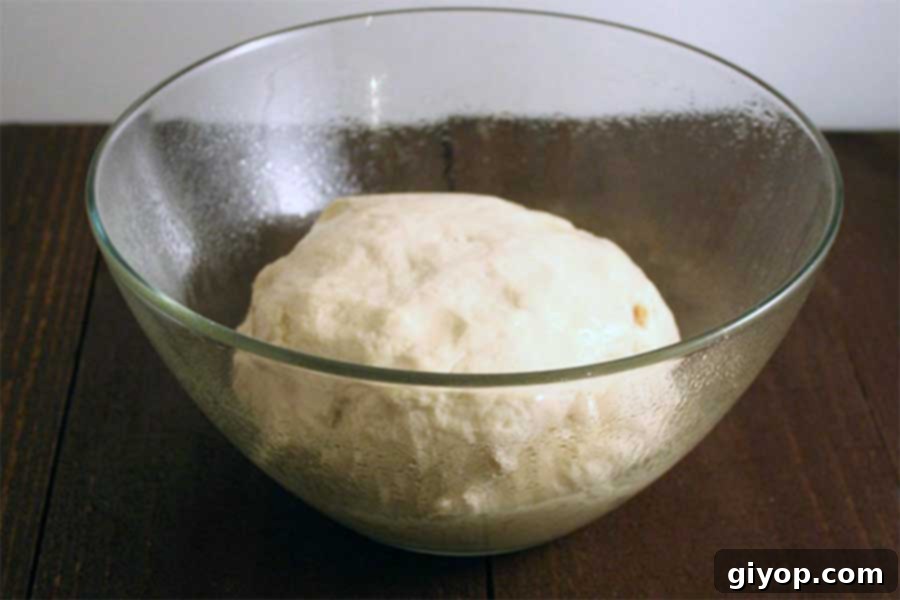
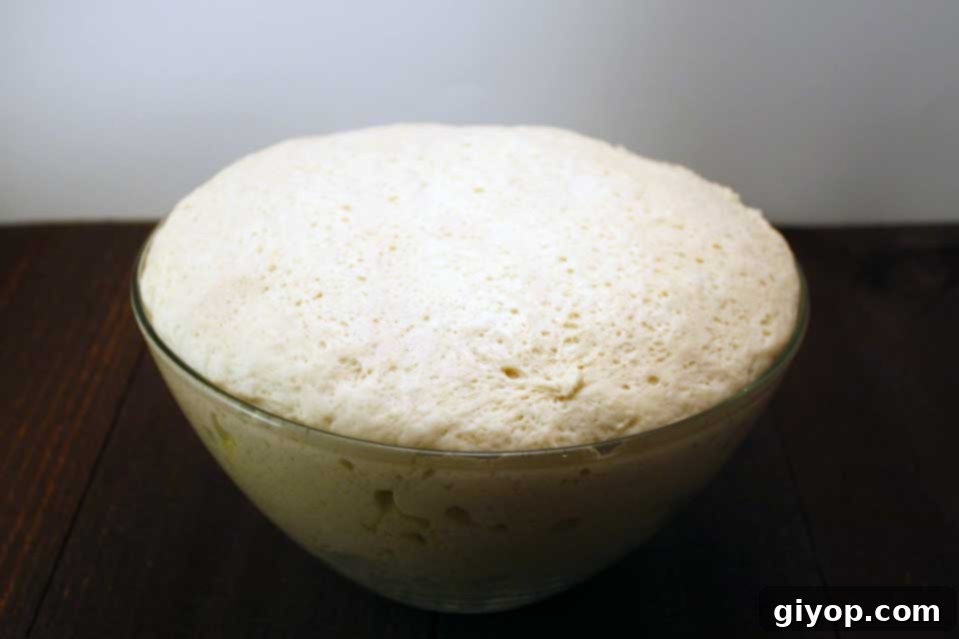
Lightly coat a large, clean bowl with canola oil. Place the dough ball into the oiled bowl, turning it once to ensure it’s fully coated with oil. This prevents the dough from sticking and drying out during the rise. Cover the bowl tightly with plastic wrap or a clean kitchen towel. Now, find a warm spot for your dough to rise. An excellent trick is to preheat your oven for just a few minutes, then turn it off, leaving the oven light on. The residual warmth and the light will create a perfectly cozy environment for the yeast. Place the covered bowl in this warm oven. The dough should double in size, which typically takes about 1 hour. A successful rise is critical for light and airy pretzels.
For many years, the art of working with bread dough felt like a daunting challenge. But this soft pretzel recipe truly demystifies the process, making it accessible and rewarding for even novice bakers. Its straightforward nature consistently yields perfect results, making you feel like a seasoned pro.
While your dough completes its first rise, it’s the perfect time to prepare for the next steps. Preheat your oven to 425°F (220°C) and begin heating a large pot of water on the stovetop. Ensure you have two large baking sheets ready, lined with parchment paper. This preparation will make the subsequent steps seamless.
Mastering the Art of Pretzel Shaping
Shaping pretzels is a fun and surprisingly easy part of the process. Even if your first attempts aren’t perfect, they’ll still taste amazing!
1. Dividing and Rolling the Dough Ropes
Once the dough has risen, gently punch it down to release the air. Transfer the dough to a clean, lightly floured surface. Divide the dough into 8 equal pieces. For consistent baking and appearance, try to make these pieces as uniform in size as possible. Take each piece and roll it out into a long, thin rope, approximately 20-24 inches (50-60 cm) in length and about ½ to ¾ inch (1.25-1.9 cm) in thickness. The key is to maintain an even thickness throughout the rope, as this will ensure even cooking.
2. Creating the Classic Pretzel Knot
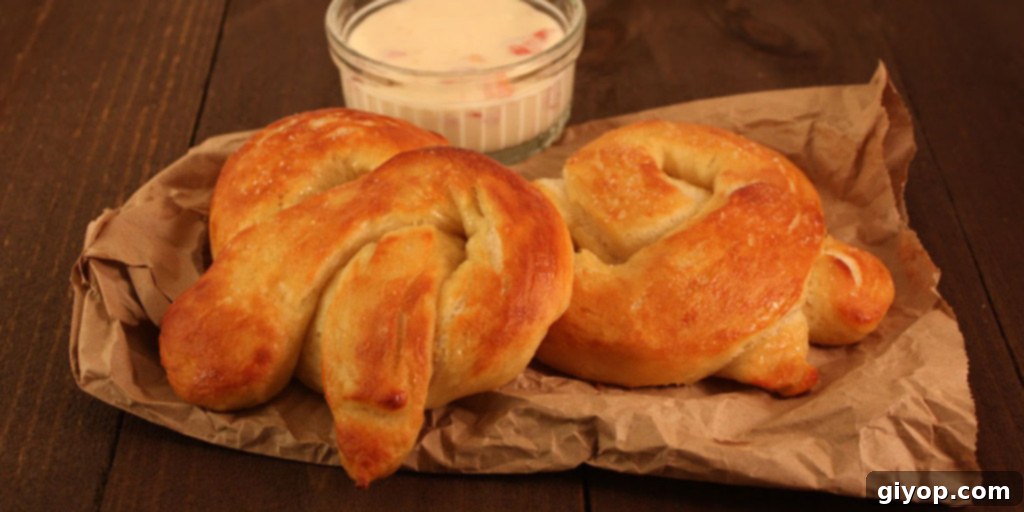
To form the traditional pretzel shape, lay one dough rope flat. Take the right end of the rope and cross it over the left end. Then, cross the right end over the left again, creating a twisted loop at the bottom. Finally, carefully flip the ends up and press them firmly onto the top curve of the pretzel, securing the knot. This method results in the iconic pretzel shape you know and love.
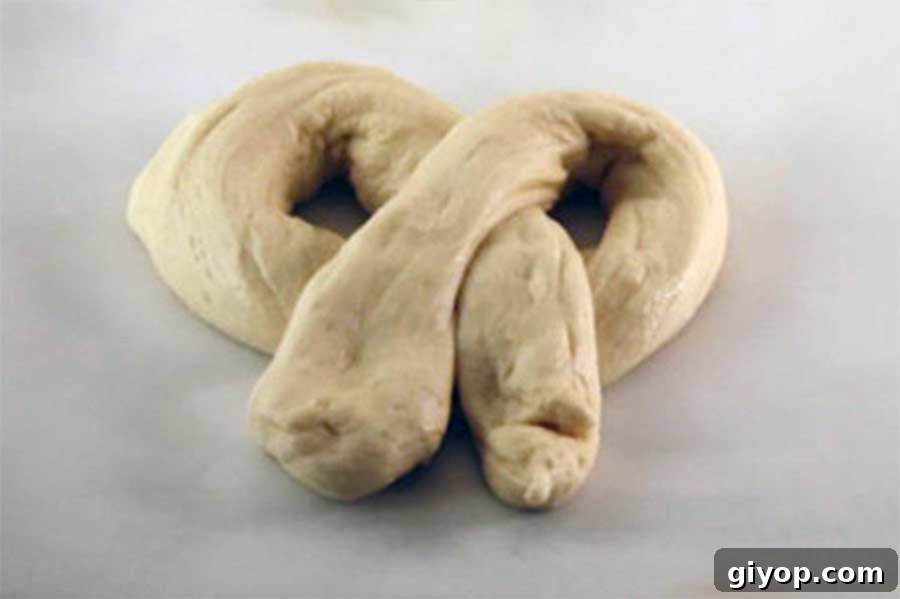
The image above illustrates the standard soft pretzel shape, a timeless classic that’s both visually appealing and satisfying to eat.
3. Simple Twisted Sticks for Easy Dipping
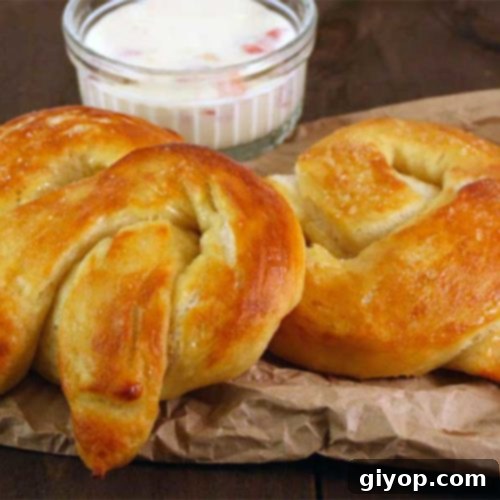
If you prefer a simpler shape or want to optimize for dipping, the twisted stick pretzel is a fantastic alternative. Simply fold a dough rope in half, then gently twist the two ends together until you reach the desired length. For the best results, aim for smaller, more manageable sticks. We once made some larger ones that ended up being a bit too cumbersome; smaller sticks bake more evenly and are more pleasant to eat. Feel free to experiment with other shapes like pretzel bites or braids for variety.
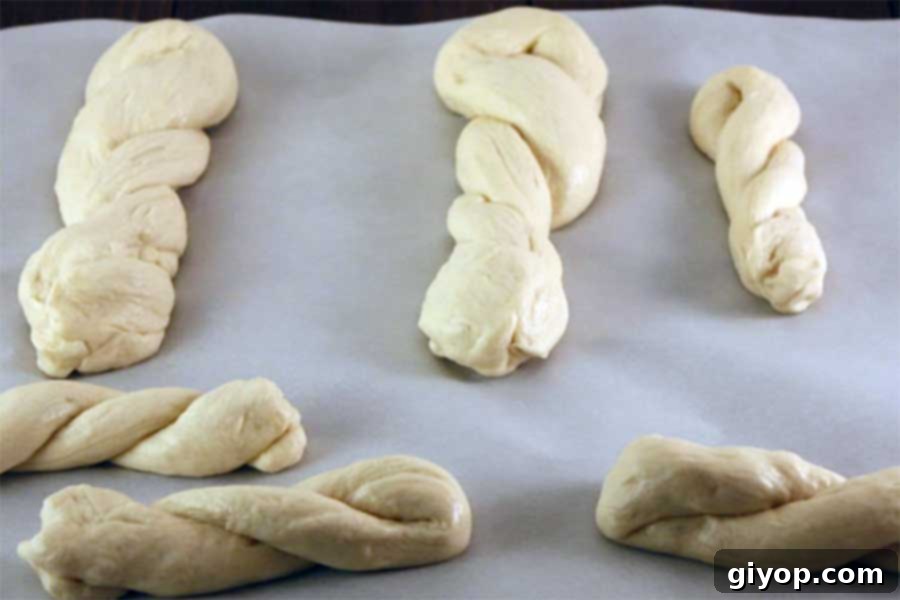
The Crucial Boiling and Baking Steps
The boiling bath is what gives pretzels their unique crust and chew, while the baking brings out their golden color and finishes their texture.
1. The Alkaline Boiling Bath
Once your water is at a rolling boil, it’s time to carefully add the baking soda. **Exercise extreme caution during this step:** slowly pour the baking soda into the boiling water. Adding it too quickly will cause a rapid, foamy overflow, creating a boiling mess. Once added, gently stir to dissolve. This creates the alkaline solution essential for the pretzels’ characteristic texture and deep browning. Place pretzels into this baking soda bath, two at a time, for exactly 30 seconds per side. Use a large spoon to splash the tops with the warm water during this brief soak. This ensures an even coating.
2. Preparing for the Oven
Using a large, flat slotted spatula, carefully remove the pretzels from the boiling bath, allowing any excess water to drip off. Place four boiled pretzels onto each prepared baking sheet, ensuring they have enough space to expand. Immediately brush the tops of each pretzel generously with melted butter. This adds flavor and helps the coarse salt adhere. Then, season them liberally with coarse sea salt or specialized pretzel salt. Don’t be shy with the salt; it’s a defining feature of a classic soft pretzel!
3. Baking to Golden Perfection
Transfer the baking sheets to your preheated oven. Bake for 15 to 18 minutes, or until the pretzels achieve a beautiful deep golden-brown color. Keep an eye on them during the last few minutes, as ovens can vary. The pretzels should look plump and have a slightly crisp exterior. Once baked, remove them from the oven and, for best texture, transfer them to a wire rack to cool slightly before serving. While delicious warm, allowing them to cool briefly helps to set their structure.
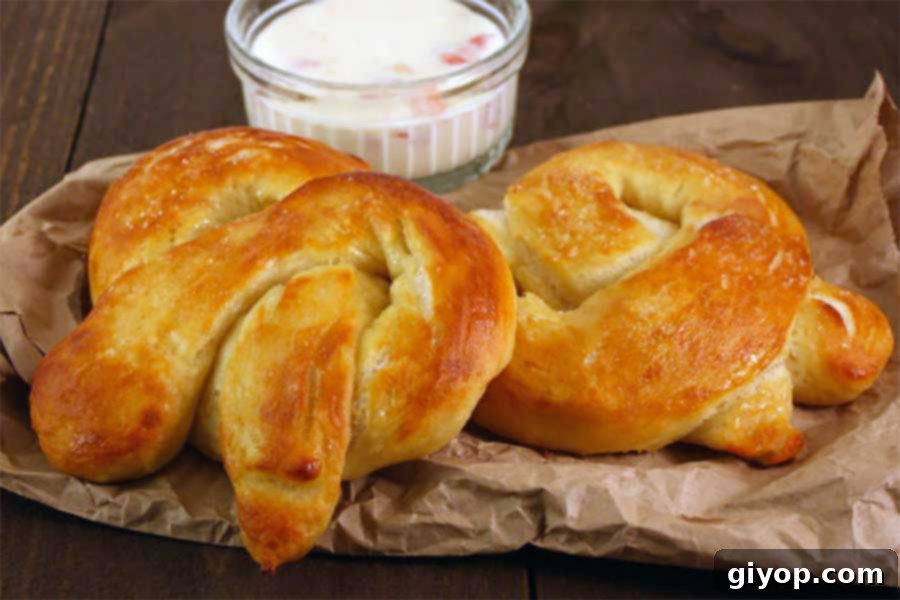
Once you taste these homemade soft pretzels, you’ll agree: this recipe delivers a soft, chewy, buttery, and slightly salty perfection that easily surpasses any chain pretzel, including Auntie Anne’s! The satisfaction of making them yourself, coupled with their incredible flavor, is simply unmatched.
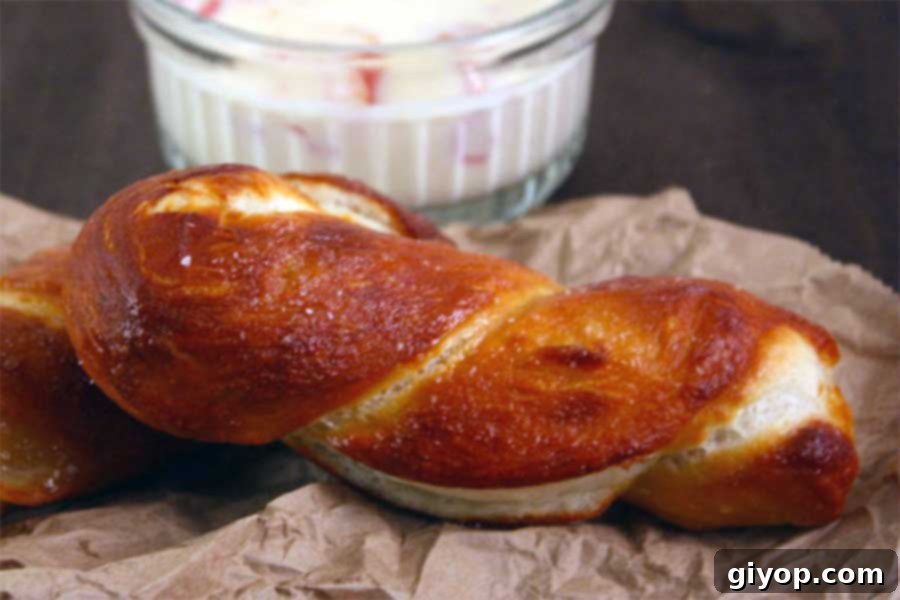
The simple cheese dip pictured, whipped up by my husband earlier in the day, proved to be the ideal accompaniment to these warm, pillowy pretzels. In fact, these delightful treats were so satisfying that they ended up being our entire dinner!
Serving Suggestions and Delicious Variations
While classic salted pretzels are delightful, this versatile recipe opens the door to numerous exciting variations, both savory and sweet.
Savory Twists
- Cheesy Pretzels: Elevate your pretzels by incorporating cheese directly into the dough. After the initial kneading, you can fold in a cup of shredded cheddar, Gruyère, or Parmesan cheese, ensuring it’s evenly distributed. For an extra cheesy crust, sprinkle additional shredded or finely grated cheese on top of the pretzels before baking. The cheese will melt and crisp up, creating an irresistible savory coating.
- Garlic Butter & Herb: Instead of plain melted butter, brush your boiled pretzels with garlic butter (melted butter infused with minced garlic and a pinch of dried parsley or oregano) before salting and baking. This adds a fragrant, savory dimension that’s perfect for garlic lovers.
- Everything Bagel Pretzels: For a trendy and flavorful twist, swap the coarse sea salt for a generous sprinkling of everything bagel seasoning before baking. The blend of sesame seeds, poppy seeds, dried garlic, and dried onion adds incredible texture and savory notes.
Sweet Indulgences
- Cinnamon Sugar Pretzels: For a dessert-like pretzel, omit the coarse sea salt. After baking, brush the warm pretzels with a generous amount of melted butter, then immediately dredge them in a mixture of granulated sugar and cinnamon (a ratio of 1/2 cup sugar to 1-2 tablespoons cinnamon works well). These are fantastic with a cream cheese glaze or simply on their own.
- Chocolate Drizzle: Once baked and cooled, melt some semi-sweet or dark chocolate and drizzle it over your sweet pretzels for an extra special treat.
Shape Shifters
- Pretzel Bites: This recipe is perfect for making bite-sized pretzels! Instead of rolling long ropes, roll the dough into thicker ropes (about 1 inch in diameter) and cut them into 1-inch pieces. Proceed with boiling, buttering, and seasoning as usual. Pretzel bites are perfect for sharing and dipping.
- Pretzel Buns: For a unique twist, you can shape the dough into small buns (about 2-3 inches in diameter) and follow the same boiling and baking process. These “pretzel buns” make excellent sliders or mini sandwich bases, adding a distinctive flavor and texture to your meals.
This recipe yields approximately 8 standard-sized pretzels, though the exact number can vary depending on the size and shape you choose to create. Feel free to adjust based on your desired portion sizes.
Frequently Asked Questions About Soft Pretzels
Here are answers to some common questions about making homemade soft pretzels:
Yes, boiling is an absolutely crucial step for making a truly authentic soft and chewy pretzel. Submerging the dough in an alkaline baking soda bath before baking creates a gelatinized surface that helps form the characteristic dark, chewy crust. Without this step, your pretzels would resemble more of a standard breadstick than a traditional soft pretzel, lacking both the desired texture and signature golden-brown color. Do not skip or shorten this essential part of the process.
Absolutely! This recipe is adaptable for making ahead. You can prepare the pretzel dough up to 1 day in advance. After the first rise, punch down the dough, wrap it tightly in plastic wrap, and store it in the refrigerator. When you’re ready to bake, let the dough come to room temperature for about 30 minutes before proceeding with shaping and boiling. For longer storage, the dough can be frozen for up to 3 months when tightly wrapped. Thaw overnight in the refrigerator before using. Baked pretzels also keep well for up to 3-4 days when stored in an airtight container or resealable bag at room temperature. For best results, gently reheat them in a toaster oven or microwave before serving.
For classic soft pretzels, coarse sea salt or kosher salt is highly recommended. Their larger crystal size not only provides a satisfying crunch but also adheres better to the pretzel’s surface after the boiling bath. Fine table salt tends to dissolve or become too salty when applied heavily. You can also find specialized “pretzel salt,” which has an even coarser, irregularly shaped crystal that is perfect for this application.
If your pretzel dough didn’t rise, the most common culprit is inactive yeast. This can happen if the water used was either too hot (killing the yeast) or too cold (inhibiting activation). Ensure your water temperature is between 105-115°F (40-46°C). Expired yeast is another common reason; always check the expiration date on your yeast package. Finally, a drafty or too-cold environment can hinder rising. Ensure your dough is in a warm, consistent spot, like a turned-off oven with the light on.
Explore More Delicious Recipes
If you enjoyed making these homemade soft pretzels, you might love trying some of our other popular recipes:
- Sausage Pretzel Bites
- Honey Mustard Pretzels
- Crispy Puff Pastry Cheese Straws
Are you on Pinterest? Save this recipe to one of your boards!
Soft Pretzels Recipe
Print Recipe
Pin Recipe
Rate this Recipe
Ingredients
- 1 1/2 cups warm water
- 2 tablespoons light brown sugar
- 1 package active dry yeast (2 1/4 teaspoons)
- 4 ounces (1 stick) unsalted butter, melted
- 1 1/2 teaspoons sea salt or kosher salt
- 5 cups all-purpose flour
- Canola oil (to grease bowl)
- 3 quarts water (for boiling bath)
- 2/3 cups baking soda
- 4 tablespoons butter, melted (for brushing, or more if desired)
- Coarse sea salt (for topping)
Instructions
- To make the soft pretzels: combine the warm water, brown sugar, active dry yeast, and 4 ounces of melted butter in the bowl of a stand mixer. Mix with the dough hook until combined, then let sit for 5 minutes until it starts to bubble, indicating yeast activation.
- Add the sea salt and 4 1/2 cups of all-purpose flour to the mixture. Mix on low speed until the ingredients are just combined. Increase the speed to medium and continue kneading until the dough is smooth and begins to pull away from the side of the bowl, which should take about 3 to 4 minutes. If the dough seems too wet, add additional flour, 1 tablespoon at a time, until the desired consistency is reached. Remove the dough from the bowl, place it on a flat surface, and knead it into a smooth ball with your hands.
- Lightly coat a large bowl with canola oil. Place the dough into the bowl, turning it to coat all sides with oil. Cover the bowl with plastic wrap or a clean towel and place it in a warm spot (like a turned-off oven with the light on) until the dough doubles in size, which typically takes about 1 hour.
- Once the dough has risen, preheat your oven to 425°F (220°C). Fill a large pot with 3 quarts of water and bring it to a rolling boil. Line two baking sheets with parchment paper.
- Remove the risen dough from the bowl and place it on a lightly floured flat surface. Divide the dough into 8 equal pieces for standard-sized pretzels.
- Roll each piece of dough into a long rope, about 20-24 inches in length. To shape into classic pretzels, take the right side of the rope and cross it over the left. Cross right to left again to create a twist, then flip the ends up and press them onto the top curve of the pretzel. For twisted sticks, simply fold the rope in half and twist the two ends together.
- Very slowly and carefully add the 2/3 cups of baking soda to the boiling water (be extremely cautious, as it can foam up rapidly). Once dissolved, gently place pretzels into the boiling solution, 2 at a time, for 30 seconds per side. Use a spoon to splash the tops with the water.
- Remove the pretzels from the boiling bath using a large, flat slotted spatula, allowing excess water to drain. Place 4 pretzels on each prepared baking sheet. Immediately brush the tops generously with 4 tablespoons of melted butter and season liberally with coarse sea salt.
- Bake for 15 to 18 minutes, or until the pretzels are beautifully golden brown and have a firm, chewy crust.
- Remove pretzels from the oven and transfer them to a wire baking rack to cool slightly. Serve warm and enjoy!