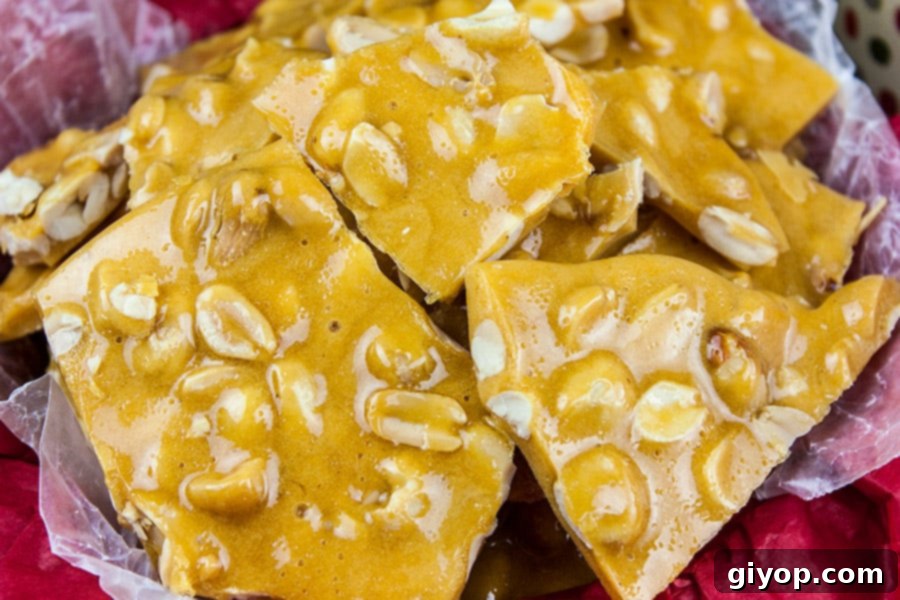
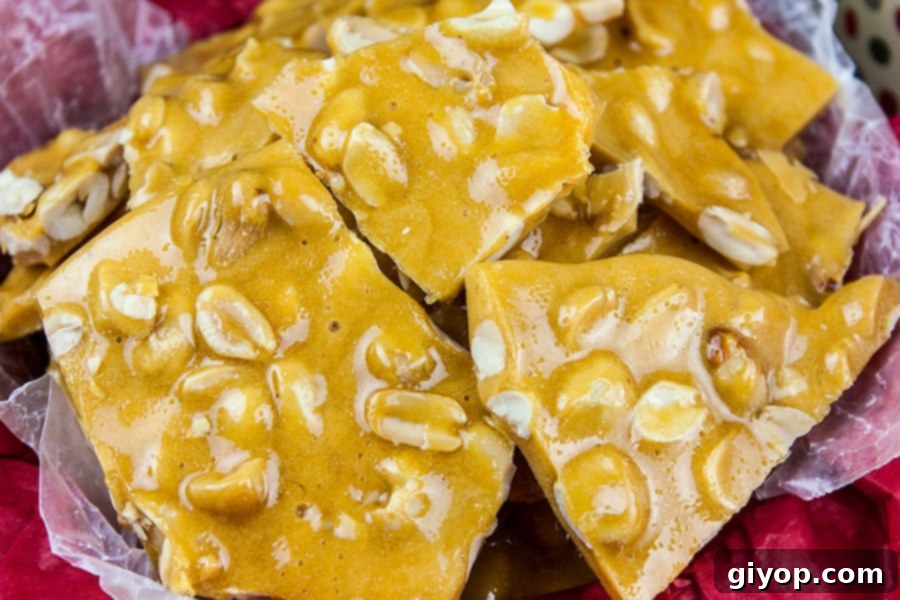
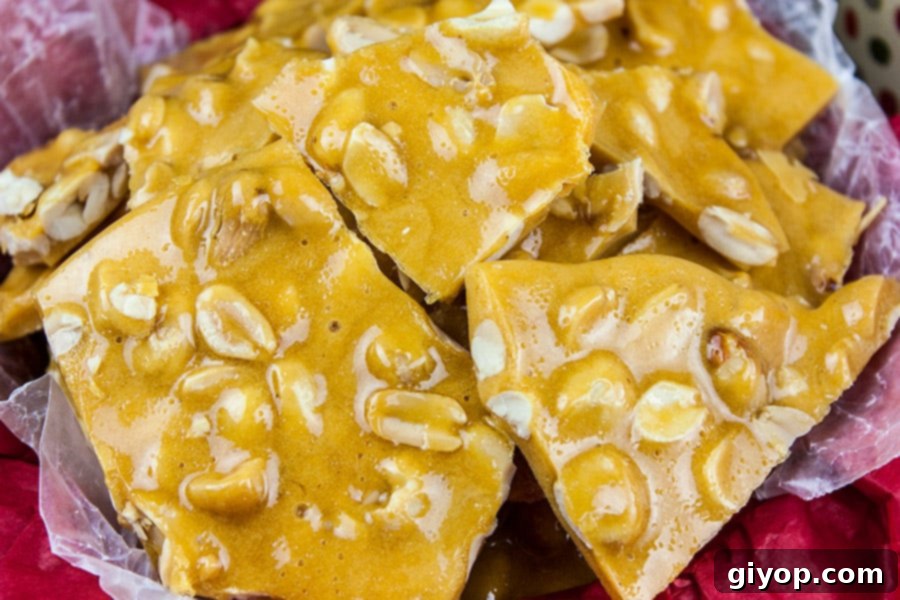
Welcome to the enchanting world of homemade candies, where tradition meets irresistible sweetness! Today, we’re diving into a cherished family treasure: my grandmother’s authentic old-fashioned peanut brittle recipe. Forget those bland, store-bought versions; this recipe delivers a truly exceptional, deliciously sweet, and wonderfully crunchy candy, generously loaded with salty peanuts. It’s a timeless treat that promises to delight your taste buds and bring back fond memories with every delightful snap.
Don’t Sweat The Recipe is supported by its readers. We may earn a commission if you purchase through a link on our site. Learn more.
Why This Old-Fashioned Peanut Brittle Recipe is a Must-Try
There’s something uniquely comforting and satisfying about a classic candy that has stood the test of time. This old-fashioned peanut brittle recipe is not just another sweet treat; it’s a culinary journey back to simpler times, delivering a rich, buttery sweetness even without a single gram of butter. Many have attempted to replicate the magic of peanut brittle with microwave methods, but nothing quite captures that authentic, deep, buttery, and classic taste like this stovetop rendition. The subtle flavors and perfect texture achieved through traditional candy-making methods are simply unparalleled.
Beyond its incredible flavor, this recipe is a true gem for several compelling reasons:
- **Effortless & Quick:** Despite its gourmet taste, this homemade peanut brittle requires only a handful of common ingredients and can be whipped up in under 30 minutes. It’s an ideal project for both novice and experienced candy makers looking for a quick yet impressive dessert.
- **Surprisingly Buttery Flavor:** You might be surprised to learn this recipe contains no butter at all! Yet, it magically transforms simple ingredients into a confection that tastes wonderfully rich and buttery-sweet, a testament to the perfect balance of sugar and corn syrup.
- **Perfectly Crisp Texture:** The signature snap and crunch of well-made peanut brittle are what set it apart. This recipe guarantees that delightful, melt-in-your-mouth crispness that every brittle enthusiast craves, ensuring it never sticks to your teeth.
- **Ideal for Gifting:** There’s no better way to show you care than with a thoughtful, handmade gift. During the holiday season, or any time of year, beautifully packaged homemade peanut brittle makes an exquisite and much-appreciated present for friends, family, neighbors, and colleagues.
- **Holiday Favorite:** For those who revel in creating delightful homemade treats to share during festive gatherings, this peanut brittle is an absolute staple. It perfectly complements other holiday classics like our flaky classic shortbread cookies, fun chocolate-covered pretzel rods, rich English toffee, and elegant maple glazed shortbread cookies.
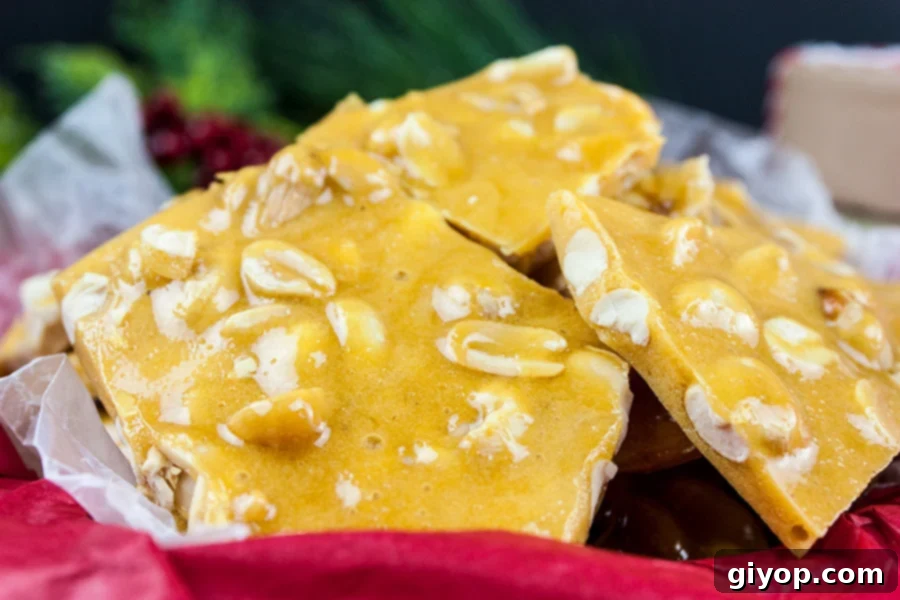
Essential Ingredients for Perfect Peanut Brittle
Crafting exceptional old-fashioned peanut brittle relies on a few simple yet crucial ingredients. Understanding the role of each component is key to achieving that signature crispy texture and rich, sweet flavor. Here’s a closer look at the stars of our show:
- Granulated Sugar: The foundation of any brittle, sugar provides the sweetness and, when cooked to the correct temperature, forms the hard, glassy candy base. For this recipe, standard white granulated sugar is all you need to achieve the perfect caramelization and crystal structure.
- Corn Syrup: This is arguably the most vital ingredient for achieving a smooth, non-gritty brittle. Corn syrup acts as an invert sugar, preventing the granulated sugar from crystallizing too quickly and ensuring a consistently smooth and pliable (before it hardens) candy. It contributes to the glossy finish and helps maintain the brittle’s stability, making it less prone to cracking prematurely.
- Water: Water is essential for dissolving the sugar and corn syrup at the beginning of the cooking process. As the mixture boils, the water evaporates, concentrating the sugars and allowing them to reach the high temperatures required for the “hard crack” stage.
- Salt: A pinch of salt might seem counterintuitive in a sweet candy, but it plays a critical role. Salt enhances all the other flavors, especially the sweetness and the nutty essence of the peanuts. It also provides a delightful contrast, balancing the richness of the candy and preventing it from tasting overly sweet. For an extra pop of flavor, using slightly salty peanuts (like cocktail peanuts) can further elevate the overall taste experience.
- Peanuts: The star of the show! Peanuts provide the characteristic nutty flavor and satisfying crunch that define peanut brittle. While raw shelled peanuts were traditionally used, modern recipes often opt for roasted or cocktail peanuts for added convenience and a head start on flavor. The slight saltiness of cocktail peanuts is a fantastic addition, creating a harmonious sweet and savory profile. You can also experiment with other nuts for delightful variations.
- Baking Soda: This unassuming ingredient is the secret to brittle’s unique, airy, and delicate texture. When added to the hot caramel, baking soda reacts with the acids in the mixture, releasing tiny carbon dioxide bubbles. These bubbles get trapped within the candy as it cools and hardens, creating small pockets of air. This aeration is precisely what makes brittle light and easy to snap, distinguishing it from denser hard candies or toffee. Without baking soda, you’d end up with a much harder, chewier candy.
Crafting Authentic Old-Fashioned Peanut Brittle: A Step-by-Step Guide
Making peanut brittle at home is a rewarding experience, transforming simple ingredients into a delightful confectionery. Precision and speed are key, so make sure you have everything prepped before you start cooking. Follow these steps carefully to achieve perfectly crisp and delicious peanut brittle:
- **Preparation is Paramount:** Before you even think about lighting the stove, prepare your work surface. Line a large baking sheet pan with parchment paper. This non-stick surface is crucial for easy spreading and removal. If you prefer a more traditional approach, like my grandmother, generously butter a clean, heat-safe section of your countertop or even directly butter the baking sheet. Having your surface ready means you can move quickly once the candy reaches temperature.
- **Combine the Base Ingredients:** In a large, heavy-bottomed saucepan, combine the granulated sugar, corn syrup, water, and a pinch of salt. A heavy-bottomed pan is important as it distributes heat evenly, preventing scorching.
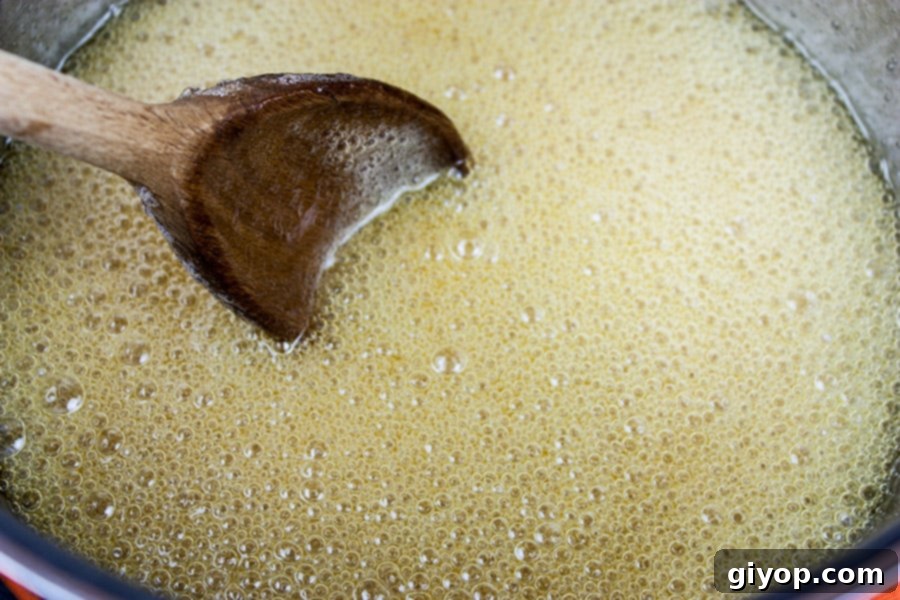
- **Boil to Perfection:** Place the saucepan over medium-high heat. Bring the mixture to a rolling boil, stirring constantly to ensure all the sugar dissolves and to prevent it from sticking to the bottom of the pan. Continue cooking, keeping a close eye on your candy thermometer. You are aiming for a temperature between 310ºF and 320ºF (the hard crack stage). I personally find 320ºF yields the perfect brittle consistency – beautifully crisp and not sticky. Constant stirring during this phase is vital for even cooking.
- **The Magic Addition:** Once your candy mixture reaches the target temperature, immediately remove it from the heat. This is where the magic happens! Quickly stir in the peanuts and the baking soda. The baking soda will react, causing the mixture to foam and lighten, creating those characteristic air pockets that give brittle its signature crunch. Stir just enough to evenly distribute the peanuts throughout the candy.
- **Rapid Spreading:** Without delay, pour the hot peanut brittle mixture onto your prepared baking sheet (or buttered countertop). Working quickly, use a buttered spatula or the back of a buttered spoon to spread the brittle as thinly as possible. My grandmother always called this “stretching” the brittle, and it’s key to achieving that delicate, snappy texture. The thinner you spread it, the crispier it will be.
- **Cool Completely:** Now comes the hardest part – waiting! Allow the peanut brittle to cool completely at room temperature. This can take anywhere from 30 minutes to an hour, depending on the thickness and ambient temperature. Do not try to move or break it before it’s fully cooled and hardened, or it won’t snap correctly.
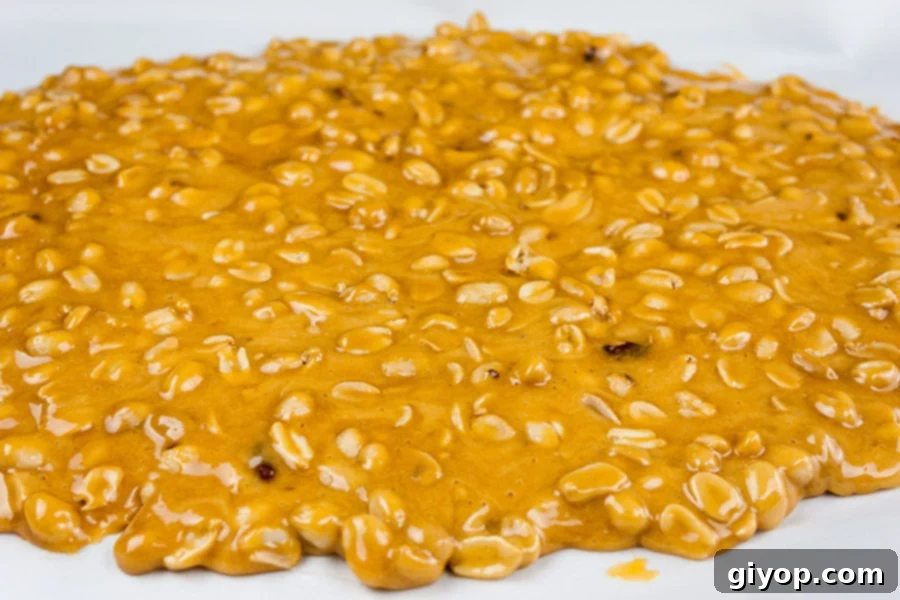
Once cooled, your homemade old-fashioned peanut brittle is ready to be enjoyed!
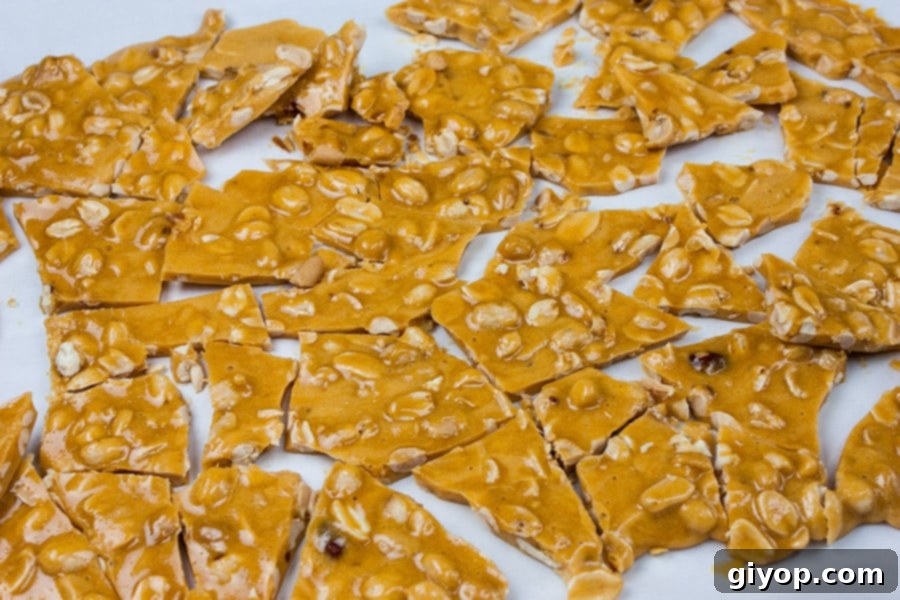
Breaking the brittle is part of the fun! You can use a butter knife or, my preferred method, gently lift the parchment paper and snap the candy into irregular, bite-sized pieces with your hands. The unique shapes add to its rustic charm.
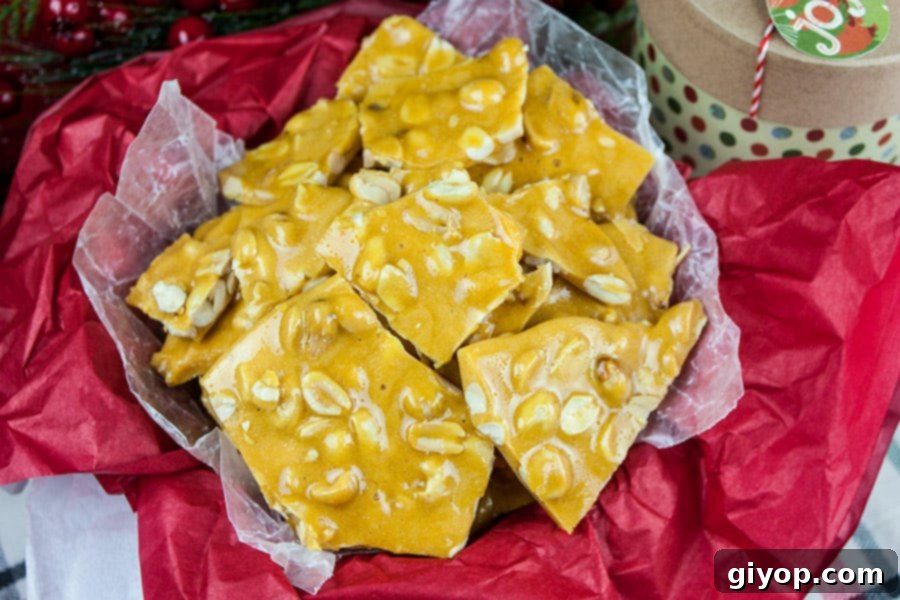
Homemade candy, especially something as classic as peanut brittle, makes wonderful gifts during the holidays. Package your brittle in cute tins, decorative boxes, or cellophane bags tied with festive ribbons. Everyone appreciates the effort and deliciousness of a homemade treat.
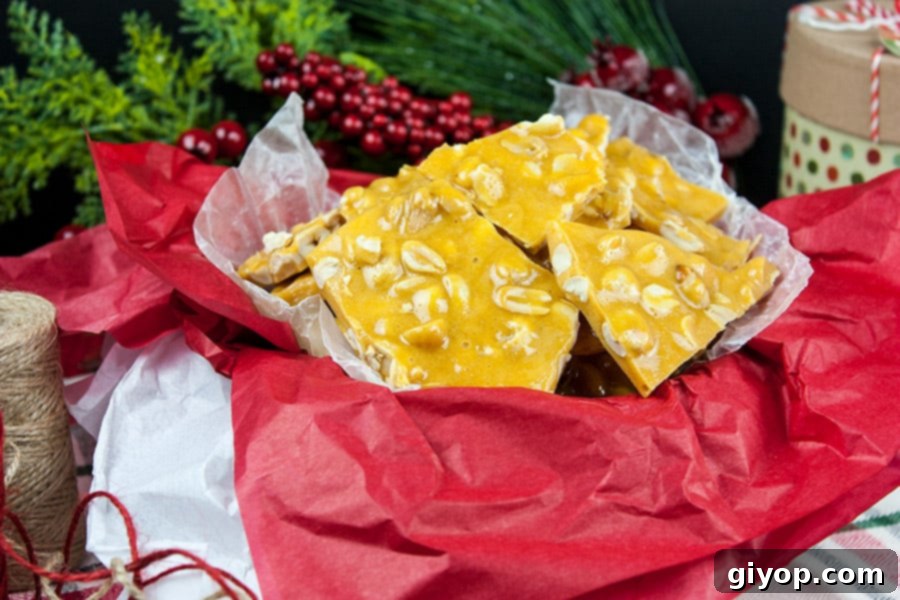
But be warned, it’s so incredibly tempting, you might just want to enjoy a few pieces yourself before you give it all away. After all, the chef always deserves a taste test!
Expert Tips & Creative Variations for Your Peanut Brittle
Achieving perfect peanut brittle every time is easier with a few insider tips and knowing how to personalize it. Here’s how to elevate your candy-making game:
- **Peanut Choice Matters:** My grandmother swore by raw shelled peanuts, stirring them in early to cook with the sugar mixture. I’ve found that using cocktail peanuts and stirring them in at the very end adds a delightful saltiness and saves a step. The choice is yours, but for an extra salty kick and convenience, pre-roasted, salted peanuts are excellent.
- **Nut Substitutions:** Don’t limit yourself to peanuts! This recipe is incredibly versatile. Experiment with other nuts like pecans, pistachios, cashews, or hazelnuts for unique flavor profiles. If using larger nuts, chop them into smaller, more manageable pieces for even distribution and a better bite. For an even more exotic twist, consider a mix of nuts or adding sesame seeds.
- **Safety First: Handling Hot Candy:** This is paramount. Boiling sugar mixture reaches extremely high temperatures and can cause severe burns. Always use a long-handled spoon for stirring and keep children and pets away from the stovetop. It’s also wise to have a bowl of ice water nearby in case of accidental contact.
- **Understanding the Hard Crack Stage:** The hard crack stage, which occurs between 300-310 degrees F (149-154°C), is crucial for brittle. This is when the sugar syrup is almost entirely free of water, resulting in a very hard, brittle texture when cooled. For optimal results and ease of handling, I typically aim for the higher end, around 320ºF (160°C).
- **Preparation is Key (Again!):** Always, always prepare your baking sheet with parchment paper *before* you start cooking the sugar. Candy making is a fast-paced process once the mixture reaches temperature, and you won’t have time to scramble for supplies. Having your surface ready means you can spread the hot brittle immediately and efficiently.
- **Invest in a Candy Thermometer:** A reliable candy thermometer is your best friend when making brittle. It takes the guesswork out of reaching the precise hard crack stage, ensuring consistent results every time. Calibrate your thermometer occasionally by testing it in boiling water (it should read 212°F or 100°C).
- **The Cold Water Test (No Thermometer? No Problem!):** If you don’t own a candy thermometer, you can still achieve success with the “cold water test.” Drop a tiny amount of the boiling candy mixture into a glass of very cold water. If it immediately forms hard, brittle strands that snap when bent, it’s reached the hard crack stage. If it’s still pliable or soft, continue cooking.
- **Flavor Enhancements:** A dash of vanilla extract added at the very end (after removing from heat but before adding baking soda) can deepen the flavor profile. Spices like a pinch of cinnamon or a tiny bit of cayenne pepper for a sweet-and-spicy kick can also be intriguing additions.
- **Humidity Watch:** Candy making can be sensitive to humidity. On very humid days, sugar can absorb moisture from the air, making it difficult to reach the hard crack stage or resulting in a sticky brittle. Choose a dry day for best results.
Frequently Asked Questions About Peanut Brittle
Making peanut brittle can sometimes raise questions, especially for first-timers. Here are answers to some of the most common queries:
Yes, we highly recommend using corn syrup for this easy peanut brittle recipe. Corn syrup is a crucial ingredient because it prevents the granulated sugar from crystallizing, which can make your brittle grainy. Other liquid sugars like honey, agave, or molasses contain impurities and different sugar structures that can burn at the high temperatures required for brittle, leading to a bitter taste and an inferior texture. For the best, smoothest, and clearest brittle, stick with corn syrup.
If your peanut brittle turns out too hard or difficult to chew, it’s likely due to too much moisture remaining in the candy mixture, or it was cooked slightly beyond the optimal temperature. Ensure you cook the mixture until it consistently reaches the specified 320 degrees F (160°C) on a reliable candy thermometer. Cooking out enough water is essential for the brittle to achieve its perfect snap. If it was cooked too high, it might become overly hard and dark.
The most accurate way to determine when your peanut brittle is done is by using a candy thermometer. Cook the mixture until it reaches a temperature of 320 degrees F (160°C). This temperature indicates the “hard crack” stage, where the sugar concentration is ideal for a crisp, snappy brittle. If you don’t have a thermometer, refer to the “cold water test” described in our tips section.
Moisture is the ultimate enemy of crispy peanut brittle. To maintain its delightful crunch, store your brittle in an air-tight container or a sealed bag. For best results, layer pieces of brittle with parchment paper or wax paper to prevent them from sticking together. Keep it at room temperature, away from heat and direct sunlight, for up to 2 weeks. Avoid refrigerating brittle, as the humidity inside a refrigerator can cause it to become sticky.
Yes, peanut brittle can be frozen! Once the peanut brittle has cooled completely and been broken into pieces, place them in a freezer-safe container or a heavy-duty freezer bag. Ensure it’s tightly sealed to protect against freezer burn and moisture. It can be frozen for up to 2 months. When you’re ready to enjoy it, simply remove it from the freezer and let it come to room temperature before serving. This method is excellent for making large batches in advance.
More Delicious Recipes for Sweet Indulgences
If you’ve enjoyed making this classic peanut brittle, you’ll love exploring other delightful homemade candy and dessert recipes. Perfect for gifting, holiday celebrations, or simply treating yourself, these recipes offer a variety of flavors and textures to satisfy any sweet tooth. Expand your confectionery repertoire with these tried-and-true favorites:
Old Fashioned Chocolate Peanut Butter Balls Recipe
Chocolate Orange Fudge
Butter Pecan Fudge
Old Fashioned Peanut Brittle Recipe
Print
Pin
Rate
Ingredients
- 2 cups peanuts*
- 2 cups granulated sugar
- 3/4 cup corn syrup
- 1/4 cup water
- 1/4 teaspoon salt
- 1/2 teaspoon baking soda
Instructions
- Prepare a large baking sheet pan with parchment paper.
- In a large saucepan mix the sugar, water, corn syrup, and salt.2 cups granulated sugar, 3/4 cup corn syrup, 1/4 cup water, 1/4 teaspoon salt
- Bring to a boil over medium-high heat, continue cooking stirring constantly until it reaches a candy thermometer reaches 310º-320º. (I bring mine to 320º.)
- Remove from the heat, stir in the peanuts and baking soda.2 cups peanuts*, 1/2 teaspoon baking soda
- Pour onto the parchment paper and quickly spread to desired thinness.
- Cool completely, break into pieces.
Notes
If you don’t have a thermometer you can try the cold water test. Drop a little of the boiling candy liquid into a glass of cold water, it should separate into hard, brittle strands. This is how you will know the peanut brittle is at the hard crack stage.
Storing – Moisture is the enemy of peanut brittle. Store in an air-tight container or bag, layered with parchment or wax paper at room temperature for up to 2 weeks.
Freezing – Let the peanut brittle cool completely, break into pieces, place them in a freezer-safe container or bag, and freeze for up to 2 months.