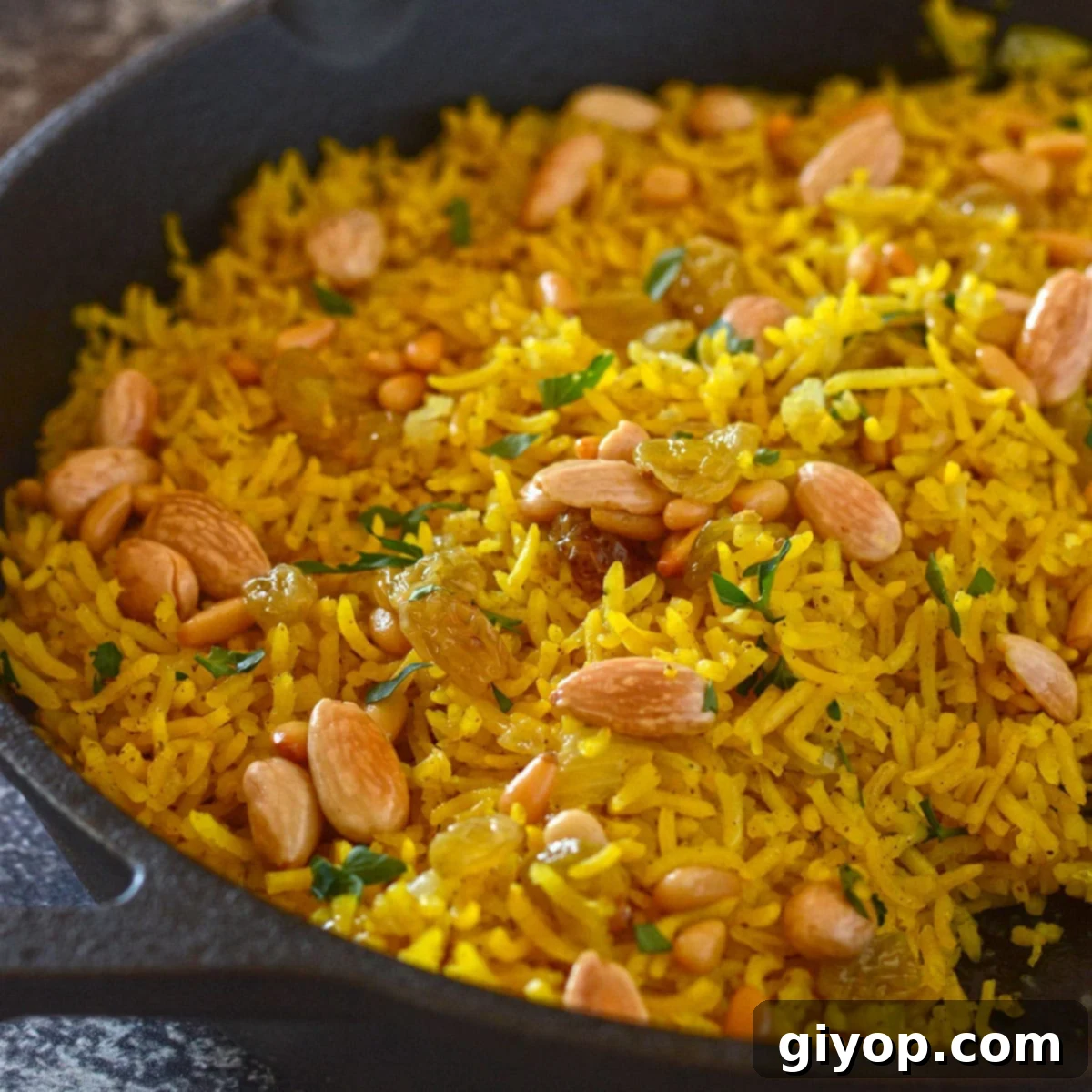
Embark on a culinary journey with this incredibly flavorful and aromatic yellow rice recipe, designed to perfectly complement any meal. Featuring fluffy basmati rice infused with warm, earthy spices and optionally elevated with the delightful crunch of toasted nuts, this dish is not just a side—it’s a vibrant experience. Ideal for family dinners, festive gatherings, or efficient meal preparation, this turmeric-infused rice promises to become a staple in your kitchen.
For those seeking a quicker rice solution, explore this rapid Instant Pot Basmati rice recipe.
Rice holds a cornerstone position in Middle Eastern cuisine, serving as more than just a filler—it’s a canvas for rich flavors and textures. From humble preparations like this classic Lebanese rice to opulent, celebratory dishes such as rice pilaf brimming with nuts and dried fruits, rice is deeply interwoven into the region’s gastronomic fabric.
Growing up, yellow rice wasn’t a frequent sight on our Egyptian family table, nor was it a particular favorite with my children. However, this transformative turmeric rice recipe has proven to be an absolute game-changer. Its captivating aroma and delightful taste have not only won over my once-skeptical kids but have also cemented its place as a cherished dish in our home.
Why You’ll Adore This Turmeric Yellow Rice Recipe
- Simple Yet Sophisticated: Crafted from readily available, everyday ingredients, this recipe proves that extraordinary flavor doesn’t require complexity.
- Exquisitely Aromatic & Visually Stunning: The vibrant yellow hue, derived naturally from turmeric powder, is not only appealing to the eye but also signals the fragrant spices awaiting your palate.
- A Delicious Departure: Break free from mundane plain rice! This recipe offers a delightful and flavorful alternative that elevates any meal, transforming ordinary dinners into something special.
- Versatile & Crowd-Pleasing: Its balanced flavor profile makes it a fantastic partner for a wide array of main courses, ensuring it’s a hit with everyone at the table.
- Healthy & Wholesome: Turmeric, a core ingredient, is celebrated for its health benefits, adding a nutritious boost to this already wholesome dish.
- Perfect for Meal Prep: Easy to make in larger batches, this yellow rice is excellent for meal planning throughout the week, saving you time without compromising on taste.
This glowing rice dish, bursting with incredible flavors and a gorgeous golden color, serves as a magnificent accompaniment to nearly any dish you choose. It’s particularly fantastic for utilizing holiday leftovers, whether it’s alongside succulent turkey, a perfectly seared steak, tender chicken, or even hearty vegetable sides like green beans and Brussels sprouts. For a completely vegan option, simply substitute ghee with avocado oil or coconut oil.
Essential Ingredients for Your Golden Yellow Rice
Ingredient Deep Dive: Achieving Authentic Flavor
- Rice: While basmati rice is our top recommendation for its fluffy texture and distinct aroma, other varieties like jasmine, long-grain, or medium-grain rice can also be used successfully. Short-grain rice will work but may result in a slightly stickier consistency. The key is proper rinsing and soaking, as detailed in the instructions, to ensure separate, perfectly cooked grains.
- Fat: We utilize a two-stage fat approach for optimal flavor. A tablespoon of neutral oil is used during the initial boiling stage, while ghee is preferred for the final simmering. Ghee imparts a rich, nutty, and authentically Middle Eastern flavor that truly enhances the dish. For a vegan alternative, olive oil, avocado oil, or coconut oil can be used throughout the recipe.
- Onion: Finely diced onion forms the aromatic base for this yellow rice. Sautéing the onion until pale yellow extracts its sweet notes and creates a foundational layer of flavor. Some cooks also enjoy adding minced garlic for an extra layer of complexity.
- Turmeric: This is the star ingredient, responsible for the rice’s signature glowing yellow color and its distinctive earthy, slightly peppery flavor. Turmeric is also lauded for its powerful anti-inflammatory properties, making this dish both delicious and wholesome. While some traditional recipes incorporate saffron for color and aroma, we’ve omitted it here to make the recipe more accessible and budget-friendly without sacrificing flavor.
- Yellow Rice Seasoning: Beyond turmeric, the core seasoning includes black pepper and salt. However, a blend of additional warm spices is highly recommended to achieve that authentic, intoxicating aroma. Our preferred mixture includes cinnamon, cloves, coriander, and especially cardamom, which lends a unique fragrant note. For those wanting to delve deeper into Middle Eastern flavors, consider adding cumin, fennel, or even a touch of oregano.
- Water or Broth: This recipe employs a two-stage cooking method for the rice. Initially, the rice is par-cooked in rapidly boiling water. In the second stage, it simmers with the sautéed onion and a small amount of additional liquid. For a richer, more profound flavor, substitute the water in the second stage with chicken broth, vegetable broth, or your preferred stock. Remember to adjust the salt content accordingly if using salted broth.
- Salt: We recommend using pink salt for its subtle mineral notes, but any fine salt will suffice. Always adjust the quantity to your personal preference and the type of salt you are using. A teaspoon is a good starting point, but taste and adjust as needed.
Step-by-Step: Crafting Your Aromatic Yellow Rice
Achieving perfectly fluffy and flavorful yellow rice is straightforward with these detailed instructions. Follow each step carefully for the best results.
- Prepare the Rice: Begin by washing your Basmati rice thoroughly under cold running water until the water runs clear. Then, soak the rice according to your package directions, typically for 15-20 minutes, in ample tap water with a pinch of salt. This crucial step helps elongate the grains and prevents them from sticking. Once soaked, drain the rice completely and set it aside.
- Initial Boil: In a large, deep pot, bring approximately 1.5 liters (about 6 cups) of tap water to a rapid boil over medium-high heat. Ensure there’s enough water for the rice to swim freely.
- Infuse the Water: Once the water is boiling, add 1 tablespoon of oil, 1 teaspoon of ground turmeric, along with all your chosen aromatic spices (cinnamon, cloves, coriander, cardamom), *except* for the salt. Stir well to combine.
- Par-Cook the Rice: Carefully add the drained rice to the boiling, spiced water. Let it return to a boil and cook for approximately 5-6 minutes, or until the rice is almost done but still has a slight bite (al dente). Do not overcook at this stage.
- Drain the Rice: Immediately drain the par-cooked rice using a fine-mesh colander. It’s important not to leave it in the colander for too long, as it can dry out and become less moist.
- Sauté the Onion: Using the same pot (or a clean one), add 1 tablespoon of ghee (or your chosen vegan fat). Sauté the finely diced onion for about 2 minutes over medium heat, until it softens and turns a pale yellow color.
- Combine and Season: Return the drained rice to the pot, layering it over the sautéed onions. Add ¼ cup of hot boiling water and 1 teaspoon of salt (or to taste). Gently mix everything together, being careful not to crush the delicate rice grains.
- The Steaming Process (with caution): This is a traditional technique for achieving exceptionally fluffy rice. Reduce the heat to its absolute minimum. Cover your pot with a clean paper kitchen towel, then securely place the lid on top. Important Safety Note: To prevent any fire hazards, either lift the corners of the towel up and over the lid, or carefully cut the corners of the towel with scissors so they do not hang over the heat source. Alternatively, use a clean kitchen towel and tie its ends securely over the lid. Absolutely DO NOT leave the pot unattended during this step. This method helps trap steam and absorb excess moisture, leading to perfectly cooked, separate grains.
- Final Simmer & Serve: Allow the rice to finish cooking for another 10-15 minutes on minimum heat. Once done, remove from heat, let it rest for a few minutes, then fluff gently with a fork before serving.
Expert Tips for Fluffy, Flavorful Yellow Rice
- Rinse and Soak is Key: For this specific two-stage cooking method, properly washing and soaking Basmati rice is non-negotiable. It removes excess starch, preventing stickiness, and allows the grains to absorb water evenly for a fluffy result.
- Mind the Soaking Time: Soaking times can vary between different brands of Basmati rice. Always check the package instructions first. If in doubt, a 10-15 minute soak is generally a safe bet. Over-soaking can lead to mushy rice.
- Aromatic Additions: Don’t hesitate to experiment with aromatics. Many enjoy adding a minced garlic clove to the onion when sautéing for an extra layer of savory depth.
- Spice it Up: The combination of aromatic spices truly elevates this dish. While turmeric, salt, and black pepper are essential, try to include cardamom for that signature Middle Eastern fragrance. Even if you don’t have all the recommended spices (cinnamon, cloves, coriander), a simpler blend will still yield a tasty and fragrant rice.
- Beyond the Basics: For an even richer flavor profile, consider incorporating other traditional spices such as a pinch of cumin, a touch of dried oregano, a few strands of luxurious saffron (for both color and taste), or a sprinkle of fennel seeds. Each addition brings its own unique character.
- Finely Dice Onions: If you or your family members are not fond of biting into noticeable pieces of cooked onion, ensure you finely dice the onion. This allows it to melt into the rice, blending seamlessly while still imparting its essential flavor.
Serving Suggestions: What to Pair with Yellow Rice
The versatility of this golden yellow rice makes it an exceptional partner for a wide array of main courses. Its vibrant flavor profile beautifully complements rich meats and savory vegetables. Consider serving it with:
- Grilled Meats: Perfect with juicy lamb kofta, flavorful beef kebabs, or tender chicken kebabs. The fragrant rice provides a wonderful contrast to the smoky, savory flavors of grilled dishes.
- Chicken Dishes: A classic pairing with Shish Tawook (chicken skewers). The creamy garlic and lemon marinade of the chicken finds a delightful balance with the aromatic rice.
- Roasted Vegetables: For a lighter, vegetarian meal, serve alongside a medley of roasted vegetables. The turmeric rice adds depth and warmth to the natural sweetness of the vegetables.
- Stews and Curries: Its ability to absorb flavors makes it an excellent base for various Middle Eastern stews or even Indian-inspired curries.
Storing and Reheating Your Golden Rice
- Storage: Allow any leftover rice to cool completely to room temperature before transferring it to an airtight container. It can be stored safely in the refrigerator for up to 4 days. For longer preservation, freeze the rice for up to 3 months. Note that frozen rice may have a slightly softer texture upon reheating, but its delicious flavor will remain unaffected.
- Reheating: To reheat, place the desired portion of rice in a pot or microwave-safe dish. Add a couple of tablespoons of water (or broth) per serving to help reintroduce moisture and prevent drying. Reheat thoroughly on low heat on the stovetop, stirring occasionally, or in the microwave until piping hot.
Frequently Asked Questions About Yellow Rice
What kind of rice is best for this recipe?
While Basmati rice is traditionally preferred for its long grains and fluffy texture, you can absolutely use other varieties. Jasmine rice, long-grain white rice, or even medium-grain rice will work well. Keep in mind that different types of rice may require slight adjustments in soaking and cooking times, as well as water ratios. For an interesting twist, some people even incorporate orzo pasta, but for classic yellow rice, long-grain is key.
Can I use broth instead of water for cooking?
Yes, absolutely! Using chicken broth, vegetable broth, or any preferred stock instead of water will significantly deepen the flavor profile of your yellow rice, adding an extra layer of savory richness. If you opt for broth, remember to taste it first and adjust the amount of added salt, as many commercial broths are already seasoned.
What can I use if I don’t have ghee?
Ghee imparts an unparalleled nutty aroma and authentic flavor to this rice, which is highly recommended. However, if ghee isn’t available, you can substitute it with unsalted butter for a similar rich taste. For a completely vegan version, olive oil, avocado oil, or coconut oil are excellent alternatives that will still produce a delicious and fragrant yellow rice.
Related Middle Eastern Rice & Main Dishes
Elevate your rice game beyond the ordinary! Explore these incredible recipes that take rice from a simple side to a show-stopping centerpiece or a flavorful accompaniment:
- Chicken Shawarma Rice: An incredibly flavorful and convenient one-dish meal. Tender chicken shawarma piled high on aromatic spiced rice makes for a truly satisfying family dinner.
- Lebanese Rice: A delicious and easy-to-follow recipe for a classic Lebanese-style rice. This simple yet elegant side dish, often garnished with fresh herbs or toasted pine nuts, is perfect for any Middle Eastern meal.
- Mahshi (Stuffed Vegetables): Mahshi is the Arabic term for any stuffed dish, and this recipe offers a medley of delicious vegetables generously filled with a fragrant, aromatic rice mixture, all slow-cooked in a rich tomato sauce.
- Chicken and Yellow Rice with Peas: A hearty and easy-to-prepare chicken and yellow rice recipe, enhanced with sweet peas. It’s perfect for both weeknight dinners and impressive enough for dinner parties or family gatherings.
- Kofta Kebabs: These delicious and popular Middle Eastern meatballs are perfect for grilling or baking. They pair exceptionally well with this turmeric yellow rice, creating a balanced and flavorful meal.
This recipe was initially published on November 8, 2019, and was extensively updated on March 15, 2023, to provide an even better user experience and clearer, more comprehensive instructions.
My journey with yellow rice is quite personal. I actually grew up accustomed to the everyday Lebanese-style white rice. It wasn’t until my dad’s work took us to Saudi Arabia that my mom and I truly began exploring the world of flavored rice dishes, like the iconic Kabsa. Living there, we had the incredible opportunity to meet friends from diverse backgrounds across the globe. This exposure opened our palates and minds to an array of different cultures and cuisines, which we embraced with immense appreciation.
Yellow rice, in particular, was a revelation we discovered through some dear Syrian friends. My mom, with her natural culinary talent, quickly perfected their recipe, often making it with chicken and peas. Yet, for years, my children, especially my eldest, remained loyal to the simple Lebanese-style rice. Any deviation from their norm was met with resistance.
Our breakthrough came during a visit to my mom in Egypt, where we stumbled upon a Syrian restaurant. They served the most exquisite Shawarma dish I had ever tasted, and it was, of course, accompanied by perfectly cooked yellow rice. Inspired by this delightful experience, I gradually introduced yellow rice into our dinner rotations. Little by little, it transformed from an unfamiliar dish to a much-loved staple, now eagerly anticipated by everyone at the table.
A key to my children’s acceptance, surprisingly, involved onions. Though they love raw onions, they dislike the texture of cooked pieces. The solution was simple yet effective: finely dicing the onion so it completely melds into the rice, becoming virtually invisible while still imparting its essential sweetness and aroma.
We genuinely hope you enjoy preparing and savoring this recipe. If you do make it, please share your culinary creations with us! Snap a picture and tag it #amiraspantry — we absolutely love seeing your dishes on Instagram, Facebook, and Twitter! Don’t want to miss out on any new recipes? Sign up for the FREE Amira’s Pantry newsletter, delivered directly to your inbox with exclusive tips and surprises! And remember to stay connected with us on Facebook, Twitter, Pinterest, and Instagram for all the latest updates and delicious inspiration.
If this recipe brings joy to your table, please consider leaving a ⭐⭐⭐⭐⭐ star rating and sharing a photo of your finished dish. Your feedback and photos are always a delight to see, and we love checking out your unique take on our recipes. Thank you for your support!

Yellow Rice Recipe (With Turmeric)
A fragrant, flavorful yellow rice with a golden hue, perfect for your holiday feasting table or to add a Middle Eastern kick to your everyday white rice. Garnish with toasted pine nuts and raisins for a nutty flavor and a touch of sweetness.
Side Dish
Mediterranean, Middle Eastern, Western
Gluten Free, Halal
10 minutes
25 minutes
35 minutes
5 servings
179.5 kcal
Amira
Ingredients
-
1
cup
(185g) Basmati rice
soaked in enough cold water with a pinch of salt for 15 minutes. -
1 ½
liter
tap water (approx. 6 cups). -
1
Tablespoon
oil (e.g., vegetable or canola). -
1
teaspoon
ground turmeric. -
¼
teaspoon
ground black pepper. -
1
Tablespoon
ghee or butter (or olive oil for vegan). -
1
(90g) small onion, finely diced. -
1
teaspoon
salt or to taste. -
¼
cup
hot boiling water.
Spices: Use any combination available
-
½
teaspoon
ground cardamom. -
¼
teaspoon
ground cloves. -
¼
teaspoon
ground cinnamon.
Optional Garnish:
- Toasted nuts (pine nuts, almonds), raisins, and fresh parsley.
Instructions
- Drain the soaked Basmati rice thoroughly and set aside.
- In a large pot, pour 1.5 liters of tap water and bring it to a rapid boil over medium-high heat.
- Add the 1 tablespoon of oil, 1 teaspoon of ground turmeric, and all the selected aromatic spices (cardamom, cloves, cinnamon) to the boiling water. Stir to combine.
- Add the drained rice to the spiced boiling water. Let it cook for 6-7 minutes until it is almost done, retaining a slight bite. Do not cook completely at this stage.
- Immediately drain the par-cooked rice in a fine-mesh colander. Ensure it doesn’t sit too long to prevent it from drying out.
- In the same pot, add 1 tablespoon of ghee (or chosen fat). Sauté the finely diced onion for about 2 minutes, until it softens and turns a light yellow color.
- Return the drained rice to the pot over the sautéed onions. Add the ¼ cup of hot boiling water and 1 teaspoon of salt (or to taste). Gently mix to combine, being careful not to break the rice grains.
- Reduce the heat to its absolute minimum. Cover the pot with a clean paper kitchen towel, then securely place the lid on top. Ensure the towel’s corners are either lifted over the lid or trimmed to prevent fire hazards. Do not leave unattended.
- Allow the rice to simmer for another 10-15 minutes until fully cooked, fluffy, and all liquid is absorbed. Fluff with a fork before serving, garnished with toasted nuts, raisins, and fresh parsley if desired.
Recipe Notes
- Washing and soaking Basmati rice is essential for this method of cooking to achieve fluffy, separate grains.
- Soaking time varies by brand; check package instructions or soak for 10-15 minutes if unsure.
- Consider adding minced garlic or finely diced green bell pepper when sautéing the onion for added flavor.
- For an authentic flavor, use a combination of spices. Turmeric powder is crucial for color and primary flavor.
- Other spices like cumin, oregano, a few strands of saffron, and fennel seeds can be added for enhanced complexity.
- Caution: When covering the pot with a paper towel, be extremely careful to prevent fire hazards. Ensure the towel does not hang over the heat source and never leave unattended. Alternatively, use a thick, clean kitchen towel with its ends tied securely over the lid.
- While ghee adds an authentic aroma and richness, butter or olive oil can be used as alternatives, especially for a vegan dish.
- Serving Suggestions: This rice pairs wonderfully with lamb koftas, kebabs, chicken kebabs, shish tawook, or roasted vegetables.
- Storage & Reheating: Cooled leftovers can be stored in an airtight container in the fridge for up to 4 days or frozen for up to 3 months. To reheat, add a couple of tablespoons of water to the rice in a pot and warm thoroughly on medium-low heat.
Please check the nutrition disclaimer policy for detailed information.
Nutrition
Carbohydrates: 30.1g |
Protein: 2.7g |
Fat: 5.6g |
Cholesterol: 6mg |
Sodium: 58.4mg |
Potassium: 43.4mg |
Sugar: 0.8g |
Vitamin A: 0.8IU |
Vitamin C: 2.4mg |
Calcium: 0.7mg |
Iron: 1.7mg