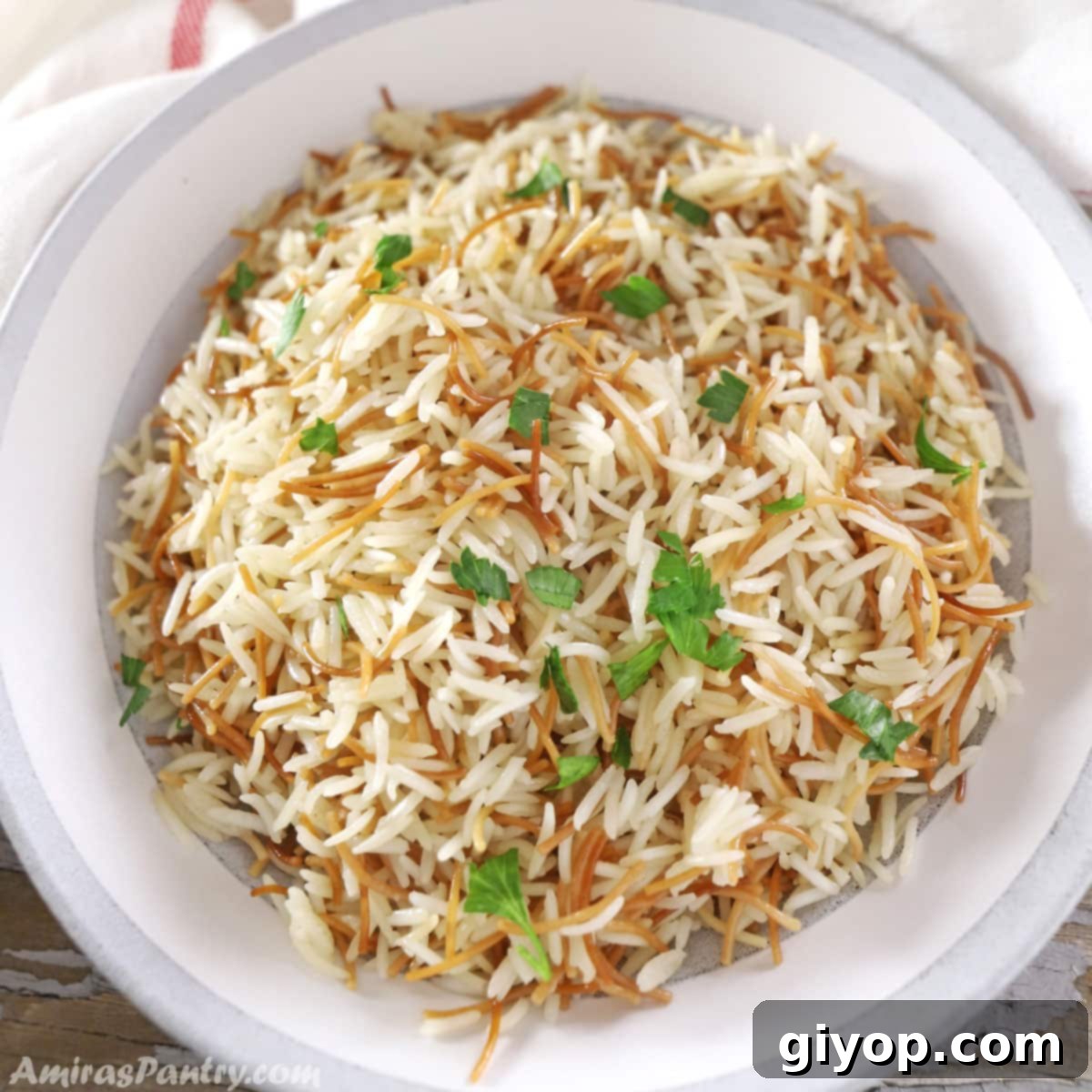
Discover the ultimate guide to preparing fluffy, delicious Lebanese rice with vermicelli, a cornerstone of Middle Eastern cuisine. Also affectionately known as Arabic rice or Middle Eastern vermicelli rice, this simple yet incredibly flavorful dish is a staple for a reason. Forget complicated steps like rinsing rice to remove excess starch or waiting for lengthy soaking times. Our fuss-free method promises perfectly cooked, separated grains every single time, making it the ideal accompaniment to any stew, particularly a hearty okra stew or classic bamya. Get ready to elevate your home cooking with this essential and easy-to-master recipe.
Lebanese rice, or “ruz bil shareeyah” as it’s known in Arabic, is a delightful rice pilaf distinguished by the addition of golden, toasted vermicelli pasta. While most commonly associated with Lebanese cuisine, variations of this comforting dish are beloved across the entire Middle East. This versatile recipe allows you to use almost any type of white rice you have on hand, with simple adjustments to water levels and cooking times. In this comprehensive guide, we’ll walk you through each step, ensuring you achieve perfect, fluffy Lebanese rice, complete with expert tips and a helpful video demonstration.
Why You’ll Love This Authentic Lebanese Rice Recipe
- Effortlessly Simple: This is by far the easiest Lebanese rice recipe you’ll ever encounter. Say goodbye to the tedious process of rinsing rice under cold running water or dealing with large bowls of soaking grains. Our streamlined method saves you time and effort without compromising on taste or texture.
- A Perfect Companion: This classic white rice pilaf is the most popular and versatile side dish in Middle Eastern cuisine. Its mild flavor and fluffy texture make it the ideal accompaniment to a vast array of main courses, from rich stews to grilled meats and vegetables.
- Consistently Fluffy Results: Our precise technique, especially the “no rinse, no soak” approach, ensures that your rice grains remain separate and perfectly fluffy, never sticky or mushy.
- Time-Saving: With no pre-rinsing or soaking required, this recipe cuts down your preparation time significantly, allowing you to enjoy a delicious, homemade side dish even on busy weeknights.
- Customizable: Whether you prefer a richer flavor from broth or a lighter, traditional taste with water, this recipe is easily adaptable to your preferences. You can also adjust the fat type to suit dietary needs.
- Economical & Accessible: Made with common pantry staples – rice, vermicelli, and a few basic seasonings – this dish is budget-friendly and uses ingredients readily available in most grocery stores.
This deceptively simple vermicelli rice pilaf is a beloved staple throughout the Arab world, celebrated particularly for its prominence in Lebanese culinary traditions.
Essential Ingredients for Lebanese Vermicelli Rice
Crafting authentic Lebanese rice requires just a handful of simple ingredients. Below is an overview; precise measurements and detailed instructions can be found in the printable recipe card at the bottom of this page.
- Rice: For best results, Basmati rice is highly recommended due to its long grains and ability to cook up fluffy and separate. Short-grain rice can also be used, though it might result in a slightly stickier texture. We’ll discuss suitable and unsuitable rice types in more detail below.
- Vermicelli Pasta: These delicate, thin strands of pasta are broken into small pieces and toasted to a beautiful golden brown, adding both texture and a nutty flavor to the rice. You can typically find vermicelli in the pasta aisle of most supermarkets, often labeled as “fine vermicelli” or “angel hair pasta.”
- Fat: Essential for browning the vermicelli and ensuring the rice cooks evenly and prevents sticking. Traditionally, ghee (clarified butter) is preferred for its rich, nutty flavor that complements the rice beautifully. However, you can also use regular butter, or a mixture of olive oil and ghee/butter. For a vegan version, simply use olive oil.
- Seasonings: Authenticity dictates simplicity. A good quality salt is often the only seasoning needed, allowing the natural flavors of the rice and vermicelli to shine. Adjust to your personal taste.
- Water: Plain tap water is perfectly fine and what is traditionally used. For an added depth of flavor, you can substitute chicken broth or vegetable stock.
- Optional Garnish: Fresh chopped parsley adds a touch of color and a fresh herbaceous note when serving. Toasted pine nuts are another popular addition, offering a delightful crunch and richness.
Step-by-Step Instructions for Perfect Lebanese Rice
Preparing this beloved Middle Eastern side dish is straightforward. This section provides an overview of the process; detailed, precise instructions are included in the recipe card below.
- Prepare the Vermicelli: In a deep, heavy-bottomed pot, melt your chosen fat (ghee, butter, olive oil, or a combination) over medium-high heat. Once hot, add the broken vermicelli noodles.
- Brown the Vermicelli: Stir the vermicelli continuously until it achieves a rich, deep golden-brown color. This step is crucial for developing the signature flavor and appearance of Lebanese rice. Be careful not to burn it; a light golden brown is ideal.
- Add the Rice: Introduce the rice to the pot. No rinsing or soaking is required for this recipe! Stir the rice for a couple of minutes, ensuring every grain is thoroughly coated with the melted fat. This step is key to preventing the rice from sticking together and achieving a fluffy texture. Stir in the salt evenly.
- Add Water and Boil: Pour in the tap water (or broth). Increase the heat and bring the mixture to a rapid, full boil. This usually takes about 5 minutes. You will notice the water level visibly reducing as it begins to absorb into the rice.
- Simmer to Perfection: Once the water is boiling vigorously, immediately reduce the heat to the lowest setting. Cover the pot tightly with a well-fitting lid. Allow the rice to cook undisturbed for 13-15 minutes. Resist the urge to lift the lid during this time, as steam is essential for proper cooking.
- Rest and Fluff: After the cooking time, remove the pot from the heat. Keep the lid on and let the rice stand for an additional 10 minutes. This resting period allows the remaining steam to finish cooking the rice, resulting in a wonderfully fluffy texture. Finally, uncover and gently fluff the rice with a rubber spatula, not a fork, to avoid crushing the grains.
The “No Rinse, No Soak” Secret to Fluffy Rice
For many, the idea of not rinsing or soaking rice before cooking goes against decades of culinary tradition. I understand this might challenge long-held habits, as even my own mother emphasized the importance of rinsing rice until the water ran clear, followed by a 15-20 minute soak. Traditional Lebanese rice recipes often strongly advocate for these steps, sometimes even suggesting you should be able to break a grain between your fingertips after soaking.
However, for a dish like Lebanese rice, which I prepare frequently – sometimes multiple times a week – spending an extra 20 minutes waiting for rice to soak is simply not feasible. Moreover, anyone who has tried knows that rinsing rice 3 or 4 times rarely results in “clear” water; it often remains cloudy due to residual starch. But more importantly, modern rice processing has changed dramatically.
In generations past, washing rice was indeed a necessity. Rice was often purchased from large, open sacks and required cleaning to remove impurities, dust, and sometimes even small stones. Today’s commercially packaged rice, sourced from modern mills, is pre-cleaned and refined to high standards. When you buy rice in sealed bags from reputable grocery stores, it’s already clean enough for direct cooking. There’s no longer a need for extensive rinsing unless you are purchasing loose rice from a bulk bin or a traditional spice and grain vendor.
Regarding fluffiness, rinsing rice has a minimal effect on the final texture of retail-packaged rice. The key to achieving fluffy, separate grains lies more in the correct rice-to-water ratio and proper cooking technique. Similarly, soaking rice for this particular recipe is unnecessary. By maintaining the appropriate liquid measurement and allowing the rice to cook undisturbed, we achieve the desired fluffy outcome without any pre-soaking hassle. Embrace the convenience without sacrificing quality!
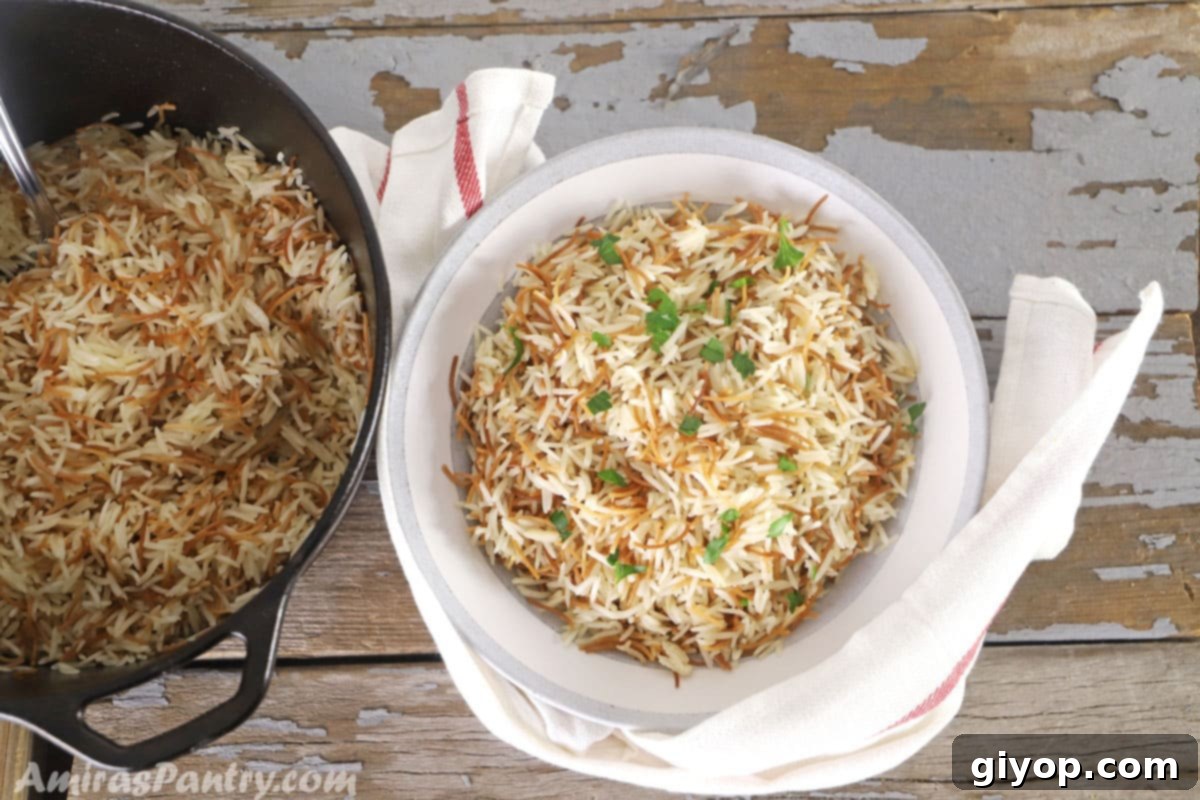
If You Still Prefer to Rinse and Soak
Breaking old habits can be challenging, and some cooks simply feel more comfortable rinsing their rice. If you find yourself unable to skip the rinsing step, you will need to adjust the water content to compensate for the absorbed moisture. For every cup of rice you rinse, reduce the amount of water by approximately 2 tablespoons. If you choose to soak your rice, for example, for an hour, further reduce the water by about 3 tablespoons per cup of rice to prevent it from becoming mushy. These small adjustments will help maintain the desired fluffy texture even with pre-treatment.
Choosing the Best Rice Types for Lebanese Rice
The beauty of this recipe lies in its adaptability. While certain types of rice yield optimal results, several varieties can be successfully used to make delicious Lebanese rice:
- Basmati Rice: This is the preferred choice and the variety used in this recipe. Its long, slender grains cook up exceptionally fluffy and separate, making it ideal for pilafs.
- Long-Grain Rice: Other long-grain varieties perform very well, offering a similar fluffy texture to Basmati.
- Medium and Short Grain Rice: These can also be used, though they tend to produce a slightly softer and potentially stickier texture due to their higher starch content. Adjusting the water ratio might be necessary to avoid overcooking.
- Jasmine Rice: A popular fragrant rice, Jasmine can be used, but generally requires less water. Reduce the water by approximately ¼ cup for each cup of Jasmine rice to achieve a desirable texture.
- Brown Rice: If you opt for a healthier, whole-grain alternative, brown rice is an option. However, it requires significantly more water and a longer cooking time. Increase the water by about ½ cup for each cup of brown rice, and extend the cooking time as needed, typically an additional 15-20 minutes.
Types of Rice to AVOID: To ensure the authentic texture and prevent a sticky, clumpy result, it’s best to avoid high-starch, glutinous varieties like sushi rice, sticky rice, or Arborio rice. Specialty rices such as wild rice or black rice also have very different cooking properties and will not yield the desired fluffy pilaf characteristic of Lebanese rice.
Amira’s Top Tips for Fluffy Lebanese Rice
- Choose the Right Pot: Always use a heavy-bottomed pot with a tight-fitting lid. A heavy pot distributes heat more evenly, preventing scorching, while a tight lid traps steam efficiently, which is crucial for proper rice cooking.
- Seasoning Strategy: Add salt to the rice and stir it in *before* pouring in the water. This allows the salt to dissolve and be absorbed evenly by the rice grains as they cook. Adding salt after the rice is cooked can result in an unevenly seasoned or overly salty dish.
- Fat Coating is Key: After adding the rice, stir it for a good couple of minutes until you are certain that every single rice grain is thoroughly coated with the melted fat (ghee, butter, or oil). This step is fundamental to preventing the grains from sticking together, guaranteeing that perfectly fluffy, separated texture.
- Resting is Essential: Do not skip the resting period after the rice has finished cooking. Removing the pot from heat and letting it sit, covered, for 5-10 minutes allows the residual steam to gently finish the cooking process and ensures the grains firm up and become beautifully fluffy.
- Fluff with Care: When it’s time to fluff the rice, use a rubber spatula instead of a fork. A spatula gently separates the grains without breaking them, preserving their integrity and fluffy texture. A fork can sometimes be too harsh, crushing the delicate cooked grains.
- Embrace the “No Rinse”: Trust the process! With modern, commercially packaged rice, rinsing is often an unnecessary step that can actually lead to nutrient loss and a longer preparation time.
- Meal Prep Friendly: This rice freezes remarkably well for up to a month. Consider cooking a larger batch to portion out and freeze for quick, convenient meals later.
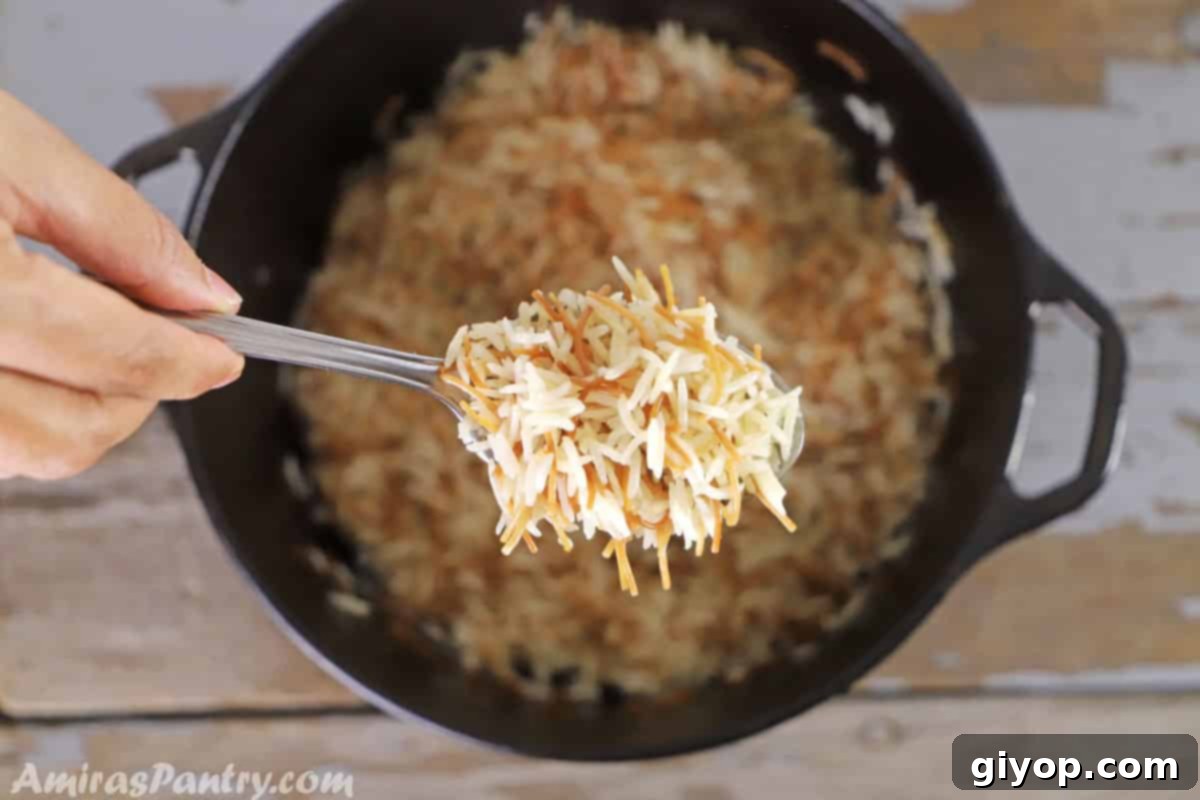
Serving Suggestions for Lebanese Rice
Lebanese vermicelli rice is an incredibly versatile side dish that complements almost any Middle Eastern meal. Its mild, comforting flavor and fluffy texture make it the perfect canvas for a variety of rich stews and flavorful main courses. Here are some of our favorite pairings:
- Classic Stew Pairings: This rice is the ultimate partner for many Arabic stews. It’s truly BFFs with molokhia (Jew’s Mallow stew) and is superb with our bamia stew (okra stew) or a hearty beef stew. The rice soaks up the savory juices of these dishes beautifully.
- Vegan Delights: For a delicious vegan meal, prepare the rice using only olive oil, then serve it alongside a flavorful lentil stew or black-eyed peas. The simplicity of the rice allows the robust flavors of the vegetarian mains to shine.
- Grilled Meats and Poultry: Lebanese rice makes an excellent accompaniment to grilled chicken, lamb kebabs, or roasted fish. Its lightness balances the richness of the proteins.
- Side to Mezze Platters: Serve a small bowl of this rice as part of a larger mezze spread, alongside hummus, baba ghanoush, salads, and other small dishes.
- Simple Garnish: Garnish with a sprinkle of fresh chopped parsley for freshness, or for an added crunch and nutty flavor, toast some pine nuts in a dry pan until golden brown and sprinkle them over just before serving.
Storage and Reheating Guidelines
Proper storage is essential to maintain the quality and safety of your Lebanese rice leftovers. With a few simple steps, you can enjoy this delicious dish for days to come or save it for future meals.
Refrigerate: To refrigerate, allow the cooked Lebanese rice pilaf to cool completely, then transfer it to an airtight container. Store in the refrigerator for 2-3 days. It’s crucial to handle cooked rice with caution; although it’s common to keep rice refrigerated for several days, an odorless, invisible, and potentially harmful bacteria (Bacillus cereus) can grow if rice is left at room temperature for too long or not stored properly. Always ensure it cools quickly and is refrigerated promptly.
Freeze: Freezing is the best option for longer storage. If you’re a fan of meal prepping or simply want a convenient side dish ready at a moment’s notice, cook a large batch of rice and portion it into individual airtight containers or freezer-safe bags. This rice freezes beautifully for about a month. Did you know there are specific Japanese and Korean Tupperware containers designed for freezing and reheating rice? They help maintain texture and prevent freezer burn.
Reheat:
- Stovetop: For refrigerated or thawed frozen rice, place it in a pot with a splash of water (about 1-2 tablespoons per cup of rice). Cover and heat over low-medium heat, stirring occasionally, until thoroughly heated through and fluffy again. The added water creates steam to rehydrate the grains.
- Microwave: For a quicker option, place refrigerated or thawed frozen rice in a microwave-safe container. Add a splash of water, cover, and microwave on high for 1-2 minutes, or until hot. Stir halfway through to ensure even heating. For frozen portions, you might need 2-3 minutes.
Related Middle Eastern Rice Recipes
If you loved this simple yet flavorful Lebanese rice, explore more delightful rice dishes from Amira’s Pantry:
- Middle Eastern Chicken and Rice: A hearty, flavorful one-pot meal that combines tender chicken with aromatic rice, offering everything you need in a single dish.
- Yellow Rice Recipe: Discover a vibrant and incredibly tasty yellow rice that will become your new favorite way to prepare it.
- Chicken Shawarma Rice: One of our favorite easy weeknight meals, bringing the beloved flavors of chicken shawarma right into a comforting rice dish.
- Rice Cooker Mexican Rice: Achieve fluffy, flavorful perfection with minimal effort using your rice cooker for this vibrant, restaurant-quality Mexican rice, ready in less than 30 minutes.
- Hashweh: Another exquisite recipe from Lebanon, Hashweh features flavorful rice combined with seasoned ground beef, creating a satisfying and aromatic main or side dish.
If you’ve enjoyed this recipe and found it helpful, please consider leaving a ⭐⭐⭐⭐⭐ rating! Your feedback is greatly appreciated.
Lebanese Rice (Ruz bil Shareeyah)
Simple and easy, no-fuss recipe for rice with vermicelli, also known as Lebanese vermicelli rice. This “no rinsing, no soaking” method guarantees quick, easy, and fluffy rice every time.
Ingredients
- 2 cups (390g) Basmati rice, not rinsed.
- 1 cup (100g) vermicelli pasta, broken into small pieces.
- 2 Tablespoons ghee (or butter, or a mix of ghee/butter and olive oil).
- 1 Tablespoon olive oil (if using with ghee/butter or for vegan option).
- ¾ teaspoon salt, or to your personal preference.
- 3 ¼ cups tap water (or chicken/vegetable broth).
Instructions
- In a medium pot over medium heat, combine ghee and olive oil. Allow the ghee to melt completely.
- Add the broken vermicelli pasta to the pot. Stir continuously until the vermicelli turns a rich, golden brown color.
- Add the Basmati rice (no rinsing or soaking needed) to the pot. Continue stirring for a few minutes until all rice grains are well coated with the fat.
- Stir in the salt, then carefully pour the water (or broth) over the rice and vermicelli.
- Bring the mixture to a full, rolling boil over medium-high heat.
- Once boiling, reduce the heat to the lowest setting, cover the pot with a tight-fitting lid, and cook for 13-15 minutes. Do not lift the lid during this time.
- Remove the pot from the heat and let it steam, still covered, for 5-10 minutes. This resting period is crucial for perfect fluffiness.
- Remove the cover, and gently fluff the rice using a rubber spatula (avoid using a fork, which can break the grains).
- Serve immediately as a delicious side dish with your favorite main course.
Video
Notes
- Many traditional recipes suggest washing rice until the water runs clear; however, for modern packaged rice, this step is generally unnecessary. If you choose to wash your rice, reduce the water by ¼ cup per cup of rice.
- Ghee is preferred for its rich flavor, but butter or extra virgin olive oil can be used, or a combination. For a vegan dish, use only olive oil.
- Chicken or vegetable stock can be substituted for water for a more flavorful rice.
- Add salt to the rice before adding water for even absorption.
- Use a rubber spatula to fluff cooked rice to prevent crushing the grains; a fork can be too harsh.
- Garnish with fresh chopped parsley, toasted pine nuts, or serve plain.
- Storage & Reheating: This rice freezes beautifully for up to a month in an airtight container. Reheat from frozen in the microwave (covered) for 2 minutes, or thaw and reheat with a little water in a pot on the stovetop. Refrigerated leftovers are good for 2-3 days; reheat similarly with a splash of water.
- Please review our nutrition disclaimer policy.