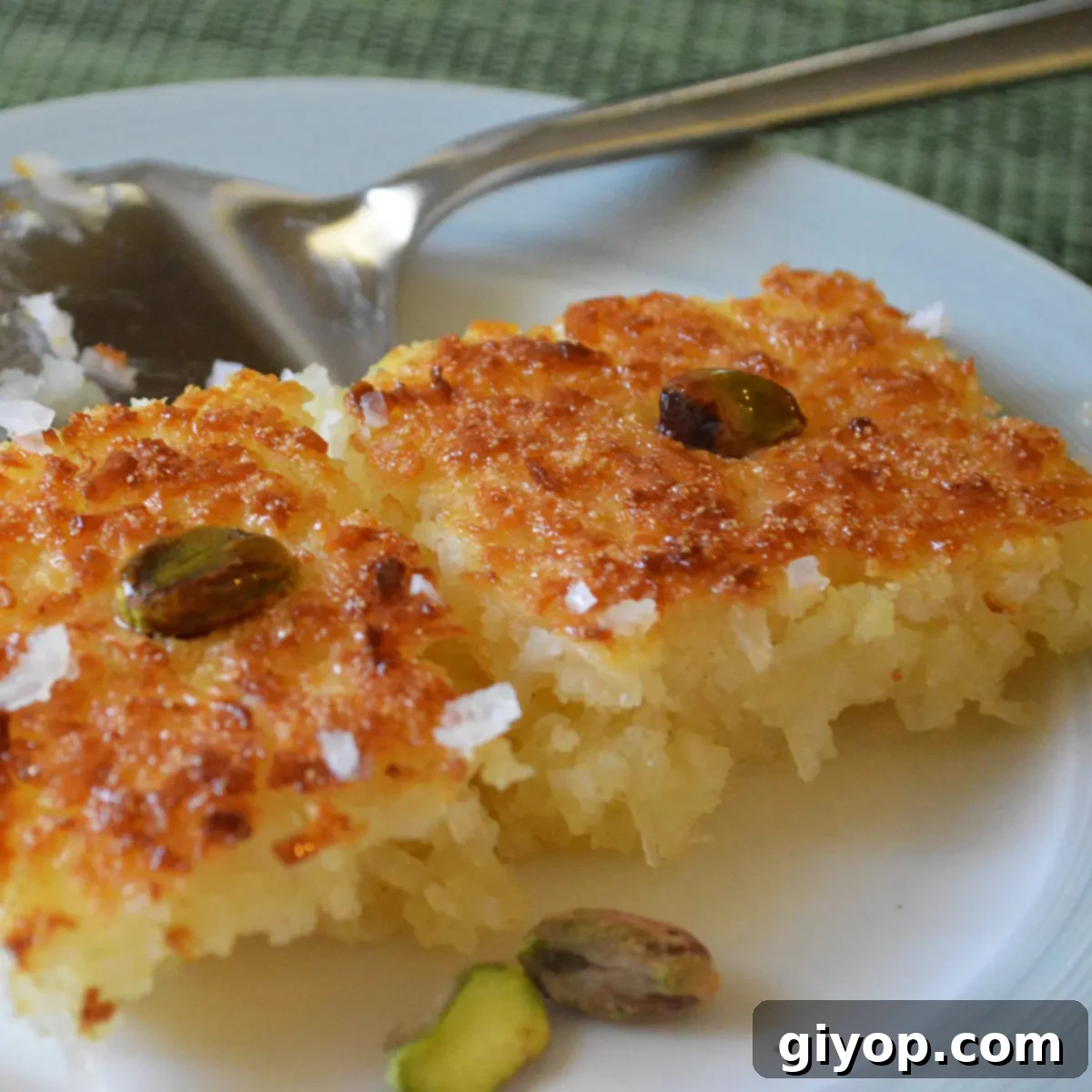
Authentic Egyptian Bassema Cake: A Luscious Coconut Semolina Delight
Prepare to embark on a culinary journey to Egypt with Bassema, a truly delightful and authentic cake that perfectly captures the essence of Middle Eastern sweets. This exquisite Egyptian dessert is a close cousin to the widely adored Basbousa, sharing its semolina base but standing out with a generous infusion of finely shredded coconut. Bassema is meticulously crafted from a blend of all-purpose flour and semolina, rich with coconut flakes, baked to a golden perfection, and then lovingly drenched in a sweet, aromatic simple syrup. The final touch, a sprinkling of crunchy nuts, elevates its texture and visual appeal, making it an irresistible treat for any occasion. It’s a moist, flavorful, and incredibly satisfying cake that will transport your taste buds to the heart of Egyptian hospitality.
Table of Contents
- What is Egyptian Bassema?
- Why You’ll Love This Bassema Recipe
- The Essential Ingredients for Perfect Bassema
- Step-by-Step Instructions: Crafting Your Egyptian Bassema
- Pro Tips for Bassema Success
- Bassema Variations to Explore
- Storing Your Delicious Bassema
- Serving Suggestions for Bassema
- Related Egyptian Recipes
- Egyptian Bassema Recipe Card
- Notes on the Recipe
- Nutrition Information
What is Egyptian Bassema?
Bassema, often recognized as an Egyptian coconut cake, holds a special place in the pantheon of Middle Eastern desserts. While it shares a similar structure and the act of being soaked in syrup with its popular counterpart, Basbousa, Bassema distinguishes itself with a pronounced and delightful coconut flavor and texture. Unlike Basbousa, which typically uses only semolina, Bassema incorporates all-purpose flour alongside semolina, creating a slightly different crumb. It’s a dessert that perfectly balances sweetness with the rich, aromatic essence of coconut, making it a favorite for family gatherings, celebrations, and as a comforting treat with a cup of tea or coffee.
This traditional cake is cherished for its simple yet profound flavors and its ability to evoke warmth and nostalgia. The combination of tender semolina, fragrant coconut, and a glistening sweet syrup creates a truly unforgettable experience. Originating from Egyptian kitchens, Bassema embodies the rich culinary heritage of the region, offering a taste of authentic homemade goodness that has been passed down through generations. Its approachable preparation makes it an ideal choice for both novice bakers and seasoned enthusiasts eager to explore classic Middle Eastern sweets.
❤️ Why You’ll Love This Bassema Recipe
- **Authentic Egyptian Flavor:** This recipe brings you the true taste of Egypt, offering a traditional dessert that’s both comforting and exotic. It’s a genuine experience, straight from an Egyptian kitchen, ensuring an authentic flavor profile.
- **Effortlessly Simple to Prepare:** Despite its impressive taste, Bassema is surprisingly easy to make. With straightforward steps and minimal fuss, you can create a show-stopping dessert without any culinary stress.
- **Uses Everyday Ingredients:** You won’t need to hunt for obscure components. This sweet dessert is crafted from simple, readily available pantry staples, making it accessible for anyone to try.
- **Irresistibly Moist & Flavorful:** The unique combination of semolina and coconut, generously soaked in homemade syrup, guarantees a cake that is incredibly moist, tender, and bursting with tropical coconut goodness.
- **Perfect for Any Occasion:** Whether you’re hosting a dinner party, looking for a comforting family dessert, or celebrating a special occasion, Bassema is versatile enough to fit all your needs. Its elegant appearance and delightful taste make it a crowd-pleaser.
- **A Wonderful Alternative to Basbousa:** If you love Basbousa, you’ll adore Bassema. It offers a similar texture and sweetness but with a prominent coconut twist, providing a fantastic variation for those who cherish semolina cakes.
📝 The Essential Ingredients for Perfect Bassema
Crafting the perfect Bassema begins with selecting the right ingredients. Each component plays a vital role in achieving the cake’s characteristic texture, moisture, and irresistible flavor. Here’s a detailed look at what you’ll need and why each ingredient is important.
Main Cake Ingredients:
- **Unsweetened Coconut:** This is the star of Bassema, providing its signature flavor and chewy texture. Using unsweetened coconut allows you to control the overall sweetness of the cake. Finely shredded is preferred for a smoother texture, but a mix can also work.
- **Semolina:** A key ingredient in many Middle Eastern desserts, semolina (specifically fine or medium grain) gives Bassema its unique, slightly grainy, yet tender crumb. It absorbs the syrup beautifully, contributing to the cake’s moistness.
- **All-Purpose Flour:** A small amount of all-purpose flour is added to bind the ingredients and give the cake a bit more structure, distinguishing it from pure semolina cakes like Basbousa.
- **Milk:** Provides moisture and helps to bring the dough together, ensuring a soft and pliable mixture that bakes evenly. Whole milk is recommended for richer flavor.
- **Ghee:** Clarified butter, or ghee, is crucial for an authentic flavor. It imparts a rich, nutty aroma and contributes to the cake’s tender texture. If ghee is unavailable, unsalted butter can be used, but ghee offers a distinct depth of flavor. Learn how to make ghee from butter here.
- **Sugar:** Sweetens the cake mixture itself, complementing the sweetness of the simple syrup.
- **Baking Powder:** Acts as a leavening agent, helping the cake to rise slightly and achieve a lighter, airier texture.
Optional Garnishes:
- **Nuts and Raisins:** Traditionally, Bassema is garnished with various nuts like almonds, walnuts, or pistachios, either whole or chopped. Raisins can also be added for bursts of sweet chewiness. These not only add a beautiful visual appeal but also a delightful textural contrast. You can also simply use more coconut flakes if you prefer.
For the Simple Syrup:
- **Sugar:** The base of the syrup, providing the essential sweetness that soaks into the cake.
- **Water:** Dissolves the sugar to create the syrup. The ratio of sugar to water is important for the desired consistency.
- **Vanilla Extract:** Adds a warm, aromatic note to the syrup, enhancing the overall flavor of the dessert.
- **Lemon Juice:** A small amount of lemon juice prevents the sugar from crystallizing and adds a subtle, bright tang that balances the sweetness of the syrup.
🥄 Step-by-Step Instructions: Crafting Your Egyptian Bassema
Creating this traditional Egyptian Bassema cake is a straightforward process, divided into making the aromatic syrup and then preparing and baking the cake itself. Follow these detailed steps for a perfect outcome.
Preparing the Simple Syrup:
- **Combine Syrup Ingredients:** In a medium saucepan, combine 1 cup of sugar and 1 cup of water. Place the saucepan over medium heat.
- **Boil and Simmer:** Bring the mixture to a boil, stirring occasionally until the sugar completely dissolves. Once boiling, reduce the heat to low and add the vanilla extract and lemon juice. Let the syrup gently simmer for about 10-15 minutes. This allows the flavors to meld and the syrup to thicken slightly.
- **Cool the Syrup:** Remove the saucepan from the heat and allow the syrup to cool down completely. It’s crucial that the syrup is cool when poured over the hot cake to ensure proper absorption and the best texture.
Mixing and Baking the Bassema:
- **Prepare Your Baking Dish:** Lightly grease a 9 or 10-inch pie dish or a similar round baking dish with ghee or butter. This prevents sticking and ensures a beautiful golden crust.
- **Combine Dry Ingredients:** In a large mixing bowl, thoroughly combine the 2 cups of finely shredded unsweetened coconut, ½ cup of semolina, ½ cup of all-purpose flour, ½ cup of sugar, and 1 teaspoon of baking powder. Whisk them together until well-mixed.
- **Add Wet Ingredients:** Pour in the ½ cup of milk and ⅓ cup of melted ghee into the dry ingredients.
- **Mix Well:** Using your hands or a sturdy spoon, mix all the ingredients together until a uniform, moist dough forms. Be careful not to overmix, as this can lead to a tough cake. The mixture should be just combined.
- **Spread into Dish:** Lightly wet your hands with a little water. This prevents the sticky dough from adhering to your hands. Evenly spread the Bassema mixture into the prepared baking dish, pressing it down gently to create a smooth, compact layer.
- **Garnish (Optional):** If using, sprinkle the top of the cake with your chosen nuts (almonds, pistachios, etc.) or extra coconut flakes. You can also press them lightly into the dough.
- **Preheat Oven:** Preheat your oven to 350°F (175°C). It is best to let the cake mixture rest while the oven is heating up.
- **Bake the Cake:** Bake the Bassema in the preheated oven for approximately 45 minutes, or until the edges are golden brown and the top is a deep, rich golden color. A toothpick inserted into the center should come out mostly clean.
Soaking and Serving:
- **Pour Cooled Syrup:** Immediately upon removing the hot Bassema from the oven, pour the completely cooled simple syrup evenly over the entire hot cake. You should hear a satisfying sizzle as the syrup begins to absorb.
- **Allow to Soak and Cool:** Let the Bassema sit and soak up all the syrup for at least 30 minutes, or even longer, until it has completely cooled down. This step is crucial for achieving maximum moisture and flavor.
- **Cut and Serve:** Once cooled and fully saturated, cut the Bassema into squares or diamond shapes and serve. It’s best enjoyed at room temperature.
Pro Tips for Bassema Success
Achieving a perfect Bassema is simple when you follow a few expert tips:
- **Quality Ingredients:** Always use fresh, high-quality ingredients. The flavor of unsweetened coconut and good quality semolina will shine through. Ghee is highly recommended for its authentic taste and aroma.
- **Do Not Overmix:** Once the wet ingredients are added, mix just enough until everything is combined. Overmixing can develop the gluten in the flour, leading to a tougher cake texture.
- **Wet Hands for Spreading:** When pressing the dough into the baking dish, lightly wetting your hands prevents sticking and allows for an even, smooth surface. This also helps with the traditional pre-cutting.
- **Hot Cake, Cold Syrup:** This is a golden rule for many Middle Eastern semolina cakes. Pouring cold syrup over a hot cake ensures that the syrup is fully absorbed, resulting in a wonderfully moist and tender cake. If both are hot, the cake can become soggy.
- **Resting Time:** Allowing the cake to rest in the baking dish after pouring the syrup is crucial. This gives the syrup ample time to seep into every part of the cake, maximizing moisture and flavor. Don’t rush this step.
- **Even Baking:** Ensure your oven is fully preheated before placing the cake inside. An evenly heated oven will lead to uniform baking and a beautiful golden-brown color.
- **Pre-Cutting:** While optional, some like to pre-cut the cake into squares or diamonds before baking. This makes it easier to cut after baking and helps the syrup penetrate the cake more evenly. However, be gentle when pre-cutting to avoid disturbing the dough too much.
Bassema Variations to Explore
While the classic Bassema is incredibly delicious, don’t hesitate to experiment with these variations to suit your taste or occasion:
- **Citrus Boost:** Add orange blossom water or rose water to the simple syrup instead of, or in addition to, vanilla extract for a fragrant, floral twist. A bit of orange zest in the cake batter can also enhance the citrus notes.
- **Spice It Up:** Incorporate a pinch of ground cardamom or cinnamon into the dry cake mixture for a warm, aromatic depth that complements the coconut beautifully.
- **Nutty Enhancements:** Beyond the traditional almond or pistachio garnish, you can mix finely chopped nuts directly into the cake batter for an added crunch throughout. Walnuts or pecans work wonderfully.
- **Fruitful Additions:** Gently fold in dried fruits like chopped apricots, cranberries, or more raisins into the batter for extra bursts of flavor and chewiness.
- **Dairy Alternatives:** For a dairy-free version, use a plant-based milk (like almond or coconut milk) and a plant-based butter alternative. Note that this might slightly alter the flavor profile.
Storing Your Delicious Bassema
Bassema is a dessert that tastes wonderful for several days after baking. To ensure it stays fresh and moist:
- **Room Temperature:** You can store Bassema at room temperature in an airtight container for up to 2-3 days. Make sure it is completely cooled before storing.
- **Refrigeration:** For longer storage, place it in an airtight container in the refrigerator for up to a week. The syrup helps keep it moist.
- **Freezing:** Bassema can also be frozen! Wrap individual pieces tightly in plastic wrap, then place them in a freezer-safe bag or container. It can be frozen for up to 2-3 months. Thaw at room temperature or gently warm in the microwave before serving.
Serving Suggestions for Bassema
Bassema is a versatile dessert that can be enjoyed in various ways:
- **Traditional:** Serve it simply as is, perhaps with a cup of strong black tea or rich Arabic coffee for a truly authentic experience.
- **With Cream:** A dollop of clotted cream (Qishta), whipped cream, or even a scoop of vanilla ice cream can add a luxurious touch and cool contrast to the sweet cake.
- **Fresh Fruit:** Pair it with fresh berries or sliced stone fruits, which provide a nice tartness to balance the sweetness.
- **Breakfast/Brunch:** In some cultures, sweets like Bassema are enjoyed as part of a lavish breakfast or brunch spread.
Related Egyptian Recipes
If you’ve enjoyed the authentic flavors of Egyptian Bassema, you might be keen to explore other traditional dishes from the region:
- Here is an authentic koshari recipe with all the tips and tricks to get the best Koshari on the table. It’s a beloved Egyptian street food classic!
- Molokhia is a traditional Egyptian green soup full of earthy and garlicky flavors. Try the best and easiest Molokhia recipe; it is a fan-favorite recipe for a reason.
- Basbousa is a traditional Egyptian dessert made from semolina flour, coconut, and yogurt, then soaked in simple syrup. It’s delicious and easy to make, and a must-try if you love Bassema!
Egyptian Bassema
Print
Pin
Rate
SaveSaved!
Ingredients
- 2 cups of finely shredded unsweetened coconut
- ½ cup of semolina
- ½ cup all purpose flour
- ½ cup sugar
- ½ cup of milk
- ⅓ cup ghee
- 1 teaspoon Baking Powder.
Optional:
- Nuts and raisins for garnishing or simply use more coconut flakes
For the syrup:
- 1 cup of sugar
- 1 cup of water
- 1 teaspoon vanilla extract
- 1 teaspoon of lemon juice
Instructions
Make the syrup:
- In a saucepan over medium heat mix in sugar, water, vanilla extract and lemon juice.
- Wait for the mixture to boil then reduce heat and simmer for 10 minutes.
- Let it cool down completely.
Prepare and Bake the Bassema:
- Grease a 9 or 10 inch pie dish or rounded baking dish.
- In a large bowl mix all the dry cake ingredients well together (coconut, semolina, flour, sugar, baking powder).
- Add milk and ghee to the dry ingredients and mix until just combined.
- Wet your hands with a little water and spread the mixture evenly into the greased baking dish.
- Sprinkle top with nuts if using, gently pressing them into the cake.
- Bake in a 350F preheated oven for almost 45 minutes or until golden brown.
- When it is done, take the Bassema out and pour the cooled syrup over it. Let it soak the syrup completely before serving.
Notes
- Do not heat up the oven before you are done preparing the cake mixture; it is best to let the prepared cake rest while the oven is heating up.
- Please check the nutrition disclaimer policy.
Nutrition
First published Jun 15, 2013. Last updated August 29, 2022 for editorial content.
In conclusion, Egyptian Bassema is more than just a dessert; it’s a celebration of simple, wholesome ingredients transformed into a spectacular culinary experience. Its moist, tender crumb, infused with the tropical essence of coconut and sweetened to perfection with a fragrant simple syrup, makes it an unforgettable treat. Whether you’re a seasoned baker or new to Middle Eastern sweets, this recipe offers an accessible and rewarding way to bring a taste of Egypt into your home. Its versatility allows for delightful variations, while its comforting familiarity makes it a beloved staple. So, gather your ingredients, follow these steps, and prepare to indulge in the rich, authentic flavors of this cherished Egyptian coconut semolina cake.