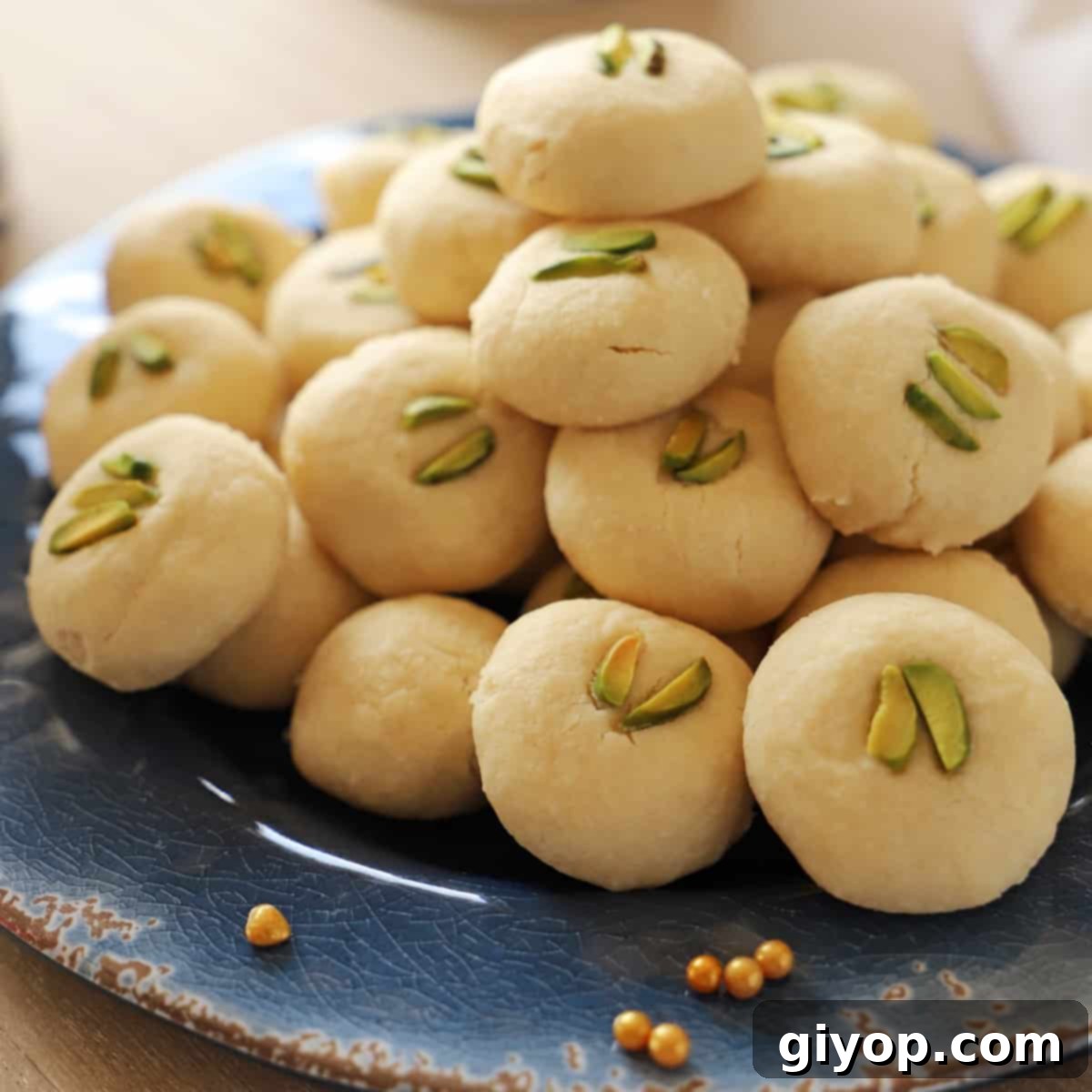
Ghraybeh, also known as Ghoraybeh or Ghorayeba, is a cherished traditional Middle Eastern shortbread cookie renowned for its delicate texture and rich, buttery flavor. These exquisite, melt-in-your-mouth cookies are a staple across Lebanese, Egyptian, and other Middle Eastern households, particularly during festive occasions and celebrations. Made with just three primary ingredients, Ghraybeh offers a subtly sweet indulgence that truly exemplifies simplicity perfected.
These exquisite Eid cookies are a magnificent choice to kickstart any holiday baking endeavors. Their popularity soars in Egypt during significant celebrations like Eid, Easter, and even as a delightful offering at weddings. The gentle sweetness and crumbly texture make them an irresistible treat, embodying the spirit of warmth and togetherness.
The Secret to Perfect Ghraybeh: Why This Recipe Works
Ghraybeh, much like Basbousa, appears deceptively simple with its minimal ingredient list, yet achieving that ideal melt-in-your-mouth texture can be a true culinary challenge. This particular recipe has been meticulously refined, passed down from an experienced pastry chef in Egypt, ensuring authentic results every time. While many home bakers struggle with Ghraybeh turning out too crumbly or too hard, this guide provides indispensable tips and precise techniques. By following these expert insights, you’ll consistently bake bakery-quality Ghraybeh that boasts the signature delicate, fine-textured crumb and distinctive ghee flavor, making it a truly perfected recipe for your home kitchen.
Essential Ghraybeh Recipe Ingredients
Key Ingredient Notes for Perfect Ghraybeh
- Ghee is Non-Negotiable: In this recipe, ghee is an absolute must. The unique composition of ghee, which is clarified butter with its milk solids and water removed, is what gives Ghraybeh its characteristic soft, melt-in-your-mouth texture. Using regular butter, even unsalted, introduces water into the dough. This water reacts with the flour to develop gluten, leading to a crunchy, tougher cookie rather than the desired delicate crumb. For truly authentic Ghraybeh, commit to using good quality ghee; it makes all the difference in flavor and texture.
- All-Purpose Flour: Standard all-purpose flour works perfectly for Ghraybeh. While some recipes might suggest different types, the key here is the ratio with ghee and powdered sugar. Ensure your flour is fresh and unbleached for the best results.
- Powdered Sugar (Confectioners’ Sugar): This ingredient is crucial for the fine, smooth texture of Ghraybeh. The finely ground nature of powdered sugar (which often contains a small amount of cornstarch to prevent caking) blends seamlessly with the ghee and flour, contributing to the cookie’s delicate structure. Homemade powdered sugar, which may not be as fine and typically lacks the anti-caking agent, is generally not recommended as it can affect the cookie’s consistency. Precision with the amount of powdered sugar is also vital, as even a slight variation can alter the final texture, making the cookies either bland or too crunchy.
Essential Equipment for Crafting Ghraybeh
The following are affiliate links. We are a participant in the Amazon Services LLC Associates Program, an affiliate advertising program designed to provide a means for us to earn fees by linking to Amazon.com and affiliated sites.
- Stand Mixer: While possible by hand, preparing Ghraybeh dough is significantly easier and more effective with a stand mixer. The long beating time required to achieve the correct creamy consistency of the ghee and sugar is best accomplished mechanically. A robust mixer, like this KitchenAid, ensures the ingredients are thoroughly aerated and combined, which is fundamental to the cookie’s delicate structure.
- Kitchen Scale: We cannot stress enough the importance of a kitchen scale for this recipe. Baking, especially for delicate cookies like Ghraybeh, is a science where precise measurements are paramount. Volume measurements (cups) can vary widely depending on how ingredients are scooped and leveled, leading to inconsistent results. A simple, inexpensive scale will dramatically improve your baking accuracy, or you can opt for a more professional model like this one.
- Sturdy Aluminum Baking Sheet: A good quality baking sheet is essential for even heat distribution, which prevents uneven baking and ensures your Ghraybeh cooks uniformly. Look for a sturdy aluminum baking sheet that resists bending or twisting at high temperatures, contributing to perfectly baked cookies with a consistent pale color.
Ghraybeh Recipe Instructions: Step-by-Step Guide
- In the bowl of your stand mixer, combine the all-purpose flour and powdered sugar. Use a spoon or whisk to gently mix these dry ingredients until thoroughly incorporated.
- Add the cold ghee to the flour and sugar mixture. Attach the flat beater attachment to your mixer and begin mixing on a low speed for approximately 4-5 minutes. Initially, the mixture will resemble wet sand, gradually transforming into a more cohesive dough.
- Increase the mixer speed to medium-low and continue beating for an additional 10 minutes. During this extended mixing period, the dough will become incredibly creamy and smooth, reminiscent of a thick, luxurious hummus in consistency. This long beating time is crucial for developing the characteristic delicate texture of Ghraybeh.
- Once the dough reaches the desired consistency, spoon it onto a piece of plastic wrap. Wrap it tightly and place it in the freezer for 15-20 minutes, or alternatively, refrigerate it for a minimum of 2 hours. The dough must be very firm and cold before shaping.
- Preheat your oven to 320°F (160°C). Position an oven rack in the middle.
- Retrieve the chilled dough. Divide the dough into four equal portions. Take one portion out to work with, keeping the remaining three portions covered and refrigerated to maintain their cold temperature.
- Using a small spoon or a cookie scoop, measure out approximately 11-12 grams of dough for each cookie. We highly recommend using a kitchen scale for accuracy here, as eyeballing can lead to inconsistent results and baking issues.
- Gently roll each portion of dough between the palms of your hands to form a smooth, small ball. Place these dough balls directly onto an ungreased aluminum baking sheet, ensuring adequate spacing between each cookie.
- Lightly press down on the top of each cookie ball to slightly flatten it. If desired, gently press a single pistachio or pine nut into the center of each flattened cookie for a traditional garnish and a hint of extra flavor.
- Bake for precisely 15 minutes. It is vital not to wait for the Ghraybeh to change color significantly. They should remain very pale, appearing almost white or a very light yellow. Over-baking will result in a hard, crunchy cookie, losing its signature melt-in-your-mouth quality.
- After baking, allow the Ghraybeh to cool completely on the baking sheet for at least 10-15 minutes. These cookies are extremely delicate when warm. Once slightly cooled, carefully transfer them to a wire cooling rack and let them set completely for a minimum of 2 hours before handling or serving. This extended cooling period allows them to firm up and prevents breakage.
💡 Expert Tips for Flawless Ghraybeh
Expert Tip: The undeniable secret behind Ghraybeh’s signature smooth, fine texture is the prolonged beating process. We are talking about a significant 15 minutes in your stand mixer! This extended mixing aerates the ghee and sugar, creating an incredibly light and delicate dough that translates into that sought-after crumbly, melt-in-your-mouth cookie.
- Ghee Temperature is Crucial: Always use cold ghee for this recipe, not frozen but just adequately chilled. The temperature of your ghee significantly impacts the final texture of your Ghraybeh. Using melted ghee is incorrect as it changes the emulsion and dough consistency. To eliminate any uncertainty caused by varying kitchen temperatures, whether you’re baking in the heat of summer or the chill of winter, consistently using cold ghee ensures the best results.
- Perfecting Ingredient Ratios: The balance of ingredients is incredibly precise in Ghraybeh. For instance, some recipes suggest 170 grams of ghee, which often results in excessively crumbly Ghraybeh that falls apart even when handled gently. Conversely, recipes calling for 135 grams of ghee can yield cookies that are too crunchy, failing to achieve the characteristic melt-in-your-mouth texture. Similarly, while many recipes use 75 grams of powdered sugar, increasing it by just 10 grams to 85 grams makes a profound difference, elevating the flavor from bland to perfectly sweet without compromising the delicate texture. Exceeding this amount, however, risks making the cookies crunchier.
- Handling Sticky Dough: Ghraybeh dough is naturally quite sticky and cannot be easily shaped by hand until it has been thoroughly chilled. If you find it too challenging to roll into balls, an excellent alternative is to use a piping bag fitted with a round tip. Pipe the Ghraybeh dough onto your baking sheet in neat 1 ½ inch (3 cm) circles. After piping, refrigerate the entire sheet for about 10 minutes to firm up the cookies, then gently flatten the tops with your finger before proceeding with the baking instructions.
- Proper Cooling and Setting: Ghraybeh is a very delicate cookie, especially when warm, and requires sufficient time to cool down and set completely before it can be handled. To determine if your cookies have set properly, gently touch one with your finger. If it doesn’t leave any residue on your finger and your finger doesn’t make a dent in the cookie, they are ready to be transferred and stored. Premature handling can cause them to break apart.
- Regional Flavor Variations: Traditionally, in Egypt, Ghraybeh is flavored solely by the rich aroma of ghee, with no additional extracts like vanilla. However, in other parts of the Middle East, particularly in the Levant region, it’s common to infuse Ghraybeh with fragrant orange blossom water or rose water, adding a distinctive floral note that is highly cherished. Feel free to experiment with a few drops of these extracts if you prefer a more aromatic cookie, but remember that the classic Egyptian version relies purely on ghee.
- Making Your Own Ghee: For the freshest and most flavorful Ghraybeh, consider making your own ghee. It’s a surprisingly simple process, and a detailed, easy-to-follow method can be found here. Homemade ghee offers a depth of flavor that can elevate your cookies even further.
⌛ Make Ahead Ghraybeh: Convenience for Your Baking Schedule
Ghraybeh dough is incredibly forgiving and perfect for make-ahead baking. The prepared dough, whether rolled into balls or left as a cohesive mass, can be stored in the refrigerator for up to 3 days without losing its quality. For longer storage, the dough can be frozen for up to 3 months. For ultimate convenience, it’s often easier to roll the Ghraybeh into individual shapes before freezing them, rather than freezing the entire dough ball. When baking from frozen, expect to add just a minute or two longer to the typical baking time to ensure they cook through evenly.
🧺 Optimal Ghraybeh Storage
Once completely cooled and set, Ghraybeh cookies can be stored in an airtight container at room temperature on your kitchen counter for 2-3 weeks. Interestingly, many connoisseurs find that Ghraybeh actually develops an even better flavor and texture on the second day, allowing the rich ghee notes to deepen and the crumb to soften further. Ensure they are kept away from direct sunlight and excessive humidity to maintain their delicate structure.
💬 Ghraybeh Recipe FAQs
Unfortunately, the answer is a definitive no. Ghee is an essential ingredient that cannot be substituted with regular butter in Ghraybeh. Butter contains both water and milk solids. The water content in butter will interact with the flour, causing gluten to develop. This gluten development results in a crunchy, hard cookie, which is the exact opposite of the desired delicate, melt-in-your-mouth texture that defines authentic Ghraybeh. To achieve the traditional texture, only pure ghee should be used.
Determining when Ghraybeh is done can be tricky, as oven temperatures vary, and the cookies are not meant to brown. The key is to bake them until they look visibly “set” and firm, but maintain a very pale, almost white or light yellow color. The bottom of the cookies should also remain pale, without any noticeable browning. When gently pressed, a properly baked Ghraybeh will feel firm but not hard, and your fingers should not leave a significant dent on the surface. It’s crucial to resist the urge to bake them longer for color, as this will lead to a dry, crunchy cookie that lacks the characteristic tenderness.
📣 Explore More Middle Eastern Sweet Treats
- Pistachio Stuffed Kahk: A must-have during celebrations in Egypt, these Pistachio stuffed Kahk cookies offer a delightful combination of crumbly dough and nutty filling. You might also want to try Kahk prepared the traditional way.
- Petit Fours: These charming little Petit Fours are also a common sight during holidays. They are wonderfully versatile; fill them with decadent chocolate spread or your favorite jam for a truly delicious experience.
- Maamoul: A traditional Middle Eastern cookie, Maamoul is typically filled with a rich date paste or nuts. It boasts a wonderfully soft texture and a delicately spiced flavor, perfect for special occasions.
Other Delectable Cookie Recipes You’ll Love
- 3-Ingredient Almond Butter Cookies: These Almond Butter Cookies are chewy, delicate, and packed with a rich nutty flavor. You can whip up these irresistibly sweet treats in less than 30 minutes.
- Irresistible Caramel Chocolate Chip Cookies: Elevate your ordinary cookies with these decadent Caramel Chocolate Chip Cookies. Featuring a chewy texture and a gooey caramel center, they are a heavenly treat suitable for any occasion.
- Cherry Cookies: Discover the delightful flavor of these delicious, chewy Cherry Cookies, bursting with vibrant cherry goodness. These crowd-pleasing little cookies are perfect for enjoying the taste of cherries anytime.
We sincerely hope you enjoy this Ghraybeh recipe! If you make this recipe, please share your creation by snapping a pic and tagging it #amiraspantry. We absolutely love seeing your culinary masterpieces on Instagram, Facebook, and Twitter!
Don’t miss out on future recipes and exciting updates! Sign up for the FREE Amira’s Pantry newsletter, delivered directly to your inbox with exclusive tips and surprises. Stay connected with us on Facebook, Twitter, Pinterest, and Instagram for all the latest culinary adventures.
If you love this recipe, don’t forget to give it a ⭐⭐⭐⭐⭐ star rating and share a photo of your finished dish! It brings us immense joy to see your photos and your unique take on our recipes. Thank you for your support!
Ghraybeh (Ghoraybeh) Recipe: Authentic Middle Eastern Shortbread Cookies
Print
Pin
Rate
SaveSaved!
Ingredients
- 250 g all purpose flour (approximately 2 cups, but weigh for accuracy)
- 150 g cold ghee (approximately ⅔ cup; must be cold, not melted, and not butter)
- 85 g powdered sugar (approximately ¾ cup; use store-bought confectioners’ sugar for best texture)
Optional for Garnish:
- Pistachios or Pine Nuts
Instructions
- In your stand mixer bowl, add the all-purpose flour and powdered sugar. Mix these dry ingredients together with a spoon until well combined.
- Add the cold ghee to the dry mixture. With the flat beater attachment, begin mixing on low speed for 4-5 minutes. The mixture will initially look like wet sand, then gradually come together into a more dough-like form.
- Increase the speed to medium-low and continue mixing for another 10 minutes. By this point, your dough should be very creamy and smooth, resembling the consistency of thick hummus. This extended beating is key to its delicate texture.
- Spoon the dough onto a sheet of plastic wrap and wrap it tightly. Place the wrapped dough in the freezer for 15-20 minutes, or in the refrigerator for at least 2 hours, until it is firm enough to handle.
- Preheat your oven to 320°F (160°C). Position an oven rack in the middle of the oven.
- Divide the chilled dough into 4 equal sections. Take one section out to work with, keeping the remaining portions refrigerated to ensure they stay cold.
- Using a kitchen scale for precision, scoop out approximately 11-12 grams of dough for each cookie. Roll each piece between the palms of your hands until smooth and round, then place directly onto an ungreased aluminum baking sheet.
- Gently press the top of each cookie lightly to flatten it slightly. If desired, press a pistachio or a pine nut into the center of each cookie as a garnish.
- Bake for 15 minutes. It is crucial not to wait for the cookies to brown; they should remain pale yellow or almost white. Over-baking will result in a hard texture.
- Allow the Ghraybeh to cool completely on the baking sheet for 10-15 minutes, as they are very fragile when warm. Then, carefully transfer them to a wire cooling rack and let them set completely for at least 2 hours before handling or serving.
Video Tutorial
A video demonstration for this recipe would typically be embedded here, showing the step-by-step process of making Ghraybeh.
Notes
- We cannot emphasize enough the importance of using a kitchen scale for this recipe. While cup measurements are provided as a rough estimate, precise gram measurements are vital for achieving the perfect Ghraybeh texture. Even an inexpensive kitchen scale will significantly improve your results.
- Always use cold ghee, not frozen but just chilled from the refrigerator. Melted ghee will negatively impact the dough’s consistency, leading to a different outcome. Using cold ghee helps stabilize the dough, especially important regardless of whether you’re baking in a warm or cool environment.
- The delicate balance of ingredients is key. For example, using 170 grams of ghee (as some recipes suggest) can make the cookies too crumbly to handle, while 135 grams might result in a crunchier texture, not the desired melt-in-your-mouth characteristic. Similarly, an exact amount of powdered sugar, specifically 85 grams, has been found to be perfect for flavor and texture; a mere 10 grams more than the commonly cited 75 grams makes a significant difference. Exceeding this can lead to crunchier cookies.
- Homemade powdered sugar is generally not suitable for this recipe. Store-bought confectioners’ sugar is finely milled and often contains a small amount of cornstarch that aids in texture and prevents caking, which is crucial for Ghraybeh’s delicate crumb.
- Ghraybeh dough is inherently sticky and difficult to shape by hand until it has been thoroughly chilled. If you prefer, you can place the batter into a piping bag fitted with a round tip. Pipe 1 ½ inch (3 cm) circles onto the baking sheet. Then, refrigerate the sheet for 10 minutes before gently flattening the tops and proceeding with baking as directed.
- These are very delicate cookies that require ample time to cool and set. To check if they are ready to handle, gently touch a cookie; it should not leave any residue on your finger, nor should your finger create a dent in the cookie. This indicates they have firmed up sufficiently.
- In Egypt, Ghraybeh is traditionally flavored only with ghee, allowing its rich, pure taste to shine, without the addition of vanilla or other extracts. However, in other regions of the Middle East, particularly the Levant, it is common to incorporate fragrant orange blossom water or rose water for an aromatic twist.
- Make Ahead:
- The Ghraybeh dough can be prepared in advance and stored in the fridge for up to 3 days. For longer storage, it can be frozen for up to 3 months. For easier baking later, it is recommended to roll the cookies into their final shape before freezing, rather than freezing the dough as a large ball. Frozen cookies may require an extra minute or two of baking time.
- To Store:
- Once baked and fully cooled, Ghraybeh can be stored in an airtight container on your counter for 2-3 weeks. Many find that the flavor and texture actually improve on the second day after baking.
Nutrition Information (per cookie)
Calories: 73 kcal | Carbohydrates: 8g | Protein: 1g | Fat: 4g | Saturated Fat: 3g | Cholesterol: 11mg | Sodium: 1mg | Potassium: 8mg | Fiber: 1g | Sugar: 2g | Calcium: 1mg | Iron: 1mg
This recipe was first published on Jul 27, 2014. It was last updated on May 6, 2021, with important tips, clear step-by-step instructions, and improved readability to ensure your success in baking perfect Ghraybeh.