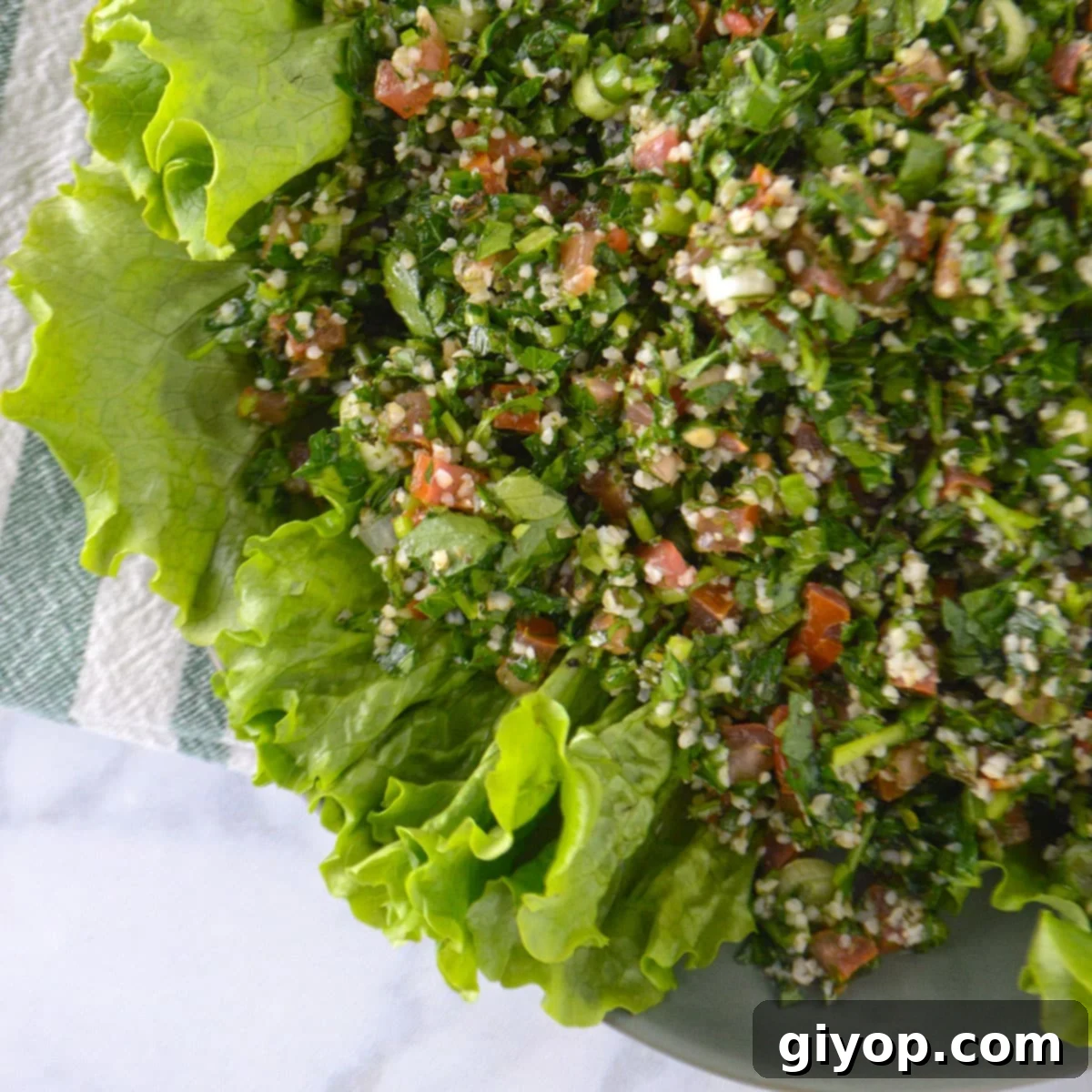
Tabouli, also widely known as Tabbouleh, is arguably the crown jewel of Mediterranean salads, celebrated for its refreshingly vibrant flavors and textural harmony. Far from being just a simple side, this iconic dish transforms a handful of garden-fresh ingredients into an edible masterpiece, bringing a burst of zest and earthiness straight to your dinner table. It’s a testament to the power of fresh herbs and a staple that has captivated palates across the globe.
For many, including myself, Tabbouleh salad is more than just a dish; it’s a culinary passion, a true delight to both prepare and savor. In the heart of the Levant region – encompassing countries like Lebanon, Syria, Jordan, and Palestine – no festive banquet or intimate family gathering is ever truly complete without a generous serving of this beloved parsley and bulgur salad. Traditionally, it’s scooped up with crisp Romaine lettuce leaves, offering a delightful crunch with every bite, though many also enjoy it with a simple fork. Each mouthful is an explosion of bright, lemony notes, intertwined with addictively earthy flavors that leave you craving more.
This invigorating Lebanese salad serves as an exquisite accompaniment to a variety of grilled meats and Middle Eastern delicacies. Imagine it alongside succulent Kofta Kebab, tender Shish Tawook chicken skewers, or perfectly charred Shish Kebab. Its tangy profile beautifully cuts through the richness of the meat, creating a balanced and unforgettable meal. Moreover, Tabbouleh is an absolute dream paired with Stuffed Grape Leaves (Dolmades), complementing their savory depth with its unparalleled freshness.
Beyond its culinary versatility, Tabouli stands out as a remarkably healthy and nutritious option, perfect for anyone seeking a wholesome, plant-based dish. Packed with an abundance of fresh parsley, ripe tomatoes, crisp green onions, and hearty bulgur wheat, it’s a powerhouse of vitamins, minerals, and dietary fiber. Drizzled with high-quality olive oil and freshly squeezed lemon juice, it offers healthy fats and a potent antioxidant boost. This vibrant salad is not just a treat for the taste buds; it’s a gift to your body, making it a guilt-free pleasure for all occasions.
The Enduring Legacy of Tabbouleh: A Culinary Journey
The history of Tabbouleh is as rich and layered as its flavors, deeply rooted in the culinary traditions of the Levant. While the exact origins are often debated, it is widely believed that Tabbouleh originated in the mountains of Lebanon and Syria, where fresh herbs and bulgur wheat were staples in the local diet for centuries. Historically, it was likely a simple peasant dish, utilizing readily available ingredients to create a nutritious and satisfying meal. Over time, its popularity soared, transcending geographical boundaries to become a globally recognized symbol of Middle Eastern cuisine.
The very name “Tabbouleh” itself is derived from the Arabic word “taabil,” meaning “to season” or “to spice,” which perfectly encapsulates the dish’s essence – a celebration of fresh, bold flavors. In ancient times, bulgur, a cracked wheat cereal, was a cornerstone of diets in the fertile crescent, valued for its versatility and nutritional density. When combined with an abundance of wild herbs, especially parsley and mint, and dressed with the region’s ubiquitous olive oil and tart lemons, the foundations of what we now cherish as Tabbouleh were laid.
Each ingredient in traditional Tabbouleh plays a vital role, contributing to its signature taste and texture. The fine chop of the parsley is paramount, creating a delicate, almost fluffy consistency that distinguishes authentic Tabbouleh from coarser versions. The subtle chewiness of the bulgur, the bright acidity of lemon, the slight peppery kick of green onions, and the sweet burst of firm tomatoes all come together in a symphony of flavors that has enchanted generations. This simple yet profound combination is why Tabbouleh remains not just a recipe, but a cherished cultural emblem, reflecting the freshness, generosity, and vibrant spirit of Levantine hospitality.
📝 Essential Ingredients for Authentic Tabouli
Crafting the perfect Tabbouleh begins with selecting the freshest, highest-quality ingredients. The beauty of this salad lies in its simplicity, meaning each component must shine. This overview provides insights into the key ingredients. You’ll find the precise measurements and detailed instructions in the printable recipe card at the bottom of the page.
For this authentic Tabouli, you will need:
- Fine Bulgur Wheat (#1): This is the backbone of your tabbouleh. Opt for fine bulgur, not coarse, as it absorbs liquid quickly and gives the salad its characteristic texture. Avoid soaking it; a thorough rinse is all that’s needed to plump it up.
- Fresh Lemon Juice: The quintessential bright and tangy element that defines Tabbouleh’s flavor profile. Always use freshly squeezed lemon juice for the best taste. The amount can be adjusted to your preference, but don’t shy away from its tartness, as it mellows over time.
- Dry Mint (or Fresh Mint): Dry mint adds a concentrated, aromatic depth that fresh mint can’t always replicate. However, fresh mint leaves, finely chopped, are also a fantastic addition, lending a lighter, more vibrant note. Choose what you have on hand, but both contribute to the signature flavor.
- Firm Roma Tomatoes: Select firm, ripe Roma tomatoes. Their lower water content and robust flavor are ideal for dicing finely without making the salad watery. The small, even dice ensures they integrate perfectly into the salad.
- Green Onions: Both the white and green parts of the green onions are used for a mild, fresh onion flavor and a subtle crunch. Finely slice them to distribute their delicate sharpness throughout the salad.
- Fresh Flat-Leaf Parsley: This is the star of the show – the main ingredient and arguably the most important. You’ll need a generous amount of fresh, vibrant flat-leaf parsley. It must be very finely chopped, which is key to the authentic texture of Tabbouleh. For tips on keeping your parsley fresh, check out our guide on how to store parsley.
- High-Quality Olive Oil: A good extra virgin olive oil binds the ingredients together and adds a fruity, peppery note. It’s a fundamental component of the dressing, contributing healthy fats and a luxurious mouthfeel.
- Salt: Essential for seasoning and bringing out all the natural flavors. Add it just before serving to prevent the vegetables from releasing too much water and wilting.
Each ingredient, from the crisp parsley to the tangy lemon, plays a crucial role in creating the authentic, refreshing, and healthful experience that is Tabbouleh. Taking the time to select and prepare them properly will yield a salad that truly shines.
🥄 Simple Steps to Create Your Perfect Tabouli
Making Tabbouleh is more about precision in chopping and layering than complex cooking techniques. It’s a labor of love that rewards you with incredible flavor. This section provides an overview of the instructions, with detailed steps available in the recipe card below.
- Prepare the Bulgur: Start by thoroughly washing your fine bulgur wheat several times under cold running water. The key here is to rinse, not soak. Soaking will make the bulgur mushy. Once rinsed, drain it very well to remove any excess water. Place the drained bulgur in a large mixing bowl.
- Infuse with Flavor: Add the fresh lemon juice to the bulgur. If you are using dry mint, sprinkle it over the bulgur as well. Mix these ingredients thoroughly. This step allows the bulgur to absorb the vibrant lemon and mint flavors as it rehydrates slightly, setting the foundation for the salad’s taste.
- Layer the Vegetables: This is where the artistry of Tabbouleh comes in. Begin by adding a layer of finely chopped firm Roma tomatoes over the bulgur mixture. Do not mix it in yet. Next, layer the finely sliced green onions on top of the tomatoes.
- Add the Parsley Star: Finally, top all the layered vegetables with a generous, thick layer of your finely chopped fresh parsley. Again, resist the urge to mix everything at this stage. Covering the ingredients in layers allows the flavors to meld and prevents the parsley from wilting prematurely.
- Chill for Flavor Development: Cover the bowl tightly with plastic wrap and refrigerate. The chilling time is crucial for the flavors to deepen and for the bulgur to fully soften and absorb the liquids.
- Season and Serve: Approximately 30 minutes to 1 hour before you plan to serve, remove the bowl from the refrigerator. Uncover it, then add the salt and olive oil. Now, gently but thoroughly mix all the ingredients together until everything is well combined and evenly dressed. Cover again and return to the refrigerator until you are ready to present this magnificent salad. Chilling it further ensures it’s perfectly refreshing when served.
Patience in the chilling and seasoning stages is a small price to pay for the exceptional taste and texture of authentic Tabbouleh. Enjoy the process and the delicious reward!
💡 Amira’s Expert Tips for Authentic Tabouli
While my own culinary journey is rich, I owe these invaluable tips for truly authentic Lebanese Tabbouleh to a dear Lebanese friend. Her wisdom cut straight to the chase, ensuring an unrivaled taste and texture. Follow these guidelines to achieve Tabbouleh perfection:
- No Food Processor for Parsley! This is perhaps the most crucial rule. When it comes to chopping parsley for Tabbouleh, a food processor is your enemy. While it might seem like a time-saver, it bruises the delicate parsley leaves, turning them into a watery, pulpy mush rather than finely diced pieces. My mom, a true expert, could chop parsley incredibly finely by hand, a skill that transforms the salad’s texture. Embrace the traditional method of hand-chopping with a very sharp knife to achieve that light, fluffy consistency. My Lebanese friend was genuinely offended when she learned I once tried to use a food processor for Tabbouleh; consider it a grave culinary sin!
- Avoid Cucumber: This was a genuine surprise for me too – no cucumber in Tabbouleh? Indeed. While you certainly *can* add cucumber to a salad, my friend insisted that if you do, you mustn’t call it Tabbouleh. Authentic Tabbouleh salad does not include cucumber, as its high water content can dilute the distinct flavors and alter the texture. Stick to the traditional ingredient list for the true experience.
- Skip Pomegranate Molasses: Many modern interpretations of Middle Eastern salads incorporate pomegranate molasses for a sweet and tangy depth. However, for authentic Tabbouleh, it’s a definite no. The classic flavor profile relies solely on the bright, unadulterated tartness of fresh lemon juice. Pomegranate molasses would introduce a sweetness that deviates from the traditional, refreshing tang.
- Do Not Soak Bulgur: This is another surprising yet vital tip. Unlike many bulgur preparations, Tabbouleh’s bulgur should *not* be soaked. Soaking makes it too soft and can result in a gummy texture. Instead, the bulgur should only be rinsed thoroughly several times under cold water and then well-drained. It will absorb enough moisture from the lemon juice and the vegetables as it chills, achieving the perfect al dente texture.
- Add Salt Only Before Serving: Timing is everything when it comes to seasoning Tabbouleh. If you add salt too early, especially hours before serving, the salt will draw out moisture from the fresh vegetables, particularly the tomatoes and parsley. This leads to a wilted, watery salad that loses its crispness and vibrant appeal. Always incorporate the salt (along with the olive oil) just 30 minutes to an hour before you plan to serve, allowing it to remain fresh and appetizing.
- Use Firm Tomatoes and Fine Chopping: The quality of your vegetables and the precision of your chop are paramount. Choose the firmest Roma tomatoes you can find; they hold their shape better when diced. Ensure that your onions and tomatoes are chopped very finely, mirroring the fineness of the parsley. Uniform, small pieces integrate beautifully into the salad, ensuring every bite is perfectly balanced in flavor and texture.
Adhering to these “rules” isn’t about rigid adherence, but about honoring a tradition that has perfected Tabbouleh’s unique charm. The effort truly pays off in a bowl that earns rave reviews.
👩🍳 Creative Variations: Exploring Tabouli-Inspired Salads
While the authentic Lebanese Tabouli recipe is a purist’s delight, the world of culinary innovation offers plenty of “Tabouli-inspired” variations for those looking to explore new flavors or cater to different dietary needs. My Lebanese friend might not endorse calling these “Tabouli,” but they offer delightful twists on the classic concept.
- Spice it Up: For an additional layer of aromatic flavor, you can certainly add Arabic baharat or a traditional 7-spice blend to your bulgur mixture along with the lemon juice and mint. This introduces a warm, complex note that some palates enjoy, though it deviates slightly from the bright, fresh simplicity of the original.
- Grain Alternatives: If you’re looking for a gluten-free option or simply want to experiment with different textures and nutritional profiles, you can substitute bulgur with other grains or legumes.
- Quinoa Tabouli: Cooked quinoa makes an excellent gluten-free base, providing a similar light and fluffy texture to bulgur. It also boosts the protein content, making the salad even more substantial.
- Barley Tabouli: For a chewier texture and a nuttier flavor, cooked pearl barley can be a wonderful alternative. It adds another dimension of heartiness to the salad.
- Lentil Tabouli: Incorporating cooked green or brown lentils offers a significant protein and fiber boost, transforming the salad into a more robust and filling meal.
- Unusual Twists: Beyond grains and legumes, some creative adaptations introduce unexpected ingredients. I’ve even come across “apple tabbouleh,” which incorporates finely diced apples for a sweet and crisp element, and versions with roasted vegetables or even fruits. While these are certainly not traditional Tabbouleh, they demonstrate the versatility of the fresh herb and lemon dressing concept.
The beauty of these variations lies in their ability to adapt the core refreshing and herbaceous qualities of Tabouli to new ingredients and dietary preferences. However, it’s always worth acknowledging the profound difference between an authentic, time-honored recipe and its modern interpretations. These “Tabouli-inspired” creations can be delicious in their own right, but they are distinct from the classic Lebanese masterpiece.
💬 Frequently Asked Questions About Tabouli
What is a Tabouli salad traditionally made from?
Traditional Tabouleh is made from a precise blend of finely chopped fresh parsley, ripe tomatoes, crisp green onions, and fine bulgur wheat, all dressed in a tangy mixture of fresh lemon juice, high-quality olive oil, and seasoned with salt and sometimes a touch of dry mint. The dominant ingredient is always fresh parsley, which gives the salad its characteristic vibrant green color and herbaceous flavor.
How healthy is Tabouli?
Tabouli is renowned for its exceptional health benefits, making it an excellent choice for a healthy, vegan, and Mediterranean diet. It is packed with dietary fibers from the bulgur and fresh vegetables, aiding digestion and promoting satiety. The abundance of fresh parsley provides a wealth of vitamins (especially Vitamin K, C, and A) and antioxidants. The olive oil contributes healthy monounsaturated fats, which are beneficial for heart health and reducing inflammation. Overall, it’s a nutrient-dense dish that offers sustained energy and a host of protective benefits for your body.
Is Tabbouleh served hot or cold?
Tabbouleh is always served cold. Chilling the salad is crucial, as it allows the flavors to meld beautifully and the bulgur to fully hydrate from the lemon juice and vegetable juices without becoming soggy. It’s meant to be a refreshing, cooling salad, especially perfect during warmer months or as a counterpoint to rich, warm dishes. Serving it at room temperature might be acceptable if you have sensitive teeth, but the traditional and most enjoyable way is chilled.
How do you eat Tabouli?
The most traditional and popular way to enjoy Tabouli is by scooping it up with crisp, fresh Romaine lettuce leaves, using them as edible wrappers. This method adds an extra layer of crunch and freshness. Alternatively, it can be eaten with a fork as a delightful side dish or a light meal. It pairs wonderfully with other Middle Eastern staples like falafel, hummus, pita bread, and all varieties of grilled meats, making it a versatile and essential component of any spread.
Can Tabouli be made ahead of time?
Yes, Tabouli can certainly be made ahead, and in fact, it is often recommended! Preparing it several hours or even a day in advance (before adding salt and olive oil) allows the flavors to deepen and meld beautifully. The bulgur will also have ample time to absorb the lemon juice and vegetable moisture, achieving the perfect texture. Just remember to add the salt and olive oil about an hour before serving to maintain the freshness and prevent the vegetables from wilting.
What is the best type of parsley to use for Tabouli?
For authentic Tabouli, fresh flat-leaf parsley (also known as Italian parsley) is highly preferred over curly parsley. Flat-leaf parsley has a more robust, earthy flavor and a more tender texture, which contributes significantly to the overall taste and mouthfeel of the salad. It is also easier to chop very finely, a critical step for achieving the correct consistency.
👩🏫 My Personal Journey with Tabouli
My love affair with this vibrant salad began at an unusually young age – I was just nine years old! It might seem strange for a child to be so captivated by a salad, but it speaks volumes about my early inclination towards lemony, tangy dishes. Back in the early 80s, Tabbouleh wasn’t a common sight in Egyptian kitchens. It was during a dinner at a Palestinian friend’s house that I first encountered it. The moment I tasted its refreshing zest and herbaceous complexity, I was utterly hooked. My mom, equally charmed, happily left that evening with the recipe, and Tabbouleh has been a cherished family favorite ever since.
Today, the internet is brimming with countless Tabbouleh recipes, some featuring quinoa, others couscous, and I’ve even seen versions incorporating apples! While I’m generally a proponent of culinary creativity and “thinking outside the box,” my dear Lebanese friend views these adaptations with a certain degree of indignation. “Tabbouleh is being abused on the internet!” she would exclaim, passionately defending the traditional recipe. And, honestly, she has a point. While these innovative creations can be delicious, they should perhaps be aptly titled “Tabbouleh-inspired” rather than authentic Tabbouleh. The essence and identity of the original dish, with its specific ingredients and preparation methods, are what make it truly unique.
The good news is that through my friend’s unwavering commitment to culinary authenticity, I’ve gathered some truly invaluable tips for making a traditional Lebanese Tabbouleh. It’s a dish that demands patience and a certain dedication to the art of fine chopping – particularly the parsley, which is the heart and soul of the salad. But the reward for this labor of love is immense: a fantastic, aromatic bowl of freshness that consistently earns rave reviews from everyone who tastes it. It’s more than just a recipe; it’s a connection to a rich culinary heritage, a celebration of fresh, vibrant flavors that stand the test of time.
Serving Suggestions and Perfect Pairings
Tabbouleh’s versatility makes it an ideal companion to a wide array of dishes, enhancing any meal with its refreshing flavors. While it shines as a standalone light lunch or appetizer, it truly excels when paired thoughtfully with other Mediterranean and Middle Eastern fare.
- As a Side Dish: It’s the quintessential side for virtually any grilled meat. Its sharp, lemony notes cut beautifully through the richness of lamb, beef, or chicken kebabs, creating a balanced and satisfying dining experience. Think of it alongside juicy Kofta Kebab, tender Shish Tawook, or classic Shish Kebab.
- With Dips and Spreads: Tabbouleh is a natural fit for a mezze platter. Serve it alongside creamy hummus, smoky baba ghanoush, or labneh (strained yogurt). Use pita bread or crisp vegetables for dipping and layering with these delicious combinations.
- Vegetarian & Vegan Meals: It pairs perfectly with falafel, adding a fresh, herbaceous counterpoint to the crispy fried chickpeas. It also complements roasted vegetables, stuffed bell peppers, or vegetarian wraps.
- A Refreshing Starter: On its own, Tabbouleh makes a light and invigorating appetizer, especially when served with a side of fresh Romaine lettuce leaves for scooping.
- Buffet Favorite: Its vibrant colors and refreshing taste make it a standout dish at any potluck, picnic, or buffet. It’s always a crowd-pleaser and a welcome addition to any spread.
The beauty of Tabbouleh lies not only in its taste but also in its ability to complement and elevate almost any meal it joins, making it a beloved staple in countless kitchens.
📣 Related Recipes: Explore More Mediterranean Delights
If you’ve fallen in love with the fresh, vibrant flavors of Tabbouleh, you’ll surely enjoy exploring other wholesome and delicious Mediterranean and Middle Eastern recipes:
- Pearl Couscous Salad: A delightful and hearty salad featuring chewy pearl couscous, jewel-like pomegranate seeds, and crisp arugula. It’s tossed in a perfectly balanced sweet and sour dressing and often topped with chopped pecans for added crunch. A truly refreshing and colorful side dish that’s perfect for any occasion.
- Beet and Carrot Salad: One of my personal favorites, this salad is a celebration of earthy flavors and incredible nutrition. Its vibrant, appealing color is matched only by its satisfying taste, making it a beautiful and healthy addition to your table.
- Ditalini Pasta Salad: An incredibly easy and comforting side dish that’s a family favorite. This creamy pasta salad also serves wonderfully as a light dinner, particularly on warm summer nights when you crave something cool and satisfying.
- Healthy Grilled Chicken Salad with Kiwi Dressing: Featuring tender grilled chicken breast paired with an abundance of fresh, crisp vegetables, all tossed in a unique and refreshing creamy kiwi dressing. This salad makes for an excellent and satisfying choice for dinner or a hearty lunch.
More Lebanese Recipes to Savor
Dive deeper into the rich culinary traditions of Lebanon with these comforting and authentic recipes that bring the essence of the Middle East to your kitchen:
- Lebanese Lentil Soup: Get ready for a delicious, comforting, and hearty bowl of Lebanese Lentil Soup. This incredibly flavorful soup is a perfect meal on the go, to enjoy at home, or to take to work. Packed with wholesome ingredients, it’s both nutritious and deeply satisfying.
- Lebanese Rice Recipe: Try this incredibly delicious and easy-to-follow Lebanese Rice Recipe, the perfect side dish for any Middle Eastern meal. Its simple yet profound flavor makes it a versatile complement. Garnish with fresh herbs or toasted pine nuts to further boost its already wonderful flavors.
- Lebanese Pita Bread Recipe: Experience the true magic of homemade Lebanese Pita Bread. This pillowy, fluffy bread of the Middle East is a world apart from store-bought versions. Making it yourself guarantees a fresh, soft texture and authentic taste that simply cannot be replicated.
🥣 Recommended Equipment
While Tabbouleh is relatively simple to prepare, having the right tools can make the process even smoother, especially when it comes to the essential fine chopping:
- Vegetable Chopper: Although traditionalists swear by hand-chopping for parsley, a high-quality manual vegetable chopper can significantly speed up the process for tomatoes and green onions, making your Tabbouleh preparation a breeze. Just remember to be careful with parsley to avoid over-processing.
- Sharp Chef’s Knife: An indispensable tool for achieving the fine chop required for parsley and other ingredients. A sharp knife ensures clean cuts and prevents bruising of delicate herbs.
- Large Mixing Bowl: Essential for combining all the ingredients and allowing ample space for mixing, especially when adding the salt and olive oil before serving.
- Colander: For thoroughly rinsing the bulgur and ensuring it’s well-drained without any excess water.
- Cutting Board: A sturdy cutting board is necessary for safe and efficient chopping of all your fresh vegetables and herbs.
Investing in good kitchen tools makes the entire cooking experience more enjoyable and helps you achieve professional-quality results right in your own home.
Don’t want to miss a recipe? Sign up for the FREE Amira’s Pantry newsletter delivered to your inbox with lots of tips and surprises!
If you like this recipe, please don’t forget to give it a ⭐⭐⭐⭐⭐ star rating and attach a photo of your finished dish. It is always a pleasure to see your photos and check your own take on the recipe. Thank you for your support!
What’s new? Check out Amira’s Pantry Store on Amazon where you’ll find all kinds of nostalgic goodness! Thanks so much for being a part of Amira’s Pantry!
Authentic Lebanese Tabouli Salad
Tabouli is a vibrant, refreshing salad loaded with fresh parsley and bursting with flavor. Salty and tangy, this classic Lebanese salad is a cherished favorite on any Middle Eastern dinner table. Follow these expert tips for an authentic and truly delicious homemade Tabouli.
Course: Appetizer
Cuisine: Lebanese, Middle Eastern
Diet: Vegan, Healthy, Halal
Prep Time: 15 minutes
Chilling Time: 1 hour (minimum) to 8 hours (recommended)
Servings: 6 servings
Author: Amira
Ingredients
- ½ cup fine #1 bulgur wheat (about 70g)
- ½ to ¾ cup fresh lemon juice (adjust to your preferred tartness)
- 2 Tablespoons dry mint (or ⅓ cup finely chopped fresh mint leaves)
- 3-4 firm Roma tomatoes, finely diced
- 5 green onions (about 65g), cleaned, trimmed, and finely sliced (white and green parts)
- 3 bunches fresh flat-leaf parsley (about 330g), very finely chopped
- ½ cup extra virgin olive oil (120ml)
- 1 ½ teaspoon salt, or to your liking
Instructions
- Prepare Bulgur: Wash bulgur thoroughly several times under cold running water. Do not soak. Drain completely to remove all excess water. Place the drained bulgur in a large, deep mixing bowl.
- Combine with Flavor Base: Pour the fresh lemon juice over the bulgur. If using, sprinkle the dry mint evenly over the mixture. Mix these ingredients well to ensure the bulgur is coated and begins to absorb the flavors.
- Layer the Vegetables: Carefully layer the finely chopped tomatoes over the bulgur mixture. Do not mix yet. Next, add a layer of finely sliced green onions on top of the tomatoes.
- Add Parsley: Finally, create a generous, thick layer of your very finely chopped fresh flat-leaf parsley over all the other ingredients. Again, resist mixing at this stage.
- Chill (Short Term): If serving relatively soon (within a few hours), cover the bowl tightly with plastic wrap and refrigerate for at least 30 minutes. This allows the bulgur to soften and flavors to begin melding.
- Season and Serve (Short Term): After chilling for 30 minutes, remove the bowl. Add the salt and olive oil. Mix everything thoroughly until all ingredients are well combined and evenly dressed. Refrigerate for at least another hour to chill completely before serving.
For Best Results (Recommended Overnight Chilling):
- Cover and Refrigerate (Long Term): After layering all ingredients (bulgur, lemon juice, mint, tomatoes, green onions, parsley), cover the bowl tightly and refrigerate for at least 8 hours, or ideally overnight. This extended chilling time is crucial for the bulgur to perfectly rehydrate and for all the vibrant flavors to fully develop and integrate.
- Final Seasoning and Chill: About one hour before you plan to serve, take the bowl out of the refrigerator. Add the salt and olive oil. Mix all the ingredients together very well until everything is evenly combined. Cover the bowl again and return it to the refrigerator for the final hour of chilling.
- Serve: Present your authentic Tabouli salad chilled. It is traditionally scooped or wrapped in crisp Romaine lettuce leaves, but you can also enjoy it with a fork as a side dish or light meal.
Notes
Note 1: Lemon Juice Tartness: Be aware that the tartness of fresh lemon juice tends to mellow over time. While it might taste quite tart immediately after preparation, it will be perfectly balanced the next day. This is why longer chilling is often recommended.
Note 2: Mint Options: You can use ⅓ cup of finely chopped fresh mint leaves as a substitute for the dry mint. Fresh mint offers a brighter, lighter flavor profile.
Note 3: Optional Spices: Some people enjoy adding a pinch of Arabic Baharat or 7-spice blend to the bulgur along with the lemon juice. I personally prefer it with just the dry mint to let the fresh herb flavors truly shine.
Nutrition
Calories: 217kcal | Carbohydrates: 13g | Protein: 2g | Fat: 19g | Saturated Fat: 3g | Polyunsaturated Fat: 2g | Monounsaturated Fat: 13g | Sodium: 103mg | Potassium: 183mg | Fiber: 3g | Sugar: 2g | Vitamin A: 473IU | Vitamin C: 15mg | Calcium: 21mg | Iron: 1mg
(Nutritional information is an estimate and may vary based on specific ingredient brands and preparation methods.)
First published May 10, 2016. Last updated August 24, 2023, with important tips, clear step-by-step instructions, improved readability, and expanded content for a comprehensive guide to authentic Tabouli.