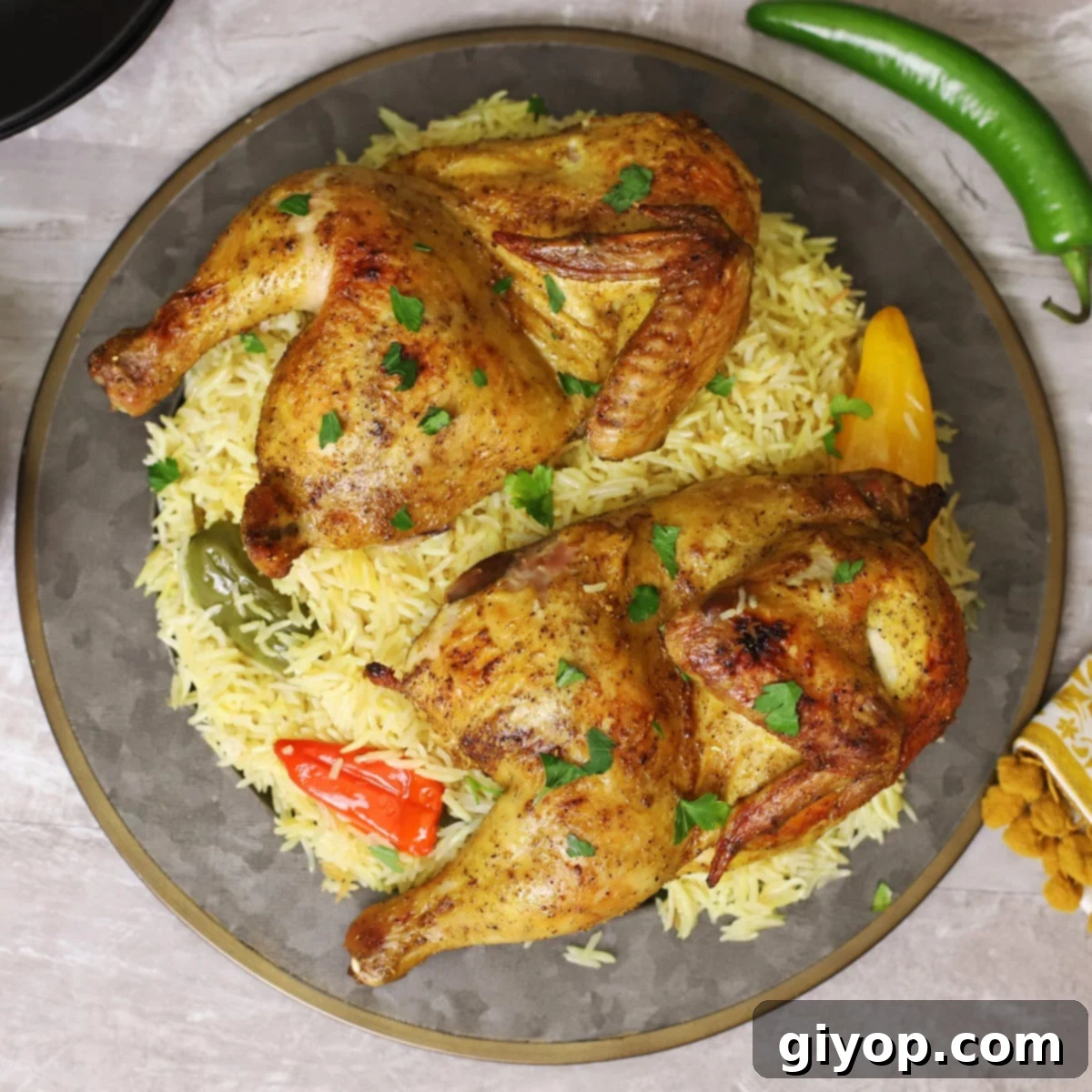
Authentic Yemeni Chicken Mandi: A Flavorful Journey of Rice and Roasted Chicken
Embark on a culinary adventure with Chicken Mandi, a truly iconic dish originating from the heart of Hadhramaut, Yemen. This traditional masterpiece brings together succulent, marinated chicken with exquisitely spiced Basmati rice, creating an aromatic and profoundly satisfying meal. More than just a recipe, Mandi represents a rich cultural heritage, celebrated widely across the entire Arab nation for its unique cooking method and unforgettable flavor profile.
While often compared to other Middle Eastern rice and meat dishes, Mandi distinguishes itself through its distinctive blend of spices and its traditional preparation. It’s a dish that tells a story of hospitality, community, and the aromatic flavors of the Arabian Peninsula, making it a beloved staple for family gatherings and special occasions.
The Ancient Art of Mandi: From Earth Oven to Your Kitchen
Traditionally, Yemeni Chicken Mandi achieves its signature taste through a fascinating and rustic cooking method. In rural Yemen, Mandi is prepared in a “taboon” or “tandoor,” a special hole dug in the ground outdoors. Hot coals are carefully placed at the bottom, and a large metal pan, often containing the marinated chicken and rice, is suspended above or placed directly on the coals. The hole is then tightly sealed, allowing the dish to slow-cook and absorb a deep, earthy, smoky flavor from the indirect heat and smoke.
Fortunately, you don’t need to dig up your backyard to experience this authentic Yemeni delight. This recipe has been expertly adapted to recreate the tender chicken, fragrant rice, and characteristic smoky essence right in your home oven. With a few clever techniques, you can enjoy all the traditional flavors without the elaborate outdoor setup, bringing the taste of Yemen directly to your dining table.
Why This Oven-Baked Mandi Recipe is a Must-Try
This recipe for oven-baked Chicken Mandi makes preparing an authentic Middle Eastern feast surprisingly accessible, combining complex flavors with straightforward steps. It’s designed to deliver the rich taste and tender texture of traditional Mandi using practical home cooking methods.
Unrivaled Flavor Infusion
One of the hallmarks of this Mandi recipe is the ingenious method of cooking the chicken directly over the rice. As the chicken bakes, its savory juices naturally drip down, basting the Basmati rice below. This process imbues the rice with incredible depth and flavor, making every grain a testament to the dish’s deliciousness. The rice absorbs not only the chicken’s natural essence but also the exquisite notes from the chicken’s marinade, resulting in a cohesive and harmonious taste experience.
Aromatic Spice Blend
The secret to Mandi’s captivating aroma and flavor lies in its carefully selected spices. This recipe utilizes Hawaij seasoning, a quintessential Yemeni spice mix known for its warm and earthy notes. This, combined with whole spices such as cardamom, cinnamon sticks, bay leaves, coriander, and black peppercorns, creates a fragrant foundation for both the chicken and the rice. The result is a symphony of Middle Eastern flavors that dances on your palate.
Effortless Assembly for Impressive Results
Despite its luxurious appeal, this Mandi recipe is remarkably easy to assemble. The chicken is simply marinated in olive oil and the special Hawaij seasoning, allowing the flavors to penetrate deep into the meat. The Basmati rice is then prepared by combining it with the remaining whole spices, a touch of ghee, and fresh peppers. The main components come together with minimal fuss, making it an ideal dish for both experienced cooks and those new to Middle Eastern cuisine.
Signature Smoky Essence, Reimagined
To truly replicate the traditional “taboon” experience, this recipe incorporates a clever smoke infusion technique. A single piece of hot charcoal, briefly introduced to the cooked dish, imparts that distinctive, authentic smoky flavor that is characteristic of Mandi. This step elevates the dish from merely delicious to truly unforgettable, adding an extra layer of depth that transports you straight to Yemen.
Essential Ingredients for Your Yemeni Chicken Mandi
Creating an authentic Chicken Mandi begins with selecting the right ingredients. This overview highlights the key components that will transform your kitchen into a hub of Middle Eastern aromas. You’ll find precise measurements and detailed instructions in the recipe card at the bottom of this page.
Chicken Selection: The Heart of the Dish
For the most flavorful and tender Mandi, bone-in chicken is highly recommended. The bones add depth to the overall flavor, especially as their juices drip into the rice below. A whole chicken, cut in half or into quarters, works wonderfully, offering a beautiful presentation and a variety of textures. You can also opt for individual bone-in chicken pieces like thighs or drumsticks, depending on your preference and serving needs. Skin-on chicken is ideal, as it crisps up beautifully under the broiler and locks in moisture during cooking.
Basmati Rice: The Fragrant Foundation
Basmati rice is the undisputed champion for Mandi. Its long, slender grains cook up fluffy and separate, preventing the dish from becoming sticky or clumpy. Basmati also possesses a distinct, delicate aroma that perfectly complements the rich spices of Mandi. While other long-grain rices can be used in a pinch, Basmati truly elevates the dish to its traditional excellence.
The Soul of Mandi: Hawaij Spice Mix and Aromatic Whole Spices
The magic of Mandi largely comes from its unique spice blend. We’ll use Hawaij (Yemeni spice mix), a versatile blend typically containing black peppercorns, cumin, coriander, turmeric, cinnamon, cloves, and cardamom. Its complex flavor profile is essential for the authentic taste. In addition to Hawaij, a selection of whole spices further enhances the rice: whole cardamom pods, cinnamon sticks, bay leaves, whole black peppercorns, and coriander seeds. These spices infuse the rice with deep, aromatic notes as it cooks. Saffron, even a small pinch, contributes a beautiful golden hue and a subtle, luxurious fragrance to the chicken marinade.
Fats and Flavor: Oil and Ghee
Olive oil is used for the chicken marinade, helping to tenderize the meat and carry the spice flavors. For the rice, ghee (clarified butter) is preferred for its rich, nutty flavor, which adds a wonderful depth to the Basmati. If ghee is unavailable, regular butter can be a suitable substitute, offering a similar richness to the rice.
Fresh Peppers and Water
A mix of fresh peppers, both sweet and chili, can be added to the rice for an extra layer of flavor and a gentle hint of warmth. Feel free to adjust the quantity and type of peppers to suit your heat preference. Water is, of course, essential for cooking the rice to perfection, ensuring it absorbs all the wonderful flavors.
Optional Enhancements and Equipment Notes
For an even more traditional touch, consider adding optional whole spices like cumin seeds, whole cloves, and dried limes (Loomi) to the rice. While traditionally included, some may prefer to omit them if their family is particular about whole spices in their food. If you don’t have a wire rack to suspend your chicken over the rice, a sturdy piece of aluminum foil can be used effectively. Simply poke several holes in the foil to allow the chicken juices to drip down and flavor the rice as they cook together.
Step-by-Step Guide to Perfect Chicken Mandi
Preparing this authentic Chicken Mandi is a rewarding experience, leading to a truly memorable meal. Follow these steps to ensure your dish is as flavorful and tender as possible. A detailed recipe card is available at the bottom of the page.
Preparing the Aromatic Chicken
- Begin by placing your bone-in, skin-on chicken pieces in a wide dish. Sprinkle both sides generously with salt, ensuring an even coating. This initial seasoning is crucial for developing the chicken’s flavor.
- In a separate small bowl, combine the olive oil, Hawaij spice mix, and a pinch of saffron threads. Gently crush the saffron threads between your fingers as you add them to release their full aroma and color. Mix these ingredients thoroughly to create a vibrant marinade.
- Generously brush the entire chicken, inside and out, with this aromatic mixture. Ensure every part of the chicken is coated. Cover the dish and refrigerate for at least one hour, or ideally, up to 24 hours. The longer the marination, the deeper the flavor will penetrate the meat.
Crafting the Flavorful Basmati Rice
- Preheat your oven to 350°F (175°C).
- In a deep oven-safe dish, add the Basmati rice. Incorporate the whole cinnamon stick, bay leaves, cardamom pods, whole peppercorns, coriander seeds, and salt. Add any optional whole spices such as cumin seeds, whole cloves, or dried limes if desired. Mix these ingredients thoroughly so the spices are evenly distributed throughout the rice.
- Nestle the assorted fresh peppers and a tablespoon of ghee (or butter/oil) into the rice mixture. Pour in the specified amount of water, ensuring it’s evenly distributed over the rice.
Assembling for Oven Perfection
- Place a wire rack over the deep oven dish containing the rice. Carefully arrange the marinated chicken pieces on the wire rack. Alternatively, if you don’t have a rack, cover the dish with heavy-duty aluminum foil, poking several holes in it with a toothpick to allow juices to drip. Place the chicken directly on top of this perforated foil.
- Tightly cover the entire dish with another layer of aluminum foil. This creates a steaming environment that ensures the chicken cooks evenly and remains incredibly tender, while its juices infuse the rice below.
- Bake in the preheated oven until the chicken is cooked through and tender. Use a meat thermometer to ensure the internal temperature of the thickest part of the chicken reaches a minimum of 165°F (74°C). Cooking time will vary depending on the size of your chicken pieces, but typically ranges from 1 hour 15 minutes to 1 hour 45 minutes.
Achieving Golden Crispy Chicken and Authentic Smoke Infusion
- Once the chicken is cooked, carefully remove the top layer of aluminum foil. Place the dish under the broiler for 5-10 minutes, or until the chicken skin becomes beautifully browned and crisp. Keep a close eye on it to prevent burning.
- For the authentic smoke infusion, heat a piece of charcoal over an open flame (like a gas burner) until it is glowing hot. Remove the chicken from the rack or foil and place it directly over the rice in the dish. Using tongs, carefully transfer the hot charcoal into a small, heatproof bowl (or a few layers of aluminum foil shaped into a bowl). Place this bowl in the middle of your dish, directly on the rice. Pour about a tablespoon of oil over the hot charcoal – it will immediately begin to smoke.
- Quickly and tightly cover the entire dish with aluminum foil again. Let it rest covered for 10-15 minutes. This allows the smoke to circulate and infuse both the chicken and the rice with that characteristic Mandi aroma.
- Finally, remove the chicken and gently fluff the rice to mix in the flavorful juices and distribute the color. Before serving, remove the whole spices from the rice. Spoon the fragrant rice onto a large serving platter and top with the broiled chicken.
Pro Tips for an Unforgettable Mandi Experience
Mastering Chicken Mandi involves a few key techniques and considerations that can elevate your dish from good to exceptional. These expert tips are designed to help you achieve the most authentic and flavorful results.
Mastering the Smoky Aroma
The charcoal smoke infusion is a traditional Middle Eastern technique crucial for imparting Mandi’s signature flavor. The rapid release of smoke when oil hits the hot charcoal envelops the entire dish, mimicking the earthen oven effect. When selecting your charcoal, opt for natural, lump charcoal if possible, as it tends to produce a cleaner smoke. Always exercise caution when handling hot charcoal. If a heatproof bowl is not readily available, simply fashion a small bowl using several layers of heavy-duty aluminum foil to safely contain the charcoal. After the smoking process, ensure the charcoal is completely cool by running it under cold water before disposal. For added safety, let it sit in a heatproof area for a day or two.
Elevating Flavor with Zhoug Sauce
Traditional Mandi chicken, while tender and aromatic, often has a subtle flavor. This is intentional, allowing the fragrant rice to shine. To provide a vibrant contrast and an explosion of taste, Mandi is almost always served with a special spicy green sauce called Zhoug. This fresh, herbaceous, and fiery condiment perfectly complements the richness of the chicken and rice, adding an invigorating kick. Consider serving it on the side, allowing everyone to customize their spice level.
Marination Secrets for Best Results
For the most tender and flavorful chicken, using fresh, not frozen, bone-in chicken is paramount. While this recipe suggests marinating for at least an hour, allowing the chicken to marinate for a longer period—ideally 4-8 hours, or even up to 24 hours—will yield the deepest flavors. The salt helps tenderize the meat, and the oil carries the spices deep into the chicken fibers. If you’re pressed for time, even an hour will make a difference, but patience here truly pays off.
Alternative Cooking Setups
If you don’t own a wire rack that fits over your baking dish, don’t worry. A strong, heavy-duty aluminum foil can serve as an excellent substitute. Double-wrap your dish with the foil and then poke numerous holes across the surface. This makeshift “rack” will still allow the flavorful chicken juices to drip down and infuse the Basmati rice as both components cook simultaneously, ensuring no flavor goes to waste.
Frequently Asked Questions About Chicken Mandi
Here are some common questions about Chicken Mandi, offering deeper insights into this beloved Middle Eastern dish.
What is Hawaij seasoning, and why is it special?
Hawaij is a versatile and aromatic Yemeni spice blend that forms the cornerstone of many Yemeni and Middle Eastern dishes, including Mandi. Its typical components include black peppercorns, cumin, coriander, turmeric, cinnamon, cloves, and cardamom. This combination creates an incredibly warm, earthy, and slightly pungent flavor profile. Hawaij is prized for its ability to add depth and authenticity to everything from soups and stews to rice dishes and meat rubs. Because it can sometimes be challenging to find commercially, many enthusiasts prefer to make their own Hawaij seasoning, ensuring a fresh and potent supply for all their culinary needs.
How long should I marinate the chicken for optimal flavor?
Marination is key to flavorful chicken in Mandi. For best results, it’s recommended to marinate bone-in, skin-on chicken for at least two hours. This allows the oil, salt, and Hawaij spices to deeply penetrate the meat, tenderizing it and infusing it with flavor. However, for a truly exceptional taste and texture, extend the marination time to several hours, ideally between 4 and 24 hours in the refrigerator. While an hour will suffice if you’re short on time, a longer marination period makes a significant difference in the final dish’s richness.
Can I make Mandi with different types of meat?
Absolutely! While chicken Mandi is widely popular, the dish is traditionally made with various meats. Lamb Mandi is another classic variation, often prepared with bone-in lamb shoulder or shank, which becomes incredibly tender and flavorful. Goat meat is also a common choice in Yemen. The cooking method and spice blend remain largely similar, but the cooking time for tougher cuts of red meat will need to be adjusted accordingly to ensure they are fall-off-the-bone tender.
What’s the best way to serve Mandi?
Mandi is typically served on a large, communal platter, encouraging sharing and a convivial dining experience. The fluffy, aromatic rice forms the base, generously topped with the golden, broiled chicken. It is almost always accompanied by a vibrant Zhoug sauce, which provides a refreshing, spicy counterpoint to the rich main dish. Fresh lemon wedges, sliced onions, or a simple side salad can also be offered to complete the meal. Enjoy Mandi family-style, scooping portions directly from the platter.
Perfect Pairings: What to Serve with Mandi
While Chicken Mandi is a complete and satisfying meal on its own, it truly shines when paired with the right accompaniments. The most essential side dish is the vibrant red Zhoug sauce. This spicy, fresh, and herbaceous condiment provides a delightful contrast to the rich flavors of the chicken and rice. Its zesty kick cuts through the richness and adds an extra layer of deliciousness, making every bite more exciting. Many also enjoy a simple fresh salad, plain yogurt, or sliced cucumbers to complement the meal.
Explore More Middle Eastern Delights
If you’ve enjoyed the rich flavors of Chicken Mandi, you’ll love exploring other aromatic and hearty dishes from Middle Eastern cuisine. Here are some related recipes to expand your culinary repertoire:
Related Rice and Chicken Dishes
- Chicken Kabsa: Another beloved one-pot meal featuring fragrant rice and chicken, popular across the Gulf region. Known for its distinct spice blend and often including dried fruits, it’s a flavorful and satisfying dish. This recipe also includes convenient Instant Pot instructions.
- Chicken Shawarma Fattah Bowl: A vibrant and deconstructed dish featuring seasoned rice, crispy toasted pita bread, and succulent chicken shawarma, all drizzled with an amazing, quick shawarma sauce. It’s a delightful medley of textures and flavors.
- Lebanese Rice: A simple, fuss-free recipe for fluffy white rice, often cooked with vermicelli. This everyday staple is quick to prepare, requires no soaking, and is a perfect versatile side dish that children often adore.
Other Flavorful Bone-in Chicken Recipes
- Musakhan: A truly magnificent Palestinian traditional dish featuring sumac-roasted chicken, caramelized onions, and toasted nuts, all piled high on traditional taboon bread. It’s a feast for the eyes and the palate, perfect for special occasions.
- Slow Cooker Bone-In Chicken Thighs: For those busy days, this “set it and forget it” meal delivers juicy chicken thighs alongside tender potatoes. It’s a comforting and easy family dinner that requires minimal effort.
- Middle Eastern Chicken Stuffed with Freekeh: An impressive and delicious recipe featuring a whole roasted chicken generously stuffed with a nutty, chewy freekeh (cracked wheat) mixture. This dish offers tender, flavorful meat with perfectly crisp skin, making it a crowd-pleaser for any gathering.
Mandi Recipe
Yemen’s national dish of aromatic rice and meat, here is an easy chicken mandi recipe. A one-pot chicken and rice dish that cooks right in your oven.
Rating: 5 out of 5 stars from 6 votes
Course: dinner, Main Course
Cuisine: Middle East, Yemeni
Diet: Halal
Prep Time: 15 minutes
Cook Time: 1 hour 15 minutes
1+ hours for marinating: 1 hour
Total Time: 1 hour 30 minutes
Servings: 6 Servings
Calories: 657 kcal
Author: Amira
Ingredients
- 3-5 pounds chicken, bone-in, skin-on
- ½ teaspoon salt, or to taste
- ⅓ cup oil
- 1 tablespoon Hawaij spice mix
- 1 pinch saffron
For the rice
- 2 cups basmati rice (385g)
- 3 cups water (710ml)
- 1 each cinnamon stick
- 2 each bay leaves
- ½ teaspoon whole peppercorn
- ½ teaspoon coriander seeds
- 3-4 whole cardamom pods
- A mix of sweet and chili peppers to your liking
- Salt to taste
- 1 tablespoon ghee, butter, or oil
- ½ teaspoon cumin seeds (optional)
- ½ teaspoon whole cloves (optional)
- 2 medium dry limes (Loomi) (optional)
- 1 piece charcoal (optional, for smoking)
Instructions
Marinate the chicken:
- Place the chicken on a wide dish and sprinkle both sides with salt.
- In a small bowl, add oil and Hawaij spice.
- With your fingers, crush the saffron threads over. Mix everything well.
- Brush the chicken in and out with all the mixture, cover and refrigerate for an hour and up to 24 hours.
Make the rice:
- Preheat oven to 350F (175°C).
- In a deep oven dish, add rice, cinnamon, bay leaves, cardamom, peppercorn, coriander, salt, and any optional spices you choose to add. Mix well.
- Put in the peppers and ghee, then pour in water.
- Place a wire rack on top and arrange chicken pieces. Or, double wrap your dish with heavy-duty aluminum foil and poke several holes with a toothpick. Place chicken on top.
- Cover with aluminum foil and bake until done. Ensure the internal temperature reaches a minimum of 165F (74°C) measured with a meat thermometer.
- After it is done, remove the top foil and put under the broiler for 5-10 minutes until the chicken is nicely browned and crisp.
To smoke infuse the Mandi:
- Heat a piece of charcoal over an open flame until it is burning hot.
- Remove the chicken and remove the foil it was placed on (if applicable).
- Place chicken right over the rice.
- With tongs, carefully place the hot charcoal in a small heatproof bowl and put it in the middle of your dish.
- Pour a tablespoon of oil over the hot charcoal and quickly cover the whole dish tightly with aluminum foil.
- Let it rest covered for 10-15 minutes to make sure the rice and chicken are infused with the smoke.
- Remove the chicken and fluff the rice to mix in color, remove the whole spices, then spoon rice on a large serving plate topped with broiled chicken.
Video
A video tutorial for making Chicken Mandi would typically be embedded here.
Notes
- It is traditional to add the spices whole to the rice. I did not add the cumin seeds because I knew my kids would not like it, and it is hard to pick them off afterwards.
- Chicken in Mandi is usually not very flavorful; that’s why it is typically served with red Zhoug sauce to spice things up a bit.
- Some people add ginger garlic paste and lemon juice to the chicken marinade to spice it up further.
- If you do not have a rack to place over the rice and under the chicken, a piece of aluminum foil may also be used. Poke a few holes in it to allow the juice from the chicken into the rice as both cook.
- In place of a heatproof bowl for smoking, you can also use a few layers of aluminum foil shaped into a small bowl. Place the foil bowl into the Mandi dish and lay the hot coal inside.
- Dispose of the coal after running it under cold water to ensure it’s completely cool. You may even want to leave it in a heatproof area for a couple of days to be sure.
Nutrition
Tried this Recipe? Pin it for Later!
Mention @AmirasPantry or tag #AmirasPantry!