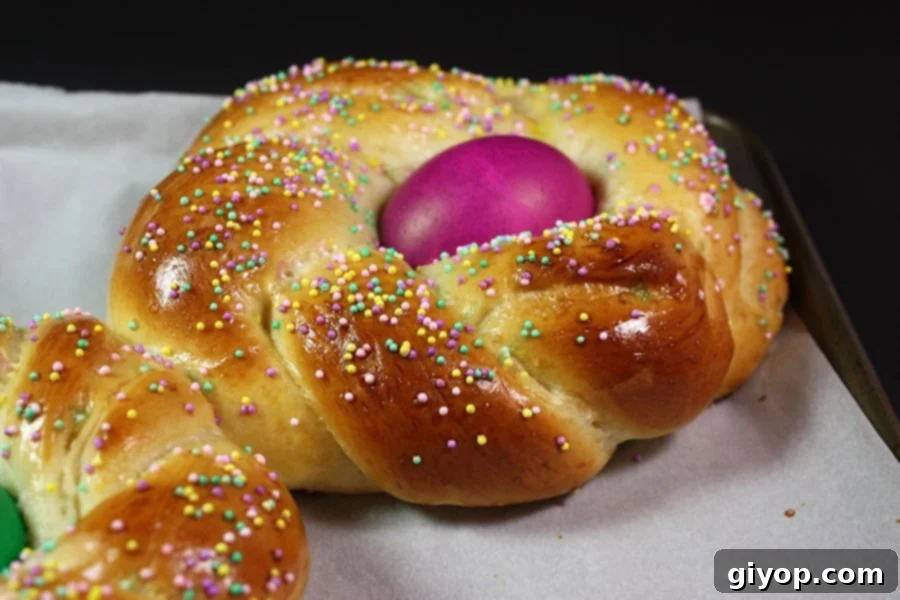
Authentic Italian Easter Bread (Pane di Pasqua) Recipe: A Sweet Tradition
Step into the heartwarming tradition of Italian Easter with our delightful **Pane di Pasqua** recipe. This isn’t just any bread; it’s a celebration of spring, family, and culinary heritage, known for its enchanting braided shape, vibrant dyed eggs, and an irresistibly soft, slightly sweet crumb. Forget complicated baking myths – crafting this beautiful Italian Easter Bread is a surprisingly simple and rewarding experience, even for novice bakers!
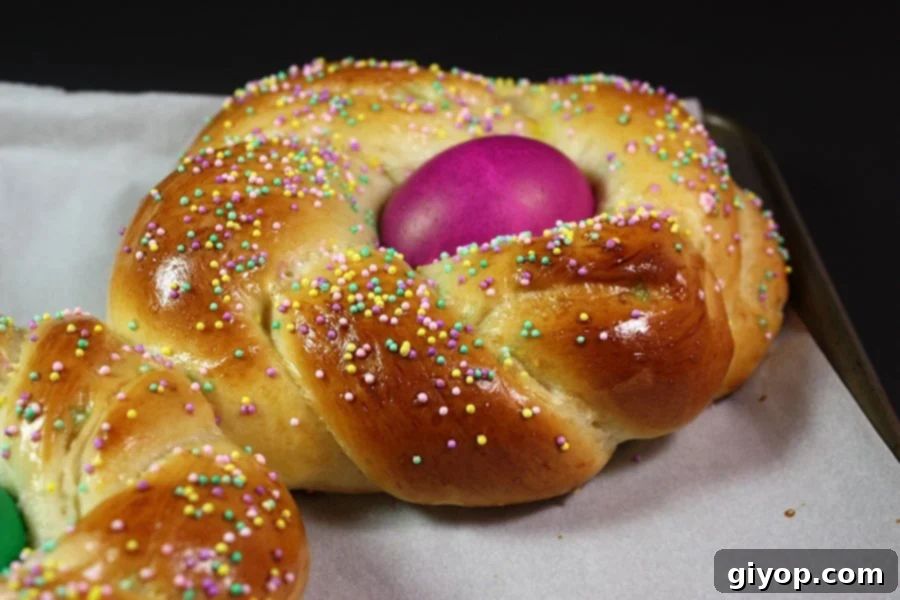
Often compared to the beloved Challah bread for its rich, braided structure, Pane di Pasqua holds a special place in Easter celebrations across Italy. Before I ventured into making this recipe, I admit, the idea of baking such an intricate-looking bread seemed daunting. However, I was genuinely astonished by how approachable and enjoyable the entire process turned out to be. The moment these golden-brown loaves emerged from the oven, fragrant and perfectly formed, I couldn’t help but summon my family to admire what I considered a true baking triumph. And let me tell you, their amazed reactions were the sweetest reward!
This isn’t merely bread; it’s a centerpiece. Its exquisite appearance, delectable taste, and wonderfully tender texture are guaranteed to captivate your guests and become a memorable part of your Easter feast. The vibrant, colorful eggs nestled within each braid add a festive touch that symbolizes new life and renewal, making each bite even more special. Who would have thought such an impressive creation could be lovingly made right in your own kitchen? Certainly not I, but the proof is in the beautiful loaves themselves!
What is Pane di Pasqua? Understanding This Sweet Easter Tradition
Italian Easter Bread, or Pane di Pasqua, is a traditional sweet yeast bread enjoyed throughout Italy and by Italian communities worldwide during the Easter holiday. It stands out with its distinctive braided shape, often formed into wreaths or individual nests, each cradling a brightly colored hard-boiled (or raw, as in this recipe) egg. This bread is more than just a culinary delight; it’s steeped in symbolism, representing new life, rebirth, and the joy of Easter.
The dough itself is rich, slightly sweet, and incredibly tender, similar in texture and richness to brioche or challah. Infused with hints of citrus zest (though not in this particular recipe, it’s a common variation), vanilla, or even anise, it offers a comforting aroma and flavor that perfectly complements the festive occasion. While recipes vary regionally, the core elements of a soft, sweet, braided loaf adorned with eggs remain consistent, making Pane di Pasqua a beloved and beautiful addition to any Easter table.
Expert Tips for Baking Your Best Pane di Pasqua
Achieving a bakery-quality Italian Easter Bread is simpler than you think with these crucial tips. Mastering a few fundamental techniques will ensure your loaves are perfectly risen, beautifully browned, and incredibly tender every time.
- Precision in Flour Measurement is Key: Baking is a science, and exact measurements are critical, especially for flour. Avoid scooping flour directly from the bag with your measuring cup, as this compacts it, leading to too much flour and a dry, dense bread. Instead, gently aerate the flour in its container with a spoon or whisk. Then, spoon the flour lightly into your measuring cup until it overflows, and level it off with a straight edge (like the back of a knife). This method ensures you get the precise amount needed for that ideal soft texture.
- Understanding Ingredient Temperatures: Generally, room temperature eggs and dairy products are recommended for baking as they emulsify more easily, creating a smoother, more uniform dough structure. However, in this specific Italian Easter Bread recipe, the milk and butter are intentionally heated to activate the yeast and melt the butter. This warm mixture helps create a hospitable environment for the yeast, ensuring a robust rise. The eggs, while not needing to be strictly room temperature, will quickly integrate into the warm liquid mixture.
- The Art of Kneading: Don’t rush the kneading process. Whether by hand or with a stand mixer, proper kneading develops the gluten in the flour, which is essential for the bread’s elastic texture and ability to rise. Knead until the dough is smooth, pliable, and springs back when gently poked. A well-kneaded dough will be less sticky and easier to work with.
- Creating the Perfect Proofing Environment: Yeast dough loves warmth. A warm, draft-free spot is ideal for the dough to rise. You can create a warm environment by placing the covered bowl in a slightly warmed (but turned off) oven, near a sunny window, or next to a pilot light. Ensuring the correct temperature promotes optimal yeast activity, resulting in a light and airy bread.
- Preventing Over-Browning: While baking, if your Italian Easter Bread starts to brown too quickly on the top before it’s fully cooked through, simply tent it loosely with aluminum foil. This acts as a shield, preventing further browning while allowing the bread to continue baking evenly to perfection.
Bringing Pane di Pasqua to Life: A Step-by-Step Guide
Embarking on the journey to create your own Italian Easter Bread is a joyous culinary adventure. This section offers a comprehensive narrative guide, outlining each stage of the baking process from activating your yeast to adorning your beautiful loaves with festive eggs. Follow along to understand the rhythm of bread making and achieve perfect results.
The Foundation: Mixing and Kneading Your Dough
The magic begins with warming the milk and butter. This gentle heat is crucial for melting the butter and creating the ideal temperature for yeast activation. Combine your yeast, a pinch of salt to balance the sweetness, eggs for richness, and sugar for flavor and browning in your stand mixer. Once the warm milk and butter mixture is added, you’ll introduce the flour in two stages. This gradual addition ensures proper hydration and allows the dough to come together beautifully. Using a dough hook, knead the mixture on medium speed until a smooth, elastic dough forms. This kneading process is vital for developing gluten, which gives Italian Easter Bread its signature soft, chewy texture. Continue until the dough is stiff but no longer sticky, about 14 minutes in a stand mixer.
The Rise: Giving Your Dough Time to Flourish
Once kneaded, shape your dough into a smooth ball and place it in a lightly greased bowl. Cover it securely with plastic wrap to prevent a skin from forming, and find a warm, draft-free spot for its first rise. Patience is a virtue here; allow the dough to double in size, which typically takes about an hour. This proofing stage develops the bread’s flavor and airy texture.
Prepping the Eggs: A Splash of Color
While your dough is on its first rise, it’s the perfect time to prepare your festive colored eggs. A unique aspect of Italian Easter Bread is that it traditionally uses raw, dyed eggs nestled within the dough, which then cook to perfection in the oven alongside the bread. To dye them, simply combine warm water, a splash of vinegar (to help the color adhere), and your preferred food coloring. Ensure the eggs are thoroughly dried after dyeing before placing them on the bread to prevent color bleeding.
Shaping the Iconic Braids: Crafting Individual Masterpieces
After the first rise, gently punch down the dough to release the air. This step helps create an even texture. Divide the dough into 12 equal pieces – a great way to ensure uniform rolls. Roll each piece into a 1-inch thick rope, about 14 inches long. A crucial tip here: avoid using excessive flour on your work surface during this shaping step. Too much flour can toughen the dough, diminishing the desired soft texture of your Italian Easter Bread. Take two ropes, intertwine them to form a beautiful braid, and then join the ends to create a charming circular wreath, pinching the tips firmly to secure them. Place these artful creations on a parchment-lined baking sheet, allowing ample space for their second rise.
The Final Flourish: Second Rise, Egg Wash, and Sprinkles
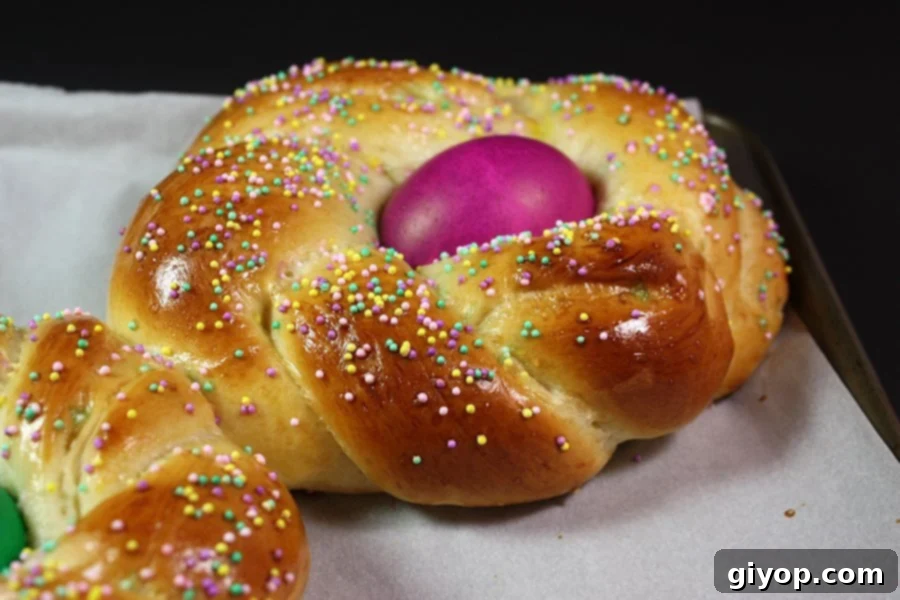
Cover your shaped bread loosely and let it undergo its second rise for another hour, until visibly doubled. This final proof is essential for a light, airy crumb. Before baking, brush each braided loaf with an egg wash – a simple mixture of beaten egg and water – to give it that irresistible golden sheen. This is also the moment to add festive sprinkles, if desired, for an extra pop of color. Gently place one of your beautifully dyed raw Easter eggs into the center of each bread ring. These eggs will cook as the bread bakes, resulting in perfectly firm, colorful eggs encased within your delicious bread.
Bake until golden brown and enjoy the delightful aroma that fills your kitchen. These sweet breads are not just a meal; they are a cherished tradition, perfect for Easter morning or any festive gathering. Happy Easter!
If you loved making this traditional Italian Easter Bread, consider sharing your creation with others! Pin this recipe to your favorite Pinterest board so you can easily find it again and inspire fellow bakers.
Explore More Delicious Italian Recipes
If you’re a fan of Italian baking, be sure to try some of our other cherished recipes:
- Classic Panettone Recipe
- Authentic Italian Sesame Seed Cookies (Biscotti Regina)
- Irresistible Italian Ricotta Cookies Recipe
- Traditional Italian Bread Recipe
Frequently Asked Questions About Italian Easter Bread
Here are some common questions to help you master your Pane di Pasqua baking experience:
Absolutely! This dough is quite versatile for make-ahead convenience. You can prepare the dough up to one day ahead. After the initial kneading, wrap the dough tightly in plastic wrap and store it in the refrigerator overnight. The next day, remove it from the fridge and allow it to come to room temperature (this might take 1-2 hours) before proceeding with shaping the nests and the subsequent rising steps. Alternatively, you can shape the individual bread nests, cover them loosely with plastic wrap, and refrigerate them overnight. The following day, let them return to room temperature and complete the final rise before baking as directed.
Yes, you can freeze both unbaked shaped dough and baked loaves, although freezing unbaked dough requires a bit more care. For unbaked shaped dough, flash freeze the individual nests on a parchment-lined baking sheet for about an hour until firm. Once frozen solid, wrap each twist individually in plastic wrap, then place them in a freezer-safe container or bag. To bake, thaw them overnight in the refrigerator, then remove from the fridge, let them come to room temperature for their final rise, and follow the baking instructions. For baked bread, allow it to cool completely, then wrap tightly in plastic wrap and aluminum foil. It can be frozen for up to 2-3 months. Thaw at room temperature or warm briefly in a low oven.
Using raw eggs is a charming and traditional aspect of Italian Easter Bread. Yes, the eggs cook perfectly in the oven as the bread bakes, resulting in firm, hard-cooked eggs that are beautifully colored and ready to be enjoyed with the bread. This method eliminates the need to boil and peel eggs separately, integrating them seamlessly into the festive presentation.
This recipe calls for rapid rise instant yeast, which is very active and doesn’t require prior proofing (dissolving in warm liquid). It can be added directly to the dry ingredients. If you only have active dry yeast, you’ll need to proof it first by dissolving it in a small portion of the warm milk (120-130°F) with a pinch of sugar for about 5-10 minutes, until foamy, before combining with the other ingredients.
Absolutely! While this recipe yields a deliciously classic Pane di Pasqua, you can customize the flavor profile. Consider adding a teaspoon of vanilla extract, a pinch of lemon or orange zest, or even a dash of anise extract for a traditional Italian touch. These additions can elevate the aroma and taste of your sweet bread.
Italian Easter Bread Recipe
Print Recipe
Pin Recipe
Ingredients
Servings: 6
- 2 1/4 teaspoons rapid rise instant yeast (1 package)
- 1-1/4 cup milk
- 1/4 teaspoon of salt
- 1/3 cup unsalted butter
- 2 large eggs, beaten
- 1/2 cup granulated sugar
- 4 cups all-purpose flour (more as needed for dusting and kneading)
- Vegetable cooking spray or vegetable oil for greasing proofing bowl
- 1 large egg, beaten with 1 teaspoon of water
- 6 dyed Easter eggs they do not need to be boiled, they will cook as the bread bakes
- Colored sprinkles
Instructions
- In a small saucepan, add the milk and butter to the pan. Heat the milk to 120 to 130°F, stirring the milk until the butter melts. Do not allow the milk to go above 130°F.
- In the bowl of a stand mixer, combine the yeast, salt, eggs, and sugar. Add the warmed milk and butter mixture. Add 2 cups of the flour to the mixing bowl. Attach a dough hook to the mixer and combine until smooth on medium speed, for about 2 minutes. Scrap side of the bowl with a spatula as needed.
- Slowly add the remaining 2 cups of flour to the mixing bowl, kneading the dough on medium-low speed, scraping the sides as needed. Knead until smooth and the dough is stiff, no longer sticky, about 14 minutes. Shape dough into a ball and place into a lightly greased bowl (vegetable cooking spray or oil). Cover the bowl with plastic wrap, and let rise for an hour in a warm place until the dough doubles in size.
- Punch the dough down, and then divide into 12 pieces. Roll each piece to form a 1-inch rope, about 14 inches long. Taking 2 pieces, twist the pieces to create a braid shape, pinching the ends together and loop into a circle.
- Place the shaped dough on a parchment-lined baking sheet (3 per sheet), spacing the braided dough, so that it has enough room to rise. Loosely cover the baking sheet with plastic wrap and allow to rise for 1 hour, until it doubles in size.
- Brush each braided bread with the beaten egg wash. Top with sprinkles, as desired. Gently place one dyed Easter egg in the center of each braided bread ring.
- Bake the bread at 350°F until golden brown, approximately 18-20 minutes. Quickly transfer the baked bread to a cooling rack. Enjoy!
Notes
Nutrition information includes dyed eggs.
Nutrition
Carbohydrates: 81g |
Protein: 18g |
Fat: 18g |
Saturated Fat: 9g |
Cholesterol: 285mg |
Sodium: 202mg |
Potassium: 198mg |
Fiber: 2g |
Sugar: 18g |
Vitamin A: 704IU |
Calcium: 66mg |
Iron: 5mg