Discover the Rich Heritage of Egyptian Kishk: A Timeless Dish with an Easy, Creamy Twist
Kishk, a revered culinary staple across the Middle East and Mediterranean, transcends mere sustenance to embody a rich tapestry of history, tradition, and regional identity. This ancient dried sour milk product, often formed into rustic balls, boasts a unique flavor profile and a fascinating preparation process that varies from country to country, and even within different regions of the same nation. For centuries, Kishk has nourished communities, offering a versatile ingredient that can be transformed into comforting, hearty meals. While the traditional preparation of Kishk, particularly in Upper Egypt, involves the meticulous fermentation of bulgur wheat in sour milk or yogurt, followed by sun-drying into durable balls, its evolution has also given rise to delightful, more accessible variations. This article delves into the world of Kishk, exploring its cultural significance, traditional roots, and introducing an incredibly convenient and delicious creamy Kishk recipe that captures the essence of this beloved dish, perfect for home cooks everywhere.
What is Traditional Kishk? A Glimpse into its Origins
At its core, traditional Kishk is a testament to ancient food preservation techniques. Born from necessity in agrarian communities, it served as an ingenious way to store dairy products for extended periods, especially during lean seasons. The process typically begins with grain, most commonly bulgur wheat, which is soaked and then fermented with sour milk, yogurt, or buttermilk. This fermentation imbues the mixture with its characteristic tangy flavor and contributes to its probiotic benefits. Once fermented, the mixture is usually shaped into small balls or cakes and left to dry under the sun, often for several days or weeks. This drying process removes moisture, rendering the Kishk stable and durable, ready to be stored and utilized throughout the year. When it’s time to cook, these hardened Kishk balls are rehydrated by soaking them in water, then crumbled and cooked with various liquids like broth or water, often thickened with flour or cornstarch, to create a creamy, nourishing stew or porridge. Each region proudly boasts its own nuances in preparation, from the type of grain used to the specific fermentation agents and drying methods, making Kishk a truly diverse culinary category.
The Egyptian Kishk Experience: A Tale of Two Traditions
In Egypt, Kishk holds a particularly special place, with diverse culinary approaches reflecting the nation’s rich regional heritage. The most iconic form, especially prevalent in Upper Egypt (the Sa’id region), involves the creation of those distinct dried sour milk balls. These are meticulously prepared by fermenting bulgur with either sour milk or yogurt, then shaping the mixture into balls and allowing them to thoroughly dry under the sun. To cook this traditional version, the dried Kishk balls are rehydrated by soaking them in water until softened, then carefully separated by hand before being added to simmering broth. Finally, a liaison of flour dissolved in water is stirred in, transforming the mixture into a thick, comforting, pudding-like consistency. This method highlights a deep connection to ancient agricultural practices and community sustenance.
However, beyond these ancient practices, other delightful variations exist. In Cairo, the vibrant capital, a different style of Kishk has become popular – a creamy, comforting dish that can be prepared from scratch using readily available ingredients. This particular recipe, cherished by my own family and many others from Cairo, bypasses the need for pre-made dried Kishk balls, making it an excellent alternative for those who cannot easily access the traditional product. It offers a quicker, yet equally satisfying, experience, delivering a similar creamy texture and subtly tangy flavor profile that defines Egyptian Kishk. This adaptation showcases the dish’s versatility and its ability to evolve while retaining its beloved essence, making it accessible to a wider audience without compromising on flavor or authenticity.
Why This Creamy Kishk Recipe is a Must-Try
For many living outside the Middle East, particularly in countries like the United States, finding authentic dried Kishk can be a significant challenge. This is precisely why this easy, creamy Kishk recipe is an absolute game-changer. It serves as a fantastic substitute for the traditional version, bringing the comforting flavors of Egyptian home cooking right to your kitchen. My own journey with Kishk wasn’t always prominent; growing up, my mother, unlike her mother, didn’t frequently prepare it. Yet, the aroma and taste of Kishk hold a special place in my husband’s heart. He often recounts fond memories of his grandmother – specifically, the grandmother of his best cousin – whose Kishk was legendary for its exquisite flavor. When I first prepared this creamy rendition for him, it instantly transported him back to those cherished childhood moments, proving its power to evoke nostalgia and warmth.
Beyond its ability to reconnect us with culinary heritage, this creamy Kishk recipe is remarkably versatile, making it a perfect dish for any season. Enjoy it chilled during the scorching summer months for a refreshing and light meal, or serve it piping hot as a hearty, comforting dish when winter’s chill sets in. Its adaptability ensures it will suit your palate and the weather, no matter where you are in the world. While I regret that the accompanying photos might not be of the highest resolution, having been taken some time ago, I assure you the recipe itself is timeless. My husband and I are currently adhering to a dietary plan in anticipation of Ramadan, which prevented me from capturing new culinary shots. However, the essence of this dish, its ease of preparation, and its unforgettable taste remain unchanged, ready to become a new favorite in your culinary repertoire.
Health Benefits of Incorporating Kishk into Your Diet
Beyond its delectable taste and cultural significance, Kishk offers several health benefits, primarily due to its key ingredients. The use of yogurt and milk makes this creamy Kishk a good source of protein and calcium, essential for bone health and muscle function. Furthermore, the yogurt introduces beneficial probiotics, which are live microorganisms that can support a healthy gut microbiome. A balanced gut is linked to improved digestion, enhanced immunity, and even better mood. The chicken broth base contributes valuable minerals and electrolytes, particularly when made from scratch, aiding hydration and providing a comforting, nutrient-dense liquid. When paired with whole-wheat pita bread, Kishk transforms into a well-rounded meal, offering complex carbohydrates for sustained energy. It’s a dish that not only satisfies the palate but also nourishes the body with wholesome ingredients.
Essential Ingredients for Your Creamy Egyptian Kishk
Crafting this simple yet flavorful creamy Kishk requires just a few readily available ingredients, each playing a crucial role in achieving its signature taste and texture. Understanding their purpose will help you appreciate the magic of this dish:
- All-Purpose Flour: This acts as the primary thickening agent, transforming the liquid broth into a smooth, pudding-like consistency.
- Plain Yogurt: The heart of Kishk’s tangy flavor profile. Yogurt provides the essential sourness and creaminess that defines the dish, mimicking the fermented nature of traditional Kishk.
- Milk (any %): Added alongside yogurt, milk contributes to the dish’s overall creaminess and helps achieve the perfect consistency.
- Chicken Broth: The foundational liquid that infuses the Kishk with savory depth. A good quality broth is key to a flavorful final product. You can easily make it with bouillon for convenience.
- Salt and Pepper: Basic seasonings to enhance all the other flavors. Adjust to your personal taste.
- A Dash of Cinnamon: A subtle yet essential spice that adds a warm, aromatic complexity, a signature touch in many Egyptian savory dishes.
- Diced Onion (one whole large yellow onion): This isn’t just an ingredient; it’s a vital garnish. Caramelized onions provide a sweet, savory crunch and a beautiful visual contrast, elevating the entire dish.
- Vegetable Oil: Used for browning the onions to perfection, ensuring they are golden, crispy, and full of flavor.
Step-by-Step Guide: Crafting Your Authentic Creamy Kishk
This recipe brings the authentic taste of Egyptian Kishk right to your kitchen with straightforward steps. Follow along to create a comforting and flavorful dish that’s perfect for any occasion.
Preparation Details:
- Preparation Time: 15 minutes
- Resting Time: 2 hours
- Cook Time: 20 minutes
- Servings: 4-6
Ingredients:
- 1 cup of all-purpose flour
- 1 cup of plain yogurt
- ½ cup of milk (any percentage will do)
- 5 cups of chicken broth (you can make it with chicken bouillon)
- Salt and pepper to taste
- A dash of cinnamon
- 1 cup of diced onion (about 1 whole big yellow onion)
- 5 tablespoons of vegetable oil
Instructions:
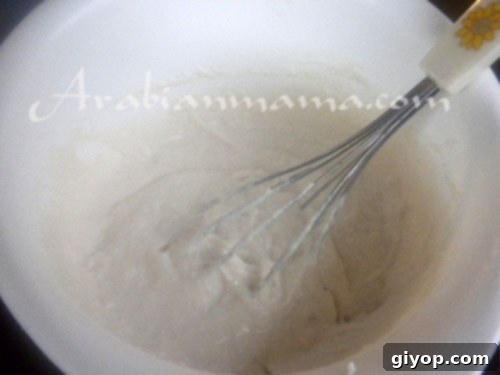
Prepare the Kishk Base: In a medium-sized mixing bowl, combine the all-purpose flour, plain yogurt, and milk. Whisk these ingredients together thoroughly until you achieve a smooth, lump-free mixture. This is a crucial step for the final creamy texture. Once well combined, cover the bowl and let the mixture rest at room temperature for at least 2 hours. This resting period allows the flavors to meld and the mixture to develop a subtle tang, characteristic of Kishk.

Simmer the Broth: In a large saucepan, bring 5 cups of chicken broth to a rolling boil. If you’re using chicken bouillon, prepare it according to the package instructions to yield 5 cups of broth. Season the boiling broth with salt, pepper, and a dash of cinnamon. Taste the broth and adjust the seasonings as needed; remember, the broth forms the savory foundation of your Kishk.
Thicken the Kishk: Once the seasoned broth is boiling, gradually pour in the flour, milk, and yogurt mixture that has been resting. As you pour, *whisk vigorously and continuously* to prevent any lumps from forming. Continue whisking over medium heat. The mixture will begin to thicken, transforming into a smooth, creamy consistency similar to a rich pudding. This process typically takes about 5-8 minutes. Continue stirring until it reaches your desired thickness and is bubbling gently.
Caramelize the Onions: While your Kishk is simmering, prepare the essential onion garnish. In a separate skillet, heat about 5 tablespoons of vegetable oil over high heat. Add the diced onion and sauté, stirring frequently, until the onions turn a deep golden brown and become beautifully caramelized. This browning process is key to developing their sweet, savory flavor and a delightful crispy texture, which provides a wonderful contrast to the creamy Kishk. Be diligent to prevent them from burning, as burnt onions can turn bitter.
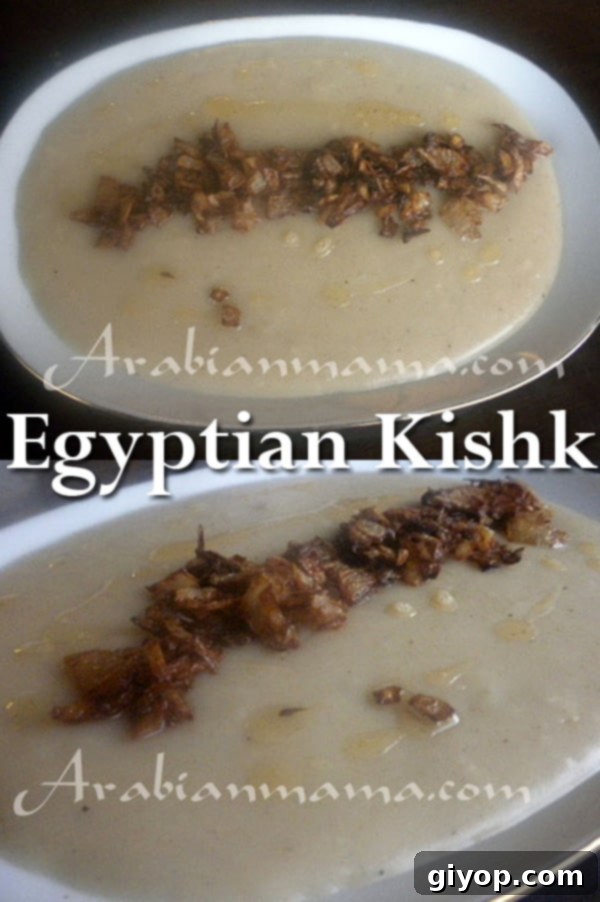
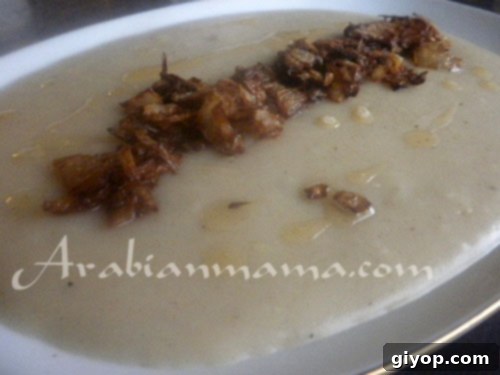
Serve and Garnish: Pour the hot, creamy Kishk into a large serving dish or individual bowls. Allow it to cool slightly, or completely, depending on your serving preference. Once plated, generously garnish the surface of the Kishk with the caramelized brown onions. The visual appeal of the golden onions atop the creamy white Kishk is as enticing as the flavors themselves.
Enjoy Your Kishk: Kishk is traditionally savored cold, with many people preferring to chill it thoroughly in the refrigerator for an hour or two before serving for an enhanced texture and flavor. It is best enjoyed with fresh pita bread, perfect for scooping up every delicious bite, making it an ideal light meal or a hearty side dish.


Tips for the Perfect Creamy Kishk
- Vigorous Whisking is Key: To ensure a perfectly smooth and lump-free Kishk, whisk continuously and energetically when adding the flour mixture to the hot broth. This prevents the flour from clumping and ensures even thickening.
- Adjusting Consistency: If your Kishk turns out too thick, you can thin it out by stirring in a little extra warm chicken broth or milk until it reaches your desired consistency. If it’s too thin, simmer it gently for a few more minutes, stirring constantly, to allow it to thicken further.
- Perfectly Caramelized Onions: Don’t rush the onion browning process. Low to medium-high heat with patient stirring will yield beautifully golden-brown, sweet, and crispy onions. Keep a close eye on them to prevent burning, which can make them bitter.
- Quality Broth Matters: Using a high-quality chicken broth will significantly enhance the overall flavor of your Kishk. Homemade broth is always best, but a good store-bought alternative works well too.
- Don’t Skip the Resting Time: The 2-hour resting period for the flour-yogurt-milk mixture is important. It allows the ingredients to meld and contribute to the authentic tangy flavor profile of the Kishk.
Kishk Beyond the Bowl: Serving Suggestions and Culinary Pairings
While the classic way to enjoy Kishk is chilled with fresh pita bread, its versatile nature allows for various serving suggestions:
- Traditional Pairing: Always serve with warm or cold pita bread for scooping. The bread is essential for soaking up the creamy goodness.
- Fresh Accompaniments: A side of fresh olives, sliced cucumbers, or a sprinkle of fresh mint or parsley can add a refreshing contrast to the richness of the Kishk.
- As a Side Dish: Kishk makes an excellent side to grilled meats, particularly grilled chicken or kofta, offering a creamy, tangy complement.
- A Light Meal: It’s hearty enough to be a light lunch or dinner on its own, especially when you’re craving something comforting and satisfying.
- Breakfast Dish: In some cultures, kishk is also enjoyed as a nourishing breakfast, providing a warm start to the day.
However you choose to enjoy it, this creamy Egyptian Kishk is a dish that promises comfort, flavor, and a delightful journey into Middle Eastern culinary traditions.

Try it out and share your thoughts! Your feedback is always welcome and helps our community grow.
Explore More Egyptian Flavors and Connect with Amira’s Pantry
If you’ve enjoyed this dive into the world of Kishk, you’ll surely love exploring other authentic Egyptian recipes. Give your meals a touch of unique Egyptian flavors with this authentic Dukkah recipe. A versatile and delightful blend of nuts, seeds, and spices that will surely add depth of flavor to your dishes, perfect for dipping bread in olive oil or sprinkling over salads.
Don’t want to miss a recipe? Sign up for the FREE Amira’s Pantry newsletter delivered straight to your inbox with lots of cooking tips and delightful surprises! And stay in touch with me on Facebook, Twitter, Pinterest, and Instagram for all the latest updates, behind-the-scenes glimpses, and culinary inspiration. Don’t forget to snap a pic if you make this recipe and hashtag it #amiraspantry — I love to see your delicious creations!
Originally published on January 30, 2013