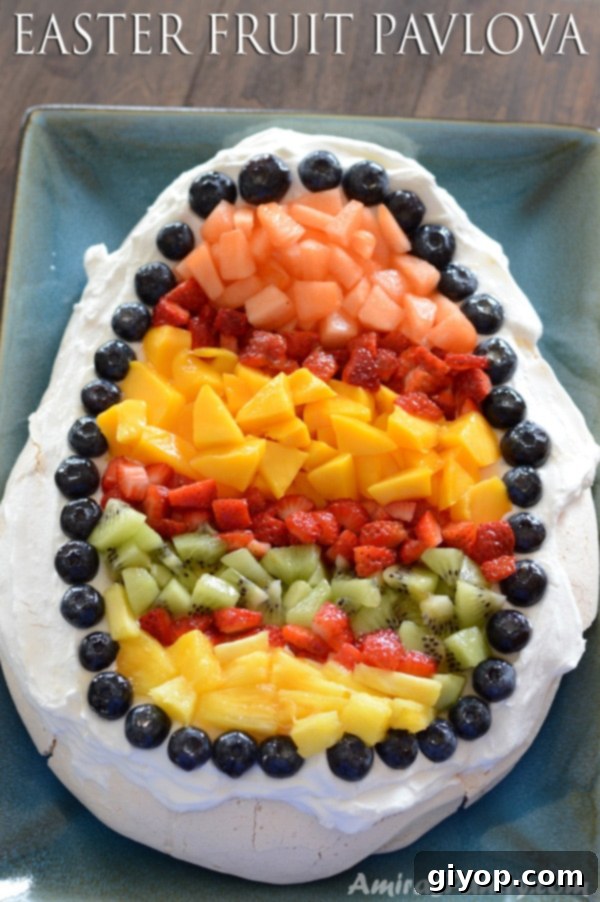
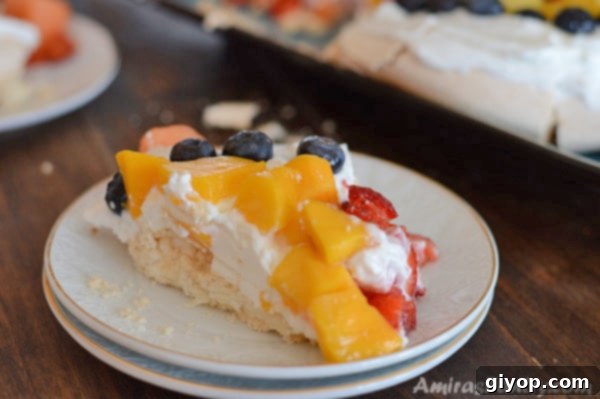
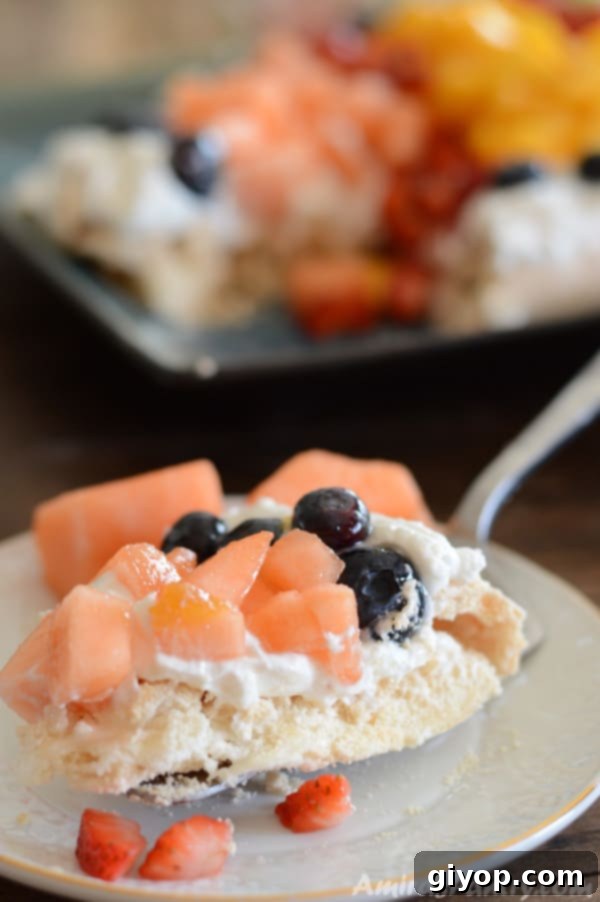
Embrace the spirit of spring and the joy of Easter with a truly magnificent dessert: an Easter-themed Pavlova. This ethereal treat offers a delightful contrast of textures – a perfectly crunchy exterior that shatters gently to reveal a cloud-like, marshmallowy soft interior. It’s not just a feast for the eyes but also a surprisingly light and low-fat dessert, making it an ideal canvas for vibrant fresh fruits and a dollop of luscious whipped cream. Whether you’re celebrating Easter, hosting a spring brunch, or simply craving a show-stopping yet simple dessert, this elegant fruit Pavlova is guaranteed to impress.
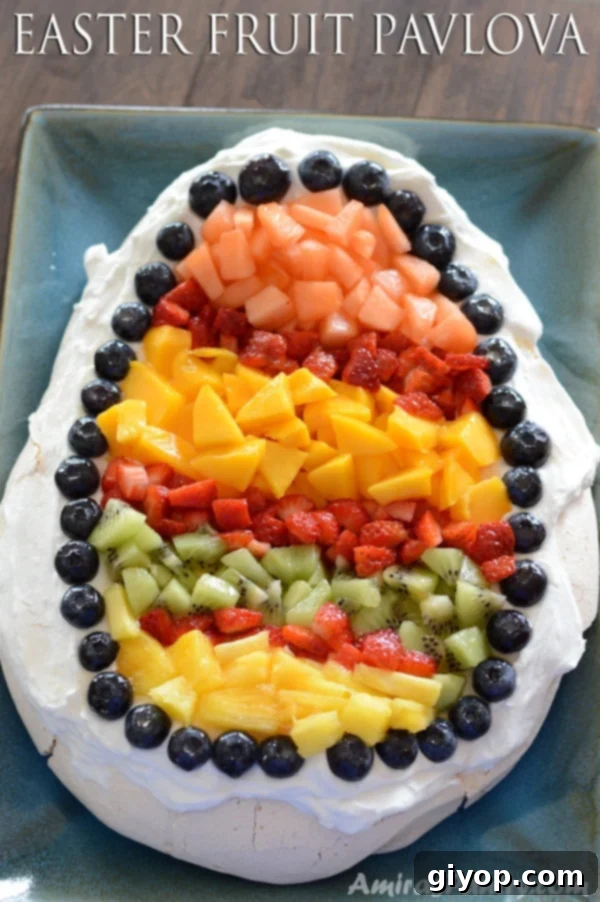
For years, the idea of making Pavlova seemed intimidating, a culinary challenge reserved for experienced bakers. However, I discovered that this elegant dessert is remarkably easy to create, yielding incredibly delicious results. The name “Pavlova” often leads people, myself included, to mistakenly believe it’s a Russian creation. In reality, this beloved meringue-based dessert is a culinary icon from Australia and New Zealand, named in honor of the legendary Russian ballerina, Anna Pavlova, during her tours in the region. Its light, graceful nature perfectly mirrors the ballerina’s artistry.
The Enchanting History of Pavlova and Egyptian Spring Traditions
While Pavlova celebrates a renowned Russian dancer, our spring festivities in Egypt carry their own deep historical roots. In Egypt, Easter Sunday is uniquely followed by a special national holiday known as “Shamm Annaseem.” This ancient festival, pronounced “Sham el-Nessim,” meaning “smelling the breeze,” is considered the celebration of spring, tracing its origins back nearly 5000 years to the time of the Pharaohs. It’s a day deeply ingrained in Egyptian culture, symbolizing new life, renewal, and fresh beginnings. What makes Shamm Annaseem truly special is its universal appeal; it’s a celebration embraced by all Egyptians, regardless of their religious beliefs, uniting communities in a joyful welcome to the new season.
Shamm Annaseem: A Timeless Egyptian Spring Festival
Shamm Annaseem is a day bursting with energy and tradition. Families and friends gather for outdoor excursions, picnics in parks, and sometimes even short trips to coastal areas or the countryside. One particularly curious tradition, which has always fascinated me, is the widespread popularity of visiting the zoo on this specific day. Yes, you read that right – the zoo! While its exact origins remain a delightful mystery, it’s likely due to the desire for open green spaces after winter, the vibrant atmosphere, and the abundance of street vendors just outside the zoo gates. These vendors add to the festive cheer, selling everything from brightly colored eggs to traditional simit bread and, most famously, salted fish. The air hums with excitement, the colors are vivid, and the shared joy is palpable across the entire nation.
The day typically kicks off with a celebratory breakfast, where a cherished tradition takes center stage: coloring eggs. I fondly recall my childhood, gathered with siblings, as my mother guided us in naturally dyeing eggs. We’d use readily available ingredients like red onion peels for beautiful rustic reds, yellow onion peels for golden hues, and beets for rich, earthy tones. It was a simple yet magical process that connected us to generations past. It’s said that the ancient Egyptians themselves would draw prayers and wishes for the upcoming season onto eggs. They would perform this ritual at night, then hang baskets filled with these adorned eggs outside their homes. When morning arrived, the first rays of the rising sun would strike the eggs, imbuing them with blessings and, as belief held, making those heartfelt wishes come true. This tradition highlights the enduring symbolism of eggs as vessels of hope and new beginnings.
Festive Shamm Annaseem Culinary Traditions
Another quintessential Shamm Annaseem culinary tradition involves consuming a special salted and fermented fish known as “Fesikh.” To be perfectly honest, I’ve never acquired a taste for Fesikh; its distinctive aroma and intense flavor have always been a challenge for me. However, it holds a significant place in the hearts and palates of countless Egyptians on this particular day. For those like me who prefer a milder option, salted and smoked herring fish offers a delicious alternative. Served with a generous squeeze of fresh lemon, a drizzle of creamy tahini sauce, plenty of crisp green onions, and warm pita bread, it becomes an incredibly satisfying meal. Did I mention green onions are practically a staple on Shamm Annaseem? Their sharp, fresh bite perfectly complements the rich flavors of the fish. These culinary customs are steeped in history, forming an integral part of the Shamm Annaseem experience. But enough about ancient traditions and fish; I suspect you’re eager to dive into making this stunning Pavlova! Let’s get to the recipe.
Crafting Your Own Elegant Easter Egg Pavlova: A Step-by-Step Guide
Creating a beautiful and delicious Pavlova might seem daunting at first glance, but with these clear steps, you’ll achieve a perfect result every time. The key is in precision and patience, which will reward you with a dessert that’s both visually striking and incredibly flavorful.
Step-by-Step Instructions
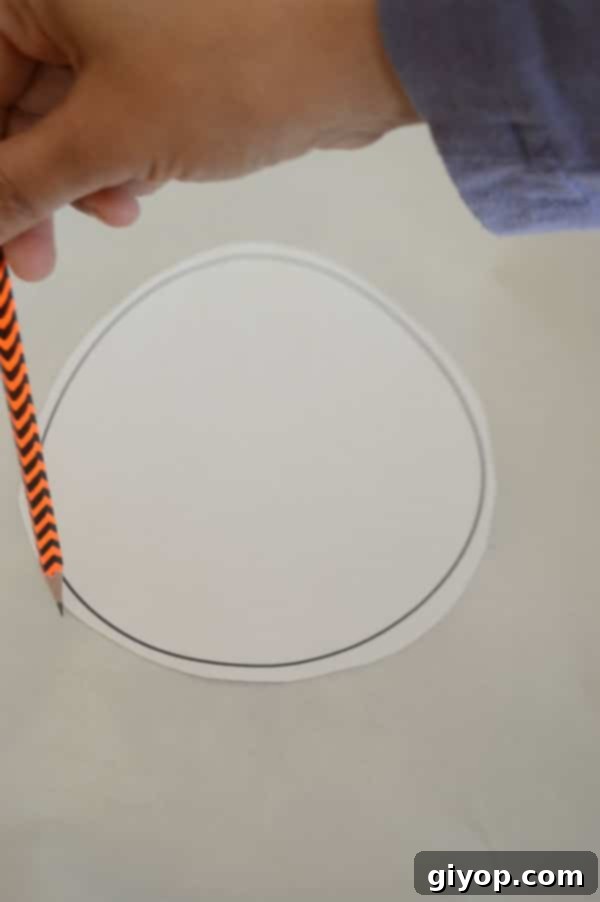
**1. Prepare Your Egg Shape:** To make your Pavlova truly festive and egg-shaped, you’ll need a template. You can easily find free egg printouts by searching online or on Pinterest – there are dozens of designs available. For individual servings, you can also opt for smaller egg bases instead of one large one. Once you have your template, line your baking sheet with a sheet of parchment paper. Trace the egg shape onto the parchment paper. This will be your guide for shaping the meringue.
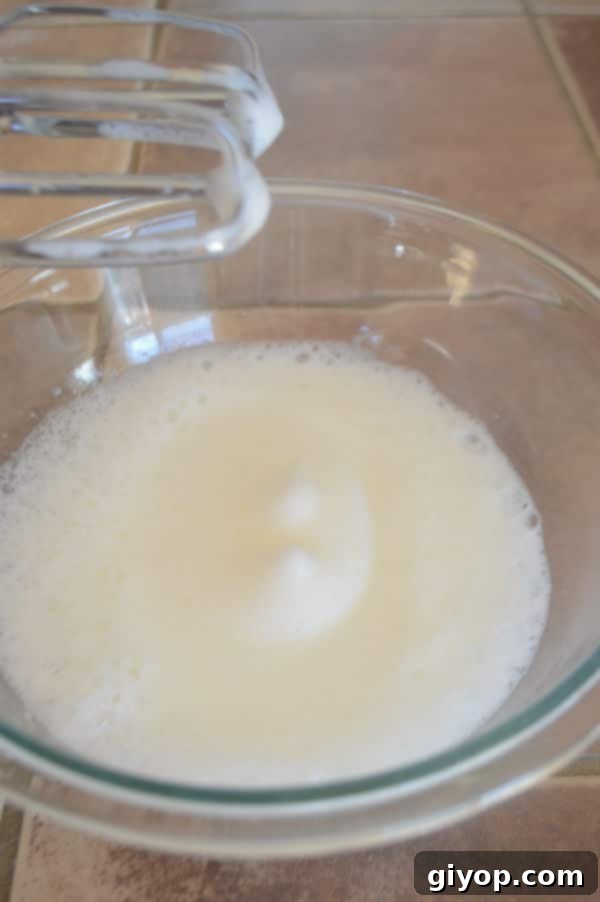
**2. Beat the Egg Whites:** In a meticulously clean mixing bowl, using clean whisks (any trace of fat can prevent the egg whites from stiffening), begin beating your room-temperature egg whites. Beat them on medium-high speed until they become frothy and soft peaks begin to form. This initial frothing is crucial for incorporating air and creating a stable meringue.
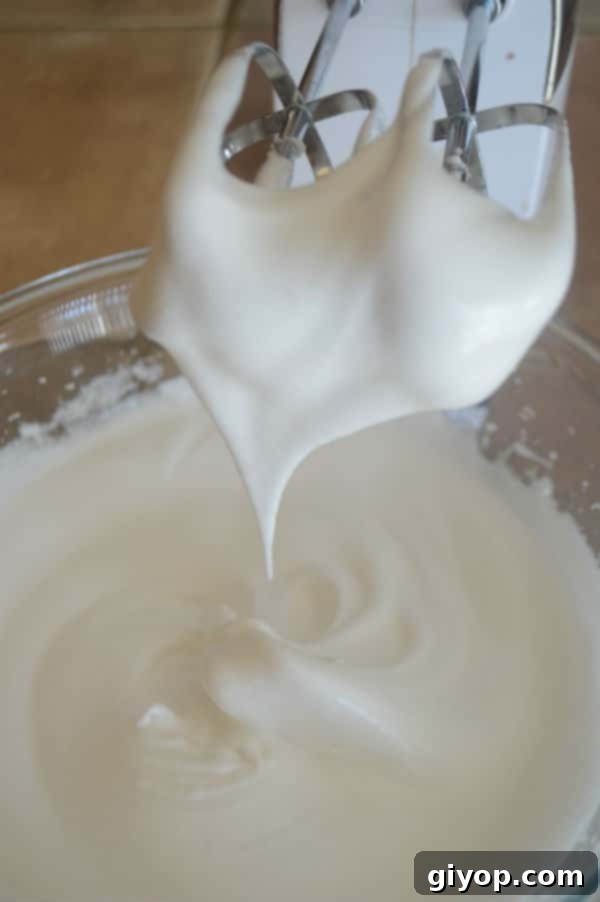
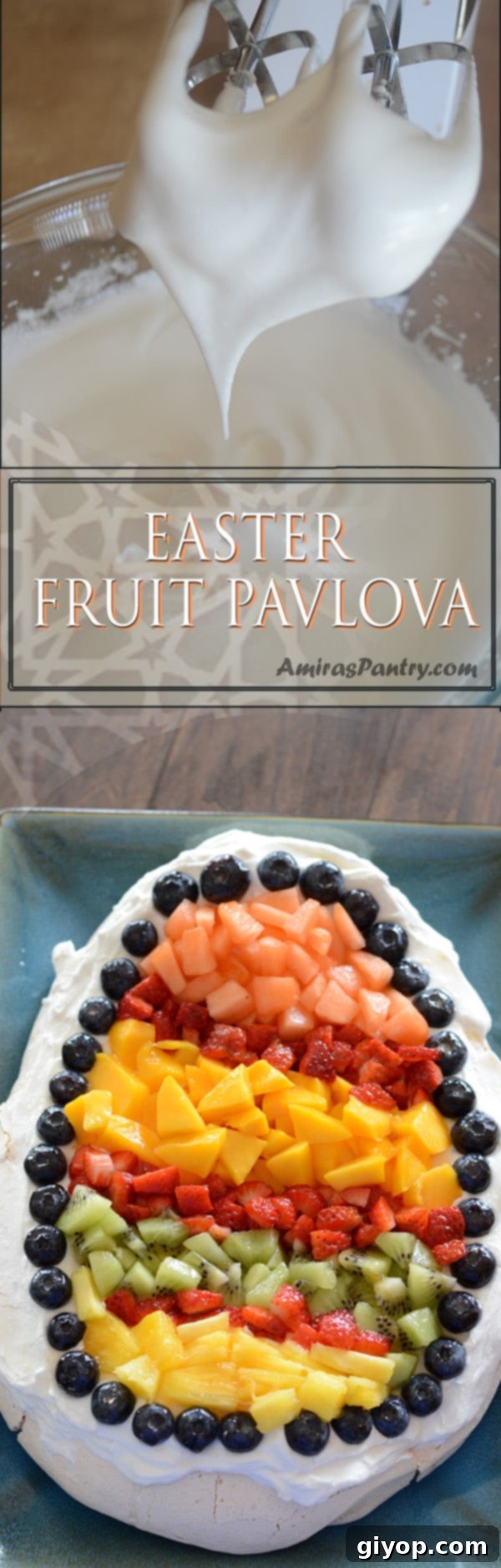
**3. Gradually Add Sugar:** With the mixer still running, gradually add the sugar, one tablespoon at a time. This slow addition allows the sugar to fully dissolve into the egg whites, creating a smooth and glossy meringue. Continue beating until the mixture is thick, glossy, and forms stiff, upright peaks. When you lift the whisk, the meringue should hold its shape without drooping. This step is vital for the Pavlova’s structural integrity and its signature crispness.
**4. Fold in Flavor and Stabilizers:** In a separate small bowl, combine the cornstarch, vanilla extract, and white vinegar. These ingredients are secret weapons for Pavlova success: cornstarch helps create the marshmallowy interior, while vinegar and vanilla add flavor and further stabilize the meringue. Gently fold this mixture into your stiff egg whites using a spatula, being careful not to deflate the airy meringue.
**5. Secure the Parchment Paper:** Before spooning the meringue, take your whisk, which will still have a little meringue mixture clinging to it, and dab four small dots of meringue onto the corners of your baking sheet. Then, place the parchment paper (drawing side down) over these dots. The meringue will act as a “glue,” preventing the parchment paper from sliding around while you shape your Pavlova.
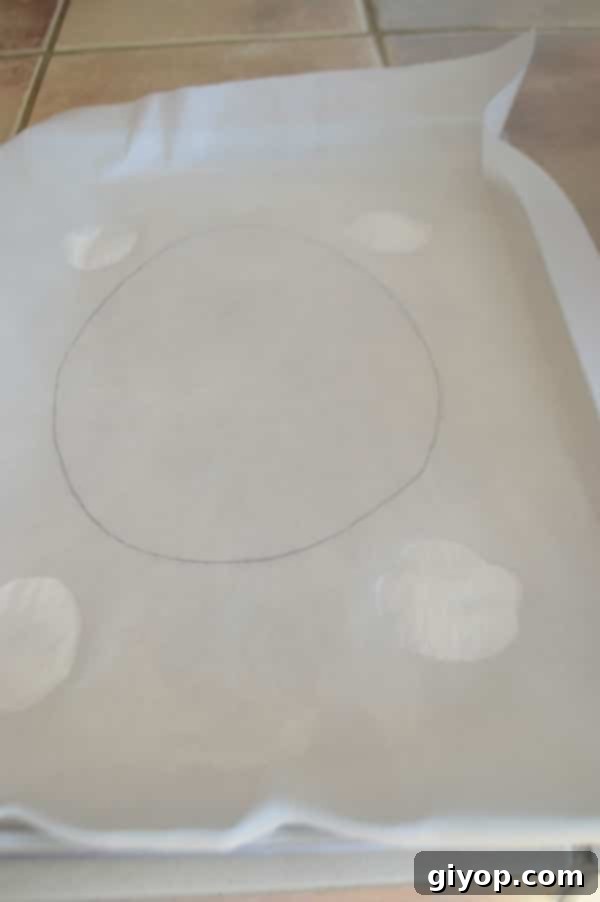
**6. Shape the Pavlova:** Spoon the delicate meringue mixture inside your traced egg drawing on the parchment paper. Gently smooth it out with the back of a spoon or a small offset spatula, creating an even base. For that classic Pavlova look, try to build up the sides slightly higher, creating a shallow well in the center to hold your delicious toppings later. This “nest” design is both functional and beautiful.
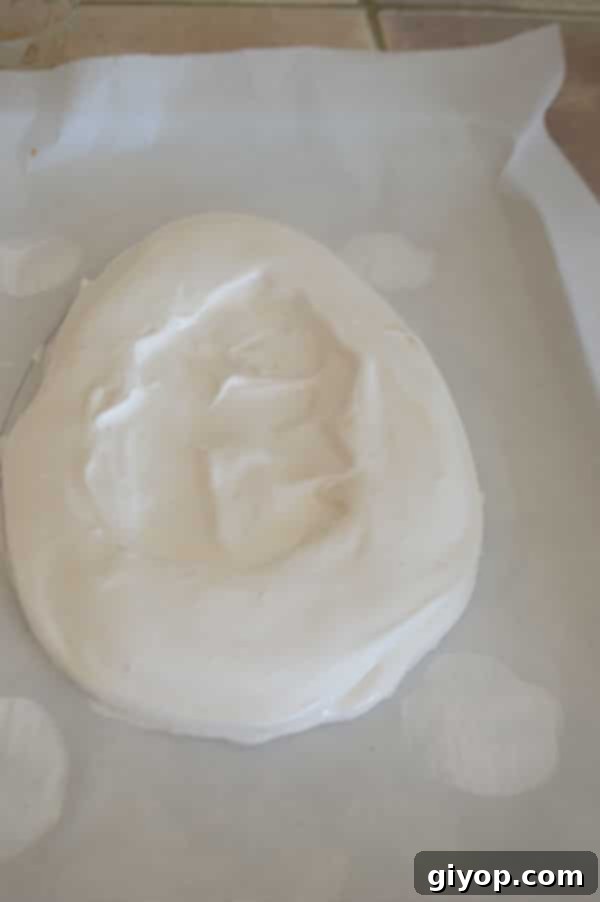
**7. Bake and Cool to Perfection:** Bake your Pavlova as directed in the recipe below. The secret to a perfect Pavlova lies in a slow bake and a gradual cool-down. While it bakes, prepare your whipping cream and slice your fresh fruits. Once baking is complete, resist the urge to open the oven door! Let the Pavlova cool down completely inside the oven, preferably overnight. This slow cooling prevents cracking and ensures that delightful crisp exterior and soft interior.
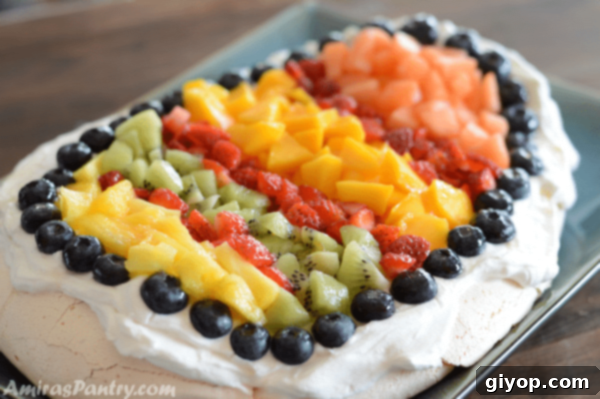
**8. Assemble and Serve:** Right before serving, carefully transfer the cooled Pavlova shell to your desired serving platter. Gently fill the center with fluffy whipped cream and artfully arrange a vibrant assortment of fresh fruits. The contrast of the white meringue, the creamy topping, and the colorful fruits makes for an absolutely stunning presentation. Serve immediately and watch your guests marvel at this elegant dessert!
Achieving Pavlova Perfection: Essential Tips and Tricks
After many attempts and refining techniques, I’ve consistently achieved a beautiful, sublime Pavlova with a delicate, crisp crust and a luscious, marshmallowy meringue inside. Here are some invaluable tips that I’ve found to be incredibly helpful and that will ensure your Pavlova is a resounding success:
- **Use Room Temperature Eggs:** This is a golden rule for meringue. Egg whites at room temperature whip up faster and achieve greater volume and stability than cold eggs. Plan ahead and take your eggs out of the fridge at least 30 minutes to an hour before you start.
- **Do Not Open the Oven During Baking or Cooling:** The sudden change in temperature and humidity can cause your delicate meringue to crack or collapse. Patience is key! Once the baking time is up, turn off the oven and leave the Pavlova inside with the oven door closed to cool down gradually.
- **Cool Overnight for Best Results:** For the ultimate crisp exterior and stable structure, allow your Pavlova to cool completely in the turned-off oven, ideally overnight. This extended cooling period is crucial for setting the meringue and preventing it from becoming sticky.
- **Balance Sweetness in Whipping Cream:** Pavlova is naturally sweet, so to create a harmonious flavor profile, add just a tablespoon of powdered sugar and a teaspoon of vanilla extract to your heavy whipping cream. This provides a subtle sweetness and aromatic lift without overpowering the delicate meringue and fresh fruits.
- **Cleanliness is Crucial:** Ensure your mixing bowl and whisks are impeccably clean and free of any grease or oil. Even a tiny speck of fat can prevent egg whites from whipping up properly. Wipe your bowl and whisk with a lemon wedge or a little vinegar before starting, just to be sure.
Why This Easter Pavlova is the Perfect Spring Dessert
This Easter egg-shaped fruit Pavlova is more than just a dessert; it’s a celebration of spring’s vibrancy and the joy of new beginnings. Its light, airy texture and refreshing fruit toppings make it the perfect sweet treat to welcome the season. It’s also a fantastic project to tackle with kids, offering a fun and delicious way to spend time together in the kitchen. The visual appeal of the meringue “egg” adorned with colorful fruits is simply captivating, making it a centerpiece for any festive table. Plus, its relatively low-fat nature (compared to many other rich desserts) means you can indulge with a little less guilt! Give this recipe a try and share the joy with your loved ones. If you love it as much as I do, please consider giving it a 5-star rating!
Easter Egg-Shaped Fruit Pavlova
An easy and delicious pavlova recipe shaped like an egg and loaded with fresh fruits.
Print Recipe
Pin Recipe
Rate Recipe
Save Recipe
Amira
Ingredients
For the Pavlova:
- 4 egg whites about ⅔ cup, ROOM TEMPERATURE.
- 1 cup granulated sugar.
- ¼ teaspoon white vinegar.
- 1 teaspoon vanilla extract.
- 2 teaspoons cornstarch.
For the Whipping Cream Layer:
- 1 pint heavy whipping cream, chilled.
- 1 Tablespoon confectioner’s sugar.
- 1 teaspoon vanilla extract.
Fruits for Topping (suggestions):
- 2 kiwis diced.
- ⅓ cup diced cantaloupe.
- 1 mango diced.
- ¼ cup diced pineapples.
- Less than a pint of blueberries.
- 1 cup diced strawberries.
Instructions
- Preheat your oven to 275°F (135°C).
- Line a baking sheet with parchment paper. Cut out your egg printout template and trace it onto the parchment paper.
- Using a clean mixing bowl and clean whisks (ensure no grease), beat the egg whites until frothy.
- Gradually mix in the sugar, adding it one tablespoon at a time, until the mixture is glossy and forms stiff peaks.
- In a small bowl, combine the cornstarch, white vinegar, and vanilla extract. Gently fold this mixture into the stiff egg whites using a spatula.
- To secure the parchment paper, dab four small dots of meringue onto the corners of your baking sheet with your whisk, then place the parchment paper (drawing side down) over them.
- Spoon the meringue mixture inside the egg drawing, smoothing it as much as possible. Try to make the sides slightly higher to create a well.
- Reduce oven heat to 250°F (120°C) and bake for 50 minutes. Turn off the heat and let the Pavlova cool completely in the oven for 2-3 hours, or preferably overnight. Do not open the oven door during this time.
- Meanwhile, prepare the whipping cream by beating chilled heavy cream with confectioner’s sugar and vanilla extract until soft peaks form.
- Right before serving, carefully move the cooled Pavlova to your serving platter.
- Top the Pavlova with the prepared whipping cream and arrange the fresh fruits in a delightful pattern.
- Serve immediately and enjoy your beautiful Easter Fruit Pavlova!
Video
A video demonstration for this recipe can be found here.
Notes
* My Pavlova did not stick to the parchment paper, but if this is a concern, you might want to crumple the parchment paper, then flatten it again over the pan and dust it lightly with some cornstarch before spooning the meringue mixture into the pan. This can help prevent sticking.
Tried this Recipe? Pin it for Later!
Mention @AmirasPantry or tag #AmirasPantry!
Related Recipes for Your Culinary Journey
If you enjoyed creating this beautiful Pavlova, you might also like to explore other delightful desserts. Here’s a suggestion that pairs wonderfully with many cakes and cupcakes:
- Marshmallow Buttercream Frosting is a delightful and fluffy frosting that can elevate your favorite cakes and cupcakes. Its light, sweet profile pairs beautifully with chocolate cakes, vanilla cupcakes, and even s’mores-inspired desserts, adding a touch of delightful flavor and irresistible texture to any treat. It’s perfect for those who love the airy sweetness of marshmallows in a creamy frosting.