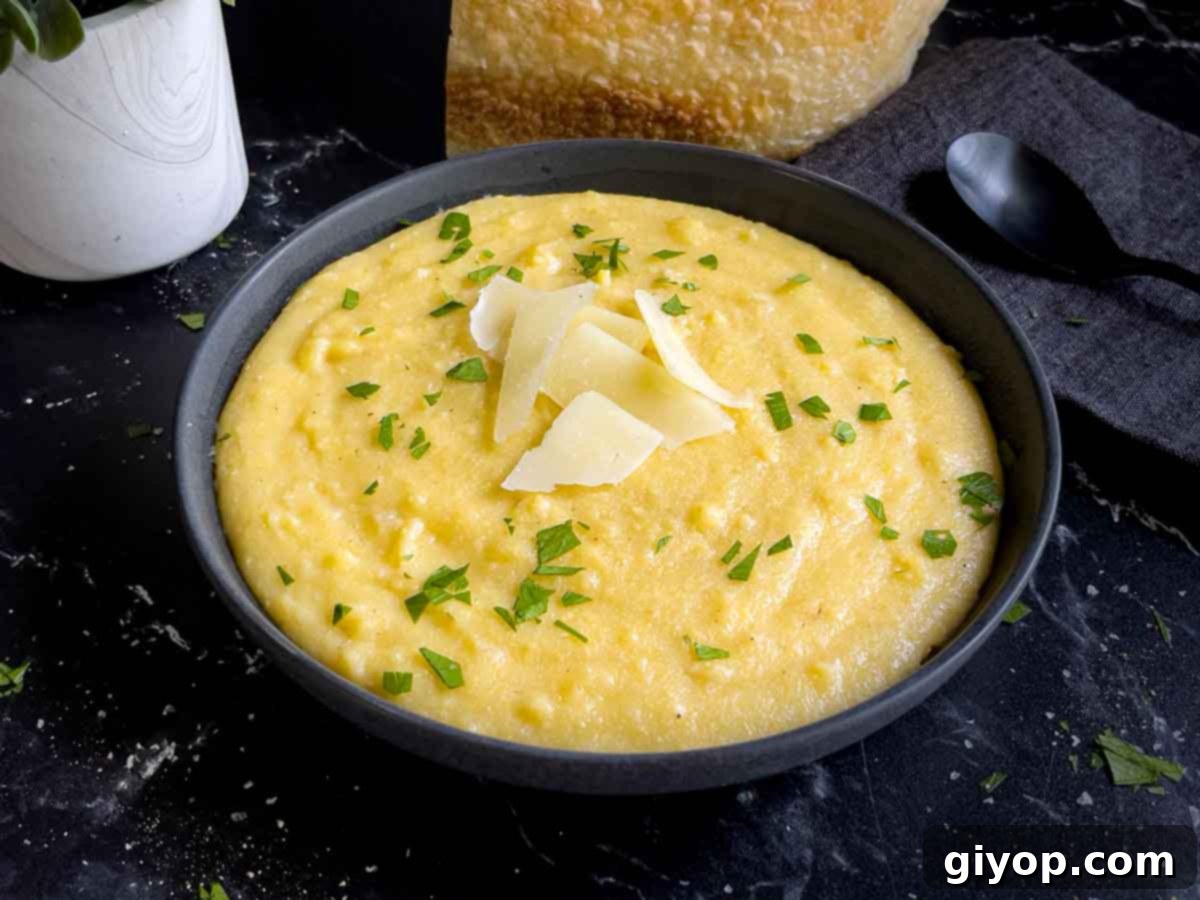
Mastering Creamy Polenta: A Culinary Journey to Italian Comfort
Creamy polenta is more than just a dish; it’s a celebration of simplicity and rich, comforting flavors. This traditional Italian staple, hailing from the northern regions, transforms humble cornmeal into a velvety, satisfying experience that can be the star of your meal or the perfect accompaniment. Its smooth texture and delightful corn essence make it incredibly versatile, capable of elevating any dining occasion.
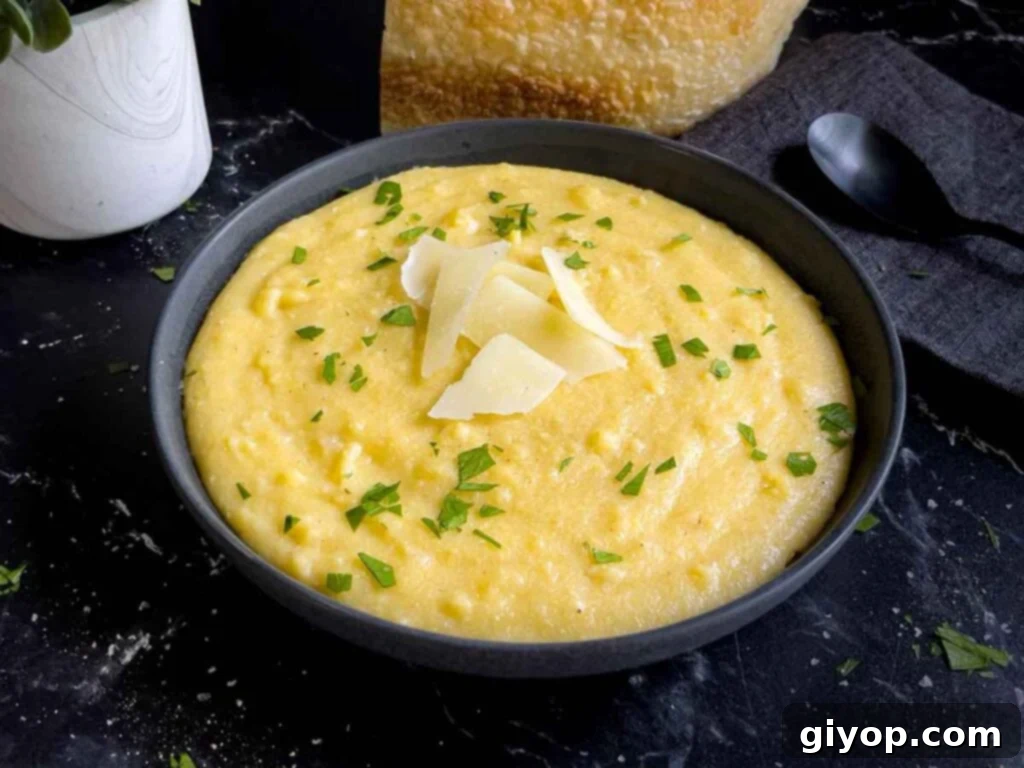
Why You Will Adore This Creamy Polenta Recipe
There’s an undeniable charm to a dish that offers profound flavor with minimal fuss, and this creamy polenta recipe perfectly embodies that ethos. You are going to fall in love with the inherent sweetness of corn, deepened and enriched to create a genuinely satisfying meal. This isn’t just a basic recipe; it’s a foundation for flavor, showcasing the pure, wholesome essence of corn in its most comforting form.
Crafted with just a handful of readily available ingredients and straightforward cooking steps, this recipe is a dream come true for anyone seeking a delicious, no-stress meal. Whether you’re a novice in the kitchen or a seasoned home cook, you’ll appreciate how easily this dish comes together, delivering impressive results every time.
While delicious enough to enjoy on its own, perhaps with a drizzle of olive oil and a sprinkle of fresh herbs, this creamy polenta truly shines as an exceptional side dish. Its rich, velvety texture provides a magnificent contrast to hearty, robust main courses. We’ve found it to be an absolutely divine pairing for intensely flavored dishes, like our spectacular braised beef cheeks, where its smooth consistency perfectly balances the tender, savory meat. The way the polenta soaks up the rich sauces of such dishes is simply heavenly.
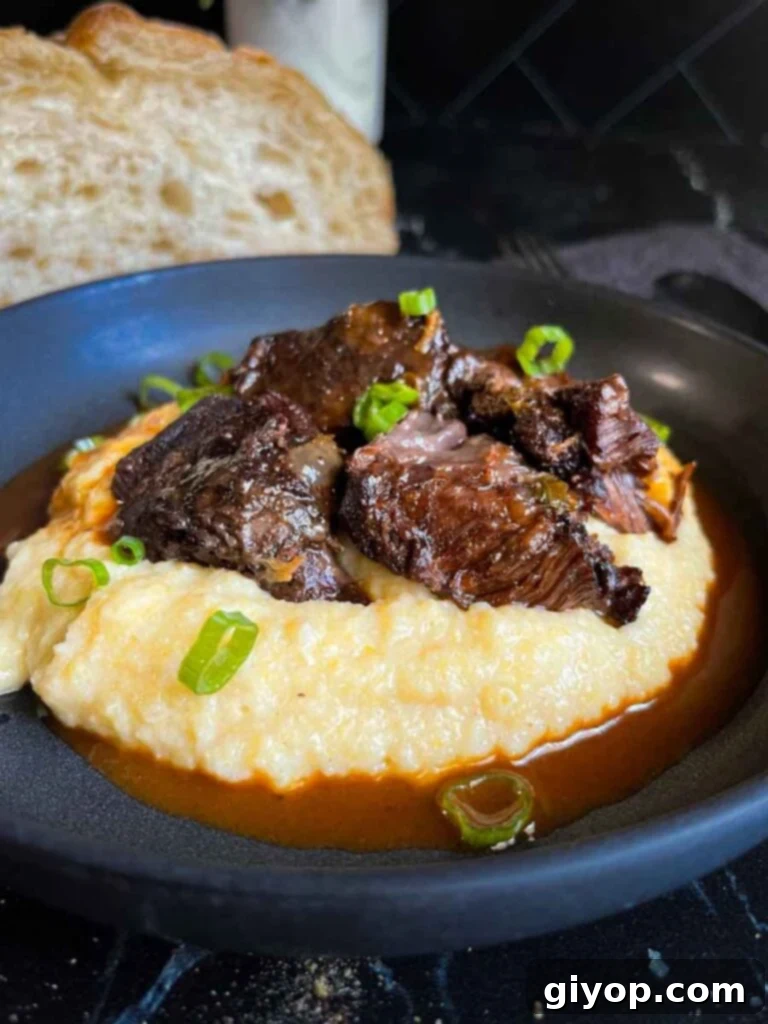
Embrace the delightful simplicity of this dish and allow the inherent sweetness and deep comfort of corn to tantalize your taste buds in every luxurious bite. It’s a testament to how simple ingredients, thoughtfully prepared, can create culinary magic.
Polenta vs. Grits: Unraveling the Cornmeal Conundrum
Many people often confuse polenta with grits, and while both are delicious dishes derived from ground cornmeal, they possess distinct characteristics rooted in different culinary traditions and regional preferences. Understanding these differences can enhance your appreciation for each unique offering.
The Origins and Traditions
Polenta is an iconic staple of northern Italian cuisine, with a history stretching back centuries. It gained prominence in regions like Lombardy, Piedmont, and Veneto, where it became a foundational dish, particularly before the widespread availability of pasta. Traditionally, polenta is made by slowly cooking coarse yellow cornmeal with water, broth, or sometimes milk, until it transforms into a thick, creamy porridge. In Italy, it’s served as a versatile side dish, often accompanying rich stews, roasted meats, or grilled vegetables, or even as a base for savory toppings like ragù. Its preparation is often a communal affair, symbolizing warmth and sustenance.
Grits, on the other hand, are a culinary cornerstone of the Southern United States. Their origins trace back to Native American communities who processed corn for consumption long before European settlement. Over time, grits became deeply ingrained in Southern American cuisine, particularly as a breakfast dish. They are typically prepared by boiling ground cornmeal, usually a finer variety, in water or milk until it reaches a thick, often lumpier, porridge-like consistency. Grits are commonly enjoyed with butter, cheese, or savory additions such as shrimp, bacon, or fried fish. They represent a cherished part of Southern hospitality and comfort food culture.
The Core Distinctions: Cornmeal Type and Grind
The primary difference between polenta and grits truly lies in the type and grind of cornmeal used, which significantly impacts their final texture and flavor profiles:
- Polenta: Traditionally utilizes coarsely ground yellow cornmeal. This coarser grind gives polenta its signature rustic, somewhat grainy, and hearty consistency. The yellow corn imparts a slightly sweeter and more pronounced corn flavor, as well as its characteristic golden hue. The slow cooking process allows the starch to fully develop, contributing to its creamy yet robust mouthfeel.
- Grits: Are most commonly made from a finer grind of white cornmeal, often specifically “hominy grits.” Hominy is dried corn kernels that have been treated with an alkali solution (nixtamalization), which removes the hull and germ, making the corn more nutritious and improving its flavor and texture. This process gives hominy grits a distinct earthy flavor and a smoother, often more uniform, creamier consistency compared to traditional polenta. While white corn is most common, yellow grits also exist, but the grind tends to remain finer than polenta.
These subtle yet significant variations in the cornmeal and processing techniques result in the contrasting textures and flavors that define each dish. Where polenta offers a satisfying, coarser, and more substantial bite, grits typically present a smoother, often more delicate, and creamier consistency. Both are incredible examples of corn’s versatility, offering unique corn-based delights to tables across different cultures. Whether you’re drawn to the rustic charm of Italian polenta or the creamy smoothness of Southern grits, each dish tells a rich story of culinary heritage.
Essential Ingredients for the Perfect Creamy Polenta
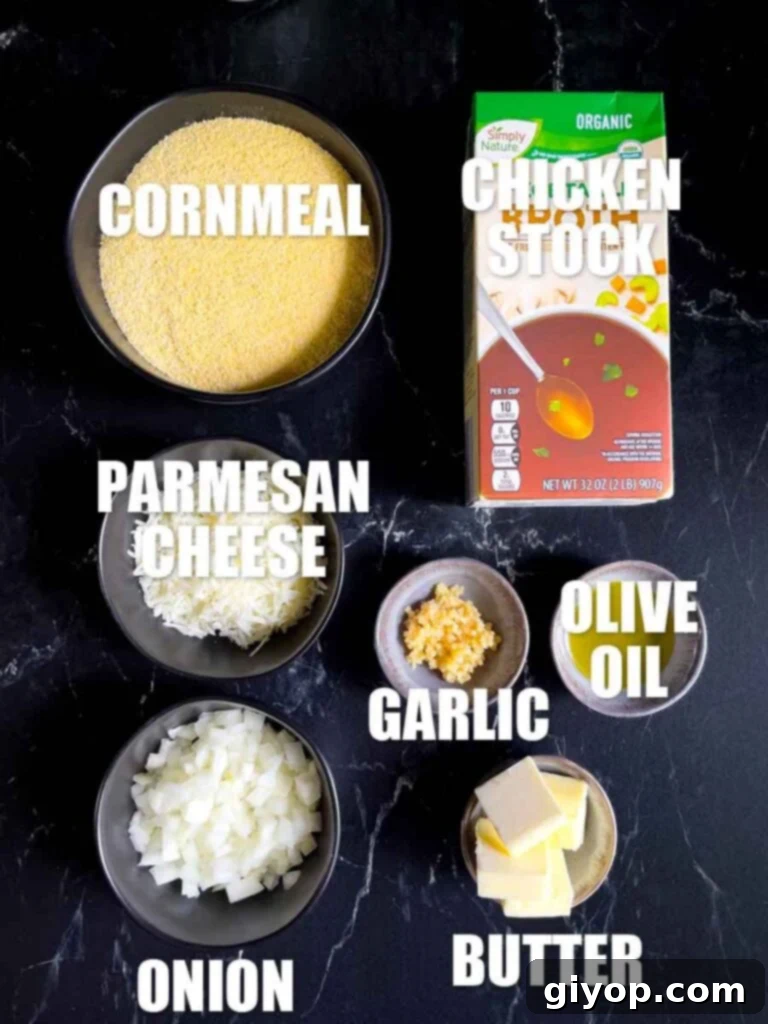
One of the many joys of this creamy polenta recipe is its reliance on simple, inexpensive, and readily available ingredients. Despite their humble nature, these components come together to create a dish that is anything but basic, proving that extraordinary flavor doesn’t require a long list of exotic items. Here’s a closer look at the key players:
- Cornmeal: The foundational ingredient, cornmeal is responsible for polenta’s hearty texture and comforting corn flavor. Opt for medium or coarse-ground yellow cornmeal for the best authentic taste and texture. Avoid instant or fine-ground cornmeal if you desire that classic, slightly grainy yet creamy mouthfeel.
- Chicken Stock: Far superior to plain water, chicken stock (or vegetable stock for a vegetarian option) is crucial for infusing the polenta with deep, savory notes and richness. It builds a flavorful base that elevates the overall taste of the dish, creating a more complex and satisfying experience.
- Olive Oil: Used for sautéing the aromatics, good quality olive oil adds a subtle fruitiness and a silky mouthfeel to the polenta. It also helps prevent the cornmeal from clumping and contributes a touch of Mediterranean richness.
- Onion: Sautéed until translucent and lightly caramelized, diced onion provides a delicate sweetness and depth of flavor. Its aromatic qualities complement the cornmeal beautifully, enhancing the dish’s savory profile without overpowering it.
- Garlic: A beloved aromatic, minced garlic introduces a bold, pungent, and irresistibly aromatic element to the polenta. It boosts the savory notes and adds a layer of complexity that makes the dish truly shine.
- Parmesan Cheese: Freshly grated Parmesan cheese is a game-changer. Its nutty, salty, and tangy qualities melt into the polenta, lending a luxurious creaminess and a delightful umami flavor. It transforms the dish from good to utterly sublime. Feel free to use Parmigiano-Reggiano or Pecorino Romano for a sharper, saltier kick.
- Butter: Essential for achieving that signature velvety texture and indulgent richness. Unsalted butter allows you to control the seasoning, ensuring a smooth mouthfeel and enhancing the overall decadent nature of the dish. Remember, good quality butter makes a difference!
- Salt and Pepper: These fundamental seasonings are vital for balancing and enhancing all the other flavors. Seasoning to taste ensures that your polenta is perfectly seasoned, harmonizing all the ingredients into a cohesive, delicious whole.
Crafting the Perfect Creamy Polenta: A Step-by-Step Guide
Creating luscious, creamy polenta is a straightforward process that rewards patience and attention to detail. Follow these steps to achieve a perfectly smooth and flavorful dish:
Sauté the Aromatics: Begin by heating the olive oil in a large, heavy-bottomed pot over medium to medium-high heat. A heavy pot is key to even cooking and preventing sticking.

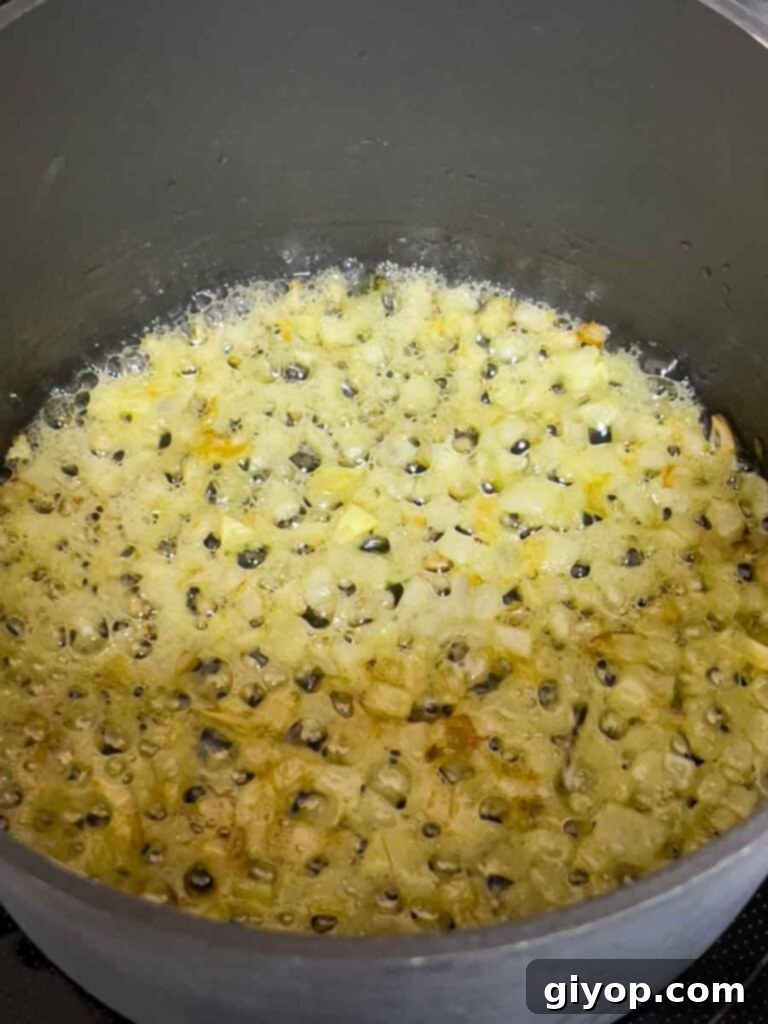
Once the oil shimmers, add the diced onions to the pot. Sauté them, stirring occasionally, until they become translucent and soft, which typically takes about 5-7 minutes. It’s important to maintain a moderate heat to prevent the onions from burning, though a slight golden browning around the edges will add depth of flavor.
Reduce the heat to medium-low and add the minced garlic. Continue to cook, stirring constantly, for about 1 minute until the garlic becomes fragrant and its raw edge mellows. Be careful not to burn the garlic, as it can turn bitter quickly.
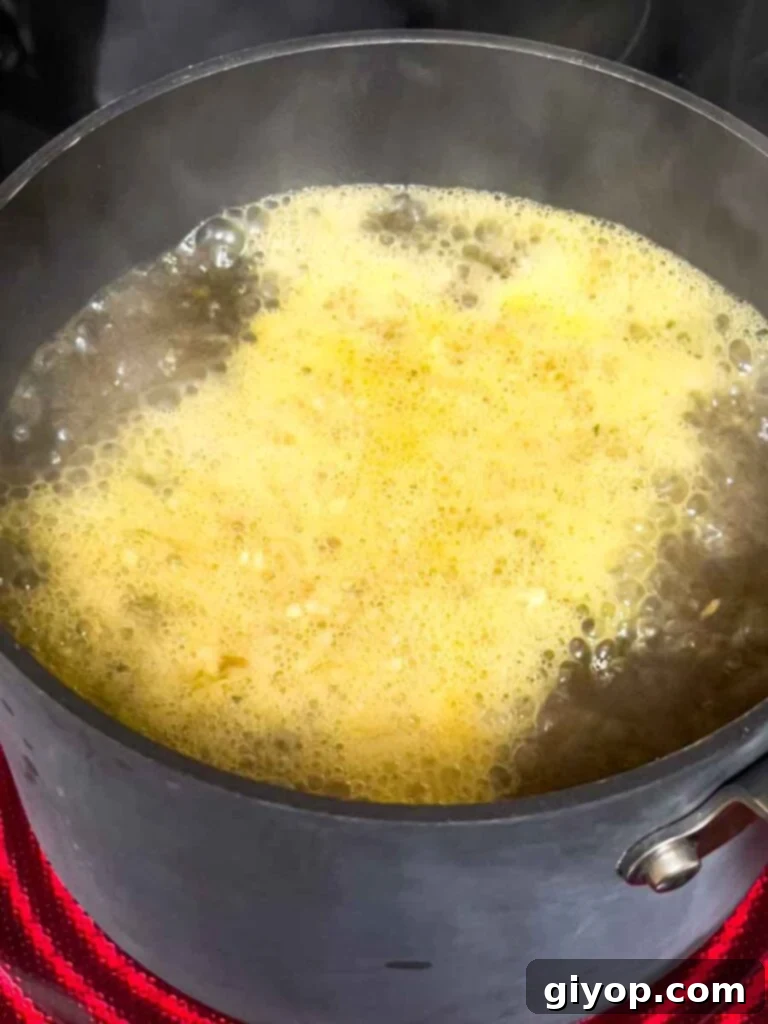
Bring Stock to a Boil: Pour the chicken stock into the pot with the sautéed aromatics. Increase the heat to medium-high and bring the stock to a rolling boil. This ensures the cornmeal starts cooking immediately and consistently.
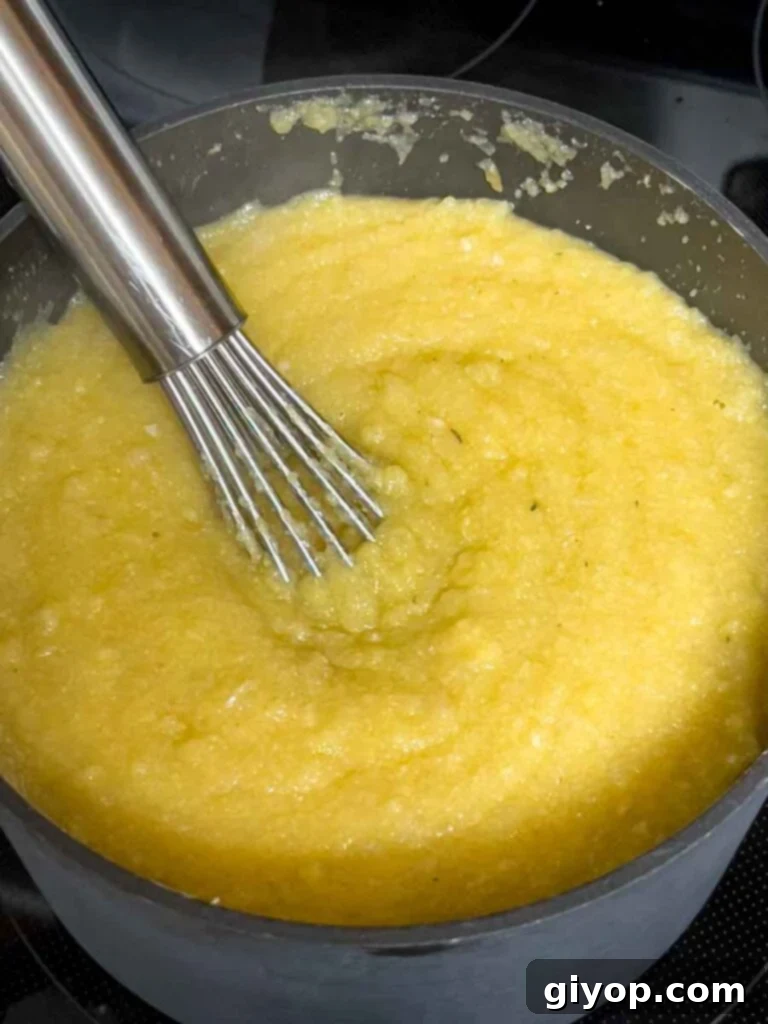
Add Cornmeal and Whisk: Once the stock is boiling, gradually pour in the cornmeal in a steady stream. As you add the cornmeal, whisk vigorously and continuously. This crucial step prevents lumps from forming and ensures a smooth, creamy consistency from the start.
Simmer and Stir: Immediately reduce the heat to medium-low. Continue whisking for a few more minutes to ensure no clumps remain. Then, switch to a wooden spoon or a heat-resistant spatula for stirring. Cook the polenta on medium-low heat for 15 to 20 minutes, stirring frequently—every few minutes is ideal. This consistent stirring is essential to prevent sticking to the bottom of the pot and helps release the starches, resulting in that desirable creamy texture.
Check for Doneness: After 15-20 minutes, give the polenta a taste. It should be creamy, smooth, and tender, without any raw or gritty taste. If it’s too thick for your preference, you can stir in a little more warm stock or water until it reaches your desired consistency.
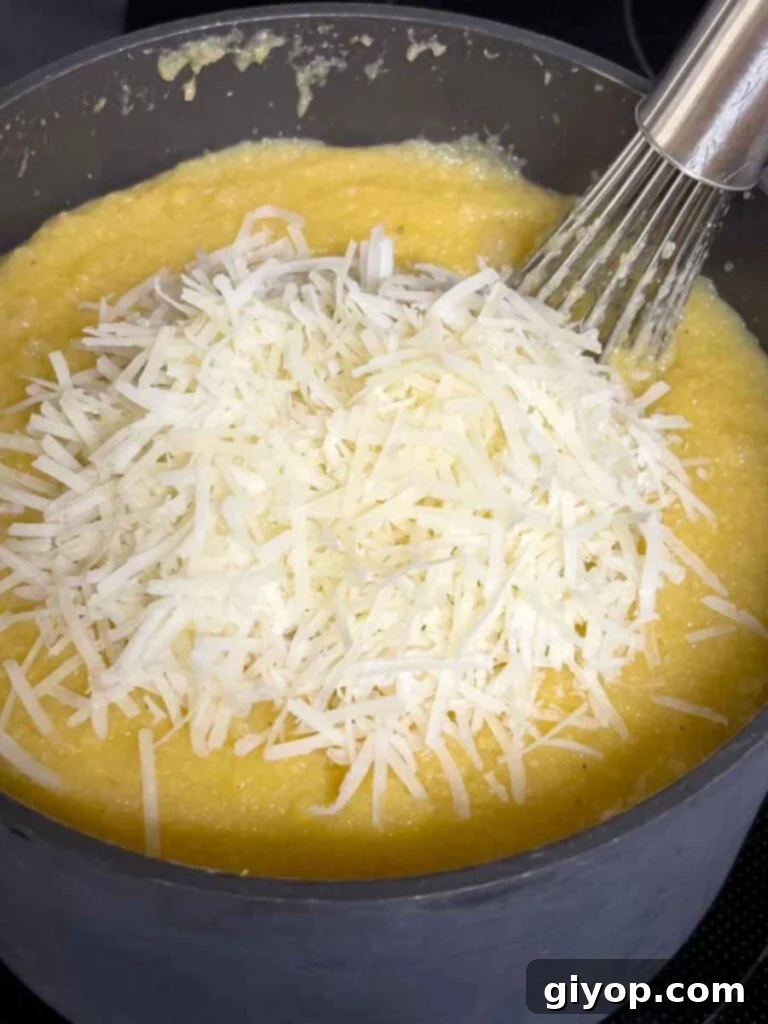
Finish with Cheese and Butter: Remove the pot from the heat. Stir in the freshly grated Parmesan cheese until it’s fully incorporated and melted, lending its distinct flavor and creaminess.
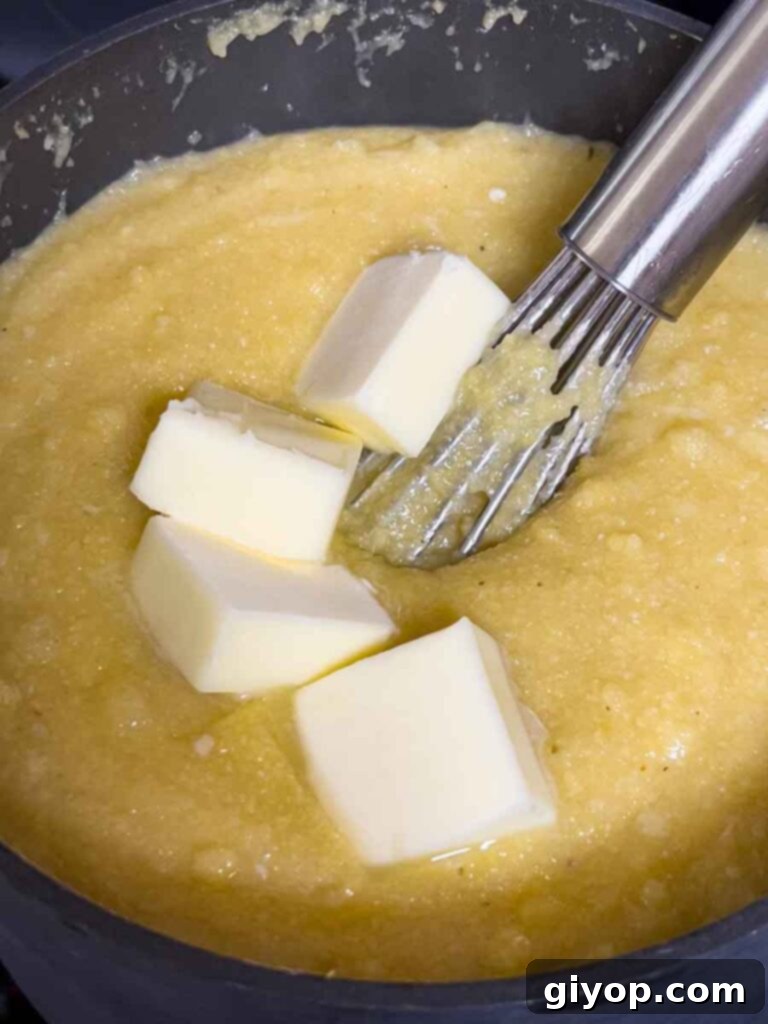
Elevate the flavor and creaminess by incorporating finely grated Parmigiano-Reggiano, or try Pecorino Romano for a bolder taste. Next, add the butter, stirring it in until it has completely melted and is fully integrated into the polenta. The butter adds incredible richness and a luxurious, silky texture.
For an irresistibly smooth and velvety texture, only use real butter. Margarine simply won’t achieve the same luscious results! Season and Serve: Taste the polenta again and season generously with salt and freshly ground black pepper to your preference. Adjust as needed until the flavors are perfectly balanced. Once everything is fully incorporated and the polenta has reached its ultimate creamy state, serve it hot.
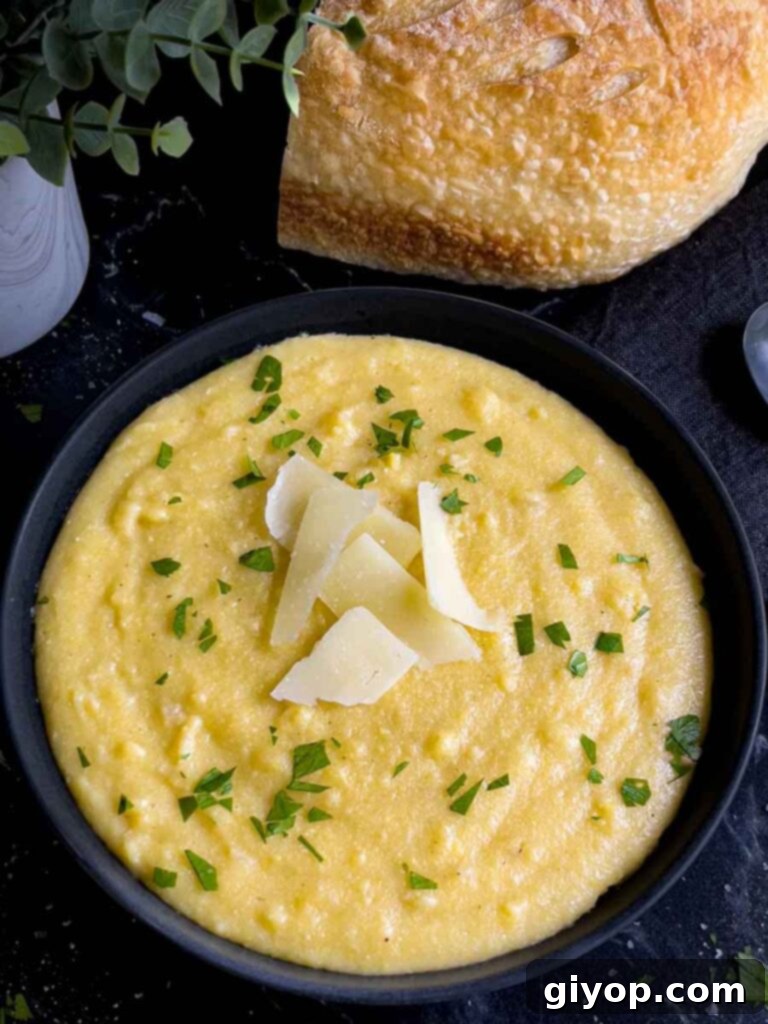
Delicious and satisfying recipes don’t have to be complicated to be exceptional. Garnish with a sprinkle of chopped fresh parsley and an extra dusting of Parmesan cheese for an appealing presentation and added fresh flavor. This simple yet profound dish is sure to become a cherished favorite in your culinary repertoire!
Expert Tips & Delicious Variations for Your Creamy Polenta
Mastering creamy polenta means not only perfecting the basic technique but also knowing how to adapt it to your preferences and explore exciting flavor variations. Here are some expert tips and creative ideas to inspire you:
- Adjusting Consistency to Your Liking: This recipe yields a beautifully rich and creamy polenta, but taste and preference are subjective. If you find your polenta too thick after cooking, don’t hesitate to stir in a little more warm chicken stock, water, or even milk/cream, one tablespoon at a time, until you reach your desired consistency. For a thicker, sliceable polenta (often served grilled or fried once cooled), you would simply use less liquid initially. The “best” texture is truly your personal favorite.
- Gradually Add the Cornmeal for Silkiness: When incorporating the cornmeal into the boiling liquid, the golden rule is to add it very gradually while continuously whisking. This meticulous method is the secret to preventing lumps and ensuring a consistently smooth and incredibly creamy texture. Adding the cornmeal slowly allows it to hydrate evenly, preventing clumps from forming and setting you up for success every time.
- Stirring is Key – Don’t Skimp! Polenta demands frequent and thorough stirring throughout its cooking process. This isn’t just to prevent it from sticking to the bottom of your pot and burning; it’s also vital for releasing the starches from the cornmeal. Regular stirring ensures these starches thicken the liquid, resulting in that coveted creamy, luxurious consistency. Aim to stir every few minutes, especially during the initial stages and as it begins to thicken. A sturdy wooden spoon or a flat-edged spatula is often best for reaching all corners of the pot.
- Herb-Infused Polenta: Elevate the aromatic profile of your polenta by incorporating fresh herbs. Alongside your initial aromatics (onion and garlic), add a tablespoon of finely chopped fresh herbs such as rosemary, thyme, or sage during the cooking process. The gentle heat will coax out their essential oils, infusing the entire dish with fragrant, earthy, and bright notes that beautifully complement the corn.
- Creamy Mushroom Polenta: Transform your polenta into a hearty and sophisticated main course or a substantial side with a savory mushroom topping. While your polenta simmers, sauté a mix of your favorite mushrooms (cremini, shiitake, oyster, or even wild mushrooms for an extra treat) with a touch of garlic and butter in a separate pan. Season with salt, pepper, and, optionally, a splash of white wine to deglaze and add acidity. Spoon this flavorful mushroom mixture generously over the creamy polenta before serving for an incredibly satisfying dish.
- Tomato and Basil Polenta: For a burst of Mediterranean freshness and vibrant flavor, try a tomato and basil variation. Stir in a tablespoon of high-quality tomato paste into the cooking polenta along with the chicken stock. The tomato paste will deepen the umami flavor and add a subtle tang. Just before serving, fold in a generous handful of freshly chopped basil leaves. Serve this alongside roasted cherry tomatoes, a simple marinara sauce, or grilled chicken for a colorful and appetizing presentation.
- Cheesy Polenta Extraordinaire: While Parmesan is classic, don’t limit yourself! Experiment with other cheeses. A combination of Fontina and Gruyère can offer a wonderfully nutty and meltingly smooth texture. For a sharper profile, consider a blend of cheddar and Monterey Jack. Incorporate these cheeses in addition to or instead of Parmesan, adjusting quantities to your taste.
- Spicy Kick Polenta: For those who love a bit of heat, infuse your polenta with a gentle warmth. Add a pinch of red pepper flakes along with the garlic and onion, or stir in a tablespoon of your favorite hot sauce or a dash of smoked paprika at the end of cooking. This subtle spice can add an exciting dimension to the creamy base.
- Utilizing Leftovers: Grilled or Fried Polenta: Don’t let leftover polenta go to waste! Pour cooled polenta into a shallow baking dish, smooth the top, and refrigerate until firm (several hours or overnight). Once firm, cut the polenta into squares, rectangles, or rounds. You can then grill, pan-fry in a little olive oil, or bake these pieces until golden and slightly crispy. Grilled polenta is fantastic with roasted vegetables or a fresh salsa, while fried polenta makes a delightful appetizer or side.
Frequently Asked Questions About Creamy Polenta
Polenta typically uses coarser ground yellow cornmeal and is a traditional Italian dish, often served with savory toppings or as a side. Grits, predominantly a Southern American staple, are made from finer ground white cornmeal (often hominy grits, which are alkali-treated) and tend to have a smoother consistency, frequently served for breakfast.
No, polenta is the name of the *cooked dish* made from cornmeal, while cornmeal is the *raw ingredient*. It’s similar to how flour is an ingredient, but bread is the finished product. Different grinds of cornmeal are used for different applications, with coarser grinds being traditional for polenta.
While quick-cooking or instant polenta is convenient and cooks much faster, it is typically a finer-grained variety and may not yield the same hearty texture as traditional, coarser-ground polenta. If you prefer the classic, slightly grainy yet creamy consistency, it’s best to use traditional polenta and allow for the recommended longer cooking time.
Absolutely! Leftover polenta tends to firm up considerably as it cools. To reheat, gently warm it on the stovetop over low heat, stirring in a little liquid (water, broth, or milk/cream) until it returns to a creamy consistency. You can also reheat it in the microwave, adding liquid as needed and stirring periodically.
A heavy-bottomed pot, such as a Dutch oven or a thick stainless steel pot, is ideal for cooking polenta. The heavy bottom helps distribute heat evenly and prevents the polenta from sticking and burning, which is crucial during the long cooking and stirring process.
Yes, easily! For a vegetarian version, simply substitute chicken stock with vegetable stock. For a vegan version, use vegetable stock and replace the Parmesan cheese with a nutritional yeast alternative or a vegan Parmesan substitute. Substitute the butter with olive oil or a plant-based butter alternative.
Other Delicious Side Dishes to Complement Your Meals
Looking for more fantastic sides to round out your culinary creations? Here are a few more delicious recipes that are sure to impress and satisfy:
- Fast And Delicious Mashed Potatoes Recipe
- Creamy Mushroom Risotto
- Baked Macaroni And Cheese
Are you on Pinterest? Save this recipe to one of your boards!
Pin Creamy Polenta Recipe on Pinterest
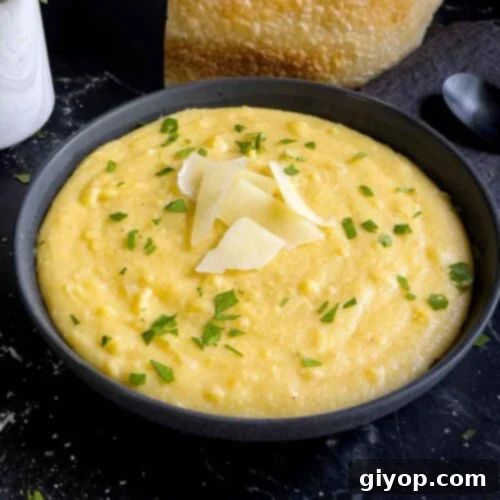
Creamy Polenta Recipe
Enjoy the rich flavors of Creamy Polenta. Made using yellow cornmeal, onion, garlic, chicken stock, butter, and parmesan cheese. Pure satisfaction in every bite!
Cuisine: Italian
Prep Time: 5 minutes
Cook Time: 20 minutes
Servings: 8
Calories: 313 kcal
Print Recipe
Pin Recipe
Ingredients
- 2 cups Cornmeal
- 6 cups Chicken stock
- 1 tbsp Olive oil
- 1/2 cup Onion (diced, appx. 1/2 onion)
- 2 cloves Garlic (minced, about 1 tbsp)
- 1/2 cup Parmesan cheese (shredded)
- 4 tbsp Butter
- Salt and pepper (to taste)
Instructions
- Heat the olive oil in a large pot over medium heat.
- Add the diced onions to the pot and sauté until they start to turn translucent, about 5-7 minutes.
- Add the garlic. Continue to cook until the garlic becomes fragrant, about 1 minute.
- Add the chicken stock to the pot and bring to a boil.
- Pour the cornmeal in, whisking vigorously as you add the cornmeal. A vigorous whisk will prevent clumping.
- Drop the heat to medium-low and continue whisking to ensure that no clumps are forming.
- Continue to cook on medium-low heat for 15 to 20 minutes, stirring occasionally.
- Add the parmesan cheese. Stir to incorporate fully.
- Add the butter and stir to incorporate fully.
- Optionally, season with salt and pepper to taste.
Notes
If you have leftover polenta, allow it to cool completely to room temperature before refrigerating. Transfer the polenta to an airtight container or cover it tightly with plastic wrap. Place the container in the refrigerator, where the polenta can be stored for around 4 to 5 days.
Freezing: Make sure the cooked polenta has completely cooled down before dividing it into portion-sized servings, if desired. Place the polenta in airtight freezer bags or containers, ensuring to remove as much air as possible to prevent freezer burn. Label the bags or containers with the date to keep track of the freezing time. Frozen polenta can be stored for up to 3 months.
Reheating: Polenta tends to firm up as it cools, so when reheating, you may need to add a little liquid, such as water or broth, and stir until it reaches a creamy consistency again. Reheating can be done on the stovetop or in the microwave.
Nutrition
Calories: 313kcal | Carbohydrates: 37g | Protein: 11g | Fat: 14g | Saturated Fat: 6g | Polyunsaturated Fat: 2g | Monounsaturated Fat: 5g | Trans Fat: 0.2g | Cholesterol: 25mg | Sodium: 405mg | Potassium: 342mg | Fiber: 4g | Sugar: 4g | Vitamin A: 229IU | Vitamin C: 1mg | Calcium: 87mg | Iron: 2mg