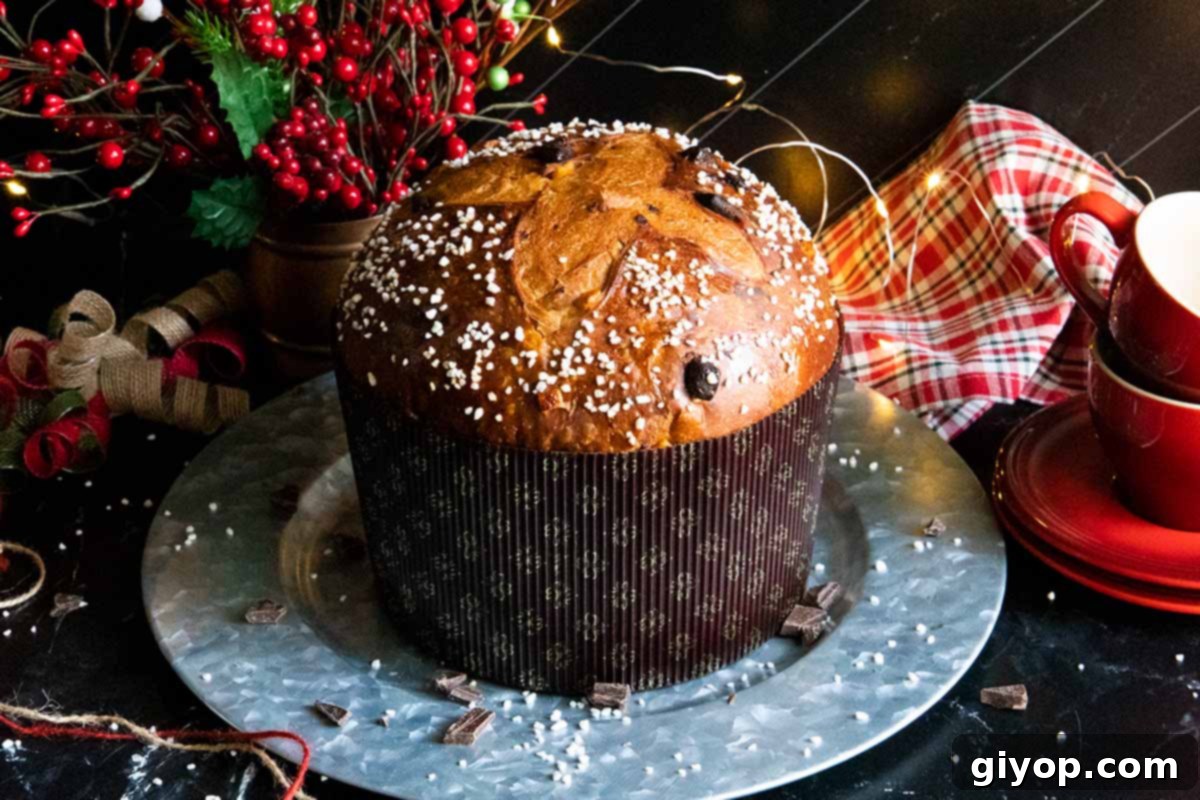
Indulge in the unparalleled delight of homemade Chocolate Orange Panettone, a truly special Italian Christmas bread that promises to elevate your holiday baking traditions. This recipe delivers a sweet, exquisitely light, and wonderfully moist loaf, generously studded with rich chocolate chunks and candied orange pieces, all infused with the vibrant zest and warmth of orange liqueur. Imagine the aroma filling your home – a blend of sweet citrus and decadent chocolate, creating an irresistible festive atmosphere.
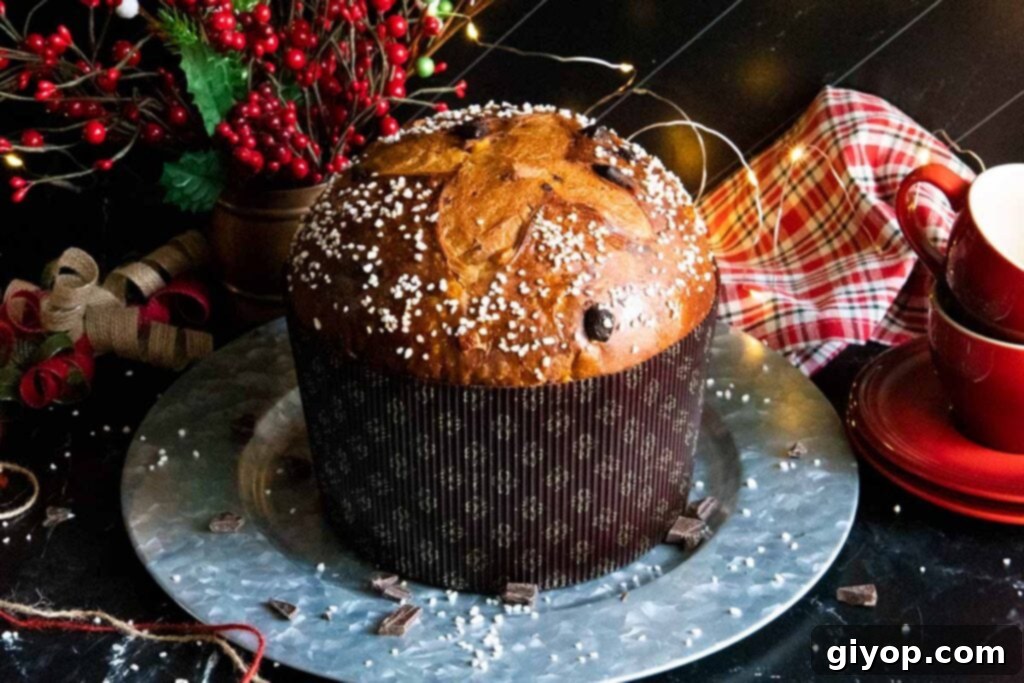
This magnificent bread is not just a treat for your family; it makes for perfect, thoughtful gifts for friends and loved ones during the festive season. Or, simply savor a slice yourself with your favorite holiday coffee, allowing the complex flavors to transport you to a winter wonderland. Making panettone from scratch is a rewarding journey, and this chocolate orange variation is an absolute showstopper.
Elevate Your Holidays with Homemade Chocolate Orange Panettone
There’s nothing quite like the taste of home-baked goods during the holiday season, and this Chocolate Orange Panettone is destined to become a new favorite. Combining the classic, beloved flavors of rich chocolate and bright, zesty orange within a light, fluffy, and buttery-rich Christmas bread creates a truly unforgettable experience. It’s a culinary masterpiece that captures the essence of festive indulgence, perfect for sharing and celebrating.
What is Panettone? A Beloved Italian Tradition
Panettone is a traditional sweet Italian bread loaf, typically enjoyed during the Christmas and New Year’s holidays. Originating from Milan, its characteristic dome shape and airy texture are instantly recognizable. Traditionally, panettone is enriched with candied orange, citron, and lemon zest, as well as raisins. It’s a bread that signifies celebration and often takes center stage at holiday gatherings across Italy and beyond.
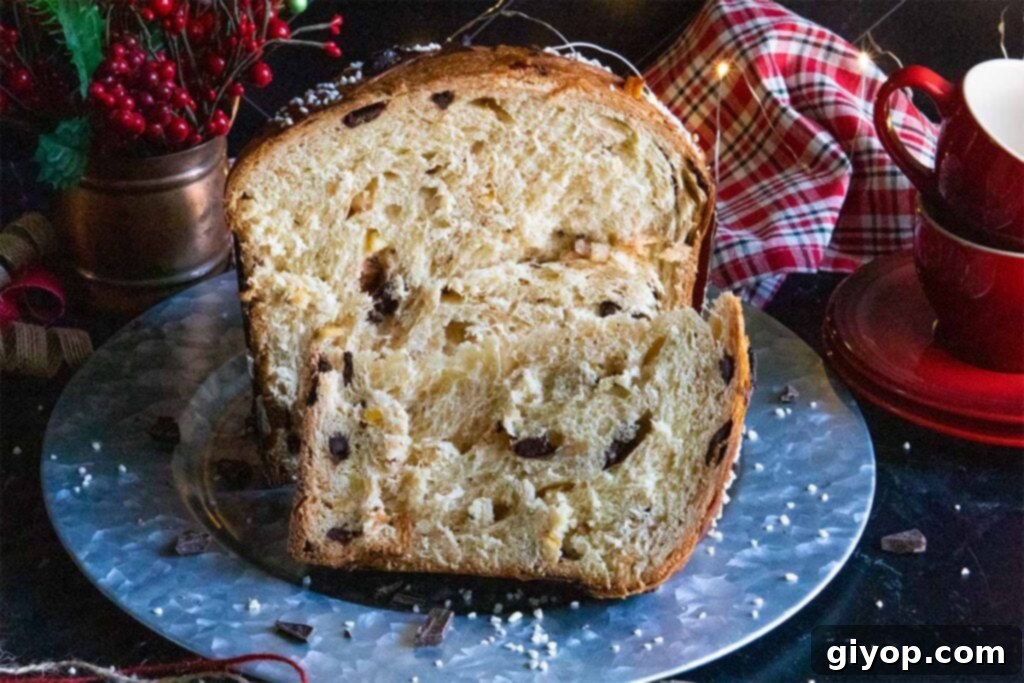
While the classic version is wonderful, this recipe ventures into a modern, irresistible twist by pairing the timeless panettone with the harmonious duo of chocolate and orange. Having meticulously tested this recipe for several weeks, building upon our traditional panettone recipe, we’ve gathered crucial insights and tips to ensure your baking success. This particular combination brings a delightful citrus brightness that beautifully cuts through the richness of the chocolate, resulting in a balanced and incredibly flavorful loaf.
Essential Tips for Baking the Perfect Chocolate Orange Panettone
Crafting panettone, especially with additions like chocolate and candied fruit, requires a bit of patience and precision. Here are some key learnings and tips to help you achieve a show-stopping loaf:
- Incorporating Chocolate: Chunks vs. Chips. For that desired “gorgeous mouthful of chocolate,” use good quality chocolate chunks rather than standard chocolate chips. Chocolate chunks melt more beautifully and provide a richer, more satisfying texture. It’s crucial that the chocolate is kneaded into the dough rather than simply pressed and rolled in, ensuring even distribution without compromising the delicate gluten structure.
- The Power of Refrigeration. Refrigerating the dough overnight is a game-changer. This cold fermentation process significantly develops the flavor of the panettone, creating a deeper, more complex taste profile. It also firms up the dough, making it much easier to handle in subsequent steps.
- Handling Cold Dough with Care. When you remove the chilled dough from the refrigerator, allow it to sit in a warm, draft-free place for at least one hour. This gradual warming is vital. Attempting to work with very cold dough can lead to tearing and difficulty in shaping. After it’s had a chance to warm up slightly, gently punch the dough down to release excess air, then carefully press it out, roll, and form it into a ball. This technique helps prevent large, undesirable holes in the finished bread, ensuring a consistent and appealing crumb.
- Baking Time Variability. Panettone can take a little longer to bake than traditional breads, especially when loaded with extra ingredients like chocolate and candied fruit. Oven calibration can also play a role, as ovens vary. Always test for doneness using a wooden skewer (it should come out clean) or a thermometer (the internal temperature should reach 200°F or 93°C). Don’t solely rely on visual cues.
- Preventing Over-browning. Using double pans (placing your panettone mold on top of another baking sheet) is an effective trick to prevent the bottom of the bread from browning too much or even burning. This creates a buffer, distributing the heat more evenly and gently.
How Do You Enjoy Chocolate Panettone? Delicious Serving Suggestions
While panettone is delightful on its own, there are many wonderful ways to enjoy this festive bread:
It’s best served warm. Place a few slices on a baking sheet and warm them gently in a preheated oven (around 300°F or 150°C) for a few minutes. This brings out its buttery aroma and softens the chocolate.
For an indulgent breakfast or brunch, transform panettone into French toast! The rich, buttery bread makes for an incredibly decadent base. Simply dip slices into an egg mixture and cook until golden brown. Serve with a dusting of powdered sugar, fresh berries, or a drizzle of maple syrup.
Panettone also pairs beautifully with a cup of coffee, espresso, or a glass of sweet dessert wine, such as Moscato d’Asti. Its delicate sweetness and rich texture make it a perfect complement.
How Long Does Panettone Last? Storing Your Holiday Treat
Like any other artisanal bread, panettone will gradually lose moisture and dry out over time. To preserve its freshness and exquisite texture, proper storage is key.
Keep your panettone in a sealed plastic bag or an airtight container at room temperature for up to 5 days. If you wish to extend its shelf life, refrigerate it for up to 7 days. For longer storage, panettone freezes exceptionally well. Wrap individual slices or the entire loaf tightly in plastic wrap, then in aluminum foil, and freeze for up to 3 months. Thaw at room temperature or gently warm in the oven before serving.
Key Ingredients for Your Chocolate Orange Panettone Recipe
The quality of your ingredients directly impacts the final taste and texture of your panettone. Here’s what you’ll need:
For the Starter (Biga)
- All-purpose flour (or Bread flour): Provides the initial structure for the starter. Bread flour, with its higher protein content, is often preferred for a lighter, chewier crumb.
- Water: Essential for activating the yeast and forming the starter dough.
- Dry active yeast: The leavening agent that kick-starts the fermentation process, contributing to flavor development.
For the Dough
- Water: Warm water (around 110-115°F / 43-46°C) is crucial for activating the yeast properly.
- Dry active yeast: For the main dough, ensuring a robust rise.
- Eggs: Room temperature eggs are vital for emulsification and contribute to the richness, color, and structure of the bread.
- Granulated sugar: Sweetens the bread, aids in yeast activity, and contributes to browning.
- Vanilla extract: Adds a warm, aromatic depth that complements both chocolate and orange.
- Orange zest: One packed tablespoon of fresh orange zest delivers the absolute best, most intense orange flavor, permeating the entire loaf.
- Bread flour: While all-purpose flour can work, bread flour’s higher protein content leads to a superior, lighter, and chewier texture, characteristic of authentic panettone.
- Kosher salt: Balances the sweetness and enhances all the flavors.
- Unsalted butter: Using good quality European butter is highly recommended. Its higher fat content and lower water content contribute to panettone’s signature rich, tender, and delicate crumb. Ensure it’s softened to room temperature for smooth incorporation.
- Semi-sweet chocolate: I found bittersweet chocolate not sweet enough for our preference; semi-sweet provides the perfect balance. Roughly chopped chocolate chunks are preferable over chocolate chips, as they melt more smoothly and offer a more luxurious bite.
- Candied orange peel: Diced into small pieces, these add bursts of intense citrus flavor and a chewy texture.
- Orange liqueur: Such as Grand Marnier or Cointreau. Soaking the candied orange peel in liqueur intensifies the orange flavor and adds a subtle boozy complexity.
Don’t Sweat The Recipe is supported by its readers. We may earn a commission if you purchase through a link on our site. Learn more.
How to Make Chocolate Orange Panettone: A Detailed Guide
Day One (The Night Before)
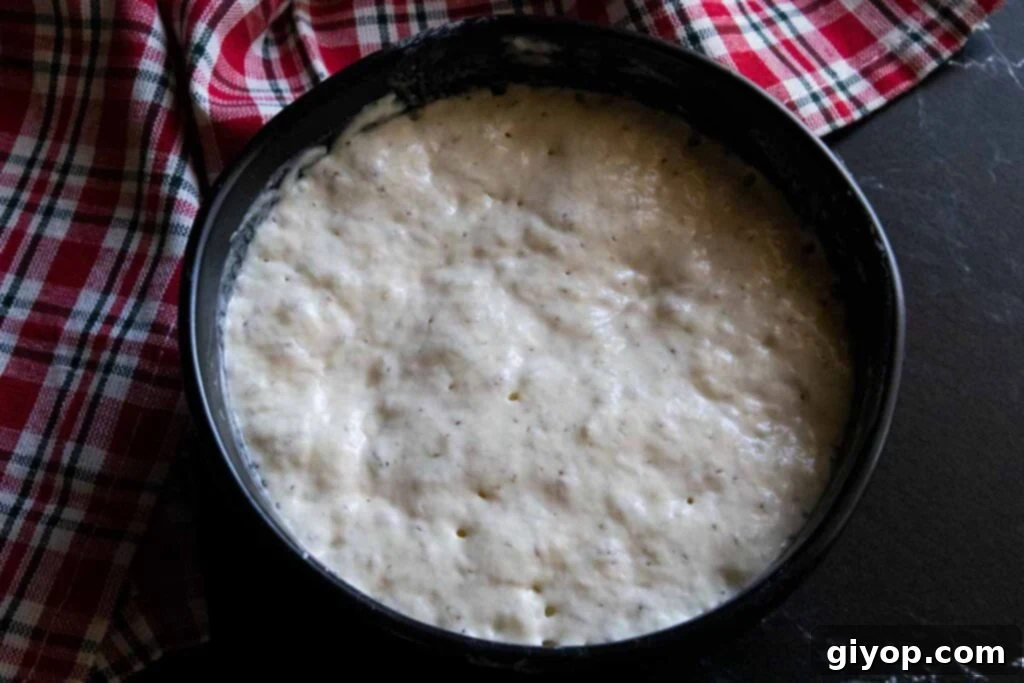
Prepare the Starter: In a medium-sized bowl, combine 3/4 cup of all-purpose or bread flour, 1/3 cup water, and 1/8 teaspoon dry active yeast. Mix thoroughly until no dry spots remain and a shaggy dough forms. Cover the bowl loosely with plastic wrap and let it rise overnight on your kitchen counter. This slow fermentation allows for deep flavor development. If you need to expedite the process, the starter can be made the same day but requires at least 6 to 8 hours to rise adequately, so begin early in the morning.
The starter, also known as a biga or poolish, is essential for adding volume, enhancing the complex flavors of your panettone, and contributing to the finished bread’s extended freshness and tender crumb.
Marinate the Candied Orange: In a separate small bowl, combine the diced candied orange peel with the orange liqueur (Grand Marnier is an excellent choice for its rich flavor). Stir them together, cover, and let the orange peel soak overnight. This infuses the candied fruit with an incredible depth of orange flavor and a hint of warmth from the liqueur.
Day Two: Crafting the Main Dough
Begin by properly measuring your flour into a medium-sized bowl using the “spoon and swoop” method – spoon flour into your measuring cup, then level it off with a straight edge, without packing it down. Whisk the kosher salt into the flour and set aside; this ensures even distribution of salt throughout the dough.
In the bowl of a stand mixer fitted with the dough hook, proof the 2 1/4 teaspoons of dry active yeast. Combine it with 1/4 cup of warm water (ideally 115ºF, or 46ºC – verify with a thermometer to ensure it’s not too hot or cold for the yeast) and about 1 tablespoon of the 1/2 cup of granulated sugar. Let this mixture sit for 5-10 minutes until it becomes frothy on top, indicating the yeast is active and healthy.
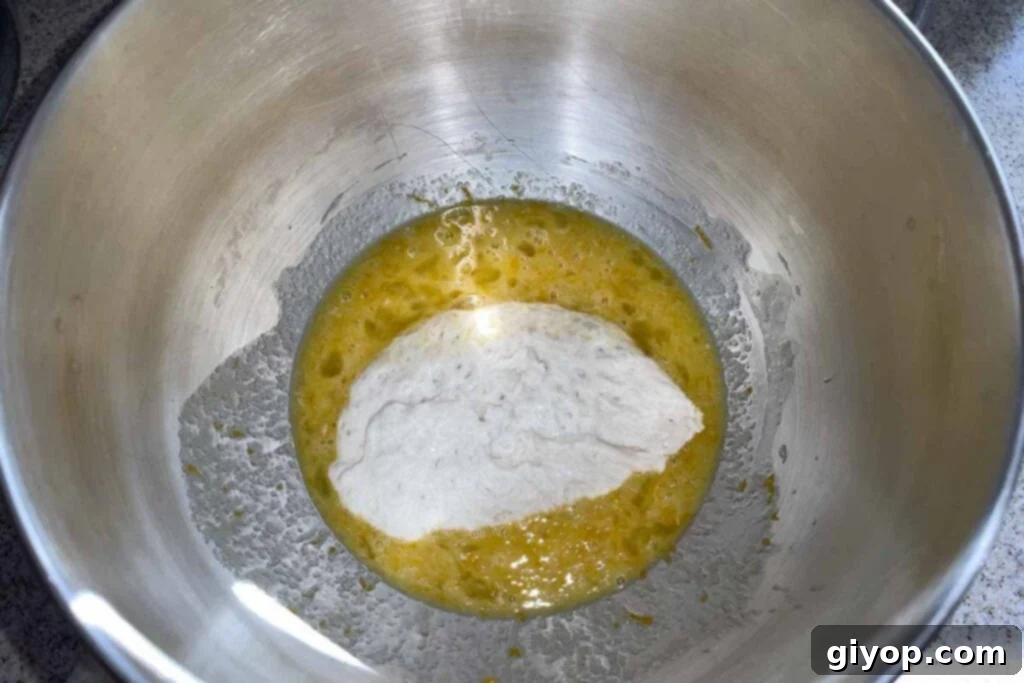
To the frothy yeast mixture, add the room temperature eggs, 1 1/2 teaspoons vanilla extract, the remaining granulated sugar, and the vibrant orange zest. Whisk these ingredients together until they are well combined and smooth.
Next, add the prepared starter from Day One and the whisked flour-salt mixture to the stand mixer bowl. Attach the dough hook and mix at low speed until all the ingredients come together and the dough begins to pull away slightly from the sides of the bowl. This initial mixing incorporates everything without overworking the gluten.
Increase the mixer speed to medium and continue to knead the dough for 10-15 minutes. The goal is for the dough to become smooth, soft, and elastic. You may need to stop the mixer periodically and scrape down the sides and bottom of the bowl to ensure all parts of the dough are being kneaded evenly.
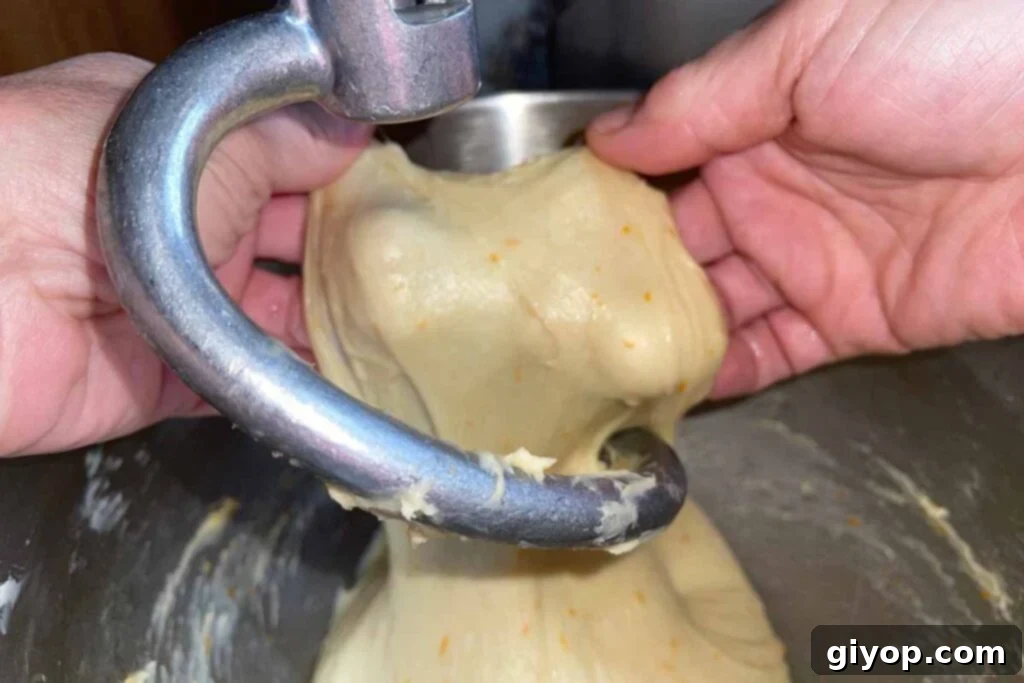
Now, it’s time to incorporate the butter. With the mixer still running on medium speed, add the room temperature unsalted butter a few tablespoons at a time. Allow each addition to be fully absorbed by the dough before adding the next. Once all the butter is incorporated, continue kneading for another 10-15 minutes. The dough should become incredibly smooth and elastic. To test for proper gluten development, perform the “windowpane test”: gently stretch a small piece of dough with dampened fingers. If you can stretch it thin enough to see light through it without tearing, your dough is ready. This is a critical step for panettone’s signature airy texture. As mentioned, using good quality European butter will make a noticeable difference in the final product’s richness and texture.
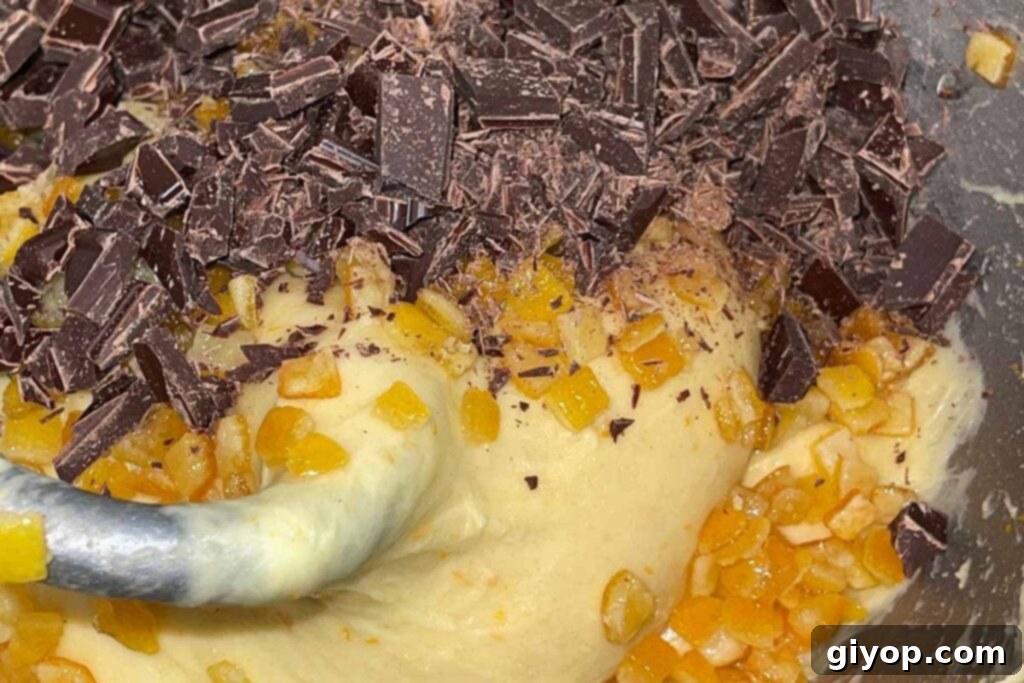
Reduce the mixer speed to low. Add the semi-sweet chocolate chunks and the well-drained candied orange peel (discarding any leftover liqueur from the marinade). Knead these inclusions into the dough for about 2 minutes, or until they are fully and evenly incorporated. Be careful not to over-knead at this stage to avoid toughening the dough or breaking down the chocolate too much.
Carefully scrape the dough out onto a lightly floured surface. Panettone dough is quite sticky, so resist the urge to add too much flour. Knead in just enough flour to make the dough slightly easier to handle, preventing it from sticking excessively to your hands and the work surface. Remember, the less extra flour you use, the lighter and fluffier your panettone will be once baked.
A bench scraper will be your best friend during this sticky process, helping you manage the dough without adding excessive flour. Be patient and work gently.
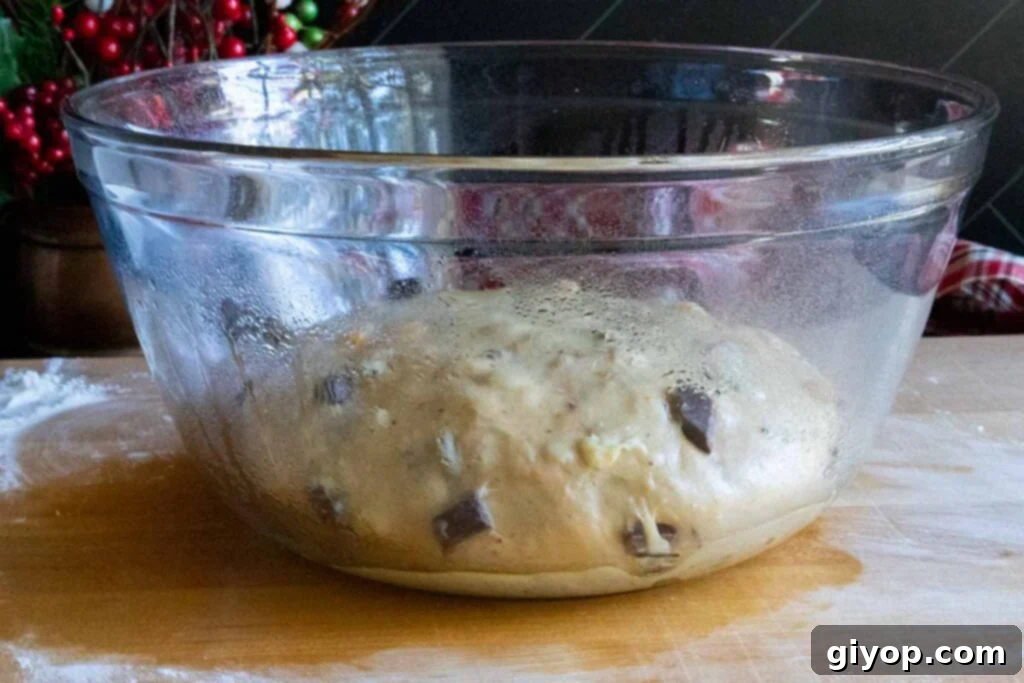
Place the dough in a large, lightly oiled bowl. Lightly oil the top surface of the dough to prevent a skin from forming, then cover the bowl tightly with plastic wrap. Allow the dough to rise in a warm, draft-free place for 3 to 4 hours, or until it has visibly tripled in size. The dough rising process for panettone is indeed long, and patience is absolutely key. Don’t strictly go by the clock; instead, watch the dough closely and proceed to the next step once it has truly tripled in volume.
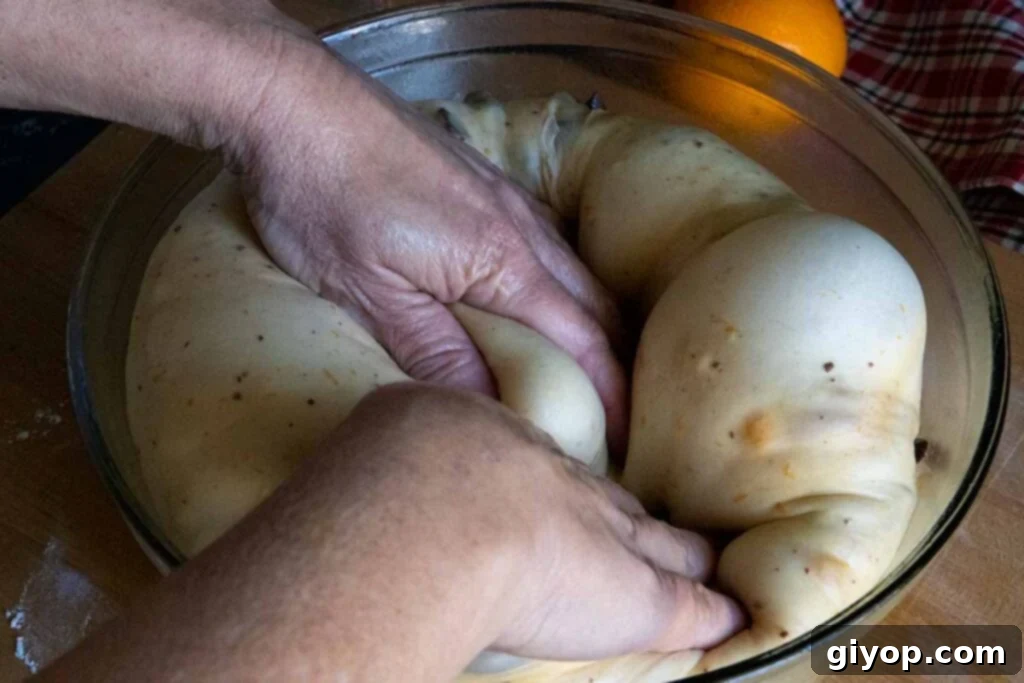
Once tripled, gently punch the dough down to release the air. Remove the dough from the bowl, transfer it to a clean work surface, and form it into a smooth ball by gently tucking and pulling the edges underneath. Return the dough to the large oiled bowl, cover it with oiled plastic wrap, and place it in the refrigerator overnight. This extended cold fermentation is crucial for further flavor development and improved texture, making the final panettone truly exceptional.
Day Three: The Grand Finale – Baking Your Panettone
The dough will continue to rise slowly and develop flavor in the fridge overnight. On Day Three, remove the dough from the refrigerator and let it sit at room temperature for at least one hour. This allows the dough to lose some of its chill, making it much easier to handle and shape without tearing.
Place the slightly warmed dough on a clean work surface. Because the dough is still cool from the refrigeration, it will be much easier to handle during this step and typically won’t require any additional flour. If you find it slightly sticky, you can lightly grease your hands with butter instead of adding flour.
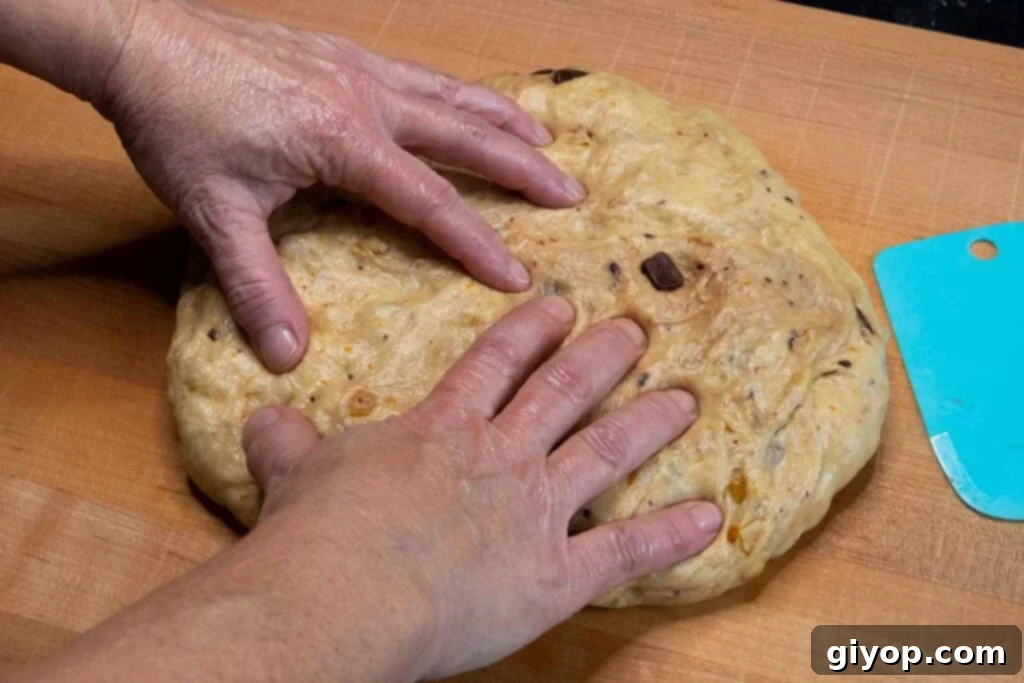
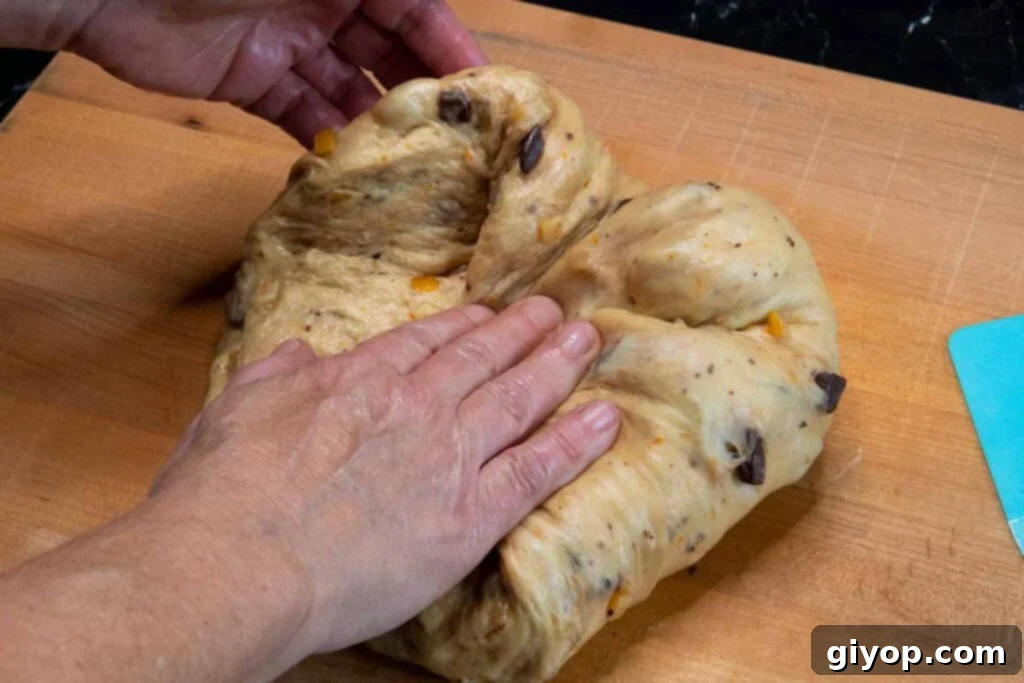
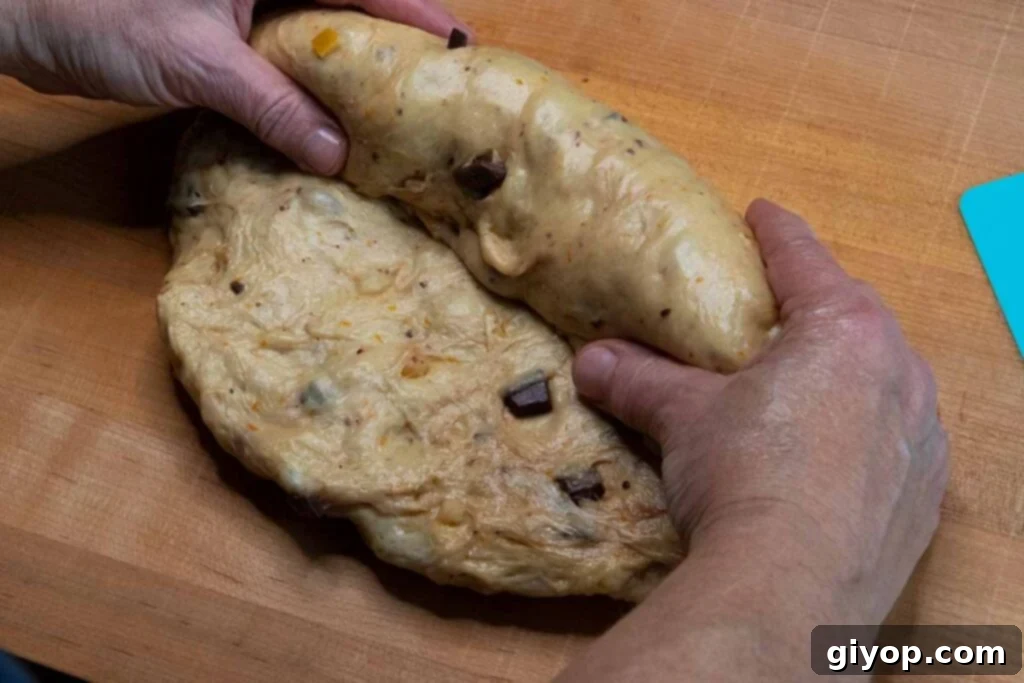
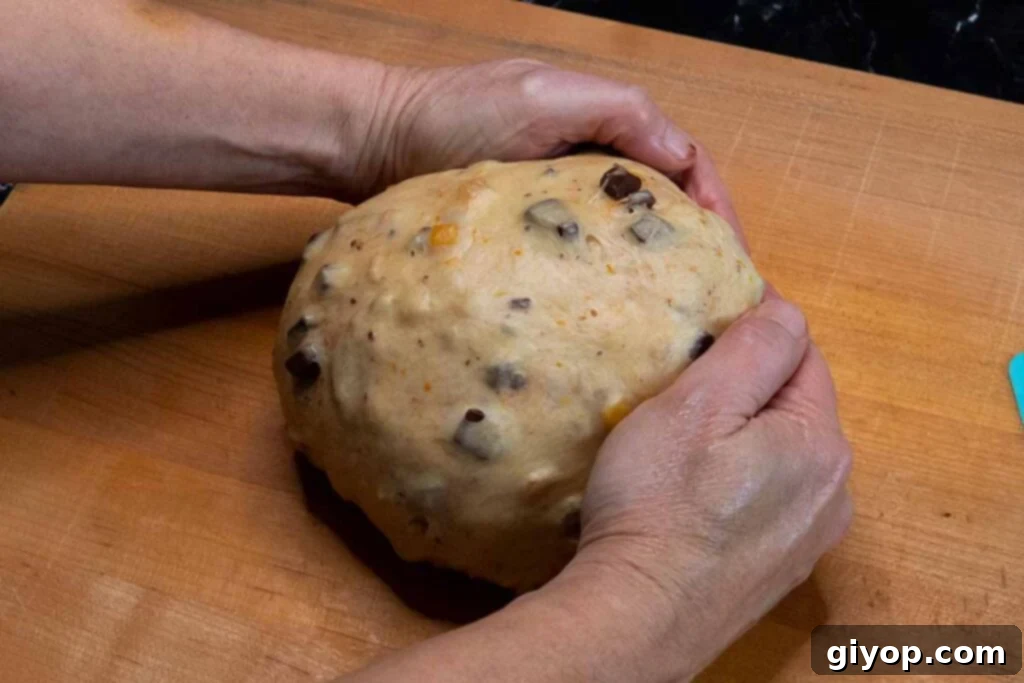
Gently press and roll the dough out into a rough rectangle. Then, roll the dough up tightly into a log shape. Once rolled, fold the ends inwards towards the center and continue folding and tucking the dough around itself to form a smooth, tight ball. This shaping technique creates surface tension, which is essential for achieving panettone’s iconic tall, domed shape during baking.
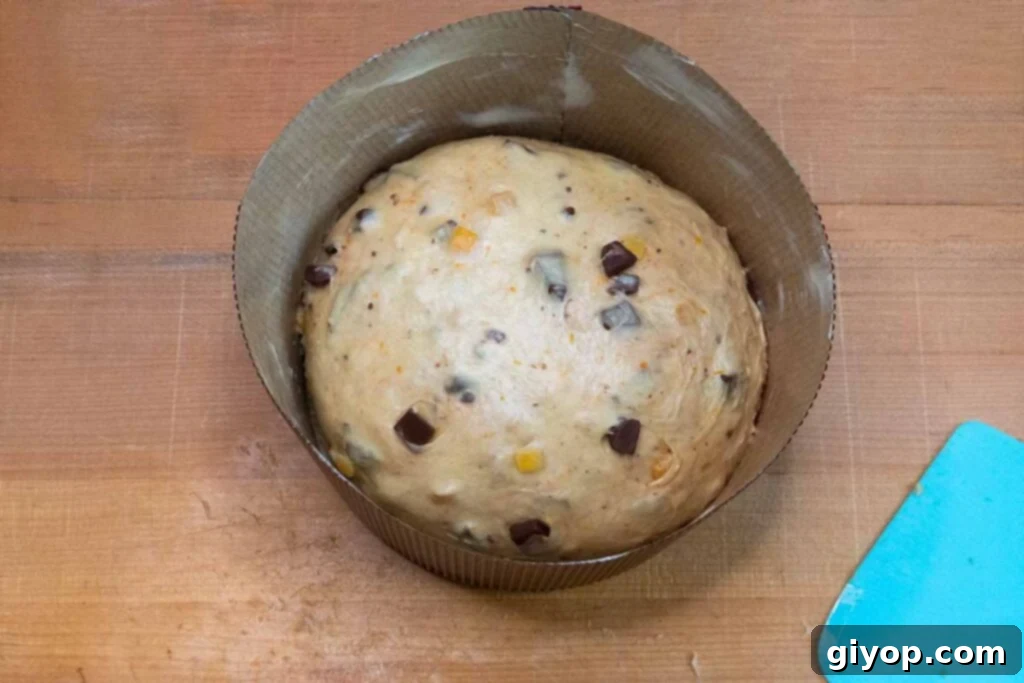
Carefully transfer the shaped dough into a greased panettone paper mold (these are readily available online). Place the mold on doubled baking sheets; this simple trick helps prevent the bottom of your panettone from browning too quickly or excessively.
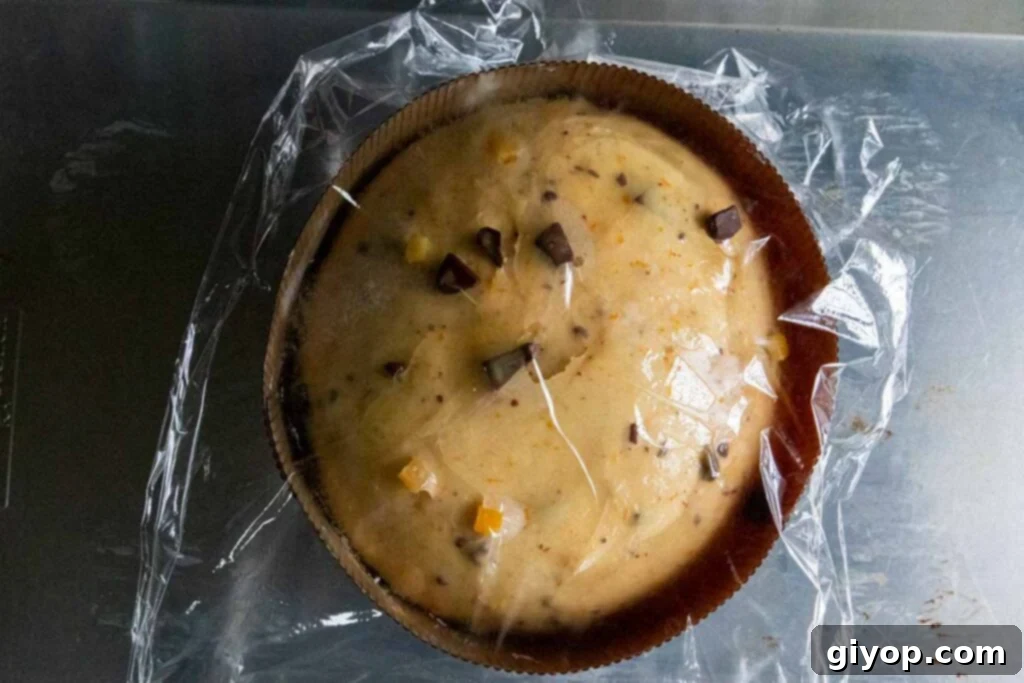
Cover the panettone mold loosely with oiled plastic wrap and let it rise again in a warm, draft-free spot. This final proofing will take approximately 3 to 4 hours, or until the dough has almost reached the top edge of the paper mold and nearly tripled in size once more. Remember that since the dough was cold, this second rise will take a while, so patience is paramount. If your house is on the cooler side (e.g., between 65º-68ºF), you can turn on your oven light and place the dough inside (with the oven off!) to create a warmer, more ideal rising environment.
Just before the panettone has completely risen to the top of the mold, remove it from its warm rising spot (if it was in the oven) and preheat your oven to 350ºF (175ºC).
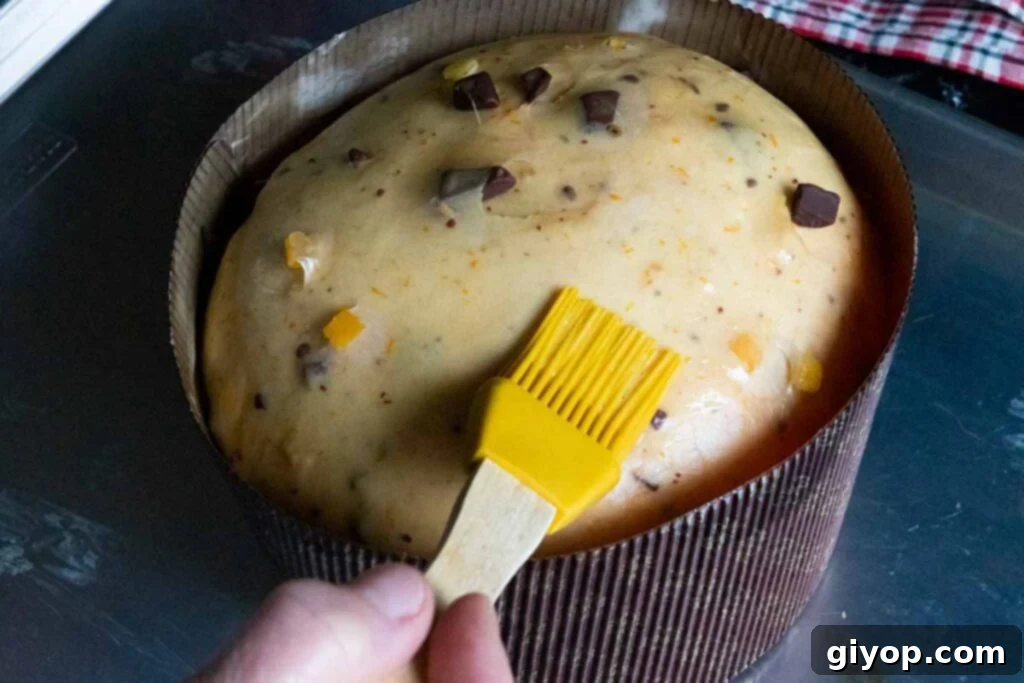
Prepare an egg wash by whisking one large egg with one tablespoon of water. Before baking, gently brush this egg wash over the entire top surface of the risen dough. This will give your panettone a beautiful golden-brown crust.
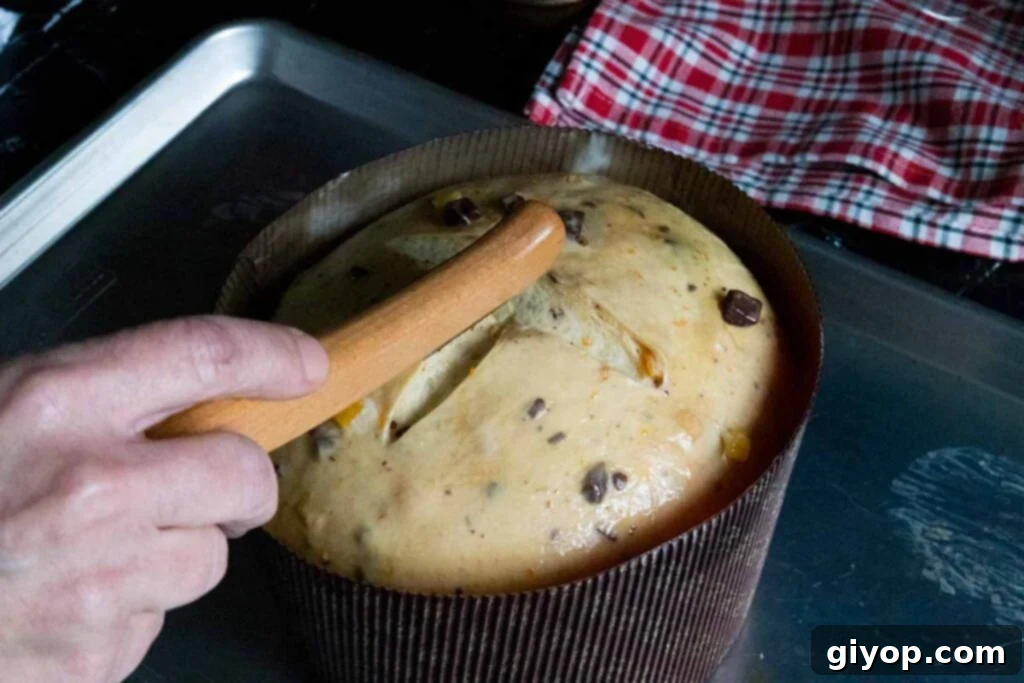
Using a very sharp knife or a clean razor blade, carefully cut a “cross” into the top of the dough, about 1/4 to 1/2 inch deep. This scoring step is crucial; it helps the panettone expand properly during baking and encourages it to achieve its characteristic domed shape. For an extra touch of richness, you can place a small dab of softened butter in the center of the cross (this step is optional but recommended).
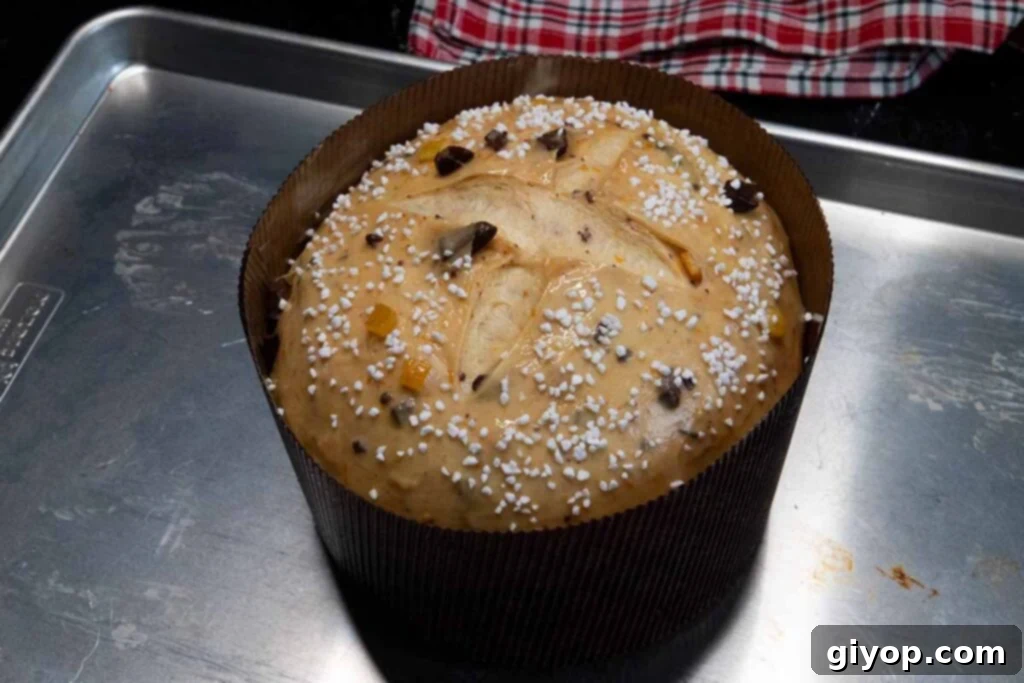
Generously sprinkle pearl sugar across the surface of the panettone. This adds a lovely crunch and a sparkling finish to the crust.
Bake the panettone in the preheated oven for 45 minutes up to 1 hour, or until a wooden skewer inserted into the center comes out clean and the internal temperature registers 200°F (93°C). If the top starts to brown too much before it’s fully baked, lightly tent it with a piece of aluminum foil. In my oven, this usually happens about 15-20 minutes into the baking process.
While the bread is baking, prepare a way to hang it upside down to cool. This is a critical step for panettone, as it helps keep its light, fluffy texture and prevents the delicate crumb from collapsing under its own weight as it cools. A deep mixing bowl, perhaps from your stand mixer, works well. Ensure it’s deep enough so that the top of the bread doesn’t touch the bottom of the bowl when inverted.
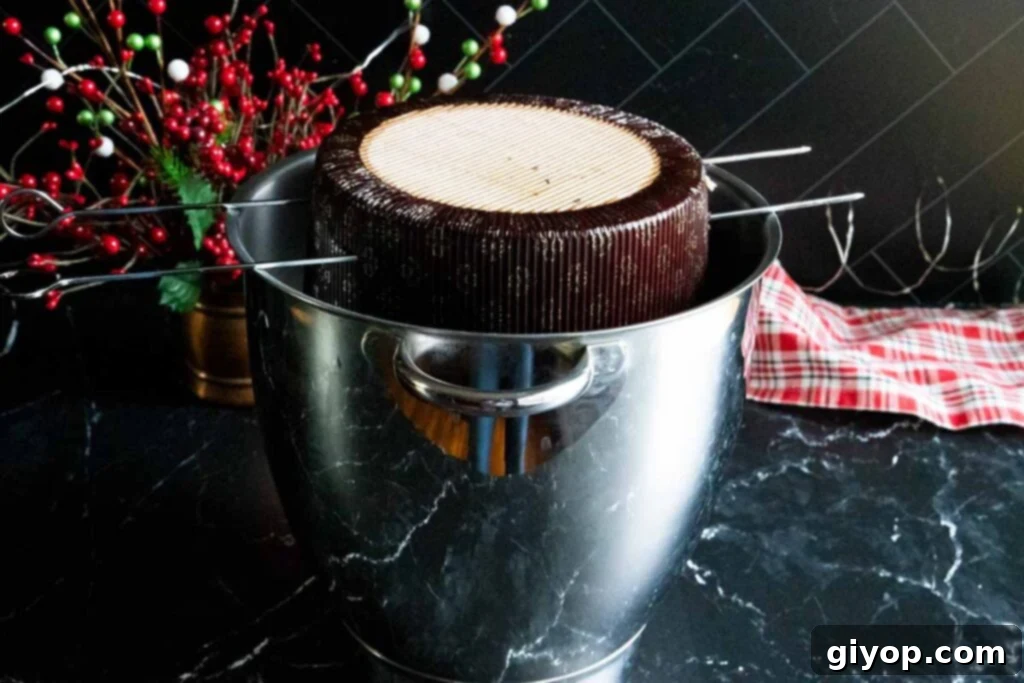
Once baked, carefully remove the panettone from the oven. Immediately and gently slide two long metal skewers (I highly recommend metal over wooden, as wooden ones can break with the weight of the bread) through each side of the bottom of the bread, about an inch or two from the base. Turn the panettone upside down and hang it over your prepared cooling area. Allow it to cool completely for at least 2 hours. This upside-down cooling method is essential for maintaining the panettone’s characteristic airy and delicate structure.
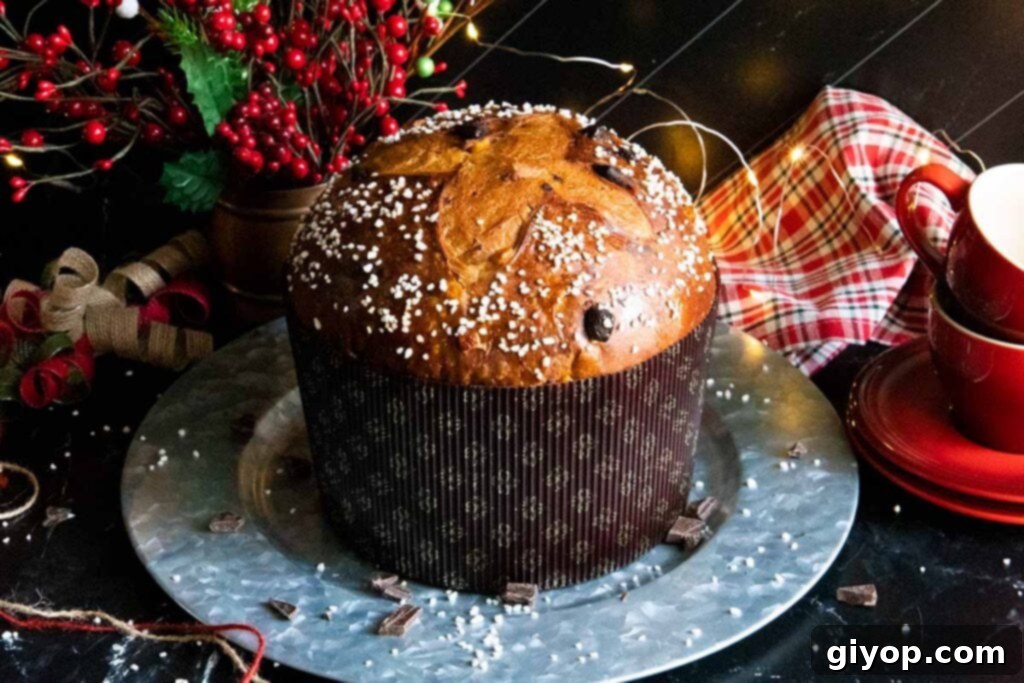
When we first embarked on our original panettone baking journey, we thought it might be a ‘one and done’ experience. We couldn’t have been more wrong! While our classic recipe remains a beloved staple, we’ve discovered endless possibilities for fun and creativity with additional ingredients. The crumb of this chocolate orange panettone is truly divine – it’s so incredibly light and airy, it feels like you’re eating a cloud, yet it boasts a wonderful structure and rich flavor that holds up perfectly.
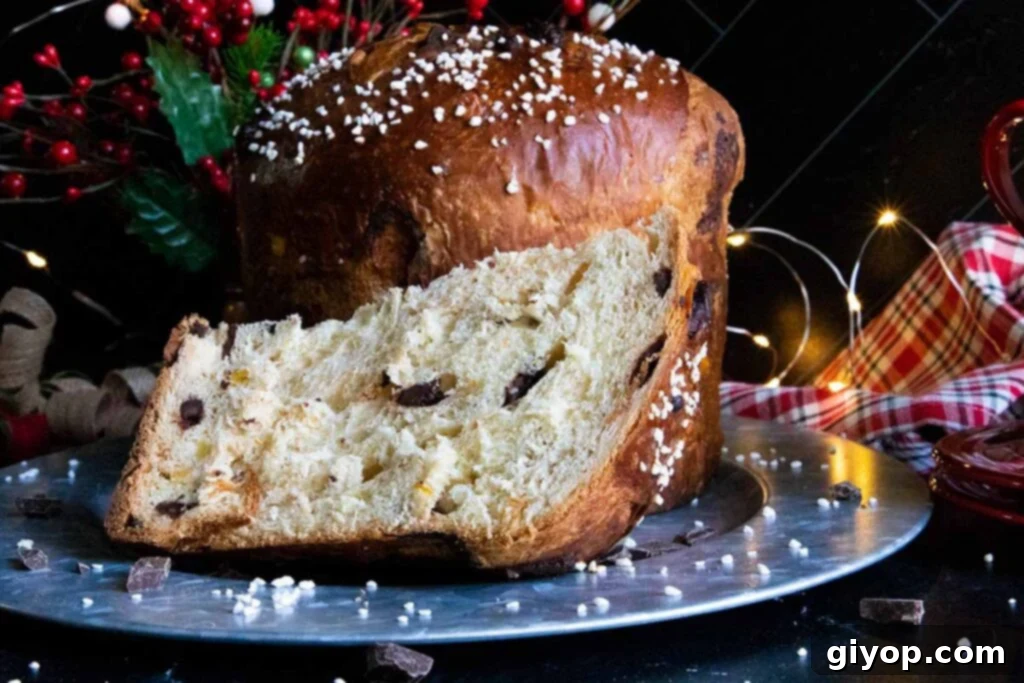
Yes, panettone is typically considered a holiday bread, but honestly, this stuff is so good, you might find yourself making a case to enjoy it year-round, not just around Christmas! The exquisite blend of chocolate and bright orange is simply too delicious to be confined to a single season. So, give it a whirl, embrace the process, and amaze your family and friends with this truly special homemade treat. Happy baking!
More Delicious Holiday Recipes to Explore
- Baklava Recipe
- Gramercy Tavern Gingerbread
- Fig Tart
- Italian Fig Cookies (Cucidati)
- Traditional Panettone Recipe
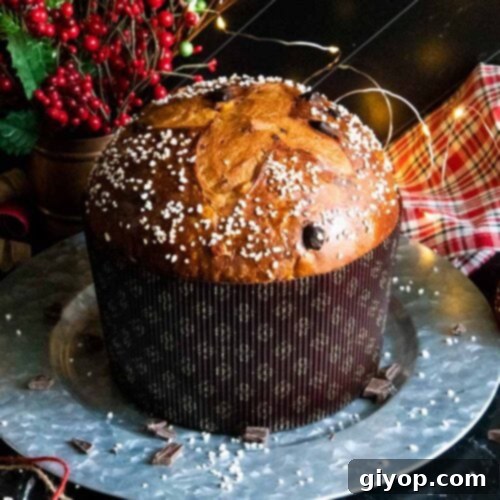
Chocolate Orange Panettone Recipe
A sweet Italian bread, traditionally enjoyed during Christmas. Rich, buttery bread, light in texture and studded with chocolate chunks and candied orange peel.
Recipe Details
- Course: Bread, Breakfast
- Cuisine: Italian
- Prep Time: 1 day 8 hours
- Cook Time: 45 minutes
- Total Time: 1 day 8 hours 45 minutes
- Servings: 15
- Calories: 299 kcal
- Author: Leigh Harris
Ingredients
For the Starter
- 3/4 cup Bread flour
- 1/3 cup Water
- 1/8 teaspoon Dry active yeast
For the Dough
- 1/4 cup Water (warm, 110-115 degrees F)
- 2 1/4 teaspoons Dry active yeast
- 3 large Eggs
- 1/2 cup Granulated sugar (divided)
- 1 1/2 teaspoon Vanilla extract
- 1 tablespoon Orange zest (packed)
- All the starter from above
- 3 cups Bread flour (plus more for dusting)
- 1 tsp Kosher salt
- 6 tbsp Unsalted butter (softened)
For the Fruit and Chocolate
- 1/2 cup Candied orange peel (diced small)
- 3 tbsp Orange liqueur (such as Grand Marnier)
- 6 oz Semi-sweet chocolate (roughly chopped into 1/4″ – 1/2″ pieces)
For the Egg Wash
- 1 large Egg (beaten)
- 1 tablespoon Water
Optional Topping
- A dab of butter for the top just before baking
- Pearled sugar for sprinkling
Instructions
The Starter (Day One)
- Mix 3/4 cup of bread flour, 1/3 cup water, and 1/8 teaspoon yeast in a medium-size bowl. Cover and let rise overnight. This starter adds volume, enhances flavor, and extends the freshness of the final bread. If you’re short on time, you can prepare the starter early on day two, allowing it at least 6-8 hours to become bubbly and active.
- In a separate small bowl, combine the diced candied orange peel with the orange liqueur (Grand Marnier works wonderfully). Allow the candied orange to soak overnight to infuse it with rich citrus notes, ensuring every bite is bursting with flavor.
The Dough (Day Two)
- Begin by properly measuring your flour (using the spoon and swoop method to avoid packing it too tightly) into a medium-sized bowl. Whisk in the kosher salt and set this mixture aside. This ensures even distribution of salt throughout the dough.
- In the bowl of a stand mixer, proof the 2 1/4 teaspoons of dry active yeast. Combine it with 1/4 cup of warm water (ideally between 110-115°F or 43-46°C – too hot will kill the yeast, too cold won’t activate it) and about 1 tablespoon of the granulated sugar. Let this sit for 5-10 minutes until a frothy layer forms on top, indicating the yeast is active and ready.
- To the activated yeast mixture, add the room temperature eggs, vanilla extract, the remaining granulated sugar, and the fragrant orange zest. Whisk these ingredients together until well combined.
- Now, add the prepared starter and the whisked flour mixture to the stand mixer bowl. Attach the dough hook and mix on low speed until the ingredients come together and the dough begins to pull away from the sides of the bowl.
- Increase the mixer speed to medium and knead the dough for an additional 10-15 minutes. The goal is a smooth, elastic consistency. You may need to pause occasionally to scrape down the sides of the bowl, ensuring all ingredients are fully incorporated.
- With the mixer still running on medium, gradually add the softened unsalted butter, a few tablespoons at a time. Wait for each addition to be fully incorporated before adding more. Once all the butter is in, continue kneading for another 10-15 minutes. The dough should become very smooth and elastic. To test for a “windowpane effect” – a hallmark of well-developed gluten – gently stretch a small piece of dough with dampened fingers. If you can stretch it thin enough to see light through it without tearing, your dough is ready.
- Reduce the mixer speed to low. Add the roughly chopped semi-sweet chocolate chunks and the previously soaked and well-drained candied orange peel. Knead for about 2 minutes, or until these delicious inclusions are evenly distributed throughout the dough. Avoid over-kneading at this stage.
- Carefully scrape the dough out onto a lightly floured work surface. Briefly knead in just enough additional flour to make the dough manageable and less extremely sticky. Remember, the less extra flour you use, the lighter and fluffier your baked panettone will be. A bench scraper can be an invaluable tool during this sticky process, so be patient.
- Place the dough into a large, lightly oiled bowl. Lightly oil the top surface of the dough, then cover the bowl tightly with plastic wrap. Allow the dough to rise in a warm, draft-free place for 3 to 4 hours, or until it has visibly tripled in size. Patience is truly a virtue here, as rising times can vary.
- Once the dough has tripled, gently punch it down to release the air. Remove the dough from the bowl, transfer it to your work surface, and form it into a smooth ball by gently tucking and pulling the edges underneath. Return the dough to the large oiled bowl, cover it with oiled plastic wrap, and refrigerate it overnight. This extended cold fermentation not only enhances the flavor but also improves the texture of the panettone.
Baking Day (Day Three)
- The dough will continue to rise slowly in the refrigerator overnight. On day three, remove the dough from the fridge and let it sit at room temperature for at least one hour to take off some of the chill. This makes it much easier to handle.
- Place the slightly warmed dough on a clean work surface (it should be cold enough not to require additional flour, but you can lightly grease your hands with butter if needed). Gently press and roll the dough out into a rough rectangle.
- Roll the dough up tightly into a log shape. Then, fold the ends inwards towards the center and continue folding and tucking the dough around itself to form a smooth, tight ball. This shaping technique creates tension for a better rise.
- Carefully transfer the shaped dough into a greased panettone paper mold. Place the mold on doubled baking sheets; this helps prevent the bottom of the panettone from over-browning.
- Cover the panettone mold with oiled plastic wrap and let it rise again in a warm, draft-free spot. This final rise will take approximately 3 to 4 hours, or until the dough has almost reached the top edge of the paper mold and nearly tripled in size once more. Since the dough started cold, this rise will be slower – again, patience is key! If your kitchen is cool (like between 65º-68ºF), consider turning on your oven light and placing the dough inside (with the oven off, of course) to create a warmer environment.
- Just before the panettone has completely risen, remove it from its warm rising spot (if it was in the oven) and preheat your oven to 350ºF (175ºC).
- Prepare an egg wash by whisking one large egg with one tablespoon of water. Gently brush this mixture over the entire top surface of the risen dough.
- Using a very sharp knife or a clean razor blade, carefully cut a cross shape into the top of the dough, about 1/4 to 1/2 inch deep. This scoring helps the panettone expand properly during baking, encouraging that characteristic domed top. For an extra touch of richness, you can place a small dab of softened butter in the center of the cross (this step is optional).
- Generously sprinkle pearl sugar across the surface of the panettone. This adds a beautiful sparkle and a delightful crunch to the crust.
- Bake the panettone for 45 minutes to 1 hour, or until a wooden skewer inserted into the center comes out clean and the internal temperature reaches 200°F (93°C). If the top begins to brown too quickly, lightly tent it with a piece of aluminum foil (usually around 15-20 minutes into baking).
- While your panettone bakes, prepare a setup for hanging it upside down to cool. This crucial step prevents the delicate, airy crumb from collapsing and helps maintain its signature light and fluffy texture. A common method is to use the bowl from your stand mixer, ensuring it’s deep enough so the top of the bread won’t touch the bottom of the bowl.
- Once baked, carefully remove the panettone from the oven. Immediately and gently slide two long metal skewers (wooden skewers tend to break with the weight of the bread) through the bottom sides of the panettone, about an inch or two from the base.
- Invert the panettone and hang it upside down over your prepared cooling area. Allow it to cool completely for at least 2 hours.
- Once fully cooled, carefully remove the skewers. Slice and serve this magnificent chocolate orange panettone.
Notes
UPDATE: While developing this recipe, I successfully streamlined the process into two days for those with less time. To do this, make the starter early on Day One, ensuring it rises and becomes bubbly for at least 6-8 hours. Then, proceed with making the dough, letting it rise for 3-4 hours. After the first rise, transfer the dough to a plastic zip-lock bag and refrigerate overnight. On Day Two, continue with the remaining steps, beginning with removing the dough from the refrigerator to take off the chill.
Nutrition
Serving: 15g | Calories: 299kcal | Carbohydrates: 42g | Protein: 7g | Fat: 11g | Saturated Fat: 6g | Polyunsaturated Fat: 1g | Monounsaturated Fat: 3g | Trans Fat: 1g | Cholesterol: 62mg | Sodium: 183mg | Potassium: 139mg | Fiber: 2g | Sugar: 16g | Vitamin A: 221IU | Vitamin C: 1mg | Calcium: 23mg | Iron: 1mg