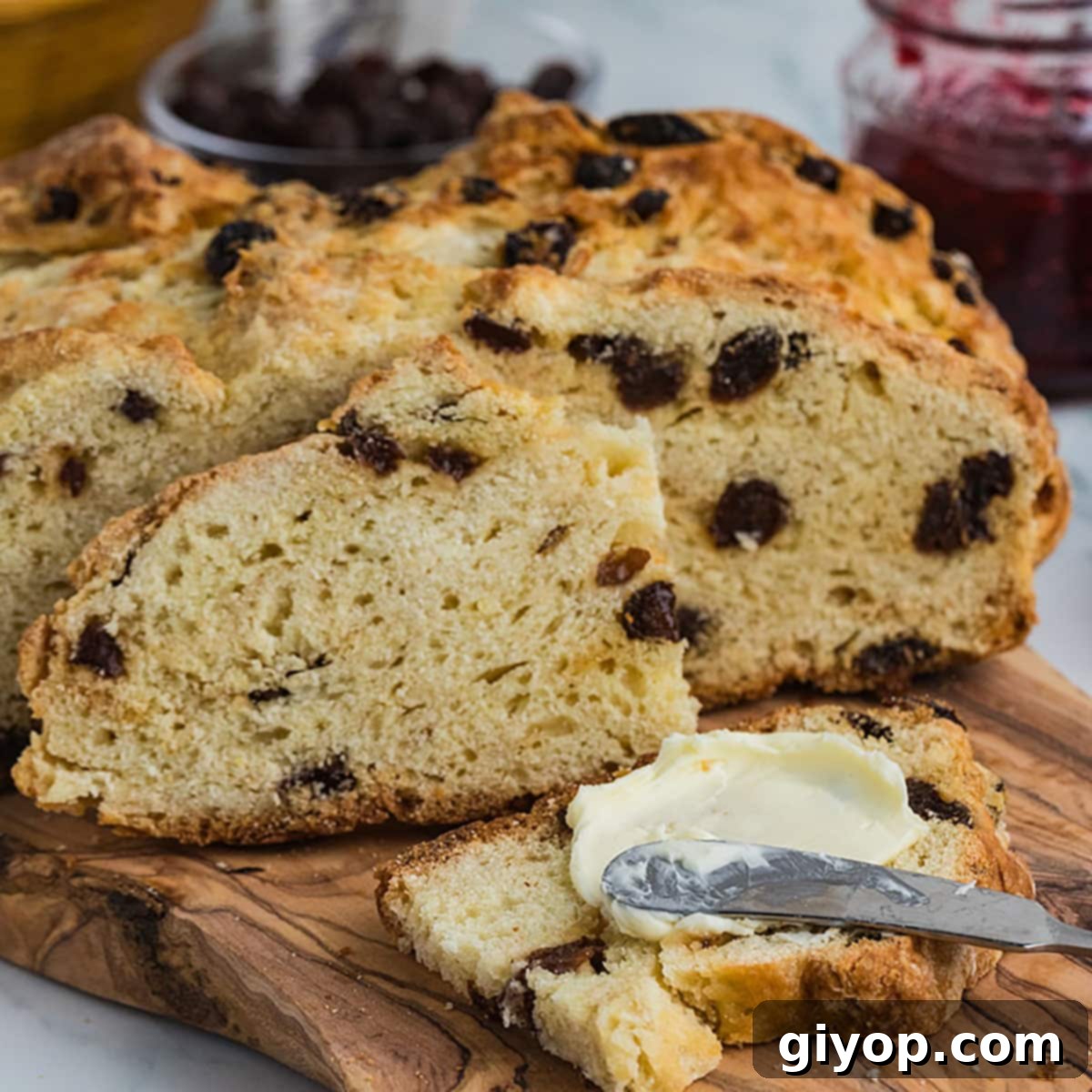
Welcome to the ultimate guide for baking Irish Soda Bread with Raisins – a timeless classic cherished for its simplicity and hearty appeal. This quick bread is a celebration of rustic charm, requiring no yeast or lengthy proofing, making it an ideal choice for bakers of all skill levels. With its slightly sweet flavor from plump, juicy raisins and a wonderfully dense yet tender texture, it’s a versatile loaf perfect for any time of day. Whether slathered with butter for breakfast, enjoyed as a wholesome snack, or served as a comforting accompaniment to a steaming bowl of soup or stew, this traditional Irish soda bread promises warmth and satisfaction in every bite.
Don’t forget to save this cherished recipe for later by bookmarking this page or pinning it to your favorite Pinterest board!
The Enduring Appeal of Traditional Irish Soda Bread with Raisins
There’s a reason why Irish soda bread remains a beloved staple in kitchens worldwide. Its no-fuss preparation and delightful flavor profile make it an instant favorite. This particular recipe, enhanced with sweet raisins, offers several compelling advantages:
- Effortlessly Simple: Forget about yeast and complex kneading techniques. This recipe relies on baking soda and buttermilk for its rise, ensuring a quick and easy process that even novice bakers can master.
- Tender Crumb & Tangy Flavor: The magic combination of buttermilk and baking soda reacts to create a beautifully tender crumb with a subtle, irresistible tangy note that perfectly complements the sweetness of the raisins.
- Versatile Delight: The addition of raisins provides delightful bursts of sweetness, making this bread incredibly versatile. Enjoy it plain, with butter and jam, or alongside hearty savory dishes like soups and stews for a truly satisfying experience.
One of the most remarkable aspects of this homemade Irish soda bread recipe is its accessibility. You don’t need any prior bread-making experience or specialized skills. If you’ve ever dreamt of baking your own bread but felt intimidated, this recipe is your perfect starting point, promising a successful and delicious outcome every time.
Key Ingredients for Your Perfect Irish Soda Bread
Crafting this delicious Irish soda bread requires a few simple, readily available ingredients. The quality of each component plays a crucial role in achieving that authentic taste and texture. Below is an overview of what you’ll need. For precise measurements and detailed instructions, please refer to the complete recipe card at the bottom of the page.
📋 Detailed Ingredient Guide and Smart Substitutions
- Raisins: These dried grapes are essential for adding natural sweetness and delightful chewy pockets throughout the bread. For a richer flavor and softer texture, soaking them in cold water before mixing is highly recommended.
- Cold Water: Used to rehydrate and plump up the raisins, ensuring they remain moist and tender during baking rather than becoming tough and dry. This simple step makes a significant difference.
- All-Purpose Flour: The foundation of our bread. It’s crucial to measure flour correctly to avoid a dense or dry loaf. Always use the spoon-and-level method: spoon flour into your measuring cup and level it off with a straight edge, rather than scooping directly from the bag.
- Granulated Sugar: Adds a subtle touch of sweetness that balances the tang of the buttermilk and enhances the flavor of the raisins. It’s not meant to make the bread overly sweet, but rather to complement its rustic profile.
- Baking Soda: This is the primary leavening agent for soda bread. It requires an acidic ingredient, like buttermilk, to activate and create the carbon dioxide bubbles that make the bread rise, resulting in a light and fluffy crumb.
- Baking Powder: While baking soda does most of the work, baking powder provides an extra lift. It’s a complete leavening agent, containing both an acid and a base, offering a secondary boost to the bread’s texture.
- Fine Sea Salt: A fundamental flavor enhancer. Salt not only seasons the bread but also helps to strengthen the gluten structure, contributing to a better texture.
- Unsalted Butter (Chilled): Cold butter is key for a tender and moist crumb. When cut into the flour, it creates pockets of steam during baking, leading to a flakier, richer texture. Using unsalted butter allows you to control the exact amount of salt in the recipe.
- Buttermilk: Indispensable for authentic Irish soda bread. Its acidity reacts with baking soda to leaven the bread, while also imparting a distinct tangy flavor and essential moisture for a tender loaf. If you don’t have buttermilk, you can make a substitute by adding a tablespoon of lemon juice or white vinegar to regular milk and letting it sit for 5-10 minutes until it slightly curdles.
- Large Egg (Room Temperature): Acts as a binder, helping to hold the dough together and adding richness and moisture. A room temperature egg incorporates more easily into the dough, leading to a smoother, more uniform batter.
Customize Your Irish Soda Bread: Creative Variations
One of the joys of baking Irish soda bread is how incredibly adaptable the recipe is. While the classic raisin version is delightful, feel free to experiment and make it uniquely your own with these delicious ideas:
- Spice It Up: Introduce aromatic depth by adding traditional Irish spices. Incorporate a teaspoon of caraway seeds for a subtle anise-like flavor, or a pinch of fennel seeds for a warm, licorice note. A touch of cinnamon or nutmeg can also add a cozy dimension.
- Savory Cheese Twist: Transform your sweet soda bread into a savory delight. Fold in a cup of grated cheese such as sharp cheddar for a classic tang, Parmesan for a salty kick, or Gouda for a creamy, slightly nutty flavor. This version pairs wonderfully with savory meals.
- Alternate Dried Fruits: If raisins aren’t your favorite, or if you simply want to try something new, swap them out! Golden raisins offer a milder sweetness, while dried apricots provide a lovely tartness. For a festive touch, dried cranberries are excellent, especially around the holidays.
- Indulgent Chocolate Chips: For those with a sweet tooth, chocolate chips are a fantastic addition. Semi-sweet or dark chocolate chips melt beautifully, creating pockets of rich, gooey goodness. This variation turns soda bread into a delightful dessert or a special breakfast treat.
- Fruity and Zesty: Citrus flavors complement the buttermilk beautifully. Grate in some lemon zest or orange zest to the dough for a bright, fresh aroma and taste. For an even more decadent treat, combine dried cherries with a dusting of powdered sugar on top after baking.
🥣 Essential Baking Tools for Your Irish Soda Bread
Baking delicious Irish soda bread doesn’t require a lot of specialized equipment, but having the right tools can certainly make the process smoother and more enjoyable. Here’s what you’ll need to gather before you begin:
The following are affiliate links. We are a participant in the Amazon Services LLC Associates Program, an affiliate advertising program designed to provide a means for us to earn fees by linking to Amazon.com and affiliated sites.
- Small Bowl: Perfect for soaking your raisins, ensuring they plump up beautifully before being incorporated into the dough.
- Large Bowl: This will be your primary mixing bowl for combining the dry and wet ingredients. Choose one with enough space to comfortably mix the dough.
- Parchment Paper: Absolutely invaluable for preventing sticking and making it easy to lift your baked bread out of the skillet or off the baking sheet. It also helps with even baking.
- Non-slip Pastry Mat: Provides a clean, non-stick surface for kneading your dough, keeping your counter tidy and making the shaping process much easier.
- 10-12” Cast Iron Skillet or Dutch Oven: Ideal for baking soda bread as it conducts heat evenly, resulting in a perfectly golden, crispy crust and a thoroughly cooked interior. If you don’t have one, a sturdy baking sheet will also work.
For more of my kitchen essentials and favorite products, be sure to check out my Amazon storefront!
Step by Step Guide to Baking Perfect Irish Soda Bread
Baking this Irish soda bread is a straightforward process, but following these steps carefully will ensure a perfect loaf every time. This is an overview; detailed instructions can be found in the recipe card below.
- Prepare Your Oven and Pan: Begin by preheating your oven to 375°F (190°C). Line a 10 to 12-inch cast iron skillet or a baking sheet with two pieces of parchment paper laid criss-cross. This ensures easy removal of the bread after baking.
- Soak the Raisins: In a small bowl, combine the raisins with cold water. Set this aside to allow the raisins to plump up and soften. This step is crucial for juicy raisins in your final bread.
- Combine Dry Ingredients: In a large mixing bowl, measure out 4 cups of all-purpose flour, granulated sugar, baking soda, baking powder, and fine sea salt. Use a whisk to lightly combine these ingredients, ensuring they are evenly distributed.
- Incorporate Cold Butter: Take your chilled unsalted butter and cut it into small, pea-sized cubes. Using a gloved hand or a pastry cutter, work the butter into the flour mixture until it resembles coarse crumbs. Some small pieces of butter remaining are perfectly fine; they will create pockets of steam and flakiness as the bread bakes.
- Add Wet Ingredients: Into the same bowl, add the room temperature egg and the buttermilk. With a wooden spoon, mix until just combined. Be careful not to overmix the dough, as this can develop the gluten too much, leading to a tough bread. The dough will be sticky, and that’s exactly what you want.
- Fold in Raisins: Drain the soaked raisins thoroughly, discarding the water. Gently fold the drained raisins into the dough, mixing just enough to ensure they are evenly distributed throughout the mixture.
- Shape the Dough: Lightly flour a clean surface, ideally a non-slip pastry mat. Turn the sticky dough out onto this surface. Knead it gently for only a few turns, just until it becomes slightly less sticky and comes together into a cohesive mass. Shape the dough into an 8-inch round loaf.
- Prepare for Baking: Carefully lift the round dough and place it onto the parchment paper in your prepared cast-iron skillet or baking sheet. Using a sharp, serrated knife, cut a deep ‘X’ shape about 1 inch deep into the top of the dough. This traditional cut helps the bread to bake evenly and creates a rustic, beautiful crust.
- Bake to Golden Perfection: Place the skillet or baking sheet in your preheated oven and bake for approximately 45-50 minutes. The Irish soda bread is done when its top is golden brown, the sides are crispy, and the center feels set. To confirm, insert a toothpick into the center; it should come out clean or with only a few moist crumbs. If not, return it to the oven for additional 5-minute increments until done.
- Cool and Serve: Once baked, use the edges of the parchment paper to lift the bread out of the skillet and transfer it to a wire rack to cool for at least 20 minutes. Allowing it to cool properly prevents a gummy texture when sliced. Once cooled, slice with a sharp knife and serve warm with your favorite toppings like butter, jam, honey, or simply enjoy it plain.
💬 Your Top Questions Answered: Irish Soda Bread FAQs
Irish soda bread offers a unique and satisfying flavor profile. It has a mild, subtly tangy taste attributed to the buttermilk. The raisins add pockets of natural sweetness, while the golden crust provides a satisfyingly crunchy contrast to the tender, dense interior. It’s not overly sweet, making it wonderfully versatile.
No, Irish soda bread and sourdough are distinctly different. Irish soda bread is a quick bread that relies on the chemical reaction between baking soda and an acid (like buttermilk) for leavening, meaning it rises quickly without yeast. Sourdough, on the other hand, is a yeast bread that uses a fermented ‘starter’ – a living culture of wild yeasts and bacteria – to leaven the dough, a process that typically takes much longer and results in a more complex, often sour, flavor.
To determine if your Irish soda bread is perfectly baked, look for a beautiful golden-brown crust and a firm, set center. You can also perform the classic “toothpick test”: insert a toothpick or a thin skewer into the deepest part of the bread. If it comes out clean or with only a few coarse crumbs attached, your bread is ready. Be mindful not to overbake, as this can lead to a dry, crumbly texture. The internal temperature should be around 200-210°F (93-99°C).
While a cast iron skillet or Dutch oven is excellent for achieving a perfect crust and even bake, you can certainly make Irish soda bread without one. A standard baking sheet lined with parchment paper is a perfectly good alternative. You could also use a large oven-safe baking dish or even a pie plate. Just ensure your chosen pan is adequately sized for an 8-inch round loaf and perhaps lightly grease it or use non-stick spray if not using parchment paper.
The best way to slice Irish soda bread is entirely a matter of personal preference and how you plan to serve it! You can cut long, thin slices for sandwiches or toast, or divide the loaf into quarters and then cut smaller slices from each section. Many traditionalists enjoy cutting it into rustic wedges, which are perfect for serving alongside soups or stews. A sharp serrated knife works best for clean cuts and minimal crumbling.
Pro Tips for the Best Irish Soda Bread
Achieving a truly outstanding Irish soda bread is easy with a few insider tips. These simple recommendations will help ensure your loaf turns out perfectly moist, tender, and flavorful every single time:
- Embrace Cold Butter: It is paramount to use cold butter. When cold butter is cut into the flour, it creates tiny pockets that release steam during baking. This steam contributes to a beautiful, moist crumb and a wonderfully tender texture, preventing your bread from becoming dense or dry.
- Room Temperature Egg is Key: While your butter should be cold, your egg should be at room temperature. A room temperature egg incorporates more smoothly and evenly into the dough, leading to a more consistent texture and better emulsification with the other ingredients. Plan ahead by taking your egg out of the refrigerator about 30 minutes before you start baking.
- Avoid Overworking the Dough: Once you add the wet ingredients, especially the egg and buttermilk, switch from a whisk to a wooden spoon. Mix only until the ingredients are just combined and no streaks of dry flour remain. Overworking the dough develops the gluten too much, resulting in a tough, chewy bread rather than the desired tender crumb. Less is truly more here!
- The Power of a Serrated Knife: When making the traditional deep ‘X’ cut on top of the loaf before baking, a serrated knife is your best friend. Its saw-like edge slices cleanly through the sticky dough without dragging or tearing, ensuring a neat, even cut that allows the bread to expand properly and gives it that classic rustic appearance.
- Patience is a Virtue (Cooling): It can be tempting to slice into your warm, fragrant bread right out of the oven, but resist the urge! Allow the bread to cool completely on a wire rack before using a sharp knife to slice it. Slicing too early can result in a gummy, dense texture as the internal structure hasn’t fully set.
Storage and Reheating Your Homemade Irish Soda Bread
Proper storage is essential to keep your Irish soda bread fresh and delicious for as long as possible. Fortunately, this bread stores beautifully, allowing you to enjoy its delightful flavors over several days or even months.
Refrigerate: For short-term storage, keep your Irish soda bread at room temperature. Wrap the loaf tightly in plastic wrap or store it in an airtight container to prevent it from drying out. Stored this way, it will retain its freshness for up to 3-4 days. For extended freshness, especially in warmer climates, you can refrigerate it, but be aware that refrigeration can sometimes alter the texture slightly.
Freeze: Irish soda bread freezes exceptionally well, making it perfect for meal prepping or always having a homemade treat on hand. To freeze, ensure the bread is completely cooled. Wrap the entire loaf or individual slices tightly in plastic wrap, then place it into a freezer-safe bag or container. It can be stored in the freezer for up to 2-3 months without compromising flavor or texture.
Reheat: To enjoy your bread warm and fresh again, thaw it completely if frozen. Preheat your oven to 350°F (175°C) and warm the loaf for about 10-15 minutes, or until heated through. If you prefer individual slices, you can toast them in a toaster or toaster oven for a quick and crispy revival.
Make Ahead: Convenience Tips for Irish Soda Bread
One of the fantastic benefits of this easy Irish soda bread recipe is its flexibility for make-ahead preparation. This feature is particularly useful for busy mornings, entertaining guests, or when you desire fresh, warm bread for dinner but have limited time for last-minute baking. You can prepare the dough up to 24 hours in advance and store it in the refrigerator. Simply cover the dough tightly with plastic wrap to prevent it from drying out. When you’re ready to bake, remove the dough from the fridge, allow it to come closer to room temperature for about 15-20 minutes, then proceed with shaping, scoring, and baking as directed in the recipe. This advance preparation ensures a fresh, wholesome loaf whenever you crave it.
Perfect Pairings: What to Serve with Irish Soda Bread
The rustic charm and versatile flavor of Irish soda bread make it an ideal companion for a wide range of dishes and occasions. Its subtle sweetness from the raisins and hearty texture allows it to transition effortlessly from breakfast to dinner.
- Hearty Soups and Stews: This is arguably the most classic pairing. The bread’s dense texture is perfect for soaking up rich broths and stews. We especially love pairing it with comforting meals such as Instant Pot Chicken and Potato Soup, Instant Pot Barley Soup, or Instant Pot Chicken and Rice Soup. The contrast between the savory main course and the bread’s sweet notes is simply divine.
- Breakfast and Brunch: Serve warm slices with a generous dollop of butter, your favorite jam, marmalade, or a drizzle of local honey. It’s also excellent alongside scrambled eggs, bacon, or a traditional Irish breakfast spread.
- Afternoon Tea: A slice of Irish soda bread with a cup of tea or coffee is a simple yet elegant treat. Its wholesome nature makes it a satisfying snack at any time of day.
- Cheese Board: For a delightful appetizer, offer slices of Irish soda bread on a cheese board. It pairs wonderfully with creamy cheeses, sharp cheddars, and even some fruit preserves.
Check These Delicious Homemade Bread Recipes
Do you love the satisfaction of baking your own homemade bread? There’s nothing quite like the aroma of freshly baked bread filling your home. If you enjoyed this Irish soda bread, you’ll surely love exploring more of our easy and delicious bread recipes that are perfect for any occasion.
- Kaiser Rolls Recipe
- Hot Dog Buns Recipe
- Overnight Focaccia
- Fluffy Buttery Dinner Rolls
We especially adore sweet bread recipes; they make for an excellent grab-and-go breakfast or a delightful treat. My kiddo once requested Irish bread with chocolate chips, and it was an instant hit! So, I made another batch, skipping the raisin-soaking step and folding in a cup of semi-sweet chocolate chips instead. It was absolutely amazing!
We’ve also experimented with a healthier twist, trying a half whole wheat and half all-purpose flour combination. The result was equally delicious, offering a richer, nuttier flavor and a slightly chewier texture, albeit with a browner hue. It proves just how versatile this base recipe can be.
I genuinely hope you enjoy this crusty, tender bread recipe as much as my family and I do. This truly is one of those timeless recipes that you’ll bake once and want to cherish and recreate forever!

Irish Soda Bread with Raisins
Experience the delightful taste of Irish Soda Bread with Raisins, a traditional quick bread with a tender crumb and a subtle sweetness from the plump raisins. Enjoy it warm with butter for a truly satisfying treat any time of day.
Course: Baking
Cuisine: Irish
Diet: Halal
Prep Time: 15 minutes
Cook Time: 45 minutes
Cooling time: 20 minutes
Total Time: 1 hour 20 minutes
Servings: 16 Slices
Author: Amira
Ingredients
- 1 cup raisins
- 1 cup cold water
- 4 cups + 2 Tablespoons all-purpose flour (divided, used spoon and level method)
- 3 Tablespoons granulated sugar
- 1 teaspoon baking soda
- 3 teaspoons baking powder
- 1 teaspoon fine sea salt
- 1 stick unsalted butter (chilled)
- 1 ⅔ cups buttermilk
- 1 large egg (room temperature)
Instructions
- Preheat your oven to 375°F (190°C). Lay two pieces of parchment paper criss-crossed in a 10 to 12-inch cast iron skillet or baking sheet and set aside.
- In a small bowl, add the raisins and water and set aside, allowing the raisins to soak and plump up.
- In a large bowl, combine 4 cups of flour, granulated sugar, baking soda, baking powder, and salt. Whisk lightly to mix these dry ingredients together.
- Cut the stick of chilled butter into small cubes. Using a gloved hand or a pastry cutter, press the butter cubes into the flour mixture until it resembles coarse crumbs. It doesn’t need to be perfectly mixed, as the butter will melt during baking, creating a delicious flavor and tender crumb.
- In the same bowl with the flour and butter mixture, add the room temperature egg and the buttermilk.
- Mix with a wooden spoon until just combined. Be careful not to overwork the dough; it will come together with just a few mixes. You’ll know it’s done when all the flour is incorporated. The dough will be sticky.
- Drain the water from the soaked raisins and discard. Mix the drained raisins into the dough, ensuring they are evenly distributed throughout.
- Dump the dough onto a lightly floured surface, such as a vinyl pastry mat. Gently knead the dough until it becomes less sticky and shape it into an 8-inch round loaf.
- Carefully lift the dough round and place it on top of the parchment paper in your cast-iron skillet or onto the baking sheet.
- Cut about a 1-inch deep ‘X’ into the top of the dough using a serrated knife. This helps the bread bake evenly and creates a traditional appearance.
- Bake in your preheated oven for about 45-50 minutes. The Irish soda bread is done when the top looks golden brown, the sides are crispy, and the center is set. Insert a toothpick into the center; if it comes out clean, the bread is ready. If not, return to the oven for 5-minute increments until fully baked.
- When done, use the sides of the parchment paper to lift the bread out of the skillet and transfer it to a wire rack. Allow it to cool for about 20 minutes before slicing.
- Slice and serve warm with your favorite topping such as butter, jelly, honey, or enjoy it plain.
Notes
- After adding the eggs, it’s best to use a wooden spoon, not a whisk. We want to avoid incorporating too much air into the dough, which can affect the final texture.
- You can choose to omit the raisins if you prefer a plain Irish soda bread. If you do this, you can also skip the step of soaking them in water.
- Do not skip soaking the raisins! This crucial step helps them plump up and become wonderfully juicy and tender when cooked inside the bread, enhancing the overall flavor and texture.
Nutrition
Calories: 156kcal | Carbohydrates: 34g | Protein: 4g | Fat: 1g | Saturated Fat: 0.2g | Polyunsaturated Fat: 0.2g | Monounsaturated Fat: 0.1g | Trans Fat: 0.003g | Cholesterol: 10mg | Sodium: 302mg | Potassium: 114mg | Fiber: 1g | Sugar: 2g | Vitamin A: 17IU | Vitamin C: 0.5mg | Calcium: 54mg | Iron: 2mg