
Unlock the secrets to crafting the most exquisite **Baba Ghanoush**, a Mediterranean delight that will captivate your taste buds with its rich, smoky, and unbelievably creamy texture. This iconic eggplant dip isn’t just a dish; it’s a culinary experience, transforming humble roasted eggplants into an irresistible appetizer or side. Perfectly paired with anything from succulent grilled meats to delicate baked fish, Baba Ghanoush is a versatile staple in Middle Eastern and Mediterranean cuisine, promising a symphony of flavors in every bite.
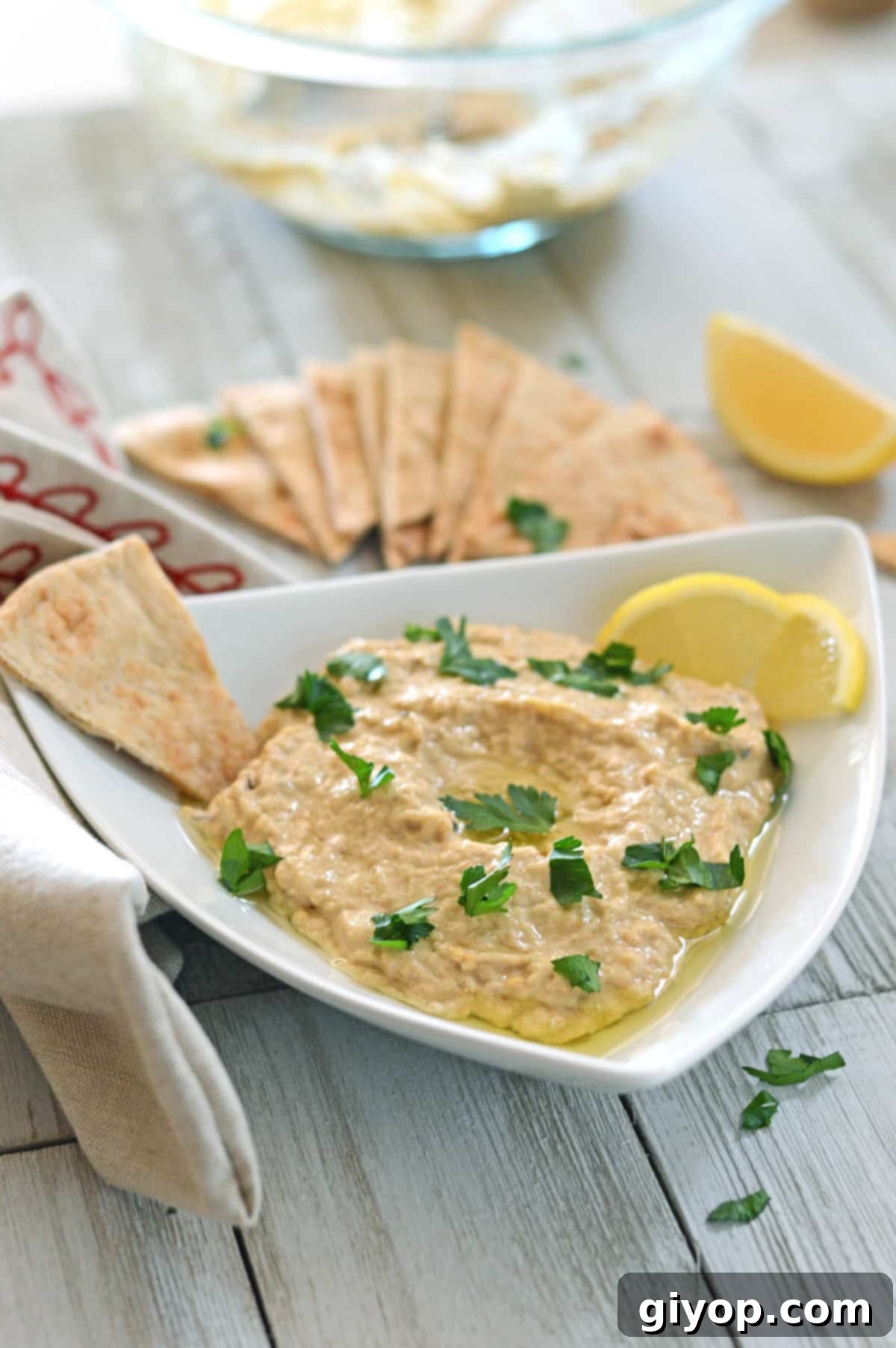
The Ultimate Baba Ghanoush Recipe
Baba Ghanoush, often spelled Baba Ganoush, is a globally beloved dip, and almost every household boasts its own cherished rendition. This recipe offers a foundational, authentic approach that you can master, then customize with exciting add-ins to suit your personal preferences. Prepare to impress with a dip that’s naturally vegan, keto-friendly, gluten-free, and low-carb, making it a perfect healthy appetizer for any occasion.

The Secret to Smoky Perfection: Roasting Eggplant
Achieving that signature smoky flavor is crucial for authentic Baba Ghanoush, and it all starts with how you roast the eggplant. For generations, my family in Egypt, along with countless others across the Middle East, has relied on the simple yet effective method of roasting eggplants directly over an open gas burner. This technique imbues the eggplant flesh with an unparalleled smoky depth that defines the dip’s character. The direct flame chars the skin, tenderizing the flesh within and infusing it with a truly irresistible aroma.
If you have access to an outdoor grill, that’s another fantastic option to achieve a similar smoky essence. The high heat and direct flame of a grill will char the eggplant beautifully, replicating the desired flavor profile. However, if neither a gas burner nor an outdoor grill is an option, or if you prefer a less hands-on approach, you can certainly oven-roast the whole eggplant until tender, then finish it under the broiler to get a good char on the skin. While this method yields a delicious result, the open-flame technique remains the gold standard for achieving the most authentic and intensely smoky Baba Ghanoush.
Authentic Baba Ghanoush (Ghanoush) Recipe
Print Recipe
Pin Recipe
Rate this Recipe
Appetizer
Mediterranean, Middle Eastern
Halal, Vegan, Keto, Gluten-Free, Low-Carb
5 minutes
20 minutes
25 minutes
4 people
136kcal
Amira
Ingredients
- 1 Large eggplant (12 to 16oz)
- 2 medium garlic cloves, minced (yields ½ Tablespoon)
- 1-2 Tablespoons tahini (Note 1)
- 1-2 Tablespoons olive oil
- 2 Tablespoons lime/lemon juice (juice of one lime)
- ½ teaspoon ground coriander
- ¼ teaspoon ground cumin
- ⅛ teaspoon cayenne pepper (optional, but recommended for a kick)
- ¾ to 1 teaspoon Pink Salt (or to taste; any salt will do)
- ¼ cup chopped flat leaf parsley (optional, for garnish and fresh flavor)
Instructions
- Cut a small slit lengthwise into the eggplant skin; this prevents it from bursting during cooking by allowing steam to escape. Roast the eggplant directly over a gas stovetop burner on medium-high heat, or on an outdoor grill. Cook, turning occasionally with tongs, until the skin is completely charred and blackened, and the eggplant feels incredibly tender throughout. Set it aside to cool. (See Note 2 for alternative cooking methods).
- Once the eggplant has cooled enough to handle comfortably, carefully scoop out the soft, smoky flesh with a spoon and transfer it to a bowl. Don’t worry if small pieces of charred skin come along; these actually enhance the smoky flavor that many enthusiasts adore. Mash the flesh thoroughly with a fork until you achieve your desired consistency – some prefer a rustic, chunky dip, while others opt for a smoother texture.
- Add the minced garlic, tahini, olive oil, fresh lime or lemon juice, ground coriander, ground cumin, cayenne pepper (if using), and salt to the mashed eggplant. Mix all ingredients vigorously with a fork until everything is well combined and the eggplant breaks down into uniform chunks. For an exceptionally smooth dip, a food processor can be used at this stage.
- Taste and adjust seasoning if necessary. Serve your freshly made Baba Ghanoush chilled, warm, or at room temperature, garnished with a drizzle of olive oil and fresh parsley, accompanied by warm pita bread, fresh vegetables, or your favorite grilled dishes.
Video Overview
A video demonstrating the making of Baba Ghanoush is available to guide you through each step, ensuring perfect results.
Notes
Note 2: For oven roasting, preheat your broiler to high. Place the slit eggplant on a foil-lined baking sheet. Broil the eggplant, turning occasionally with tongs, until its skin is thoroughly charred on all sides and the flesh is completely tender. This method still provides a good smoky flavor, though generally less intense than direct flame roasting.
Please check the nutrition disclaimer policy for more information.
Nutrition Facts (per serving)
Carbohydrates: 10.3g |
Fat: 11g |
Saturated Fat: 1.6g |
Polyunsaturated Fat: 2.5g |
Monounsaturated Fat: 6.5g |
Sodium: 84.8mg |
Potassium: 300mg |
Fiber: 4.7g |
Sugar: 4.1g |
Vitamin A: 0.1IU |
Vitamin C: 1.2mg |
Calcium: 36mg |
Iron: 0.7mg
Loved this Recipe? Share and Pin it for Later!
Mention @AmirasPantry or tag #AmirasPantry!
Essential Ingredients for Perfect Baba Ghanoush
Crafting exceptional Baba Ghanoush starts with selecting the right ingredients. Each component plays a vital role in achieving that signature smoky, creamy, and flavorful profile.
- Eggplants: Opt for globe eggplants, as they are ideal for this recipe. Their size and texture when roasted contribute significantly to the dip’s consistency. While other varieties exist, I’ve consistently achieved the best results with globe eggplants.
- Fresh Garlic: Minced fresh garlic provides a pungent, aromatic kick that is indispensable. The intensity mellows slightly when mixed with the other ingredients, creating a balanced flavor.
- Lime or Lemon Juice: Freshly squeezed citrus juice brightens the dip, adding a crucial tangy note that cuts through the richness of the eggplant and tahini. Either lime or lemon works beautifully, offering a slightly different nuance.
- Tahini Paste: This creamy sesame paste is a cornerstone of authentic Baba Ghanoush, lending a nutty depth and a wonderfully smooth texture. While some recipes omit it, I strongly advocate for its inclusion for a truly traditional taste. If you’re looking for alternatives, check out these Tahini Substitutes.
- High-Quality Olive Oil: A good drizzle of extra virgin olive oil not only adds richness and gloss to the dip but also enhances the overall Mediterranean flavor. Use it both within the dip and as a garnish.
- Simple Spices: A blend of ground cumin, ground coriander, and salt forms the backbone of the seasoning. These spices complement the eggplant beautifully without overpowering its smoky essence.
- Cayenne Pepper (Optional): For those who enjoy a subtle warmth and a gentle kick, a touch of cayenne pepper is highly recommended. It adds an extra layer of complexity that elevates the dip.
Step-by-Step: How to Make Baba Ghanoush
Making Baba Ghanoush is a straightforward process, but paying attention to each step ensures the best flavor and texture.
1. Prepare the Eggplant for Roasting: Begin by washing your eggplant thoroughly. Carefully make a single, deep slit lengthwise through the skin with a sharp knife, but avoid cutting all the way through the flesh. This crucial step allows steam to escape during cooking, preventing the eggplant from bursting and ensuring it cooks evenly and thoroughly.
2. Roast the Eggplant to Perfection: Place the prepared eggplant directly over a medium-high flame on a gas stovetop burner. If using an outdoor grill, place it directly on the hot grates. Using sturdy tongs, turn the eggplant frequently, ensuring all sides are exposed to the direct heat. Continue roasting until the entire eggplant skin is completely blackened, shriveled, and the eggplant itself feels incredibly soft and collapses easily when gently squeezed. This charring is key to developing that signature smoky flavor. Set the roasted eggplant aside on a plate to cool slightly until it’s comfortable enough to handle.

3. Extract the Smoky Flesh: Once cooled, carefully cut the eggplant in half lengthwise. With a spoon, gently scoop out the tender, smoky flesh from inside the charred skin. Don’t be concerned if small flecks of the blackened skin come along; these bits contribute wonderfully to the authentic smoky taste and are often appreciated by Baba Ghanoush connoisseurs. Discard the skin.

4. Mash the Eggplant: Transfer the scooped eggplant flesh into a clean bowl. Using a fork, thoroughly mash the eggplant until it reaches your desired consistency. For a traditional, rustic Baba Ghanoush, a fork mash is perfect, leaving some delightful texture. If you prefer an exceptionally smooth dip, a food processor can be used at this stage (see “More Tips” below).

5. Combine All Ingredients: Add the minced garlic, tahini, olive oil, lime/lemon juice, ground coriander, ground cumin, cayenne pepper (if using), and salt to the mashed eggplant. Stir all the ingredients vigorously with the fork until they are thoroughly combined and incorporated. Taste the mixture and adjust the seasoning as needed, adding more salt, citrus, or tahini according to your preference.

Expert Tips for the Best Baba Ghanoush
- Selecting the Perfect Eggplant: The foundation of great Baba Ghanoush is a great eggplant. Look for small to medium-sized globe eggplants, as larger ones tend to contain more seeds and can be bitter. Choose eggplants with shiny, smooth, and firm skin, free of blemishes. The stem should be vibrant green and mold-free. A good eggplant will feel heavy for its size, indicating fresh, moist flesh. Ideally, cook them within a day of purchase for optimal flavor and texture. If you can’t make the dip immediately, roast the eggplants and refrigerate the cooked flesh for later.
- To Drain or Not to Drain: When roasting eggplants directly over an open flame or on a grill, they naturally release their excess moisture as they cook. This means you typically won’t need to drain them afterward. However, if you opt to broil your eggplant in the oven, it might retain more moisture. In this case, after scooping out the flesh, you might want to place it in a colander for about 15-30 minutes to allow any excess liquid to drip away, preventing a watery dip.
- The Food Processor Debate: This is a matter of personal preference and a source of friendly debate in many Middle Eastern kitchens! While some prefer a super smooth, almost paste-like consistency for their Baba Ghanoush, many, myself included, believe the classic version should retain some texture and visible chunks of eggplant. My mother, for example, would give me “the look” if I ever suggested using a food processor! If you desire a velvety smooth dip, a food processor is your friend. However, for a truly authentic experience that celebrates the eggplant’s unique texture, a simple fork mash is the way to go.
- Making Ahead & Storage: While Baba Ghanoush is delightful fresh, it can also be made ahead. Prepare it up to three days in advance and store it in an airtight container in the refrigerator. Leftovers will keep for up to a week. However, keep in mind that the flavors, particularly of the garlic, can become more pungent over time.
How Long Does Baba Ghanoush Last in the Fridge?
Baba Ghanoush is best enjoyed fresh, but it stores remarkably well. In my household, it rarely lasts beyond three days because we love it so much! However, for practical purposes, it can be safely stored in an airtight container in your refrigerator for up to three days while maintaining its optimal flavor and texture. Any leftovers can still be consumed for up to a week, though you might notice the flavors becoming more concentrated and pungent over time, especially the garlic. Always trust your senses; if it smells or looks off, it’s best to discard it.
The Rich History: What Culture is Baba Ghanoush?
Baba Ghanoush boasts a fascinating history rooted deeply in the Middle East. While its exact origin is debated, many Arabic historical sources trace its roots back to the first century. Some culinary historians believe it originated in Lebanon, others point to the broader Levant region (comprising Lebanon, Syria, Jordan, and Palestine), and some even suggest Turkey as its birthplace. Regardless of its precise geographical beginning, it is unequivocally a dish with ancient Levantine or Middle Eastern heritage.
One popular legend tells of a kind and beloved priest named Father Ghanoush (Baba Ghanoush translates to “Father Ghanoush” or “Papa Ghanoush”). He was so cherished by his community that one day, a villager or student prepared this unique eggplant dish especially for him. Known for his generosity, Father Ghanoush refused to enjoy the dish alone and instead organized a feast, inviting the entire village to partake. Everyone adored the new creation, and in honor of the benevolent priest, they named it “Baba Ghanoush.” This charming tale highlights not just the dish’s deliciousness but also its connection to hospitality and community – values deeply ingrained in Middle Eastern culture.
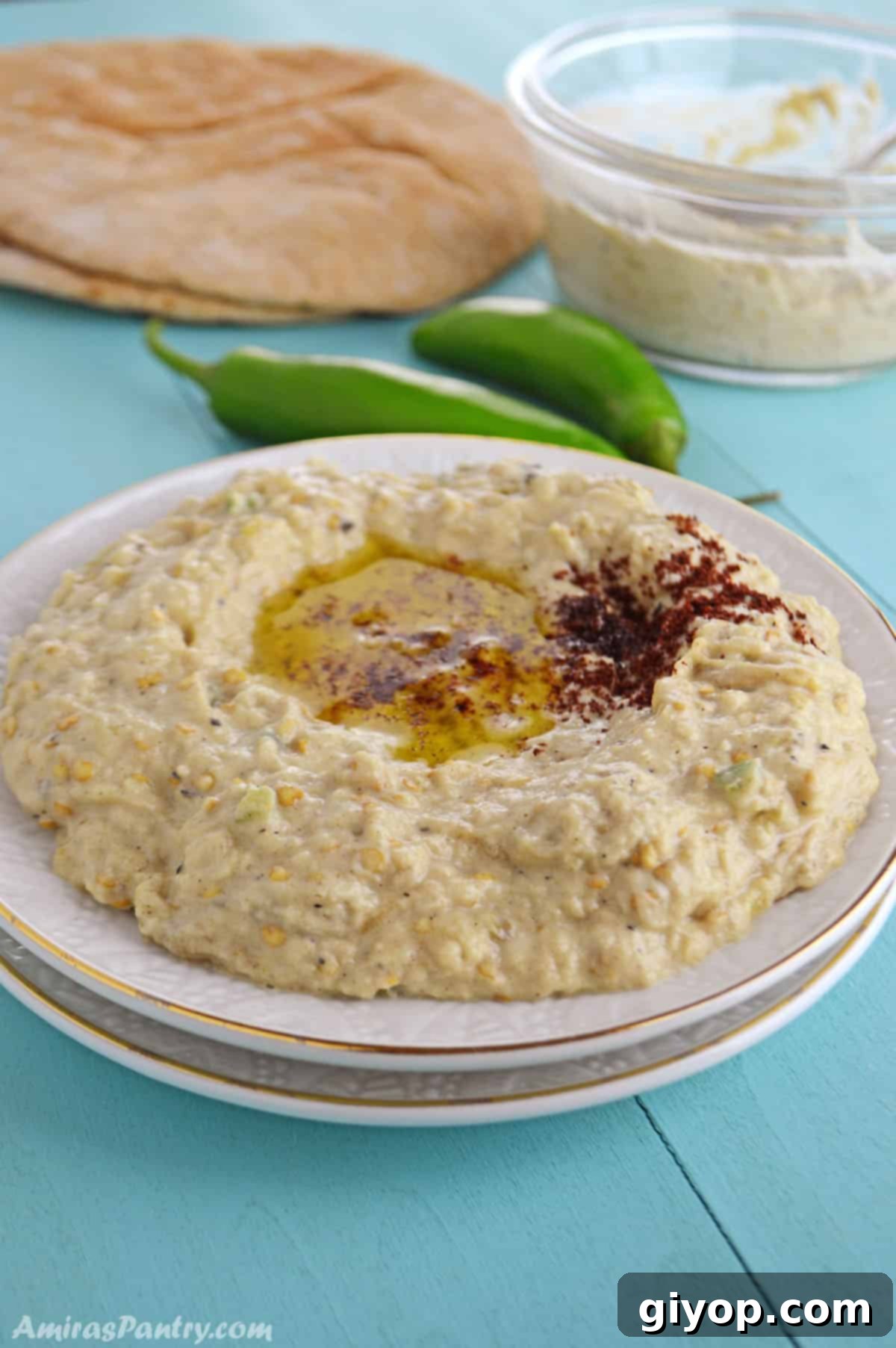
Delightful Ways to Serve Baba Ghanoush
Having savored Baba Ghanoush countless times, I can confidently say it pairs beautifully with almost anything! Its rich, smoky, and creamy profile makes it incredibly versatile. Whether you **dip it, spread it, spoon it, or simply enjoy it straight from the bowl**, it’s always a winner. Here are some fantastic serving suggestions to inspire you:
- Classic Dip: Serve it as a traditional dip with an array of fresh vegetables like carrot sticks, bell pepper strips, and cucumber spears for a healthy, crunchy accompaniment.
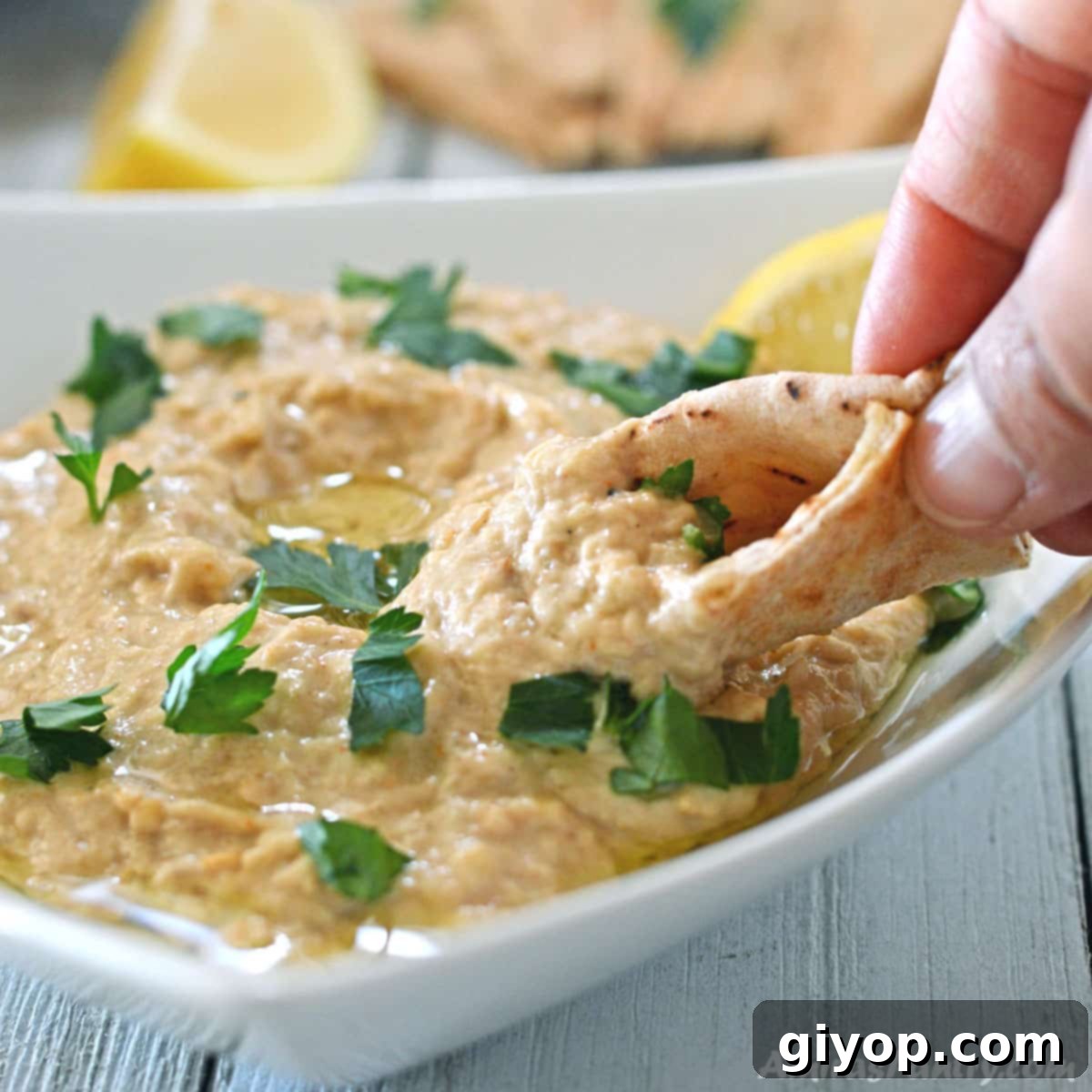
- Pita Perfection: Scoop it up with warm pita bread, pita chips, or even crispy tortilla chips. The contrast of the soft dip with a crunchy vessel is pure bliss.
- Sandwich Spread: Elevate your sandwiches by spreading a generous layer of Baba Ghanoush. It’s especially incredible when paired with Middle Eastern favorites like falafel or ful medames, adding moisture and a burst of flavor.
- Grilled Meat’s Best Friend: It’s an exceptional accompaniment to grilled meats. Think shish kabob, kofta, shish tawooq, and chicken kafta. The smoky dip complements the char of the meat perfectly.
- Seafood Sensation: Don’t overlook it with fish dishes. Whether you’re enjoying grilled trout or baked sea bass, Baba Ghanoush adds a delightful richness that enhances the seafood’s natural flavors.
- Garnish: Always finish your Baba Ghanoush with a final drizzle of olive oil, a sprinkle of chopped fresh parsley, and perhaps a pinch of paprika for color.
Customize Your Creation: Baba Ghanoush Add-ons
Baba Ghanoush, like many ancient Middle Eastern recipes, has countless regional variations. This basic recipe provides a superb starting point, but don’t hesitate to experiment and tweak it to your personal taste. Here are some popular and delicious add-on suggestions to elevate your homemade dip:
- Finely Chopped Onion: A small amount of very finely chopped red or white onion can add a subtle sharpness and crunch, providing a refreshing contrast to the creamy dip.
- Roasted and Diced Red Bell Pepper: For a touch of sweetness and vibrant color, incorporate roasted and finely diced red bell pepper. It complements the smoky eggplant beautifully.
- Roasted Chilies: If you love heat, roast a few chilies alongside your eggplant, then finely mince them and stir into the dip. This adds an intense, smoky spice.
- Extra Chopped Parsley: Beyond a simple garnish, mixing more fresh chopped flat-leaf parsley into the dip itself can boost its fresh, herbaceous flavor.
- Toasted Pine Nuts: Lightly toast some pine nuts in a dry pan until golden, then sprinkle them generously over the finished dip. They add a delightful buttery crunch and a touch of elegance.
- Roasted Whole Garlic Cloves: Instead of just minced raw garlic, consider roasting whole garlic cloves alongside the eggplant. Their mellow, sweet flavor when roasted adds a sophisticated depth. You can mash them into the dip or simply place them on top as a garnish.
- A Touch of Yogurt: For an even creamier and tangier dip, some people enjoy mixing in a tablespoon or two of plain Greek yogurt. This adds a lovely richness and a slight tartness.
More Delicious Dips We Love
- Beetroot Hummus
- Olive Oil Bread Dip
- Whipped Ricotta
- Authentic Tahini Sauce / Dip