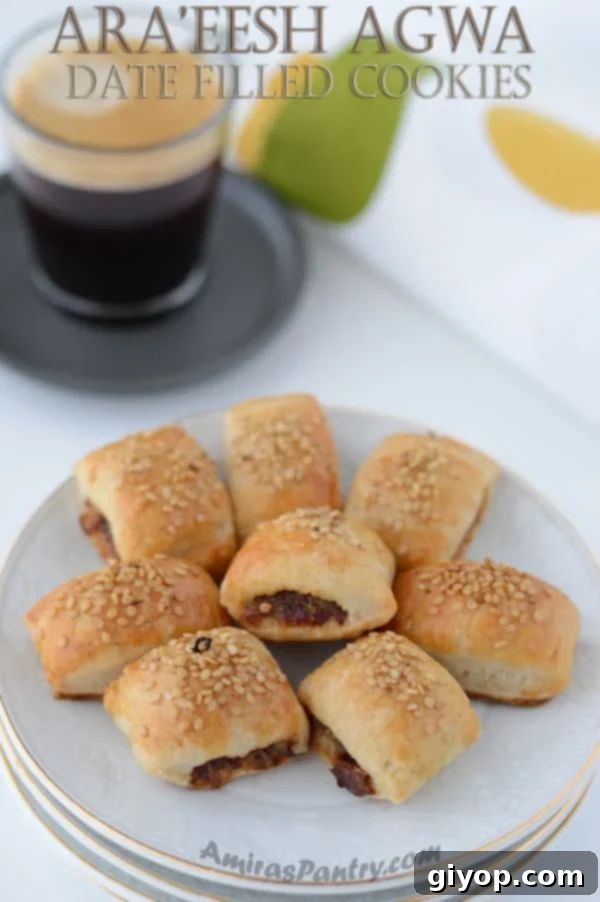
Discover the Delight of Egyptian Ara’eesh: A Timeless Date-Filled Cookie Recipe
Embark on a culinary journey to Egypt with Ara’eesh, a cherished traditional cookie that perfectly blends simplicity with irresistible flavor. These delightful pastries, often filled with sweet date paste or left plain, offer a satisfying crunch or a melt-in-your-mouth softness, making them an ideal snack at any time of day. Whether you crave a comforting treat with your morning coffee or a sweet indulgence in the afternoon, Egyptian Ara’eesh promises a truly authentic and heartwarming experience.
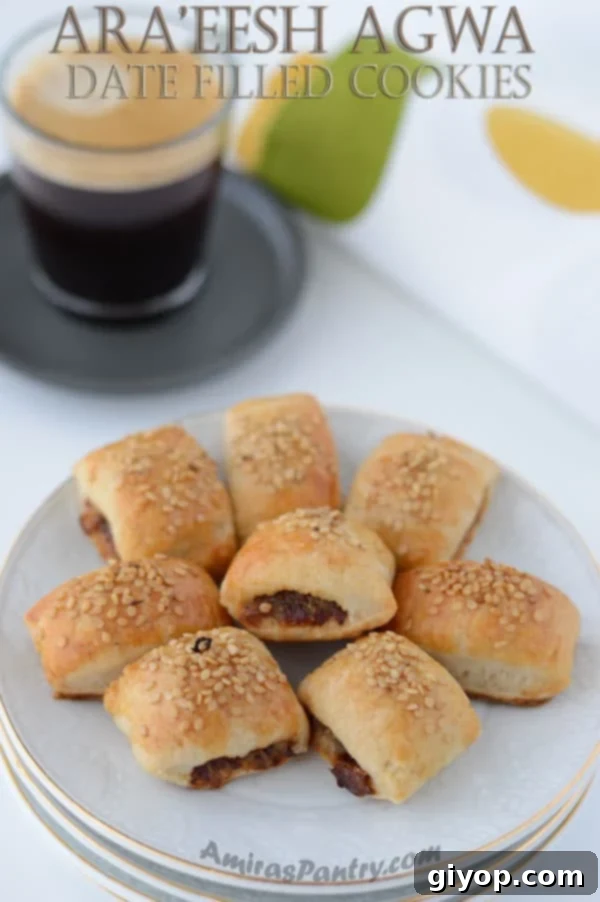
A Taste of Home: My Childhood Connection to Egyptian Ara’eesh
For many, Ara’eesh isn’t just a cookie; it’s a beloved memory, a taste of home. Having grown up surrounded by its comforting aroma in Egypt, recreating this staple in my own kitchen has been a long-held dream. The omnipresence of Ara’eesh in every Egyptian pastry shop speaks volumes about its cultural significance. It’s more than just a sweet; it’s a fabric of daily life and special occasions.
One particular memory stands out vividly. My oldest son, at the tender age of four in Egypt, used to call these cookies “circles” and would take them to school. His school bus would arrive at an astonishing 6:15 AM, often before he was fully awake, let alone ready for breakfast. My late father, ever resourceful, would buy him these “circles” to nibble on during his bus ride. And yes, in Egypt, school buses pick up children directly from their homes, not from designated stops, adding to that unique childhood charm. This simple gesture of love cemented Ara’eesh as a truly special treat in our family, a tradition I’ve yearned to continue.
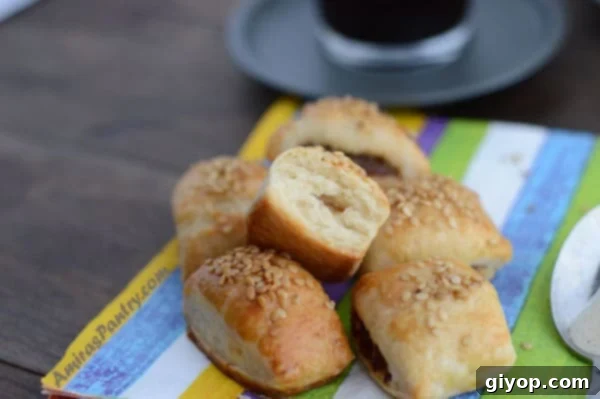
Exploring the Varieties: Plain, Date-Filled, and Beyond
Egyptian Ara’eesh boasts delightful versatility in its fillings. Traditionally, it’s often stuffed with Agwa (a rich date paste), Turkish delight, or simply enjoyed plain. When filled, these cookies are sometimes referred to as “Kaab el ghazaal,” which translates to “a deer’s heel.” The name might sound a bit peculiar, and its exact origin or connection remains a charming mystery even to me! Regardless of the enigmatic name, the filled versions are incredibly popular.
Today, I’m excited to share how to make both the classic date-filled and the plain variations of Egyptian Ara’eesh. Both recipes yield incredibly delicious results that are sure to impress. Let’s delve into the process of creating these wonderful cookies right in your home kitchen, bringing a piece of Egyptian culinary heritage to your table.
Crafting the Perfect Ara’eesh Dough: A Step-by-Step Guide
The foundation of exceptional Ara’eesh lies in its dough. We begin by preparing a fragrant mixture of dry ingredients. Then, we gently melt butter – or a combination of butter and oil, a detail we’ll explore further below – over medium heat. It’s crucial that this melted fat is warm, but not scorching hot, when it’s incorporated into the dry ingredients. After mixing, allow the mixture to cool sufficiently before you begin working it with your hands. This ensures an even distribution and proper texture development.
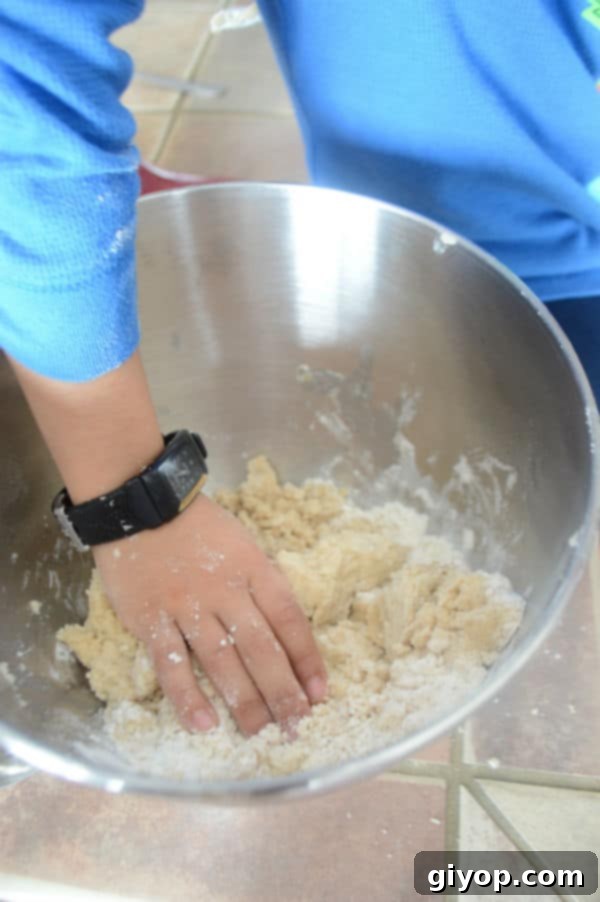
Baking can be a wonderful family activity. My children, especially the youngest, absolutely adore working with dough. I often invite them to join me in the kitchen for recipes like this, turning cooking into a fun, interactive experience. It’s a fantastic way to bond and chat, offering a welcome break from screen time. Once the butter and dry ingredients are well combined, gradually add warm milk (or water, depending on your preference) and continue to knead the dough until it comes together into a firm, cohesive mass. The kneading process is key to developing the gluten and achieving the desired texture for your cookies.
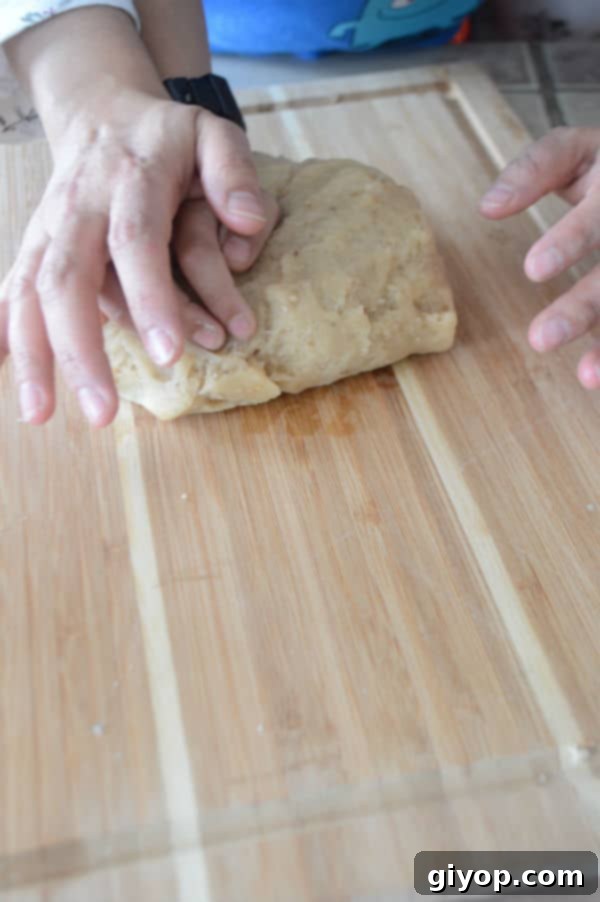
After kneading, allow the dough to rest and rise in a warm place for about two hours. This crucial step allows the yeast to activate, contributing to the lightness and flavor of the cookies. Once rested, divide the dough into six equal portions. For the plain Ara’eesh, take each portion and roll it into an approximately 11-inch long log. Trim the ends for a neat appearance, then cut each log into eight uniform pieces. This classic shape results in appealing, bite-sized cookies perfect for any occasion.
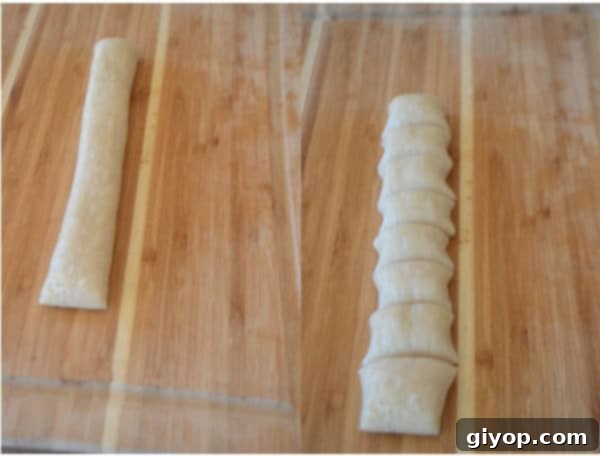
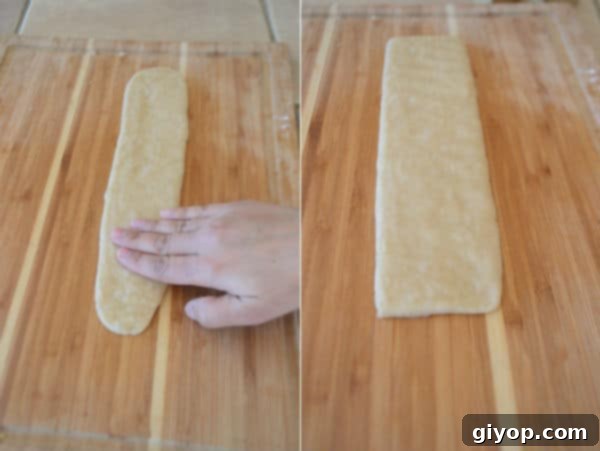
If you’re opting for the delightful date-filled Ara’eesh, the shaping process varies slightly. Instead of a log, you will roll each dough portion into a rectangular shape. This provides a perfect base for holding the sweet filling securely within the cookie. The flexibility of the dough allows for various creative presentations, but the rectangle is essential for a well-stuffed cookie.
Next, prepare your Agwa (date paste) by shaping it into a rope. This date rope should be approximately one-third the width of your rolled dough rectangle. Carefully place the Agwa rope along one edge of the dough rectangle, then gently roll the dough over the filling to form a perfectly sealed, stuffed cylinder. This technique ensures that each bite of Ara’eesh contains a generous and satisfying amount of date paste. Precision in this step leads to beautifully uniform and delicious cookies.
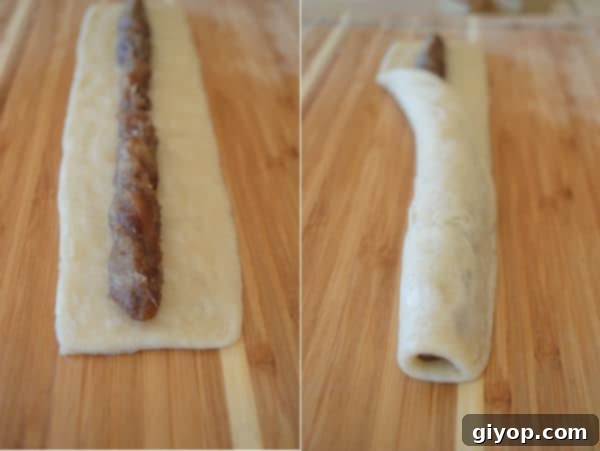
Once your stuffed cylinder is formed, cut it into eight equal pieces. This method results in the most traditional and aesthetically pleasing shape for filled Ara’eesh, showcasing the spiral of dough and date paste within. Each piece will be a testament to your baking skills and the rich flavors of Egyptian cuisine. Achieving consistent sizes ensures even baking and a professional presentation.
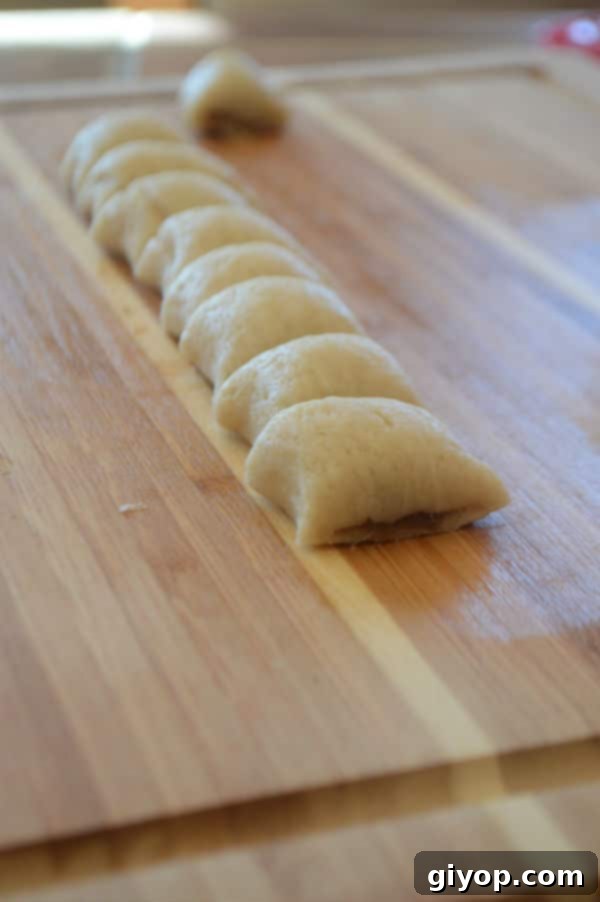
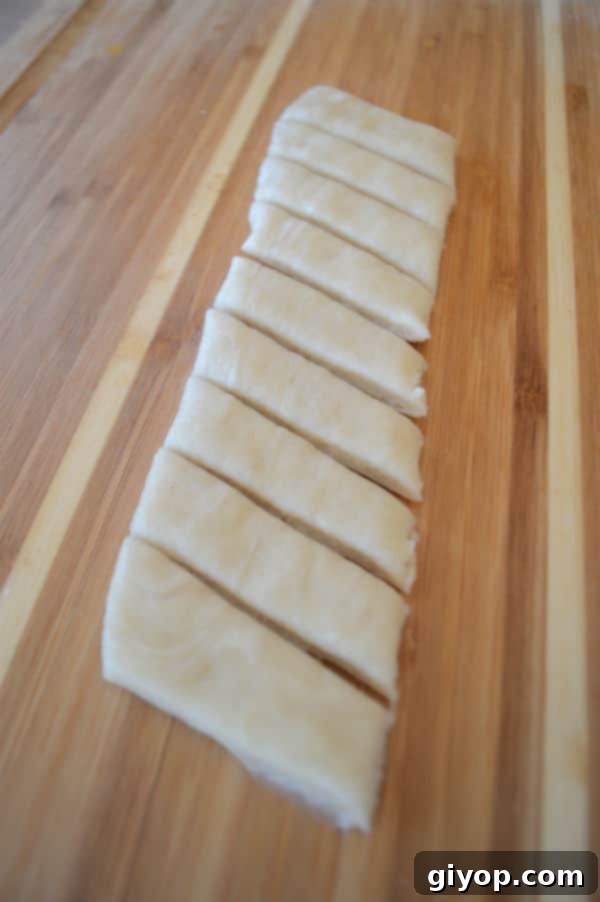
For those seeking a simpler approach, some bakers prefer to skip the rolling into a cylinder and instead form the dough into a rectangle, then directly cut it into individual pieces as shown in some illustrations. While this method is undoubtedly quicker and more convenient, the rolled technique produces the quintessential, traditional shape of Ara’eesh, which many find more authentic and visually appealing. The choice depends on your preference for tradition versus convenience.
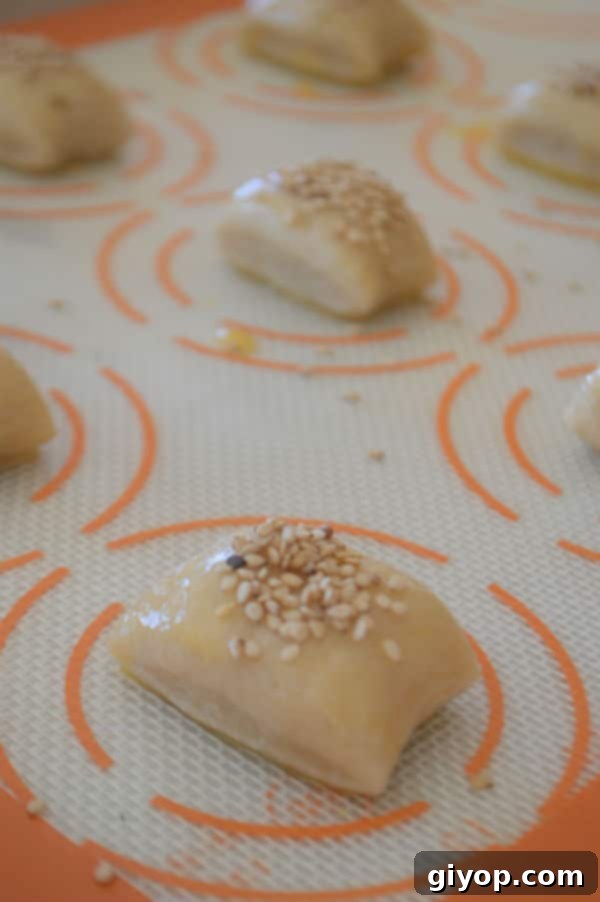
To give your Ara’eesh a beautiful golden sheen and a hint of nutty flavor, brush the tops with a simple egg wash. Immediately after, generously sprinkle them with sesame seeds. This not only enhances their appearance but also adds a lovely texture and aroma that is characteristic of many Middle Eastern baked goods. The sesame seeds become wonderfully toasted during baking, contributing to the overall deliciousness of the cookies.
Finally, it’s time to bake! Once golden and fragrant, your homemade Ara’eesh will be ready to transport you to the wonderful world of Egyptian flavors. Serve them warm with a refreshing cup of tea or a robust coffee. These cookies are not just a snack; they are an invitation to slow down, savor the moment, and enjoy a truly authentic culinary delight.
Achieving Your Ideal Ara’eesh Texture: Butter vs. Oil, Milk vs. Water
When it comes to baking Ara’eesh, a subtle but significant “dilemma” arises regarding the choice of fat and liquid. These decisions profoundly impact the final taste and texture of your cookies, allowing you to tailor them to your preference. Here’s my two cents on the matter, based on years of experience and countless batches.
Using butter in your Ara’eesh recipe yields an incredibly rich and super soft cookie. The distinctive creamy flavor of butter permeates the dough, making each bite a luxurious experience. However, if you’re aiming for a crunchier texture, opting for vegetable oil is the way to go. Oil tends to create a crispier cookie, though it might lack some of the deep, buttery flavor that butter provides. It’s a trade-off between richness and crunch, and both results are delicious in their own right.
Similarly, your choice of liquid plays a role. Using water in the dough tends to produce a lighter cookie, which can be desirable for those who prefer a less dense treat. On the other hand, incorporating milk into your Ara’eesh dough results in a richer, more tender crumb. Milk adds a subtle sweetness and creaminess that can elevate the overall flavor profile. Many traditional recipes lean towards milk for its ability to enhance both taste and texture.
I’ve personally experimented with numerous combinations of butter, oil, milk, and water, even sending out test samples to gather opinions. What I’ve found is that preferences vary greatly. Older generations often favor the soft and buttery version, recalling the traditional cookies of their youth. Children, not surprisingly, are also big fans of anything buttery! For me, I always aim to replicate the taste and texture of the Ara’eesh I used to buy in Egypt – a perfect balance. To achieve this, I typically use a combination: half butter and half oil for the fat, and milk for the liquid. This blend offers the best of both worlds: a delightful richness from the butter, a pleasant crispness from the oil, and a tender, flavorful dough thanks to the milk.
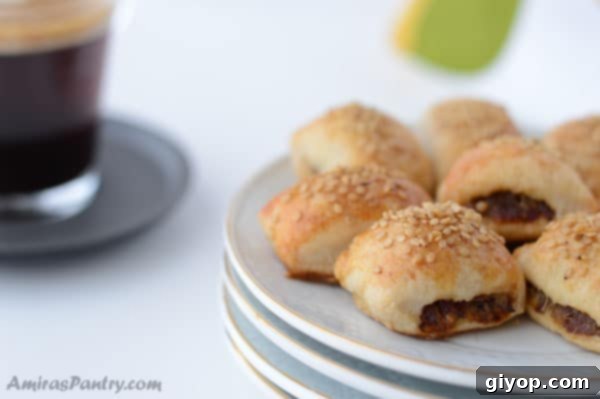
So, I encourage you to embark on your own little baking adventure! Start by following my recommended combination, or feel free to experiment with different ratios of fat and liquid. This can be a fantastic way to involve your kids in the kitchen, teaching them about ingredients and their effects while discovering your family’s perfect Ara’eesh. Whether you follow my lead or blaze your own trail, the joy of baking these traditional cookies is truly rewarding.
That concludes today’s detailed guide to making Egyptian Ara’eesh. I sincerely hope you try this wonderful recipe and share your thoughts on these delightful cookies. Until next time, happy baking!
Explore More Traditional Middle Eastern Sweets
- Maamoul: Another beloved Middle Eastern cookie, often prepared for holidays. Maamoul is typically made with semolina dough and filled with either date paste, pistachios, or walnuts, then pressed into decorative molds for its distinctive appearance. It boasts a soft texture and a delicately spiced flavor that makes it incredibly popular.
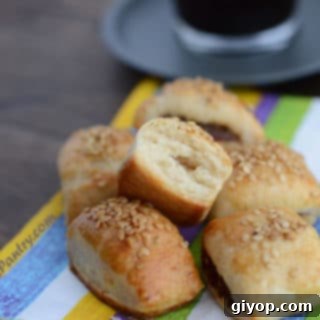
Egyptian Ara’eesh
Course: Snack
Cuisine: Egyptian, Middle East
Author: Amira
Ingredients
- 4 cups AP flour.
- ¼ teaspoon salt.
- ½ cup unsalted butter.
- ½ cup vegetable oil or melted butter.* Note1
- ½ cup milk or water.* I’ve used milk.
- 1 Tablespoon dry yeast.
- 1 teaspoon sugar.
- 2 Tablespoon sesame seeds.
- optional: one or more of the following:
- 1 teaspoon anise seeds.
- 1 teaspoon fennel seeds.
- 1 teaspoon cumin seeds.
- For garnishing: more sesame seeds.
- For stuffing: If you are going to fill all the araeesh you’ll need a batch of agwa recipe.
Instructions
- In the mixer bowl, combine flour, salt, yeast, sesame seeds, your optional add-ons, and sugar, then mix well.
- Melt the butter and add oil to the butter. Pour this over the flour mixture, ensuring the mixture is not hot.
- Mix together until the flour is completely incorporated and resembles coarse crumbs.
- Warm up the milk and pour it gradually over the flour mixture until the dough comes together.
- Turn the dough onto a lightly floured surface and knead by hand for 5 minutes, until smooth and elastic.
- Cover the dough and let it rise in a warm place for two hours, or until doubled in size.
- Preheat oven to 325°F (160°C).
- Divide the risen dough into 6 equal parts.
- If you are making plain Ara’eesh, roll each section into an 11-inch long log, then cut into 8 equal parts.
- If you are going to stuff it with Agwa, roll each part into an 11-inch long rectangle, with approximately 4mm thickness. Roll the Agwa into smaller cylinders, place them into the center of the dough rectangle, then roll the dough over to fully enclose the Agwa. Divide into 8 equal parts.
- Place the shaped cookies on a Silpat-lined baking sheet, brush with egg wash, and sprinkle sesame seeds on top.
- Bake for 18-20 minutes, or until the bottom gets nicely browned. Then, broil for one or two minutes until the tops are nicely golden brown.
- Let the Ara’eesh cool completely on a wire rack before storing.
- Store in an airtight container for up to 2 weeks for optimal freshness.
- Enjoy your homemade Egyptian Ara’eesh!
Notes
Note1: The recipe calls for ½ cup butter and ½ cup oil. For a more buttery flavor, I’ve used ¾ cup butter and ¼ cup oil.
As I’ve explained in the post above, using butter or oil affects the taste and texture of the Ara’eesh, and similarly, the choice of milk or water influences the dough. So you might want to follow my suggested route or experiment a little to find your own preference.
Please check the nutrition disclaimer policy.