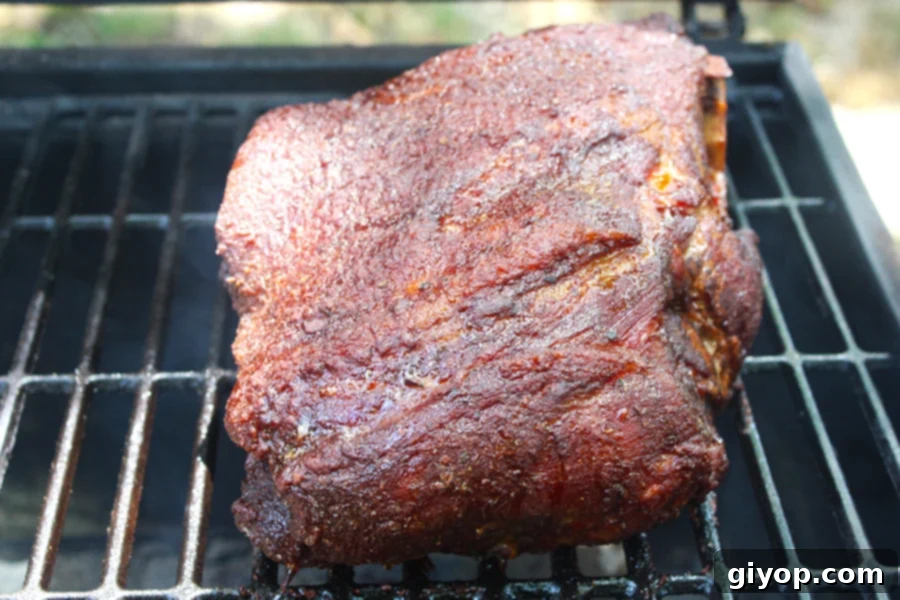
Welcome to the ultimate guide for crafting the most succulent, flavorful, and fall-apart tender smoked pork shoulder, often affectionately known as pork butt! This isn’t just a meal; it’s a backyard barbecue institution, a labor of love that rewards you with an unforgettable culinary experience. Whether you’re a seasoned pitmaster or a weekend warrior looking to impress, this comprehensive recipe and method will ensure perfect results every single time.
Why This Smoked Pork Butt Recipe is a Barbecue Game Changer
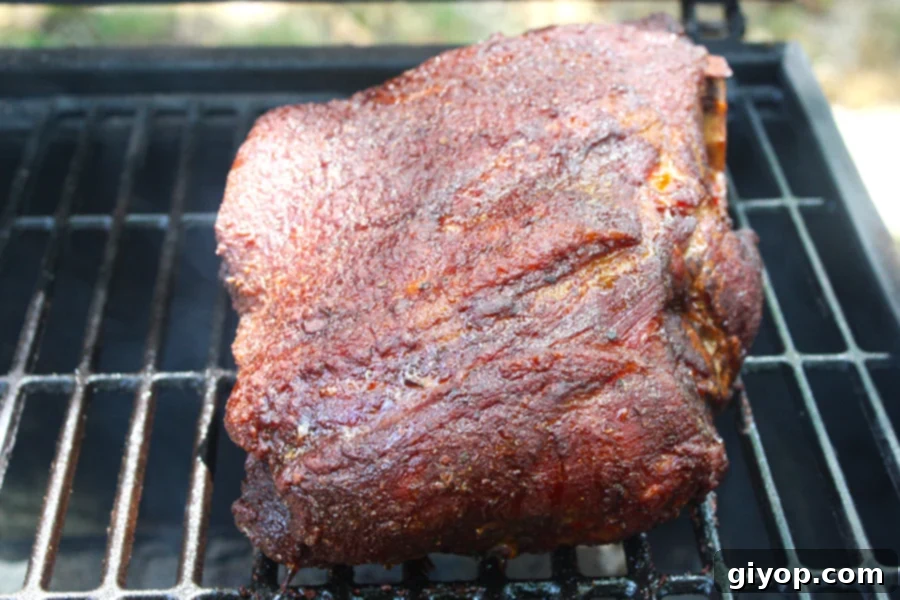
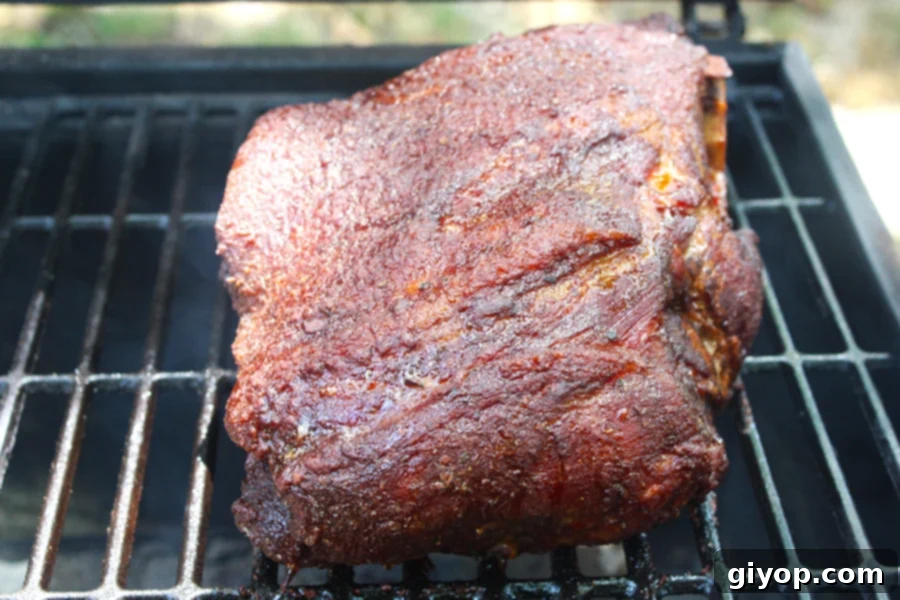
Smoked pork butt stands as a true cornerstone of American barbecue, and for good reason. The magic lies in the symphony of flavors and textures achieved through a long, slow smoking process. Imagine the rich, smoky aroma permeating every fiber of the meat, mingling with a robust, perfectly balanced spice rub to create a crispy, savory “bark” on the exterior. Inside, the pork transforms into an incredibly tender, juicy masterpiece that literally falls apart with the gentlest touch, ready to be pulled into perfect strands of deliciousness.
My journey through countless smoked pork butts has consistently delivered the same thrilling outcome: a perfectly smoked piece of meat that evokes the excitement of a holiday morning. This isn’t just about cooking; it’s about creating memories and sharing exceptional food. When you present friends and family with pulled pork from this recipe, prepare for rave reviews. The dedication to a slow, deliberate cook ensures maximum flavor development and unparalleled tenderness, proving that the best things truly do come to those who wait.
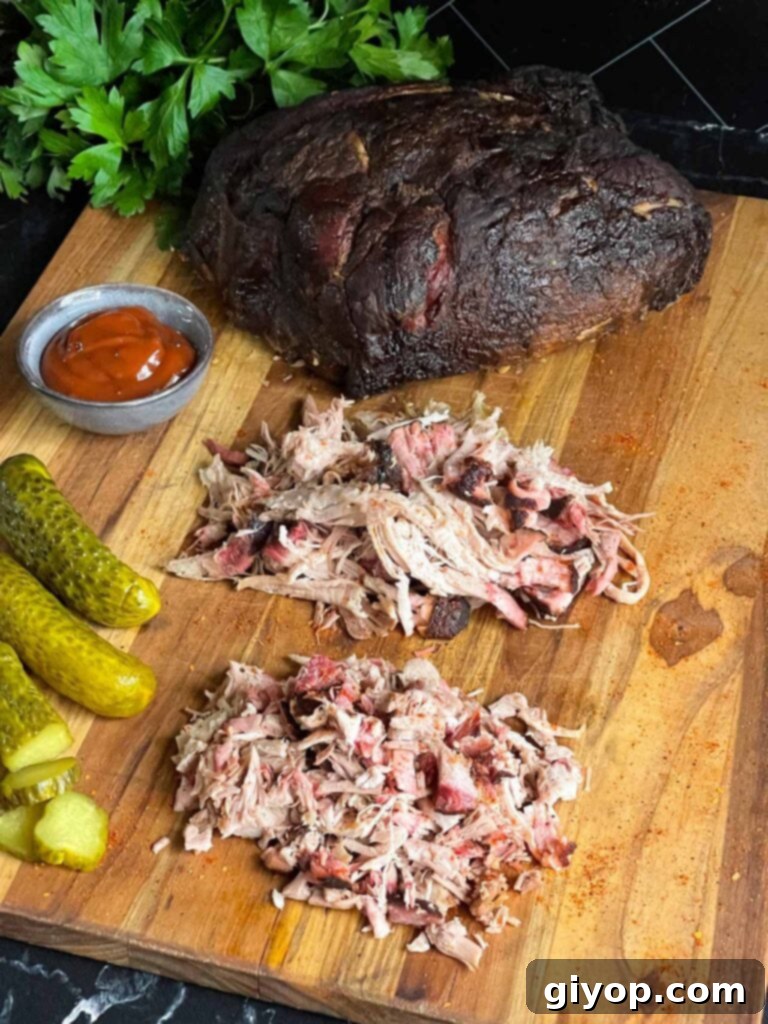
The feedback is always consistent: “This is the best smoked pork shoulder I’ve ever tasted.” That alone makes waking up at the crack of dawn to fire up the smoker an absolute pleasure. And while the smoker is hot, it’s often an excellent opportunity to throw on other crowd-pleasing barbecue delights, like our highly-rated smoked chicken wings or some tender smoked baby back ribs. If you prefer your ribs to effortlessly “fall off the bone,” be sure to explore our St. Louis-style ribs recipe too.
The Secret to Unrivaled Juiciness: The Pork Shoulder Brine!
While there’s no single “magic trick” in barbecue, one technique truly elevates a smoked pork shoulder from good to legendary: brining. If you’ve never tried it, prepare for a game-changing revelation. The primary goal during such a long, slow cook is to maintain the meat’s moisture, preventing it from drying out. While injecting the pork butt is an option, brining offers a simpler, equally effective method for ensuring a juicy outcome.
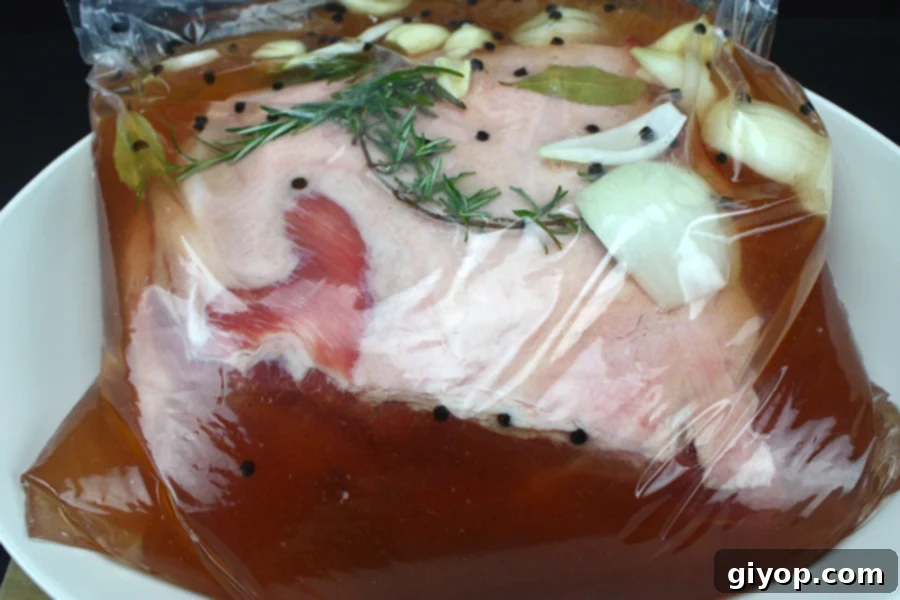
Our preferred method involves a simple yet powerful brine. You can find a detailed explanation and our specific pork shoulder brine recipe here. In essence, the brine works by introducing moisture and flavor deep into the muscle fibers, allowing the meat to retain more of its natural juices throughout the extensive cooking process. The result? A perfectly moist interior, an incredible, crunchy bark on the outside, and meat that virtually melts in your mouth. Let’s get started on achieving that barbecue nirvana!
Crafting the Perfect Rub: Ingredients for Your Smoked Pork Butt
A phenomenal dry rub is essential for building that signature barbecue flavor and creating an irresistible bark on your smoked pork butt. While you’re welcome to use your personal favorite, we highly recommend trying our Memphis-style rub. It’s been perfected over years of smoking and provides the ideal balance of savory, sweet, and spicy notes that complement pork beautifully. We even use this versatile spice blend on our ribs!
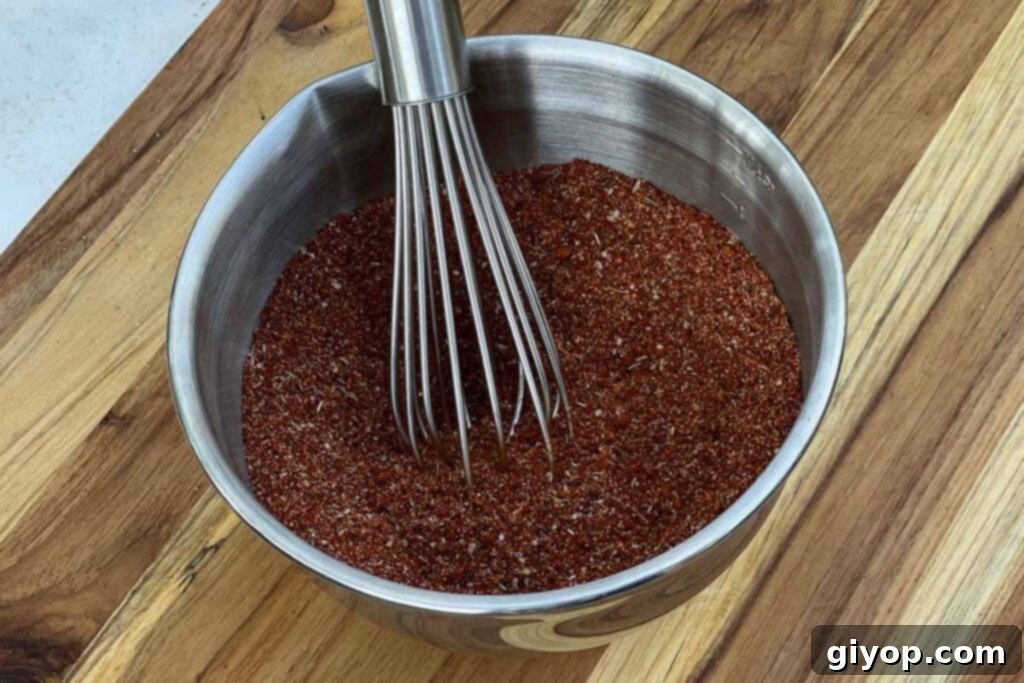
Our proprietary rub is a quintessential Memphis-style blend, designed to hit all the right flavor chords. After years of experimentation, this combination has proven itself time and again. Here’s a breakdown of the key components and their contributions:
- Paprika: Forms the vibrant, earthy backbone of any classic Memphis barbecue rub, contributing both color and a mild, peppery flavor.
- Smoked Paprika: Intensifies the smoky essence of the rub, adding a deeper layer of barbecue authenticity even before the meat hits the smoker.
- Garlic Powder: Provides a subtle yet essential aromatic depth, rounding out the overall flavor profile without overpowering the other spices.
- Chili Powder: Another indispensable element in a Memphis rub, offering a warm, complex heat that builds the flavor foundation.
- Kosher Salt: Crucial for seasoning the meat from within, enhancing all other flavors and aiding in moisture retention during the brine and cook.
- Black Pepper: Delivers sharp, pungent heat and a classic barbecue bite, creating delightful flavor pockets on the bark.
- Onion Powder: Similar to garlic powder, this adds a rich, savory fullness and aromatic complexity that complements the pork beautifully.
- Brown Sugar: Introduces a crucial hint of sweetness, which caramelizes during the smoking process to create that coveted, dark, and flavorful bark. The molasses in brown sugar also adds a unique depth. Feel free to substitute with white sugar if preferred, though we love the richness brown sugar provides.
- Dried Oregano: Contributes a herbaceous, slightly earthy note that adds a layer of sophistication to the rub.
- Cumin: Imparts an additional layer of smoky, earthy warmth, intensifying the barbecue flavor.
- Dry Mustard: Adds a subtle tang and a mild, peppery heat that cuts through the richness of the pork.
- Cayenne Powder: This is where you control the heat! Add more or less depending on your preference for a fiery kick, ensuring a balanced spice level.
To prepare the rub, simply combine all ingredients in a small bowl and mix thoroughly until well blended. This thoughtful combination ensures a rich, complex flavor that will truly make your smoked pork butt sing.
The Journey to Perfection: How To Smoke a Pork Shoulder (Pork Butt)
Let’s plan for that glorious moment when you’re ready to dive into a plate of melt-in-your-mouth pulled pork, say, by 4 PM on a Saturday. This timeline will guide you through the process:
Note on Fat Cap Trimming
Before brining, take a moment to inspect the fat cap on your pork shoulder. If there’s an excessive layer of fat, it’s advisable to trim some of it down. A thick fat cap can prevent the delicious smoke flavor and the spice rub from penetrating the meat effectively. Aim for about a quarter-inch layer of fat for optimal results.
Thursday Evening: Brine Time! Your journey to incredible pulled pork begins the night before. Place your pork shoulder, also known as pork butt or Boston Butt, into the prepared brine solution. Most grocery stores carry them, and I often grab a couple at a time to maximize my smoking efforts. Allow the pork to brine for a full 18-24 hours. This critical step infuses the meat with moisture and flavor, setting the stage for an incredibly juicy final product.
Friday Afternoon: Prep and Season. After its refreshing brine bath, remove the pork shoulder and let it rest for a couple of hours. This allows any excess brine to drain off naturally. Once drained, pat the meat relatively dry with paper towels. Next, apply a generous layer of yellow mustard to all sides of the pork. Don’t worry, you won’t taste the mustard in the final product; it acts as a fantastic binder, helping the dry rub adhere beautifully. The vinegar in the mustard also subtly aids in the cooking process. Finally, apply a liberal amount of your Memphis-style dry rub, ensuring every inch is coated, then wrap the seasoned pork tightly and refrigerate overnight. While some prefer to spritz the meat with apple juice or apple cider vinegar during the cook, I find it largely unnecessary when the meat has been brined.
Don’t Sweat The Recipe is supported by its readers. We may earn a commission if you purchase through a link on our site. Learn more.
Choosing the Right Wood for Smoking: Enhancing Flavor
The choice of wood significantly impacts the final flavor of your smoked pork butt. After extensive testing, I’ve found that using unsoaked wood chunks yields a superior smoke flavor. When wood chips are soaked, they spend time steaming and evaporating water before they even begin to produce flavorful smoke. Unsoaked chunks, on the other hand, start smoking immediately, delivering a cleaner, more robust smoke profile. For offset smokers, expect to add a new chunk of wood every 45 minutes to an hour, keeping a close eye on your smoke output. Pellet smokers and gravity-fed smokers are generally more self-sufficient in maintaining a consistent smoke.
In my experience, hickory or pecan wood are the top choices for smoking pork butt. I personally favor the assertive, classic barbecue flavor that hickory imparts, creating a deeply smoky, shredded pork. Some enthusiasts prefer the sweeter, milder notes of fruit woods like apple wood or cherry wood. Ultimately, the best wood is the one whose flavor you enjoy most, so don’t hesitate to experiment and find your personal preference.
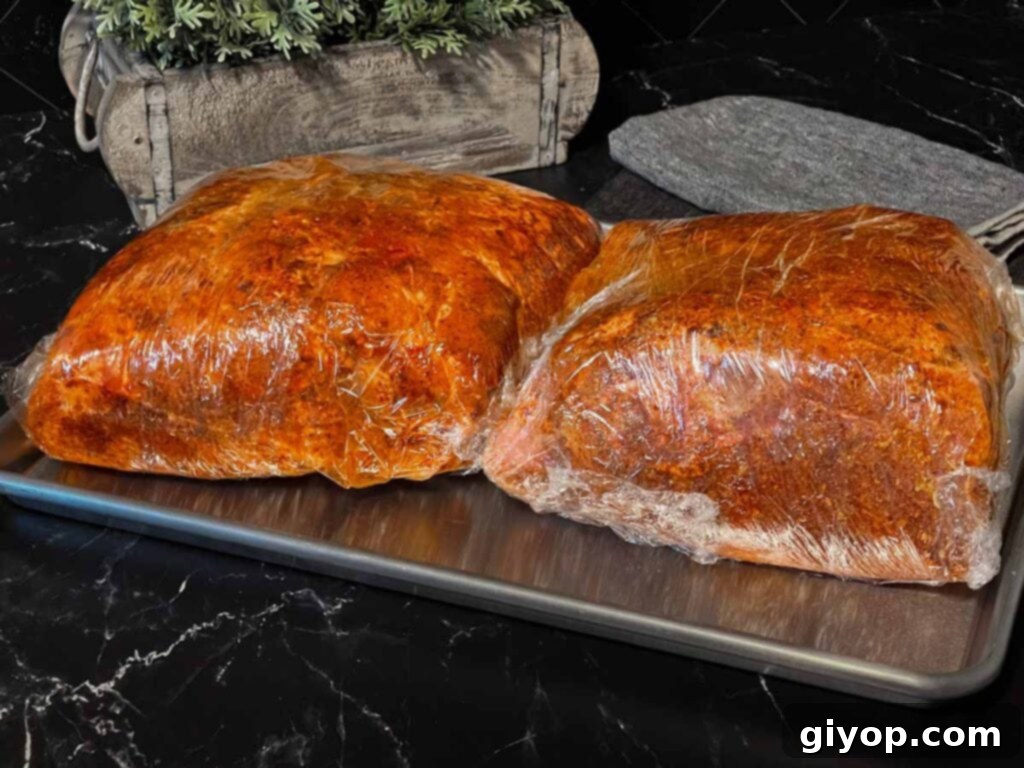
Saturday Morning: The Smoke Begins! A typical 8-pound pork shoulder requires approximately 12 hours of smoking. This means an early start, often around 3:30 AM, to get the charcoal lit and the smoker regulated. Your target smoker temperature should be consistently maintained between 225-250°F (107-121°C) before the meat goes on. For offset smokers, achieving and maintaining this steady temperature can take a bit of time, so factor that into your morning routine. If you’re using a dedicated smoker, this process might be quicker. Those with Weber-style grills can also achieve excellent results by using indirect heat; place the meat on one side of the grill and the heat source on the other. Just before placing the pork on the grates, you may wish to add a final, light dusting of your dry rub.
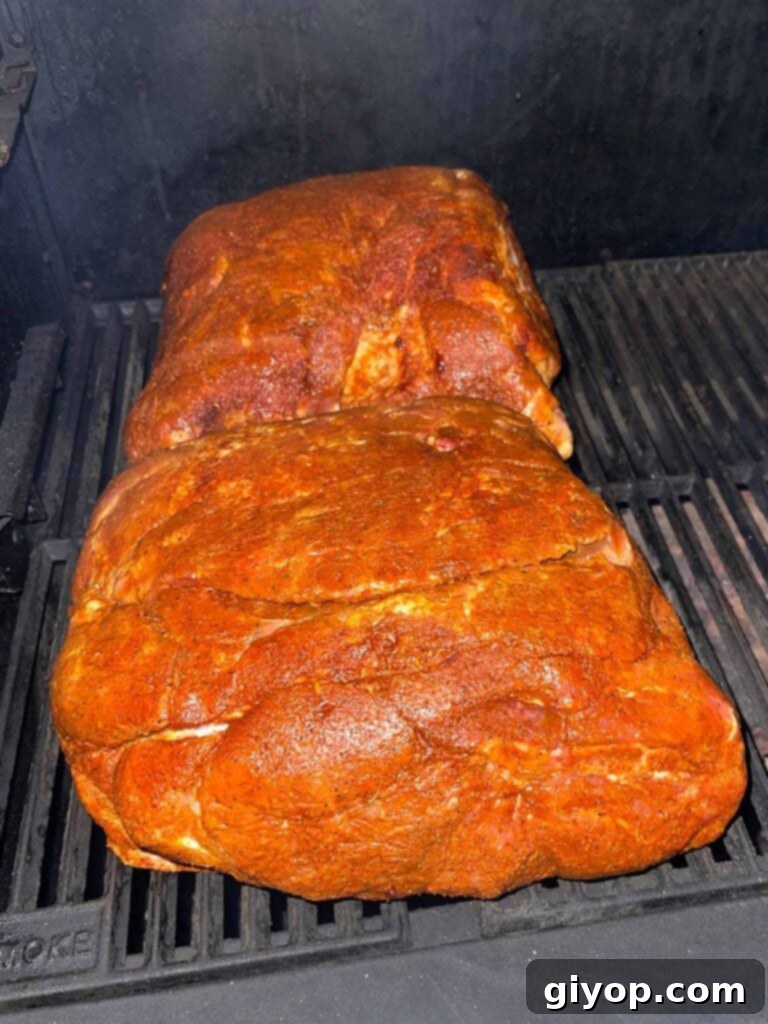
Place the pork butt on the smoker, typically fat side up. This is a matter of preference among pitmasters; some believe the fat cap bastes the meat as it renders, while others argue fat side down protects the meat. I’ve successfully employed both approaches, so choose whichever you prefer or try both over time to see what works best for you.
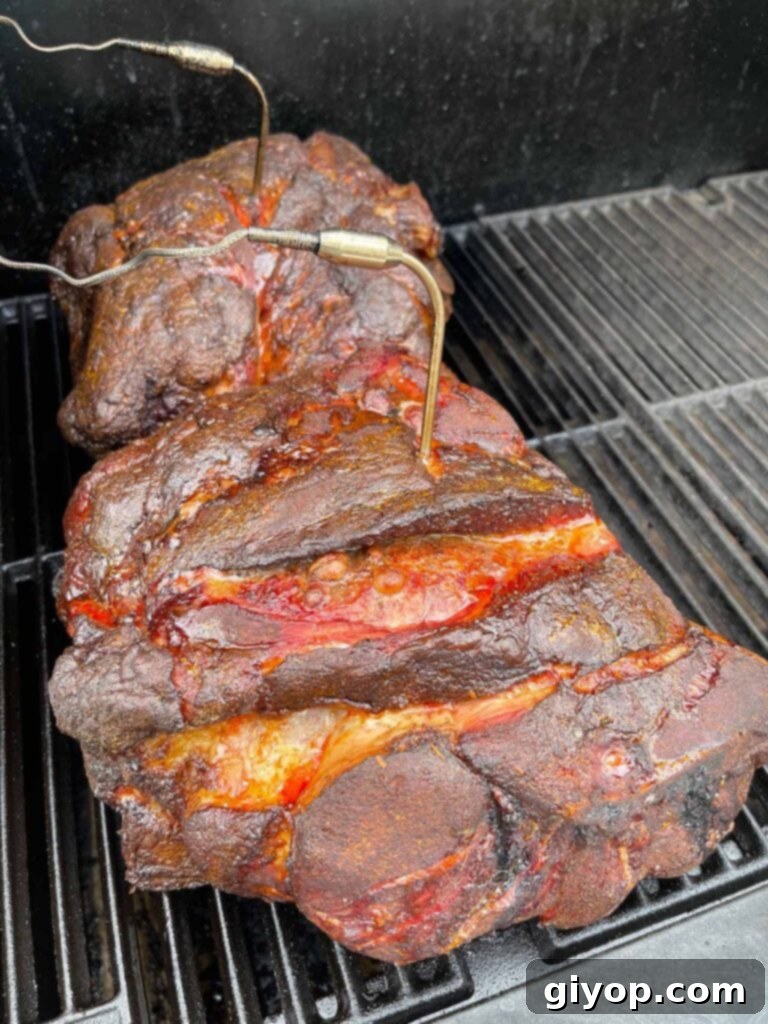
Allow the pork to smoke uncovered for the first 6 hours. During this initial phase, rigorous temperature management is crucial. Continuously monitor your smoker’s temperature, adjusting fuel and airflow as needed to keep it within the 225-250°F range. To further ensure moisture, especially if you opted not to brine, consider spritzing the bone-in pork butt every hour or so with a 50/50 mixture of apple cider vinegar and water.
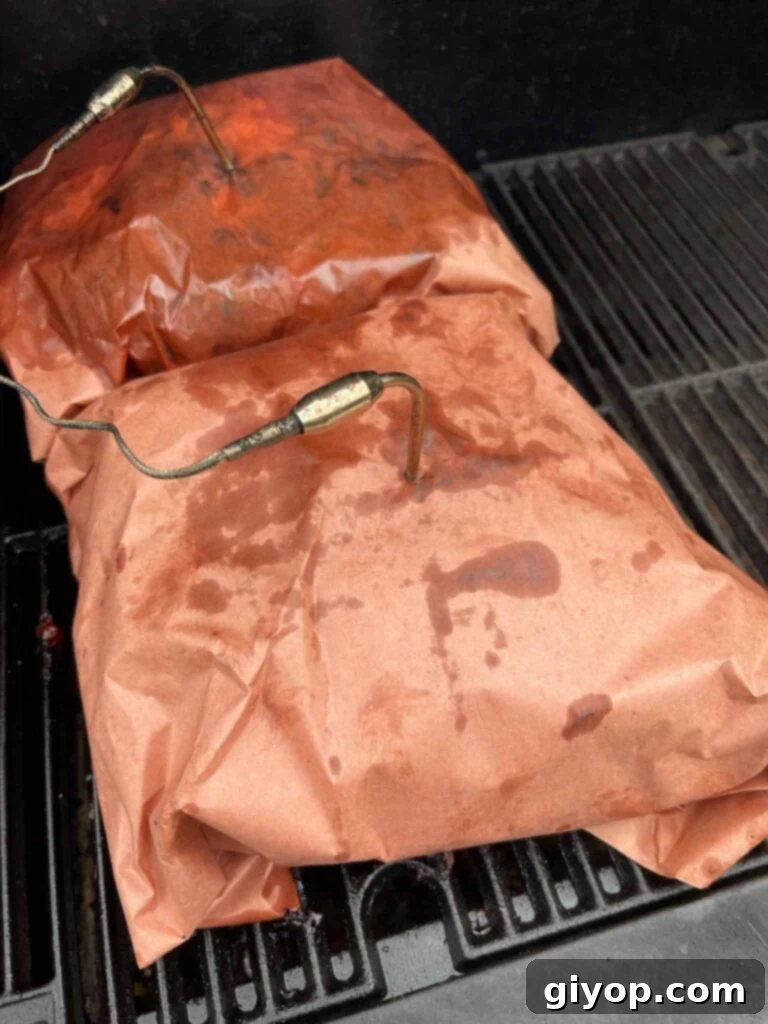
After the initial 6 hours of smoking, it’s time to pull the meat and wrap it. We highly recommend using peach butcher paper for this stage. While aluminum foil is an option, butcher paper allows for some moisture to escape, preventing the meat from stewing in its own juices and preserving that precious bark. Return the wrapped pork to the smoker to continue cooking. Around the 11th hour, I begin closely monitoring the internal temperature. Your target internal temperature for perfectly tender pulled pork is between 192-195°F (89-91°C).
The Tenderness Threshold
A crucial stage in the cooking process is when the internal temperature of the pork butt reaches approximately 180°F (82°C). At this point, the tough connective tissues and collagen begin to break down significantly, initiating the transformation of the meat into its incredibly tender state. While 180°F is a good start, pushing to 192-195°F ensures optimal, melt-in-your-mouth tenderness.
Once the meat reaches the desired internal temperature, carefully remove it from the smoker. Resist the temptation to immediately tear into it – it will be incredibly hot! Allow the pork butt to rest for at least an hour, ideally two, before shredding. This resting period is vital, as it allows the muscle fibers to relax and reabsorb all those delicious juices, resulting in a more moist and flavorful final product. You might also need to keep a watchful eye on any eager family members who, like a cobra, might try to snatch the crispy smoked ends!
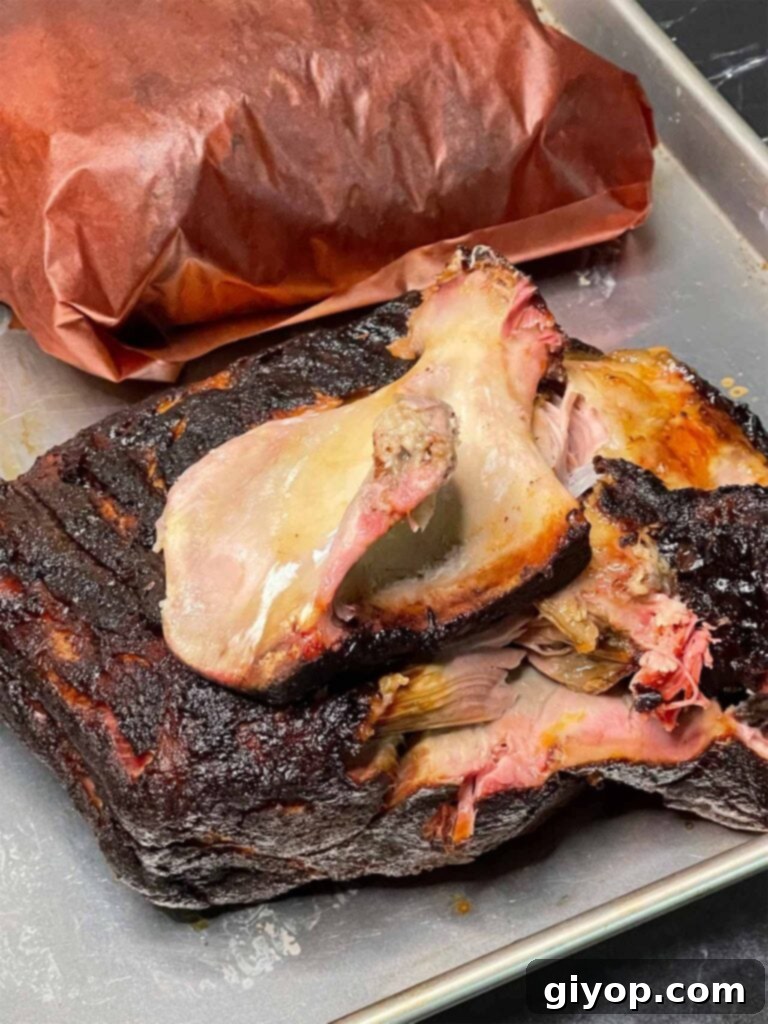
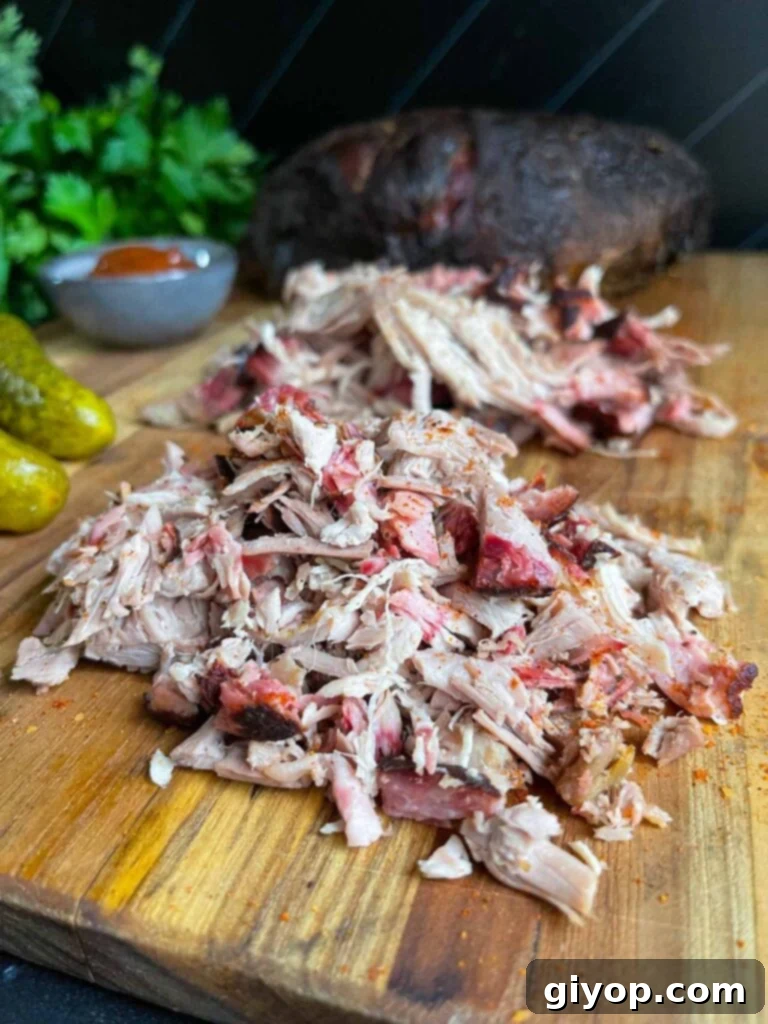
After the resting period, place the pork butt in a sturdy rectangular pan to catch all the flavorful juices. Now comes the satisfying part: grab hold of that shoulder bone, and watch it slide out cleanly, a testament to the pork’s incredible tenderness. While still warm, use a pair of meat claws or forks to shred the pork. Once it cools down slightly, your clean hands will work just as well. What you’ll be left with is pure smoked pulled pork heaven – succulent, juicy meat, a beautiful crimson smoke ring, and that irresistible, savory bark.
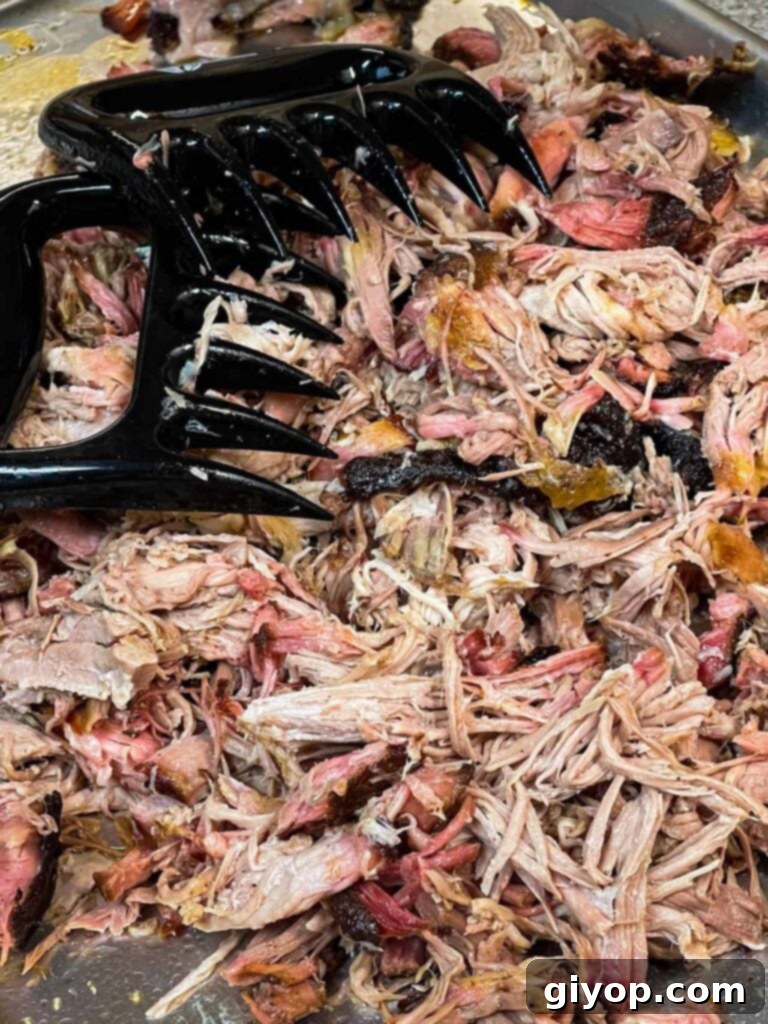
Now, the only decision left is how to enjoy this incredible creation!
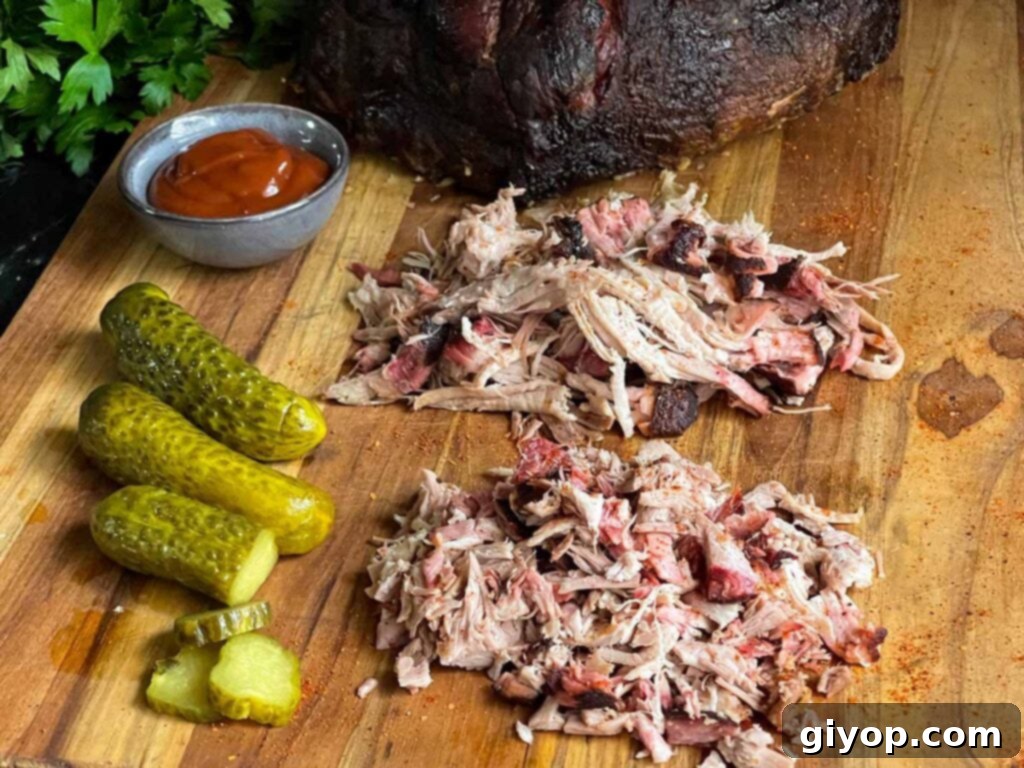
I’m a traditionalist at heart, enjoying my pulled pork as a hearty sandwich, piled high with crisp pickles and a spoonful of tangy chow chow. A few quick chops with a cleaver gives me that perfect texture. My wife, on the other hand, prefers a healthier approach, adding a touch of her favorite homemade barbecue sauce and savoring it without the bun. The beauty of this smoked pulled pork is its versatility – it’s delicious every single way!
Wondering what to pair with your new favorite pulled pork? You can never go wrong with classic barbecue sides. An herb potato salad (without mayo) offers a refreshing contrast, or whip up some banging barbecue baked beans for a truly satisfying meal.
Enjoy the process, and happy BBQing!
Pro Tips for Mastering Smoked Pork Shoulder
Having smoked countless pork butts over the years, I’ve gathered a wealth of insights. Here are some invaluable tips to help you achieve consistent, mouth-watering results.
Temperature is Key, Not Time.
This is arguably the most critical lesson in low-and-slow barbecue. While a general guideline suggests about 90 minutes per pound when smoking at 225-250°F, this is merely an estimate. Many factors, such as the initial temperature of the meat, the shape of the cut, ambient weather conditions, and smoker consistency, can significantly alter cooking times. Therefore, always rely on the internal temperature of the pork butt to dictate when it’s done, not the clock.
- At 165°F (74°C), the pork is safe to eat from a food safety standpoint, but it won’t be tender enough to pull.
- Around 180°F (82°C), the magic begins. This is the temperature range where the tough collagen and connective tissues within the pork butt start to break down and convert into gelatin, making the meat increasingly tender.
- At 190°F (88°C), the pork butt will be quite tender, but for truly fall-apart results, I recommend pushing it further.
- The ideal temperature for pulling the pork butt off the smoker is 195°F (91°C). At this point, it achieves an exquisite fork-tender consistency without becoming mushy or overcooked. If your goal is pulled pork that practically melts in your mouth, aim for this precise temperature.
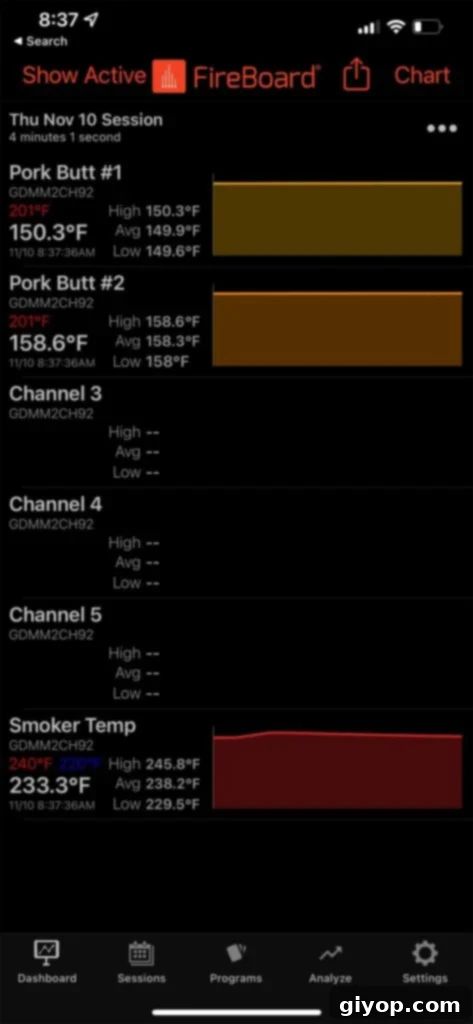
I typically use a FireBoard thermometer for continuous, accurate temperature monitoring throughout the cook. For quick spot checks or when I’m not using my FireBoard, an instant-read thermometer is indispensable. This also doubles as a “probe tender” test: when the probe slides into the meat with minimal resistance, feeling like it’s entering soft butter, your pork butt is perfectly done. Always remember: cooking to temperature, not time, is the ultimate secret to barbecue success.
The Impact of Wood Choice (in my opinion)
While I generally advise using the wood you enjoy most, I have a strong bias, especially when it comes to authentic Southern pulled pork. In the South, hickory reigns supreme for smoking pork. When I smoke pork butt, hickory is my go-to choice. It provides an assertive, rich smoke flavor that’s potent but not as overwhelmingly strong as mesquite. I love how hickory makes the smoky goodness of the pulled pork truly sing, enhancing that delicious bark to perfection.
For those looking to diversify, a mix of hickory and oak also produces excellent results. Pecan is another fantastic choice, offering a slightly milder, nutty smoke that serves as a close second to hickory. If you’re aiming for a touch of fruitiness that pairs incredibly well with pork, apple wood is an amazing option. Regional preferences abound, but for that genuine, traditional Southern pulled pork experience, I highly recommend giving hickory a try.
Understanding ‘The Stall’
Don’t be alarmed if, during your long smoke, the internal temperature of your pork butt seems to hit a plateau. This phenomenon, known as “the stall,” is completely normal and occurs when smoking large cuts of meat at low temperatures. It typically happens in the 150-170°F (65-77°C) range, where the meat’s internal temperature stops rising for several hours. This is due to evaporative cooling: moisture within the meat evaporates from the surface, cooling the meat much like sweat cools our bodies on a hot day. The duration of the stall can vary depending on factors like the size of the meat and the ambient humidity of your environment. Wrapping the pork, a technique often called the “Texas Crutch,” is an effective way to power through the stall and accelerate the cooking process.
To Wrap or Not To Wrap?
Wrapping your pork butt serves two primary purposes in this recipe. Firstly, it helps manage the level of smoke penetration. Smoking for the entire 12 hours unwrapped can result in an overly smoky flavor. Wrapping the pork after 6 hours prevents further smoke from penetrating the meat, allowing for a perfectly balanced smoky taste. If you desire a more intense smoke flavor, you can wrap later; for less smoke, wrap sooner. I’ve found that wrapping around the 6-hour mark provides an ideal balance.
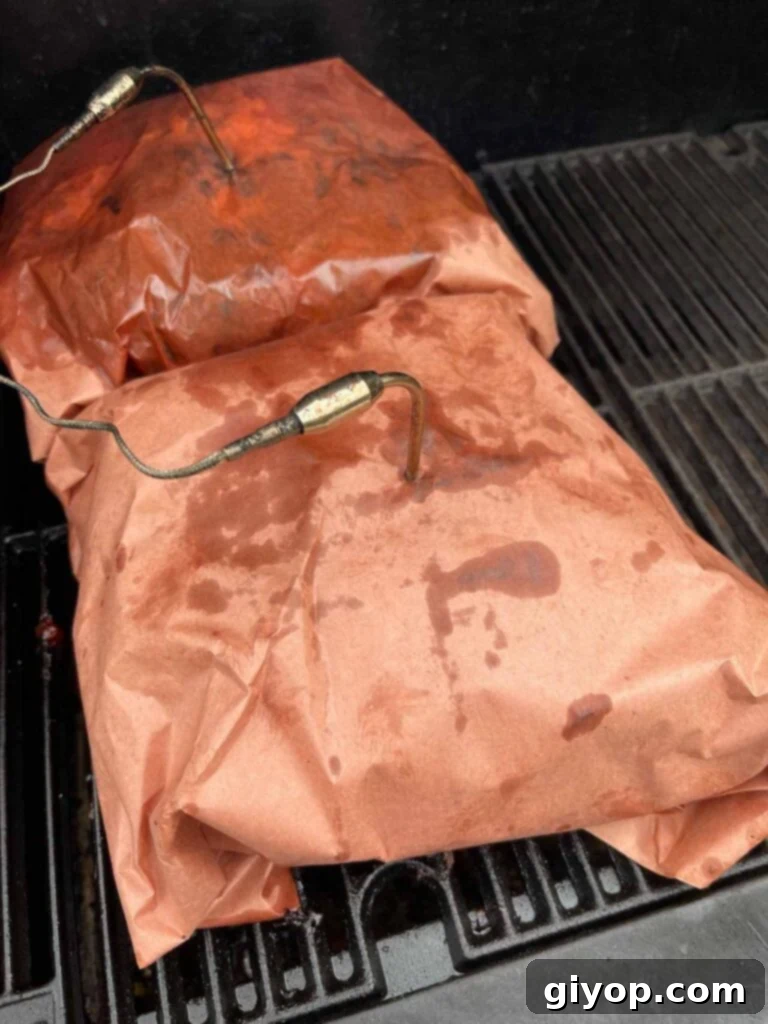
The second, equally important purpose of wrapping is to help you power through “the stall,” as mentioned previously. While some barbecue purists argue that wrapping can negatively impact the bark, I’ve found this to be largely untrue when using butcher paper, which still allows for some air circulation and steam to escape, unlike aluminum foil. If you choose not to wrap and encounter the stall, a simple solution is to temporarily increase your pit temperature by about 10-15 degrees until the internal temperature of the meat begins to rise again.
Smoking a Pork Butt Ahead of Time
The long cooking time for a smoked pork butt shouldn’t deter you from enjoying it for a midday gathering. You absolutely can smoke a pork butt in advance! Simply follow the smoking instructions a day ahead of your event. Once the pork butt is cooked and rested, shred the meat, making sure to retain all the flavorful juices. Store the shredded pork and its juices in disposable aluminum foil pans, seal them well, and refrigerate overnight. On the day of your party, reheat the pork in an oven, on the grill, or back on the smoker at 225°F (107°C) until it’s thoroughly hot, usually about 30-40 minutes. Serve hot and enjoy the convenience!
Exciting Variations for Your Smoked Pork Butt
One of the joys of barbecue is the endless opportunity for customization. Here are some variations to consider for your next smoked pork butt:
- Binder: Our recipe typically uses classic yellow mustard as a binder, which disappears into the bark during the cook. However, olive oil is another excellent choice that helps the rub adhere. Honestly, even skipping the binder altogether works well; in that case, I’d recommend more frequent spritzing with a 50/50 mix of water and apple cider vinegar to maintain moisture.
- Rubs: The world of dry rubs is vast and exciting! While our Memphis-style rub is a personal favorite, don’t hesitate to experiment. Bad Byron’s Butt Rub is a widely popular commercial option that delivers fantastic results. Many other great rubs, like those from Meat Church, can be found at specialty stores or even Academy Sports, offering a range of flavor profiles from sweet to spicy.
- Wood: As discussed, different woods impart distinct flavors. While I’m a steadfast hickory fan for pork, mixing in other types of wood can create unique and delicious profiles. Apple wood, with its mild, sweet, and fruity smoke, is a frequent addition that complements pork beautifully. Cherry wood offers a similar sweetness with a darker color.
- BBQ Sauces: The perfect barbecue sauce can elevate your pulled pork to new heights. The options are endless! If you love a sweet heat, explore Kansas City-style sauces. For a tangy, vinegary kick, North Carolina-style sauces are a must-try. There truly isn’t a bad choice when it comes to pairing with smoked pork.
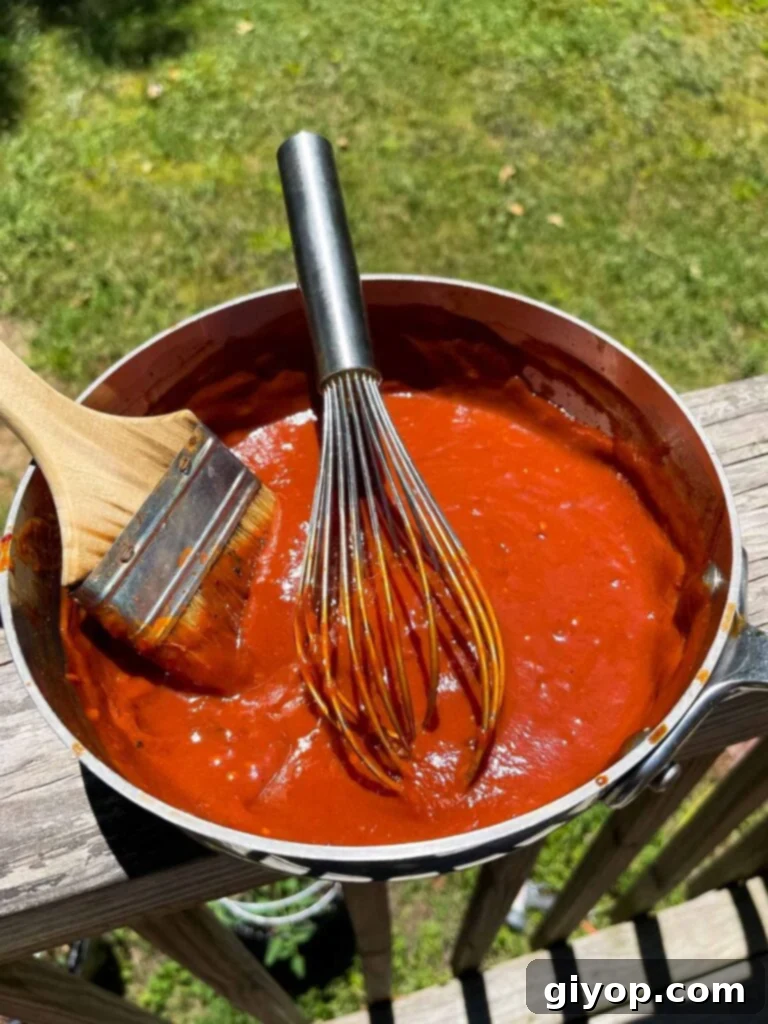
If you’re looking for a homemade option, our Bourbon Chipotle Barbecue Sauce is truly outstanding. It’s a rich, ketchup-based sauce with delightful sweet notes that are balanced by the smoky heat of chipotle peppers. The bourbon adds an incredible depth and complexity, creating a sophisticated flavor profile that we keep stocked in our pantry. Plus, nothing beats the fresh taste of homemade sauce!
- Keto-Friendly: For those following a ketogenic diet, smoked pork butt is an ideal dish. To keep it keto-friendly, simply ensure your rub contains no added sugars. Many commercial rubs, like Bad Byron’s Butt Rub, are sugar-free and offer a fantastic blend of spices that complement pork perfectly. Pair it with low-carb sides, and you have a delicious, guilt-free meal.
Frequently Asked Questions About Smoked Pork Shoulder
A standard 8 lb pork shoulder typically takes about 12 hours when smoked at a consistent temperature of 225-250 degrees Fahrenheit (107-121°C). However, always remember to cook to internal temperature, not just time.
Allowing the pork shoulder to rest for at least an hour is crucial. We prefer to let it rest for 90 minutes to 2 hours. This essential resting period allows the meat’s fibers to relax and reabsorb all the flavorful juices, resulting in a significantly more moist and tender pulled pork.
For the most optimal, fall-apart tender results, we recommend removing your pork butt from the smoker when its internal temperature reaches 195 degrees Fahrenheit (91°C). While the pork butt can be considered ready to be pulled at 180 degrees Fahrenheit (82°C), and it’s safe to eat at 165 degrees F (74°C), it won’t be tender enough to shred easily at these lower temperatures. Aiming for at least 190 degrees Fahrenheit (88°C) will yield good tenderness, but 195°F is truly ideal for melt-in-your-mouth perfection.
Other Amazing Barbecue Recipes to Explore
If you’ve loved mastering the smoked pork butt, here are a few more barbecue recipes from our collection that you’re sure to enjoy:
Smoked Pork Shoulder (Pork Butt) Recipe
This recipe and method consistently produces a juicy, tender, perfectly smoked pork butt/shoulder every time!
Course: Barbeque, Main
Cuisine: American, Barbecue, BBQ, Grilling
Prep Time: 1 hour
Cook Time: 12 hours
Total Time: 13 hours
Servings: 16
Calories: 249 kcal
Author: Brad Harris
Ingredients
Main Ingredients:
- 8 Lb Pork Shoulder (Butt)
Memphis Dry Rub (makes approx. 0.5 cup):
- 1/2 cup Paprika
- 1/4 cup Chili powder
- 3 tbsp Kosher salt
- 3 tbsp Black pepper
- 3 tbsp Brown sugar
- 2 tbsp Smoked paprika
- 2 tbsp Garlic powder
- 2 tbsp Onion powder
- 1 tbsp Dried oregano
- 1 tbsp Cumin
- 2 tsp dry mustard
- 1 tsp cayenne pepper
Instructions
- Brine pork shoulder for 18-24 hours.
- Pull pork from brine, allow to rest for approximately 1-2 hours.
- Apply a liberal amount of mustard, coating the entire surface of the meat.
- Apply a liberal amount of rub, rubbing or patting it into the meat.
- Wrap the seasoned pork and refrigerate overnight.
- Smoke at 225-250°F (107-121°C) for 6 hours.
- Pull pork from grill, wrap tightly in butcher paper or tin foil. If using tin foil, ensure it’s not completely sealed to allow some moisture to escape.
- Return to grill, continue to cook for another 6 hours at 225-250°F (107-121°C).
- Using a meat thermometer, remove cooked meat when the internal temperature reaches 195-200°F (91-93°C) and allow to rest for 30 minutes to an hour before shredding.
Notes
Prep time is indicated at approximately one hour. This does not include the time required to brine the pork if you decide to do so. Please read the entire recipe thoroughly before beginning.
The rub recipe provided makes enough rub for approximately 4 pork butts, so you’ll have extra for future cooks or other meats.
Remember to always smoke to internal temperature, not to a strict time schedule. The size of the pork butt, the ambient temperature, and the humidity levels can all significantly affect the overall cooking time.
Nutrition
Calories: 249kcal | Carbohydrates: 9g | Protein: 29g | Fat: 11g | Saturated Fat: 4g | Polyunsaturated Fat: 2g | Monounsaturated Fat: 5g | Cholesterol: 93mg | Sodium: 1480mg | Potassium: 695mg | Fiber: 4g | Sugar: 3g | Vitamin A: 3266IU | Vitamin C: 2mg | Calcium: 62mg | Iron: 4mg