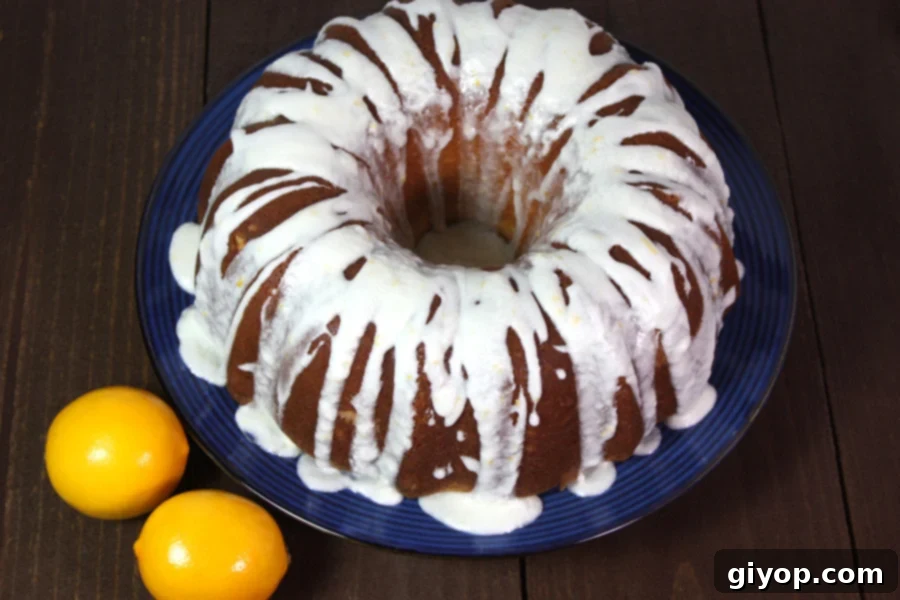
There’s nothing quite like the bright, zesty flavor of Meyer lemons to awaken your palate and bring a burst of sunshine into your kitchen. And when that vibrant citrus is transformed into a moist, tender, and exquisitely tangy bundt cake, it becomes an absolute masterpiece. This isn’t just any lemon cake; it’s a Meyer lemon bundt cake, boasting a unique sweetness and aromatic depth that sets it apart. Perfectly balanced and not overly sweet, this delightful dessert promises a truly memorable experience with every slice. Prepare to fall in love with its delicate crumb, its fragrant aroma, and the irresistible tang of fresh Meyer lemons. It’s truly soooo good, it might just become your new go-to recipe for any occasion, from a casual family treat to an elegant brunch centerpiece.
Don’t Sweat The Recipe is supported by its readers. We may earn a commission if you purchase through a link on our site. Learn more.
Why This Meyer Lemon Bundt Cake Will Be Your New Favorite
I’m officially obsessed with Meyer lemons, and once you try this cake, you will be too! Whenever I spot these beautiful citrus gems in the store, I make sure to snag a bag. My strong recommendation? Get yourself some Meyer lemons, head straight home, and immerse yourself in the joy of baking this absolutely delicious bundt cake. You won’t regret it.
There’s an undeniable magic that Meyer lemon cakes bring, especially as Spring finally makes its welcome appearance. It’s more than just a cake; it’s a celebration of fresh flavors and sunny days. This particular recipe captures that essence perfectly.
This cake is not only deliciously divine but also surprisingly simple to make, making it accessible for bakers of all skill levels. Its texture is truly remarkable, often compared to a luxurious Meyer lemon pound cake. You’ll find it boasts an incredibly moist and tender crumb that melts in your mouth, infused with that distinctive Meyer lemon tang and sweetness.
Beyond its incredible flavor and ease of preparation, this Meyer lemon bundt cake offers a versatility that makes it perfect for various occasions. Whether you’re hosting a sophisticated brunch, preparing a delightful dessert for a family gathering, or simply craving a sweet treat with your afternoon tea, this cake fits the bill. Its elegant bundt shape makes for a beautiful presentation, and the glistening lemon glaze adds a touch of sophistication that will impress your guests. It’s a perfect way to brighten any table and uplift any mood.
If you’re a fan of delightful spring and summer desserts, you might also enjoy some of our other cherished recipes, such as the Fluffy Strawberry Shortcake, the timeless Classic Coconut Cake, the indulgent Almond Joy Cake, or the ever-popular Blueberry Pie. Each of these brings its own unique charm, but for a truly bright and zesty experience, this Meyer Lemon Bundt Cake stands in a class of its own.
Meyer Lemons vs. Regular Lemons: Unveiling the Unique Citrus
Understanding the distinction between Meyer lemons and their more common counterparts is key to appreciating the unparalleled flavor of this bundt cake. A Meyer lemon is notably more round in shape compared to a true lemon (like a Eureka or Lisbon variety), and its skin is distinctively fragrant and thinner, often having a smoother, darker yellow hue, sometimes with a slight orange tint when fully ripe.
The most significant difference lies in their taste profile. Meyer lemons offer a sweeter and less acidic flavor than regular lemons. This makes them less tart and more mellow, with a floral, almost herbal undertone that is often described as a cross between a lemon and a mandarin orange. This unique genetic makeup isn’t just anecdotal; a Meyer lemon is, in fact, a natural hybrid between a citron and a mandarin orange. It was first introduced to the United States in the early 1900s by Frank Meyer, an agricultural explorer who collected a sample on a trip to China, bringing this culinary treasure to the Western world.
Because of their reduced acidity and inherent sweetness, Meyer lemons are particularly cherished in baking and dessert making. They provide that delightful “pop” of lemon flavor without the sharp, acidic bite that can sometimes overwhelm delicate pastries. This characteristic is precisely why they are the star of this bundt cake, contributing to its lusciously tangy yet perfectly balanced sweetness. When a recipe calls for a bright citrus note but you want to avoid an overly sour profile, Meyer lemons are your ideal choice. Their season typically runs from late fall through early spring, making this bundt cake a perfect treat to bake during these months, capturing the essence of the season in every bite.
Essential Ingredients for Your Meyer Lemon Bundt Cake
Crafting this exquisite Meyer Lemon Bundt Cake relies on a selection of high-quality ingredients, each playing a vital role in achieving its signature moist, tender crumb and vibrant flavor. While the full list with precise measurements can be found in the recipe card below, here’s a closer look at the key components that make this cake truly special:
- Dry Ingredients – This foundational blend includes all-purpose flour, which provides the cake’s structure; baking soda, a leavening agent that helps the cake rise and achieve its tender texture; and salt, which enhances all the flavors and balances the sweetness. Ensure your flour is properly measured (spooned and leveled) for the best results.
- Wet Ingredients – The rich moisture and flavor come from unsalted butter, creamed until light and fluffy for a delicate crumb; large eggs, which bind the ingredients, add richness, and contribute to the cake’s structure; sour cream, a secret weapon for incredible moisture and a subtle tang that complements the lemon; and of course, fresh Meyer lemon juice and Meyer lemon zest, which are the heart and soul of the cake’s unique citrus profile. Using room-temperature eggs, butter, and sour cream is crucial for a smooth, emulsified batter.
- Granulated Sugar – Essential for sweetness, granulated sugar also contributes to the cake’s texture and golden crust. Its fine crystals dissolve beautifully during the creaming process.
- Glaze Ingredients – The crowning glory of this bundt cake is its simple yet impactful glaze. Made from powdered sugar (confectioners’ sugar) for a smooth, quick-setting finish; more fresh Meyer lemon juice for that intense citrus punch; and a touch of Meyer lemon zest to amplify the aromatic qualities, this glaze adds an irresistible sheen and an extra layer of tangy sweetness.
Using fresh Meyer lemons for both the cake batter and the glaze is highly recommended to achieve the most authentic and vibrant flavor. Their unique sweetness truly shines through in this recipe.
Baking Your Perfect Meyer Lemon Bundt Cake: A Step-by-Step Guide
Creating this delicious Meyer Lemon Bundt Cake is a straightforward process, combining simple techniques to yield impressive results. Follow these detailed steps to ensure a perfectly moist and flavorful cake every time. The beauty of this recipe lies in its ease, proving that you don’t need complicated methods for extraordinary flavor.
The mixing process for this bundt cake is truly quite simple and intuitive, focusing on proper incorporation of ingredients rather than complex maneuvers. With just a few key steps, you’ll have a beautifully uniform batter ready for the oven. This ease of preparation ensures that even novice bakers can achieve a stunning and delicious outcome.
- Prepare Your Pan and Oven: Begin by preheating your oven to 350°F (175°C). This ensures the oven is at the correct temperature when the cake enters, promoting an even bake. Next, thoroughly grease a bundt or pound cake pan. This step is critical to prevent the cake from sticking and ensure a clean release. You can use softened butter, meticulously coating every crevice of the pan, followed by a light dusting of flour, tapping out any excess. Alternatively, a high-quality baking spray with flour (like Baker’s Joy) works wonderfully for convenience. Make sure to cover the center tube and all decorative ridges.
- Cream Butter and Sugar: In a large mixing bowl, using an electric mixer (stand or hand-held), cream together the softened unsalted butter and granulated sugar. Beat this mixture at medium speed for about 5 minutes, or until it becomes noticeably light, fluffy, and pale in color. This process incorporates air, which is essential for a tender cake crumb.
- Incorporate Eggs: Add the large eggs to the creamed mixture one at a time. After each egg addition, beat well until fully incorporated before adding the next. This allows the eggs to emulsify properly with the butter mixture, preventing a curdled appearance and ensuring a smooth, cohesive batter. Using room temperature eggs helps tremendously with this emulsification.
- Add Lemon Flavor: Gently stir in the fresh Meyer lemon juice and Meyer lemon zest. The zest, in particular, carries much of the lemon’s aromatic oils, infusing the batter with intense citrus fragrance and flavor. Be careful not to overmix at this stage; just enough to combine.
- Combine Dry Ingredients: In a separate, medium-sized bowl, whisk together the all-purpose flour, baking soda, and salt. Whisking ensures these dry ingredients are evenly distributed, preventing pockets of leavening agents or salt in the final cake.
- Alternate Wet and Dry: With the mixer on low speed, gradually add the flour mixture to the creamed mixture, alternating with the room-temperature sour cream. Begin and end with the flour mixture. Beat just until the ingredients are combined and no streaks of flour remain. Overmixing at this stage can develop the gluten in the flour too much, resulting in a tough cake. Scrape down the sides of the bowl as needed to ensure everything is fully incorporated.
- Fill the Pan and Bake: Pour the luscious cake batter evenly into your meticulously prepared bundt pan. Gently tap the pan on the counter a couple of times to release any large air bubbles. Bake for approximately 50-60 minutes. Baking times can vary depending on your oven and pan material, so look for visual cues. The cake is done when it’s golden brown, springs back lightly when touched, and a wooden skewer or toothpick inserted into the center comes out clean or with a few moist crumbs attached.
- Cooling Process: Once baked, remove the bundt cake from the oven and let it cool in the pan on a wire rack for 10 minutes. This crucial resting period allows the cake to firm up slightly, making it easier to invert without breaking. After 10 minutes, carefully invert the cake onto the wire rack to cool completely. Cooling on a rack allows air circulation, preventing the bottom from becoming soggy.
- Prepare and Apply Glaze: Once the cake is completely cooled (this is important, as applying glaze to a warm cake will cause it to melt and run), prepare your vibrant lemon glaze. In a small bowl, whisk together the powdered sugar, fresh Meyer lemon juice, and Meyer lemon zest until smooth and of a drizzly consistency. If it’s too thick, add a tiny bit more lemon juice; if too thin, add more powdered sugar.
- Garnish and Serve: Generously pour or drizzle the lemon glaze evenly over the cooled bundt cake, allowing it to cascade down the sides and into the intricate ridges. The glaze will set slightly, creating a beautiful finish. Allow the glaze to set for a few minutes, then slice, serve, and prepare to devour this incredible homemade treat!
Expert Tips for the Best Meyer Lemon Bundt Cake
Achieving a perfectly moist, flavorful, and beautifully presented Meyer Lemon Bundt Cake is easier with a few helpful tips:
- Room Temperature Ingredients are Key: This is perhaps the most crucial tip for any baking success. Ensure your eggs, unsalted butter, and sour cream are at room temperature. Softened butter creams smoothly with sugar, incorporating air for a light texture. Room temperature eggs and sour cream emulsify much better with the other ingredients, leading to a homogenous, smoother batter that bakes evenly and results in a more tender crumb.
- Embrace Meyer Lemons for Maximum Zing: While regular lemons can be substituted, Meyer lemons truly make this cake sing with their unique, sweeter, and less acidic “zing.” Their floral notes add an extra layer of complexity that regular lemons simply can’t replicate. If you’re lucky enough to find them, always opt for Meyer lemons for the most authentic flavor.
- Mastering the Bundt Pan Release: A well-greased bundt pan is your best friend. To prevent your beautiful cake from sticking, use softened butter to thoroughly coat every nook and cranny, especially the intricate designs. Follow this with a generous dusting of all-purpose flour, rotating the pan and tapping out any excess. For added assurance, some bakers swear by baking spray that contains flour. Take your time with this step – it’s worth it to ensure your cake slides out with ease.
- Lemon Quantity Matters: Depending on their size and juiciness, you will typically need at least 5 to 6 Meyer lemons for this recipe, covering both the cake batter and the vibrant glaze. It’s always a good idea to have an extra lemon or two on hand, just in case, to ensure you have enough juice and zest.
- Sour Cream Alternatives: If you don’t have sour cream on hand or prefer an alternative, full-fat plain Greek yogurt can be substituted in equal measure for the sour cream in the Meyer Lemon Bundt Cake recipe. It will provide a similar moisture and a delightful tanginess. Ensure it’s also at room temperature.
- Adjusting Your Glaze Consistency: The perfect glaze should be thick enough to cling to the cake but thin enough to drizzle beautifully. You can easily adjust its consistency. If your glaze seems too thick, add a very small amount (half a teaspoon at a time) of milk or more Meyer lemon juice until it reaches your desired drizzly texture. Conversely, if it appears too thin and watery, gradually whisk in more powdered sugar until it thickens appropriately.
- Don’t Overmix the Batter: Once you start adding the flour mixture, mix only until just combined. Overmixing develops gluten, which can lead to a tough and dense cake rather than the tender crumb you’re aiming for.
- Cool Completely Before Glazing: Patience is a virtue here! Ensure your bundt cake is completely cooled before applying the lemon glaze. If the cake is even slightly warm, the glaze will melt and be absorbed into the cake, rather than forming a lovely, visible coating.
Frequently Asked Questions About Meyer Lemon Bundt Cake
Absolutely! This delicious bundt cake is one of those rare treats that actually tastes even better the next day as the flavors have more time to meld and deepen. You can confidently bake the cake up to 24 hours ahead of when you plan to serve it. Just ensure it’s cooled completely before storing.
To maintain its freshness and delightful texture, place the completely cooled and glazed cake in an airtight cake container. Store it at room temperature, away from direct sunlight or heat, where it will remain wonderfully moist and flavorful for about 4 to 5 days. There’s usually no need to refrigerate unless your kitchen is exceptionally warm.
Yes, this cake freezes beautifully, making it an excellent option for meal prepping or saving for a future occasion. If you plan on freezing the cake, let it cool completely after baking, but *do not* apply the glaze. Once thoroughly cooled, wrap the cake tightly with several layers of plastic wrap, ensuring no air can get in. Follow this with a layer of heavy-duty aluminum foil for extra protection against freezer burn. For best results, place the foil-wrapped cake into a large freezer bag before freezing. It can be stored in the freezer for up to 2 months.
When you’re ready to enjoy it, simply thaw the cake overnight in the refrigerator. Once thawed, bring it to room temperature and then prepare and apply the lemon glaze as instructed in the recipe. It will taste as fresh as the day you baked it!
Pan sticking is a common concern with bundt cakes! The most frequent culprit is insufficient greasing and flouring of the pan. Make sure to use softened butter and meticulously coat every crevice, followed by a thorough dusting of flour, tapping out any excess. For heavily detailed pans, baking spray with flour is often recommended for better coverage. Another common mistake is not allowing the cake to cool for the recommended 10 minutes in the pan before inverting; this allows the cake to firm up slightly. If your cake still sticks, don’t despair! You can carefully ease it out with a thin offset spatula, or try placing a damp, hot towel over the inverted pan for a few minutes to create steam that might help release it.
This recipe is designed for a standard 10-inch (12-cup) bundt cake pan. If you use a smaller pan, you may need to adjust baking time and potentially have leftover batter. If you use a larger pan, the cake will be shorter and may bake faster. Always fill bundt pans no more than two-thirds full to allow for proper rising. For different pan sizes, keep a close eye on the cake towards the end of the baking time, and always rely on the toothpick test for doneness.
More Zesty Lemon Recipes to Enjoy
If you’ve fallen in love with the vibrant and refreshing flavor of Meyer lemons, or simply can’t get enough of citrus-infused treats, you’re in for a delight! Here are a few more fantastic lemon recipes from our collection that we think you’ll absolutely adore. Each offers a unique way to enjoy the bright and invigorating taste of lemons, perfect for any time of year.
Lemon Sandwich Cookies
These bright and zesty lemon sandwich cookies feature a soft, chewy cookie exterior embracing a creamy, tangy lemon filling. They are a delightful balance of sweet and tart, perfect for afternoon tea or a light dessert.
Lemon Cheesecake Shortbread Bars
Indulge in these luxurious Lemon Cheesecake Shortbread Bars, featuring a buttery shortbread crust generously topped with a rich, creamy, and vibrantly tart lemon cheesecake filling. They offer a sophisticated yet comforting dessert experience, ideal for sharing or a personal treat.
Honey Ginger Lemonade
Quench your thirst with our invigorating Honey Ginger Lemonade, a unique twist on a classic favorite. This beverage combines the tartness of fresh lemons with the warmth of ginger and the natural sweetness of honey, creating a wonderfully balanced and refreshing drink that’s perfect for any occasion.
Meyer Lemon Bundt Cake: The Ultimate Citrus Dessert
Print Recipe
Pin Recipe
Rate Recipe
Ingredients
Cake
- 1 cup Unsalted butter softened
- 2 cups Granulated sugar
- 6 large Eggs room temperature
- 6 tablespoons Meyer lemon juice
- 1 tablespoon Meyer lemon zest
- 3 cups All-purpose flour
- 1/2 teaspoon Baking soda
- 1/4 teaspoon Salt
- 1 cup Sour cream room temperature
Glaze:
- 1 cup Confectioners’ sugar
- 2 tablespoons Meyer lemon juice freshly squeezed
- 2 teaspoons Meyer lemon zest
Instructions
Cake
- Preheat the oven to 350F degrees. Grease a bundt or pound cake pan with butter and dust flour, or use baking spray, ensuring all crevices are covered.
- In a large mixing bowl, cream the softened butter and granulated sugar together using an electric mixer until the mixture is light, fluffy, and pale, which usually takes about 5 minutes.1 cup Unsalted butter, 2 cups Granulated sugar
- Add the large eggs one at a time, beating thoroughly after each addition to ensure full incorporation into the butter mixture.6 large Eggs
- Stir in the fresh Meyer lemon juice and Meyer lemon zest until just combined, infusing the batter with vibrant citrus flavor.6 tablespoons Meyer lemon juice, 1 tablespoon Meyer lemon zest
- In a separate medium bowl, whisk together the all-purpose flour, baking soda, and salt until well combined.3 cups All-purpose flour, 1/2 teaspoon Baking soda, 1/4 teaspoon Salt
- Gradually add the whisked dry ingredients to the creamed mixture, alternating with the room-temperature sour cream. Begin and end with the flour mixture, beating only until just combined and no dry streaks remain. Scrape down the sides of the bowl as needed to ensure a uniform batter.1 cup Sour cream
- Carefully pour the cake batter into the prepared 10-inch bundt or tube pan, ensuring it’s evenly distributed.
- Bake for 50-60 minutes, or until a wooden skewer or toothpick inserted into the center of the cake comes out clean. Let the cake cool in the pan on a wire rack for 10 minutes before carefully inverting it onto the wire rack to cool completely.
Glaze
- Once the cake is completely cool, in a small mixing bowl, combine the confectioners’ sugar, fresh Meyer lemon juice, and Meyer lemon zest. Whisk until smooth and of a drizzling consistency. Pour or drizzle the prepared glaze evenly over the cooled bundt cake.1 cup Confectioners’ sugar, 2 tablespoons Meyer lemon juice, 2 teaspoons Meyer lemon zest
Notes
Storing – For optimal freshness, store the completely cooled and glazed cake in an airtight container at room temperature. It will stay wonderfully moist and flavorful for up to 4 to 5 days.
Make Ahead and Freezing – For detailed instructions on preparing the cake in advance and freezing it for later enjoyment, please refer to the comprehensive FAQ section located earlier in this post.