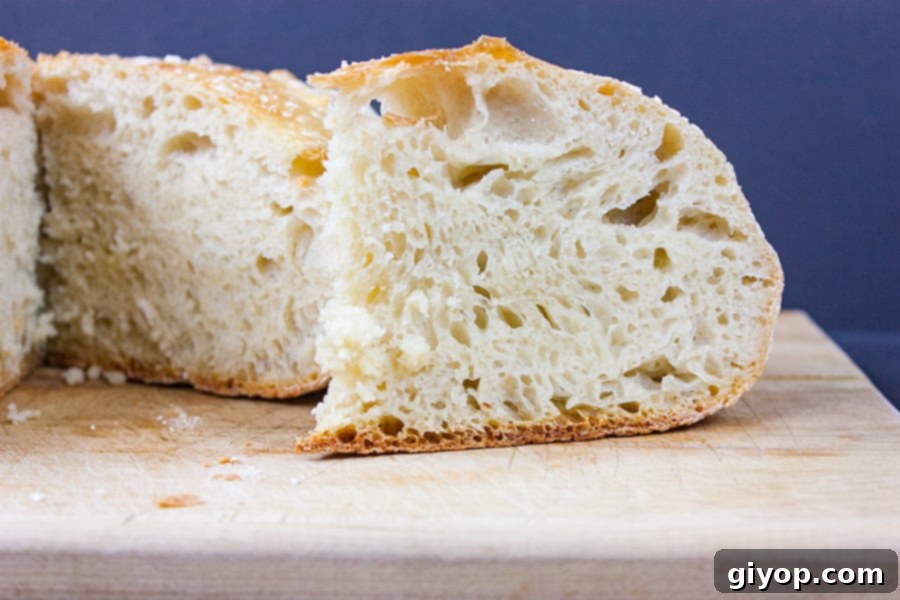
Welcome to the ultimate guide for baking a flawless No-Knead Large Dutch Oven Bread! This recipe has been specially adapted for those of us who own a larger capacity Dutch oven, typically a 5 to 6-quart model. Forget the frustration of a flat loaf; with these adjusted measurements and techniques, you’ll achieve a magnificently tall, gloriously crusty, and irresistibly chewy artisan bread right in your home kitchen.
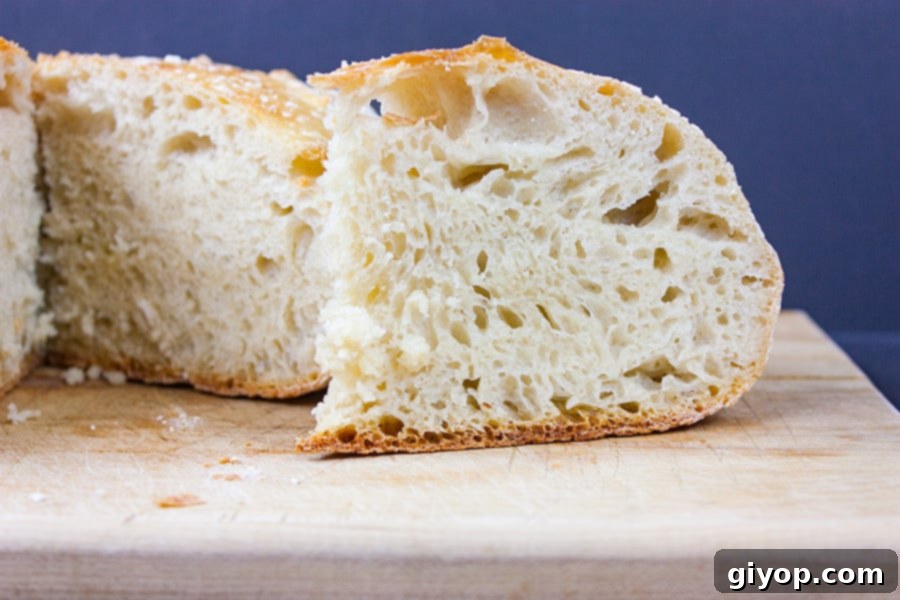
Mastering the No-Knead Large Dutch Oven Bread Recipe
The “no-knead” bread phenomenon has truly revolutionized home baking, making the dream of artisanal, bakery-quality bread accessible to everyone, regardless of experience. This incredibly simple method bypasses the tedious kneading process, relying instead on a long, slow fermentation to develop complex flavors and a perfect gluten structure. For a long time, I avoided trying it due to the seemingly daunting rest period, but believe me, this recipe is an absolute game-changer! Don’t make my mistake; embrace the simplicity and delicious results.
Many standard no-knead recipes are designed for smaller 3-4 quart Dutch ovens, which, while divine, just weren’t enough to achieve a robust, tall loaf in my 5.5-quart pot. After a bit of research, I discovered that doubling the original recipe was the answer I was looking for. This adapted version ensures your generous Dutch oven yields a genuinely magnificent loaf, proving that amazing homemade bread is within reach for every kitchen.
Why Choose No-Knead Bread? The Magic of Minimal Effort
For years, the idea of baking homemade bread seemed daunting, often associated with hours of vigorous kneading and precise timing. The no-knead method shatters these preconceptions. By simply combining a few basic ingredients – flour, water, yeast, and salt – and allowing time to do the work, you can create bread with an irresistible crust and a wonderfully airy, chewy interior. This hands-off approach makes it ideal for busy schedules, allowing you to prepare the dough in minutes and let it rest overnight, ready for baking the next day. The minimal active time required makes it a perfect weekend project or a simple addition to your weekly meal prep.
The beauty of no-knead bread lies in its simplicity. It requires no special equipment beyond a bowl and a Dutch oven, making it approachable for novice bakers. The long fermentation process not only develops incredible flavor but also enhances the dough’s elasticity, leading to that characteristic open crumb structure without any physical kneading. It’s a truly miraculous method that consistently delivers professional-looking and tasting bread with surprisingly little effort.
The Dutch Oven Advantage: Achieving the Perfect Crust and Crumb
Baking bread in a Dutch oven is the secret weapon for achieving that quintessential crackly, golden-brown crust and a soft, airy crumb. The heavy cast iron pot, preheated to a high temperature, acts like a mini-steam oven. As the dough bakes inside the covered pot, the moisture released from the dough is trapped, creating a steamy environment that prevents the crust from hardening too quickly. This allows the bread to expand fully – a phenomenon known as “oven spring” – before the lid is removed. Once the lid comes off, the trapped moisture escapes, allowing the crust to crisp up and develop its beautiful deep golden color and satisfying texture.
For larger Dutch ovens, like a 5.5-quart or 6-quart capacity, this recipe smartly doubles the standard ingredients, ensuring a robust, well-formed loaf that fills your pot perfectly, rather than spreading out too flat. This generous volume of dough also benefits from the consistent, even heat distribution of cast iron, leading to a uniformly baked loaf with a superior texture from edge to edge. It’s truly the optimal environment for baking artisan bread at home, transforming simple ingredients into a show-stopping centerpiece for any meal.
Ingredients You’ll Need for Your Artisan Loaf
This recipe uses a handful of basic ingredients, but understanding their role can subtly influence your final bread. We’ll use a slightly larger quantity to accommodate your 5.5-quart Dutch oven, ensuring a generously sized loaf that truly fills the pot.
- 6 cups Bread Flour (recommended, or all-purpose flour): While all-purpose flour works, bread flour has a higher protein content. This higher protein content contributes to a stronger gluten structure, which in turn leads to a chewier crumb and better overall rise. It is highly recommended for achieving that classic artisan texture. Remember, you’ll also need a little extra flour for dusting your work surface.
- 1/2 teaspoon Instant or Active Dry Yeast: Both types of yeast work perfectly in this recipe. Instant yeast can be mixed directly with the dry ingredients, while active dry yeast traditionally benefits from being proofed in a small amount of warm water first. However, for this recipe’s long fermentation period, either type can be mixed directly with the dry ingredients without prior proofing, as the extended rest gives it plenty of time to activate.
- 2 1/2 teaspoons Salt: Salt is absolutely essential for both flavor and for controlling the rate of yeast activity. It slows down fermentation, allowing for a longer, more flavorful rise, and enhances the taste of the flour. Don’t be tempted to reduce the salt, as it will result in a bland loaf.
- 2 2/3 cups Cool Water: The cool temperature of the water is intentional. It helps to slow down the yeast’s activity, which is crucial for the long, slow fermentation process. This extended cold fermentation is what develops deep, complex flavors in your no-knead bread, transforming simple flour into something extraordinary.
Step-by-Step Guide to Your Delicious No-Knead Bread
1. The Initial Mix: Simple and Quick Combination
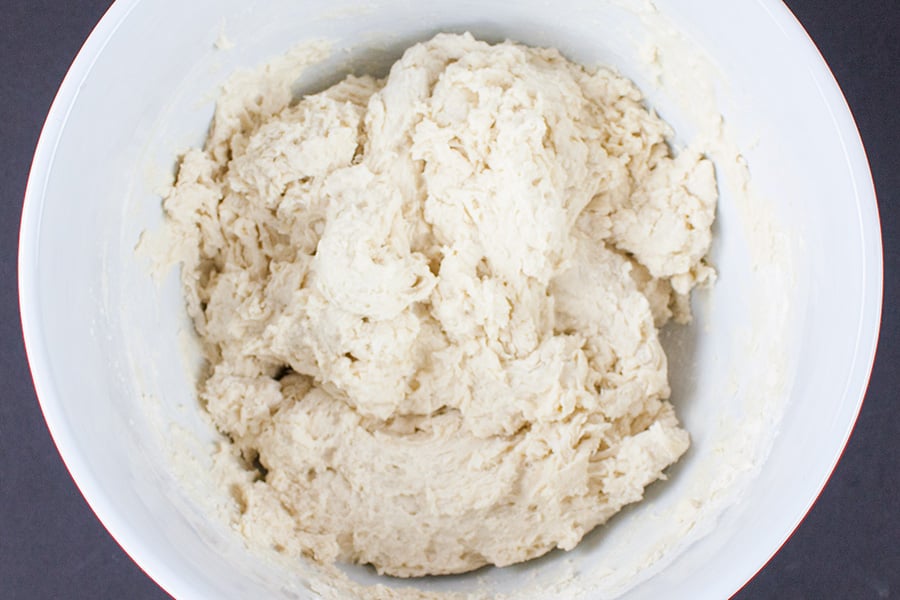
In a very large mixing bowl, combine the six cups of bread flour (or all-purpose flour if preferred), the 2 1/2 teaspoons of salt, and the 1/2 teaspoon of instant or active dry yeast. Use a whisk or a fork to thoroughly combine these dry ingredients, ensuring the yeast and salt are evenly distributed throughout the flour. Next, pour in the 2 2/3 cups of cool water. Using a sturdy wooden spoon or a strong spatula, stir the ingredients together until all the flour is fully incorporated and you have a wet, shaggy, and very sticky dough. There’s absolutely no need for kneading here; just make sure there are no dry pockets of flour left at the bottom of the bowl. This high hydration (wetness) is fundamental to the bread’s characteristic airy texture and open crumb.
2. The Long Rest: Letting Time Work Its Magic (First Fermentation)
Once your dough is mixed, cover the bowl tightly with plastic wrap. This is crucial for preventing the dough from drying out and maintaining a humid environment, which is ideal for fermentation. Let the dough rest undisturbed on your kitchen counter at room temperature for an extended period, typically between 12 to 18 hours. This prolonged rest, known as bulk fermentation, is where the true magic of no-knead bread happens. The yeast slowly works its way through the dough, developing deep, complex flavors, strengthening the gluten network, and producing those tell-tale bubbles that define artisan bread. An ideal room temperature is usually between 68-72°F (20-22°C). If your kitchen tends to be warmer, aim for the shorter end of the resting time; if it’s cooler, you might need to lean towards the longer end to ensure proper fermentation.
3. Checking the Dough: Signs of Readiness Post-Fermentation
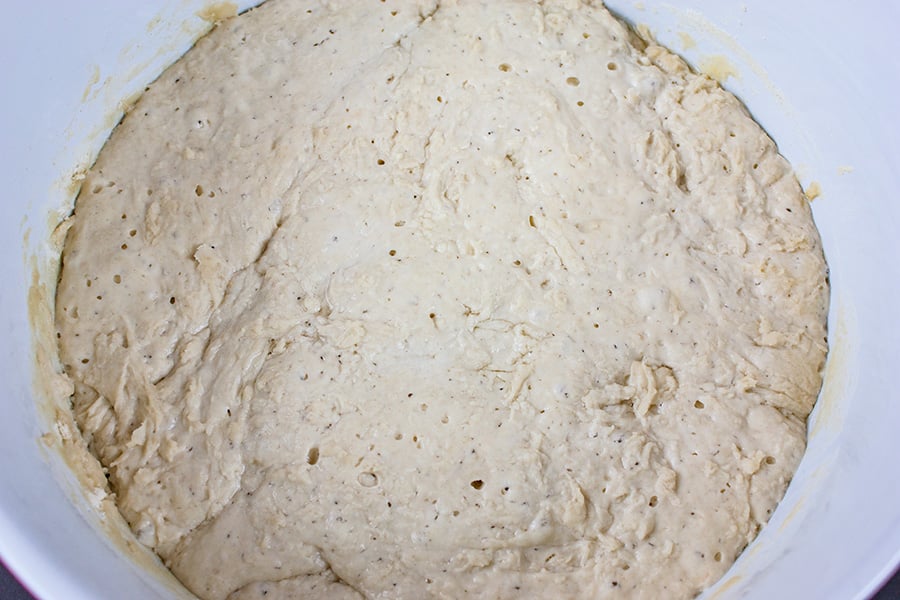
After its extended resting period, your dough should look and smell noticeably different. It will have expanded significantly, often doubling in size, and will possess a distinctively yeasty aroma. Its surface will be covered with numerous small bubbles, and the color might have darkened slightly. These are all clear indicators that the yeast has been highly active, and the dough is fully fermented and perfectly ready for the next step: shaping. Don’t be alarmed if the dough still appears incredibly wet and sticky; this is exactly the desired consistency for a wonderfully airy crumb. Resist the urge to add more flour at this stage, as it can make the bread dense.
4. Shaping the Loaf: A Gentle Touch is Key
When you’re prepared to proceed with baking, generously flour your hands and your work surface. The dough will indeed be very sticky, so don’t hesitate to use a good amount of flour to prevent it from adhering everywhere. Gently scrape the risen dough out of the bowl and onto your amply floured surface. Sprinkle a bit more flour over the top of the dough. Now, perform a simple but effective folding technique: gently fold the edges of the dough over onto itself once or twice, bringing the sides towards the center. Then, using your floured hands, carefully tuck the edges underneath to form the dough into a rough, round ball or boule shape. The primary goal here is to create some surface tension on the outside of the dough without excessively deflating the air pockets that have formed.
5. Second Rise (Proofing): The Final Ascent
To prepare for the second rise, also known as proofing, lay a large rectangle sheet of parchment paper on a clean cotton towel. Generously dust the parchment paper with enough flour to ensure the dough won’t stick to it as it rises. Carefully transfer your newly shaped dough, seam-side down, onto the floured parchment paper. Dust the top of the dough with a little more flour. To help the loaf maintain its beautiful round shape during this final rise, gently pull the corners of the parchment paper up and around the loaf, wrapping it loosely. Then, use the cotton towel to gently wrap the parchment-enclosed dough, providing additional support. Let it rise for approximately 2 hours, or until it has visibly doubled in size and feels wonderfully light and airy. This step is crucial for achieving a light interior texture.
6. Preheat Oven & Dutch Oven: The Crucible of Crust
About 1 1/2 hours into the second rise (or roughly 30 minutes before the dough is expected to finish proofing), preheat your oven to a blazing 425 degrees Fahrenheit (220°C). This high temperature is absolutely crucial for the success of your no-knead bread. While the oven heats, place your empty, oven-safe cast iron Dutch oven with its lid inside. Allowing the Dutch oven to preheat thoroughly with the oven is paramount. A super-hot Dutch oven will instantly create an intense burst of steam when the dough is added – this rapid expansion is what bakers call “oven spring” – which is key to achieving maximum rise and that wonderfully crusty exterior. Be sure to use heavy-duty oven mitts when handling the extremely hot Dutch oven.
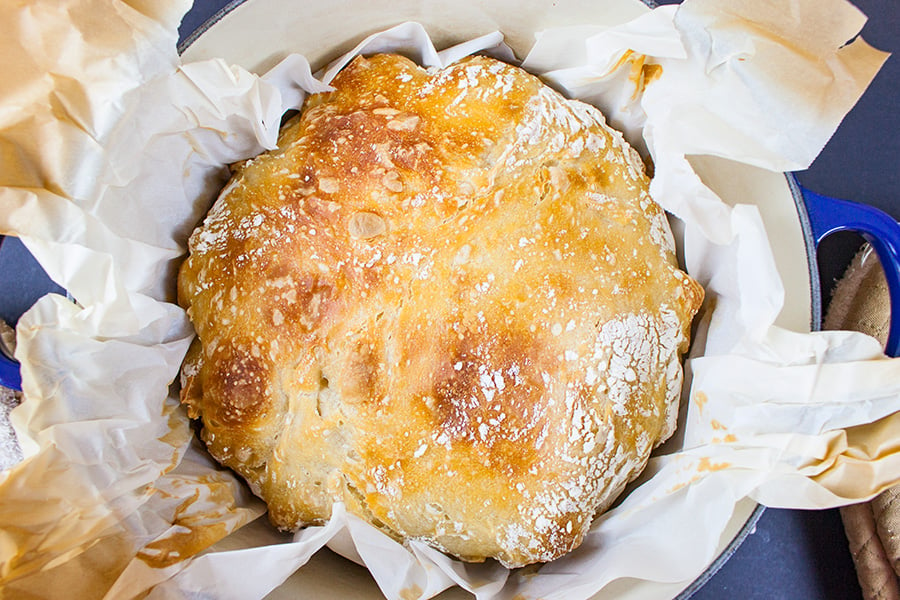
7. Baking the Bread: The Two-Stage Transformation
Once your dough has fully risen and your oven and Dutch oven are piping hot, carefully pull out the Dutch oven using reliable oven mitts. Immediately remove the lid. Unwrap the towel and parchment paper from around the dough. Gently lift the parchment paper, with the shaped dough nestled inside, and carefully lower it into the scorching hot Dutch oven. Don’t worry if it looks a little uneven; it will settle and straighten out as it bakes. Promptly cover the Dutch oven with its lid and carefully return it to the preheated oven.
Bake for 40 minutes with the lid on. During this covered stage, the trapped steam will work its magic, allowing the bread to expand beautifully and develop an incredible chewiness. After 40 minutes, carefully remove the lid. Continue baking for an additional 10-15 minutes, or until the crust achieves a deep, rich golden-brown color. To confirm doneness, the internal temperature of the bread, when checked with an instant-read thermometer, should register between 200-210 degrees Fahrenheit (93-99°C). Remember that baking times can vary slightly depending on your specific oven, so monitor it closely during the final uncovered stage to prevent over-browning.
8. Cooling and Enjoying: The Final (Hardest) Step
When your magnificent bread is done, carefully use the parchment paper as convenient handles to lift the glorious loaf out of the scorching hot Dutch oven. Transfer it immediately to a wire rack to cool. This step is absolutely essential for the bread’s final texture! While it’s incredibly tempting to slice into a warm loaf due to the enticing aroma, letting it cool completely (or at least for a good hour) allows the internal structure to set properly. Cutting into it too early can result in a gummy texture. However, we understand the irresistible allure of freshly baked bread. If you simply can’t resist a warm slice, go ahead – just be prepared for a slightly denser crumb. A generous slather of butter on that still-warm, crusty slice is, without a doubt, pure perfection and worth every moment of waiting.
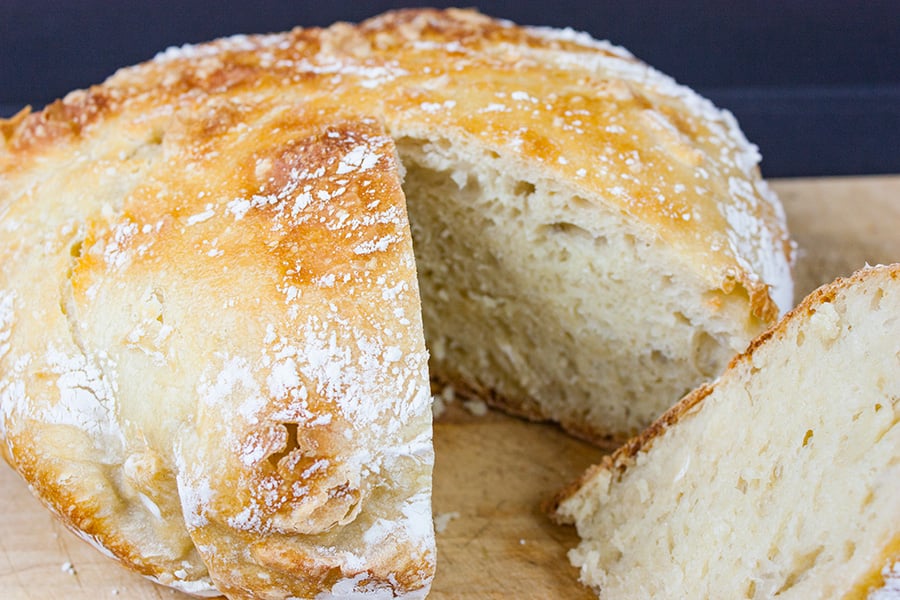
This no-knead large Dutch oven bread boasts a spectacularly crusty exterior that beautifully yields to a wonderfully airy and slightly chewy interior. It’s a testament to simple elegance, proving that incredible, homemade artisan bread doesn’t require a baker’s degree or hours of toil. Enjoy your homemade masterpiece, share it with loved ones, or simply savor it yourself!
Tips for Success & Troubleshooting Your No-Knead Bread
- Dough Too Sticky? No-knead dough is designed to be highly hydrated and inherently wet. If it feels excessively sticky during shaping, don’t be tempted to add extra flour during the initial mix. When it comes time to shape, simply use more flour on your hands and generously dust your work surface to prevent sticking. A bench scraper can also be a helpful tool for handling sticky dough.
- Dough Not Rising? The most common culprit for a lack of rise is inactive yeast. Always ensure your yeast is fresh by checking the expiration date. Also, extreme cold can significantly inhibit yeast activity. If your kitchen is very cold, try placing the covered dough bowl in a slightly warmer spot, such as inside an unheated oven with just the oven light on, or near a warm (but not hot) appliance.
- Can I Use Other Flours? While bread flour is highly recommended for its protein content and gluten development, you can certainly experiment with proportions of other flours. For instance, you could substitute up to 2 cups of whole wheat flour for some of the bread flour. However, be aware that whole wheat or rye flours absorb more water, so you may need to make slight adjustments to the liquid content to maintain the desired wetness and dough consistency.
- How to Store Leftovers? Once your magnificent loaf has completely cooled, store the bread in a resealable airtight bag or an airtight container at room temperature. It will stay fresh and delicious for up to 2 days. For longer-term storage, follow the freezing instructions below.
- Freezing for Later: For extended storage, first ensure the bread is entirely cooled. Then, you can either freeze the whole loaf or slice it first (which is often more convenient for individual servings). Place the bread in a freezer-safe bag or container, removing as much air as possible, and it can be stored for up to 2 months. You can toast individual slices directly from frozen for a quick treat.
- Optional Flavor Add-Ins: Get creative and personalize your loaf! Before the second rise, gently fold in ingredients like shredded Parmesan cheese, fresh rosemary or thyme, finely minced roasted garlic, chopped sun-dried tomatoes, or pitted and chopped olives. Experiment with what you love to create unique artisan bread variations.
Frequently Asked Questions About No-Knead Dutch Oven Bread
1. Can I shorten the first rise time?
While you can, it’s not recommended for achieving the optimal flavor development and crumb structure. The long fermentation (12-18 hours) is precisely what gives no-knead bread its characteristic complex taste and airy texture. Shortening it might result in a less flavorful loaf with a denser crumb. Patience is a virtue when it comes to this recipe!
2. What if I don’t have parchment paper? Is it essential?
Parchment paper makes transferring the sticky dough safely and easily into the scorching hot Dutch oven. It also helps in maintaining the loaf’s shape. If you absolutely don’t have it, you can generously flour the bottom of your preheated Dutch oven, but be extremely careful when adding the dough directly, as it can be quite tricky to handle without parchment. Using a well-floured clean kitchen towel to cradle the dough during its second rise, then quickly inverting it into the hot pot, can be another alternative, but parchment is generally preferred for ease and safety.
3. My bread turned out flat, what could have gone wrong?
Several factors could contribute to a flatter loaf: your yeast might not have been active or fresh, the dough might have over-proofed (meaning the second rise was too long, especially in a very warm environment, causing the gluten structure to collapse), or the Dutch oven might not have been hot enough, leading to insufficient “oven spring.” Always ensure your yeast is fresh and that your Dutch oven is thoroughly preheated for at least 30 minutes in the oven.
4. Can I use a different pot if I don’t have a Dutch oven?
A heavy cast-iron Dutch oven is ideal due to its superior heat retention and its ability to trap steam efficiently. However, any heavy, oven-safe pot with a tight-fitting lid that can withstand high temperatures (like a ceramic baking pot or even an inverted metal bowl over a heavy baking sheet to simulate the lid) can work as an alternative. Just ensure it can safely handle the 425°F (220°C) baking temperature. The key is to create that steamy, enclosed environment.
Other Delicious Bread Recipes to Explore
Easy Homemade Crescent Rolls
Italian Bread Recipe
Sourdough Bread Recipe
Pin This Recipe for Later!
If you loved this detailed guide and are excited to try (or re-try) this amazing no-knead large Dutch oven bread, don’t forget to save it! Pin this recipe to one of your Pinterest boards for easy access whenever that craving for homemade artisan bread strikes. Just click the button below to add it!
No-Knead Large Dutch Oven Bread Recipe
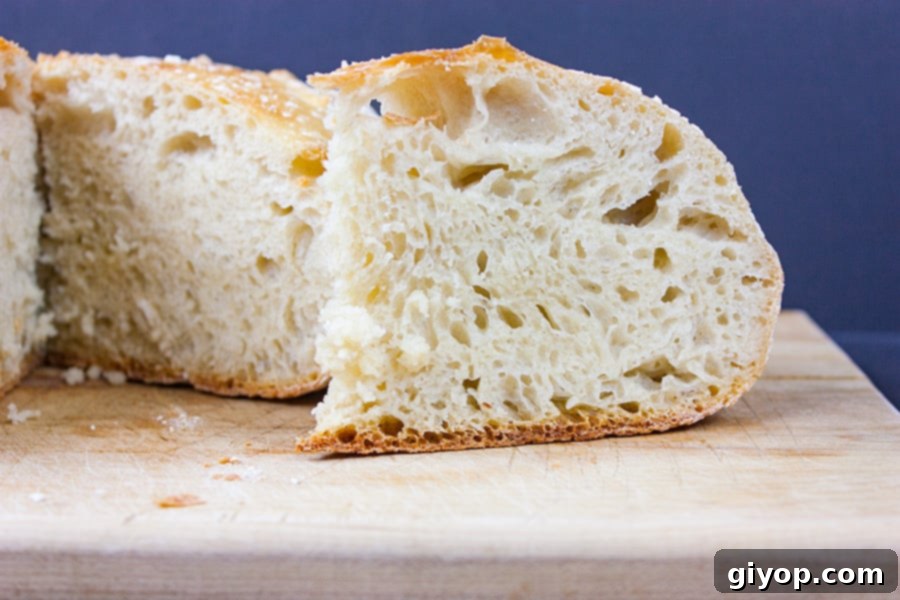
This No-Knead Large Dutch Oven Bread recipe is specifically designed for 5-6 quart Dutch ovens, ensuring your loaf rises tall, develops an incredible crispy crust, and boasts a wonderfully chewy interior. It’s truly crazy good and incredibly easy to make!
Recipe Details
- Course: Bread
- Cuisine: American
- Prep Time: 14 hours 20 minutes (includes initial dough rest time)
- Cook Time: 40-55 minutes
- Total Time: Approximately 15 hours
- Servings: 12 slices
- Calories: 227 kcal per serving
- Author: Don’t Sweat The Recipe
Ingredients
- 6 cups bread flour (recommended, or all-purpose flour, plus more for work surface)
- 1/2 teaspoon instant or active dry yeast
- 2 1/2 teaspoons salt
- 2 2/3 cups cool water
Instructions
- In a large bowl, combine the flour, yeast, and salt. Add the water and stir with a wooden spoon or spatula until all the ingredients are well incorporated; the dough should be wet and sticky. Cover the bowl tightly with plastic wrap. Let the dough rest for 12 to 18 hours on the counter at room temperature. When ready, the surface of the risen dough will have darkened slightly, smell yeasty, and be dotted with small bubbles.
- Generously flour your hands and a clean work surface. Carefully scrape the dough onto the floured surface and sprinkle with more flour. Fold the dough over on itself once or twice, then, using your floured hands, gently tuck the dough underneath to shape it into a rough ball.
- Place a large rectangle sheet of parchment paper on a clean cotton towel and dust it generously with flour to prevent the dough from sticking as it rises. Carefully place the shaped dough, seam side down, onto the floured parchment paper and dust the top with more flour. Gently pull the corners of the parchment paper around the loaf, wrapping it completely to help maintain a round shape. Do the same with the towel. Allow the dough to rise for about 2 hours, or until it has visibly doubled in size.
- After about 1 1/2 hours into the second rise, preheat your oven to 425 degrees Fahrenheit (220°C). Place your empty 6-8 quart heavy covered pot, such as a cast-iron Dutch oven, into the oven as it heats to ensure it is thoroughly preheated. Once the dough has fully risen, carefully remove the very hot pot from the oven. Unwrap the towel and parchment paper from around the dough, then carefully lift the parchment (with the dough) and gently lower it into the hot Dutch oven.
- Promptly cover the Dutch oven with its lid and place it back into the preheated oven. Bake for 40 minutes. After 40 minutes, carefully remove the lid. Continue baking for an additional 10-15 minutes, or until the crust is a deep golden brown. The internal temperature of the bread, when checked with an instant-read thermometer, should be around 200-210 degrees Fahrenheit (93-99°C).
- When done, carefully use the parchment paper as handles to remove the loaf of bread from the pot and transfer it to a wire rack to cool completely before slicing. While tempting, allowing it to cool fully helps set the crumb and prevents a gummy texture.
Notes & Tips
- Parchment Paper Alternative: While the recipe suggests using a kitchen towel with parchment, I often simplify this step by using only parchment paper. I’ve found that tying the top of the parchment loosely with a rubber band can effectively help hold the loaf’s round shape during the second rise, if you prefer not to use a towel.
- Optional Flavor Add-Ins: Unleash your creativity! During the initial mixing step, consider incorporating delicious additions such as grated Parmesan cheese, finely chopped fresh herbs like rosemary or thyme, roasted garlic cloves, or sun-dried tomatoes for an extra layer of flavor in your artisan loaf.
- Storing Your Fresh Bread: To keep your homemade bread at its best, ensure it has completely cooled before storing. Place the entire loaf in a resealable airtight bag or an airtight container. It will remain fresh and delicious at room temperature for up to 2 days.
- Freezing for Future Enjoyment: For longer preservation, once your bread is fully cooled, you can freeze it. Wrap the whole loaf or individual slices in plastic wrap, then place them in a freezer-safe bag or container. It can be stored in the freezer for up to 2 months. Thaw slices at room temperature or toast directly from frozen for a warm, quick treat.
Nutrition Information (per serving)
- Calories: 227 kcal
- Carbohydrates: 46g
- Protein: 8g
- Fat: 1g
- Saturated Fat: 1g
- Sodium: 489mg
- Potassium: 67mg
- Fiber: 2g
- Sugar: 1g
- Calcium: 11mg
- Iron: 1mg