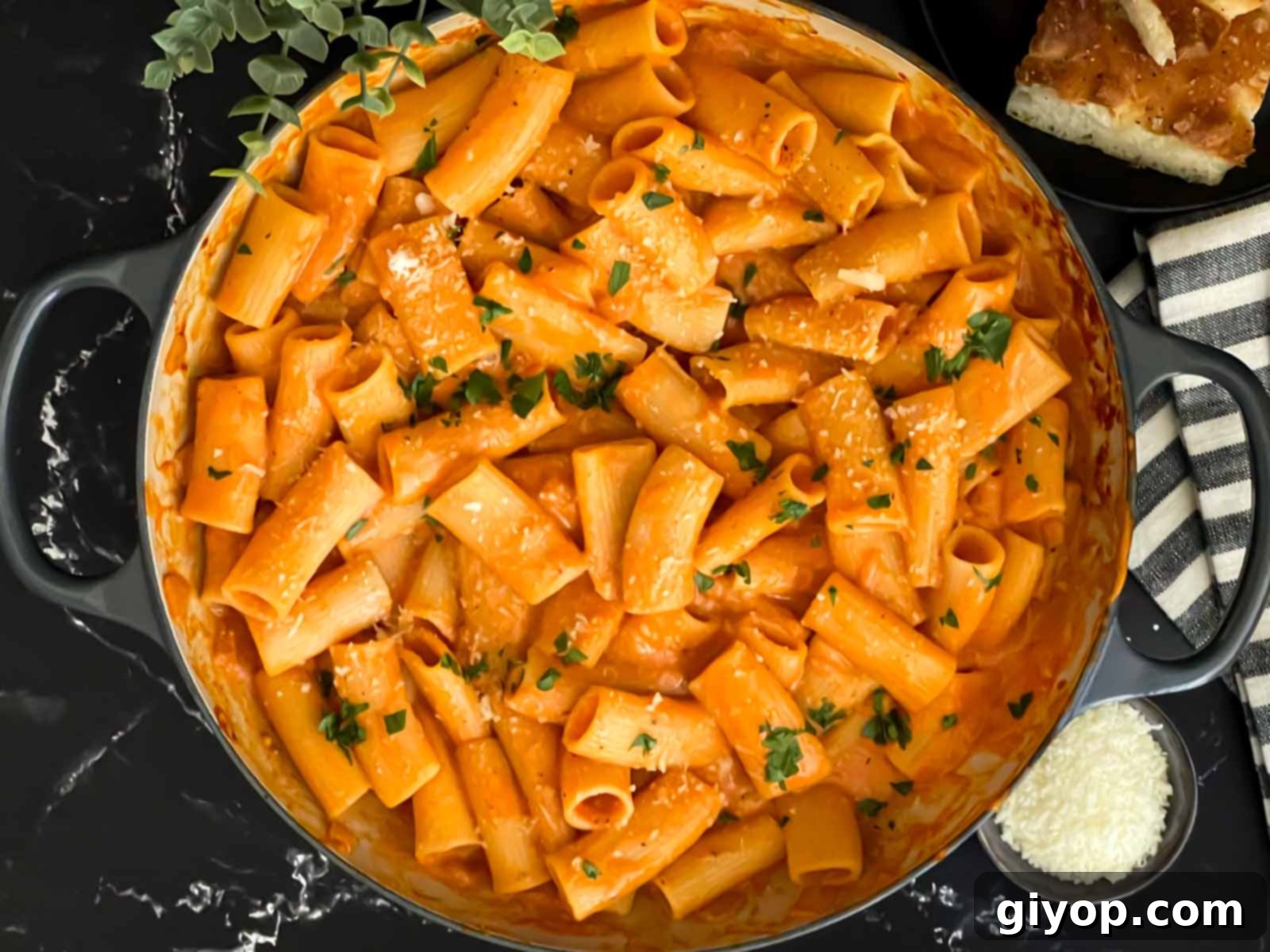
Classic Pasta alla Vodka: A Creamy & Flavorful Italian Delight
Indulge in the rich, creamy, and irresistibly flavorful experience of classic Pasta alla Vodka. This iconic dish, known for its velvety tomato sauce infused with a hint of vodka, offers a perfect balance of sophistication and comfort. Whether you’re planning a special dinner or simply craving an elevated weeknight meal, this recipe promises an unforgettable culinary journey that will impress everyone at your table.
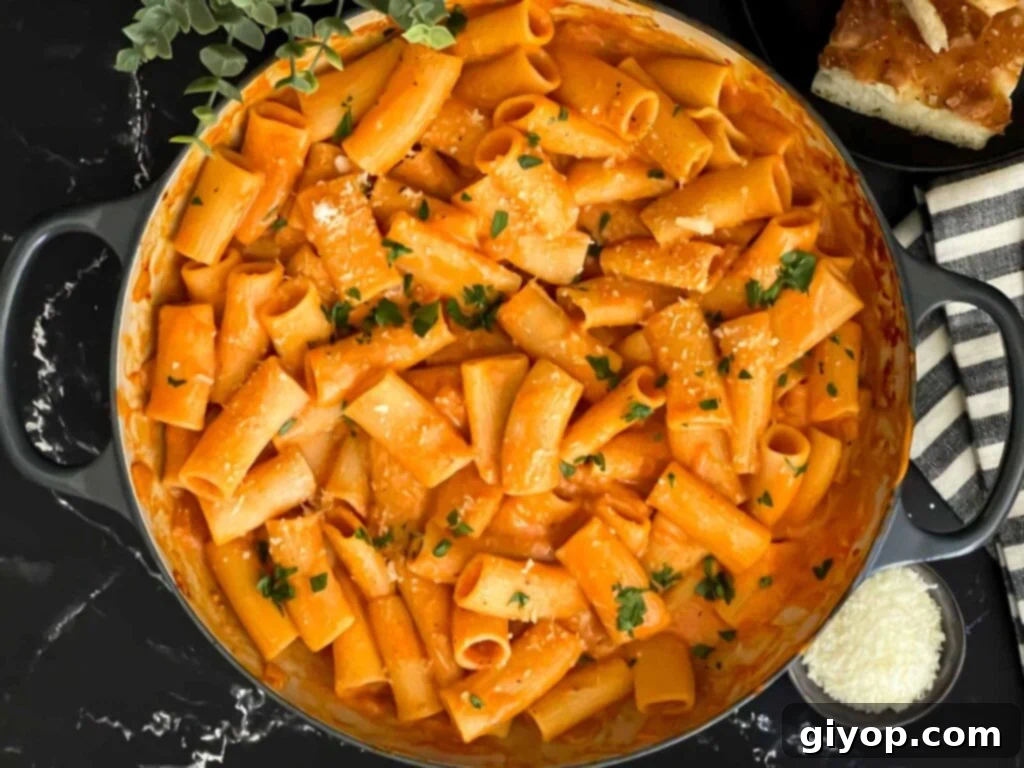
Why You Will Love This Timeless Recipe
Pasta alla Vodka holds a special place in the hearts of pasta lovers for myriad reasons. It effortlessly strikes a delightful balance, offering a dish that’s both straightforward to prepare and indulgently luxurious. This makes it a fantastic choice for any occasion – from impressing dinner guests with your culinary prowess to treating yourself to a deeply satisfying, comforting meal at home.
The magic of this dish lies in its exquisite flavor profile. The carefully selected ingredients blend together in a harmonious symphony, where the subtle addition of vodka plays a crucial role. Far from being a dominant flavor, the vodka acts as a catalyst, enhancing the aromatic compounds of the tomato sauce and preventing the cream from separating, resulting in a remarkably smooth and stable emulsion. This process creates a sauce that is velvety, robust, and beautifully clings to every strand of pasta. The result is an easy yet elegant dish that consistently delivers on taste and texture.
Its versatility is another key factor in its widespread appeal. Pasta alla Vodka is hearty enough to be the star of a celebratory feast, yet quick and simple enough to become a staple in your casual weeknight dinner rotation. It’s a dish that transcends occasions, always bringing a touch of Italian-American charm to the table. The combination of rich tomato, savory aromatics, a touch of spice, and decadent cream creates a depth of flavor that is truly satisfying.
To perfectly complement this creamy masterpiece, consider pairing it with some freshly baked bread. Our Easy No-Knead Overnight Focaccia Bread or our classic Italian Bread Recipe are excellent choices for soaking up every last drop of the delectable sauce. For a refreshing counterpoint, a crisp salad works wonders. Try our Fresh Tomato Mozzarella Salad or a vibrant Arugula Fennel Salad to complete your authentic Italian dining experience.
Essential Ingredients for the Perfect Vodka Sauce
Crafting an exceptional Pasta alla Vodka begins with a selection of fresh, high-quality ingredients. While the ingredient list might seem modest, each component plays a vital role in building the dish’s signature depth and creaminess. The biggest decision you’ll likely face is choosing your preferred pasta shape, as the sauce is wonderfully adaptable. Beyond that, standard pantry staples are all you need to bring this culinary gem to life. For precise measurements and a detailed list, please refer to the recipe card below.
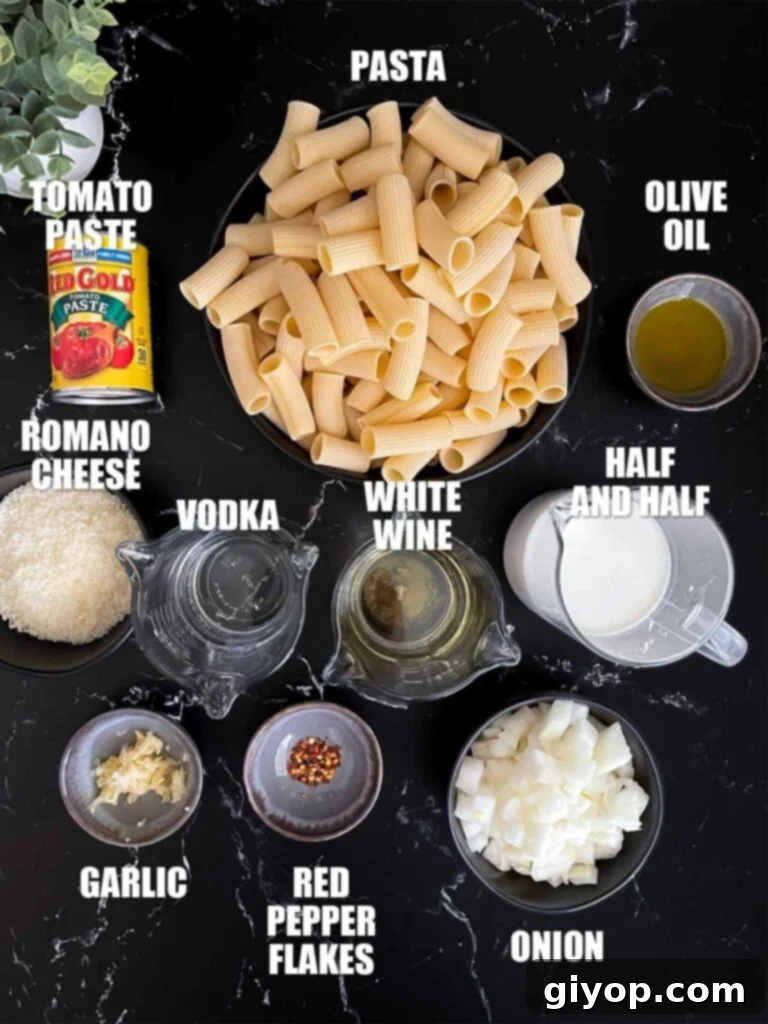
Here’s a closer look at the key players:
- Pasta: While penne is the traditional choice due to its ability to capture the sauce in its ridges and hollows, other shapes like rigatoni, fusilli, or even spaghetti can work beautifully. Choose a quality pasta that holds up well to a creamy sauce.
- Pecorino Romano Cheese: This sharp, salty Italian sheep’s milk cheese adds a distinctive savory punch and helps emulsify the sauce, giving it body and flavor. Don’t skimp on quality for this one!
- Onion & Garlic: The aromatic foundation of almost any great Italian sauce. Diced onions, sautéed until soft and lightly caramelized, provide sweetness, while minced garlic adds its undeniable pungent depth.
- Olive Oil: The fat base for sautéing the aromatics. Use a good quality extra virgin olive oil for best flavor.
- Tomato Paste: The backbone of the sauce’s tomato flavor. Cooking it thoroughly until it darkens slightly deepens its flavor, removing any raw acidity and creating a rich, concentrated tomato essence.
- Half and Half (or Heavy Cream): This is where the “creamy” in “creamy vodka sauce” comes from. Half and half offers a lighter touch, while heavy cream creates a more decadent and luxurious sauce.
- Vodka: The star ingredient that makes this dish unique. The alcohol evaporates during cooking, leaving behind subtle flavor compounds that enhance the tomato and cream, creating a smoother, more complex sauce. It also helps to emulsify the fat and water components of the sauce.
- White Wine: Adds another layer of acidity and complexity, deglazing the pan and contributing to the sauce’s depth. Choose a dry white wine like Pinot Grigio or Sauvignon Blanc.
- Red Pepper Flakes: For a gentle kick of heat that balances the richness of the cream. Adjust to your preference.
- Ground Nutmeg: A secret ingredient for many creamy sauces, a tiny pinch of nutmeg complements dairy beautifully, adding warmth and a subtle, sophisticated aroma without being overpowering.
- Reserved Pasta Water: Liquid gold! Starchy pasta water is essential for achieving the perfect sauce consistency, helping to bind the sauce to the pasta and create that coveted emulsified texture.
- Kosher Salt & Black Pepper: Fundamental seasonings to bring all the flavors into harmony. Always taste and adjust.
- Basil or Parsley: Fresh herbs for garnish, providing a bright, fresh finish and an appealing visual contrast.
Crafting Your Perfect Pasta alla Vodka: A Step-by-Step Guide
Making Pasta alla Vodka is a rewarding experience that yields restaurant-quality results in your own kitchen. Follow these detailed steps to create a sumptuous and perfectly balanced dish.
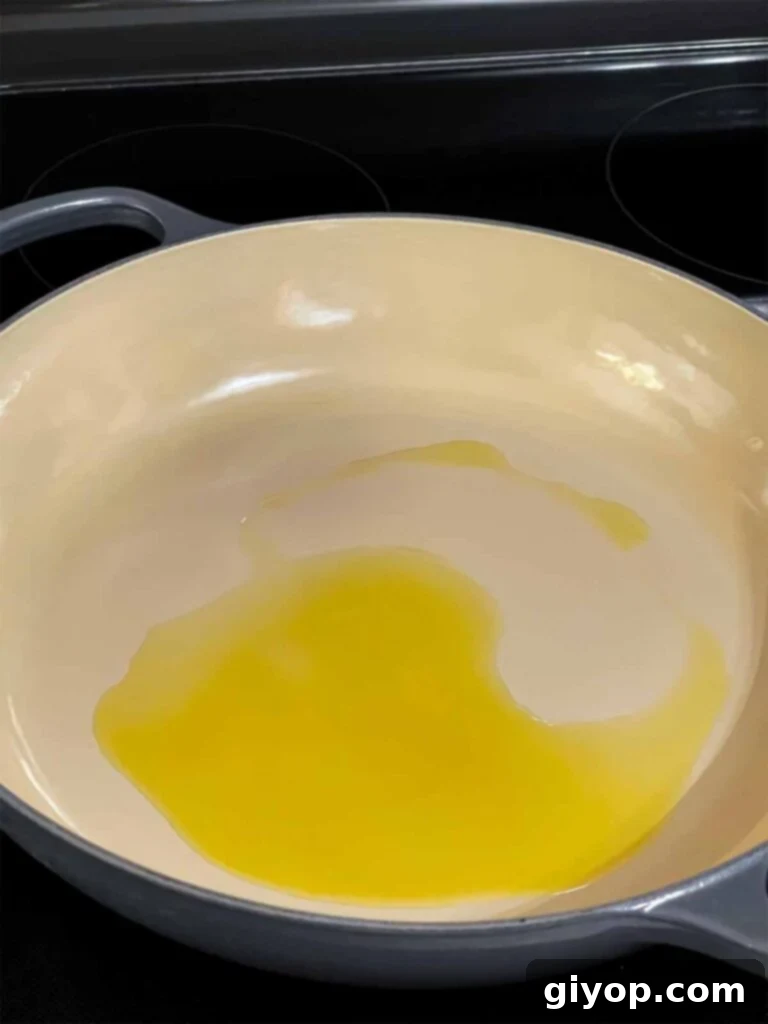
Prepare the Pasta Water and Start the Sauce: Begin by bringing a large pot of generously salted water to a rolling boil. The water should taste noticeably salty, similar to the ocean, as this is your first opportunity to season the pasta itself. While the water heats, add olive oil to a large, deep skillet or Dutch oven over medium to medium-low heat. This lower heat prevents burning and allows the aromatics to slowly release their flavors.

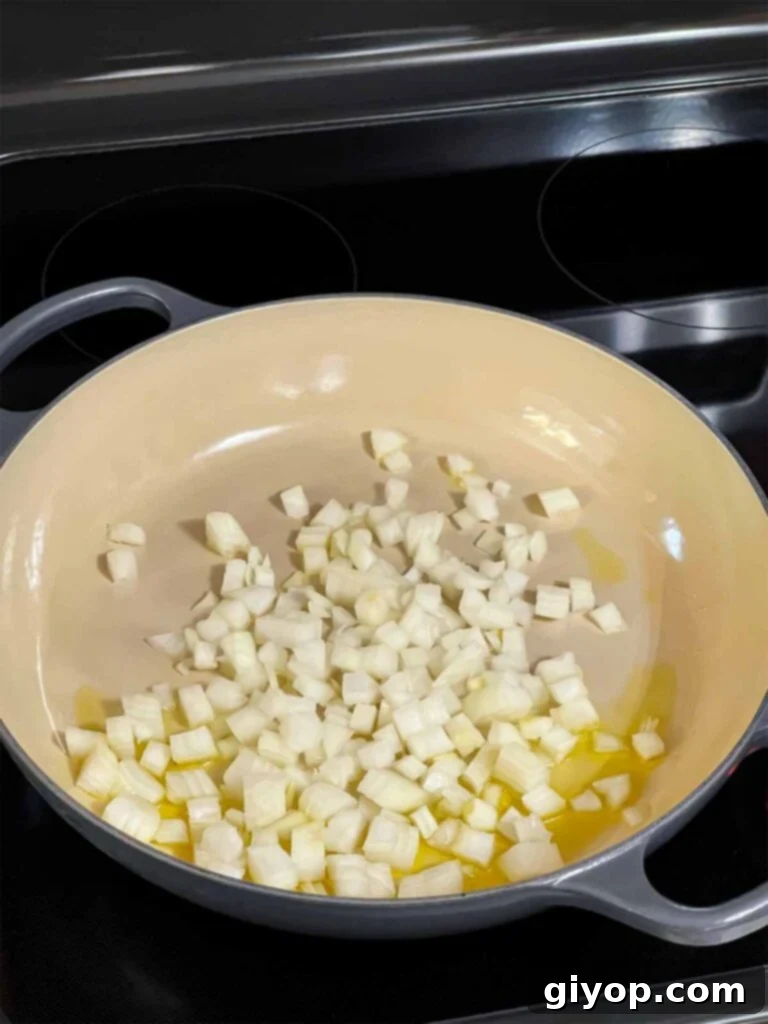
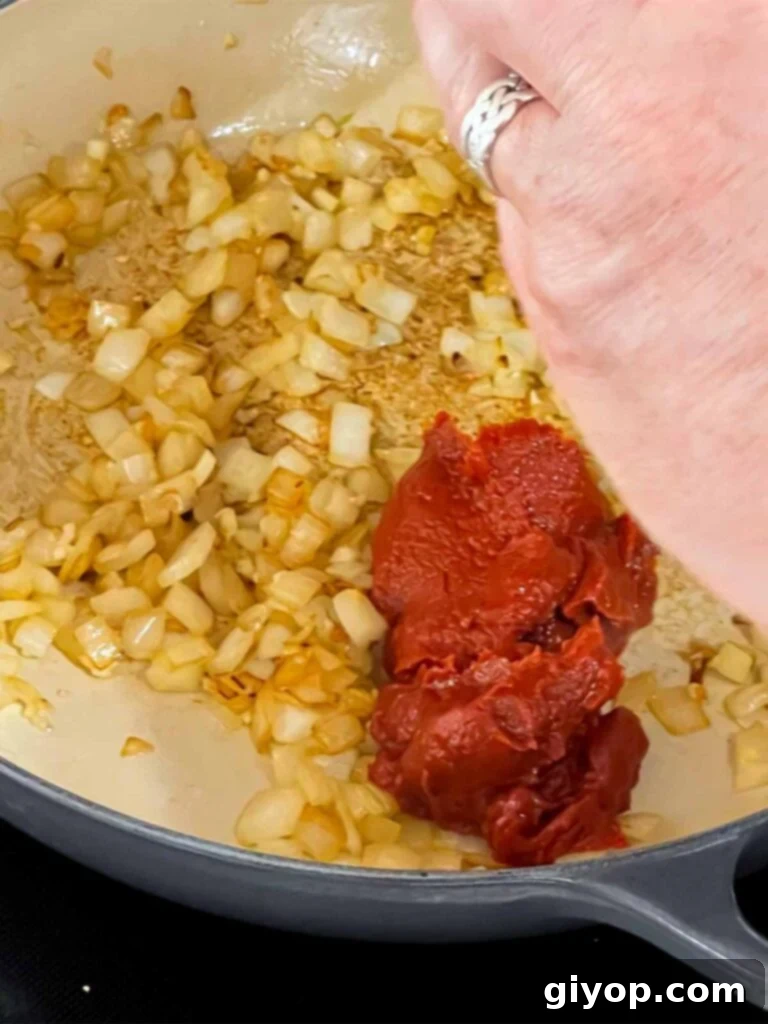
Ensure your pasta water is adequately salted for optimal flavor. Heating olive oil in a skillet to prepare the sauce base. Sauté Aromatics and Toast Tomato Paste: Add the diced onions to the heated olive oil and cook gently for approximately 6 minutes. Stir occasionally until they soften and begin to acquire a translucent, slightly golden color. Adjust the heat as needed to prevent burning, as burnt onions can impart bitterness. Next, add the minced garlic and cook for just about one minute, or until it becomes wonderfully fragrant. Be careful not to let the garlic brown. Then, stir in the tomato paste and red pepper flakes. Begin cooking your chosen pasta in the boiling water, aiming for one minute less than the package instructions for al dente.
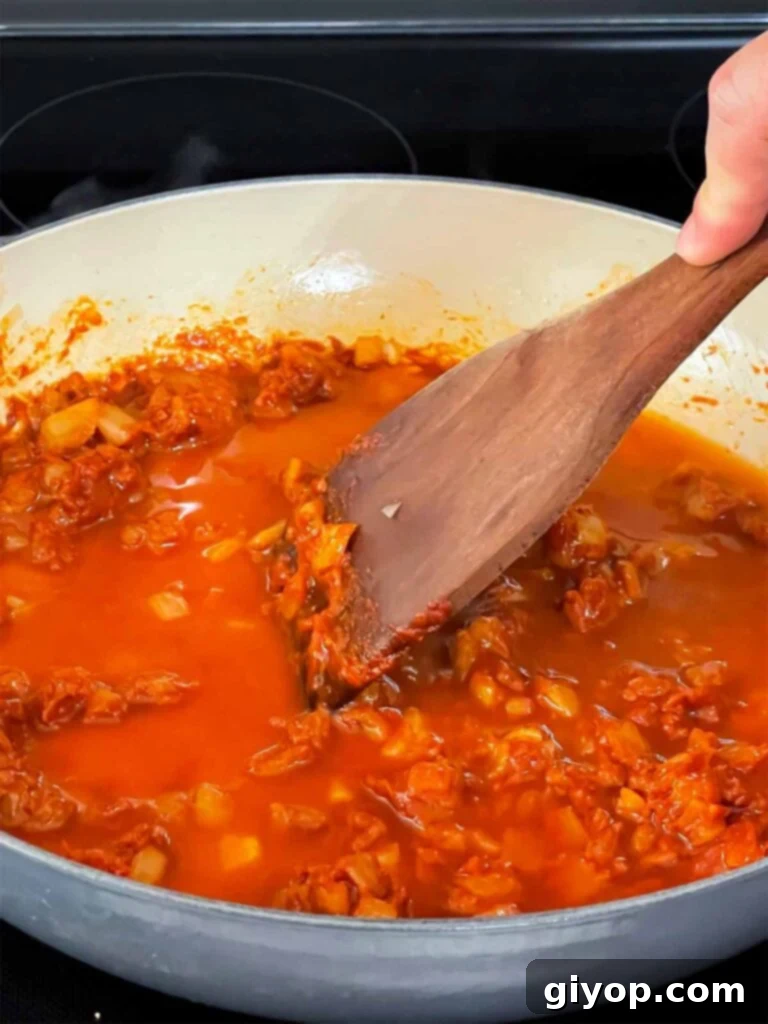
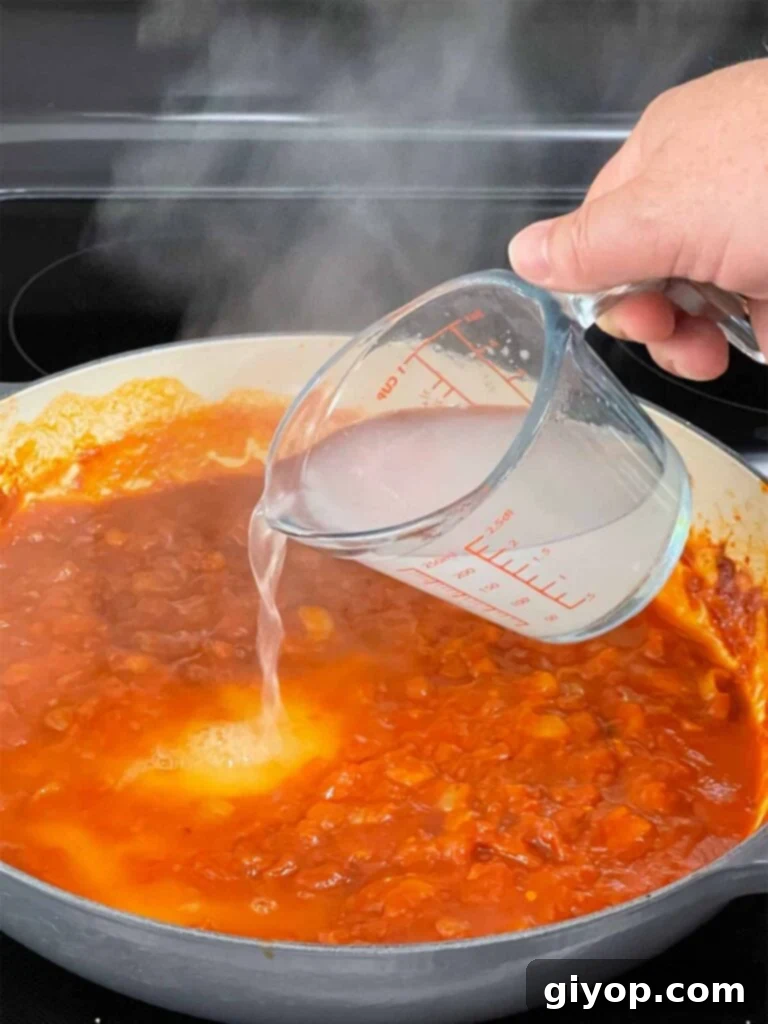
Sautéing onions until they are soft and slightly golden. Incorporating tomato paste to deepen the sauce’s flavor. Build the Vodka Sauce Base: Continue to cook the tomato paste for 5 minutes, stirring constantly. This crucial step toasts the paste, eliminating raw flavors and developing a deeper, richer tomato essence. Next, pour in the vodka and white wine. Increase the heat to high and bring the mixture to a vigorous boil, stirring well. Allow the sauce to reduce by approximately half. This process burns off the alcohol, leaving behind its complex flavors and concentrating the sauce. Add one cup of the reserved pasta water to the skillet, then reduce the heat to a gentle simmer.
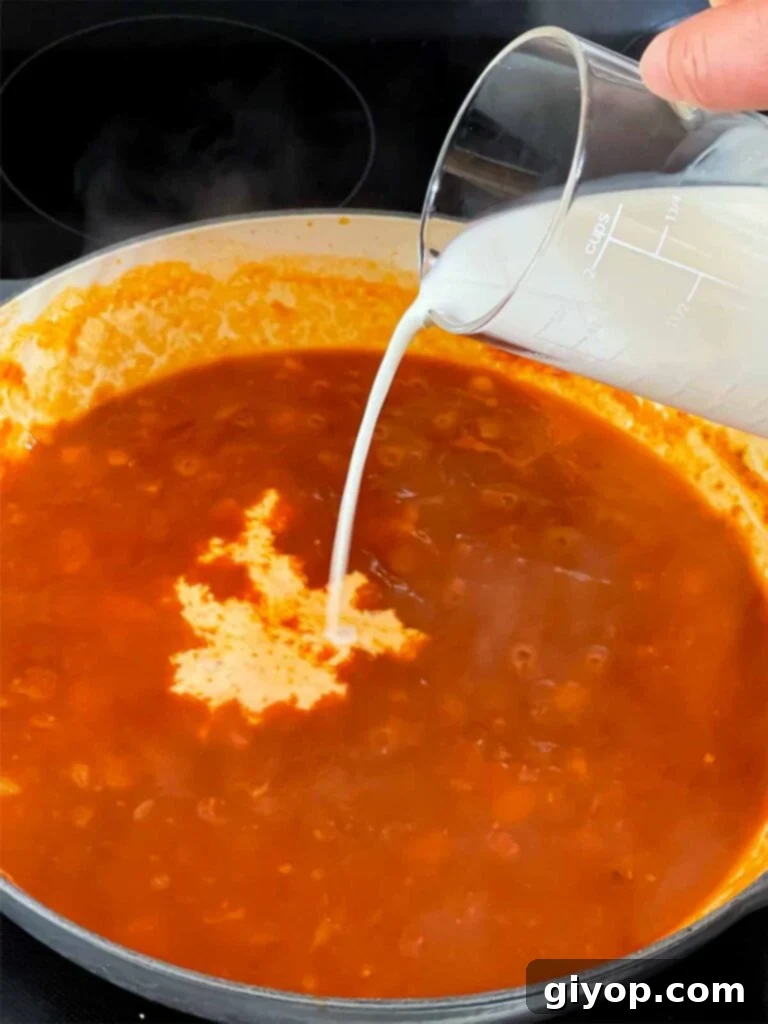
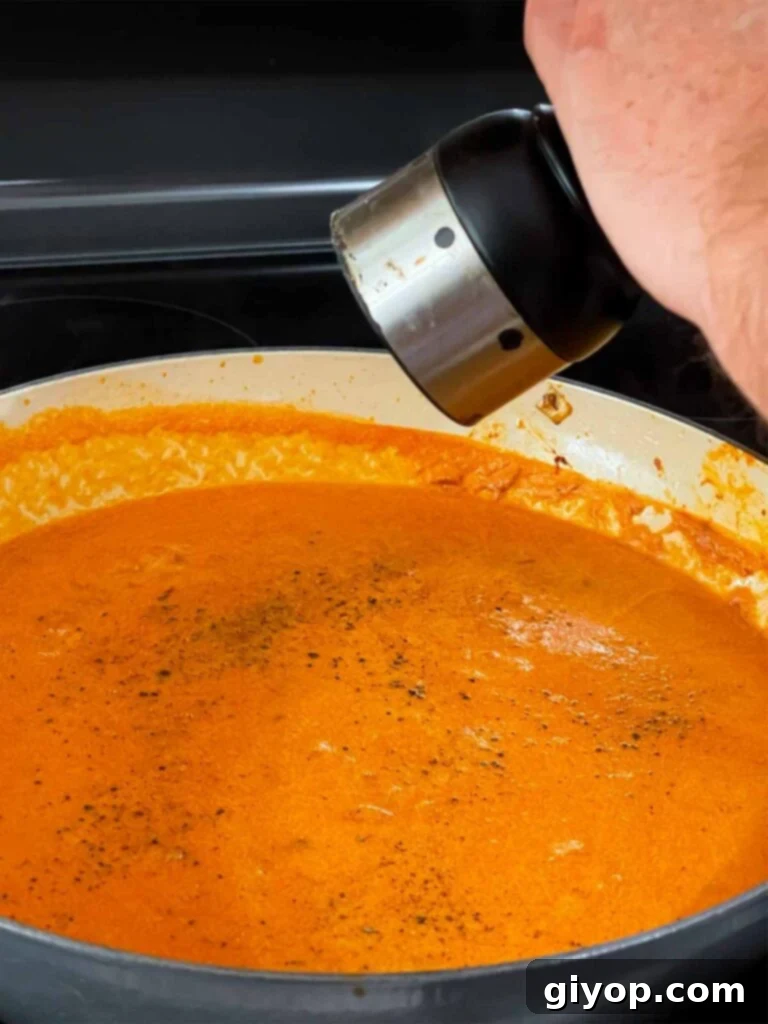
The vodka sauce simmering to reduce and concentrate its flavors. Pasta water helps emulsify the sauce to achieve a perfect consistency. Add Cream and Season: Pour in the half and half (or heavy cream for a richer sauce) and the ground nutmeg. Continue to simmer the sauce, mixing thoroughly to combine all ingredients. At this point, give the sauce a taste. Adjust the seasoning by adding kosher salt and black pepper according to your individual preferences. Remember that the Pecorino Romano cheese will also add saltiness, so season judiciously.
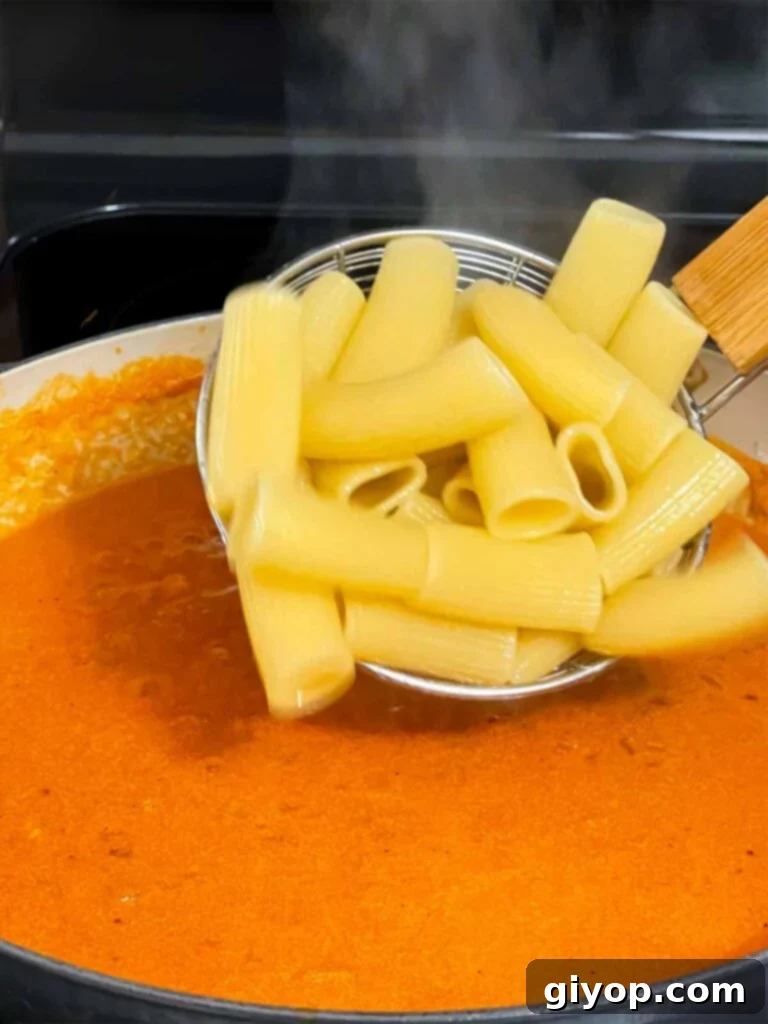
Pouring in the cream for that signature smooth and rich texture. Taste and adjust seasoning to achieve the perfect flavor balance. Combine with Pasta and Serve: Carefully transfer the slightly undercooked pasta directly into the saucepan with the simmering sauce. Mix thoroughly, tossing the pasta to ensure every piece is beautifully coated. Continue to cook, gently simmering, until the pasta reaches a perfect al dente texture. The pasta will absorb the flavors of the sauce as it finishes cooking. Remove from the heat, then stir in the Pecorino Romano cheese, mixing well until it’s fully combined and the sauce is luscious. Taste one final time and add any additional salt or pepper if desired. Optionally, garnish with fresh basil or parsley before serving immediately.
Tossing the pasta in the sauce to ensure every strand is coated. The final dish, perfectly cooked and ready to be enjoyed.
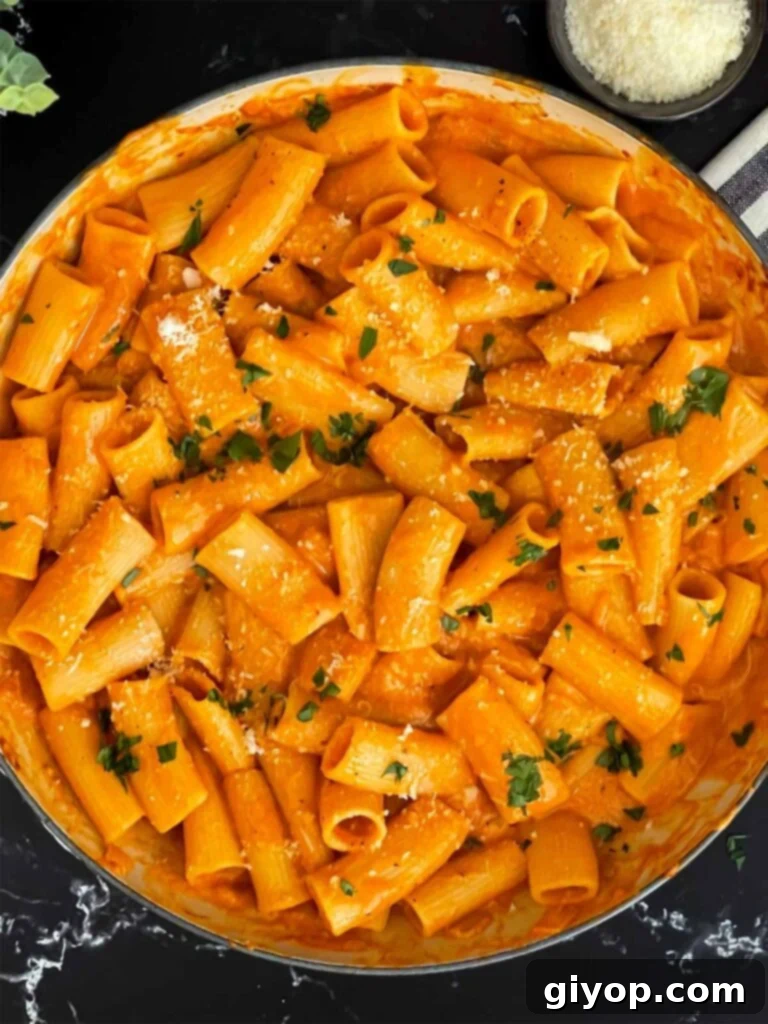
You’re going to absolutely love this classic Pasta alla Vodka recipe. Its harmonious blend of flavors and textures makes it a stellar choice for both busy weekday meals and elegant gatherings when guests come calling. Everyone is sure to praise this delightful and comforting Italian-American staple!
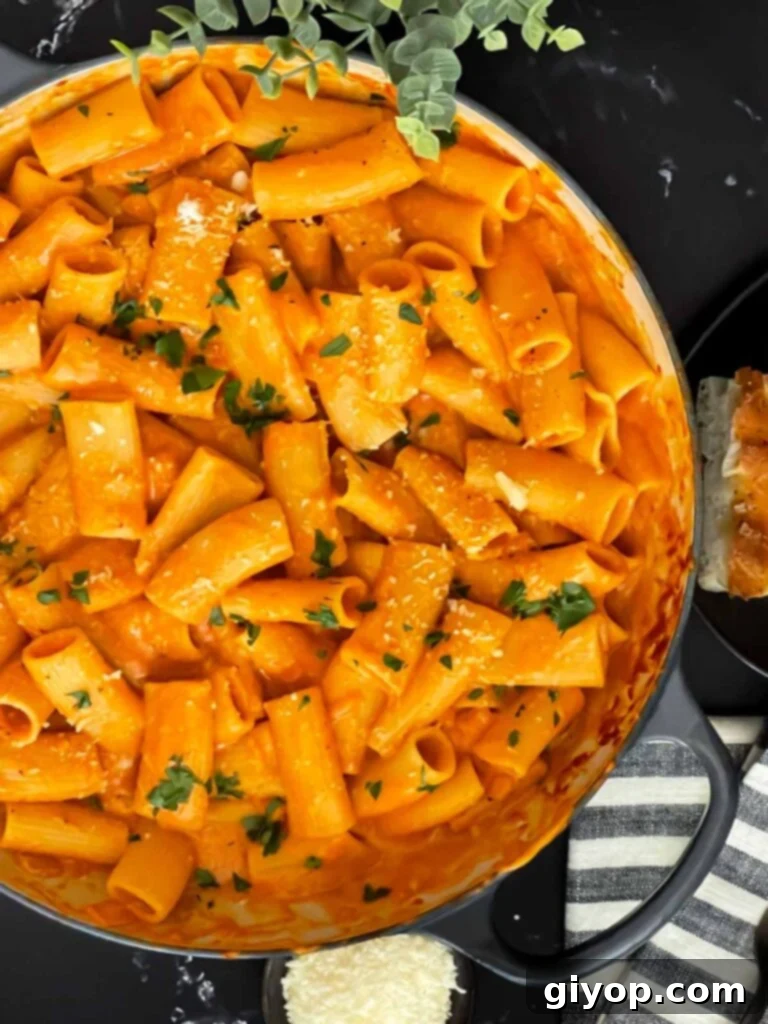
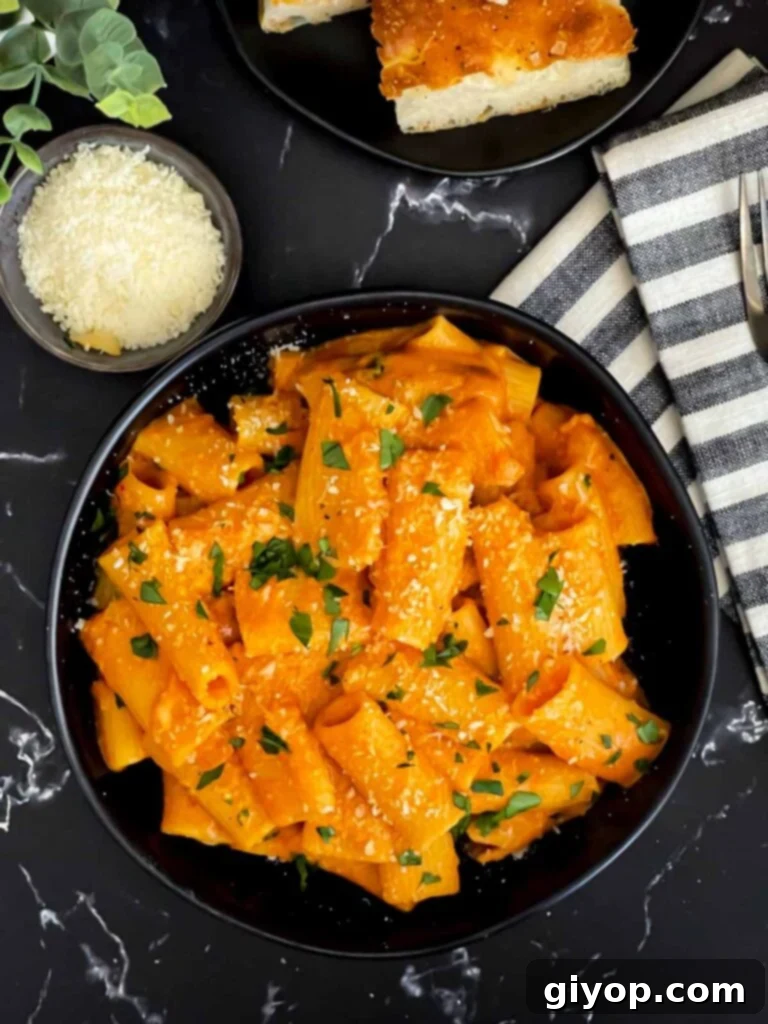
This recipe is also incredibly adaptable, allowing you to tailor it to your dietary needs or personal taste preferences. Don’t forget to check out the “Variations” section below for more creative ideas on how to modify this recipe to truly make it your own.
Expert Tips for the Best Pasta alla Vodka
Achieving restaurant-quality Pasta alla Vodka at home is easier than you think, especially with a few expert tips. These insights will help you master the technique and elevate your dish:
- Quality Ingredients Matter Immensely: In a dish with relatively few components, the quality of each ingredient truly shines. Opt for a good quality vodka, as its subtle notes will be present. Similarly, invest in a rich, concentrated tomato paste (not tomato sauce or crushed tomatoes) for the deepest umami flavor. Freshly grated Pecorino Romano makes a world of difference compared to pre-grated varieties.
- Mastering the Flame for Aromatics: Always keep the heat at a medium to medium-low setting when sautéing the garlic and onions. This gentle heat is crucial to prevent them from burning, which can introduce an unwanted bitter taste to your sauce. Instead, it allows them to slowly caramelize and release their sweet, aromatic compounds, building a flavorful foundation for your sauce.
- Achieving Perfect Pasta Texture: The secret to pasta that’s perfectly coated and not mushy is to cook it until it’s just before al dente in the boiling water. Remember, the pasta will continue to cook when it’s tossed with the hot sauce in the skillet, where it will absorb the incredible flavors and starches, creating a cohesive, well-emulsified dish.
- Reducing the Vodka for Optimal Flavor: Don’t rush the simmering process after adding the vodka and white wine. Allowing the alcohol to reduce sufficiently is key. This step not only cooks off the harsh alcohol taste but also concentrates the essential flavors, contributing to a richer, more complex, and balanced sauce. You want the vodka to leave behind its subtle aromatic notes, not an alcoholic kick.
- Consistent Stirring is Key for Tomato Paste: When cooking the tomato paste, continuous stirring is vital. This prevents it from sticking to the bottom of the pan and burning, ensuring an even toast. Toasting the tomato paste until it darkens slightly (but doesn’t burn) develops its sweetness and deepens its umami, making it the flavorful heart of your sauce.
- Taste and Adjust Seasoning: Always taste your sauce before serving. Seasoning is a personal preference, and a little extra salt, pepper, or even a touch more red pepper flakes can transform a good sauce into a great one. Remember that Pecorino Romano is quite salty, so adjust accordingly.
- Don’t Waste Pasta Water: Reserve at least 1-2 cups of the starchy pasta water. This cloudy, flavorful liquid is your best friend for adjusting the sauce’s consistency. It helps to emulsify the sauce, making it velvety smooth and ensuring it beautifully coats the pasta. Add it gradually until you reach your desired thickness.
Delicious Variations to Personalize Your Pasta alla Vodka
One of the joys of cooking Pasta alla Vodka is its incredible adaptability. While the classic recipe is perfect on its own, there are many ways to customize it to suit your tastes, dietary needs, or what you have on hand. Here are some inspiring variations to try:
- Protein Power-Ups: Elevate your meal by incorporating additional protein. Stir in succulent grilled chicken strips or perfectly sautéed shrimp during the final stages of cooking for a heartier, more complete dish. Italian sausage, crumbled and cooked, also makes a fantastic addition, adding a savory, spicy dimension.
- Luxuriously Richer Cream Sauce: For those special occasions when you crave an even more decadent and luxurious experience, substitute heavy cream for the half-and-half. Heavy cream will result in a thicker, profoundly richer sauce that clings to the pasta with an exquisite velvety texture. You could even stir in a spoonful of mascarpone cheese at the end for an added touch of indulgence.
- Vegan-Friendly Version: Enjoy a plant-based take on this classic by making a few simple swaps. Replace the half-and-half with full-fat coconut cream for a rich, creamy base. Be sure to skip the Pecorino Romano cheese, or opt for a high-quality plant-based parmesan alternative to achieve a similar savory profile.
- Ignite the Spice Factor: If you’re a fan of heat, don’t hesitate to spice things up! Increase the amount of red pepper flakes according to your preference, or add a dash of cayenne pepper for an extra fiery kick. You can also use a pinch of Calabrian chili paste for a more complex heat and unique flavor.
- Go Gluten-Free: Accommodate dietary restrictions easily by substituting regular wheat-based pasta with your favorite gluten-free option. Many excellent gluten-free pastas are available today that hold up well in creamy sauces. Just be sure to follow the package instructions carefully, as cooking times can vary.
- Explore Different Cheese Varieties: While Pecorino Romano is traditional, experimenting with other cheeses can introduce exciting new depths of flavor. Try grating fresh Parmesan cheese for a nuttier, milder saltiness, or add a touch of sharp Asiago cheese for a bolder profile. A sprinkle of fresh mozzarella could also add a delightful gooey texture.
- Add Fresh Vegetables: Boost the nutritional value and fresh flavors by incorporating finely diced vegetables. Sautéed bell peppers, spinach, cherry tomatoes, or mushrooms can be added along with the onions or garlic, bringing color and extra nutrients to your dish.
- Herbaceous Twist: Beyond basil and parsley, consider stirring in other fresh herbs like finely chopped oregano or a sprig of fresh thyme during the simmering phase for a different aromatic dimension.
Frequently Asked Questions About Pasta alla Vodka
For an exquisite alcohol-free version of Pasta alla Vodka, you can easily omit both the vodka and white wine from the recipe. To ensure the sauce retains its signature brightness and depth that the alcohol would normally help develop, consider adding a tablespoon of fresh lemon juice or a good quality white wine vinegar. This acidity will help to cut through the richness of the cream and ‘brighten’ the flavors. Furthermore, increase the amount of tomato paste by an extra ounce or two and ensure it’s cooked thoroughly until slightly caramelized; this will deepen the flavor profile and compensate for the absence of the alcohol’s complex notes. These adjustments help maintain the sauce’s rich, vibrant, and perfectly balanced character, making it suitable for all ages and preferences while still delivering that comforting “vodka sauce” experience.
Penne is traditionally considered the best pasta shape for Pasta alla Vodka, and for good reason! Its tube shape and ridged surface are perfectly designed to capture and hold the creamy sauce, ensuring every bite is bursting with flavor. However, other similar pasta shapes like rigatoni (which has larger ridges) or fusilli (spiral-shaped, excellent for trapping sauce) are also fantastic choices that work exceptionally well. Ultimately, any short, sturdy pasta with plenty of surface area for the sauce to cling to will be a great option.
Yes, you can freeze Pasta alla Vodka, but it’s important to manage expectations, as cream-based sauces can sometimes undergo slight textural changes upon thawing and reheating. The cream may separate a little, making the sauce appear grainy or broken. For the best results, Pasta alla Vodka is always freshest and most delicious when enjoyed immediately after preparation. If you do choose to freeze it, store it in an airtight container for up to one month. To reheat, thaw it in the refrigerator overnight, then gently warm it on the stove over low heat, stirring frequently. You might need to add a splash of extra cream or reserved pasta water to help re-emulsify the sauce and restore its creamy consistency.
You don’t need to use your most expensive top-shelf vodka for this recipe, as the nuances of flavor can be lost during cooking. However, avoid very cheap, harsh-tasting vodkas. A mid-range, neutral vodka will work perfectly. The goal is for the vodka to enhance the other flavors and aid in emulsification, not to overpower the dish with a strong alcoholic taste. Any standard vodka you enjoy for cocktails will be suitable.
Yes, the vodka sauce itself (before adding the pasta) can be prepared a day in advance. Store it in an airtight container in the refrigerator. When ready to serve, gently reheat the sauce over low heat, stirring occasionally. You may need to add a splash of pasta water or cream to loosen it up and restore its smooth texture. Cook the fresh pasta right before serving and combine it with the reheated sauce for the best results.
Other Delicious Pasta Recipes You’ll Love
Italian Sausage Rigatoni with Spicy Tomato Cream Sauce
Pasta alla Norcina
Foolproof Baked Ziti With Italian Sausage
Pasta alla Vodka Recipe
Print
Pin
Rate
Ingredients
- 1 lb Pasta
- 1/2 cup Pecorino Romano Plus extra for garnish
- 1 cup Onion diced
- 3 cloves Garlic minced
- 2 tbsp Olive oil
- 6 oz Tomato paste
- 1 cup Half and Half
- 1/2 cup Vodka
- 1/2 cup White wine
- 1/4 tsp Red pepper flakes
- 1/8 tsp Ground nutmeg
- 1-2 cups Reserved pasta water
- 1 tsp Kosher salt
- 1/2 tsp Black pepper
- Basil or parsley for garnish, chopped
Instructions
- Bring a large pot of salted water to a boil. In a separate skillet, heat olive oil over medium to medium-low heat.2 tbsp Olive oil
- Add onions to the skillet and cook for about 6 minutes until softened and slightly colored. Avoid burning.1 cup Onion
- Add garlic to the skillet and cook until fragrant, about 1 minute. Stir in the tomato paste and red pepper flakes.3 cloves Garlic, 6 oz Tomato paste, 1/4 tsp Red pepper flakes
- Drop pasta into the boiling water and cook until 1 minute less than al dente.1 lb Pasta
- Cook the tomato paste for 5 minutes, stirring continuously. Add vodka and white wine to the skillet, increase heat to high, and bring to a boil. Reduce the mixture by half.1/2 cup Vodka, 1/2 cup White wine
- Add one cup of reserved pasta water to the skillet and reduce heat to a simmer.1-2 cups Reserved pasta water
- Stir in half and half and nutmeg, continue to simmer, mixing well. Season with kosher salt and black pepper to taste.1 cup Half and Half, 1 tsp Kosher salt, 1/2 tsp Black pepper, 1/8 tsp Ground nutmeg
- Add cooked pasta to the sauce, mixing well to coat. Simmer until pasta is al dente.
- Stir in Pecorino Romano cheese until well combined. Adjust seasoning if necessary.1/2 cup Pecorino Romano
- Garnish with basil or parsley and serve immediately.Basil or parsley
Notes
Keep leftovers in an airtight container in the refrigerator for up to 3 days. Reheat gently on the stove, adding a little cream or pasta water to loosen the sauce if necessary.