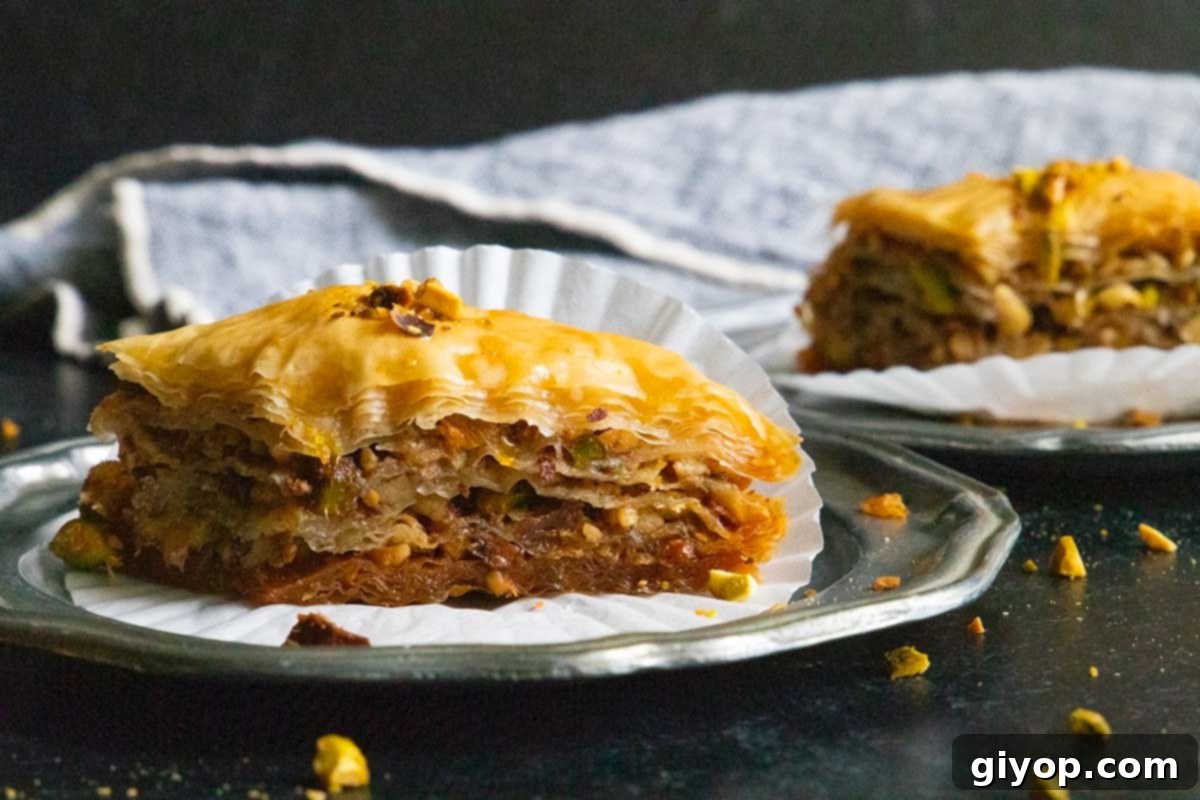
Indulge in the exquisite pleasure of homemade baklava, a dessert that perfectly marries crispy, golden layers of phyllo dough with a rich, spiced nut filling, all drenched in a fragrant, sweet honey syrup. This recipe guides you through creating a truly unforgettable treat, bursting with the warm flavors of cinnamon and nutmeg, and the delightful crunch of walnuts and pistachios. Forget the store-bought versions; once you experience the depth of flavor and incredible texture of freshly made baklava, there’s no going back.

For many years, the thought of making baklava from scratch seemed daunting. The delicate phyllo dough, the intricate layering, and the precise syrup preparation felt like challenges best left to seasoned pastry chefs. However, just as I ventured into perfecting our Panettone Recipe, I finally decided to conquer my baklava fears. What I discovered was a surprisingly rewarding process, leading to a dessert that far surpasses any store-bought equivalent. The rich aroma filling your kitchen and the unparalleled taste of freshly baked baklava are experiences you simply can’t replicate with pre-made versions. This recipe ensures success, transforming a seemingly complex dessert into an achievable culinary triumph.

Why Choose Homemade Baklava?
The allure of homemade baklava lies not just in the superior taste, but also in the rewarding experience of creating such a magnificent dessert with your own hands. Store-bought baklava, while convenient, often lacks the vibrant freshness, the perfect crispness of the phyllo, and the nuanced flavors of a carefully crafted honey syrup. When you make baklava at home, you have complete control over the quality of ingredients, from the rich, unsalted butter to the aromatic spices and the finest raw honey. This attention to detail results in a baklava that is lighter, more fragrant, and exceptionally delicious. The layers are flakier, the nuts are more flavorful, and the syrup has a balanced sweetness that never overwhelms. Plus, the sense of accomplishment you feel when presenting a tray of your own golden, diamond-cut baklava is truly unparalleled. It’s an edible masterpiece that reflects care and passion, making it a perfect dessert for special occasions or simply to elevate an ordinary day.
Essential Baklava Ingredients
Crafting the perfect baklava begins with selecting high-quality ingredients. Each component plays a crucial role in achieving the desired taste and texture.
- Phyllo pastry dough: This is the backbone of your baklava. Ensure it’s thawed properly according to package instructions. Impatience here can lead to tears and frustration. Look for fresh, pliable sheets.
- Unsalted butter, melted: Use high-quality European butter like Plugra, Kerry Gold, or Danish brands. The higher fat content in these butters contributes to an incredibly rich flavor and helps create those signature flaky layers. Clarified butter (ghee) can also be used for an even more authentic taste and clearer butterfat.
- Walnuts: Opt for raw walnuts. Their natural, slightly bitter notes perfectly complement the sweet syrup. When chopping, aim for a texture that’s neither too fine (which can become pasty) nor too coarse (which might make cutting difficult).
- Pistachios: Roasted and salted pistachios add a delightful pop of color and a distinct, savory-sweet flavor that balances the walnuts. If using unsalted, you might add a tiny pinch of salt to the nut mixture.
- Ground cinnamon: A cornerstone spice for baklava. Use a fresh, good-quality ground cinnamon for the best aromatic experience.
- Ground nutmeg: Freshly grated nutmeg offers an unparalleled aroma and warmth. While pre-ground works, grating it yourself just before mixing elevates the flavor profile significantly.
- Granulated sugar: Used in both the nut filling and the honey syrup to provide sweetness and help bind the nut mixture slightly.
Fragrant Honey Syrup Ingredients
The honey syrup is the soul of baklava, infusing every layer with sweetness and an intoxicating aroma. My extensive testing revealed that reducing the syrup and infusing flavors during the simmering process is key to a perfectly balanced, flavorful, and non-watery result. This method allows the spices and citrus to deeply penetrate the syrup, leading to a much richer taste and a more viscous consistency that absorbs beautifully into the hot phyllo layers, preventing sogginess and ensuring that delightful honey-soaked crispness. Without proper reduction and infusion, I found the syrup to be too thin, leading to a runny texture and diluted flavor, even after chilling overnight.
- Water: Forms the base of your syrup.
- Granulated sugar: Provides structure and additional sweetness.
- Honey: We highly recommend 100% raw unfiltered honey for its complex flavor and superior quality. It adds a distinct floral note that is characteristic of traditional baklava.
- Orange: Fresh orange slices impart a bright, citrusy aroma and a subtle tang that beautifully cuts through the sweetness of the honey.
- Cinnamon sticks: Whole cinnamon sticks release their flavor slowly and deeply into the syrup, providing a rich, warm foundation.
- Whole cloves: A few whole cloves add a hint of spicy warmth and a complex, aromatic depth to the syrup.
Mastering Baklava: Essential Tips for Success
Creating perfect baklava can seem intricate, but with these key tips, you’ll achieve delicious, golden results every time. Attention to detail in each step ensures those coveted crispy layers and rich, honey-drenched flavors.
- Proper Phyllo Thawing: This is critical. Always thaw your phyllo dough according to the package instructions, typically overnight in the refrigerator. Rushing this can lead to brittle, unusable sheets. Once thawed, remove it from the fridge about an hour before assembly to bring it to room temperature. This makes the sheets more pliable and less prone to cracking. You want it neither too moist nor too dry.
- Protecting the Phyllo: Phyllo dough dries out incredibly fast. While you are assembling your baklava, keep the stack of un-buttered pastry sheets covered with a sheet of parchment paper, followed by a clean, damp (but not wet) kitchen towel. This creates a humid environment, preventing the delicate dough from drying and cracking, which would make it impossible to work with.
- Nut Customization: While the traditional combination of pistachios and walnuts offers a classic flavor, feel free to experiment! Almonds, pecans, or a mix of your favorite nuts can be used to personalize your baklava. Just ensure they are of similar coarseness.
- Perfect Nut Grind: Avoid grinding the nuts too finely. A coarse grind is ideal, providing a pleasant texture contrast to the flaky phyllo. If you use a food processor, pulse the nuts in short bursts to prevent them from turning into a paste. I’ve found that a hand chopper often gives better control over the texture, resulting in perfectly chopped nuts with a satisfying crunch.
- Cool Syrup, Hot Baklava: This is a golden rule for baklava. Prepare your honey syrup first, well in advance, and allow it to cool completely to at least lukewarm, preferably room temperature. Pouring cool syrup over hot baklava creates a temperature shock that allows the phyllo to absorb the syrup slowly and thoroughly without becoming soggy, retaining its crispiness. I often strain the syrup into a large glass measuring cup immediately after cooking to help it cool faster.
- Patience for Perfection: Baklava is a dessert that truly benefits from resting. It’s best made the day before you plan to serve it. Allowing it to set overnight at room temperature, uncovered until completely cool, then covered, gives the syrup ample time to fully absorb into the layers, and all the incredible flavors to meld and deepen. This resting period transforms it into an even more delicious, cohesive treat.
- Butter generously: Don’t skimp on the butter! Each layer needs a good brushing to ensure maximum crispiness and flavor. This is what creates those distinct, flaky layers.
- Sharp Knife for Cutting: Use a very sharp knife to cut the baklava before baking. This helps create clean, precise diamond or square shapes without tearing the delicate phyllo.
How to Craft Your Pistachio Walnut Baklava
Embark on the journey of making this delightful pistachio walnut baklava by following these detailed steps:
Step 1: Prepare the Phyllo Dough
Begin by thawing your phyllo dough according to the package instructions. The most reliable method is to let it thaw overnight in the refrigerator. Once thawed, remove it from the fridge at least one hour before you plan to start assembling. This crucial step allows the dough to reach room temperature, making it far more pliable and less likely to crack or tear as you work with it.
Step 2: Prepare the Honey Syrup
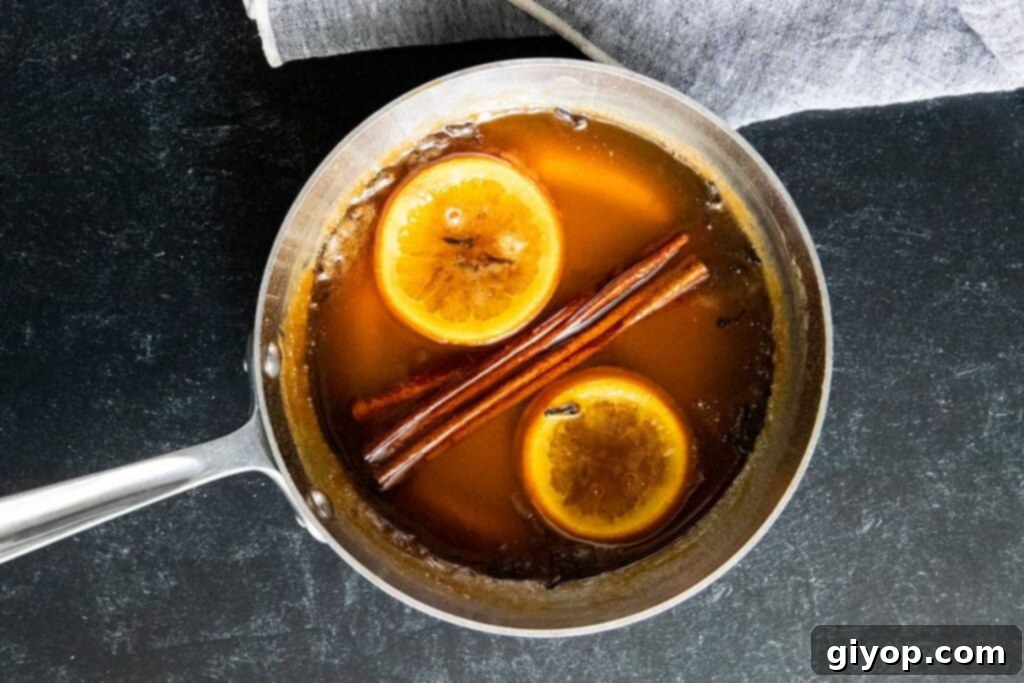
In a medium saucepan, combine the granulated sugar and water. Heat this mixture over medium heat, stirring occasionally, until all the sugar has completely dissolved. Once dissolved, add the honey, fresh orange slices, cinnamon sticks, and whole cloves to the saucepan. Bring the mixture to a rolling boil, then immediately reduce the heat to a gentle simmer. Allow the syrup to simmer for approximately 25 minutes. This simmering process is essential for reducing the syrup to a desirable thickness and allowing the aromatic flavors of the orange, cinnamon, and cloves to deeply infuse. After simmering, remove the saucepan from the heat and let the syrup cool down to lukewarm or room temperature. Once cooled, strain the syrup through a fine-mesh strainer into a clean measuring cup to remove the orange slices and spices. You should yield about 1 3/4 cups of perfectly flavored syrup.

Step 3: Prepare the Nut Filling
Take your raw walnuts and pulse them in a food processor until they are finely chopped but not pasty. You want a coarse, crumbly texture. Transfer the chopped walnuts to a medium-sized bowl. Next, pulse the roasted and salted pistachios in the food processor until they are also finely chopped or coarsely ground, similar to the walnuts. Add the chopped pistachios to the bowl with the walnuts. To this nut mixture, stir in the granulated sugar, ground cinnamon, and ground nutmeg until everything is well combined. This flavorful blend will be the heart of your baklava.
Step 4: Prepare the Baking Pan and Preheat Oven
Preheat your oven to 350 degrees Fahrenheit (175 degrees Celsius). Prepare a 9×13 inch baking pan by generously brushing the bottom with some of the melted unsalted butter. This prevents sticking and contributes to the golden crust.

Step 5: Trim the Phyllo Dough
Carefully unroll your thawed phyllo dough. You’ll likely need to trim the sheets to fit your 9×13 inch baking pan as perfectly as possible. For instance, if you are using Athenos brand phyllo which comes in 9×14 inch rolls, you would trim about 1 inch from one side to make it fit snugly. Once trimmed, remember the golden rule: keep the remaining phyllo dough covered with parchment paper and a damp towel to prevent it from drying out and becoming brittle.
How to Assemble Baklava Layers
The assembly process, though requiring a steady hand, is methodical and rewarding. Keep your covered phyllo dough within easy reach.
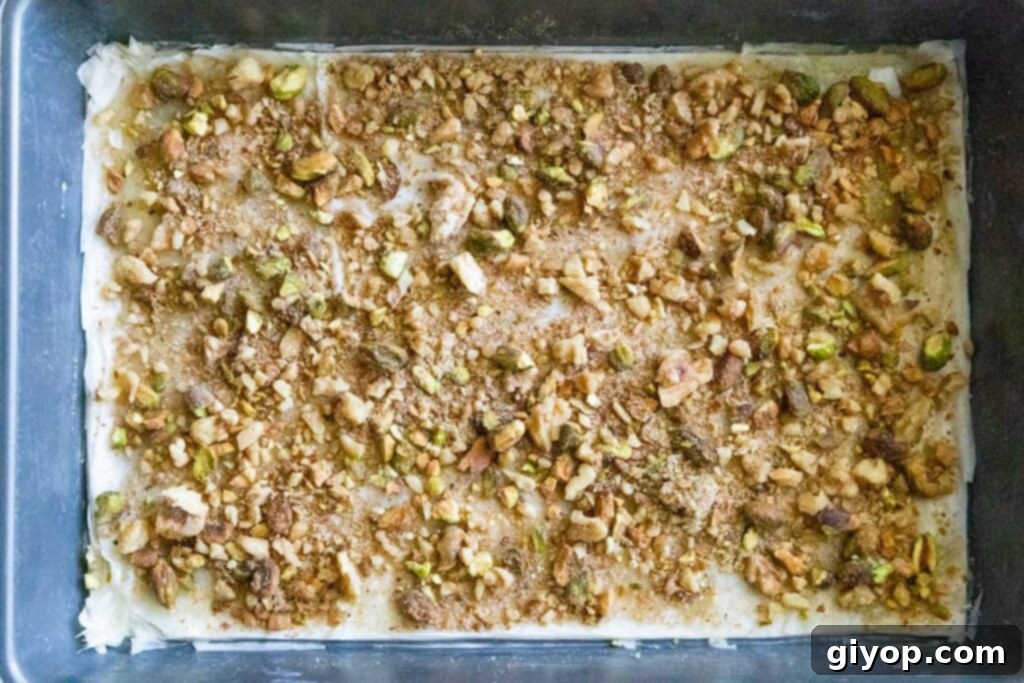
First Layer (Base): Carefully lay 10 sheets of phyllo dough into the prepared baking pan, one sheet at a time. After placing each individual sheet, brush it generously and evenly with melted butter before adding the next. This meticulous buttering is essential for achieving those wonderfully flaky layers. Once all 10 base layers are down, sprinkle approximately 3/4 cup of the spiced nut mixture evenly over the entire surface of the phyllo.
Intermediate Layers: For the next four layers, you will use 5 sheets of phyllo dough for each section.
Second Layer: Place 5 sheets of phyllo dough, brushing each sheet thoroughly with melted butter before stacking. Sprinkle another 3/4 cup of the nut mixture evenly over the top.
Third Layer: Repeat the process by placing 5 more sheets of buttered phyllo dough, followed by another 3/4 cup of the nut mixture.
Fourth Layer: Continue with 5 more sheets of buttered phyllo dough, and then sprinkle another 3/4 cup of the nut mixture.
Fifth Layer: Place a final set of 5 buttered phyllo sheets, topping them with the remaining 3/4 cup of the nut mixture.
Final Layer (Top): For the very top layer of your baklava, lay the remaining 10 sheets of phyllo dough one by one, brushing each individual sheet thoroughly with melted butter. Once the last sheet is in place, give the entire top surface a final, generous brush with any remaining melted butter. This ensures a beautiful golden-brown finish.
Step 6: Cutting the Baklava
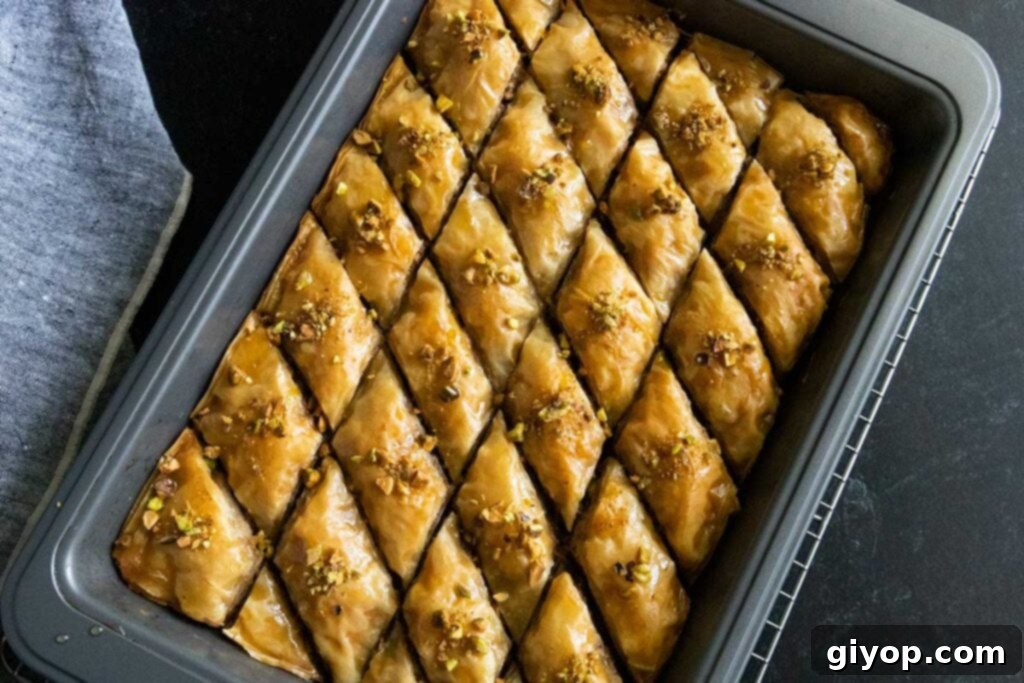
Before baking, it is crucial to cut the baklava. This allows the butter and later the syrup to penetrate all the layers. Using a very sharp knife, first make straight cuts into strips, about 1 1/2 inches wide. For a 9×13 inch pan, this usually means three lengthwise cuts to create four strips. Then, cut diagonally across these strips to form classic diamond shapes. Be precise and cut all the way through the layers down to the bottom of the pan.


Step 7: Bake and Syrup Soak
Place the cut baklava in the preheated oven and bake for 35 to 40 minutes, or until the top turns a beautiful golden brown and the edges are crisp. Keep a close eye on it to prevent burning. As soon as you remove the hot baklava from the oven, immediately and slowly pour or spoon the cooled honey syrup evenly over the entire surface. You will hear a satisfying sizzle as the syrup permeates the hot phyllo. This temperature contrast is vital for achieving that perfect crisp, honey-soaked texture. If desired, garnish with a sprinkle of finely chopped pistachios or walnuts. I’ve found that reserving a tiny bit of syrup and dabbing a few drops on the center of each piece before adding the garnish helps it stick better.
Step 8: Cool and Rest for Best Flavor
Allow the baklava to cool completely on a wire rack at room temperature, uncovered. For truly the best results, cover it once it is completely cool and let it sit overnight. This resting period is crucial for the flavors to meld beautifully and for the syrup to fully absorb, resulting in a perfectly tender yet crisp dessert. Patience is a virtue here – and a necessity! Resist the urge to snatch a piece too soon; it’s worth the wait.

Serving Your Delicious Baklava
Baklava is best served at room temperature, allowing its complex flavors to shine. It pairs wonderfully with a strong cup of Turkish coffee or a refreshing glass of mint tea. For a simple dessert, serve it as is, or consider a small dollop of unsweetened whipped cream or a scoop of vanilla bean ice cream for a delightful contrast in temperature and texture. Its rich sweetness makes it a perfect ending to any meal, whether a casual family dinner or a festive gathering.
Baklava Storage and Freezing Guide
How do you store baklava?
To maintain its freshness and crispy texture, store baklava in an airtight container at room temperature. It will remain delicious for about 1 week. Avoid refrigerating baklava, as the cold can cause the phyllo to become tough and the syrup to crystallize.
Can you freeze baklava?
Yes, baklava can be frozen successfully, but with a slight caveat. While it holds up well, freezing for extended periods (much longer than a month) can cause it to lose some of its signature crispiness. To freeze, arrange individual pieces in an airtight container, layering them with parchment paper or wax paper to prevent sticking. Wrap the container tightly with freezer paper or heavy-duty aluminum foil, and then place it in a zip-lock freezer bag for extra protection against freezer burn. To thaw, simply transfer the frozen baklava to the refrigerator overnight. Bring it to room temperature before serving for the best experience.
Inspired by Natashaskitchen

Easy Pistachio Walnut Baklava Recipe
Print
Pin
Rate
Ingredients
Baklava and Nut Filling
- 16 oz Phyllo dough thawed according to package instructions
- 1 1/2 cups Unsalted butter up to 2 cups, melted
- 8 oz Walnuts, raw finely chopped
- 8 oz Pistachios, roasted and salted finely chopped
- 1/4 cup Granulated sugar
- 1 1/2 tsp Ground cinnamon
- 1/2 tsp Ground nutmeg
Honey Syrup
- 1 cup Water
- 3/4 cup Granulated sugar
- 1 cup Honey 100% raw unfiltered is recommended
- 2 slices Fresh Orange
- 3 sticks Cinnamon
- 1 tsp Whole cloves
Instructions
Prep
- Thaw the phyllo dough according to package instructions. Overnight in the refrigerator is best. Then remove from the fridge one hour before starting to come to room temperature.
Honey Syrup
- In a medium saucepan heat the sugar and water stirring occasionally until the sugar dissolves. Add the honey, orange slices, cinnamon sticks, and whole cloves. Bring to a boil, reduce heat and simmer for about 25 minutes.
- Remove from the heat and let cool to lukewarm. Strain through a fine-mesh strainer into a measuring cup. Yields about 1 3/4 cups.
How to Assemble Baklava
- Pulse the walnuts in a food processor until finely chopped or coarsely ground. Pour into a medium-size bowl.
- Pulse the pistachios in the food processor until finely chopped or coarsely ground. Add to the bowl with the walnuts. Stir in the sugar, ground cinnamon, and ground nutmeg.
- Preheat the oven to 350 degrees F. Prepare a 9×13 baking pan by brushing some of the melted butter over the bottom.
- Trim the phyllo dough to fit the baking pan as best as you can. I use Athenos brand and each package has 2 rolls of 40 sheets measuring 9×14 inches. So I trim them slightly, by about 1-inch.
- Keep the phyllo dough covered with a damp towel while not in use. You don’t want it to dry out and start breaking.
- First Layer – Lay 10 sheets of phyllo dough into the pan one at a time, brushing each sheet with the melted butter before placing the next sheet. Sprinkle about 3/4 cup of the nut mixture evenly over the layers of phyllo dough.
- Second layer – Place 5 sheets of phyllo dough brushing each one with butter. Sprinkle another 3/4 cup of nut mixture.
- Third layer – Place 5 sheets of phyllo dough brushing each one with butter. Sprinkle another 3/4 cup of nut mixture.
- Fourth layer – Place 5 sheets of phyllo dough brushing each one with butter. Sprinkle another 3/4 cup of nut mixture.
- Fifth layer – Place 5 sheets of phyllo dough brushing each one with butter. Sprinkle another 3/4 cup of nut mixture.
- Final layer – Lay 10 sheets of dough buttering each one. Brush the very top layer with the butter again.
- To cut the baklava into diamonds, using a sharp knife cut into about 1 1/2″ wide strips (three cuts). Then cut diagonally into diamond shapes.
- Bake uncovered for 35 to 40 minutes, or until the top is golden brown.
- Remove from the oven and immediately pour or spoon the cooled syrup over the hot baklava. Garnish with finely chopped pistachios or walnuts if desired.
- Let the baklava cool completely on a wire rack, uncovered at room temperature. For the best results cover once it is completely cooled and let it sit overnight.
Nutrition
Carbohydrates: 28g |
Protein: 4g |
Fat: 18g |
Saturated Fat: 7g |
Polyunsaturated Fat: 5g |
Monounsaturated Fat: 5g |
Trans Fat: 1g |
Cholesterol: 24mg |
Sodium: 76mg |
Potassium: 135mg |
Fiber: 2g |
Sugar: 17g |
Vitamin A: 320IU |
Vitamin C: 1mg |
Calcium: 26mg |
Iron: 1mg