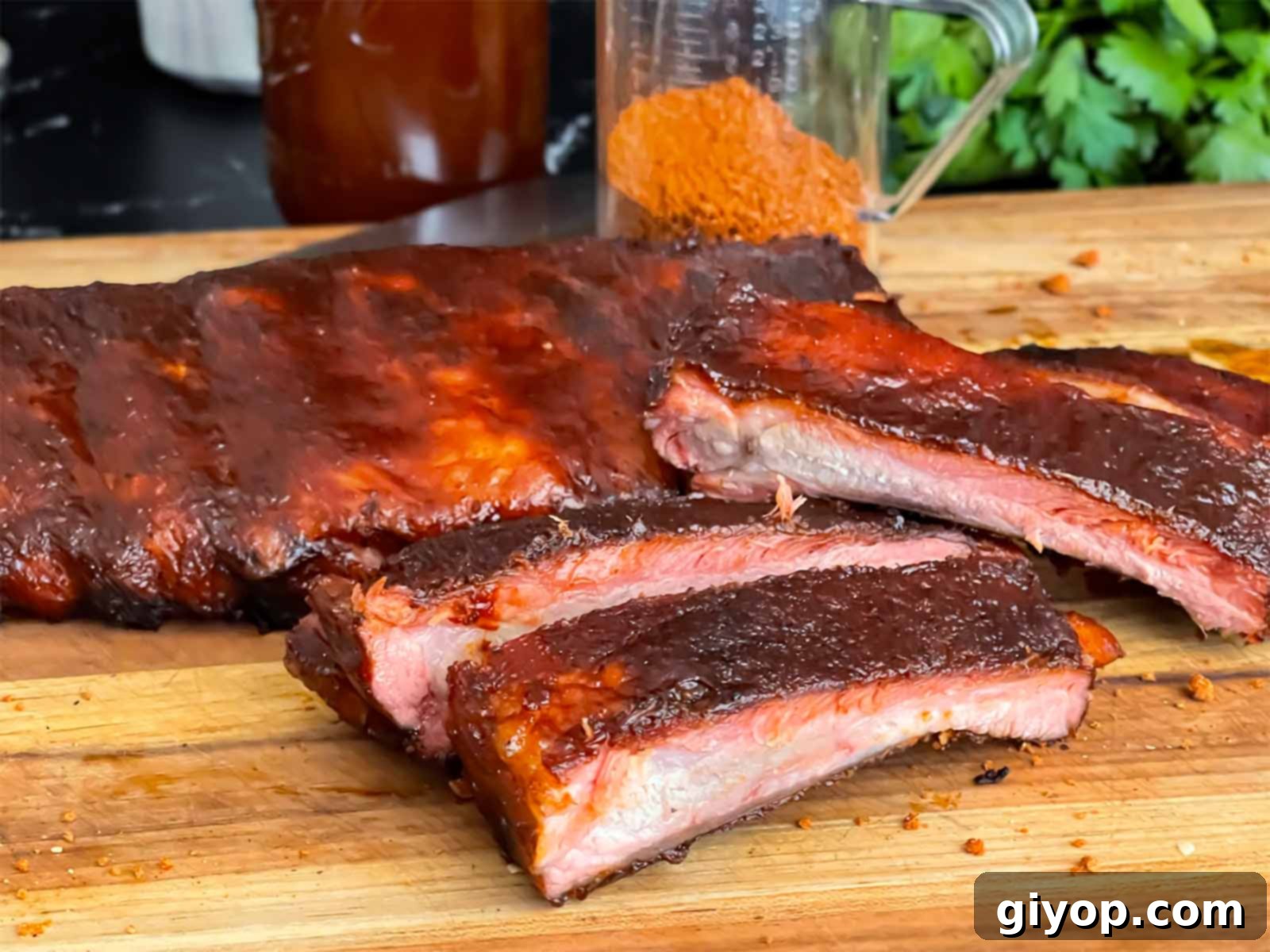
When you dream of barbecue, the image that often comes to mind is the legendary Kansas City BBQ Ribs. These aren’t just ribs; they are a culinary masterpiece – smoky, glistening, and deeply caramelized, boasting a flavor so rich it’s often described as “meat candy.” With each tender bite or gentle tug, the meat effortlessly slides off the bone, promising an unforgettable experience. Prepare to fall in love with this iconic American dish!
Why You’ll Crave This Kansas City BBQ Ribs Recipe
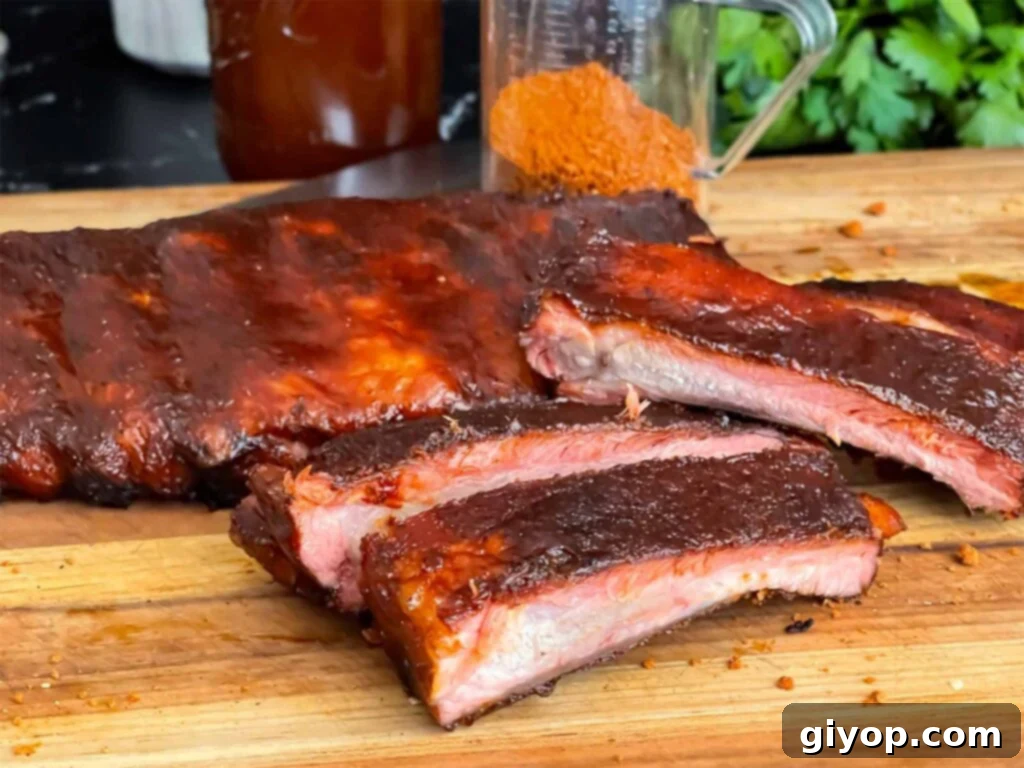
When it comes to authentic barbecue, these ribs set the standard. We’re talking about glorious slabs of succulent pork, generously coated in a flavorful spice rub and slow-smoked over rich hickory wood. This careful process transforms the surface into a deep, glossy crust—a “bark” that locks in a harmonious blend of sweet, tangy, and profoundly smoky flavors.
And the sauce? It’s a true Kansas City masterpiece. Our homemade barbecue sauce is thick, perfectly sticky, and undeniably finger-licking good. It achieves a delicate balance between the rich sweetness of brown sugar and a vibrant tangy kick, creating a lacquered finish that makes every single bite pure BBQ nirvana. This isn’t just a meal; it’s an experience that captures the heart and soul of traditional American barbecue—bold, smoky, and absolutely unforgettable.
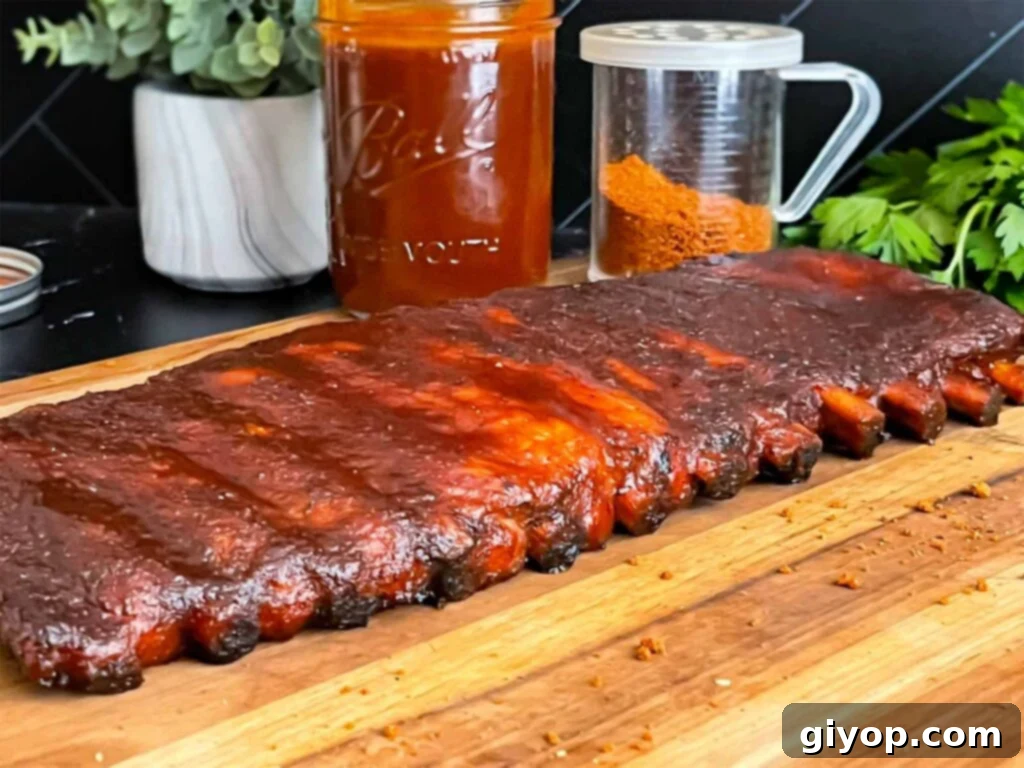
Smoking these ribs with your homemade Kansas City rub and Kansas City barbecue sauce isn’t merely cooking; it’s an act of claiming your rightful place as barbecue royalty among your friends and family. The depth of flavor and the fall-off-the-bone tenderness will leave everyone asking for your secret. While we highly recommend trying our authentic homemade versions for the ultimate flavor profile, feel free to use your favorite store-bought alternatives if you’re short on time.
To truly complete your Kansas City barbecue feast, don’t forget the classic sides. Hearty barbecue baked beans, creamy classic southern potato salad, and refreshing macaroni salad are fantastic starting points that complement these smoky ribs perfectly.
Crafting the Perfect Kansas City Ribs: A Step-by-Step Guide
Creating these sensational Kansas City ribs follows a tried-and-true method that I use for my ribs regularly. It’s a process designed to maximize flavor and tenderness, ensuring every rib is a masterpiece. We start by carefully trimming the ribs, applying a robust rub, and allowing the flavors to meld overnight in the refrigerator. The next day, they undergo a gentle smoke for a few hours, followed by a tenderizing wrap, and finally, a finishing stage (with or without sauce, depending on your preference).
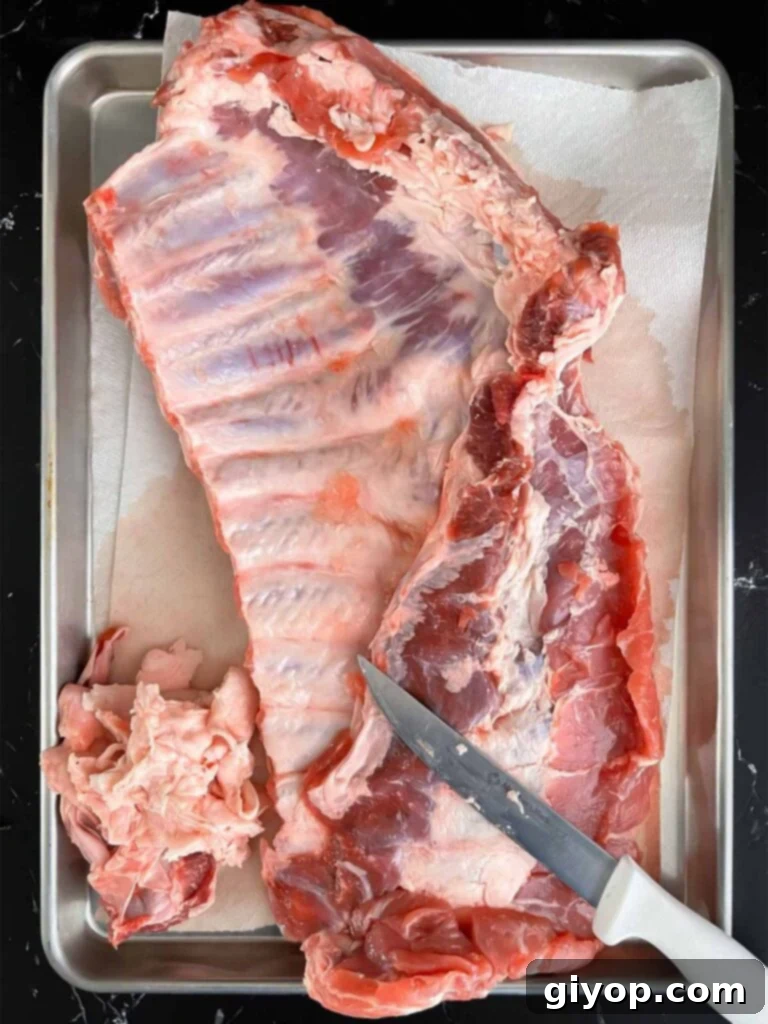
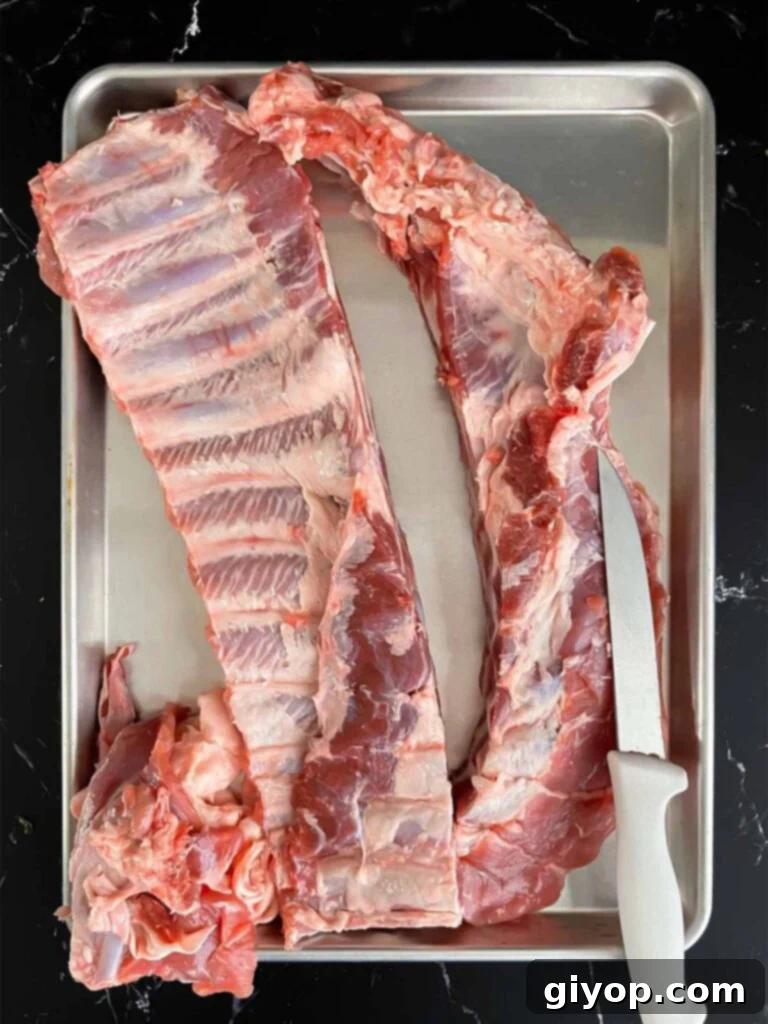
For this specific recipe, I opt for a rack of spareribs, which are known for their rich meatiness. I meticulously trim off the brisket bone and rib tips to create a more uniform St. Louis-style cut, which cooks more evenly and presents beautifully. But rest assured, nothing goes to waste! Those delicious trimmings are smoked right alongside the main rack, transforming into a savory meat snack that’s perfect for sampling during the long cook.
Preparing Your Ribs for Optimal Flavor and Texture
While you can certainly prepare your ribs right before smoking, dedicating the time the night before will profoundly deepen the flavor. This allows the spice rub ample time to work its magic, absorbing into the meat and initiating a “dry brining” process that results in juicier, more flavorful ribs.
- Begin by trimming any excess fat from both sides of the ribs. This ensures more even cooking and prevents flare-ups. If you’re using spareribs, you may also choose to trim off the skirt meat (the flat piece on the backside). For smaller gatherings, I often leave it on, but for a more uniform presentation, removing it creates a perfect St. Louis cut. Crucially, don’t forget to remove the tough membrane from the back of the ribs. This fibrous layer prevents the rub and smoke from penetrating the meat and can result in chewy ribs.
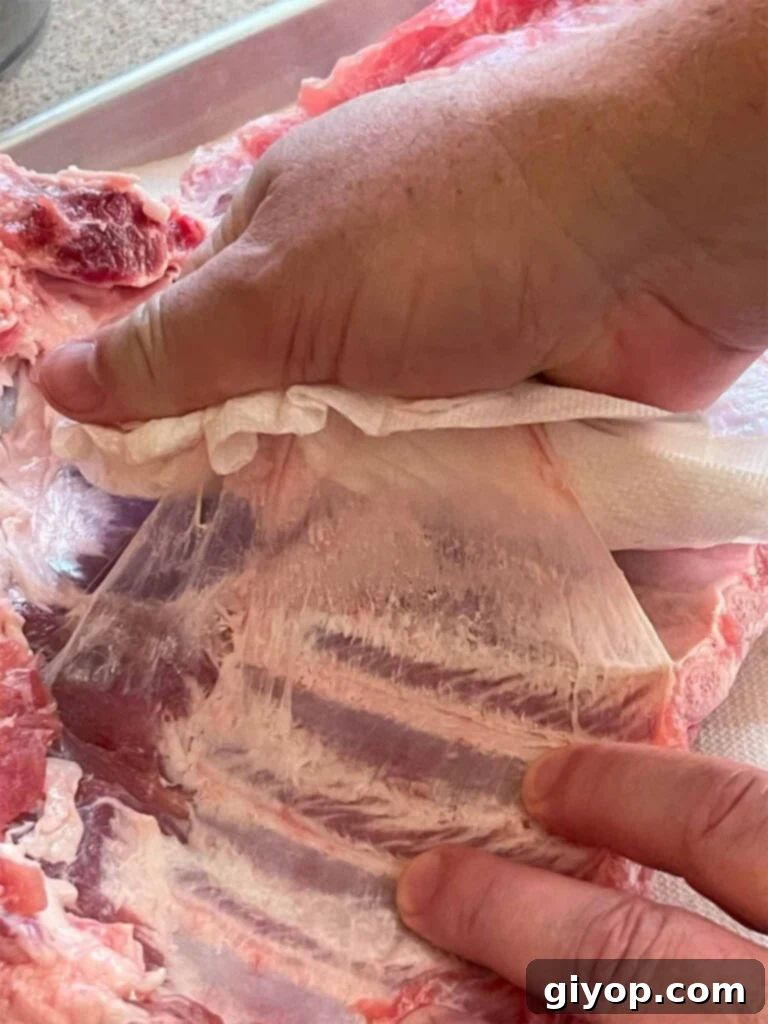
note
The need to trim off the brisket bone and rib tips is primarily for spareribs to achieve a cleaner St. Louis cut. Many racks of ribs you find in stores, particularly those labeled “St. Louis style,” will already have this done for you. This recipe is also perfectly suited for baby back ribs; simply be mindful that their smaller size typically means a slightly shorter cooking time.
- Once trimmed, you can optionally apply a thin layer of yellow mustard as a binder. While some purists skip this, mustard helps the rub adhere evenly to the meat, creating a beautiful, consistent bark. After the binder, generously apply your Kansas City-style BBQ rub to both sides of the rack, ensuring every surface is covered.
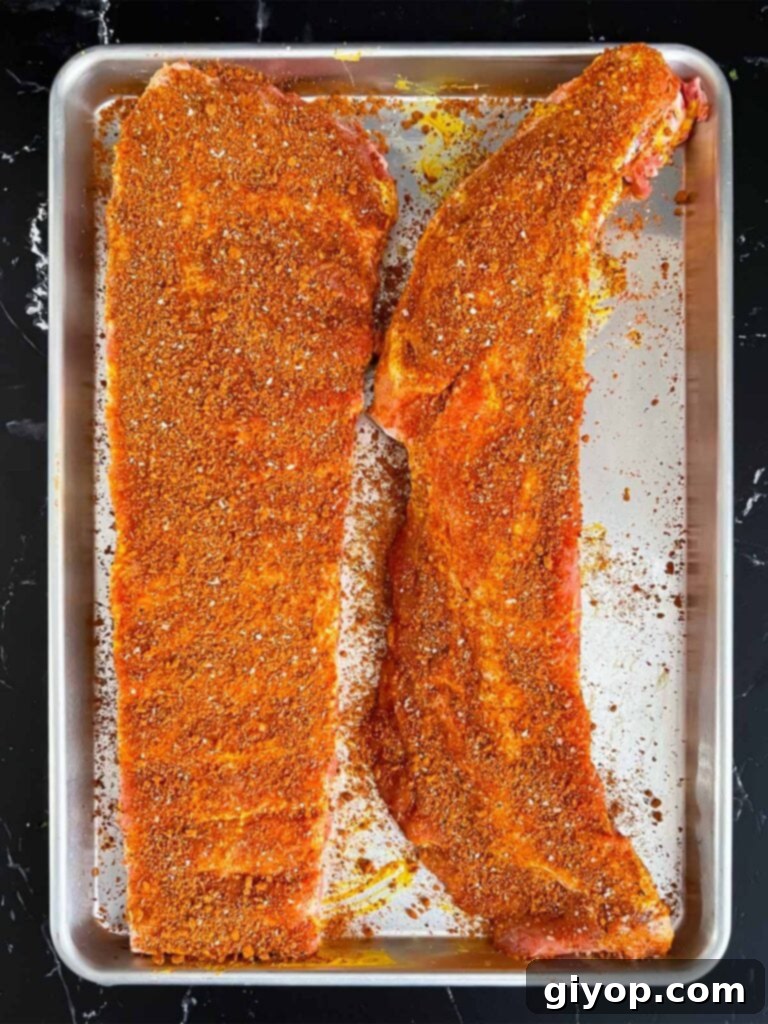
Once the ribs are seasoned, cover them loosely with plastic wrap or place them in a large sealed bag and refrigerate for at least a couple of hours. For truly exceptional flavor penetration and moisture retention, I strongly recommend doing this the night before. This dry brining period allows the salt and spices to draw out moisture, dissolve, and then reabsorb back into the meat, leading to a much more tender and flavorful end product.
The Art of Smoking Your Kansas City Ribs
The smoking process is where the magic truly happens, infusing your ribs with that distinctive Kansas City flavor. About an hour before you plan to smoke, remove the ribs from the refrigerator. This allows them to come closer to room temperature, promoting more even cooking and better smoke adhesion.
- Preheat your smoker to a consistent 225 degrees F (approximately 107°C). Low and slow is the mantra for tender, smoky ribs. While the ribs rest, gently pat away any moisture that may have been released from the rub. Then, apply a very light dusting of your BBQ rub back onto the ribs. This revitalizes the seasoning and helps in bark development. Hickory wood is the traditional choice for Kansas City BBQ, providing a strong, classic smoky flavor, but feel free to experiment with other woods like apple or cherry for different nuances.
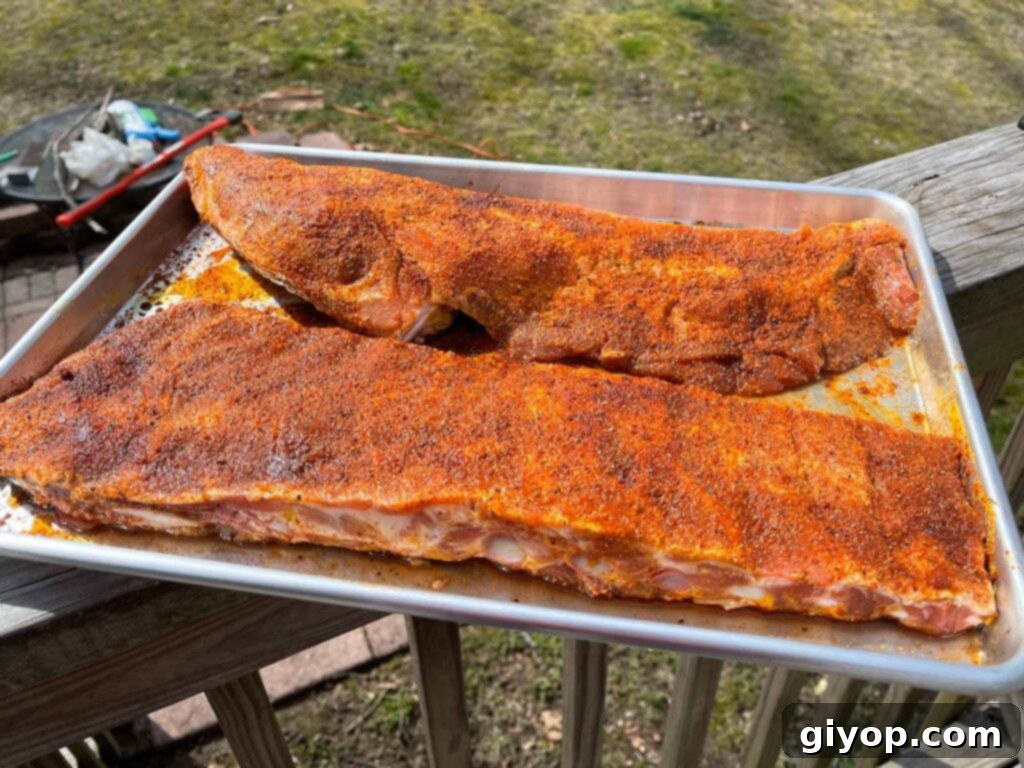
- Carefully place the ribs directly on the smoker grates, bone side down. Smoke them until the internal temperature reaches between 155°F and 165°F (approximately 68°C-74°C), which typically takes about 2 ½ hours for spare ribs. After the first hour, you have the option to spritz the ribs every 30 minutes with a 50/50 mixture of either apple cider vinegar or red wine vinegar and water. This spritz helps to keep the surface moist, prevents it from drying out, and contributes to the development of a beautiful, flavorful bark.
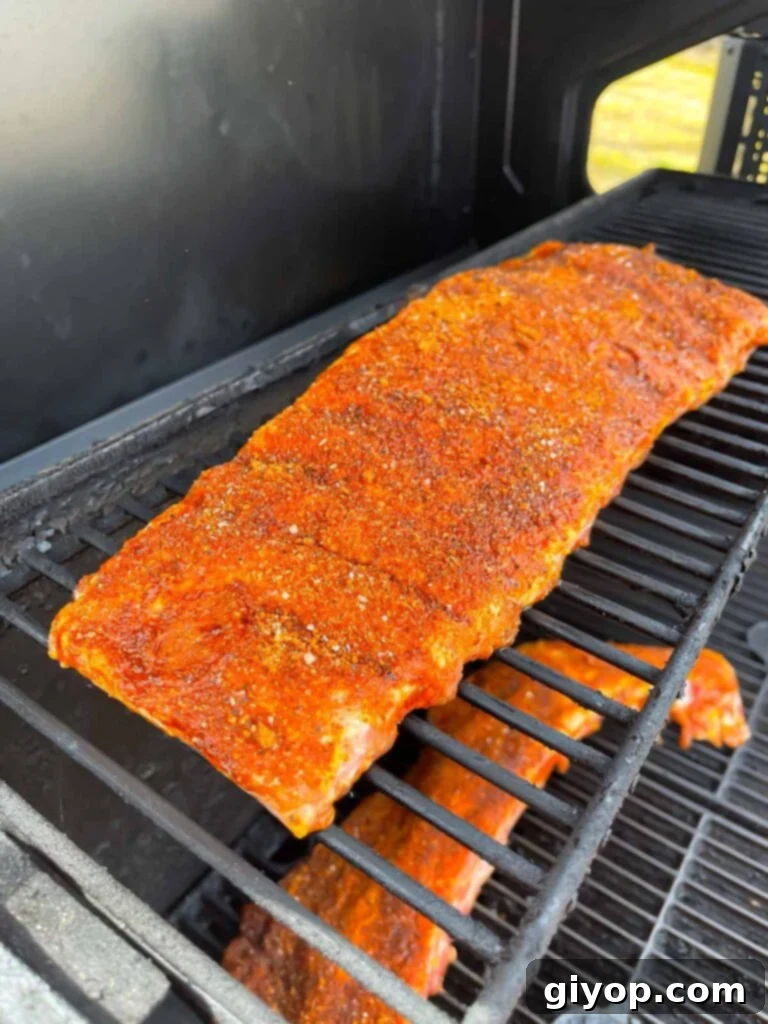
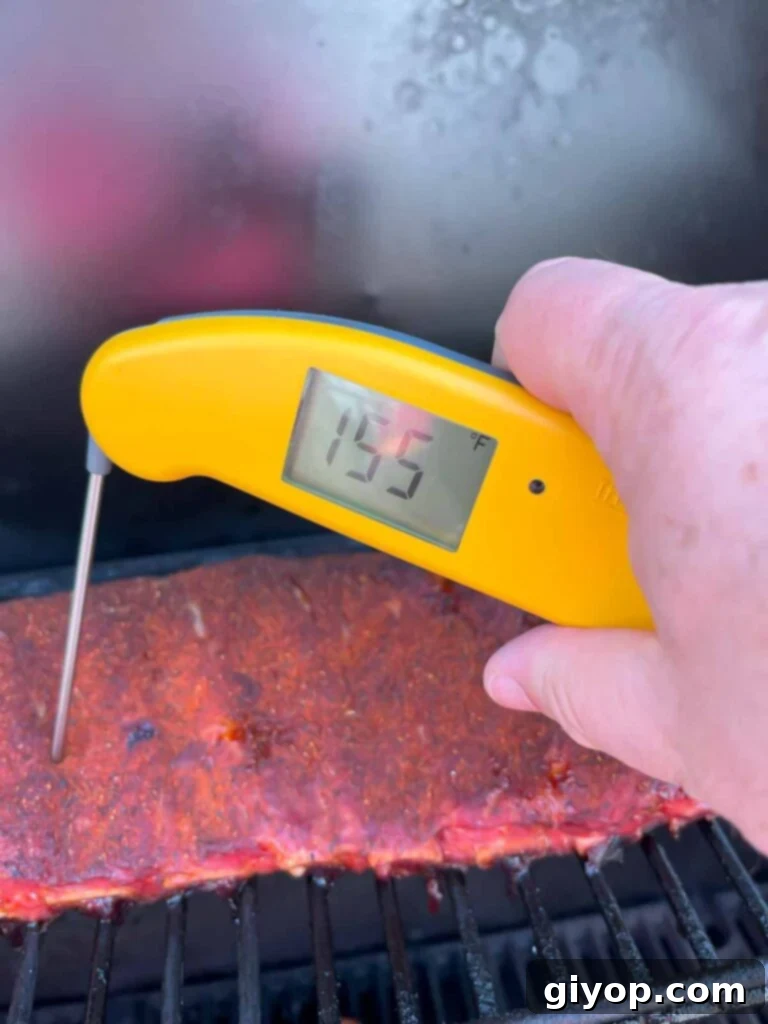
During this initial smoking phase, you’re aiming for a rich, mahogany color and the beginnings of a firm, flavorful bark. The internal temperature is a guide, but visual cues are also important. The ribs should look appealingly smoked, but still have some firmness. The low temperature and long duration also contribute to the iconic “smoke ring” – a pinkish layer just under the surface, indicating proper smoke penetration.
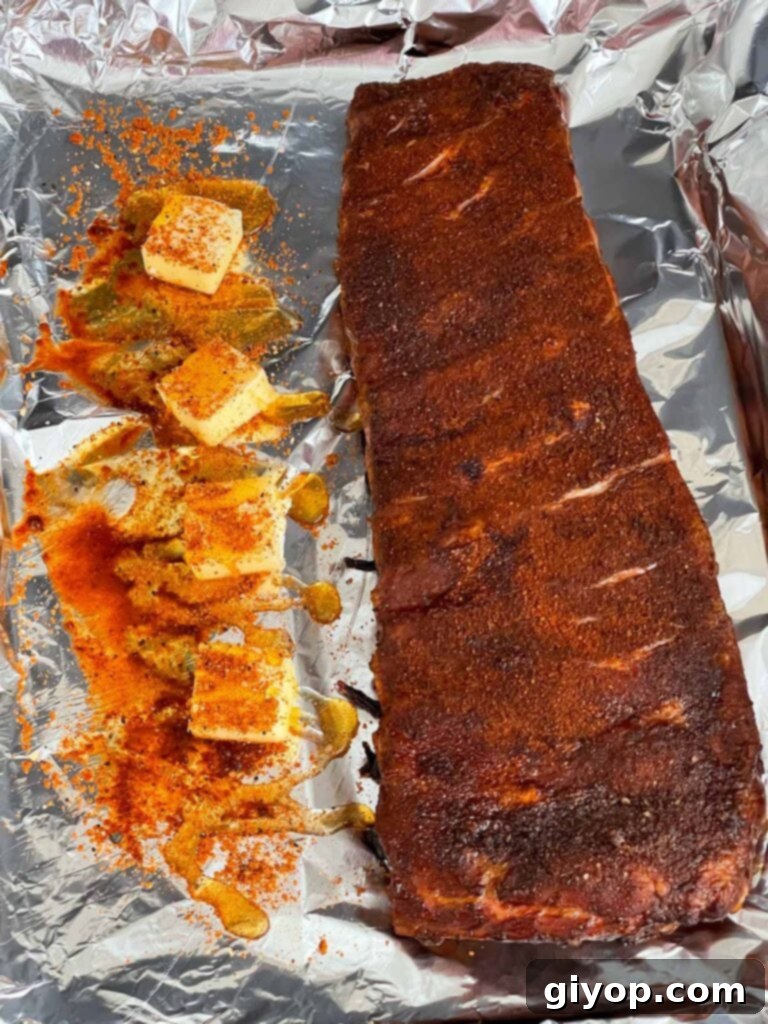
- Once the ribs have developed a beautiful color and a firm bark, and their internal temperature registers at least 155°F (68°C), it’s time to remove them from the smoker for the next crucial step: wrapping. Prepare a generous sheet of heavy-duty aluminum foil, layered twice for extra protection. On this foil, place 4 tablespoons of unsalted butter, a couple of tablespoons of honey, 1 tablespoon of red wine vinegar (or apple cider vinegar for a brighter tang), and a sprinkling of your BBQ rub (about a tablespoon). These ingredients will create a flavorful steaming liquid within the foil, infusing the ribs with moisture and flavor.
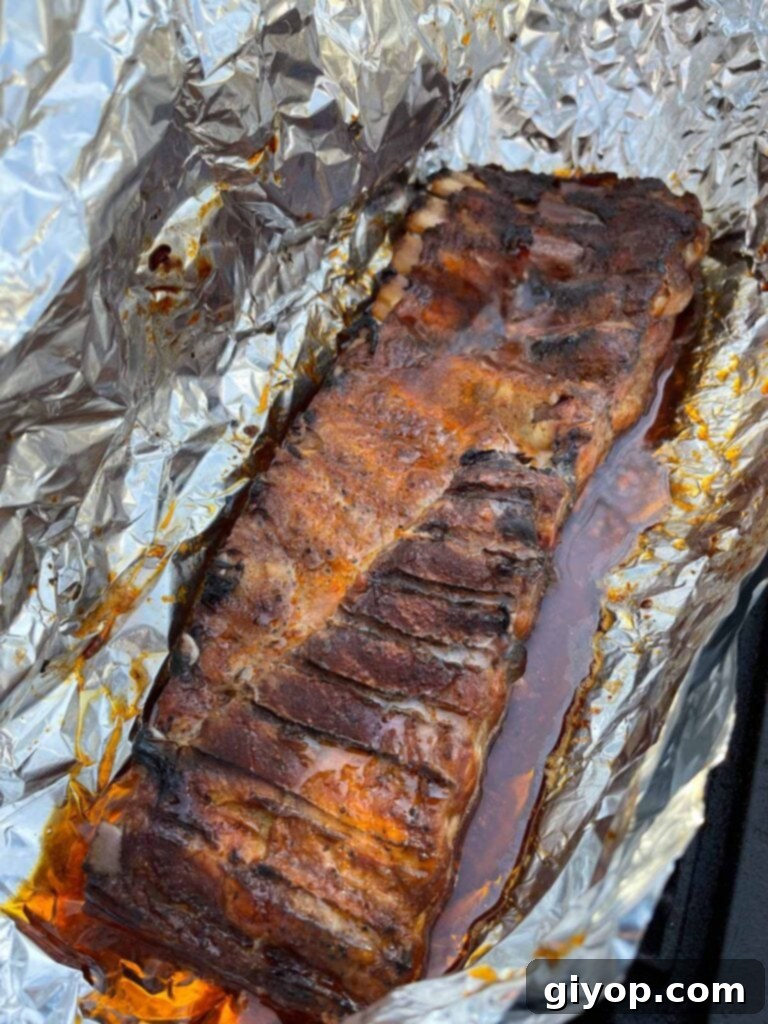
- Place the ribs meat-side down onto the butter mixture on the foil. This position allows the meat to absorb the rich flavors and tenderizing steam. Loosely but securely wrap the ribs, creating a sealed packet that will trap the moisture. Return the foil-wrapped ribs to the smoker, keeping them top-side down, and continue to cook for another two hours. This wrapping phase is critical for achieving that desirable fall-off-the-bone tenderness and is often referred to as “the Texas crutch” or the “2” in a 3-2-1 method, helping the ribs power through the stall and become incredibly succulent.
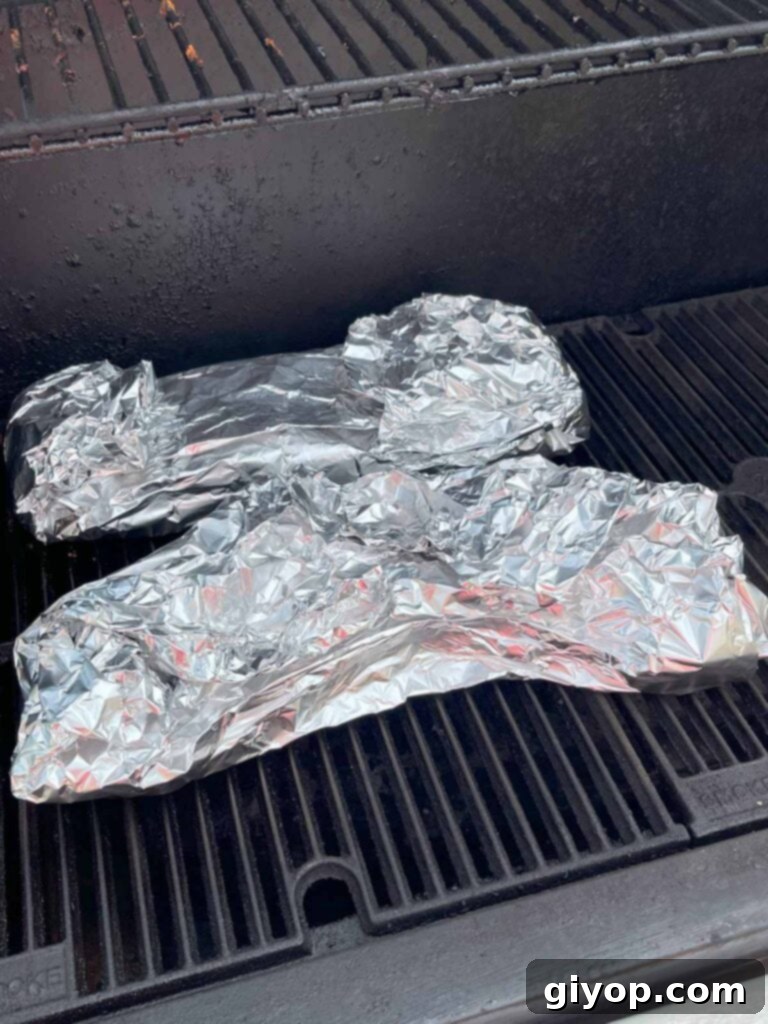
- After approximately two hours in the foil, the ribs should have reached peak tenderness. The meat will noticeably begin to pull away from the bones, a clear indication that they are almost ready for the final stage. Their internal temperature should now be around 195-200°F (90-93°C). Carefully remove the ribs from the foil, discarding the foil and any remaining liquid. Now, it’s time to apply your Kansas City BBQ sauce generously to both sides of the ribs, ensuring a thick, even coating. Place the sauced ribs back onto the smoker, this time directly on the grates.
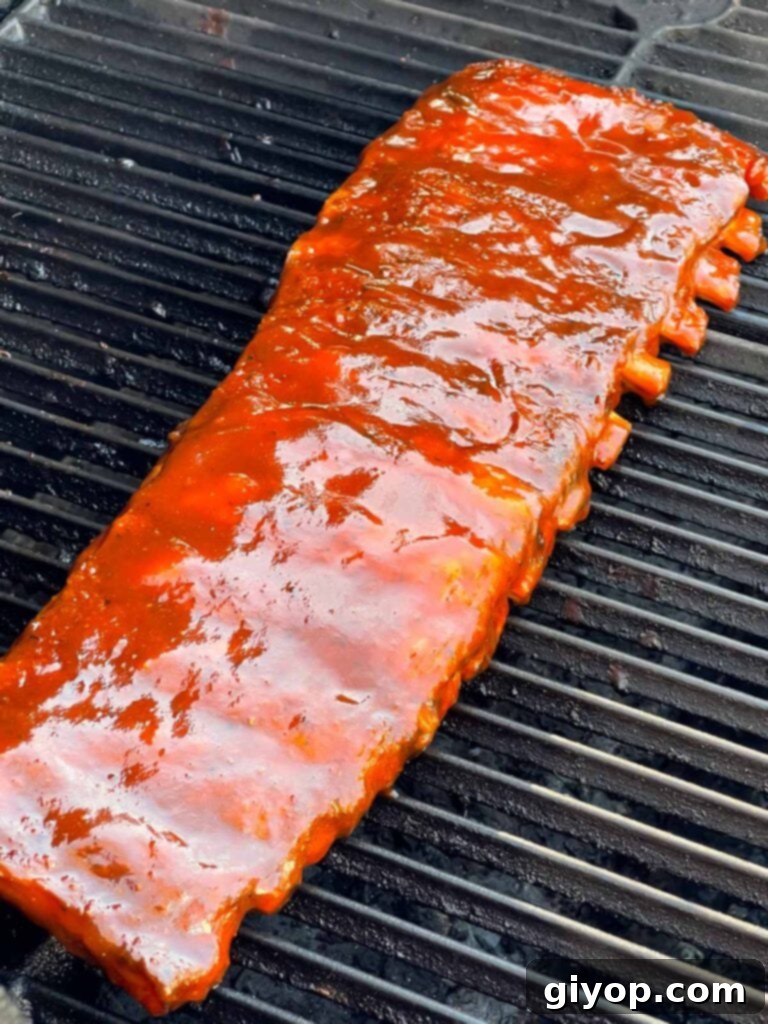
This final stage, often called “the glaze,” allows the barbecue sauce to warm through, thicken, and caramelize onto the ribs, forming that irresistible sticky, sweet, and tangy coating characteristic of Kansas City BBQ. It’s also the final “1” in the popular 3-2-1 smoking method.
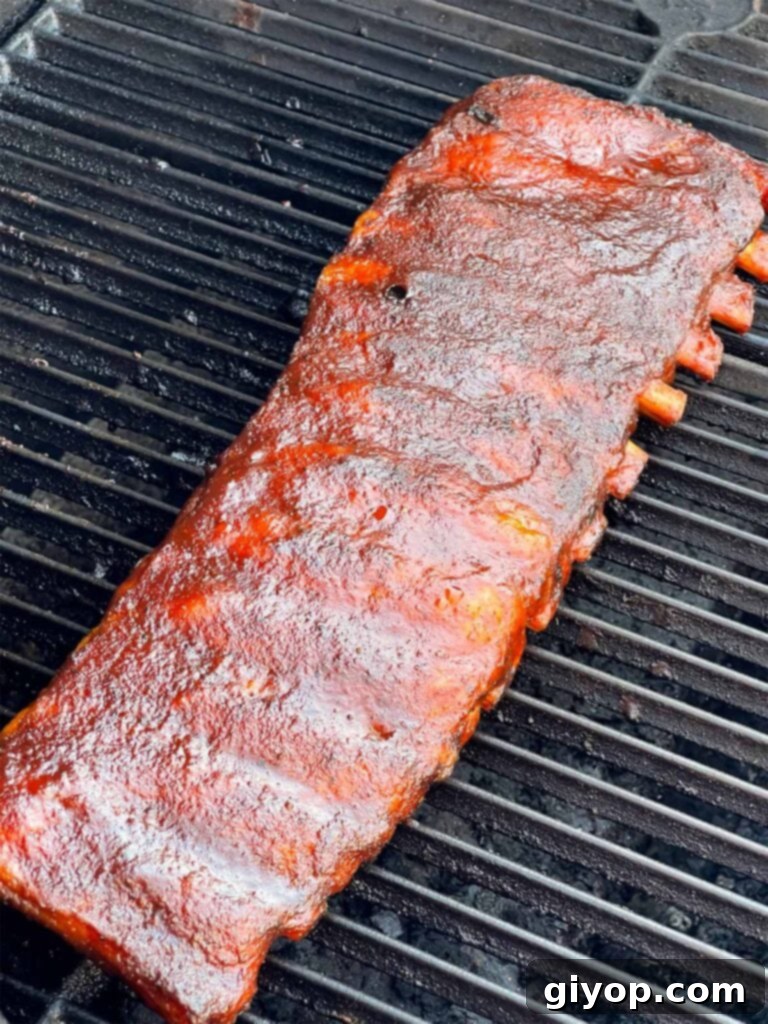
- Continue to cook the ribs on the smoker for another 30 minutes, or until the barbecue sauce has beautifully set and created a sticky, lacquered glaze. This final cook time is essential for the sauce to adhere and caramelize without burning. Once set, remove the ribs from the smoker and allow them to rest for about 5 to 10 minutes. This resting period is crucial, allowing the juices to redistribute throughout the meat, ensuring every bite is moist and flavorful (if you can resist that long!).
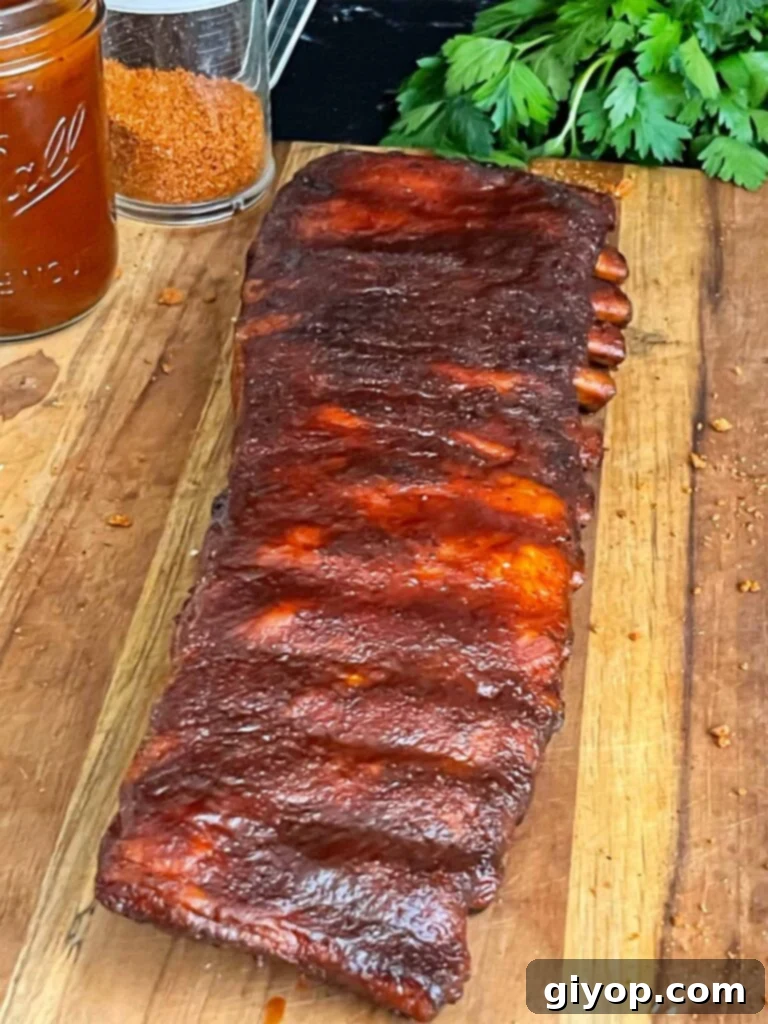
- Finally, slice your ribs between the bones and serve immediately.
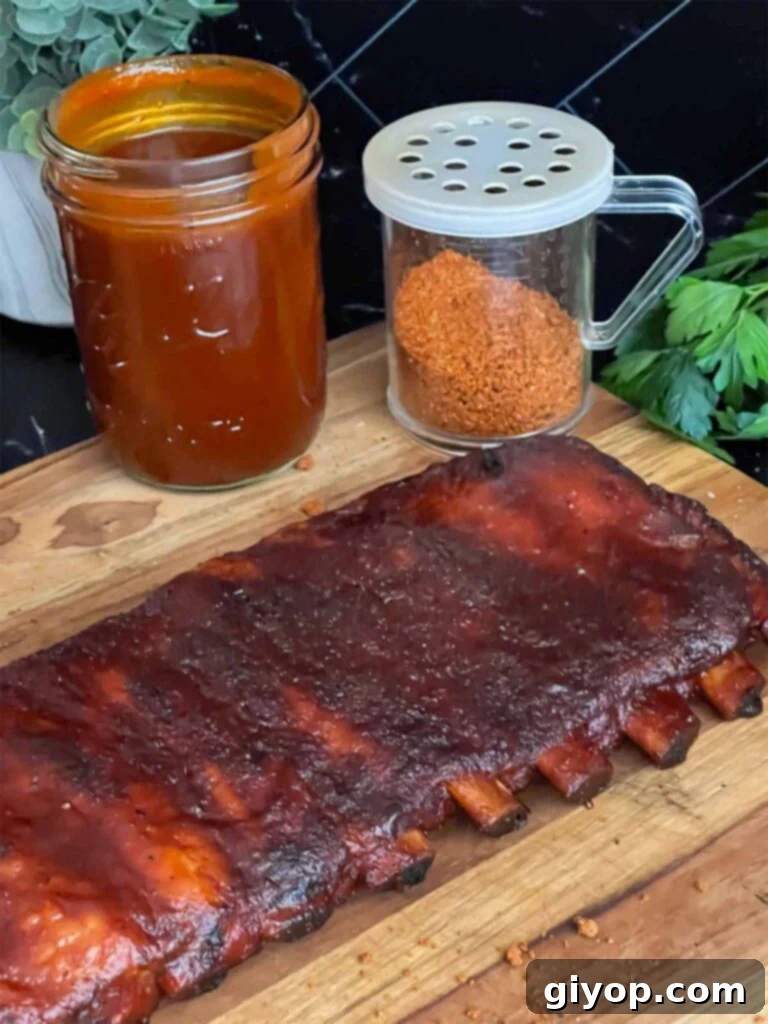
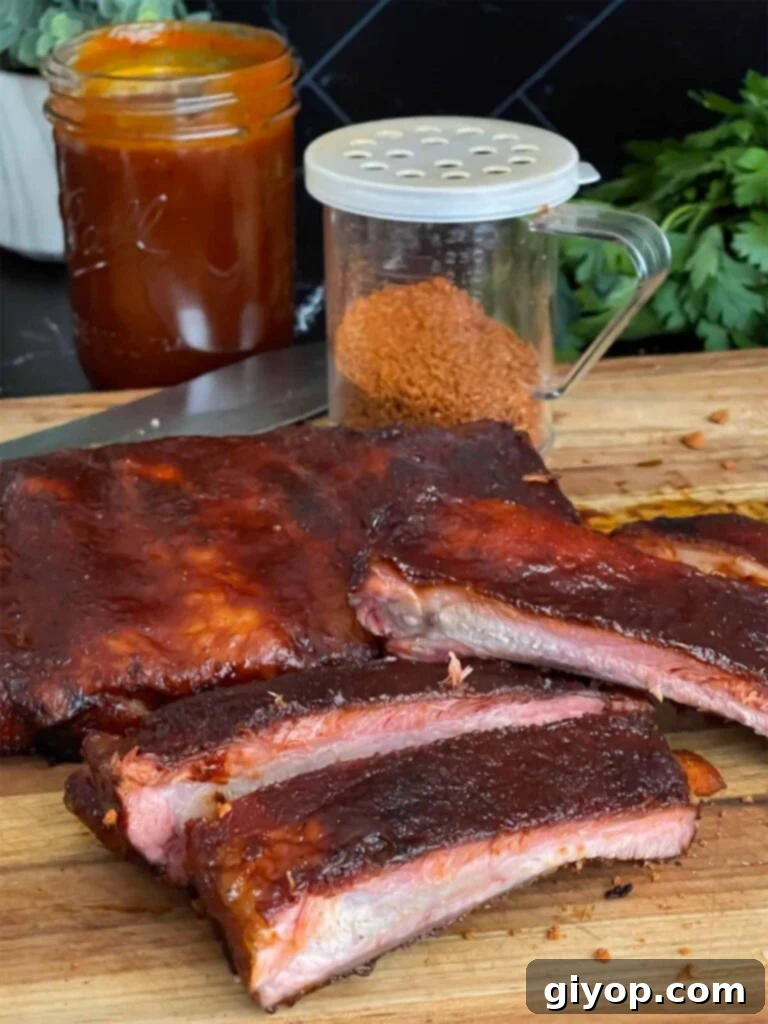
These Kansas City BBQ Ribs represent barbecue in its purest, most indulgent form—the kind of saucy, smoky, fall-apart magic that instantly transports you to the vibrant barbecue pits of Kansas City. If you’re seeking that classic, deeply satisfying barbecue experience, this recipe is precisely what you need. Dive in and savor every mouth-watering moment!
Enjoy!
Expert Tips for Perfect Kansas City BBQ Ribs
- Trim for Even Cooking and Presentation: When working with spareribs, taking the time to trim off the brisket bone and rib tips creates a uniform St. Louis cut. This not only ensures a more aesthetically pleasing rack but also promotes consistent cooking across the entire slab, preventing thinner sections from overcooking while thicker parts remain underdone. Plus, those trimmings are a bonus chef’s snack—my wife can’t get enough of them!
- Dry Brine for Unrivaled Flavor Depth: Allowing your chosen rub to sit on the ribs overnight is more than just marinating; it’s a crucial dry brining step. The salt in the rub draws out moisture from the meat, which then mixes with the spices to form a flavorful brine that reabsorbs. This process tenderizes the meat from within and ensures the spices penetrate deep, resulting in a richer, more complex flavor profile.
- Don’t Skip the Spritz for Moisture and Bark: During the initial smoking phase, a light spritz of a 50/50 mixture of apple cider vinegar (or red wine vinegar) and water is a game-changer. It helps keep the surface of the ribs moist, which is essential for smoke particles to adhere, leading to a more pronounced smoke ring and a beautiful, caramelized bark. The acidity also adds a subtle tang that complements the smoky richness.
- Wrap for Ultimate Tenderness and Speed: The “Texas crutch,” or wrapping the ribs in foil, is key to achieving that desirable fall-off-the-bone tenderness. The added butter, honey, and vinegar inside the foil create a steamy, flavorful environment that breaks down tough connective tissues. This step not only tenderizes the meat but also helps the ribs power through the dreaded “stall” (where the meat’s temperature plateaus), significantly speeding up the overall cooking time.
- Sauce at the Right Time for Perfect Glaze: Resist the urge to sauce your ribs too early in the smoking process. Applying the barbecue sauce in the final 30 minutes of cooking allows it just enough time to thicken, caramelize, and create a sticky, glossy glaze without burning. Saucing too soon can lead to a burnt, bitter crust, masking the delicious smoky flavor you’ve worked so hard to build.
Exciting Variations to Customize Your Ribs
- Dry Rub Only (Memphis Style): For a purist’s approach or to experience a different regional BBQ style, skip the sauce entirely. This variation results in a more intense smoky flavor and a thicker, crispier bark, allowing the complex notes of the dry rub to shine through completely. It’s often associated with Memphis-style ribs, focusing purely on the seasoned, smoked meat.
- Spicy Kick Addition: If you love a bit of heat, easily elevate your ribs with a spicy twist. Incorporate a teaspoon or more of cayenne pepper into your dry rub, or add a few dashes of your favorite hot sauce directly into your Kansas City barbecue sauce. For an extra fiery punch, you can even sprinkle a pinch of red pepper flakes during the final saucing stage.
- Honey Butter Glaze: For an extra glossy, sweet, and sticky finish that literally drips with flavor, prepare a mixture of melted butter and additional honey. Brush this glaze liberally over the ribs during the last 10-15 minutes of cooking. This creates an incredibly appealing sheen and a rich, sweet outer layer that caramelizes beautifully.
- Whiskey or Bourbon Twist: To add a sophisticated depth of flavor, swap out the vinegar in your foil wrap for a splash of bourbon or whiskey. The alcohol evaporates during cooking, leaving behind robust, smoky, and slightly sweet notes that complement the pork perfectly. Choose a whiskey with a flavor profile you enjoy drinking, as its essence will infuse into the meat.
- Explore Different Woods for Unique Smoke Profiles: While hickory is the undeniable classic for Kansas City BBQ, don’t be afraid to experiment with other types of wood. Cherry wood offers a sweet, fruity undertone and a beautiful mahogany color. Apple wood provides a milder, sweet, and delicate smoke, perfect for those who prefer a less intense smoky flavor. Pecan wood delivers a rich, nutty flavor, while oak provides a medium, versatile smoke that pairs well with almost any meat.
Frequently Asked Questions About Kansas City BBQ Ribs
Absolutely! Baby back ribs are a fantastic choice for this recipe. Just be aware that because they are smaller and leaner than spare ribs, they tend to cook a little faster. Monitor their internal temperature and tenderness closely, and adjust your smoking and wrapping times accordingly.
Perfectly cooked ribs will have the meat pulling back from the ends of the bones by about half an inch. The best test is the “bend test”: lift the rack of ribs in the center with a pair of tongs. If the meat cracks slightly and shows signs of tearing on the surface, they are ready. You can also use a thermometer; aim for an internal temperature around 195-205°F (90-96°C) for optimal tenderness.
Yes, you can! You can achieve delicious results in your oven. Preheat your oven to 275°F (135°C). To replicate the moisture of a smoker, place a pan of water on the bottom rack. For that smoky flavor, you can add a few drops of liquid smoke to your rub or mix it into your barbecue sauce. Follow the same steps for trimming, rubbing, wrapping, and saucing, adjusting cooking times as needed.
It is highly recommended! The membrane on the back of the ribs is a thin, tough layer of connective tissue. If left on, it can result in a chewy texture and prevents the rub and smoke from fully penetrating the meat. Removing it ensures tender, flavorful ribs that are a joy to eat.
Discover More Amazing Barbecue Rib Recipes
Smoked Baby Back Ribs Recipe
St. Louis Ribs – Learn How To Do Smoked Ribs Like A Pro
Fall Off The Bone St Louis Style Ribs
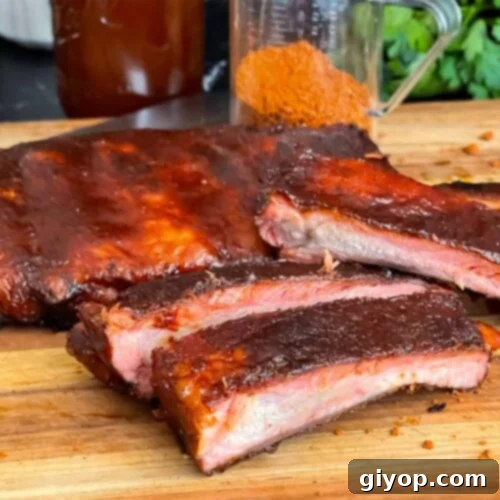
Kansas City Barbecue Ribs Recipe
Print
Pin
Rate
Ingredients
- 1 rack spare ribs trimmed St. Louis style
- 2 tbsp yellow mustard binder, optional
- ½ cup Kansas City-style BBQ rub homemade or store-bought
For Spritzing (Optional):
- ½ cup apple cider vinegar or red wine vinegar
- ½ cup water
For Wrapping:
- 4 tbsp unsalted butter
- 2 tbsp honey
- 1 tbsp apple cider vinegar or red wine vinegar
- 1 tbsp Kansas City-style BBQ rub
For Finishing:
- 1 cup Kansas City-style BBQ sauce
Instructions
Prep the Ribs:
- Trim any excess fat from the ribs and carefully remove the tough membrane from the back. This ensures better rub penetration and a more tender final product.
- Lightly coat the ribs with yellow mustard (this acts as an excellent binder for the rub but is optional). Then, generously apply your Kansas City-style BBQ rub to all sides of the ribs.
- Cover the seasoned ribs and refrigerate for a minimum of 2 hours, or ideally, overnight. This dry brining process significantly enhances flavor and tenderness.
Smoke the Ribs:
- Preheat your smoker to a consistent 225°F (107°C). Use hickory wood for an authentic Kansas City smoky flavor, or choose your favorite smoking wood.
- Place the ribs directly on the smoker grates, bone side down.
- Smoke for approximately 2 ½ hours, or until a good bark has formed and the internal temperature reaches 155-165°F (68-74°C). Optionally, spritz the ribs every 30 minutes after the first hour with a 50/50 mix of apple cider vinegar and water to maintain moisture and enhance bark development.
Wrap for Tenderness:
- Prepare two layers of heavy-duty aluminum foil. On the foil, combine the unsalted butter, honey, apple cider vinegar (or red wine vinegar), and an additional tablespoon of Kansas City-style BBQ rub.
- Place the smoked ribs meat side down onto the butter mixture on the foil. Wrap the ribs tightly to create a sealed packet.
- Return the foil-wrapped ribs to the smoker for another 2 hours, or until the internal temperature reaches around 195-200°F (90-93°C) and the meat shows significant pullback from the bones.
Finish with Sauce:
- Carefully unwrap the ribs and place them back on the smoker grates. Discard the foil and any liquid.
- Brush generously with your Kansas City-style BBQ sauce on both sides, ensuring an even coating.
- Continue to cook for an additional 30 minutes, allowing the sauce to set and caramelize into a sticky, glossy glaze.
Rest & Serve:
- Remove the ribs from the smoker and let them rest on a cutting board, loosely tented with foil, for 5-10 minutes. This allows the juices to redistribute, ensuring maximum moisture.
- Slice the ribs between the bones and serve them hot.
- Savor every bite of those smoky, sticky, and incredibly tender Kansas City ribs!