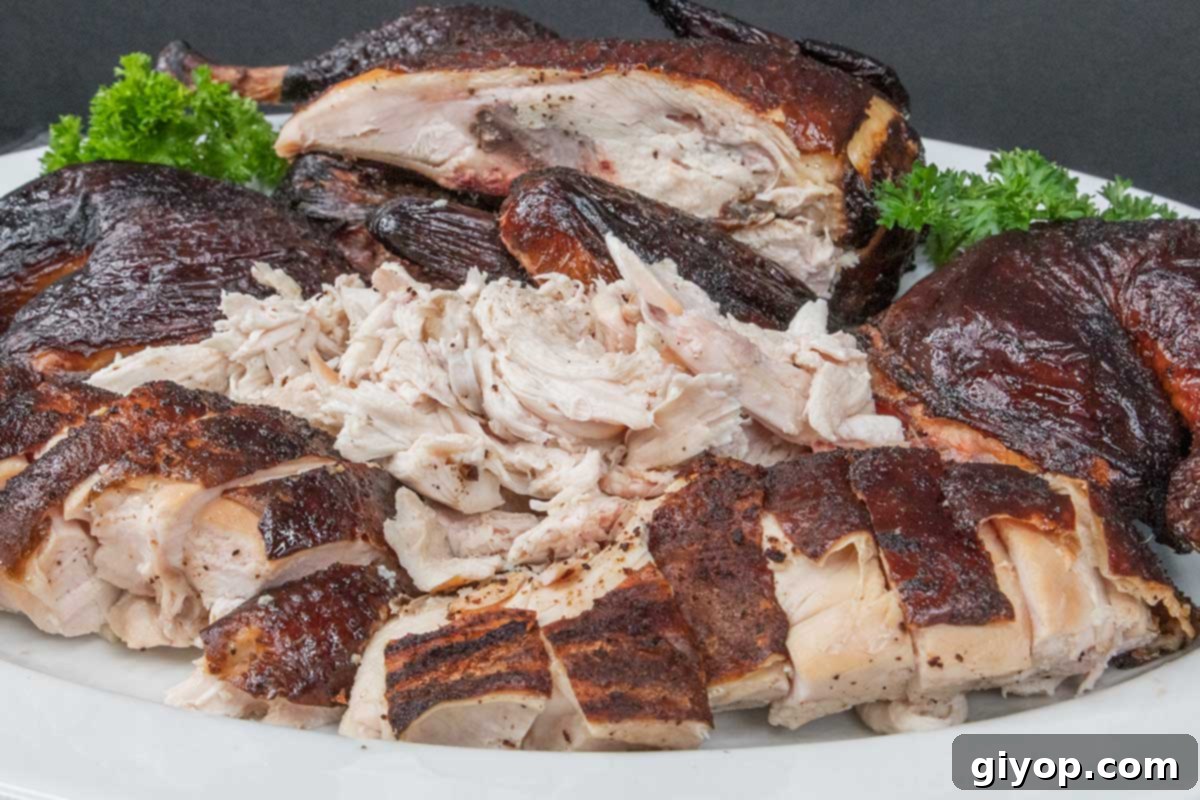
Unlock the secrets to crafting the ultimate smoked chicken – a culinary masterpiece that is incredibly juicy, fall-off-the-bone tender, and infused with an irresistible smoky flavor. This comprehensive guide will transform your backyard barbecue into a gourmet experience, making you the undisputed champion of the smoker. Prepare to amaze your family and friends with a whole smoked chicken that truly blows them away.
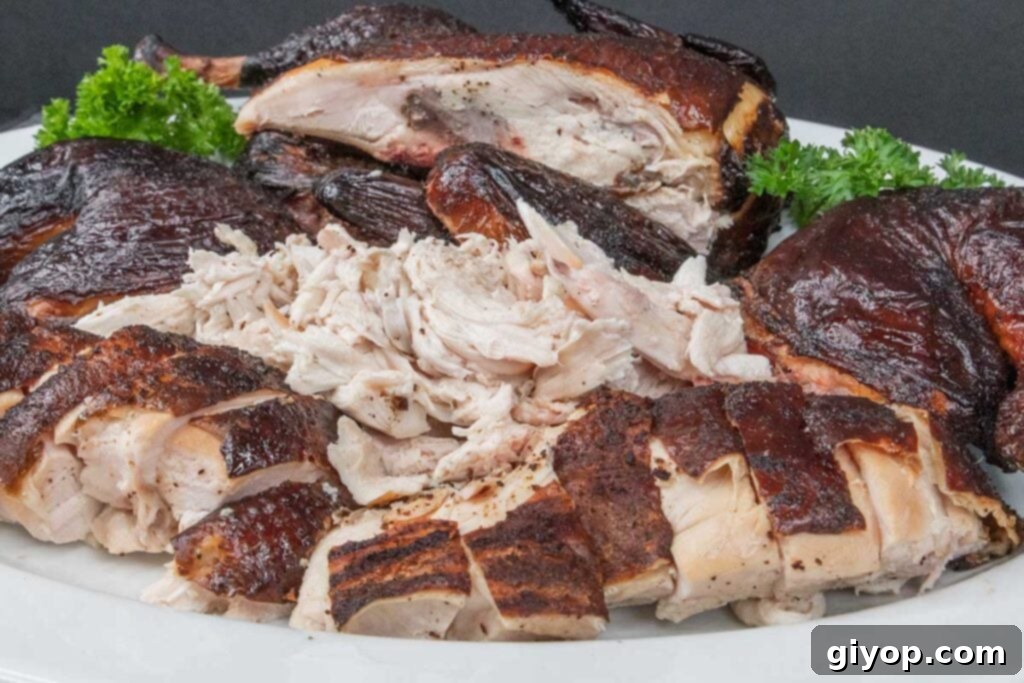
Smoked Chicken: Whole Bird vs. Spatchcock – A Deep Dive
One of the most common dilemmas for any aspiring pitmaster attempting smoked chicken is deciding between smoking a whole bird or spatchcocking it. Both methods have their merits, and to genuinely understand the best approach for achieving maximum flavor and tenderness, we conducted a thorough comparison. Our goal was to answer critical questions that many home cooks face, such as the impact on cook time, the depth of smoke penetration, and the optimal seasoning strategy. We aimed for empirical evidence, ensuring our recommendations are backed by real-world testing. (For a quick summary of our findings, jump straight to What We Learned).
Understanding the Spatchcock Advantage
Spatchcocking, also known as butterflying, involves removing the chicken’s backbone, allowing it to lay flat. This technique offers several distinct advantages, primarily significantly reducing cooking time. A spatchcocked chicken can cook in roughly half the time of a whole bird, a considerable benefit when you’re craving delicious smoked chicken without the extensive wait. However, this faster cook time raises questions about smoke absorption – can a quicker cook still deliver that deep, aggressive smoky flavor we all desire? We wanted a taste that wasn’t just a faint background note but a prominent, mouth-watering presence.
The Dry Brine vs. BBQ Rub Debate
Another crucial element of our experiment revolved around seasoning. Should we stick to a simple dry brine, primarily salt with classic aromatics like onion and garlic powder, or opt for a more complex, store-bought BBQ rub? The dry brine is known for its ability to tenderize and season from within, while rubs often provide a flavorful crust. We tested both methods to see which would yield superior results for smoked chicken, considering factors like moisture retention and overall flavor profile.
Mastering the Spatchcock Technique for Even Cooking
The spatchcock technique is a game-changer for anyone looking to optimize their chicken cooking, whether on the smoker, grill, or even in the oven. It ensures more even cooking and faster results by flattening the bird. Here’s a detailed, step-by-step guide to spatchcocking your chicken perfectly:
- Prepare Your Workspace: Lay the chicken breast-side down on a clean cutting board. Position the bird so the backbone faces upwards and the ‘parson’s nose’ – the triangular fatty piece at the rear – is closest to you.
- Remove the Backbone: Using a sturdy pair of kitchen shears (a sharp knife can also work, but shears offer more control and safety), begin cutting along one side of the backbone. Apply steady pressure, cutting through the ribs until you reach the neck cavity.
- Repeat on the Other Side: Rotate the chicken and repeat the cutting process along the other side of the backbone. Once both cuts are made, the backbone should be easily removable. You can save the backbone for making stock or discard it.
- Trim Excess: Use paper towels to pat dry any residual moisture on the chicken’s surface. With your shears, carefully trim away any large, loose flaps of skin or excessive fat. These pieces tend to burn or become rubbery rather than absorbing smoke effectively.
- Flatten the Bird: Flip the chicken over so it’s breast-side up. Place your hands firmly on the breastbone and press down hard. You should hear a crack as the breastbone breaks, allowing the chicken to lay completely flat. If it’s too difficult, you can lightly score the breastbone with the back of a knife to initiate the break before pressing.
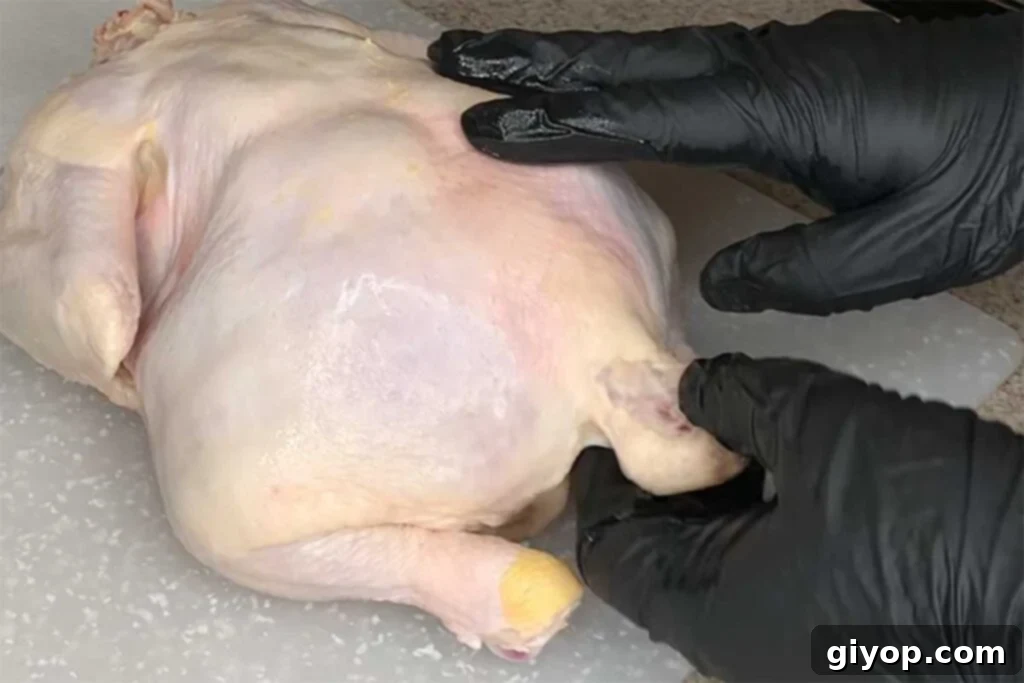
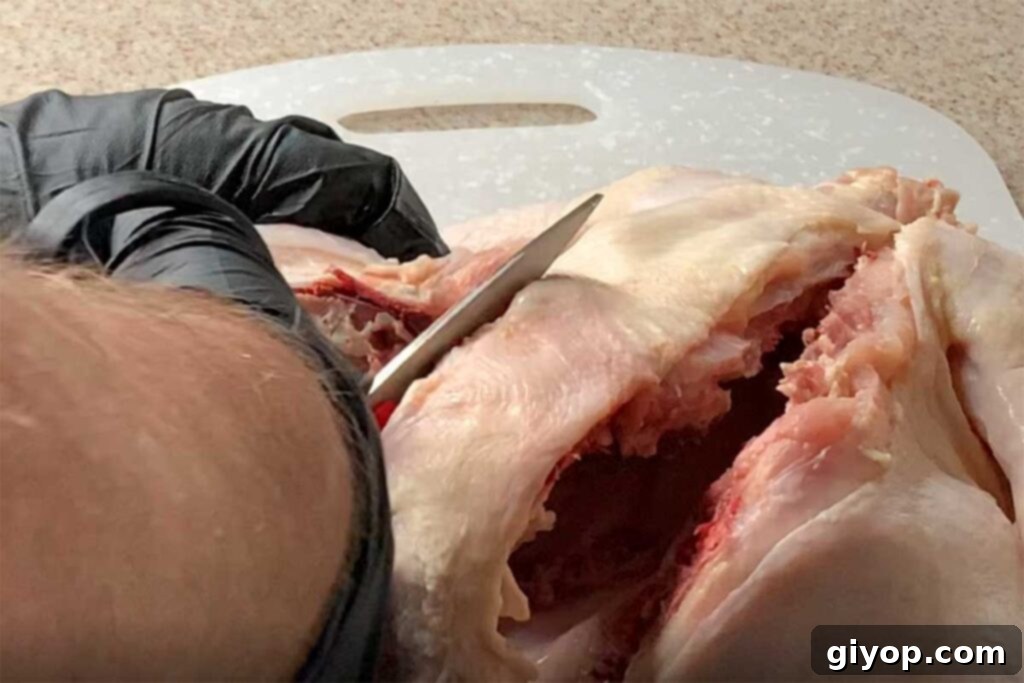
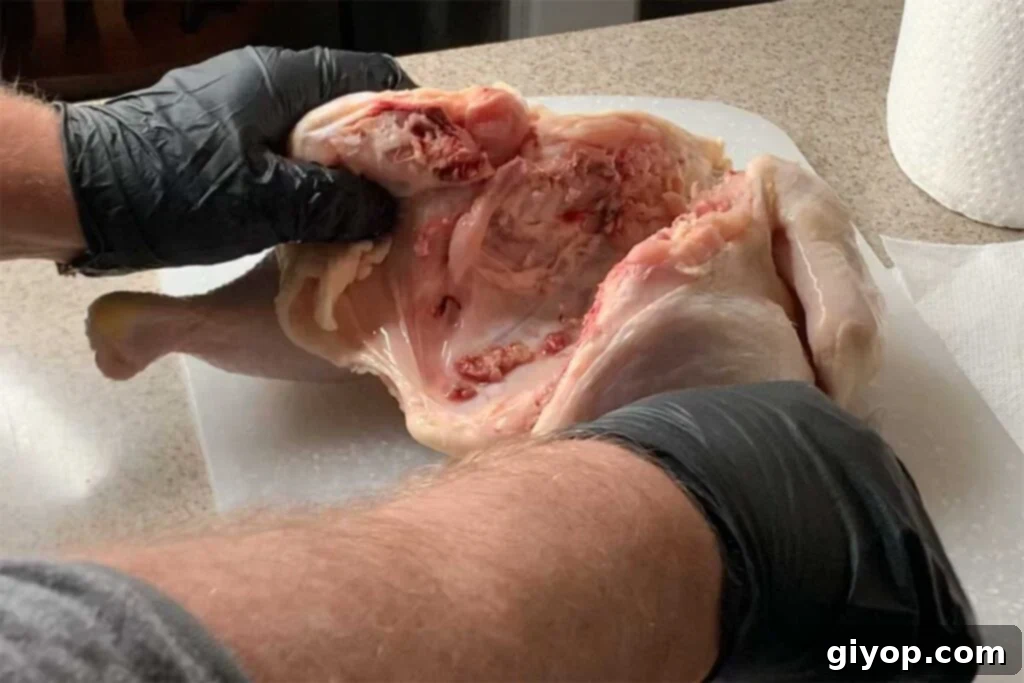
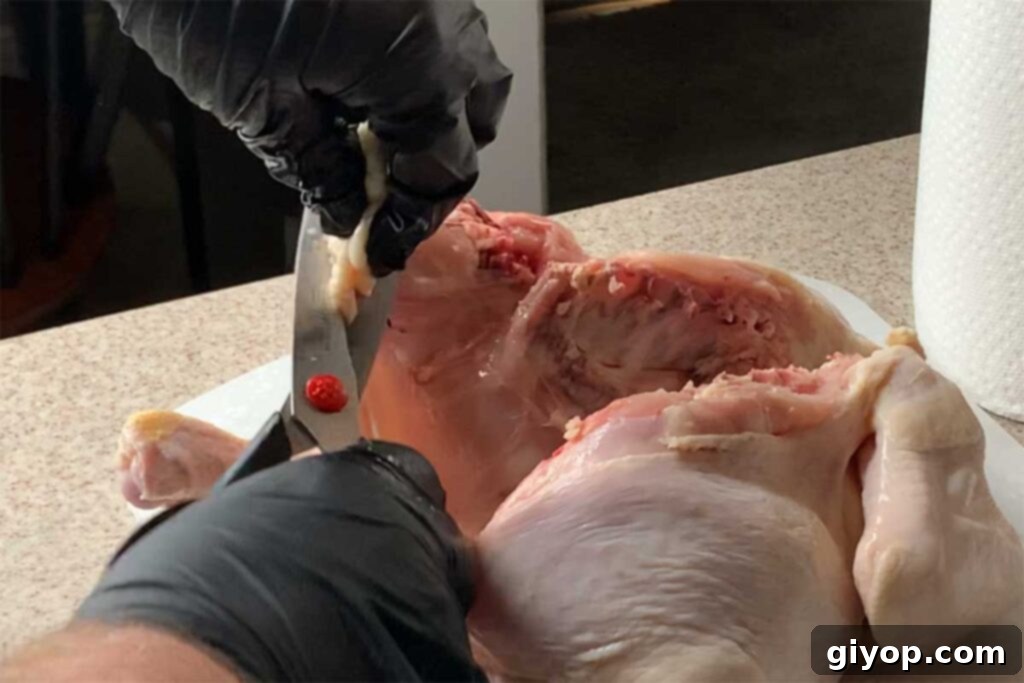
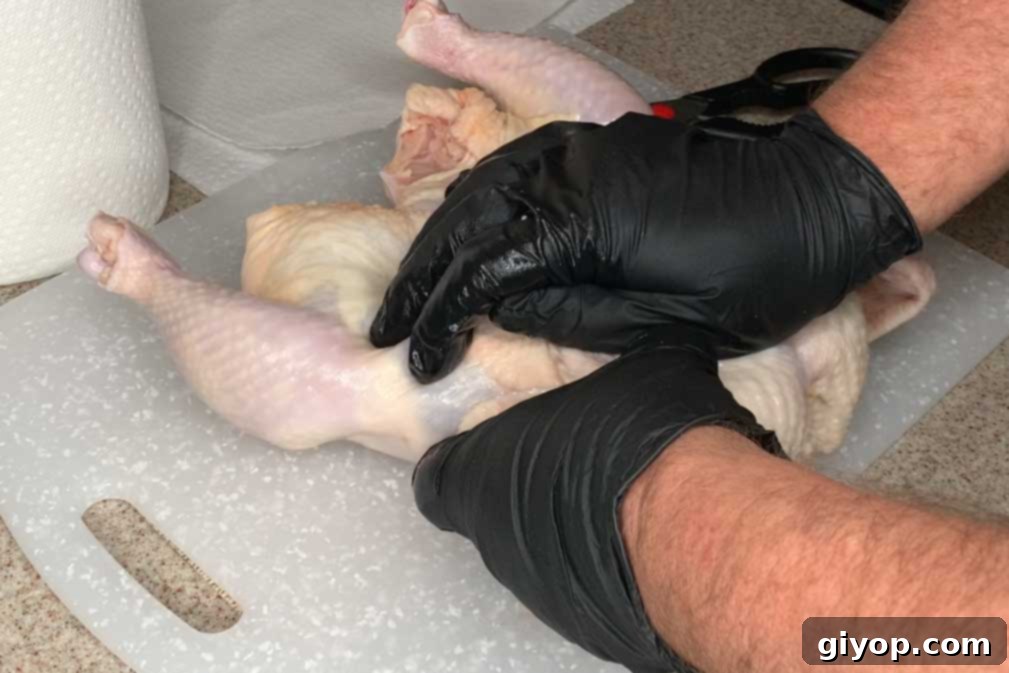
Once flattened, your chicken is ready for seasoning and smoking. This method ensures that the entire bird cooks more uniformly, preventing the breast from drying out while the thighs finish cooking. For a 5-pound bird, expect a significantly reduced cook time of approximately 2.5 to 3 hours at 250-275°F.
To Skewer or Not to Skewer?
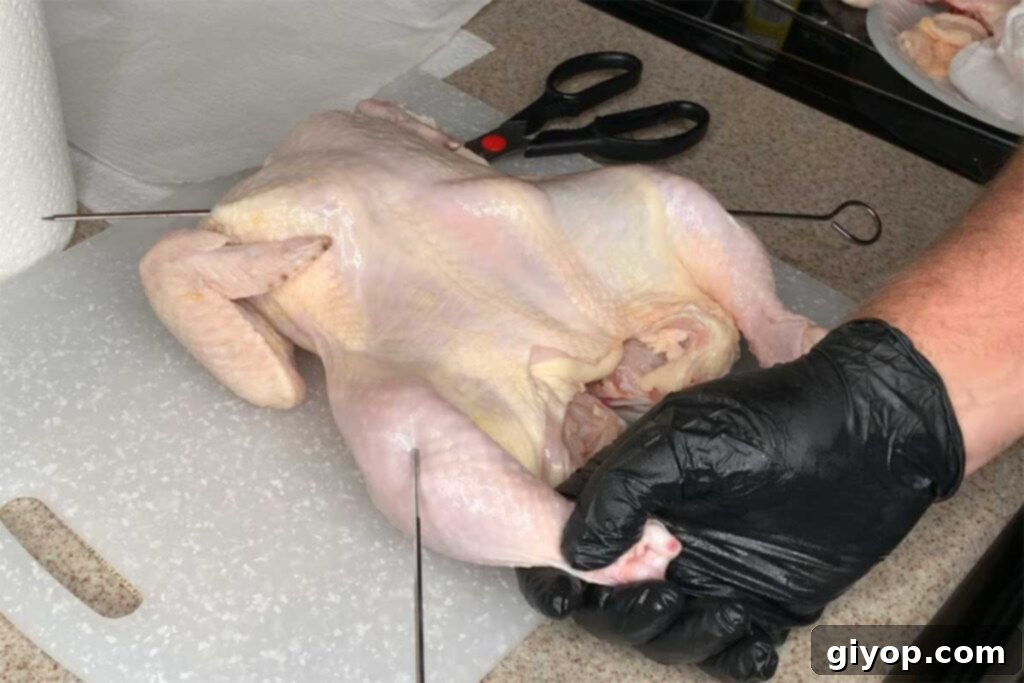
Some methods suggest skewering the spatchcocked chicken through the legs, across the body, and through the breast to help it stay flat. In our tests, we found this step made no discernible difference in the final cook or presentation when smoking at lower temperatures (225-275°F). However, if you plan to smoke at higher temperatures (above 275°F) or grill, skewering can provide added stability and might be a worthwhile consideration.
The Art of Seasoning: Dry Brine for Optimal Flavor and Moisture
Proper seasoning is paramount to achieving a truly exceptional smoked chicken. Our preferred method is dry brining, a technique that has consistently delivered superior results compared to traditional wet brining. Dry brining allows the salt to penetrate the meat, drawing out moisture and then reabsorbing it, effectively tenderizing the muscle fibers and intensifying the chicken’s natural flavors. This process also ensures a beautifully seasoned bird from the inside out, without the soggy skin often associated with wet brines.
Our Simple Yet Effective Dry Brine Recipe
For a foundational flavor that complements the smoke without overpowering it, we highly recommend this simple dry brine blend:
- 1 tbsp Kosher Salt
- 1/2 tsp Garlic Powder
- 1/2 tsp Onion Powder
- 1/2 tsp Freshly Ground Black Pepper
Combine these ingredients thoroughly in a small bowl. This blend provides a classic savory profile that allows the smoky notes to shine.
Choosing Your Rub: Simple vs. Complex
During our experimentation, we compared this simple salt-based dry brine with a standard BBQ rub, specifically Bad Byron’s Butt Rub, chosen for its sugar-free composition and good salt content. Our findings were quite revealing: the core flavor difference was minimal. While the commercial rub offered a slight hint of heat that our simple brine did not, the overall impact on the smoked chicken’s taste was surprisingly subtle. This led us to conclude that a carefully applied simple dry brine is often all you need to create a fantastically flavored smoked chicken. However, if you prefer a specific flavor profile or a touch of spice, a high-quality, sugar-free BBQ rub can certainly enhance the experience.
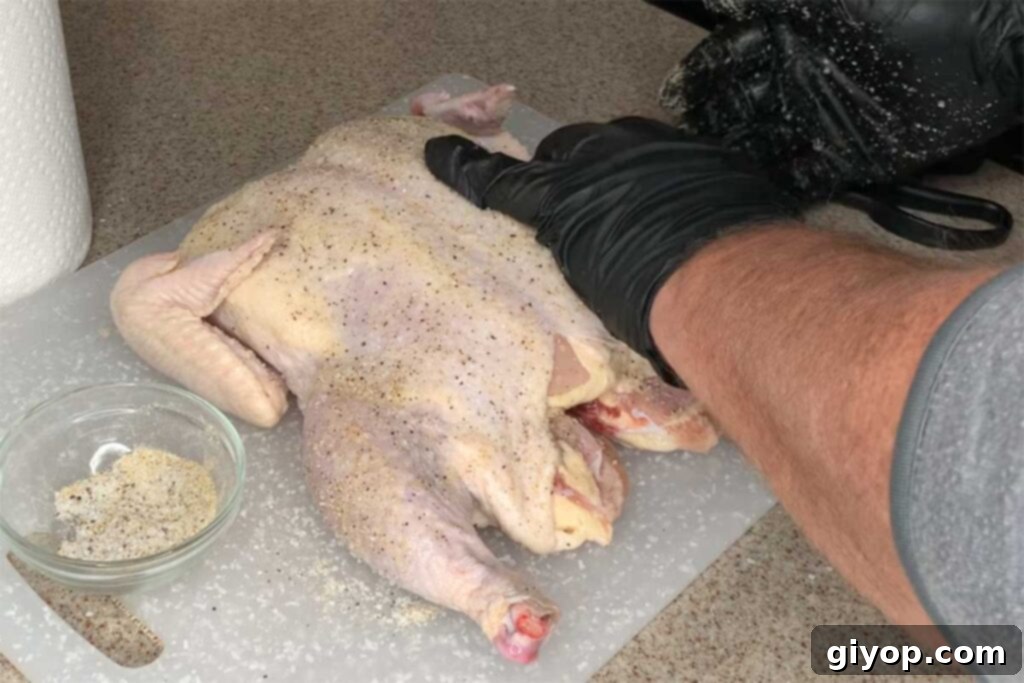
Application and Brining Time
Whichever seasoning you choose, apply it generously to both sides of the chicken, paying particular attention to the thicker parts like the breasts and thighs. Once coated, place the chicken on a baking sheet, cover it tightly with plastic wrap, and refrigerate for a minimum of 8 hours, though overnight (12-24 hours) is ideal. The longer brining period allows the salt to work its magic, resulting in a more tender, flavorful, and incredibly juicy finished product.
Preparing Your Whole Chicken for the Smoker: Trussing for Success
For whole chickens, a crucial step before smoking is “dressing” or trussing the bird. This simple technique helps the chicken maintain an appealing shape, promotes more even cooking, and prevents delicate parts from drying out. While less critical for spatchcocked chickens due to their flattened form, trussing is highly recommended for whole birds.
To dress your chicken:
- Tie the Legs: Using butcher’s twine, tie the chicken’s legs together at the drumstick ends. This keeps the leg and thigh meat tucked in close to the body, ensuring they cook uniformly with the breast.
- Tuck the Wings: Fold the wing tips underneath the body of the chicken, against the breast. This prevents the wing tips from burning or becoming overly dry during the long smoking process, as they are thin and exposed.
A properly trussed chicken will cook more evenly, leading to consistently tender and juicy meat throughout the entire bird. This step significantly contributes to the overall success of your smoked chicken.
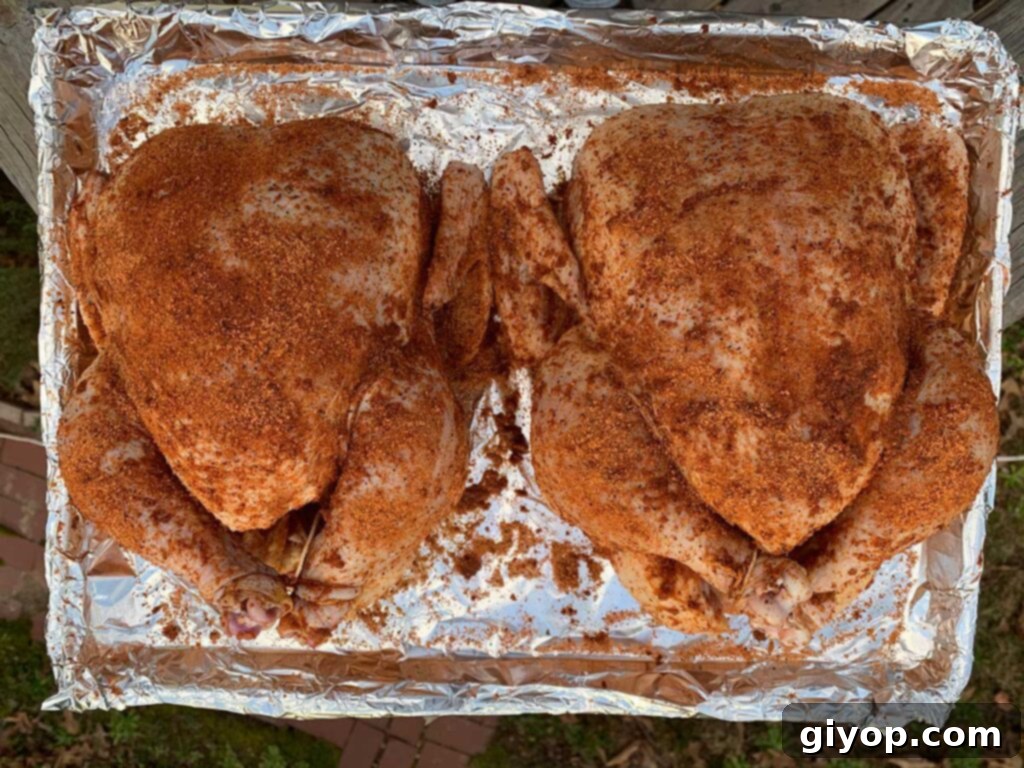
Smoking the Perfect Whole Chicken: Low and Slow Method
Now that your chicken is seasoned and prepared, it’s time for the magic to happen in the smoker. The key to truly delicious smoked chicken is a low-and-slow approach, allowing ample time for smoke penetration and gentle cooking to achieve unparalleled tenderness.
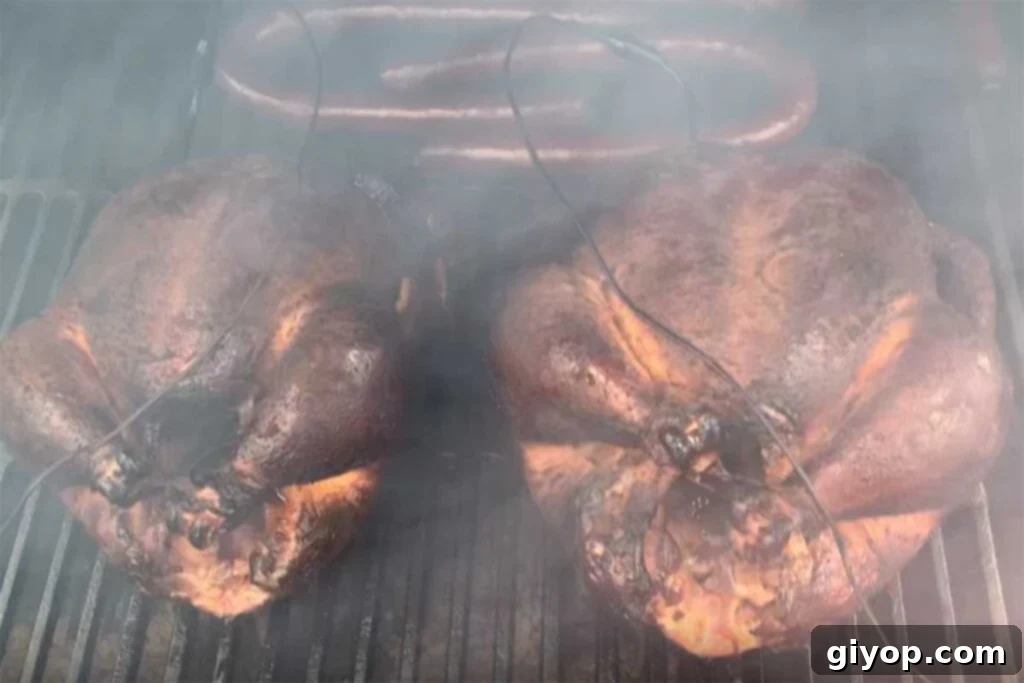
Smoker Setup and Wood Selection
- Preheat Your Smoker: Bring your smoker to a stable temperature between 225-250 degrees Fahrenheit (107-121°C). Consistency is key, so allow your smoker to settle at your target temperature before adding the chicken.
- Choose Your Wood: The type of wood you use will significantly impact the final smoke flavor. We recommend a combination of oak and hickory for a robust, classic BBQ profile.
- Oak: A versatile, medium-intensity wood that provides a clean, balanced smoky flavor. It’s an excellent base for any smoked meat.
- Hickory: Offers a stronger, more aggressive smoke flavor, often described as bacony or hearty. It pairs exceptionally well with chicken, adding depth without being overpowering when used in moderation.
- Other Options: Pecan offers a milder, nutty smoke. Fruitwoods like apple or cherry impart a sweeter, lighter smoke and can add a beautiful reddish hue to the skin. Experiment to find your favorite combination!
Add your chosen wood chunks to your smoker according to its specific instructions (e.g., charcoal, electric, or pellet smoker). Ensure you maintain a consistent smoke output throughout the cook.
Smoking Process and Temperature Guidelines
- Place the Chicken: Once your smoker is at a steady temperature and producing clean, blue smoke, carefully place the whole, trussed chicken directly on the grates. Ensure there’s adequate space for smoke to circulate around the bird.
- Monitor Internal Temperature: Smoke the chicken until the internal temperature of the thickest part of the breast and thigh reaches 165 degrees Fahrenheit (74°C). Use a reliable meat thermometer, inserted without touching bone, to accurately monitor the temperature. This typically takes around 5 hours for a 5-pound whole chicken at 225-250°F.
- Rest the Chicken: Once the target internal temperature is reached, remove the chicken from the smoker. Place it on a cutting board or platter and tent loosely with foil. Allow it to rest for approximately 20-30 minutes before carving. This resting period is crucial; it allows the juices to redistribute throughout the meat, ensuring every bite is incredibly moist and tender.
- Carve and Serve: After resting, carve your perfectly smoked chicken and serve it alongside your favorite sides.
Differences in Cook Time: A Practical Comparison
Understanding the cooking time variations between different preparation methods is vital for planning your barbecue.
- Spatchcocked Chicken: For a 5 lb. chicken smoked at 225-250 degrees F, expect a significantly reduced cook time of approximately 2.5 to 3 hours.
- Whole Chicken: A 5 lb. whole chicken smoked at the same temperature range (225-250 degrees F) will require a longer cook time, typically around 5 hours.
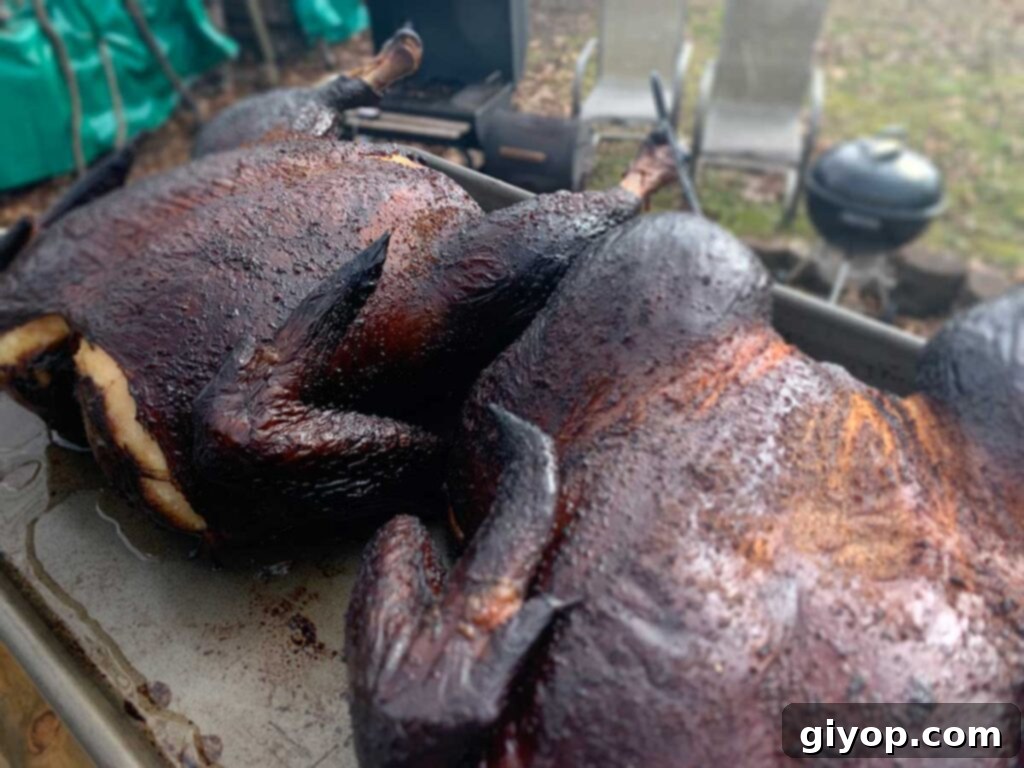
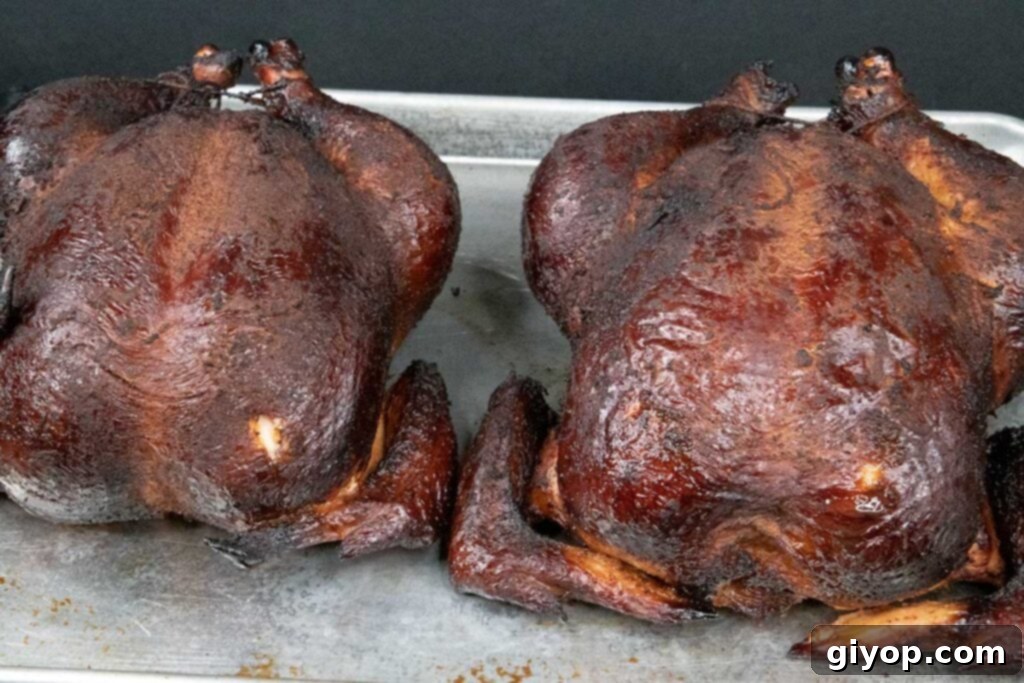
While spatchcocking offers speed, our tests aimed to uncover if this comes at a cost to the desired smoke flavor.
Key Learnings from Our Smoked Chicken Experiment
Our extensive testing with both spatchcocked and whole chickens, using different brining methods, provided invaluable insights into creating the best possible smoked chicken. Here’s a detailed breakdown of what we learned:
Smoke Flavor: The Whole Chicken Wins
While the spatchcock method undeniably speeds up cooking, getting the chicken to the table faster, it fell short in delivering the aggressive, rich smoke flavor we were seeking. Both spatchcocked chickens were undeniably delicious and moist, but the shorter exposure time meant the smoky essence was more subtle, almost a background note rather than a primary flavor. The whole chickens, with their extended time in the smoker, absorbed a much deeper, more satisfying smoky character. For those who prioritize intense smoky flavor, the traditional whole-bird method at a low temperature is the clear winner.
Rub vs. Simple Brine: Minimal Impact on Overall Taste
Our comparison between a simple salt-based dry brine and a commercial BBQ rub (Bad Byron’s Butt Rub) revealed that for smoked chicken, the choice makes less of a difference than one might expect. The commercial rub imparted a very faint hint of heat, which was its only noticeable distinction from the simple salt brine. This suggests that the quality of the chicken and the smoking process itself contribute far more to the final flavor than a complex rub. A simple, effective dry brine is often all that’s needed to prepare the chicken for optimal smoking.
The Skin Dilemma: BBQ Chicken vs. Smoked Chicken
This is a crucial point of distinction that often confuses home cooks: **BBQ chicken and smoked chicken are not the same thing, especially when it comes to the skin.** We found that even at a slightly higher smoking temperature of 275°F, the chicken skin remained chewy, not crispy. At lower smoking temperatures (225-250°F), the skin will be even chewier. Expect to discard it if you prefer crispy skin.
If you desire crispy, bite-through chicken skin, what you’re likely craving is **BBQ chicken**, which typically involves higher heat, often finishing on a grill or under a broiler to crisp up the skin. Smoked chicken, cooked low and slow, prioritizes incredibly tender, moist meat infused with smoke. Sacrificing smoke time for crispy skin by cranking up the heat defeats the purpose of true smoked chicken. Embrace the tender, smoky meat and, if you must, enjoy the skin as a flavorful, albeit chewy, component, or simply remove it. Don’t be fooled by anyone claiming perfectly crispy skin from a low-and-slow smoked chicken.
The Ultimate Smoked Chicken Recipe: Our Final Recommendation
Based on our findings, the solution for a truly delicious, juicy, and smoky whole chicken is a straightforward yet meticulous process:
- Dry Brine Overnight: Season your whole chicken generously with a simple dry brine (salt, garlic powder, onion powder, pepper) and refrigerate for at least 8-12 hours. This is the foundation for juicy meat.
- Low and Slow Smoking: Preheat your smoker to a stable 225-250 degrees Fahrenheit (107-121°C). Use wood chunks like oak and hickory for a robust smoke flavor.
- Cook to Perfection: Smoke the chicken until the internal temperature reaches 165 degrees Fahrenheit (74°C) in both the breast and thigh. Use an accurate meat thermometer.
- Crucial Resting Period: Remove the chicken from the smoker and allow it to rest for 20 to 30 minutes, tented loosely with foil. This ensures the juices redistribute, resulting in maximum moisture and tenderness.
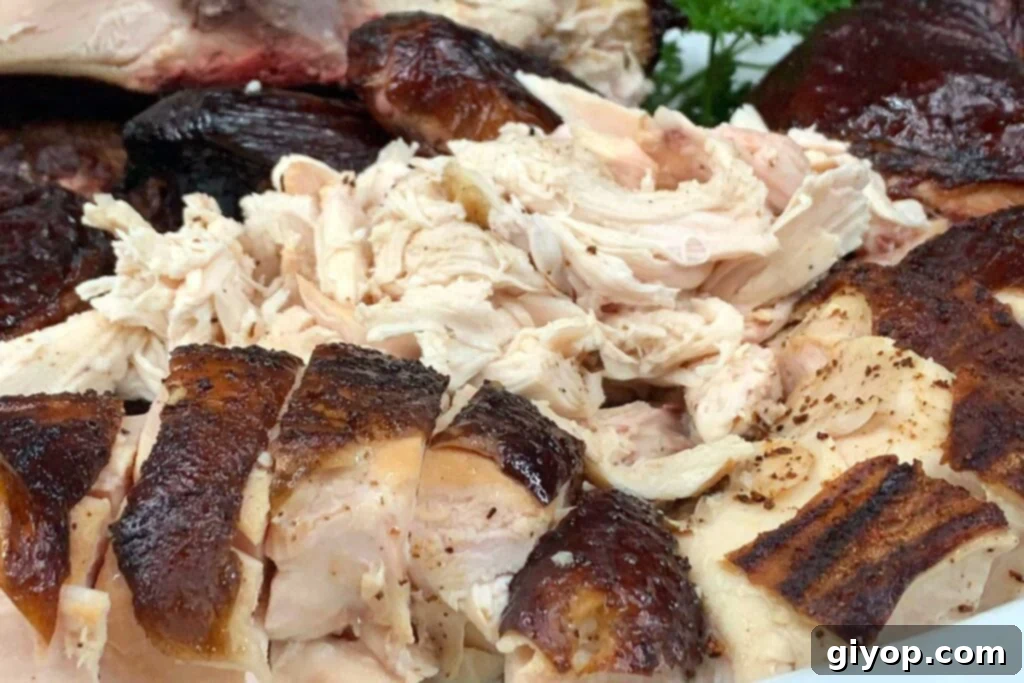
Serving Suggestions and Leftover Inspiration
Serve your magnificent smoked chicken as you see fit! We highly recommend pairing it with a side of Alabama White BBQ Sauce. The tangy, peppery, and slightly sweet notes of the white sauce create an unparalleled flavor explosion with the rich, smoky chicken. It’s a match made in culinary heaven! We even use this incredible sauce with our smoked chicken wings.
Don’t stop at just one chicken! Smoking multiple birds is efficient and provides fantastic leftovers for creative dishes. We often make a banging smoked chicken salad that’s absolutely incredible on brioche bread. Another killer creation from our kitchen is a smoked chicken panini sandwich on freshly made sourdough. The possibilities for delicious meals with leftover smoked chicken are endless!
Expand Your Grilling Repertoire!
If you’re passionate about outdoor cooking, explore some of our other popular grilling and smoking recipes:
- Best Ever Grilled Chicken Marinade
- The Best Keto Grilled Pork Tenderloin Recipe
- Smoked Pork Shoulder Recipe
- Fall Off The Bone St Louis Style Ribs
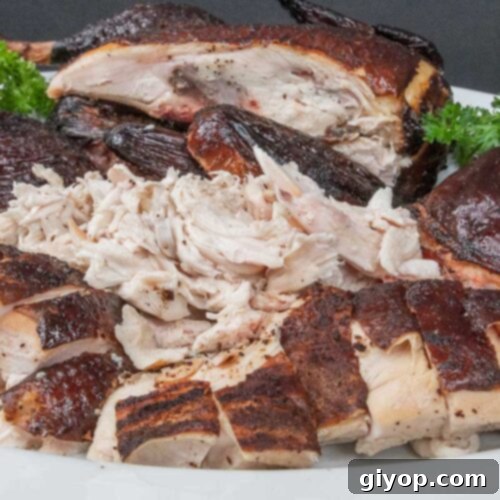
Smoked Whole Chicken Recipe
A comprehensive guide to creating fabulous smoked chicken that is juicy, tender, and intensely smoky, guaranteed to impress every time.
Average Rating: 4.80 from 5 votes
Print Recipe
Course: BBQ, Chicken, Smoked
Cuisine: BBQ
Prep Time: 10 minutes
Cook Time: 5 hours
Dry Brine: 8-24 hours
Servings: 4 people
Calories: 412 kcal
Equipment
- Smoker
- Hickory, Oak, or Pecan wood chunks (or a mix)
Ingredients
Dry Brine
- 1 tbsp Kosher Salt
- 1/2 tsp Onion Powder
- 1/2 tsp Garlic Powder
- 1/2 tsp Pepper, freshly ground
Chicken
- 1 Whole Chicken (4-5 lb)
Instructions
Prep
- Combine all dry brine spices in a bowl.
- Add rub to the entire surface of the chicken, paying attention to the breasts and thighs.
- Place chicken on a plate or baking dish and cover with plastic wrap.
- Refrigerate for at least 8 hours, and up to 24 hours, for optimal brining.
The Cook
- Preheat your smoker to a stable 225 to 250 degrees Fahrenheit.
- Place the chicken into the smoker. Make sure to tuck the wings under to prevent overcooking and tie the legs if smoking whole.
- Smoke at 225 to 250 degrees Fahrenheit for approximately 5 hours (for a 5lb whole chicken) or until the breasts and thighs have reached an internal temperature of 165 degrees Fahrenheit.
- Remove from the smoker and allow to rest for 20 to 30 minutes.
- Carve and serve your deliciously smoked chicken.