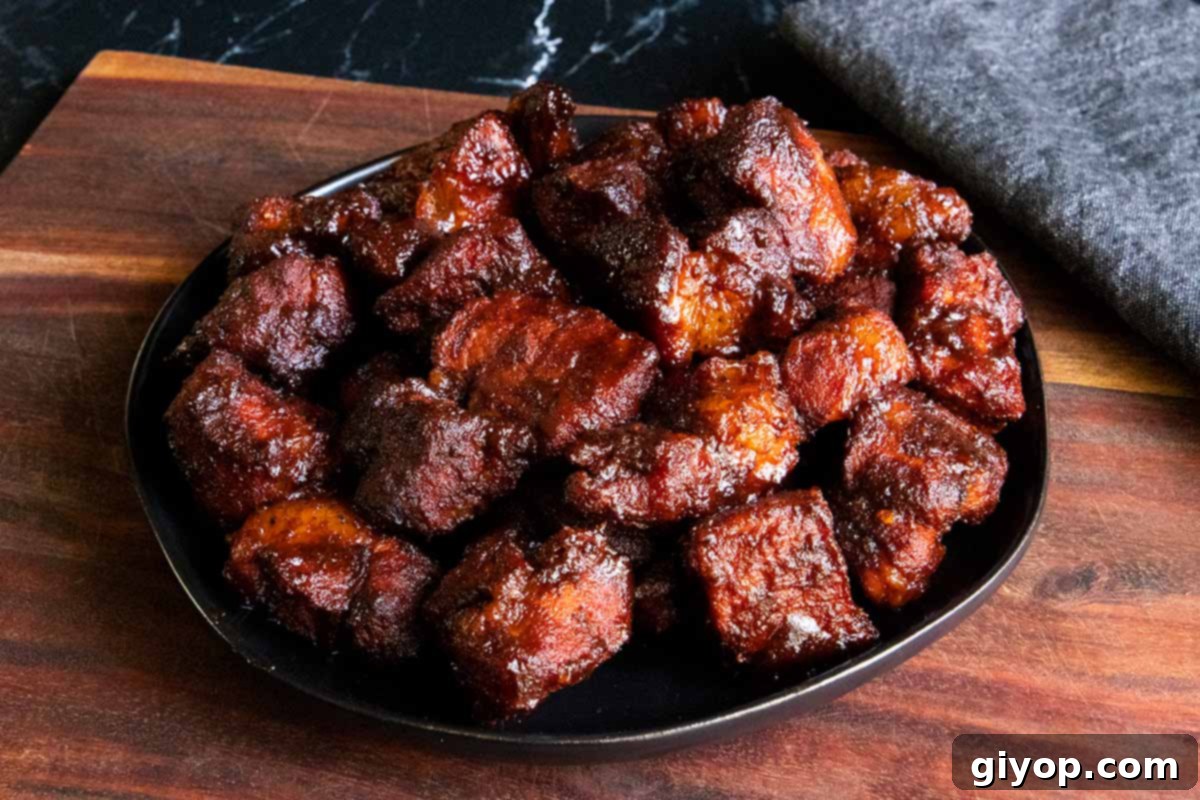
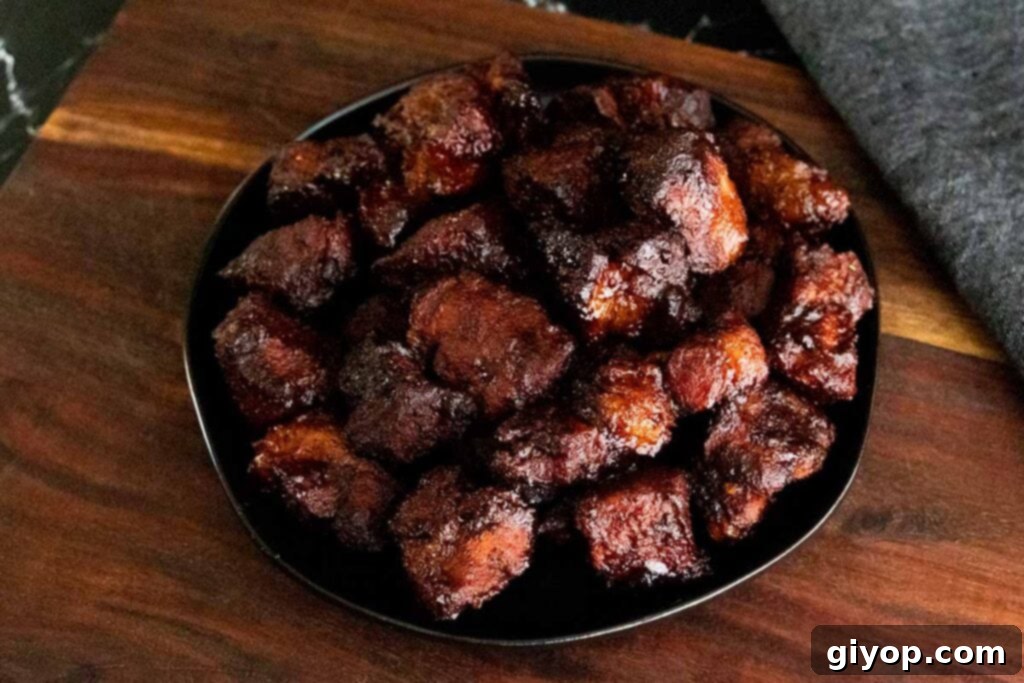
Prepare yourself for an extraordinary culinary experience with these perfectly tasty, smoky, sticky-sweet Pork Butt Burnt Ends! Imagine succulent cubes of pork, slow-smoked to perfection, then coated in a rich, spicy-sweet glaze that transforms each bite into pure “meat candy.” If you’re a fan of barbecue that melts in your mouth and leaves an unforgettable flavor, then this recipe is about to become your new obsession.
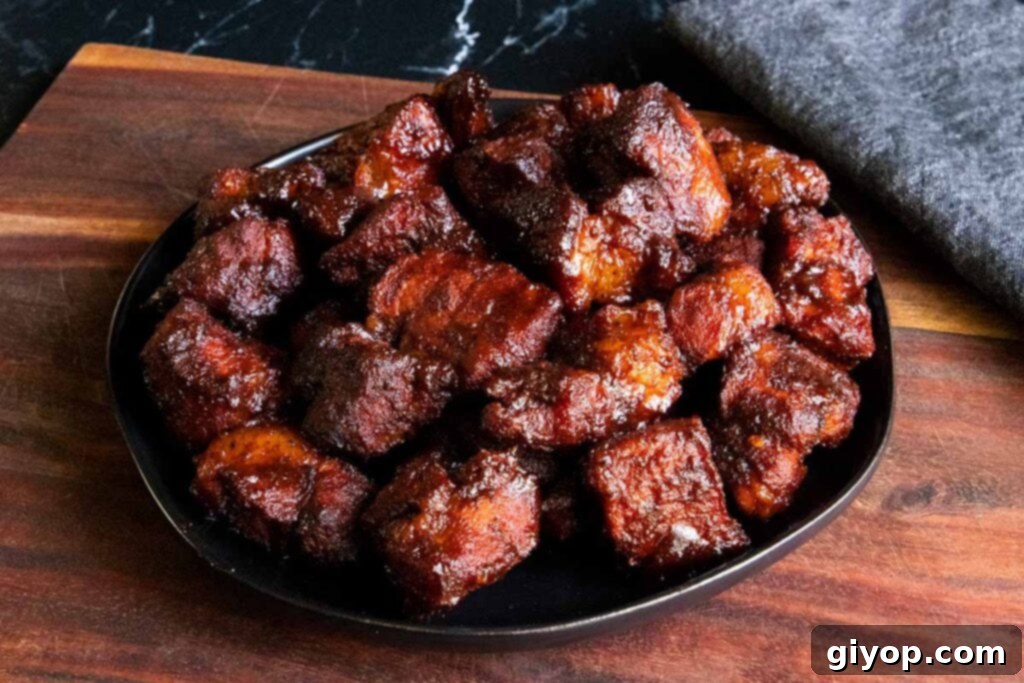
Burnt ends are, without a doubt, a beloved staple in the world of barbecue. Their irresistible combination of crispy, caramelized edges and tender, juicy interiors makes them highly sought after. However, the traditional method often involves smoking a full brisket, which can be a time-consuming endeavor, spanning 12 to 16 hours. While brisket burnt ends are legendary, the commitment required can sometimes be daunting for the average backyard pitmaster.
Another popular alternative is pork belly burnt ends. These are incredibly rich and decadent, but their high-fat content can make them almost too indulgent. You find yourself needing to pace yourself to avoid feeling overwhelmed by their richness. This led to a quest for the perfect balance: a recipe that delivers all the incredible flavor and texture of burnt ends without the epic cook time or excessive richness.
And then, the revelation: the Boston butt, also known as pork butt. This cut offers the best of both worlds. It boasts a fantastic fat content that renders beautifully during the smoking process, contributing to incredible moisture and flavor, alongside a substantial, meaty bite that holds up well to cubing. After extensive trials and meticulous adjustments, a truly exceptional recipe was born – one that masterfully delivers that signature smoky depth, a nuanced spice, and the irresistible sticky sweetness. The result? Absolutely fabulous burnt ends that have quickly climbed to the top of my favorite smoker preparations. If you haven’t experienced these yet, you absolutely must give them a try.
The beauty of using pork butt for burnt ends lies in its significantly decreased cook time compared to brisket, while still offering an explosion of flavor. It’s a solid win for any barbecue enthusiast looking for big taste with a more manageable timeline. While this method is highly adaptable to various types of grills, our focus here will be on achieving optimal results using a dedicated smoker for that authentic BBQ flavor.
Furthermore, this recipe is incredibly versatile in terms of serving size. Depending on your gathering, you can easily scale it up or down. I’ve personally experimented with smoking half a pork butt for these burnt ends and reserving the other half for some classic chopped pork, proving just how flexible this approach can be. Whether you’re feeding a small family or a crowd, these pork butt burnt ends are sure to be a showstopper.
Ingredients Needed for Unforgettable Pork Butt Burnt Ends
Crafting these delectable burnt ends doesn’t require an arsenal of exotic ingredients. The magic largely happens with a well-balanced rub and a simple yet potent glaze. The rub, in particular, is a culmination of years of smoking various meats, meticulously refined to strike the perfect chord of sweet, smoky, and subtly spicy notes. It’s so versatile, you’ll find yourself wanting to put it on almost everything!
The Star: Boneless Pork Butt
For this recipe, you’ll need approximately 8 pounds of boneless pork butt (also known as Boston butt). When selecting your pork butt, look for a good amount of marbling throughout the meat. Marbling, the intramuscular fat, is crucial for keeping the burnt ends juicy and tender as they cook. While a bone-in butt can certainly be used, boneless simplifies the cubing process, saving you time and effort.
The Signature Rub: A Symphony of Spices
The precise quantities for our award-winning rub are detailed in the recipe card below. However, here’s a quick overview of the spices that come together to create this harmonious blend. As mentioned, this rub truly elevates the pork without overpowering it with excessive sweetness or heat. It’s designed to complement the rich pork flavor, making it perfect for these burnt ends and many other smoked pork dishes.
- Paprika: Provides a vibrant red color and a mild, fruity undertone.
- Smoked Paprika: Adds an essential layer of deep, smoky flavor that truly defines barbecue.
- Garlic Powder: A foundational savory note, offering aromatic depth.
- Chili Powder: Contributes earthy notes and a subtle, warm spice.
- Kosher Salt: Essential for seasoning and enhancing all other flavors.
- Black Pepper: Offers a classic pungent kick and a hint of warmth.
- Onion Powder: Another savory cornerstone, complementing the garlic.
- Brown Sugar: Crucial for the sweet element, aiding in caramelization and bark formation.
- Dried Oregano: Brings a touch of earthy, slightly peppery Mediterranean aroma.
- Dried Thyme: Adds a delicate, minty, and earthy fragrance.
- Cumin: Imparts a warm, earthy, and slightly smoky flavor.
- Dry Mustard: Provides a tangy, sharp note that cuts through richness and enhances savory flavors.
- Cayenne: Delivers a subtle, lingering heat to balance the sweetness.
The Irresistible Glaze: Sticky, Sweet Perfection
Ah, the glaze! This is where our smoked pork butt burnt ends truly transform into that “meat candy” we adore. It’s a simple concoction, yet it delivers a powerful punch of sticky, sweet, and subtly spicy goodness that makes these burnt ends stand out. You won’t find anything overly complicated here, just a perfect blend of complementary flavors.
- Hot Honey: A fantastic ingredient that brings both sweetness and a delightful kick. It’s widely available in most grocery stores.
- Brown Sugar: Enhances the sweetness and helps create that glossy, caramelized finish.
- Your Favorite Barbecue Sauce: Choose a high-quality barbecue sauce that you genuinely love. Its flavor profile will significantly impact the final taste.
- Butter: Adds richness and helps to create a silky-smooth texture for the glaze.
- Some of the Remaining Rub: Incorporating a bit of the dry rub into the glaze ties all the flavors together beautifully.
Don’t Sweat The Recipe is supported by its readers. We may earn a commission if you purchase through a link on our site. Learn more.
Crafting the Perfect Pork Butt Burnt Ends: A Step-by-Step Guide
Creating these sensational burnt ends is a rewarding journey, transforming a humble pork butt into bite-sized nuggets of smoky, sweet, and tender bliss. Follow these detailed steps to achieve barbecue perfection in your own backyard.
Step 1: Preparing Your Signature Rub
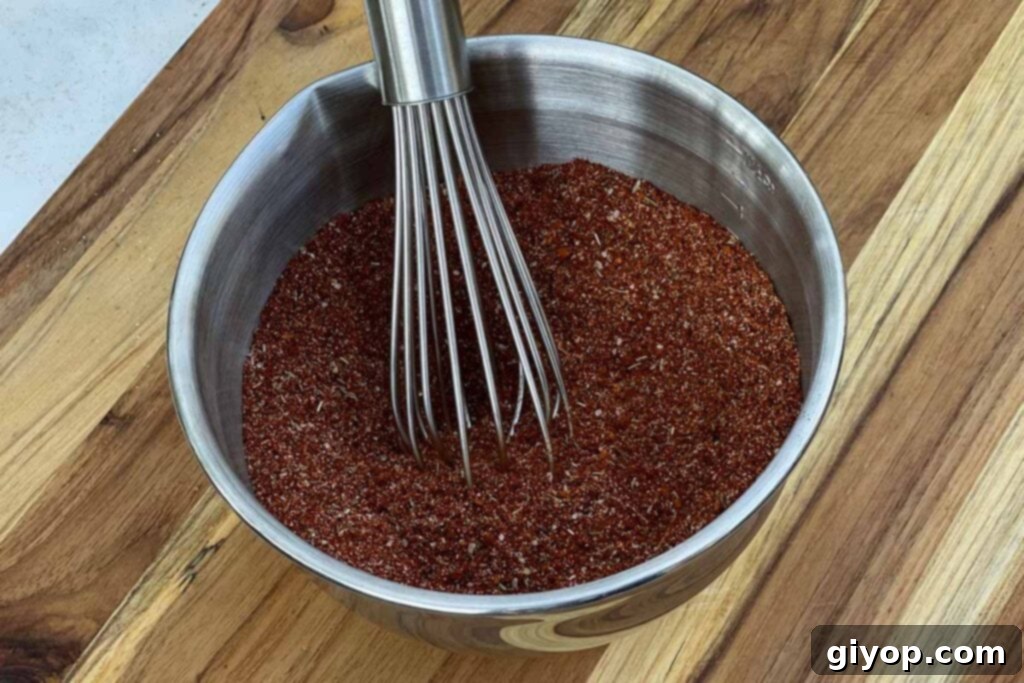
This initial step is wonderfully straightforward, yet it lays the foundation for all the flavors to come. Simply gather all the individual spices listed for the rub in a medium-sized bowl. Using a spoon or whisk, mix them thoroughly until they are uniformly combined. Ensure there are no clumps and that the different spices are evenly distributed. This homemade rub is designed to provide a complex flavor profile that perfectly complements the pork. Once mixed, set your carefully crafted spice blend aside, keeping it ready for when the pork is prepped and waiting to be seasoned.
Step 2: Preparing the Pork Butt for Burnt Ends
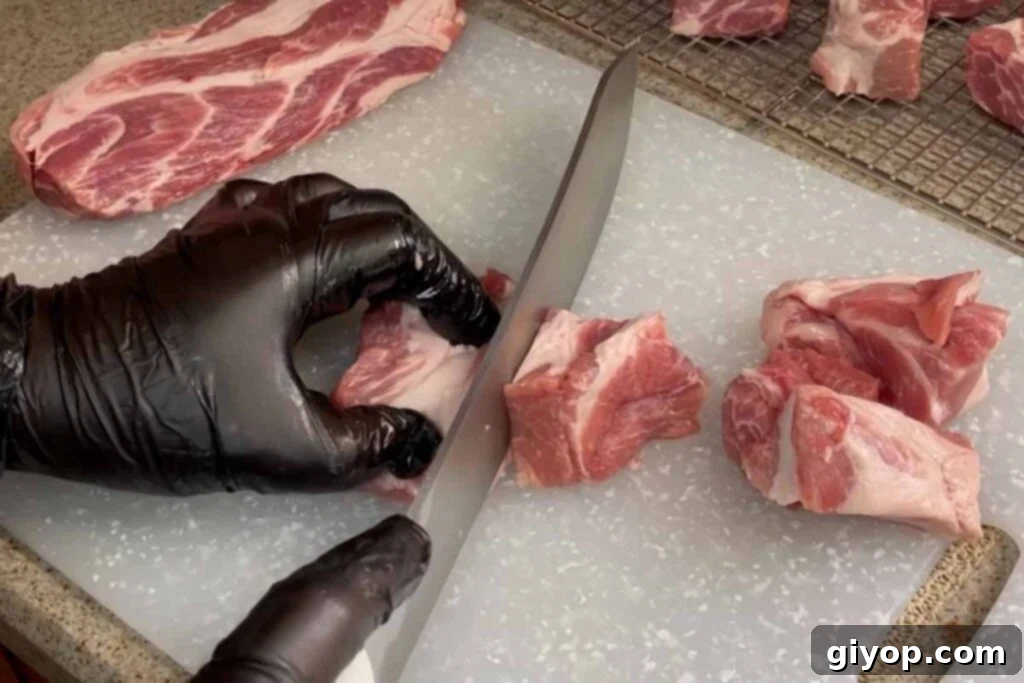
Proper preparation of the pork is key to achieving that desirable bark and allowing the smoke and rub to penetrate deep into the meat. Start by placing your boneless pork butt on a clean cutting board. Using a sharp knife, trim away most of the large, hard pieces of fat from the exterior. While pork butt has an excellent internal fat content that will render down, excess surface fat can prevent the rub from adhering and create a barrier that inhibits smoke penetration. You want enough fat to keep things juicy, but not so much that it interferes with flavor development. Since these are smaller cubes with a shorter smoke time compared to a whole butt, a good, thorough trim is beneficial.
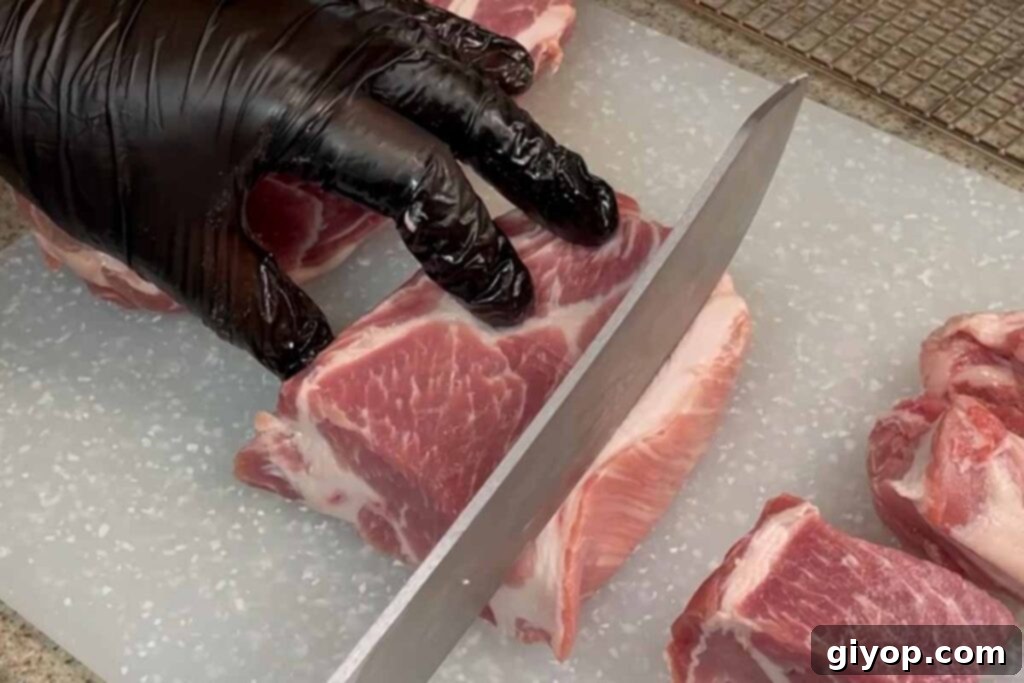
Next, cut the trimmed pork butt into uniform 1½-inch cubes. Consistency in size is important here, as it ensures that all the burnt ends cook evenly. You’ll likely encounter some smaller, irregular bits and pieces; it’s best to trim these further or discard them, as they tend to burn up during the smoking process rather than developing into delicious burnt ends. The goal is to have consistent, sizable cubes that will maintain their integrity and tenderness.
Once your pork is cubed, transfer the pieces into a large receptacle—a sturdy mixing bowl or a disposable aluminum pan works perfectly. Now it’s time to apply the rub. While not strictly required, I highly recommend using a thin layer of yellow mustard as a binder. The mustard doesn’t impart a noticeable flavor to the final product, but it helps the rub adhere beautifully to every surface of the pork cubes. If you prefer, a light coating of olive oil can also serve as an effective binder.
Regardless of your binder choice, apply it evenly to the pork cubes, then begin adding your prepared rub. Be generous! You want a substantial, flavorful coating on each piece. Sprinkle a good amount of rub, then toss and mix the cubes thoroughly with your hands (gloves recommended!) to ensure every surface is completely covered. Repeat this process until all the pork pieces are uniformly seasoned. The recipe yields about 2 cups of rub, and you’ll typically use about 1 cup during this initial seasoning phase.
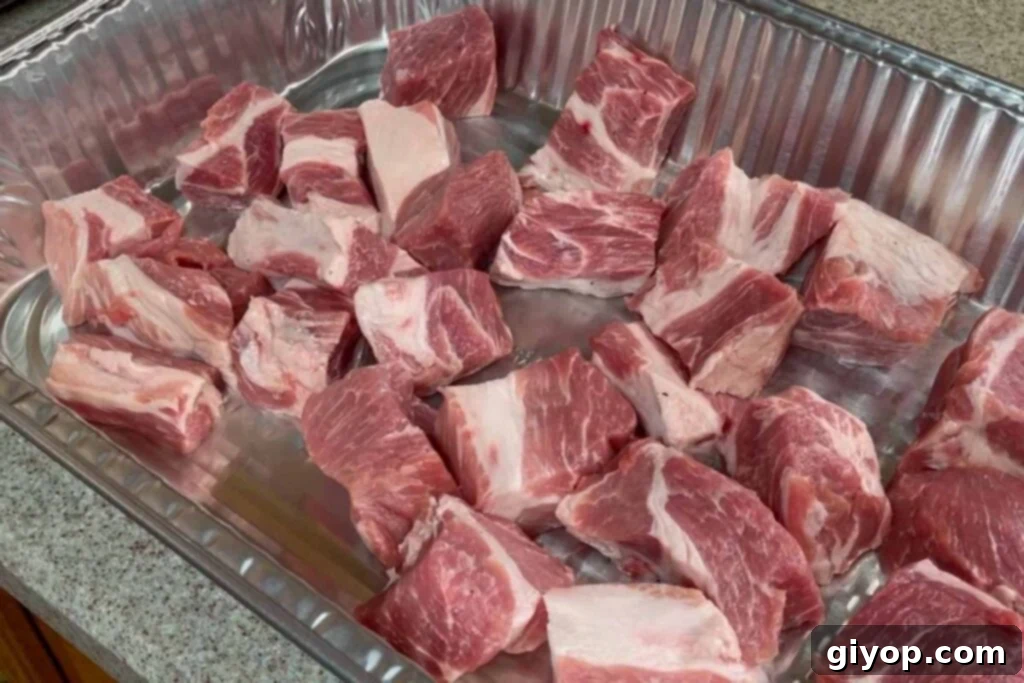
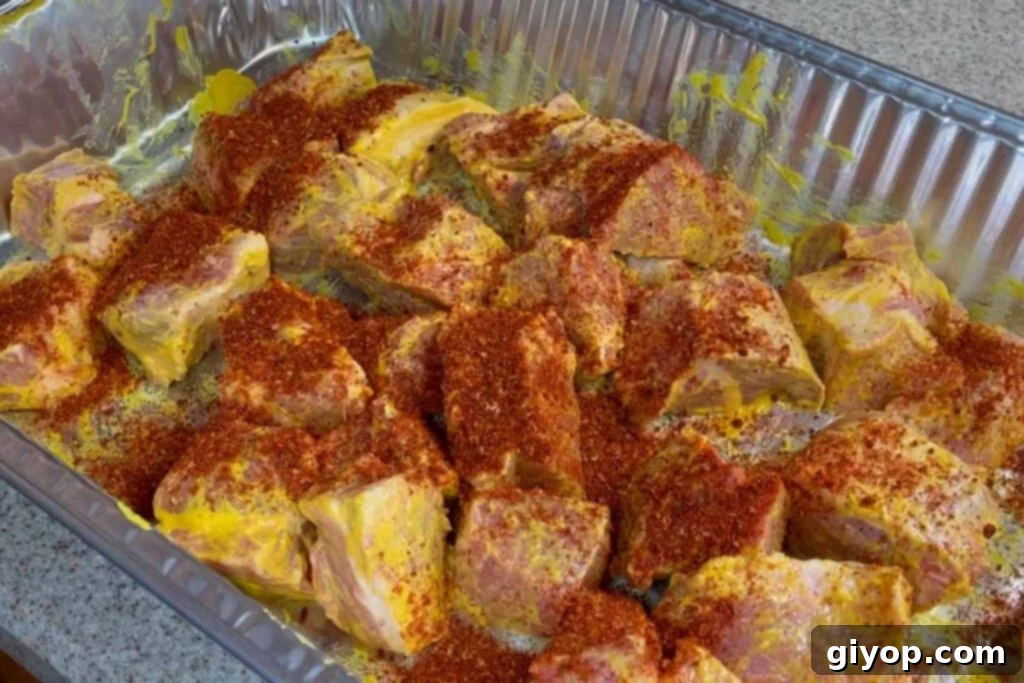
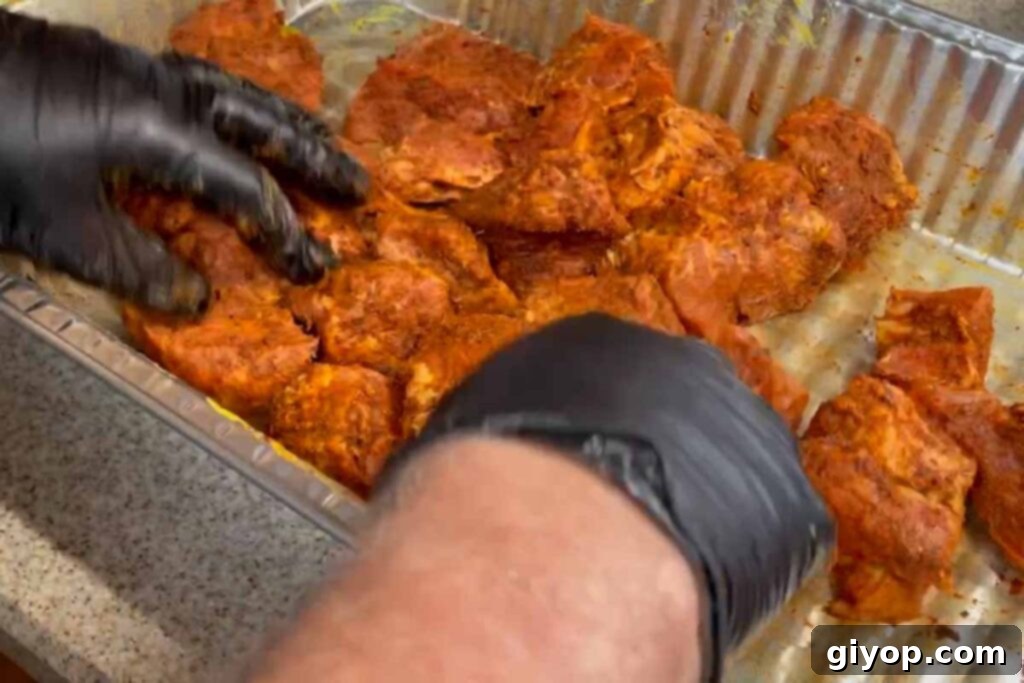
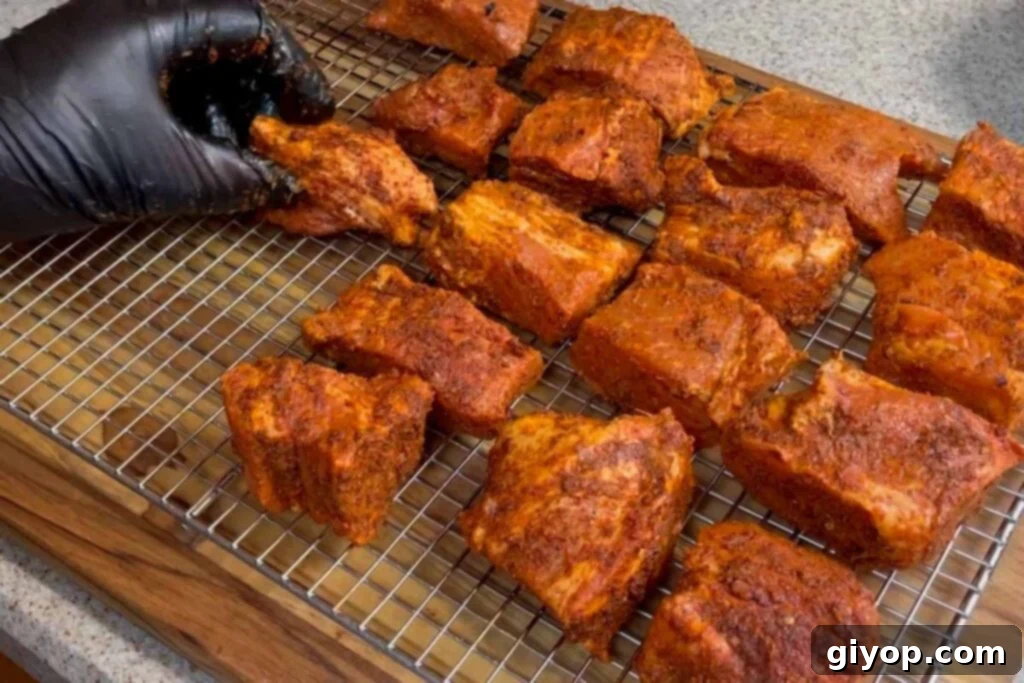
Finally, arrange the seasoned pork cubes on baking cooling racks. These racks are ideal because they allow for even airflow around each piece, promoting better smoke penetration and bark development. They also make transferring the meat to and from the smoker much easier. Alternatively, you can place the cubes directly on your smoker grates, but be mindful that cleaning the grates afterward might require a bit more effort due to any drippings.
Step 3: The Smoking Process – Infusing Flavor and Building Bark
With your pork perfectly prepped, it’s time to fire up the smoker. Bring your smoker up to a steady temperature of 225-250 degrees F (approximately 107-121 degrees C). The choice of wood is critical for flavor. I personally favor a combination of hickory and cherry wood. Hickory offers a robust, aggressive smoke flavor that stands up well to pork, while cherry contributes a milder, fruity note and imparts a beautiful, deep mahogany color to the meat. Other excellent choices include pecan, which provides a nutty, sweet flavor, or oak, known for its medium-strong, classic barbecue profile. Feel free to use your personal favorite smoking wood or experiment to find a blend you love.
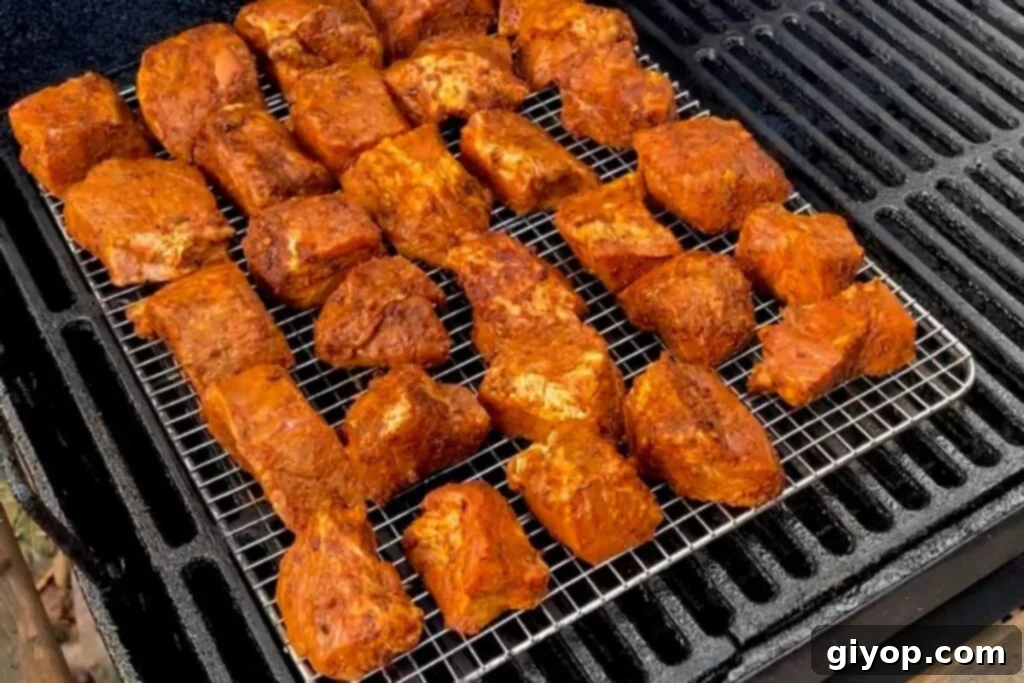
Place the pork cubes (on the cooling racks, if using) into the preheated smoker. Smoke for approximately 1 hour at 225-250 degrees F. This initial smoking phase is crucial for two main reasons: it allows the meat to absorb that essential smoky flavor, and it begins the formation of the “bark,” that delicious, flavorful crust on the exterior of the pork. During this hour, the internal temperature of the pork should reach around 165-170 degrees F (74-77 degrees C). This temperature is simply a guide for this stage; the real tenderizing cook will come later.
A Quick Note on Thermometers: Accurate temperature monitoring is vital for barbecue success. There are many excellent thermometers on the market, but I have two go-to recommendations that I use almost exclusively. Full disclosure, these are affiliate links, but I genuinely love and rely on these tools.
Firstly, an instant-read thermometer is indispensable for quickly checking the internal temperature of any meat. It provides immediate readings, preventing overcooking and ensuring food safety.
Secondly, for serious backyard cooks, the Fireboard is an absolute game-changer. This multi-probe thermometer connects to your phone, allowing you to monitor multiple meat temperatures and your smoker’s ambient temperature remotely. It’s an incredible tool for maintaining consistent heat and knowing exactly what’s happening inside your smoker throughout the entire cook. Trust me, it’s an amazing investment for any barbecue enthusiast!
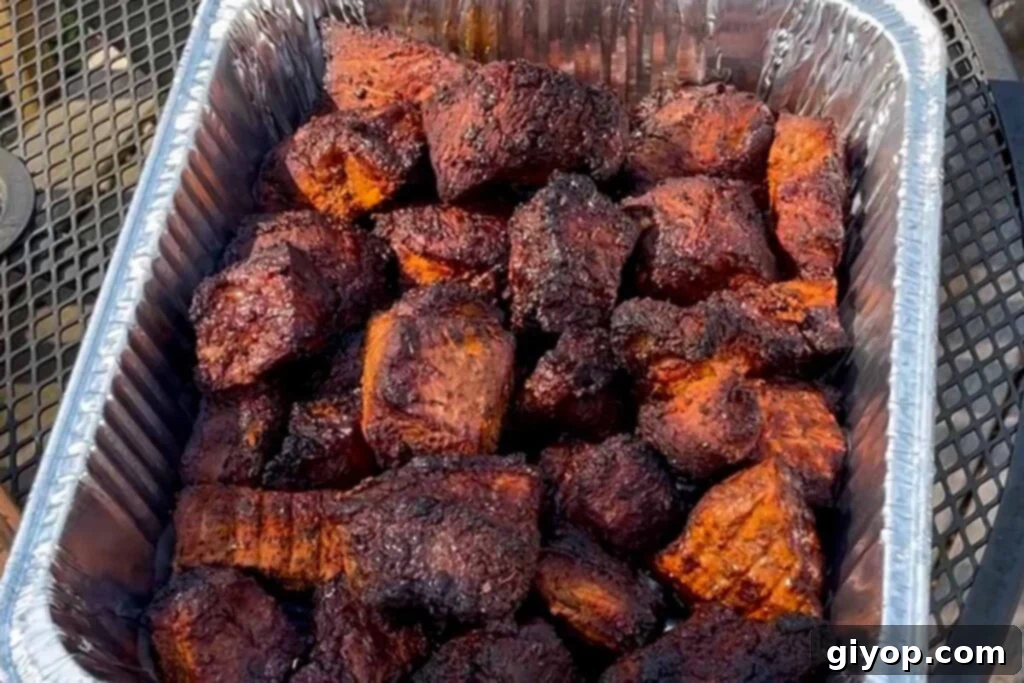
Once the pork cubes have developed a good smoky color and a noticeable bark has started to form, carefully remove them from the smoker. At this point, increase your smoker’s temperature to approximately 275 degrees F (135 degrees C) in preparation for the next critical phase.
Step 4: The Braising Phase – Achieving Unbeatable Tenderness
This is where the magic truly happens for tenderizing the pork butt burnt ends – the braising step. I cannot emphasize enough how crucial this phase is. Through numerous trials and errors in developing this recipe, I discovered that simply smoking these cubes from start to finish often results in tough, chewy meat. Braising, however, is the secret to transforming them into incredibly tender, succulent bites in a timely manner.
To begin, transfer your smoked pork cubes into a disposable aluminum pan. These pans are incredibly convenient for barbecue, minimizing cleanup and making the braising process a breeze – if you don’t have some, get them! Add approximately 12 ounces of pineapple juice to the pan. The tropical sweetness and acidity of the pineapple juice not only infuse a fantastic flavor but also aid in tenderizing the pork. Follow this by adding enough apple juice to cover about half the height of your pork cubes. For my setup, this usually amounts to about 2 cups, but the exact volume will vary depending on the size of your aluminum pan and the amount of pork. The combination of these fruit juices creates a wonderfully sweet and slightly tangy braising liquid.
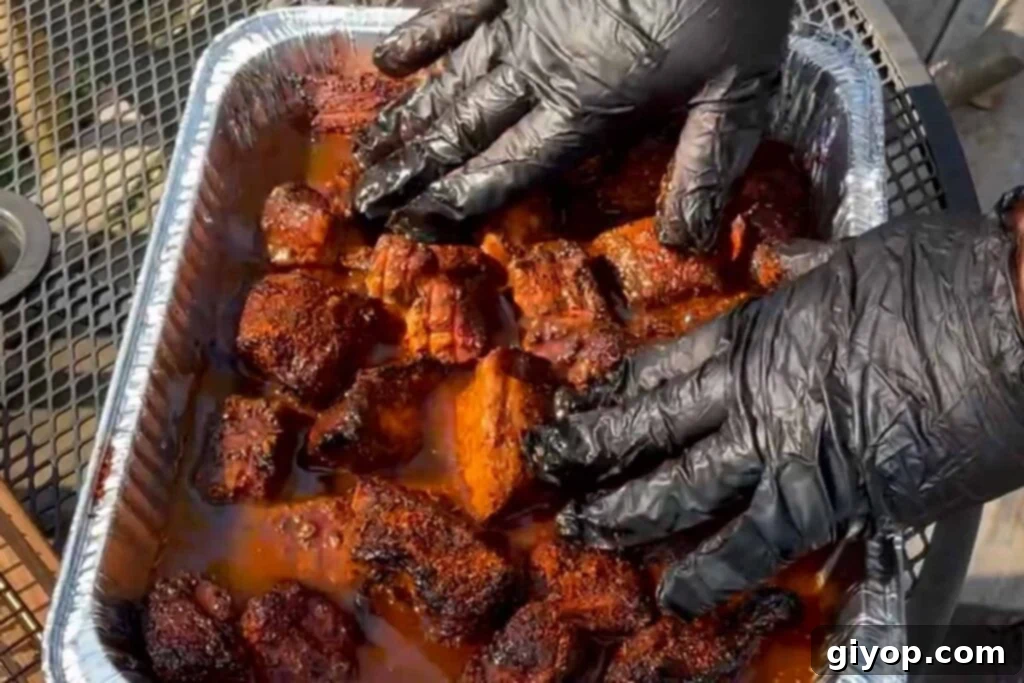
To further enhance the flavor of the braising liquid, stir in a couple of tablespoons of the remaining rub. This ties the flavors of the rub into the liquid, ensuring a cohesive taste profile. Once the liquid and rub are combined, cover the aluminum pan tightly with aluminum foil. This creates a sealed environment, allowing the pork to steam and braise in the flavorful liquid. Place the covered pan back onto your smoker, which should now be holding a steady temperature of 275 degrees F.
Braise the pork for about an hour to an hour and a half at 275 degrees F. During this time, the pork bites will steadily begin to tenderize. It’s important to start checking the meat for your preferred level of tenderness after about an hour. The internal temperature should be at least 205 degrees F (96 degrees C), but temperature alone isn’t the sole indicator of doneness for burnt ends. Some people prefer a slight “pull” when they bite into the meat, offering a bit of resistance, while others crave meat that is so tender it simply falls apart. Use a fork or probe to test the tenderness; it should feel very soft with little resistance. After the hour mark, continue checking every 15 to 20 minutes until it reaches your desired texture.
A word of caution: if the meat braises for too long, it can become excessively tender, making it difficult to handle and glaze without it falling apart. Finding that sweet spot of tenderness is a matter of personal preference, so don’t be afraid to test and adjust. Once your pork has achieved its ideal tenderness, remove the pan from the smoker and carefully drain all the braising liquid. The flavor has been absorbed by the pork, and we’re ready for the final, gloriously sticky step.
Step 5: The Glazing Process – Crafting the “Meat Candy” Finish
This is arguably the most exciting part of the entire process! With the pork cooked to tender perfection, it’s time to add that incredible sticky-sweet glaze that truly defines “meat candy.” The combination of flavors here will create a truly unforgettable experience.
To the drained pork cubes in the aluminum pan, add half of the hot honey, your chosen favorite barbecue sauce, all of the brown sugar, the butter, and two tablespoons of the reserved dry rub. Using sturdy tongs or gloved hands, gently mix all these ingredients with the pork cubes. The goal is to ensure every single piece of pork is thoroughly coated in this rich, aromatic glaze. Take your time to distribute it evenly, making sure no piece is left unglazed.
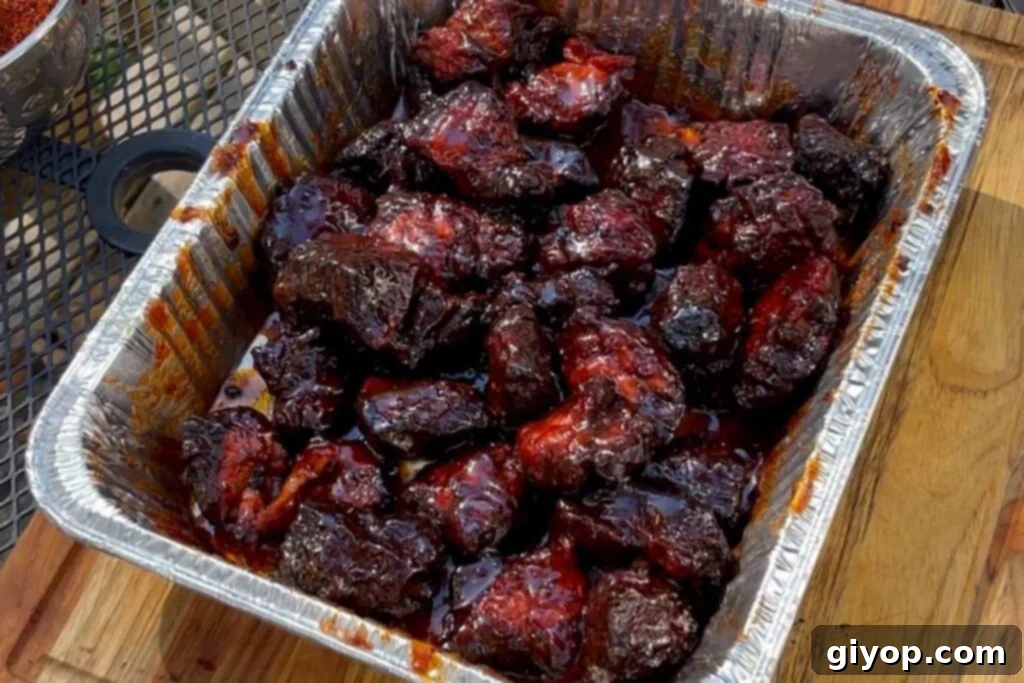
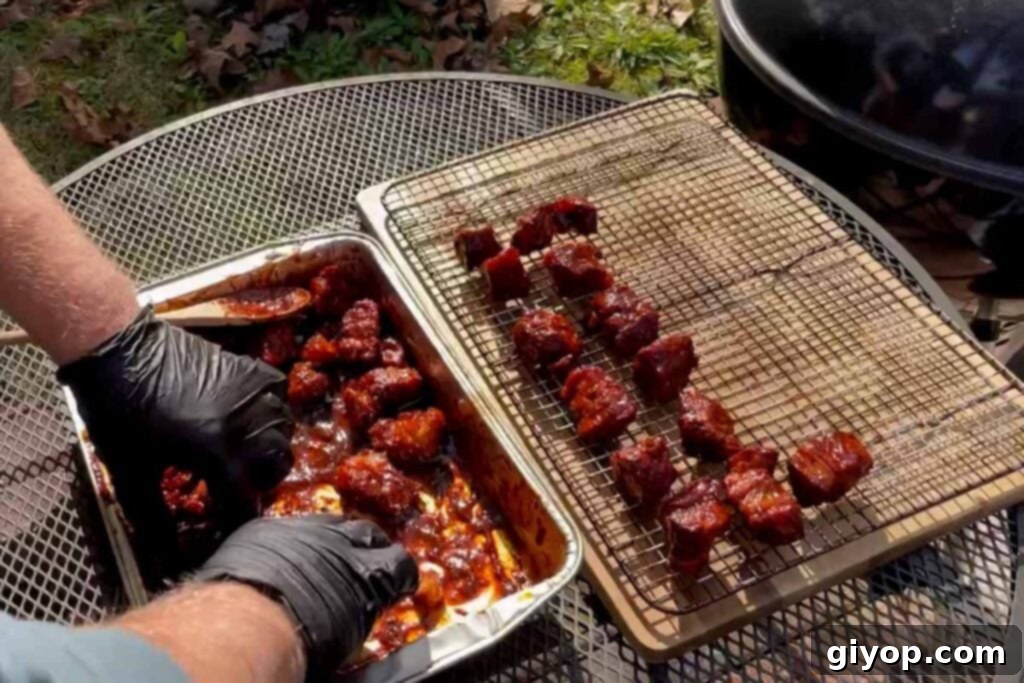
Once thoroughly coated, place the pan back onto the smoker, which should still be at 275 degrees F. Allow the glazed pork to cook for an additional 45 minutes. During this final phase, the sugars in the glaze will caramelize, and the sauce will “tack up” to create that irresistible sticky texture. To ensure even glazing and prevent any pieces from burning, stir the pork cubes every 15 minutes or so. This ensures all sides get equal exposure to the heat and helps the glaze develop a consistent, glossy finish.
Step 6: Resting and Serving Your Masterpiece
After the 45-minute glazing period, remove the pan of pork butt burnt ends from the smoker. It’s crucial to allow them to rest for about 10-15 minutes. This resting period allows the juices within the meat to redistribute, ensuring maximum tenderness and flavor in every bite. During this time, the glaze will also set a bit more.
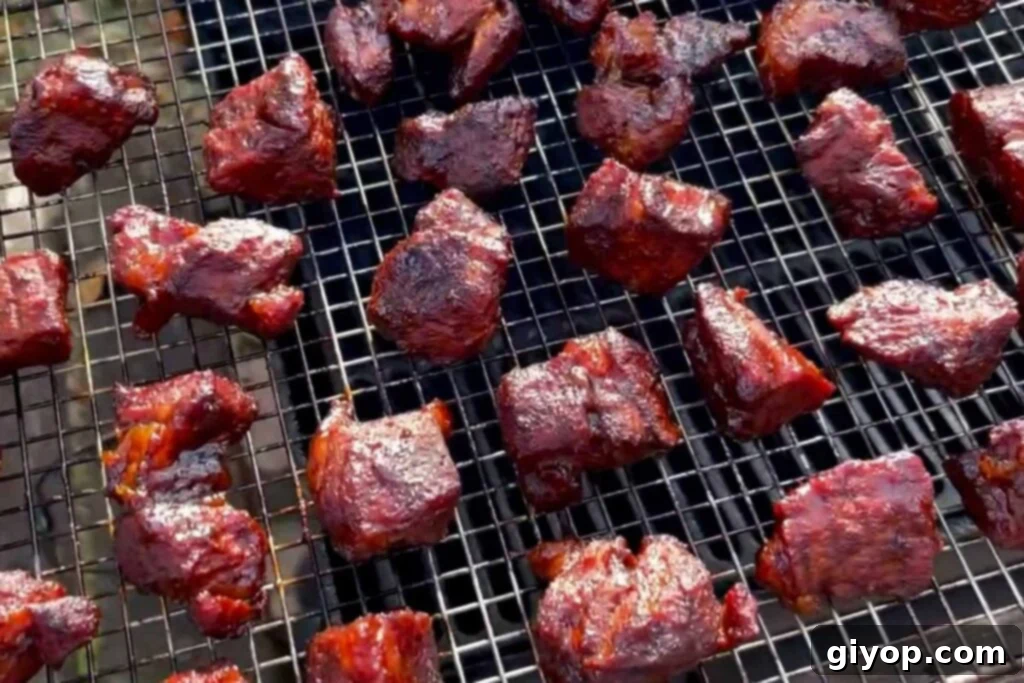
For those who crave an even stickier, more caramelized exterior – that truly “tacked up” meat candy experience – you have an optional final step. Carefully transfer the glazed burnt ends from the pan onto clean baking cooling racks, arranging them with a little space between each piece. Place these racks back into the smoker for an additional 15 minutes. This will help dry out the glaze slightly, intensifying its stickiness and creating those wonderfully crispy edges.
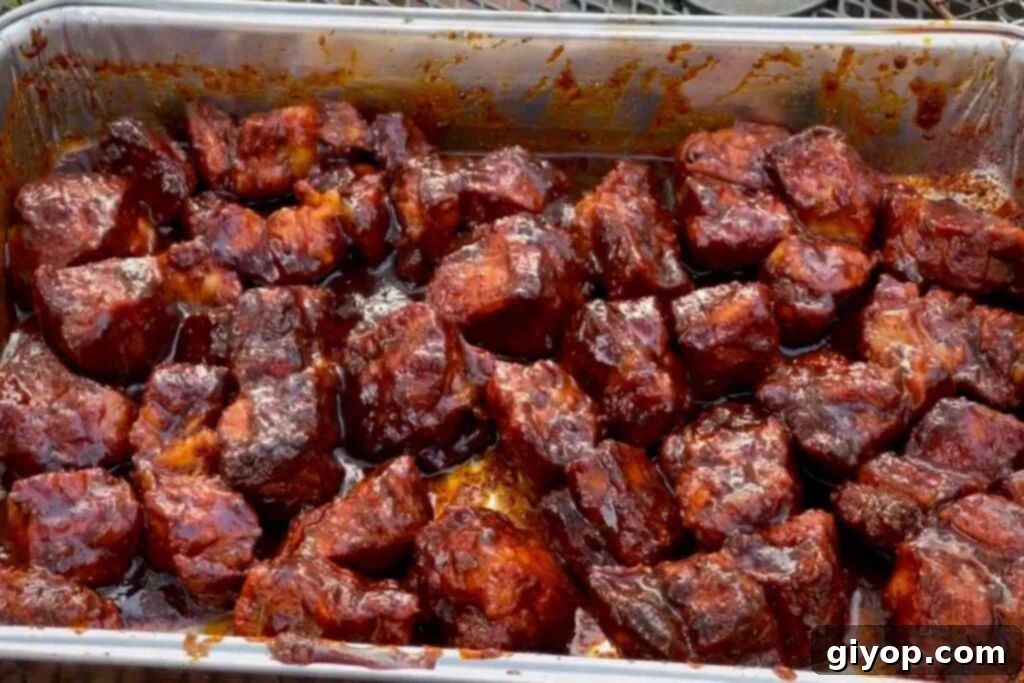
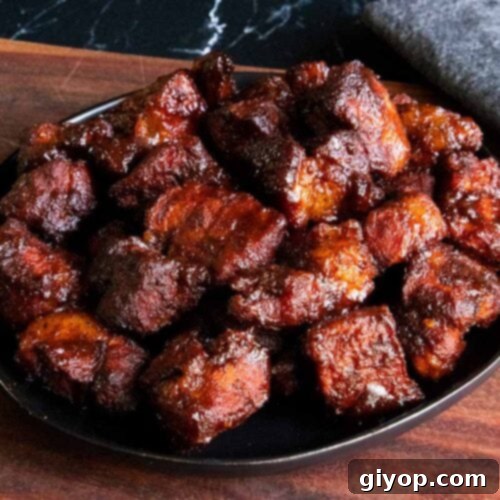
Now, it’s finally time to indulge in this incredible meat candy! The complex spiciness of the rub, perfectly complemented by the deep smoke flavor and that glossy, sticky-sweet glaze, creates a symphony of tastes that is nothing short of BBQ nirvana. Each tender cube of pork offers an epicurean firestorm of deliciousness, where all those carefully cultivated flavors explode in your mouth.
This recipe, perfected over many attempts and adjustments, consistently delivers outstanding results. These delectable pork butt burnt ends make a superb appetizer, a standout side dish, or even a magnificent main course. They’re perfect for your next family get-together, a lively tailgate party, or simply for an enjoyable weekend barbecue session. Once you try them, pork butt burnt ends are very likely to become a great go-to recipe in your smoking repertoire.
If you’re eager to explore more amazing barbecue creations, be sure to check out some of the other fantastic recipes linked below!
Essential Tips for Perfect Pork Butt Burnt Ends
To ensure your pork butt burnt ends turn out perfectly every time, keep these invaluable tips in mind:
- Smart Fat Trimming: While a pork butt has plenty of delicious fat, excessive surface fat can be problematic. Trim away most of the large, firm fat caps. You want enough internal marbling to keep the meat juicy, but not so much exterior fat that it forms a barrier preventing your rub and smoke from creating that irresistible bark and deep flavor penetration. A good trim ensures a better “meat candy” experience.
- To Bind or Not to Bind?: Using a binder like yellow mustard or a thin layer of olive oil is completely optional, but highly recommended. While the mustard flavor cooks off completely, it significantly helps the rub stick to every surface of the pork cubes. This ensures maximum flavor in every bite. If you’re out of mustard or prefer not to use it, simply apply the rub directly to the damp pork—it will still be delicious!
- Maintain Low & Slow Smoke Temperature: Stick to a consistent temperature of 225-250°F (107-121°C) during the initial smoking phase. This low-and-slow approach allows the pork to slowly absorb that deep, smoky essence without drying out. Going too hot, too fast, will limit smoke penetration and hinder bark development, so patience is key here.
- Strategic Wood Selection: Your choice of wood impacts the final flavor significantly. Hickory offers a bold, traditional smoke, while cherry provides a sweeter, milder profile and a beautiful reddish hue. Pecan or oak are also excellent options. Don’t be afraid to mix wood types to create a custom flavor profile that truly complements the pork.
- Mastering the Braise for Tenderness: The braising step is non-negotiable for achieving that incredibly tender, fall-apart texture. Start checking for doneness after about an hour of braising. The internal temperature should be at least 205°F (96°C), but more importantly, test for tenderness with a fork. You want it tender enough to easily pull apart, but not so fragile that it completely disintegrates when you handle it for glazing. Avoid over-braising!
- Achieving That Perfect Sticky Glaze: Don’t rush the final glazing and tacking phase. The last 45 minutes back on the smoker, with regular stirring, allows the sugars in the glaze to caramelize beautifully. This process is what creates those coveted, sticky, candy-like burnt ends with a slightly crisp exterior. Resist the urge to pull them off too early; that extra time makes all the difference.
Exciting Variations for Your Pork Butt Burnt Ends
While the classic recipe is outstanding, these pork butt burnt ends are incredibly adaptable. Here are some ideas to tweak the flavors and make them uniquely yours:
- Amp Up the Heat: For those who love a fiery kick, introduce more cayenne pepper into your rub or add an extra dash of your favorite hot sauce directly into the glaze. You could even incorporate some finely minced habanero or jalapeño into the braising liquid for an added layer of spice.
- Boost the Tanginess: If you prefer a brighter, more acidic profile, consider replacing some of the brown sugar in the glaze with pure maple syrup or an additional squeeze of fresh lime or orange juice. A splash of apple cider vinegar in the glaze can also enhance the tang and cut through the richness.
- Explore Asian-Style Burnt Ends: Give your burnt ends an umami-rich twist by crafting an Asian-inspired glaze. Combine hoisin sauce, soy sauce, rice vinegar, grated fresh ginger, minced garlic, and honey for a uniquely savory and sweet profile. This pairs wonderfully with the smoky pork.
- Embrace a Classic Kansas City Vibe: For a more traditional, rich, and savory burnt end experience, ditch the pineapple juice in the braising liquid. Instead, opt for beef broth to add a deeper, more robust flavor. Pair this with a molasses-heavy, sweet, and tangy Kansas City-style BBQ sauce for the glaze to complete the transformation.
- Indulge in Boozy Burnt Ends: Elevate your glaze by adding a generous splash of your favorite bourbon, whiskey, or even dark rum. The alcohol will cook off, leaving behind a complex, rich, and sophisticated flavor that adds incredible depth to the sticky-sweet coating. It’s a fantastic way to take things up a notch for adult palates.
Frequently Asked Questions About Pork Butt Burnt Ends
Absolutely! Bone-in pork butt works perfectly. Simply cut around the bone, separating the meat into manageable sections, and then cube it up as normal. The bone itself will often be surrounded by flavorful meat and fat that you can also cube and use.
Plan for approximately 3.5 to 4 hours of active cooking and smoking time. This includes prep time, the initial smoke, braising, and the final glazing phase. While it might seem like a commitment, the incredible flavor and tenderness of these burnt ends are undoubtedly worth every minute!
Yes, you certainly can adapt this recipe for the oven! For the initial “smoking” phase, roast the cubed pork at 250°F (121°C). If you want a hint of smoky flavor without a smoker, you can add a little liquid smoke to your rub or braising liquid. Then, proceed with the braising step at 275°F (135°C), covering the pan tightly with foil. Finally, finish them uncovered at the same temperature for the glazing and tacking phase. You’ll still achieve fantastic tenderness and flavor!
Not at all! While pineapple juice adds a wonderful sweetness and tenderizing acidity, you have great alternatives. Apple juice is a fantastic substitute, offering a milder sweetness. Beer (especially an amber ale or lager) can also be used for a more savory, malty flavor, or even beef broth for a deeper, more traditional barbecue profile. Feel free to experiment with what you have on hand or what best suits your taste.
For this particular recipe, spritzing isn’t really necessary. Since we’re cubing the pork butt, the increased surface area already ensures plenty of exposure to both the smoke and the rub, allowing a great bark to form. Furthermore, the extensive braising step ensures the meat remains incredibly moist and tender. If you do prefer to spritz, do so lightly every 30-45 minutes with a 50/50 mixture of apple cider vinegar and water. Just be careful not to overdo it, as excessive spritzing can wash off your hard-earned bark.
Store any leftover burnt ends in an airtight container in the refrigerator for up to 3-4 days. Their rich flavor often deepens overnight, making them almost better the next day!
Yes, they freeze beautifully! Once cooled, transfer them to a freezer-safe bag or airtight container. They can be frozen for up to 2-3 months. Thaw overnight in the refrigerator before reheating.
To reheat, place the burnt ends in an oven-safe dish, add a splash of apple juice or beef broth to prevent drying, cover with foil, and warm in a 300°F (150°C) oven until heated through (about 20-30 minutes). You can also reheat them gently on the stove in a covered pan with a little liquid, or even quickly in the microwave if you’re in a hurry, though the oven method yields the best results for texture.
Discover More Amazing Barbecue Recipes
Texas Style Smoked Pork Loin
Smoked Pork Tenderloin
Smoked Baby Back Ribs Recipe
Pork Butt Burnt Ends Recipe
Print
Pin
Rate
Ingredients
The Pork
- 8 lbs Boneless Pork Butt
The Rub
- 1/2 cup Paprika
- 1/4 cup Chili powder
- 3 tbsp Brown sugar
- 3 tbsp Kosher Salt
- 3 tbsp Black pepper
- 2 tbsp Smoked paprika
- 2 tbsp Garlic powder
- 2 tbsp Onion powder
- 1 tbsp Cumin
- 1 tbsp Dried oregano
- 2 tsp Dry mustard
- 1 tsp Cayenne powder
The Glaze
- 1/2 cup Hot honey
- 1/2 cup Brown Sugar
- 1 cup Barbeque sauce Your preferred brand
- 2 tbsp Butter
- 4 tbsp Rub Leftover from above
Braising Liquid
- 24 oz Pineapple juice
- Apple juice enough to fill the disposable aluminum tin halfway coving the pork. Depends on the size. Perhaps two cups or so.
- 4 tbsp Rub Leftover from above
Instructions
Preparing The Rub
- Mix all the spices together in a bowl until they are well combined. Set aside
Preparing The Pork
- Trim away most of the fat using a sharp knife.
- Cut the pork butt into 1½ inch cubes. There will be bits and pieces that don’t conform. Trim them as well and discard them.
- Place cubed pork into a large receptacle, a bowl or disposable aluminum pan.
- Add mustard to cubed pork and mix to coat well (optional, but recommended)
- Add rub liberally. Mix and toss pieces and contine to add rub until well covered.
- Place the cubes onto baking cooling racks for easy removal or set aside (to place them on the grates directly when it’s time).
Smoke
- Get the smoker to 225 to 250 degrees F. Add your preferred wood for smoking. This recipe uses hickory and cherry woods.
- Smoke the pork for approximately 1 hour or until the meat has good smoke color and bark is beginning to form. Internal temperature of the pork should be around 165-170 degrees F.
- Remove the pork and increase the temperature of the smoker to 275 degrees F.
Braise
- Place the pork in a disposable aluminum tin.
- Add 12 ounces of pineapple juice
- Add enough apple juice to come up the sides of the pork halfway.
- Cover with foil and place back onto the smoker.
- Braise for an hour to an hour and a half at 275 degrees F.
- Check the pork for your preferred tenderness. You don’t want it to be fork tender but close to it.
- When the pork is at your preferred tenderness, pull from the smoker.
- Drain the braising liquid.
The Glaze
- Add half of the hot honey, your favorite bbq sauce, brown sugar, butter, and a few tablespoons of the rub. Mix with utensils or gloved hands.
- Repeat the process with the remaining glaze ingredients until each piece has been sufficiently covered.
- Place back onto the smoker which should still be at 275. Cook for 45 more minutes, stirring every 15 minutes or so.
Serve
- After 45 minutes, remove from the smoker and allow to rest for about 10-15 minutes. If you want them to really tack up, you can place them back onto the cooling racks and place back in for about 15 more minutes.
- Serve and enjoy!