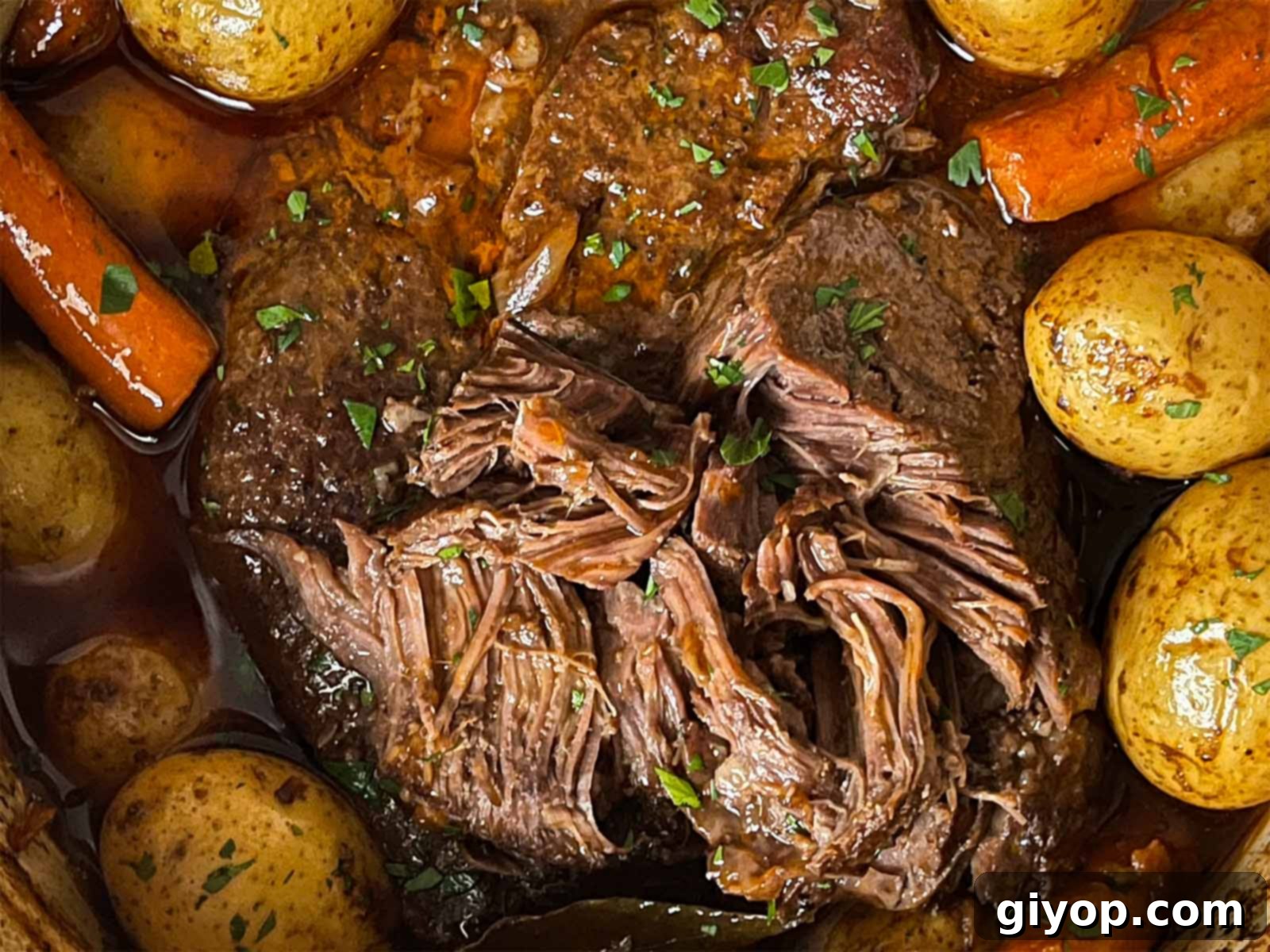
Classic Pot Roast: Your Ultimate Guide to a Tender, Flavorful Family Meal
There’s nothing quite like the comforting aroma and hearty satisfaction of a truly classic pot roast. This isn’t just a meal; it’s an experience, a culinary embrace that brings back cherished memories of home-cooked goodness. Imagine fork-tender, melt-in-your-mouth beef, slow-braised to perfection, alongside creamy potatoes and sweet carrots, all bathed in a rich, velvety, savory broth. This isn’t just dinner; it’s a celebration of simple, wholesome ingredients transformed into an extraordinary feast that warms the soul and satisfies the deepest cravings. Perfect for a cozy Sunday dinner or a special gathering, this Dutch oven pot roast recipe is designed to deliver unparalleled flavor with minimal fuss, making it a beloved staple in any home.
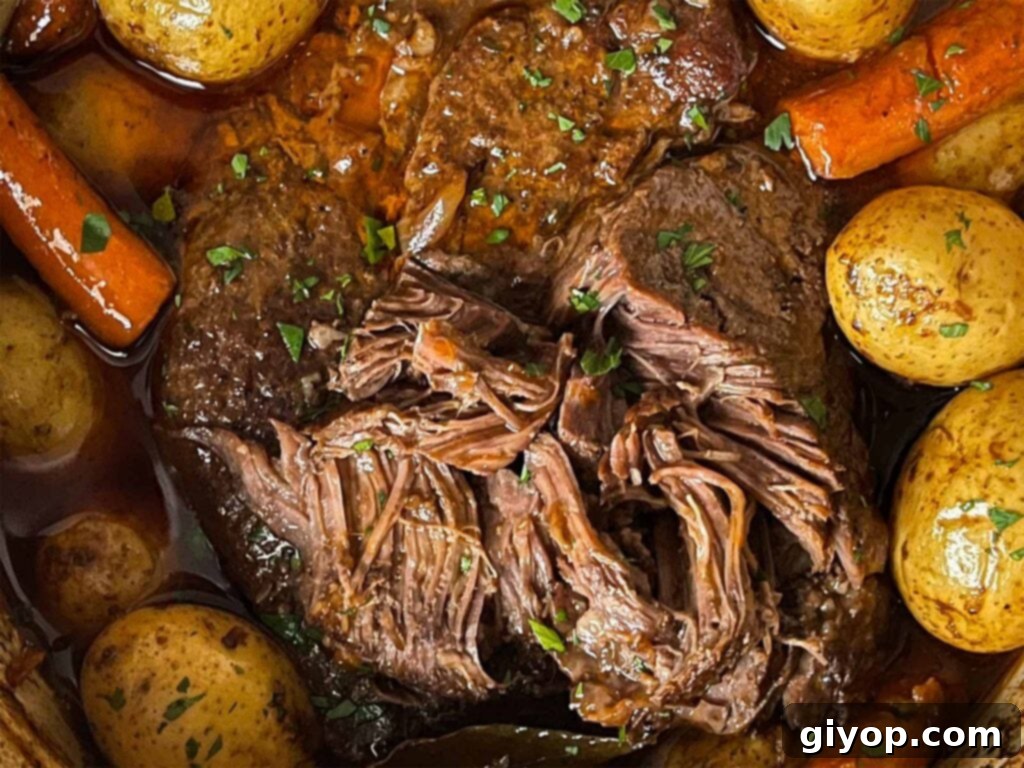
Don’t Sweat The Recipe is supported by its readers. We may earn a commission if you purchase through a link on our site. Learn more.
Why This Classic Pot Roast Will Become Your Favorite
There are countless reasons why this hearty pot roast stands out as a true culinary gem, destined to become a go-to recipe in your kitchen. From its soul-satisfying taste to its surprisingly simple preparation, every aspect is designed for delicious success.
- The Quintessential Comfort Food: Pot roast holds a special place in the hearts of many, evoking nostalgic childhood memories with every tender bite. It’s the ultimate comfort food, providing a deeply warming and satisfying meal, especially perfect for chilly evenings or when you simply need a taste of home.
- Unrivaled Tenderness Through Slow Braising: The secret to truly spectacular pot roast lies in the slow braising process. This gentle cooking method breaks down tough cuts of beef over several hours, transforming them into incredibly tender, juicy meat that practically melts in your mouth. You won’t believe how succulent the beef becomes!
- Effortless Preparation, Easy Cleanup: While the cooking time for pot roast is significant, the hands-on preparation is surprisingly minimal. It’s largely a “set it and forget it” dish, allowing you to focus on other tasks while your oven does the work. Plus, this classic recipe is typically a one-pot wonder, simplifying cleanup considerably and making your cooking experience even more enjoyable.
- A Budget-Friendly Feast for Any Occasion: Pot roast is a smart choice for feeding a crowd without breaking the bank. It typically utilizes more affordable cuts of beef, which, when slow-cooked, become just as flavorful and tender as their pricier counterparts. It’s an excellent option for family dinners, holiday meals, or casual dinner parties, ensuring everyone leaves satisfied.
- A Symphony of Rich, Savory Flavors: The thoughtful combination of tender beef, sweet root vegetables, and aromatic herbs in this classic pot roast recipe creates an incredibly rich and savory broth that permeates every ingredient. Each component contributes to a complex flavor profile that is deeply satisfying and truly unforgettable, making every spoonful a delight.
Looking for more heartwarming meals? Some of our other favorite Comfort Meal recipes include our Easy Meatloaf Recipe, One Pan Roasted Chicken and Vegetables, Creamy Potato Corn Chowder, Spicy Shrimp and Cajun Polenta, Slow Cooker Beef Tips and Gravy, and Stuffed Bell Pepper Recipe.
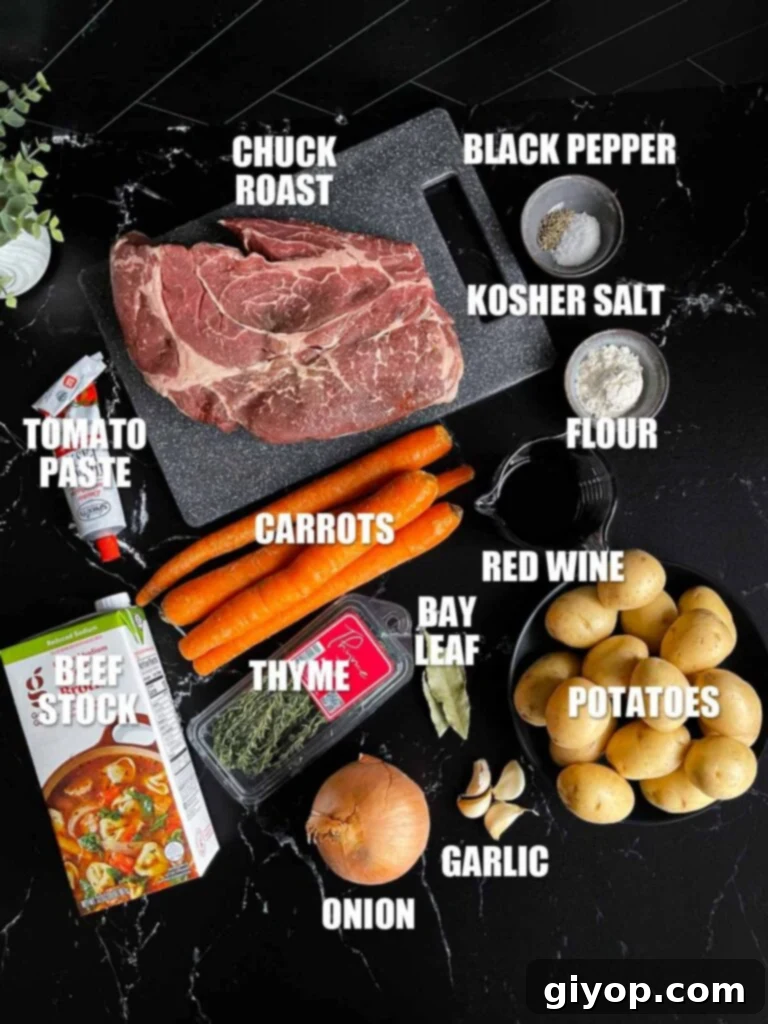
For a complete list of precise ingredients, measurements, and detailed cooking instructions, please refer to the recipe card below.
Crafting the Perfect Classic Pot Roast in Your Oven: A Step-by-Step Guide
Making a show-stopping pot roast in your oven is simpler than you might think. Follow these clear steps to achieve a dish that’s rich in flavor and wonderfully tender.
Step 1: Prepare and Sear the Beef
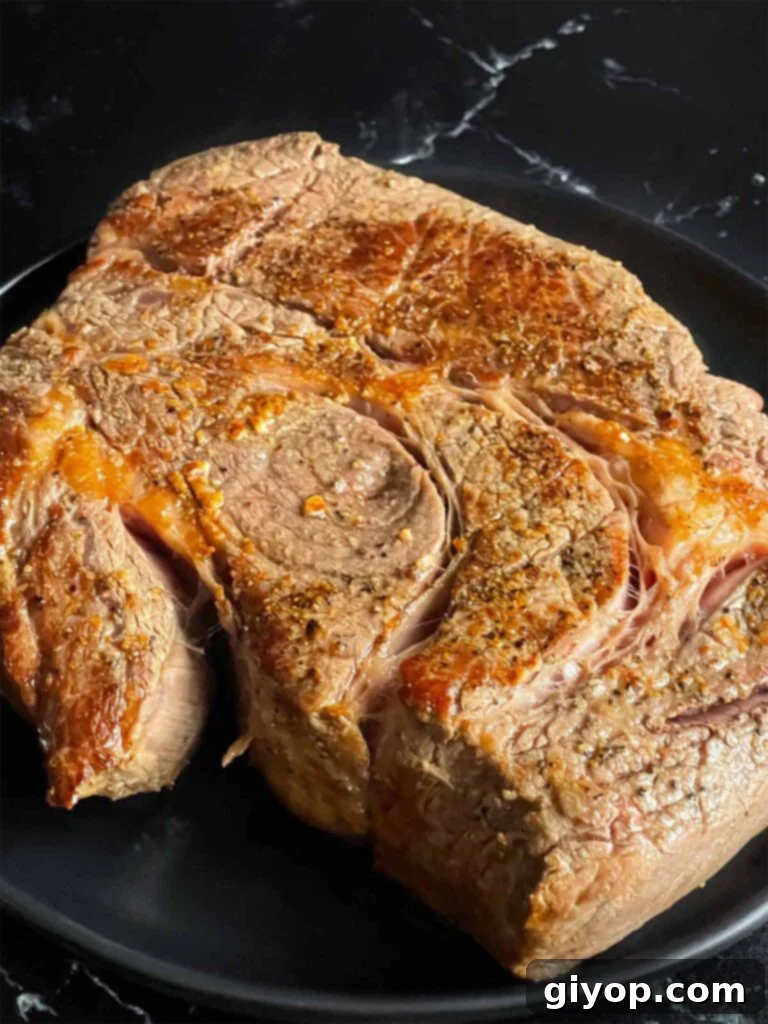
Begin by preheating your oven to 325 degrees F (160 degrees C). This ensures your oven is at the optimal temperature for slow braising when the pot roast goes in. Next, generously season all sides of your chuck roast with kosher salt and freshly ground black pepper. Don’t be shy with the seasoning here; it’s crucial for building deep flavor. In a sturdy Dutch oven or heavy-bottomed pot with a tight-fitting lid, heat 2-4 tablespoons of olive oil over medium-high heat until shimmering. Carefully place the seasoned beef into the hot pot and sear it on all sides for about 4 minutes per side, or until a beautiful, deep brown crust forms. This searing step is vital as it locks in juices and creates a rich foundation of flavor. Once seared, remove the beef to a platter and set aside.
Step 2: Build the Flavorful Base
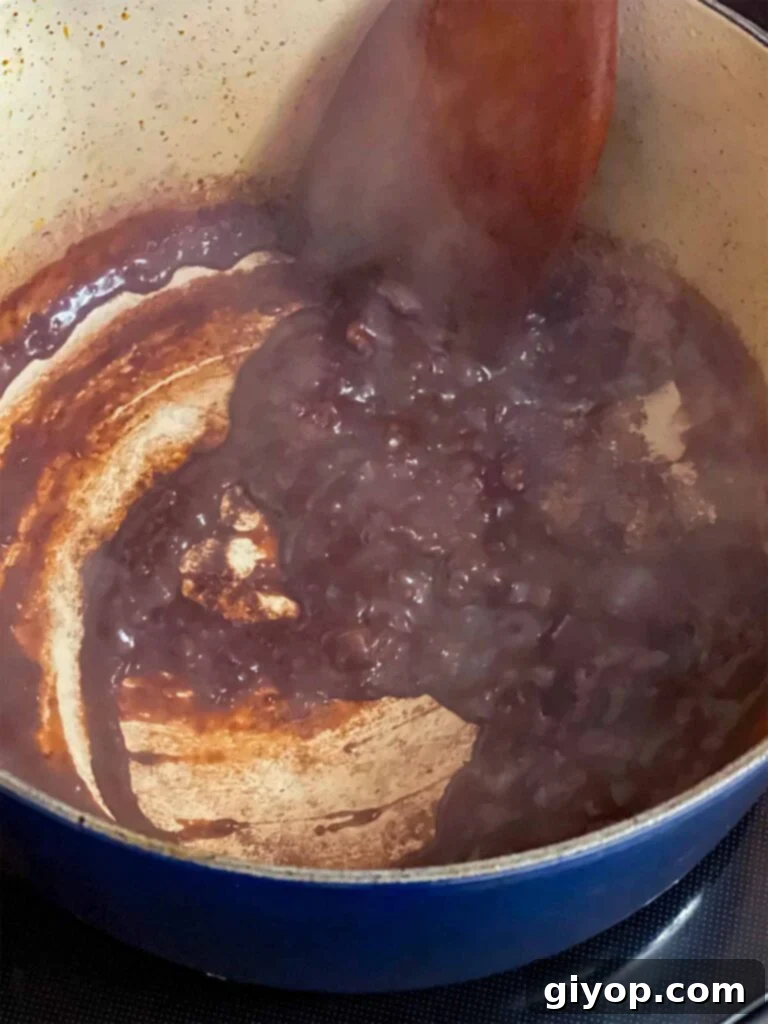
With the beef removed, you’ll notice delicious browned bits (fond) stuck to the bottom of the pot – these are packed with flavor! Add 1 tablespoon of tomato paste to the pot and cook, stirring constantly, for about one minute until it darkens slightly and becomes fragrant. This helps to deepen the savory notes of your gravy. Next, sprinkle in 2 tablespoons of all-purpose flour, stirring well to create a roux. Cook for another minute or two, allowing the flour to cook out its raw taste. Pour in 1/2 cup of red wine, scraping the bottom of the pan with a wooden spoon to deglaze and release all those flavorful brown bits. Let the wine reduce for about 1 minute, concentrating its rich essence into the sauce.

Step 3: Begin the Slow Braise
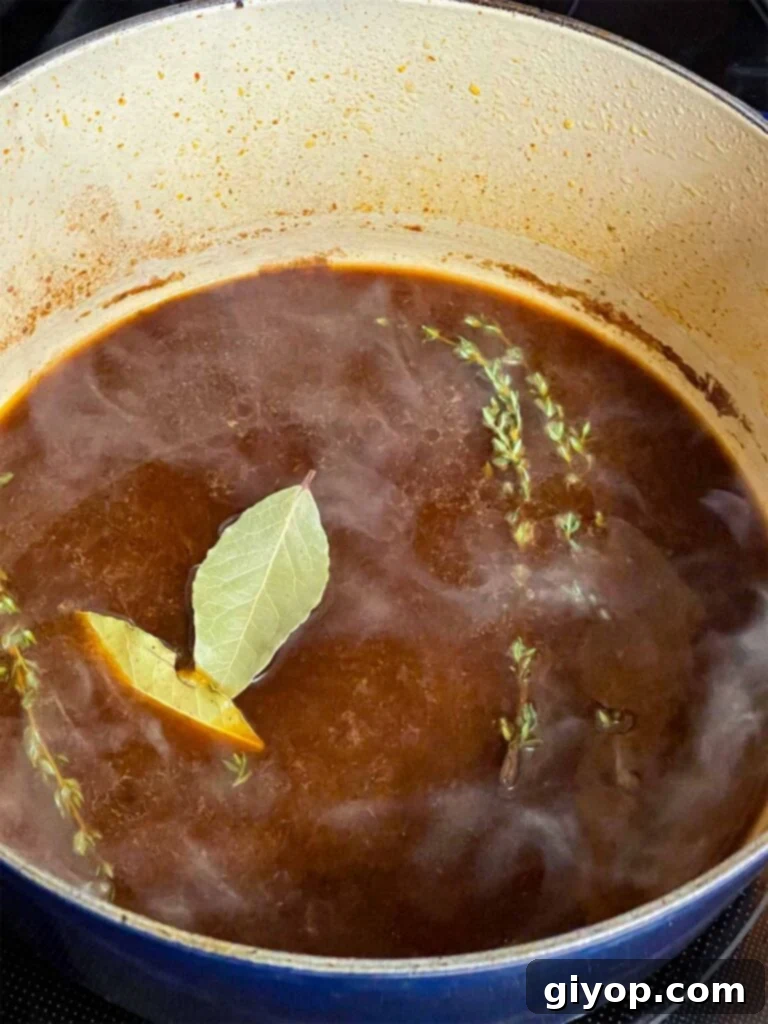
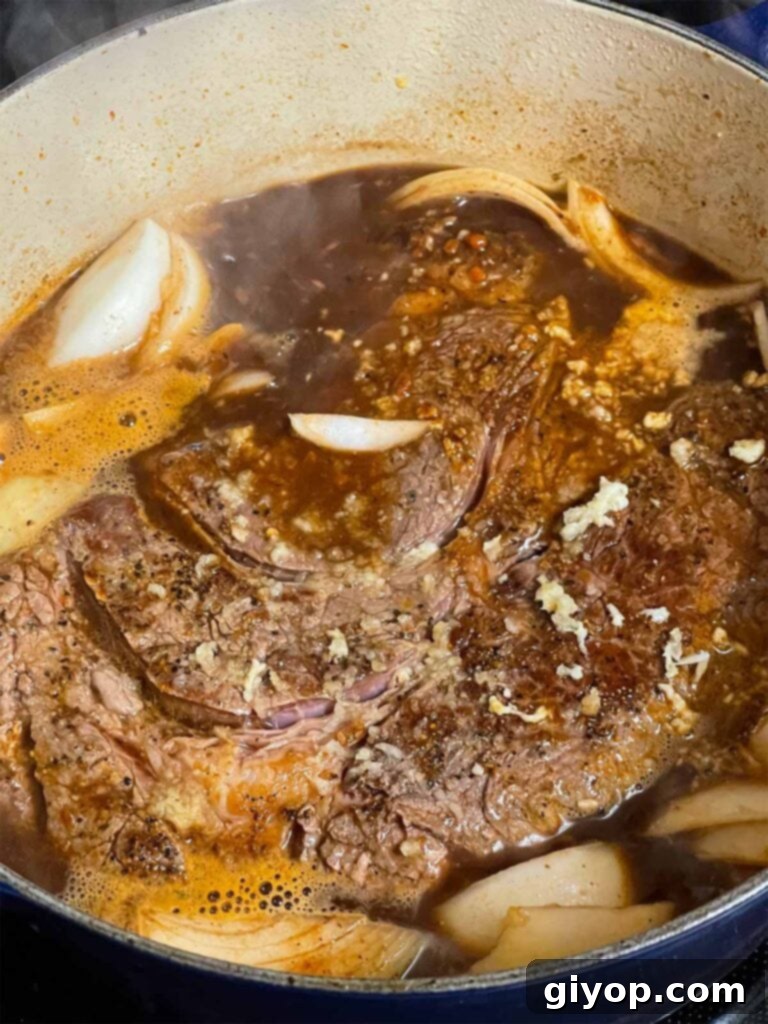
Pour in 2 cups of reduced-sodium beef broth, stirring to combine with the roux and deglazed pan drippings. Add the fresh thyme sprigs and bay leaves; these herbs will infuse the braising liquid with their aromatic flavors. Carefully return the seared beef to the pot, nestling it into the liquid. Add the roughly chopped yellow onion and minced garlic cloves around the beef. Cover the pot tightly with its lid and transfer it to your preheated oven. Let it cook for the initial braising period of 1 1/2 hours. This first stage allows the beef to begin tenderizing and absorbing the rich flavors of the broth and aromatics.
Step 4: Add Vegetables for a Complete Meal
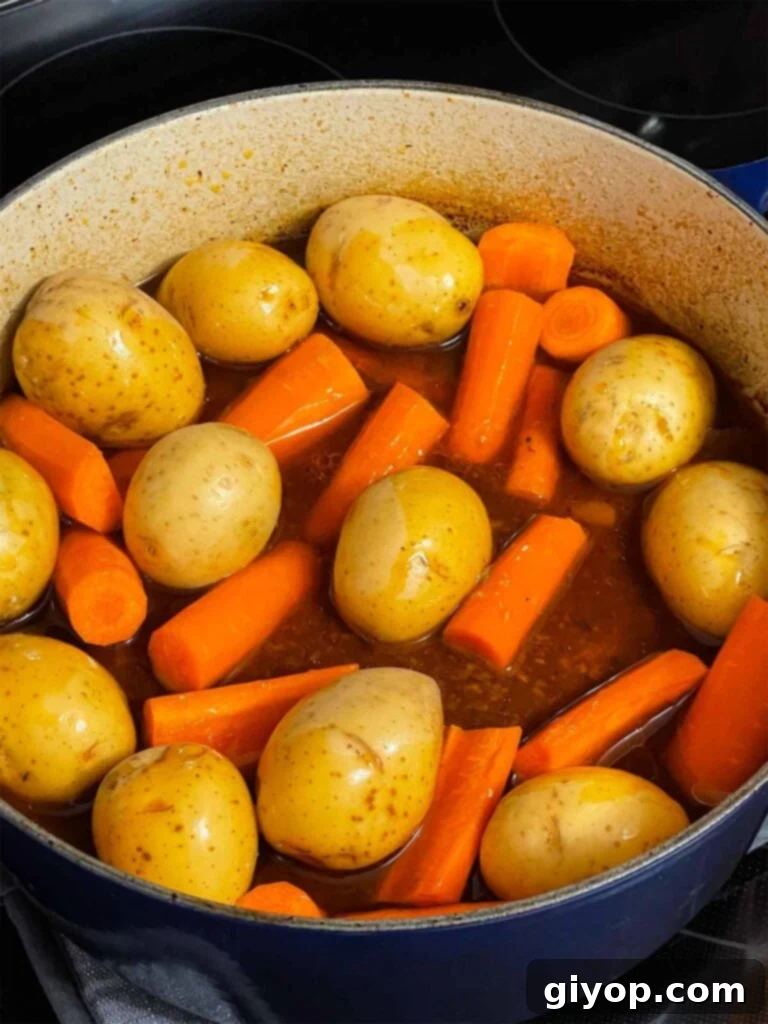
After the initial 1 1/2 hours of cooking, carefully remove the pot from the oven. Add the small yellow potatoes and carrots, tucking them around the roast. It’s perfectly fine if some of the vegetables aren’t fully submerged in the sauce; they will steam and cook beautifully in the covered pot. Return the covered pot to the oven and continue cooking for another 1 1/2 to 2 hours, or until both the roast and the vegetables are incredibly fork-tender. The total cooking time will vary slightly depending on your oven and the exact size of your roast and vegetables, so rely on tenderness as your guide.
Step 5: Finishing Touches and Serving
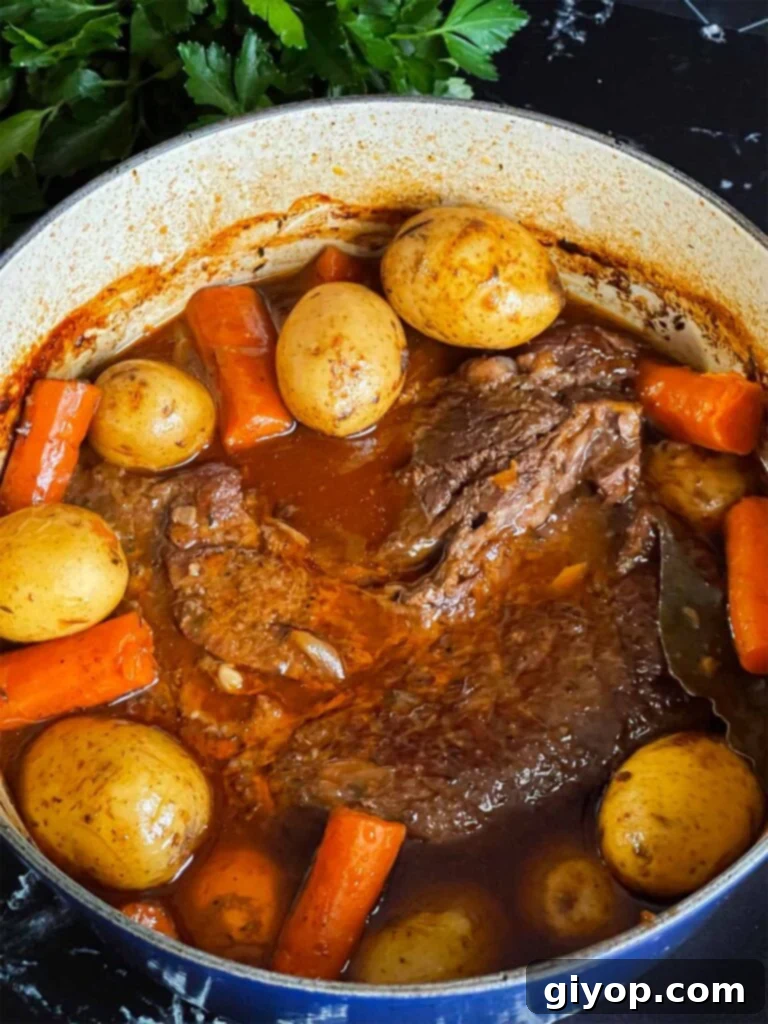
Once the pot roast and vegetables are perfectly tender, remove the pot from the oven. Carefully remove the bay leaves and any visible thyme stems. Taste the broth and season to taste with additional salt and pepper if needed, remembering that flavors can become more concentrated during slow cooking. You can serve the beef as whole tender chunks or easily shred it with two forks for a more rustic presentation. Arrange the succulent beef, creamy potatoes, and tender carrots on a platter or serve directly from the Dutch oven, ensuring everyone gets plenty of that rich, flavorful broth. This complete meal is ready to be enjoyed!
What to Serve Alongside Your Hearty Pot Roast
This easy pot roast recipe, featuring perfectly cooked beef, Yukon Gold potatoes, and carrots, is truly a complete and satisfying meal on its own. The tender meat and hearty vegetables simmered in a rich broth make for a robust dinner. However, you can elevate your dining experience by adding a few complementary sides. Consider serving it with warm, crusty bread like Homemade Crescent Rolls or savory Garlic Bread to soak up every drop of that delicious gravy. For a touch of Southern comfort, Sweet Potato Biscuits would be an excellent choice. If you’re looking for something fresh to balance the richness, a light and crisp Arugula Fennel Salad or simple Green Beans would be perfect. And, of course, a bed of incredibly mashed potatoes is always a welcome accompaniment, adding another layer of creamy goodness that pairs exceptionally well with the rich braising liquid.
Expert Tips for the Best Pot Roast Every Time
Achieving a truly spectacular pot roast is all about understanding a few key principles and applying some expert tips. These suggestions will help ensure your dish is consistently tender, flavorful, and memorable.
Timing is Key for Vegetables: If you don’t mind your potatoes and carrots being extra soft and infused with flavor, you can certainly add them at the very beginning of the cooking process with the beef. However, for vegetables that retain a bit more texture and don’t become overly mushy, adding them during the last 1.5 to 2 hours of cooking is ideal. This ensures they cook through but maintain their shape and integrity.
Choose the Right Cut of Beef: The foundation of a great pot roast is the meat itself. Always opt for a roast with good marbling – those fine streaks of fat running through the meat. This marbling is crucial as it renders during the slow cooking, adding incredible moisture, tenderness, and a rich, mouth-watering flavor to the finished dish.
Customize Your Onion Cut: While we often prefer to cut onions into larger pieces for pot roast, allowing them to soften and sweeten over time without disintegrating completely, you can certainly dice them smaller if that’s your preference. Smaller pieces will melt into the sauce more, contributing to a thicker, more homogeneous gravy.
Potato Perfection: For slow-cooked pot roast, small yellow potatoes (like Yukon Golds) or red potatoes work wonderfully as they tend to hold their shape better. Russet potatoes, while delicious, have a higher starch content and are more prone to falling apart, though they still contribute fantastic flavor to the sauce. Choose based on your desired texture.
Evenly Cut Carrots: To ensure your carrots cook uniformly and reach a tender, yet not mushy, consistency, cut them into large, equal-sized pieces. This prevents smaller pieces from overcooking while larger ones are still firm.
Fresh vs. Dried Herbs: Fresh herbs like thyme truly elevate the aroma and flavor of a pot roast. However, if fresh thyme isn’t available, you can substitute with dried thyme. Remember that dried herbs are more concentrated, so use about 1/2 teaspoon of dried thyme for every tablespoon of fresh.
Control Your Salt: I highly recommend using reduced-sodium beef broths. This gives you complete control over the salt level in your dish. If you’re using regular beef broth, which is typically high in sodium, be sure to reduce the amount of kosher salt you add to the meat initially (perhaps to 1/2 teaspoon) and then season the sauce to taste at the very end.
Patience is a Virtue: The most important tip for pot roast is to not rush the cooking time. The goal is “fall-apart tender” beef, and this simply takes time. If after the recommended 3 hours of cooking, your roast isn’t easily shreddable with a fork, keep cooking it! Continue braising until it reaches that desired meltingly tender consistency. An undercooked pot roast is tough; a perfectly cooked one is divine.
Delicious Variations to Personalize Your Pot Roast
While this recipe for pot roast with potatoes and carrots is a timeless classic and truly one of the best, there’s always room to explore and tailor the dish to your personal tastes or what you have on hand. Don’t hesitate to experiment with different root vegetables to add variety and unique flavors. For instance, parsnips offer a subtly sweet and earthy note that complements beef beautifully, while turnips or rutabagas can provide a slightly sharper, more peppery flavor and denser texture. Each vegetable will absorb the rich braising liquid, adding its own character to the overall dish.
Herbs are another excellent area for customization. If you’re not a fan of thyme or simply want to try something different, fresh rosemary is a fantastic substitute. Rosemary brings a strong, piney, and slightly lemony aroma that pairs exceptionally well with beef, lending the pot roast a distinct, aromatic twist. You could even combine a sprig of rosemary with a sprig of thyme for a more complex herbal profile. Feel free to also introduce other aromatics like a splash of balsamic vinegar for a touch of acidity and depth, or a pinch of smoked paprika for a subtle smoky warmth. The beauty of pot roast lies in its versatility, allowing you to create your own signature version with ease.
Classic Pot Roast FAQs
Here are some frequently asked questions about making the perfect classic pot roast, along with expert answers to help you master this comforting dish.
What is the best cut of meat for pot roast?
The best cuts of beef for a truly tender and flavorful pot roast are those with good marbling and connective tissue that breaks down beautifully during slow cooking. These include:
- Chuck Roast (Our Favorite!): Also known as shoulder roast, chuck eye roast, or blade roast, this is widely considered the king of pot roasts. It comes from the shoulder area and boasts an excellent balance of fat and connective tissue. During the slow braising process, this tissue melts into gelatin, creating an incredibly tender, juicy, and rich-tasting pot roast that easily falls apart.
- Bottom Round, Shoulder Roast, Rump Roast: These cuts are also well-marbled and, when slow-cooked, will yield a juicy and tender roast beef. They are good alternatives to chuck roast.
- Brisket: A notoriously tough cut, brisket shines in slow-cooked preparations. The extended cooking time effectively breaks down its strong fibers, releasing its natural, robust beef flavor and transforming it into a fall-apart tender meal.
- Round Roast (Not Recommended for beginners): While it can be used, round roast is typically very lean. This means it has less fat and connective tissue to break down, making it prone to drying out if not cooked very carefully and monitored closely. It’s generally best avoided for traditional pot roast unless you are experienced with very lean cuts.
Can this pot roast be made in a slow cooker?
Absolutely! This classic pot roast recipe adapts beautifully to a slow cooker. To do so, follow these steps: First, brown the chuck roast in a skillet or the Dutch oven as instructed to build that crucial flavor crust. Transfer the seared beef to your slow cooker crock. Then, prepare the sauce by stirring in the tomato paste, flour, and red wine to deglaze the pan as per the recipe. Once the sauce is ready, pour it over the beef in the slow cooker, along with the beef broth, thyme, bay leaves, onions, and garlic. Cover and cook on the low setting for 8-10 hours, or on high for 5-6 hours, until the meat is undeniably pull-apart tender. For the most tender and flavorful results, the low setting is generally recommended.
How do you know when a pot roast is done?
A perfectly cooked pot roast isn’t about reaching a specific internal temperature for doneness like a steak; it’s about tenderness. The true indicator that a pot roast is done is when it breaks apart easily with a fork, or when you can effortlessly shred it with two forks. If you use a meat thermometer, the internal temperature will typically be between 190-200 degrees F (88-93 degrees C), but always prioritize the fork-tender test over temperature for this particular dish.
How to make a thicker pot roast gravy?
If you prefer a rich, thick gravy to the thinner wine sauce that results from the braising liquid, it’s easy to achieve! Once the pot roast and vegetables are fork-tender, carefully remove the meat and vegetables to a platter. Loosely tent them with aluminum foil to keep them warm. In a small bowl, mix 2 tablespoons of cornstarch or all-purpose flour with 2 tablespoons of cold water to create a slurry. Stir this slurry into the simmering liquid remaining in the pot. Bring the liquid to a boil on the stovetop over medium-high heat, whisking constantly. Continue to whisk for 1-2 minutes until the gravy starts to thicken to your desired consistency. Taste and adjust seasoning as needed before serving.
Storage tips for leftover pot roast
To properly store leftover pot roast, first allow it to cool completely to room temperature. Then, transfer the pot roast, including the vegetables and any remaining gravy, into an airtight container. Refrigerate promptly, and it will keep safely for up to 4 days. Storing it with the gravy helps keep the meat moist and flavorful.
Can I freeze leftover pot roast?
Yes, pot roast freezes exceptionally well! Once your pot roast has cooled completely, place it in a freezer-safe, airtight container or heavy-duty freezer bag. Be sure to include plenty of the braising liquid with the meat and vegetables, as this helps to prevent freezer burn and keeps everything moist. Freeze for up to 3 months. To thaw, simply transfer it to the refrigerator overnight.
How to reheat pot roast without drying it out?
Reheating pot roast slowly and with added moisture is key to preserving its tenderness. The oven can sometimes dry it out, so here are alternative methods:
- On the Stovetop: This is an excellent method for reheating. Add some beef broth or leftover gravy to a pot and place it over low to medium heat. Add the pot roast (shredded or in chunks) to the pot and gently warm for 10 to 15 minutes. Once most of the broth has been absorbed by the meat, you can add the vegetables, cover the pot, and heat for another 5 to 10 minutes, or until everything is warmed through.
- In a Slow Cooker: For larger amounts or if you have more time, the slow cooker is ideal. Place the leftover pot roast, including any liquids from the original cooking, into a slow cooker. Add a little more beef broth if necessary to ensure the meat is partially submerged. Cook on the low setting for 3 to 4 hours until thoroughly warmed. If the beef is already shredded or in smaller chunks, it might only take 1 to 2 hours.
What kind of red wine is best for pot roast?
For pot roast, a dry red wine with good body is usually best. Cabernet Sauvignon, Merlot, Pinot Noir, or a Zinfandel are excellent choices. The key is to use a wine that you would enjoy drinking on its own, as its flavor will concentrate in the sauce. Avoid cooking wines, which often contain added salt and preservatives that can negatively impact the dish’s flavor.
Can I skip the searing step?
While you technically can skip the searing step, it’s highly recommended not to. Searing the beef creates a flavorful, caramelized crust (the Maillard reaction) that adds incredible depth and complexity to your pot roast. It also locks in some of the meat’s juices, contributing to a more tender and juicy final product. Skipping this step will result in a less flavorful and potentially less appealing pot roast.
Explore More Delicious Beef Recipes
Braised Beef Cheeks
Garlic Herb Beef Top Round Roast
Crock Pot Mississippi Pot Roast
Are you on Pinterest? Click the button below to add this recipe to one of your boards!
Classic Pot Roast Recipe Card
Classic Pot Roast
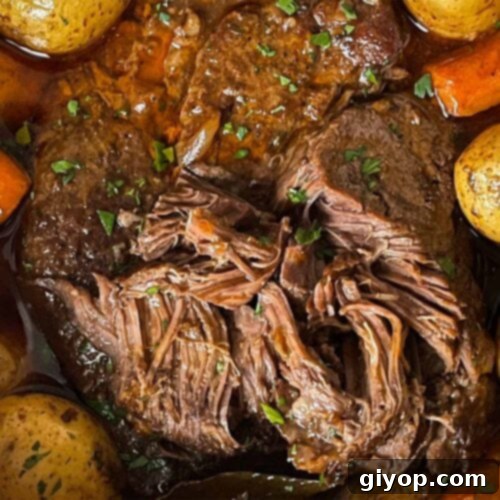
Sunday dinner at its best with juicy, tender beef and creamy potatoes and carrots.
Rating: 5 out of 5 stars from 3 votes
Print Recipe | Pin Recipe
Course: Dinner, Main Course | Cuisine: American
Prep Time: 15 minutes | Cook Time: 3 hours | Servings: 8
Calories: 481kcal | Author: Leigh Harris
Ingredients
- 3-4 lb Chuck roast
- 1 tsp Kosher salt
- 1/2 tsp Black pepper
- 2-4 tbsp Olive oil
- 1 tbsp Tomato paste
- 2 tbsp All-purpose flour
- 1/2 cup Red wine
- 2 cups Reduced-sodium beef broth
- 3 sprigs Fresh thyme (or 1/2 teaspoon dried thyme)
- 2 Bay leaves
- 1 medium Yellow onion (cut into large 2″ pieces)
- 4 cloves Garlic (minced)
- 2 lbs Small yellow potatoes
- 1 lb Carrots (cut into 2″ pieces)
Instructions
- Preheat oven to 325 degrees F (160 degrees C). Season the beef well on all sides with kosher salt and black pepper.
- In a Dutch oven or heavy pot with a lid over medium-high heat, heat the olive oil. Brown the meat on both sides, about 4 minutes per side, until a deep crust forms. Remove the meat to a platter. Stir in the tomato paste, and cook for about one minute until fragrant. Add the flour and cook another minute or two, stirring constantly. Add the red wine and deglaze the pan, scraping up any browned bits. Reduce the wine for about 1 minute.
- Add the beef broth, thyme, and bay leaves. Return the seared beef to the pot, nestling it into the liquid. Add the onions and garlic around the beef. Cover the pot tightly and cook in the preheated oven for 1 1/2 hours.
- Carefully remove the pot from the oven. Add the potatoes and carrots, tucking them around the roast (it’s okay if they are not fully submerged, they will still cook). Return the covered pot to the oven and cook for another 1 1/2 hours to 2 hours, or until the roast and vegetables are incredibly fork-tender.
- Remove the pot from the oven. Discard the bay leaves and thyme stems. Season to taste with additional salt and pepper if needed. Serve the beef shredded or in chunks with the vegetables and rich gravy.
Notes
- For a thicker gravy: If you prefer a thicker gravy, remove the meat and vegetables to a platter and tent them loosely with aluminum foil. In a small bowl, mix 2 tablespoons of cornstarch or flour with 2 tablespoons of cold water to create a slurry. Stir this slurry into the liquid in the pot. Bring to a boil on the stovetop and whisk until it starts to thicken to your desired consistency.
- Storage, freezing, and reheating: Please refer to the FAQ section of this post for detailed instructions on storing, freezing, and reheating your pot roast.
Nutrition
Calories: 481kcal | Carbohydrates: 29g | Protein: 37g | Fat: 23g | Saturated Fat: 9g | Polyunsaturated Fat: 2g | Monounsaturated Fat: 12g | Trans Fat: 1g | Cholesterol: 117mg | Sodium: 602mg | Potassium: 1415mg | Fiber: 5g | Sugar: 5g | Vitamin A: 9548IU | Vitamin C: 28mg | Calcium: 72mg | Iron: 5mg