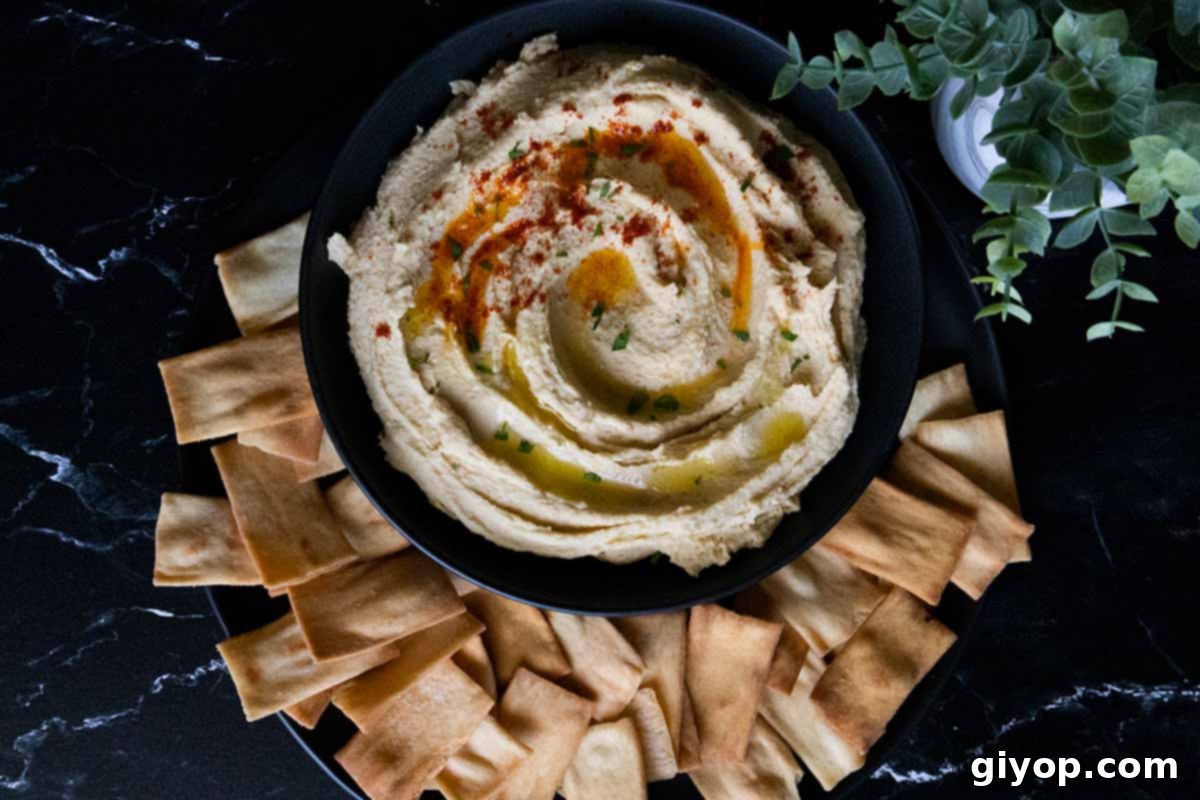
Unlock the secret to crafting the most unbelievably creamy, smooth, and flavorful hummus right in your own kitchen. Forget the store-bought versions; once you experience the fresh, vibrant taste of homemade hummus, there’s no turning back. This comprehensive guide will walk you through everything, including the much-debated topic of shelling chickpeas, ensuring you achieve the perfect texture and taste every single time. Get ready to impress your friends and family with a dip that’s not only delicious but also incredibly easy to make.
The Quest for Smoothness: To Peel or Not To Peel Chickpeas?
Many home cooks wonder if peeling chickpeas (also known as garbanzo beans) is the definitive step to achieving that coveted silky-smooth hummus texture. It’s a common belief, and indeed, removing the outer skins can contribute to a finer puree. However, the effort involved in individually peeling each chickpea can be incredibly time-consuming and, for many, not entirely worth the minimal difference in the final product’s texture. We’ve experimented extensively, peeling them by hand, and while it does yield a slightly smoother result, the improvement often doesn’t justify the significant investment of time and patience. The good news is, you can still achieve wonderfully smooth hummus without this laborious step!
Our method focuses on efficient blending and proper ingredient ratios to deliver a luxuriously creamy dip that surpasses anything you’d find in a grocery store. It’s fresher, more robust in flavor, and gives you complete control over the quality of ingredients, free from unwanted additives or preservatives.
However, if you are determined to achieve the absolute smoothest consistency and wish to explore chickpea shelling, we’ll provide a simplified technique that makes the process easier and faster than traditional hand-peeling. But remember, it’s an optional step!
Essential Ingredients for Your Perfect Hummus
Crafting exceptional hummus begins with high-quality ingredients. Each component plays a vital role in building the layered flavors and achieving that signature creamy texture. Here’s a breakdown of what you’ll need and why:
- Cooked Chickpeas (Garbanzo Beans): The foundation of any great hummus. While you can cook dried chickpeas from scratch (requiring an overnight soak and cooking until incredibly soft, often with a pinch of baking soda to aid tenderness), canned chickpeas are a fantastic shortcut. Opt for good quality canned chickpeas, drained and rinsed thoroughly, to save significant time without compromising much on flavor. Their convenience makes homemade hummus an accessible treat for any day of the week.
- Fresh Garlic: Absolutely non-negotiable! Fresh garlic imparts a pungent, aromatic kick that defines authentic hummus flavor. Avoid powdered garlic; the raw, bright notes of fresh garlic are essential. Minced finely, it blends seamlessly into the dip.
- Fresh Lemon Juice: Another cornerstone of hummus, fresh lemon juice provides a crucial tangy brightness that lifts all the other flavors. Always use freshly squeezed lemon juice for the best possible taste; bottled lemon juice simply doesn’t compare. It adds a zesty zip that cuts through the richness and enhances the overall Mediterranean profile.
- Ground Cumin: This warm, earthy spice is what gives hummus its distinctive Middle Eastern aroma and flavor. A little goes a long way, adding depth and complexity. Adjust the amount to your personal preference, starting with half a teaspoon and adding more if desired.
- Tahini: A paste made from ground sesame seeds, tahini is a traditional ingredient that lends hummus its characteristic nutty flavor and smooth, luxurious texture. While it is possible to make hummus without tahini, it won’t have the same authentic depth or creaminess. Look for good quality tahini, preferably one with a smooth, pourable consistency, and remember to stir it well before measuring, as the oil often separates.
- Extra Virgin Olive Oil: Beyond being a delightful garnish, extra virgin olive oil is incorporated into the hummus mixture to enhance its creaminess and richness. Choose a good quality olive oil for the best flavor contribution. A final drizzle over the finished dip adds gloss and another layer of flavor.
- Kosher Salt: Essential for seasoning. We recommend starting with 1/2 teaspoon and adjusting to taste. Salt brings out all the other flavors, ensuring your hummus is perfectly balanced.
Crafting Your Easy, Super Creamy Homemade Hummus
Achieving restaurant-quality hummus at home is simpler than you might think. Follow these steps for a truly delicious and smooth dip:
Optional: The Easier Way to Skin Chickpeas (for Ultra-Smooth Hummus)
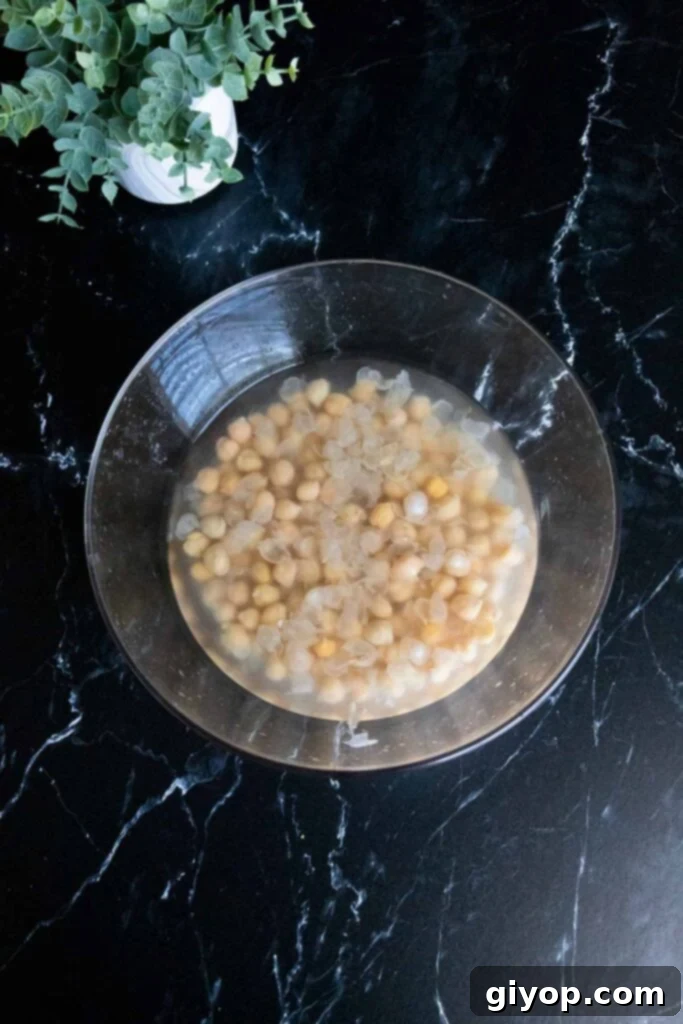
If you’re aiming for the absolute silkiest texture and are willing to invest a little extra time, here’s an easier method to remove chickpea skins compared to traditional hand-peeling:
- Prepare the Chickpeas: Begin by draining and thoroughly rinsing your canned chickpeas under cold water. This removes excess sodium and any canning liquid.
- Hot Water Soak: Place the rinsed chickpeas in a large bowl. Pour enough hot (not boiling) water over them to cover the peas by about one inch. Let them soak for 5 to 10 minutes. The hot water helps to soften the skins, making them easier to remove.
- Gentle Rub: After soaking, gently rub the chickpeas together between your hands or with a spoon in the water. You’ll notice the skins beginning to detach and float to the surface.
- Remove Skins: Use a slotted spoon or simply your hands to skim off the floating skins and discard them. Repeat this process a few times until most of the skins are removed. Don’t worry if a few stubborn skins remain; the powerful blending will take care of the rest.
- Final Drain: Drain the skinned chickpeas completely before proceeding with the recipe.
Pro Tip: The No-Peel Secret! If the idea of peeling chickpeas seems daunting, don’t fret! You can still achieve wonderfully smooth hummus without this step. The real secret lies in allowing your food processor or high-speed blender to run for an extended period—about 3 to 4 minutes. This longer processing time breaks down the chickpea fibers and skins sufficiently, resulting in a remarkably creamy and smooth texture that most people find perfectly satisfying without any peeling whatsoever. This is the trick we often employ for everyday ease!
The Main Hummus Blending Process
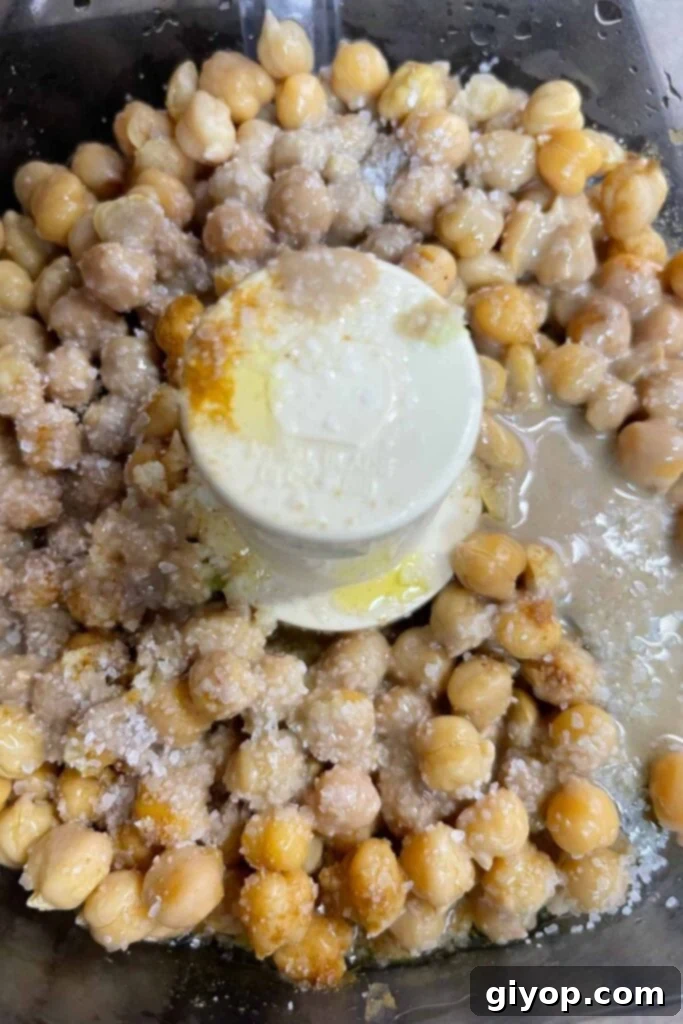
- Combine Ingredients: In the bowl of your food processor, add the drained chickpeas (skinned or unskinned, as per your preference), minced fresh garlic, fresh lemon juice, ground cumin, well-stirred tahini, extra virgin olive oil, and kosher salt.
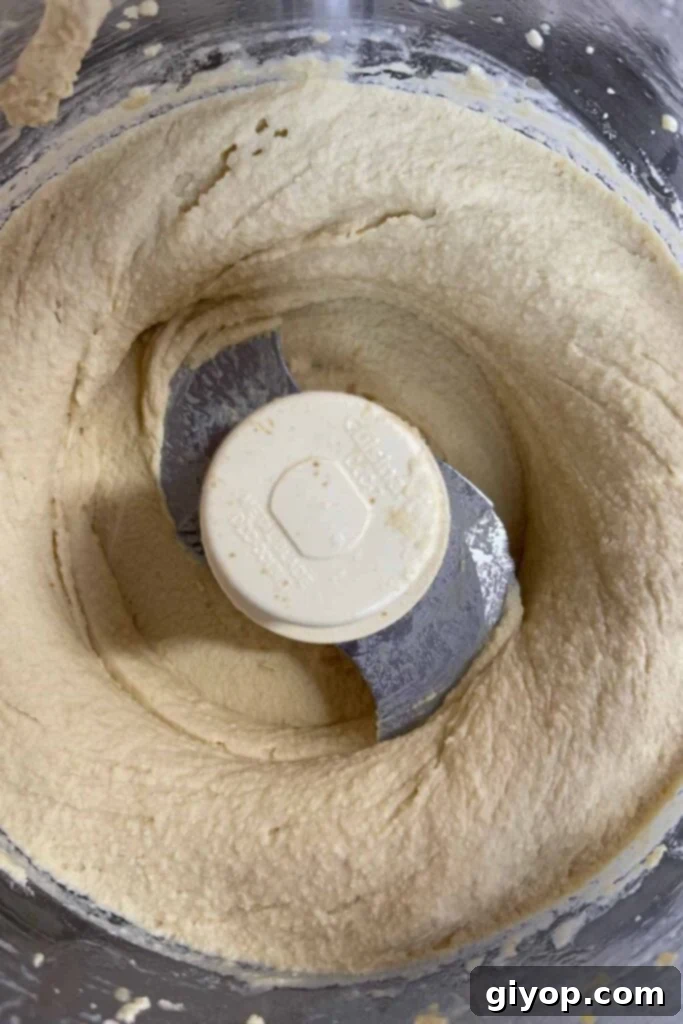
- Process to Perfection: Secure the lid and process the mixture for a full 3 to 4 minutes. It might seem like a long time, but this continuous blending is key to breaking down the chickpeas and creating an incredibly smooth and creamy emulsion. Stop occasionally to scrape down the sides of the bowl with a spatula, ensuring all ingredients are fully incorporated.
- Adjust Consistency: During or after processing, assess the consistency. If the hummus appears too thick or isn’t reaching your desired level of creaminess, add a tablespoon or more of very cold water, one at a time, and continue processing until it’s perfect. Cold water helps to lighten the texture without making it watery. We often find this amount of processing yields a delightful consistency for our taste, but you might prefer yours a little thinner.
- Taste and Adjust: Always taste your hummus before serving. Adjust seasonings as needed, adding more salt, lemon juice, or cumin to suit your palate.
Serving Your Delicious Homemade Hummus
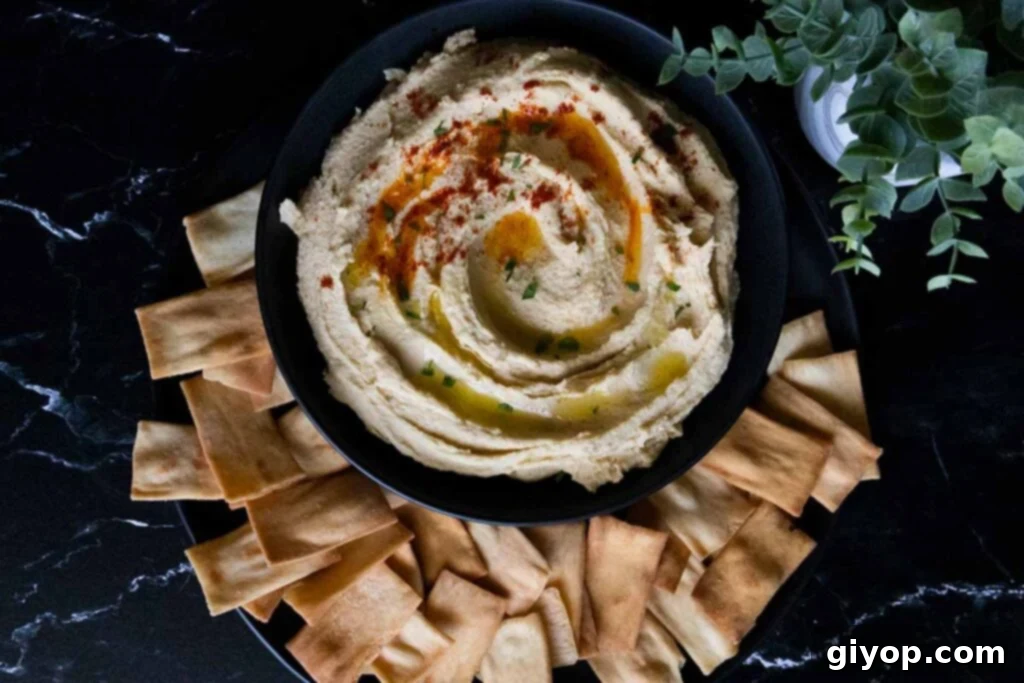
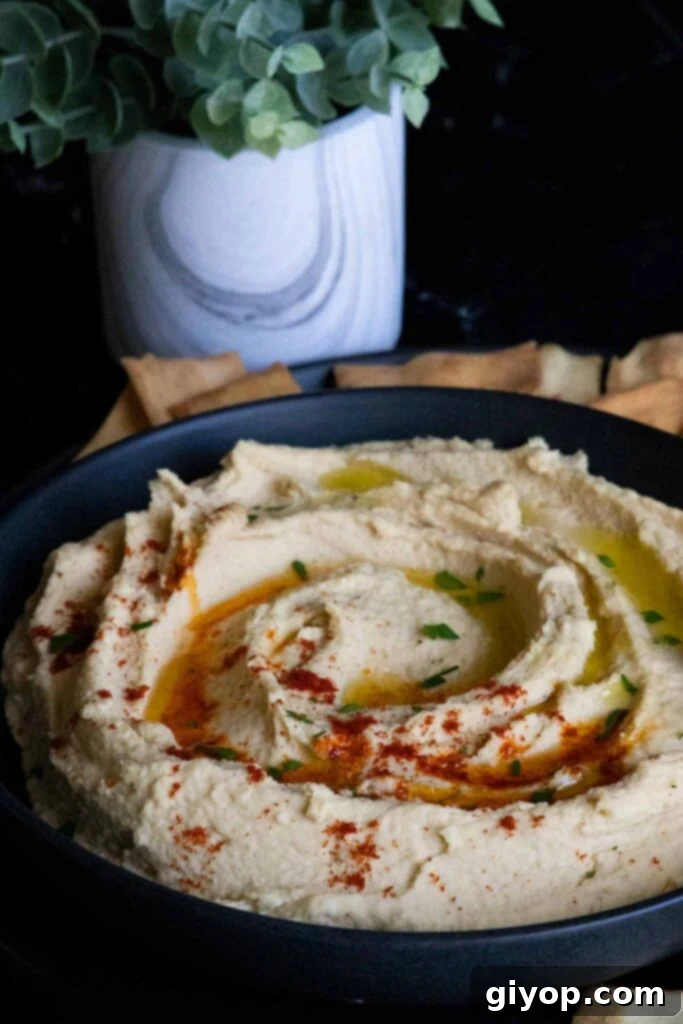
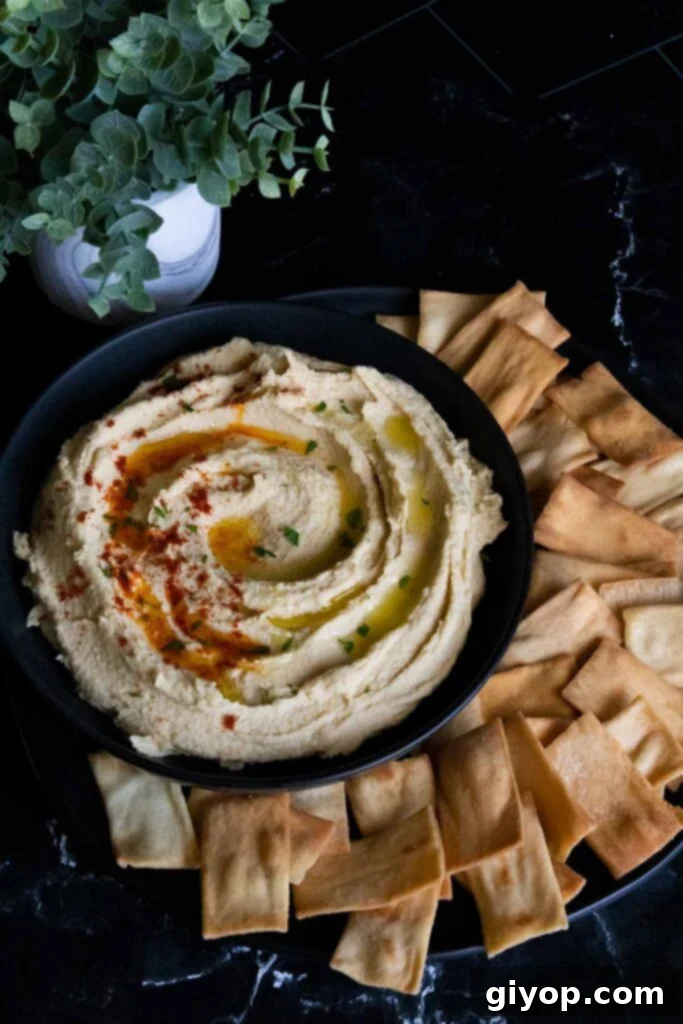
Once your hummus reaches peak creaminess and flavor, it’s time for the final touches. Transfer the hummus to a stylish serving bowl. Using the back of a spoon, create an appealing swirl or a shallow well in the center. Drizzle generously with a bit more high-quality extra virgin olive oil. For a beautiful presentation and an extra layer of flavor, sprinkle with a pinch of vibrant paprika and some freshly chopped parsley. This not only makes it look irresistible but also adds a lovely aromatic finish.
Creative Serving Suggestions for Hummus
Hummus is incredibly versatile and can be enjoyed in countless ways. Here are some of our favorite suggestions:
- Pita Chips: The classic pairing! Their crunchy texture and savory flavor are the perfect counterpoint to creamy hummus.
- Pita Bread: Warm, soft pita bread is ideal for scooping. For an extra treat, brush pita bread with olive oil and toast lightly before serving.
- Fresh Vegetables: A healthy and refreshing option. Think crisp bell peppers (all colors!), crunchy celery sticks, sweet carrot sticks, cucumber slices, cherry tomatoes, or even radish rounds.
- Crackers: Any sturdy cracker works wonderfully, from whole-grain to rice crackers, offering a satisfying crunch.
- Sandwiches and Wraps: Slather a generous layer of hummus onto your sandwiches or wraps for a flavorful, creamy spread that adds moisture and protein. It’s a fantastic alternative to mayonnaise.
- Grain Bowls: Add a dollop of hummus to your favorite grain bowls (quinoa, farro, rice) for a boost of flavor and nutrition.
- Salad Dressing Base: Thin out hummus with a little water or lemon juice to create a creamy, flavorful salad dressing.
- Accompaniment to Grilled Meats: Serve alongside grilled chicken, lamb, or fish for a Mediterranean-inspired meal.
Exciting Hummus Variations to Try
Once you’ve mastered the basic recipe, don’t hesitate to get creative! Hummus is a fantastic canvas for additional flavors. Here are a few popular variations to inspire you:
- Roasted Garlic Hummus: For a more mellow and robust garlic flavor, roast a head of garlic until soft and caramelized before adding the cloves to your food processor. The sweetness of roasted garlic adds incredible depth.
- Roasted Red Pepper Hummus: Add 1/2 cup to 3/4 cup of drained and chopped roasted red peppers (from a jar works perfectly, just pat them dry) to the food processor along with the other ingredients. The peppers add a lovely smoky sweetness and a vibrant color.
- Kalamata Olive Hummus: Incorporate about 3/4 cup of pitted and chopped Kalamata olives into the blend for a briny, salty kick that evokes the flavors of the Mediterranean.
- Pesto Swirl Hummus: Stir in a tablespoon or two of your favorite store-bought or homemade pesto at the very end. Swirl it gently through the hummus for a beautiful marbled effect and a fresh, herbaceous taste.
- Spicy Hummus: Add a pinch of cayenne pepper, a dash of hot sauce, or a small roasted jalapeño to the mixture for a fiery kick.
- Sun-Dried Tomato Hummus: Blend in a quarter cup of oil-packed sun-dried tomatoes (drained) for an intense, sweet-tart flavor profile.
For an added touch, sprinkle a few sesame seeds or toasted pine nuts on top of your finished hummus right before serving. These additions provide a delightful textural contrast and an extra layer of nutty flavor.
More Delicious Dip Recipes to Explore
If you love this homemade hummus, you’ll surely enjoy these other delectable dip recipes perfect for entertaining or a simple snack:
- Easy Spinach Dip
- Artichoke Dip
- Easy Mediterranean Dip
- Easy Black Bean Dip
- Fresh Herb Vegetable Dip
Easy Homemade Hummus Recipe
Learn how to make super creamy, smooth, and flavorful hummus at home with or without shelling the chickpeas.
Course: Appetizer, Dip
Cuisine: Mediterranean
Prep Time: 15 minutes
Servings: 9
Calories: 167 kcal
Author: Leigh Harris
Ingredients
- 30 oz Chickpeas (garbanzo beans) – 2 cans
- 2 cloves Fresh Garlic – minced
- 1/4 cup Fresh lemon juice
- 1/2 tsp Ground Cumin – more or less to taste
- 1/4 cup Tahini – well stirred
- 3 tbsp Extra virgin olive oil – plus extra for garnish
- 1/2 tsp Kosher salt – or more to taste
Instructions
- Optional: To Skin the Chickpeas: Drain and rinse the chickpeas. Place them in a large bowl and pour enough hot water to cover the peas by about 1-inch. Let them soak for 5 to 10 minutes. Gently rub the chickpeas together in the water; the skins should come off easily and float to the top. Skim off and discard the skins with a slotted spoon or your hands. Drain the chickpeas thoroughly before proceeding.
- In the bowl of a food processor, combine the prepared chickpeas, minced garlic, fresh lemon juice, cumin, tahini, olive oil, and kosher salt.
- Process continuously for 3 to 4 minutes until the mixture is incredibly smooth and creamy. You may need to stop occasionally to scrape down the sides of the bowl. If the hummus is too thick for your preference, add a tablespoon or more of cold water, one tablespoon at a time, while processing, until you achieve your desired consistency.
- Transfer the finished hummus to a serving bowl. Using the back of a spoon, create a shallow well or swirl in the center. Drizzle with a little extra virgin olive oil and sprinkle with paprika (and chopped fresh parsley, if desired) for garnish before serving.
Notes
Nutrition information is based on a 1/3 cup serving size and is an estimate.
Nutrition
Calories: 167kcal | Carbohydrates: 15g | Protein: 6g | Fat: 10g | Saturated Fat: 1g | Polyunsaturated Fat: 3g | Monounsaturated Fat: 5g | Sodium: 395mg | Potassium: 180mg | Fiber: 5g | Sugar: 1g | Vitamin A: 21IU | Vitamin C: 4mg | Calcium: 46mg | Iron: 2mg
Storage Tips for Homemade Hummus
Once you’ve made a fresh batch of hummus, proper storage is key to maintaining its freshness and flavor. Transfer your homemade hummus to an airtight container. To prevent it from drying out and to keep it fresh, create a smooth surface on top of the hummus, then drizzle a thin layer of extra virgin olive oil over it before sealing the container. This creates a protective barrier against air. Stored this way in the refrigerator, homemade hummus will typically stay fresh for 4 to 7 days. Always use a clean spoon each time you dip into it to extend its shelf life. If you notice any sour smell or discoloration, it’s best to discard it.
The Health Benefits of Hummus
Beyond its incredible taste and versatility, hummus is also packed with impressive health benefits, making it a fantastic addition to any diet. Its primary ingredient, chickpeas, are a rich source of plant-based protein and dietary fiber. This combination helps to keep you feeling fuller for longer, aiding in weight management and promoting healthy digestion. The fiber content also contributes to gut health by feeding beneficial gut bacteria.
Chickpeas are also abundant in essential vitamins and minerals, including folate, iron, magnesium, phosphorus, and B vitamins. Tahini, derived from sesame seeds, adds healthy fats, antioxidants, and minerals like copper and selenium. Olive oil, a cornerstone of the Mediterranean diet, provides heart-healthy monounsaturated fats. Fresh lemon juice boosts vitamin C, while garlic offers its well-known immune-boosting and anti-inflammatory properties. All these ingredients combined make hummus a nutrient-dense, wholesome, and delicious food choice.
Final Thoughts on Your Homemade Hummus Journey
Making hummus from scratch is a deeply rewarding experience that allows you to control every aspect of its flavor and texture. Whether you choose to peel your chickpeas for an extra silky finish or rely on the power of your food processor for an effortless blend, the result will always be superior to any store-bought alternative. The fresh, bright, and nutty flavors of homemade hummus are truly unmatched. So, gather your ingredients, follow these simple steps, and embark on your journey to creating the ultimate creamy hummus. It’s not just a dip; it’s a versatile, healthy, and incredibly satisfying culinary delight that will become a staple in your kitchen.