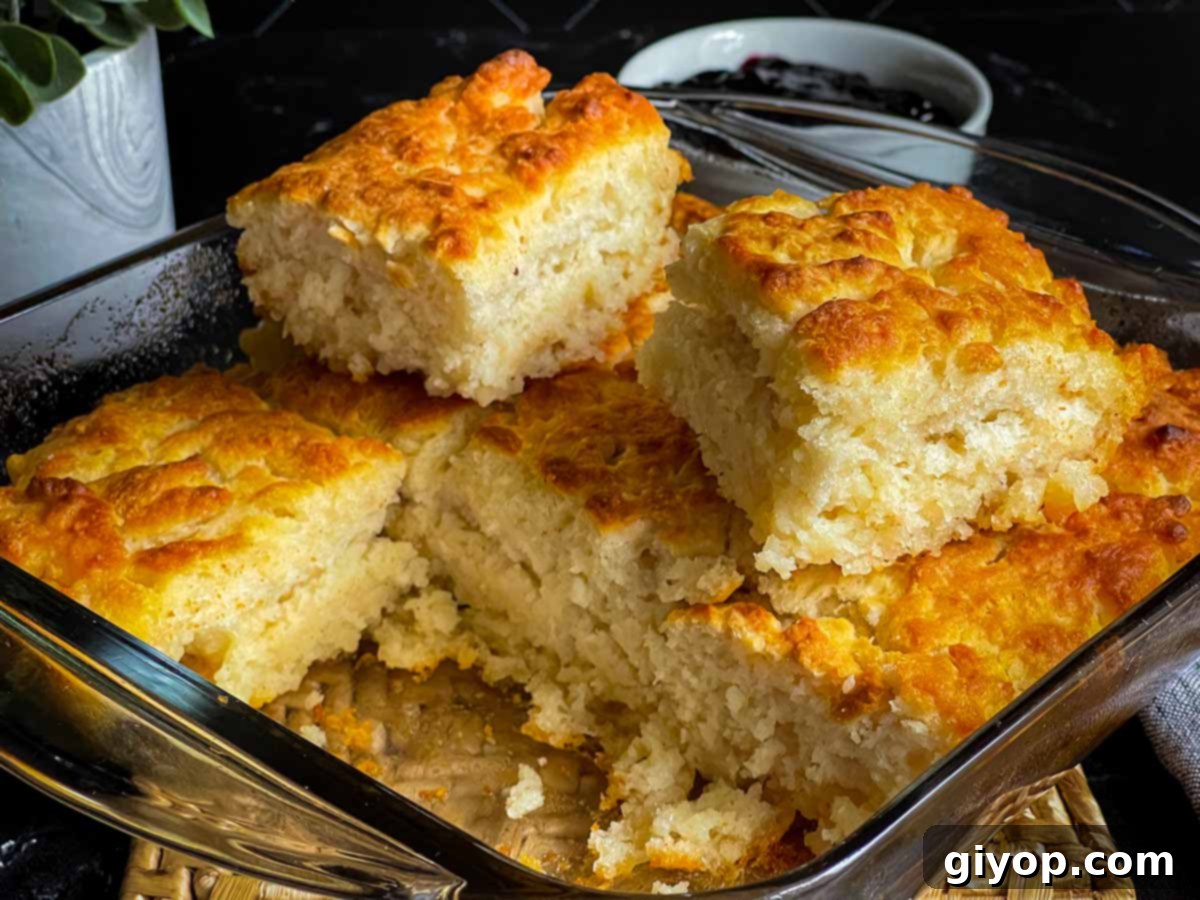
Easy Homemade Butter Swim Biscuits: The Ultimate Buttermilk Recipe for Fluffy, Crispy Perfection
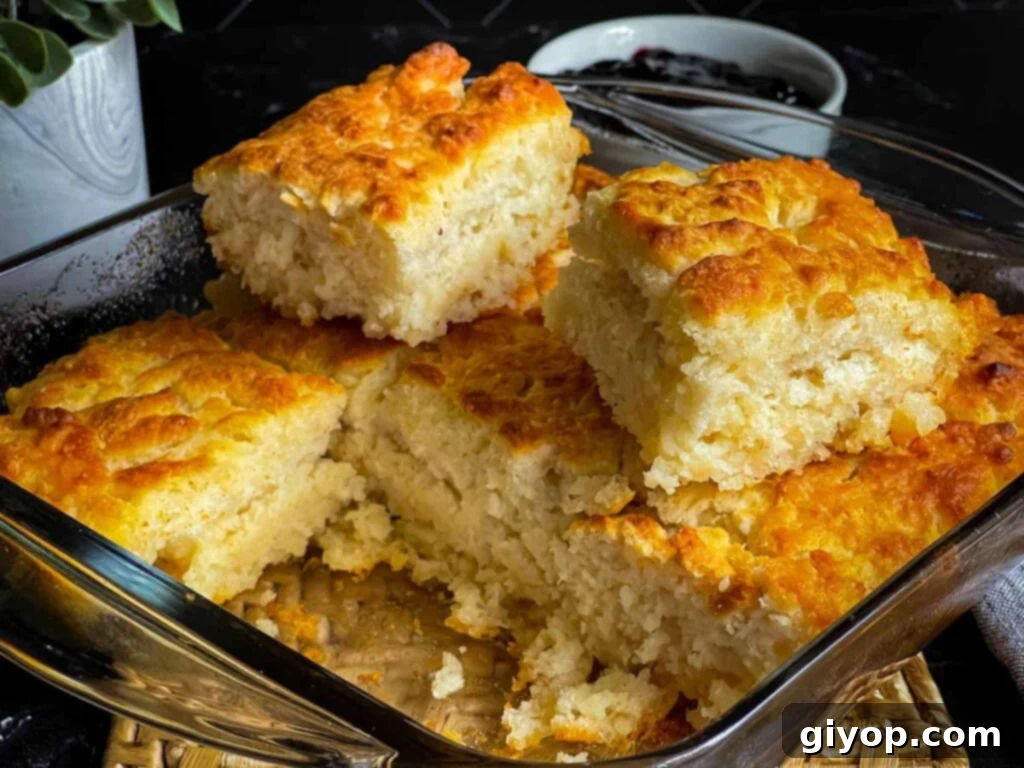
Dive into the delightful world of **Butter Swim Biscuits**, also affectionately known as **Butter Dip Biscuits**, a truly extraordinary twist on the classic buttermilk biscuit. Imagine sinking your teeth into a biscuit that boasts a golden, exquisitely crispy, butter-soaked crust, yielding to an interior that is incredibly light, moist, and fluffy. These aren’t your average biscuits; they are baked directly in a generous pool of melted butter, ensuring every bite is infused with rich, unparalleled flavor and a tender crumb. Perfect for any meal, these biscuits are not only unbelievably delicious but also remarkably simple to prepare, making them an ideal choice for both novice and experienced bakers alike. Forget the fuss of cutting in cold butter or using a biscuit cutter – this recipe streamlines the process without compromising on taste or texture, promising a batch of perfection every time, every single time.
Don’t Sweat The Recipe is supported by its readers. We may earn a commission if you purchase through a link on our site. Learn more.
Table of Contents
- Why You’ll Love These Butter Swim Biscuits
- Key Ingredients for Perfect Butter Swim Biscuits
- Step-by-Step Guide: How to Make Easy Homemade Butter Swim Biscuits
- Expert Tips for the Best Butter Swim Biscuits
- Frequently Asked Questions (FAQs)
- More Biscuit Recipes
- Final Thoughts on Butter Swim Biscuits
Why You’ll Love These Butter Swim Biscuits
There are countless reasons why these incredible Butter Swim Biscuits are destined to become a staple in your kitchen. Beyond their irresistible taste, they offer a unique combination of ease and versatility that sets them apart from traditional biscuit recipes, making them a standout choice for any home cook.
- **Effortless Preparation for All Skill Levels:** One of the most compelling aspects of this recipe is its sheer simplicity. Bid farewell to the laborious process of cutting cold butter into flour, a common hurdle in classic biscuit recipes. With Butter Swim Biscuits, you eliminate the need for specialized techniques like grating or cubing butter. Instead, the butter is simply melted and poured directly into the baking dish, creating a hassle-free, buttery foundation. This method also removes the requirement for a biscuit cutter; a simple knife to score the dough before baking is all that’s necessary. This straightforward approach makes these biscuits incredibly accessible for beginners, ensuring perfect results without the typical stress of traditional biscuit making.
- **Unforgettable Texture and Flavor Combination:** The unique “swimming” method in melted butter is where the magic truly unfolds. As these biscuits bake, they absorb the butter, developing an exquisitely crispy, golden-brown crust that is utterly saturated with rich, buttery flavor. This glorious exterior beautifully contrasts with an interior that is remarkably tender, moist, and delightfully fluffy. It’s a symphony of textures and tastes – a crisp shell giving way to a soft, yielding crumb – that will undoubtedly have you reaching for more.
- **Incredibly Versatile for Any Meal:** The rich, buttery, and slightly tangy profile of these biscuits makes them incredibly adaptable to almost any meal of the day. They serve as a perfect accompaniment to a hearty breakfast of eggs and bacon, elevate a casual brunch spread with fresh berries and cream, or provide a comforting, savory side to a classic Southern fried chicken dinner or a bowl of chili. Their robust flavor complements both sweet and savory toppings, allowing for endless culinary creativity.
- **Minimal Ingredients, Maximum Impact:** You’ll be astonished at the depth of flavor and satisfying texture achieved with such a concise list of common pantry items. This recipe calls for just six fundamental ingredients: all-purpose flour, unsalted butter, baking powder, salt, granulated sugar (optional), and buttermilk. The beauty of this simplicity means that these ingredients are almost certainly already in your kitchen, enabling you to whip up a fresh batch of warm biscuits on a whim, without a special trip to the grocery store.
- **A Guaranteed Crowd-Pleaser for Any Occasion:** Whether you’re preparing a casual family meal, hosting a holiday brunch, or bringing a potluck dish, these butter swim biscuits are sure to be a showstopper. Their inviting golden appearance, unique texture, and deeply comforting buttery taste make them an instant favorite. They’re a cherished classic reimagined with an irresistible twist that appeals to everyone.
For more breakfast inspiration and delectable baked goods, explore our other favorite breakfast recipes like Sausage Muffins (without Bisquick), Raspberry Cream Cheese Danish, Maple Bacon French Toast Bake, Sausage Cake, and Southern Sweet Potato Biscuits.
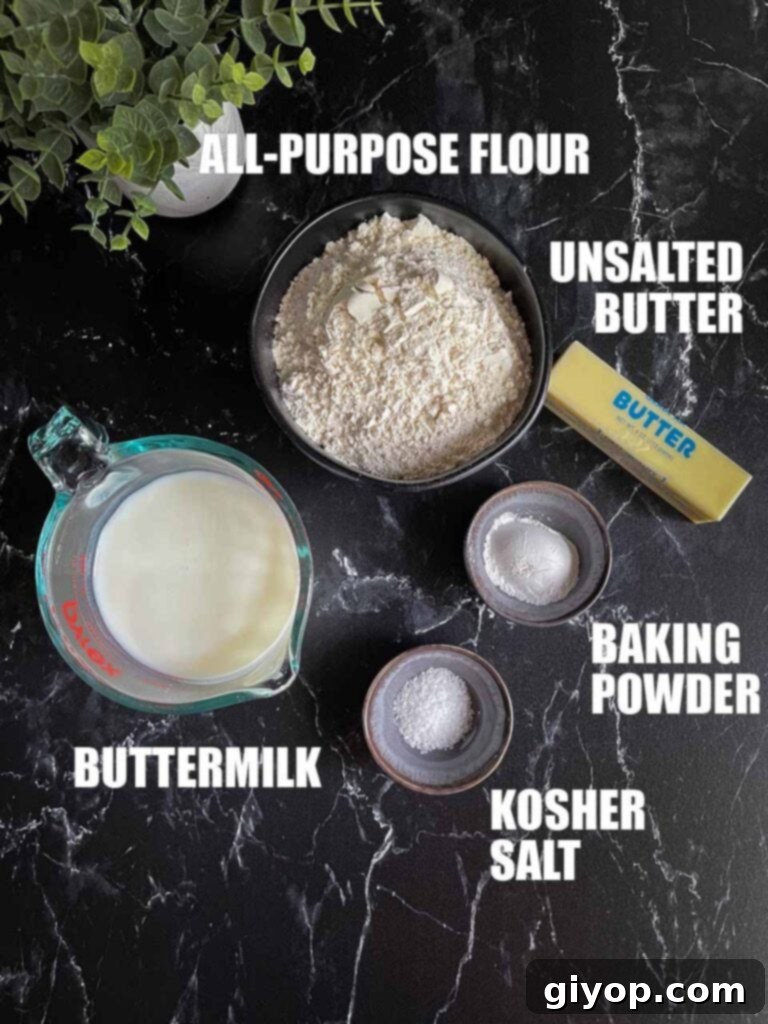
Key Ingredients for Perfect Butter Swim Biscuits
One of the beauties of this butter swim biscuit recipe is its reliance on readily available, simple ingredients. You likely have most, if not all, of these staples in your pantry and refrigerator already. Understanding the role of each ingredient is key to achieving that perfect flaky, buttery, and moist biscuit that everyone raves about.
- **All-Purpose Flour:** This forms the fundamental structure and body of your biscuits. Using standard all-purpose flour ensures a tender crumb and excellent rise. For accurate results, proper measurement is crucial: always aerate your flour by fluffing it with a spoon, then gently spoon it into your measuring cup until it overflows, and finally, level it off with the back of a knife. Avoid scooping directly from the bag, as this compacts the flour and can lead to dense biscuits.
- **Unsalted Butter:** The undeniable star of this recipe! We specify unsalted butter to give you complete control over the overall saltiness of your biscuits. The innovative technique of melting the butter and pouring it into the pan is what creates these biscuits’ signature crispy, golden-brown exterior and infuses every inch with rich, deep butter flavor. This also conveniently eliminates the labor-intensive step of cutting in cold butter, a common hurdle in traditional biscuit recipes.
- **Baking Powder:** This is your primary leavening agent, a crucial component responsible for the impressive lift and irresistibly fluffy texture of your biscuits. For optimal results, always ensure your baking powder is fresh and active. Old or expired baking powder can significantly reduce the rise, resulting in disappointingly flat and dense biscuits.
- **Kosher Salt:** A small but mighty ingredient, salt is essential for balancing the flavors within the biscuit. It enhances the richness of the butter, complements the subtle tang of buttermilk, and harmonizes with any sweetness from sugar (if used). Kosher salt is generally preferred for baking due to its pure taste and larger, more evenly dissolving crystals.
- **Granulated Sugar (Optional):** While many traditional Southern biscuits are prepared without any sugar, a modest tablespoon of granulated sugar in this recipe adds a delightful, subtle hint of sweetness. This also contributes to achieving a beautifully golden and slightly caramelized crust. You have the flexibility to adjust the amount or omit it entirely, based on your personal preference and whether you plan to serve them with sweet or savory toppings.
- **Buttermilk:** This ingredient is truly non-negotiable for authentic, tender, and flavorful buttermilk biscuits. Its inherent acidity reacts with the baking powder to create a powerful leavening action, resulting in a superior rise. Beyond lift, buttermilk imparts a distinct tangy flavor and contributes significantly to the biscuits’ characteristic soft, tender texture. If you find yourself without buttermilk, fret not! You can easily create a homemade substitute: for the 1¾ cups required in this recipe, simply add 1½ tablespoons of lemon juice or white vinegar to a liquid measuring cup, then fill the remaining volume up to the 1¾ cup mark with whole milk. Stir gently and allow the mixture to sit for 5-10 minutes until it visibly curdles slightly – it’s then ready to use!
With these six simple yet powerful ingredients, you’re now fully equipped to bake a batch of the most delicious, easiest homemade biscuits you’ve ever had, promising a delightful treat every time!
Step-by-Step Guide: How to Make Easy Homemade Butter Swim Biscuits
Get ready to bake a batch of the easiest, most satisfying, and utterly delicious biscuits you’ve ever made. This straightforward recipe for Butter Swim Biscuits guarantees perfectly crispy exteriors and incredibly fluffy interiors with minimal effort. Follow these simple steps for guaranteed success:
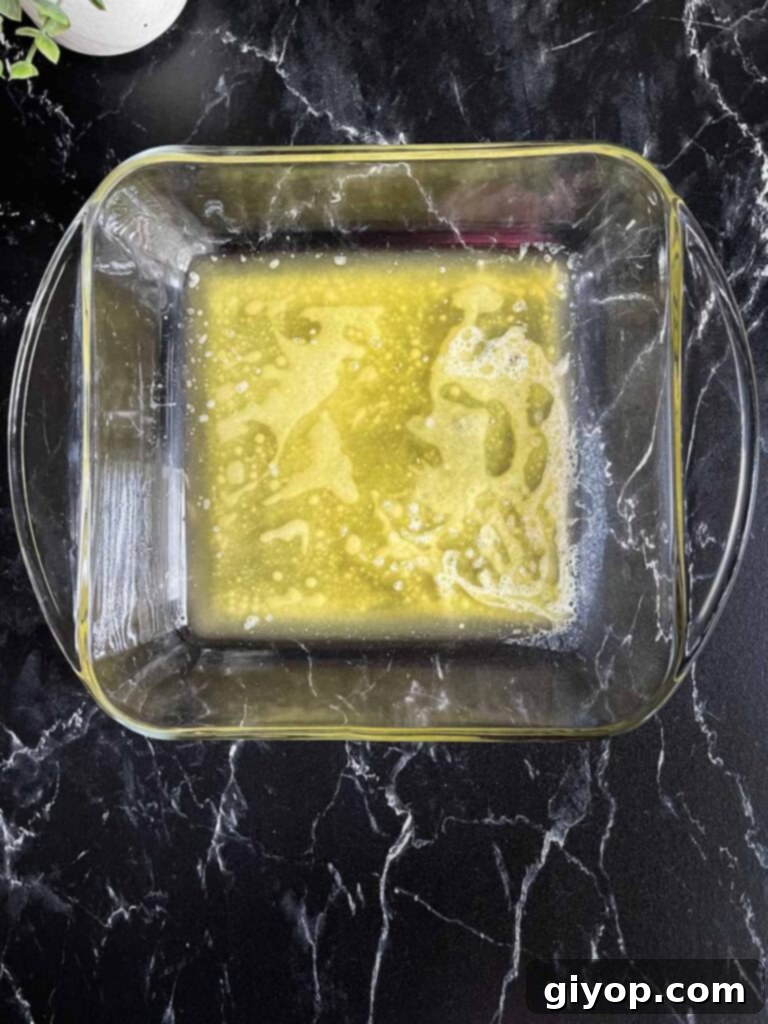
- **Preheat Oven and Prepare Baking Dish (Initial Setup):** Begin by preheating your oven to a robust 450 degrees Fahrenheit (232°C). This high temperature is absolutely essential for activating the leavening agents quickly, ensuring a rapid rise and contributing to that desirable golden, crispy crust. While your oven heats, take an 8×8 or 9×9 inch glass or ceramic baking dish. Although the melted butter helps prevent sticking, a light coating of cooking spray is recommended for extra non-stick insurance. In a separate microwave-safe bowl, gently melt the unsalted butter until it’s completely liquid. Be careful not to let it boil, sizzle, or start to brown. Once melted, pour this shimmering liquid butter directly into your prepared baking dish, ensuring it forms an even layer across the bottom.
- **Whisk Together Dry Ingredients (Foundation for Flavor):** In a spacious medium-sized mixing bowl, combine your all-purpose flour, baking powder, the optional granulated sugar, and kosher salt. Using a wire whisk, vigorously blend these dry ingredients together for about 30 seconds to a minute. This step is crucial not only for thoroughly combining everything but also for aerating the flour, which contributes significantly to a lighter and more tender biscuit texture. Ensure there are no visible lumps of baking powder or salt, as this can lead to inconsistent flavor and rise.
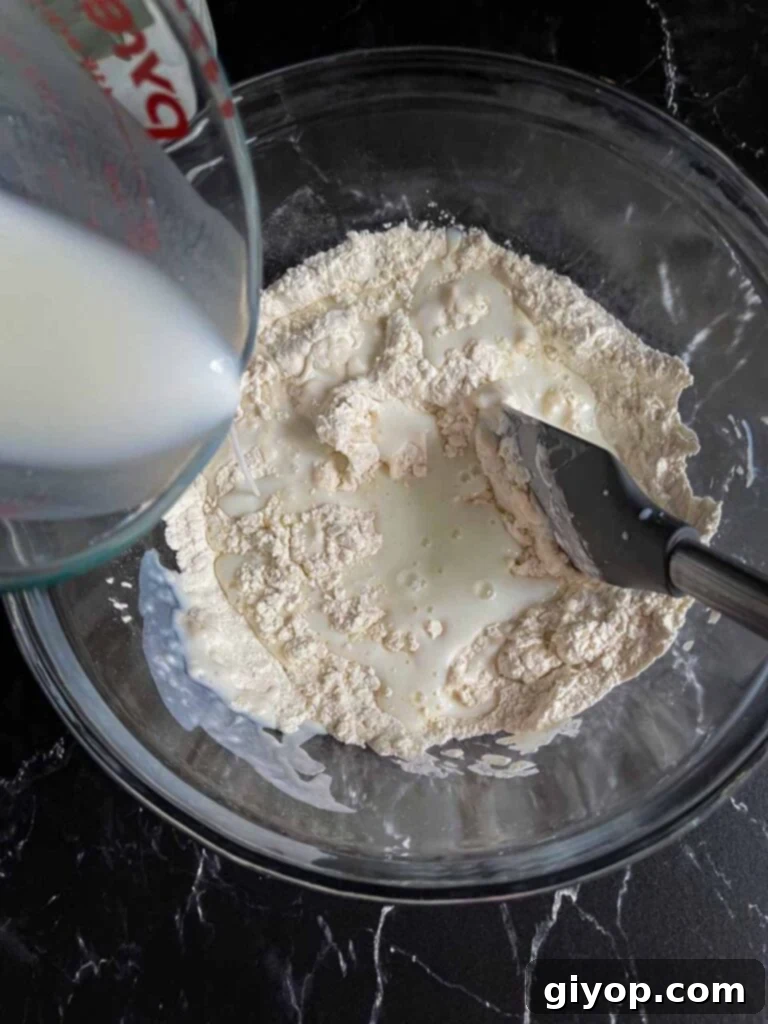
- **Combine Wet and Dry to Form Dough (The “Shaggy” Secret):** Create a shallow well in the center of your whisked dry ingredients. Carefully pour the cold buttermilk into this well. Now, using a sturdy spoon, a rubber spatula, or even your clean hands, gently mix the ingredients together. The key here is to mix *just until* the dry ingredients are moistened and a sticky, shaggy, and somewhat lumpy batter forms. Resist the strong urge to overmix! A few visible dry streaks of flour are perfectly acceptable and even desirable. Overmixing develops the gluten in the flour, which will inevitably lead to tough, chewy, and less desirable biscuits instead of the light and fluffy ones you’re aiming for. The dough will be quite soft and wet, unlike traditional kneaded biscuit dough.
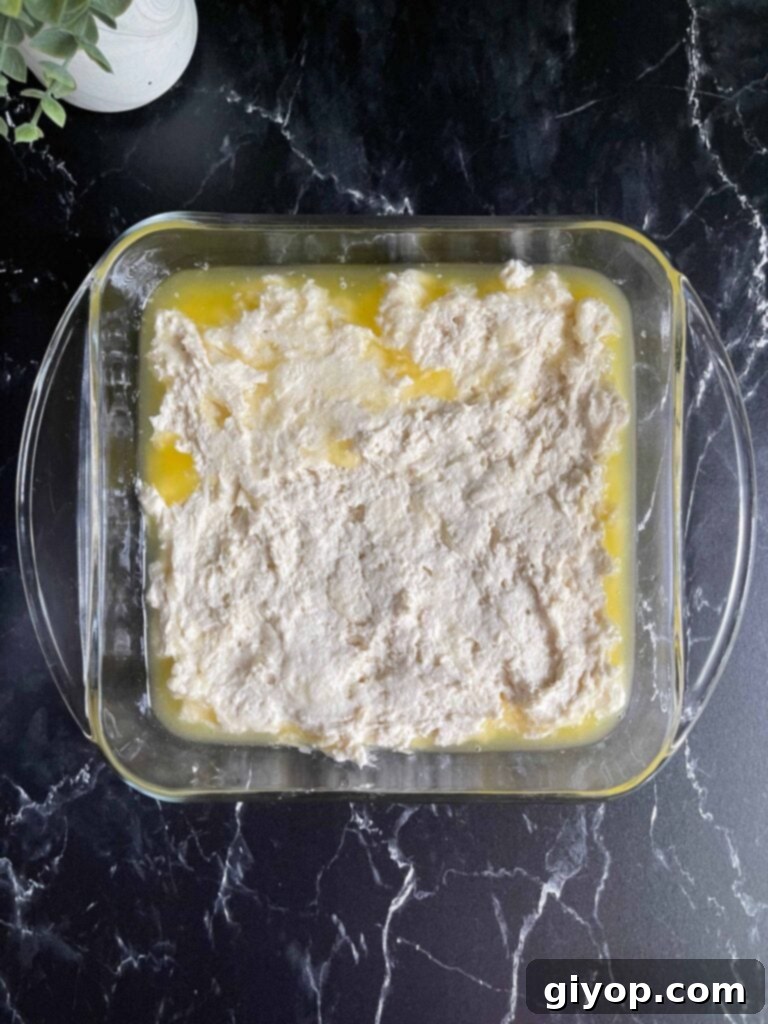
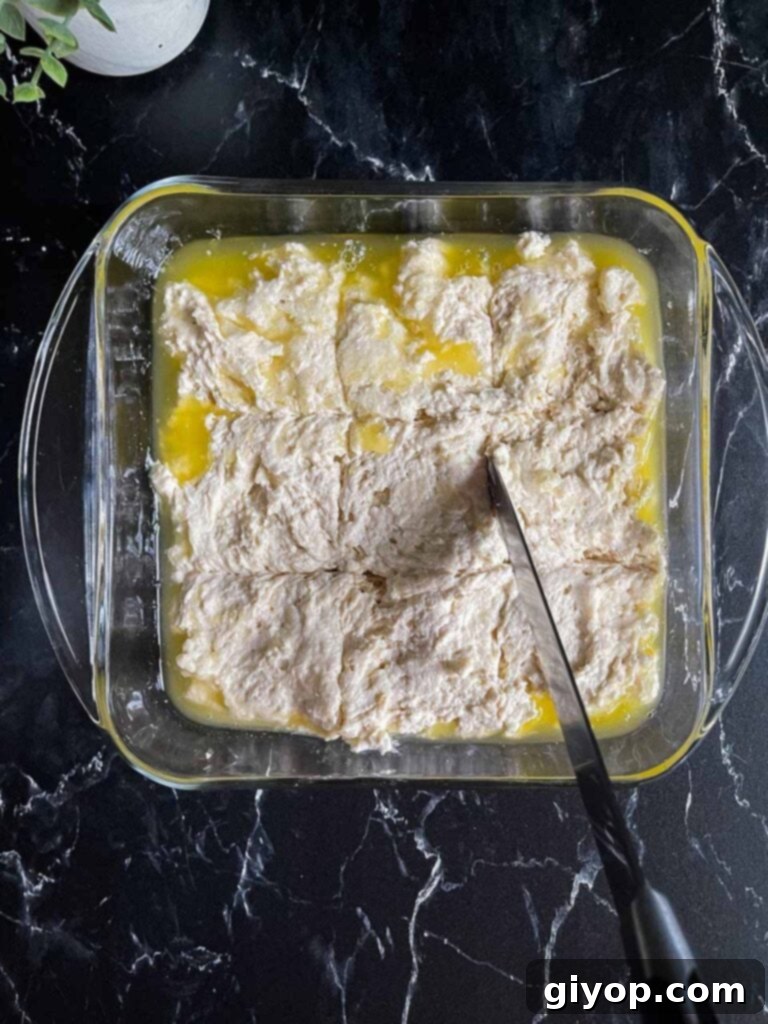
- **Transfer Dough to Pan and Score (Preparing for Butter Infusion):** With care, spoon the sticky biscuit dough evenly on top of the melted butter that’s already waiting in your baking dish. Using your spatula or the back of a spoon (you can also lightly dampen your hands with water to prevent sticking), gently spread the dough out to form an even layer that covers the entire bottom of the pan. Once the dough is evenly spread, take a sharp knife and, as precisely as you can, lightly score the dough into 9 equal-sized squares (typically 3 rows by 3 columns). This scoring is not about cutting all the way through; rather, it creates shallow guides that help define the individual biscuit portions. This not only makes them easier to separate after baking but also encourages the melted butter to seep around each biscuit, further enhancing that crispy, buttery edge.
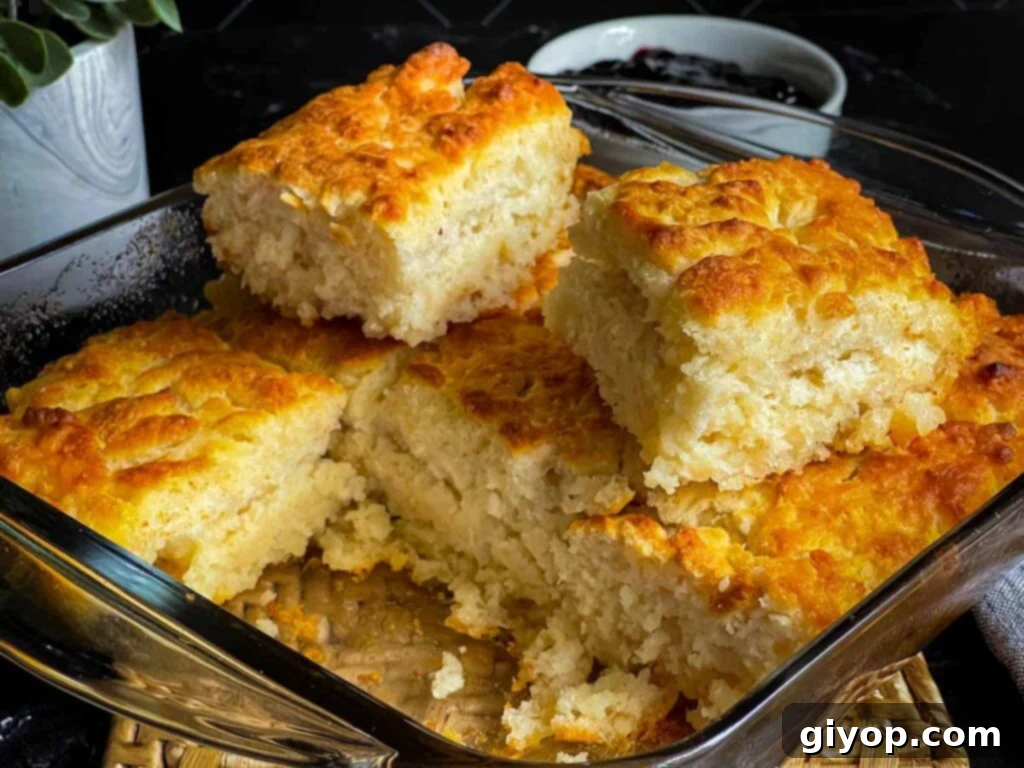
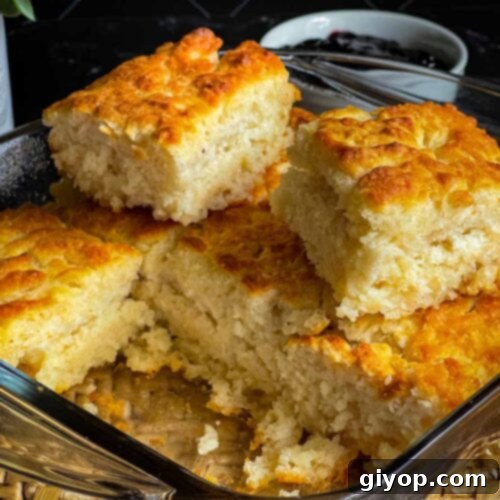
- **Bake to Golden Perfection (The Grand Finale):** Carefully transfer the baking dish into your preheated 450°F (232°C) oven. Allow the biscuits to bake for approximately 20-25 minutes. Baking times can vary depending on your oven, so keep a close eye on them, especially towards the end. The biscuits are perfectly ready when they have risen beautifully, boast a rich, deep golden-brown color on top, and a toothpick inserted into the center of one of the middle biscuits comes out clean. The melted butter in the pan should be bubbling vigorously, and the edges of the biscuits should look wonderfully crispy and caramelized.
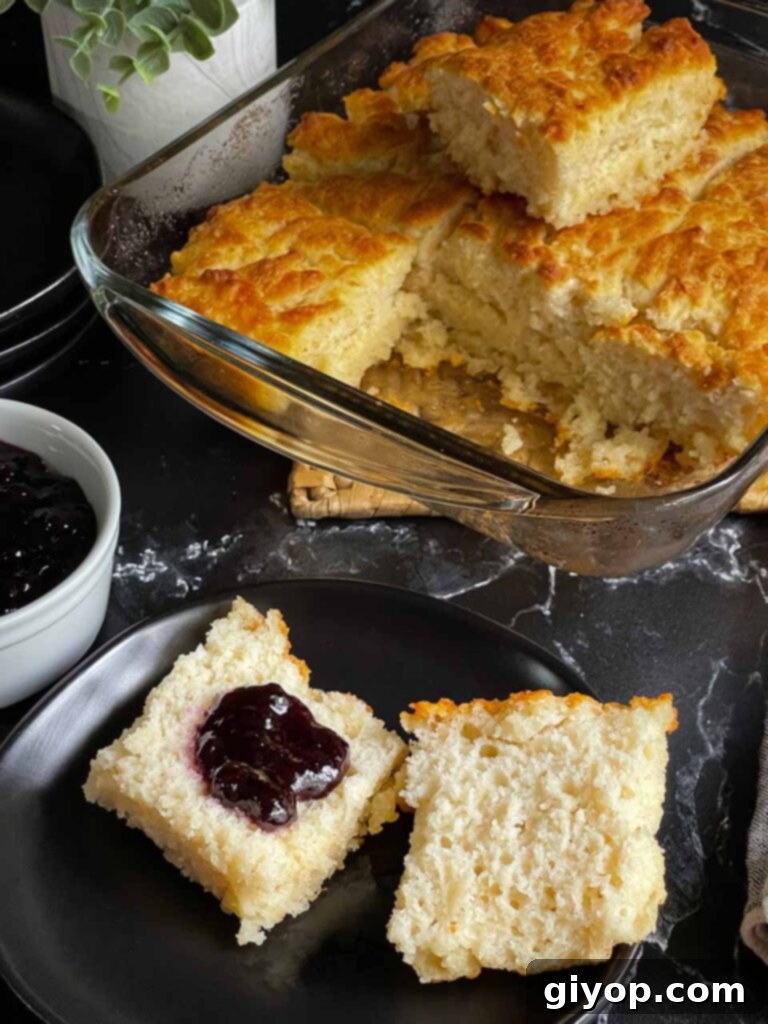
Once baked, immediately remove the pan from the oven and allow the biscuits to cool in the pan for a few minutes. This brief resting period allows the butter to settle and the biscuits to firm up slightly before you cut along the scored lines and serve. These buttery biscuits are incredibly versatile and utterly fantastic with any meal, whether it’s breakfast, brunch, lunch, or dinner. Elevate your experience by topping them with an extra pat of butter, your favorite sweet fruit jam, a drizzle of warm honey or rich maple syrup, or homemade apple butter!
Expert Tips for the Best Butter Swim Biscuits
Achieving biscuit perfection is wonderfully attainable with this forgiving butter swim method. These expert tips will help ensure your biscuits turn out flawlessly every single time, yielding that irresistible crispy, buttery exterior and light, fluffy interior:
- **Measure Flour Accurately for Ideal Texture:** This is arguably the most critical tip for consistent baking results. Never scoop flour directly from the bag with your measuring cup, as this action compacts the flour, leading to an excess amount that can result in dry, dense, and heavy biscuits. Instead, gently aerate your flour by fluffing it with a spoon or whisk. Then, carefully spoon the flour into your measuring cup until it overflows slightly. Finally, use the back of a straight knife or a flat edge to level off the excess flour, ensuring a precise measurement. This “spoon and level” technique guarantees you use the correct quantity for a tender crumb.
- **Avoid Overmixing the Dough at All Costs:** Once you’ve added the buttermilk to your dry ingredients, the golden rule is to mix *just until* they are combined and a sticky, shaggy dough forms. Overmixing is the primary culprit behind tough, chewy biscuits. It overdevelops the gluten in the flour, transforming what should be a light and tender treat into something dense and rubbery. Don’t worry if you see a few small dry streaks; these will hydrate during baking, and it’s far better to undermix slightly than to overmix.
- **Choose the Right Baking Pan for Even Cooking:** We strongly advocate for using a **glass or ceramic baking pan** (such as an 8×8 or 9×9 inch square dish) for this recipe. Metal pans, particularly thin ones, conduct heat very aggressively and can cause the melted butter at the bottom of the pan to overheat and burn rapidly. This often happens before the biscuits themselves are fully cooked through, leading to a scorched bottom. Glass or ceramic bakeware distributes heat more evenly and gently, preventing the butter from scorching and allowing the biscuits to bake perfectly.
- **Melt Butter Gently and Mindfully:** When melting your butter, whether in the microwave or on the stovetop, do so with care. You want the butter to be completely liquid, but it should not be boiling, sizzling, or showing any signs of browning. Excessive heat can cause the butter’s milk solids and fats to separate prematurely, which might subtly affect the final texture and flavor of the butter-soaked crust. Aim for just melted.
- **Pre-Melting Butter in the Oven (Proceed with Caution):** If you’re looking to save a dish or some time, you can place the block of butter directly into your baking pan and let it melt in the preheating oven. However, this method requires vigilance! Watch the butter extremely closely. Remove the pan from the oven as soon as the butter is almost entirely melted. The residual heat retained by the pan will continue to melt the remaining solids. This prevents the butter from burning while you prepare the biscuit dough.
- **Customize Your Biscuit’s Golden Hue with Foil:** Everyone has a personal preference for the ideal level of golden-brown on their biscuits. If you notice your biscuits are browning too quickly on top, but a toothpick inserted in the center indicates they’re not quite cooked through, simply loosely tent the baking dish with a sheet of aluminum foil. This clever trick will shield the tops from further browning, allowing the biscuits to continue baking internally to perfection without becoming overly dark.
- **The Sugar is Truly Optional: Tailor to Your Taste:** The recipe includes an optional tablespoon of granulated sugar. While this addition contributes a subtle hint of sweetness and helps achieve a slightly richer, more caramelized golden crust, it’s entirely up to your preference. If you lean towards a purely savory biscuit, or if you plan to slather them with very sweet jams or syrups, feel free to omit the sugar altogether. The biscuits will still be wonderfully delicious and buttery!
- **Ensure Buttermilk is at Room Temperature for Best Integration:** While not as absolutely critical as with some other delicate baking recipes, allowing your buttermilk to come closer to room temperature (by letting it sit out on the counter for 10-15 minutes before mixing) can be beneficial. Room temperature liquids integrate more smoothly and quickly with dry ingredients, potentially leading to a more evenly hydrated dough and a slightly more tender crumb.
Frequently Asked Questions (FAQs)
Absolutely! You can certainly use self-rising flour to make these delicious biscuits, and it’s a common substitution. When making this swap, it is crucially important to omit the baking powder and salt from the recipe entirely. Self-rising flour already contains these leavening agents (baking powder) and salt in specific proportions, so adding more would result in an overly salty taste, an unbalanced rise, or an undesirable texture. Simply replace the all-purpose flour with the same amount of self-rising flour and proceed with the remaining steps as written.
While technically possible to use regular milk, for the absolute best flavor, most tender texture, and optimal rise, we highly recommend using buttermilk. The acidity inherent in buttermilk reacts synergistically with the baking powder, producing a superior rise and contributing to the biscuits’ signature tangy flavor and incredibly soft crumb. If you don’t have buttermilk on hand, don’t worry! You can easily create a homemade substitute: for this recipe, which calls for 1¾ cups of buttermilk, simply measure 1½ tablespoons of lemon juice or white vinegar into a liquid measuring cup. Then, fill the rest of the cup up to the 1¾ cup line with whole milk (or 2% milk). Stir it gently and let it sit for about 5-10 minutes until it visibly thickens and curdles slightly. This quick DIY buttermilk will function perfectly in the recipe.
Yes, absolutely! A well-seasoned cast iron skillet is an excellent choice and a fantastic alternative to a glass or ceramic baking dish for these butter swim biscuits. A 10-inch cast iron skillet typically works wonderfully for this recipe. You can even melt the butter directly in the skillet on your stovetop over low heat for a few minutes before adding the dough, making it even more convenient. Just be sure to watch the butter closely to prevent it from burning or browning too much. Once the butter is melted, pour the dough into the skillet and proceed with the recipe as directed. When baking in a round skillet, you have the option to cut the dough into traditional squares or attractive wedges. Keep in mind that if you opt for squares, the corner pieces will naturally be slightly smaller and uniquely shaped due to the round perimeter of the pan, but still equally delicious!
To ensure your freshly baked butter swim biscuits retain their optimal flavor and texture, first allow them to cool completely at room temperature. Once thoroughly cooled, transfer them to an airtight container or a heavy-duty resealable freezer bag. They can be stored at room temperature for up to 2 days, or if you need to keep them longer, refrigerate them for up to 3-4 days. For reheating, preheat your oven to a gentle 200 degrees Fahrenheit (93°C). Wrap the biscuits loosely in aluminum foil to protect them from drying out, and heat for about 10-15 minutes, or until they are warmed through to the center. This low, slow reheating method helps to preserve their tender interior and crisp exterior.
Yes, these delicious butter swim biscuits freeze beautifully, making them perfect for meal prep or enjoying fresh biscuits anytime! After baking, allow the biscuits to cool completely to room temperature. Once cooled, arrange them in a single layer on a baking sheet and freeze for approximately one hour until they are firm. This “flash freezing” step prevents them from sticking together. After they are firm, transfer the frozen biscuits to a freezer-safe, airtight container or a heavy-duty freezer bag. They can be frozen for up to 1 month for the best quality, though they often remain good for longer. To reheat from frozen, you have a couple of options: you can either thaw them overnight in the refrigerator and then warm them in the oven as described above, or reheat them directly from frozen at 300 degrees Fahrenheit (150°C) for 15-20 minutes, loosely wrapped in foil, until they are thoroughly warmed through.
If your butter swim biscuits turn out tough instead of light and tender, the most common culprit is almost always overmixing the dough. When you mix the wet and dry ingredients for too long, you develop the gluten in the flour excessively. This overdeveloped gluten creates a strong, elastic network, which results in a dense, chewy, and less desirable biscuit texture. To avoid this, remember to mix the ingredients just until they are combined and a sticky, shaggy batter forms – it’s perfectly fine if there are still a few lumps or dry spots. Resist the temptation to keep stirring once the flour is mostly moistened.
If your biscuits failed to achieve that beautiful, fluffy rise and ended up flat, several factors could be at play. Firstly, the most frequent reason is expired or inactive baking powder. Baking powder loses its leavening power over time, so always check its expiration date and ensure it’s fresh. Second, an inaccurate oven temperature can be a factor; if your oven isn’t truly heating to 450°F (232°C), the leavening agents won’t activate properly. Using an oven thermometer can help verify your oven’s accuracy. Lastly, while less common for a “swim” dough, extreme overmixing can sometimes also hinder the rise by creating too much gluten, as mentioned in the previous FAQ. Always ensure fresh ingredients and an accurately calibrated oven for optimal results!
More Biscuit Recipes
Easy Homemade Biscuits (tender, soft, and flaky)
Easy Homemade Buttermilk Drop Biscuits Recipe
Cheddar Chive Biscuits
Butter Swim Biscuits Recipe (aka Butter Dip Biscuits)
Buttermilk biscuits baked in a pool of melted butter. A crispy crunchy butter-soaked exterior and light and fluffy interior.
Pin Recipe
Rate Recipe
Course: Bread, Breakfast, Brunch
Cuisine: American
Prep Time: 10 minutes
Cook Time: 20-25 minutes
Servings: 9
Calories: 252 kcal (per serving)
Author: Leigh Harris
Ingredients
- 2 1/2 cups All-purpose flour
- 1 tbsp Baking powder
- 1 tbsp Granulated sugar (optional)
- 1 1/2 tsp Kosher salt
- 1/2 cup Unsalted butter (melted)
- 1 3/4 cups Buttermilk
Instructions
- Preheat the oven to 450°F (232°C). Lightly spray an 8×8 or 9×9 inch glass or ceramic baking dish with cooking spray. Melt the unsalted butter in a microwave-safe bowl and pour it into the prepared baking dish, ensuring it coats the bottom.
- In a medium bowl, whisk together the all-purpose flour, baking powder, granulated sugar (if using), and kosher salt until well combined and free of lumps.
- Pour the buttermilk into the dry ingredients. Mix gently with a spoon or spatula, just until a sticky, shaggy batter forms. Avoid overmixing to keep the biscuits tender.
- Carefully spoon the sticky biscuit dough on top of the melted butter in the baking dish. Spread the dough out evenly to cover the entire bottom of the pan using a spatula or your hands.
- Using a sharp knife, lightly score the dough into 9 equal-sized squares (3 rows by 3 columns). This helps with even baking and makes cutting easier after baking.
- Bake for approximately 20-25 minutes, or until the biscuits are golden brown on top and a toothpick inserted into the middle comes out clean. The butter in the pan should be bubbling.
- Remove from the oven, let cool for a few minutes, then cut along the scored lines and serve warm.
Nutrition Facts (Approximate per serving)
Calories: 252kcal | Carbohydrates: 31g | Protein: 5g | Fat: 12g | Saturated Fat: 7g | Polyunsaturated Fat: 1g | Monounsaturated Fat: 3g | Trans Fat: 0.4g | Cholesterol: 32mg | Sodium: 440mg | Potassium: 238mg | Fiber: 1g | Sugar: 4g | Vitamin A: 392IU | Calcium: 120mg | Iron: 2mg
Final Thoughts on Butter Swim Biscuits
These Butter Swim Biscuits are truly more than just a recipe; they are an experience in comfort food at its finest, offering a delightful and unique blend of crispy, buttery edges and a sumptuously soft, tender interior that will leave you craving more with every bite. Whether you’re a seasoned baker looking for a new twist on an old favorite, or just beginning your culinary journey and seeking a foolproof path to perfectly baked biscuits, this recipe provides an accessible and rewarding solution with minimal effort. Their exceptional versatility makes them suitable for any meal – from a hearty breakfast to a comforting dinner side – and their incredible flavor profile ensures they’ll be a resounding hit with everyone at your table. So go ahead, gather your simple ingredients, embrace the effortless charm of the “butter dip” method, and prepare to indulge in a batch of the most satisfying and memorable homemade biscuits you’ve ever had. Happy baking, and enjoy every buttery moment!