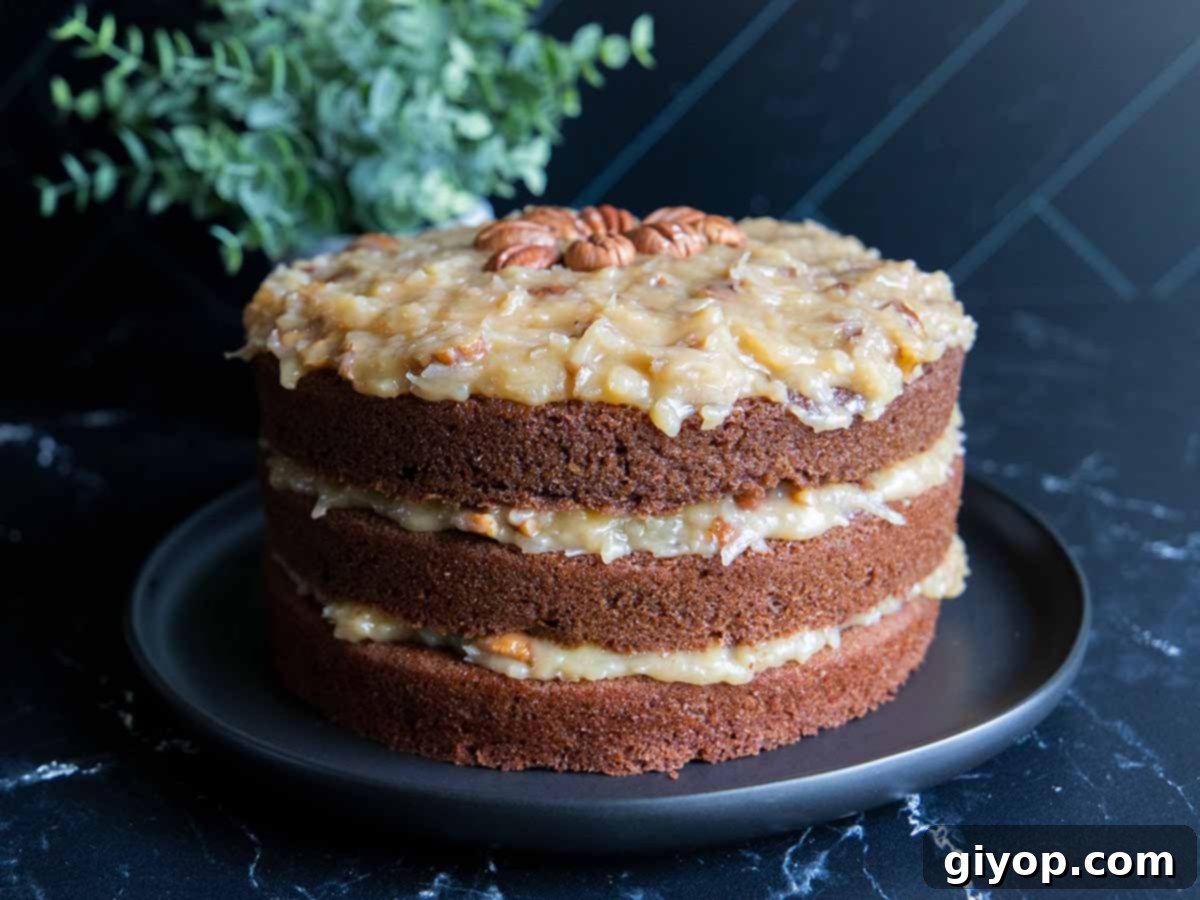
Indulge in a timeless classic with the original Baker’s German Chocolate Cake, a truly remarkable dessert featuring a subtly sweet chocolate cake crowned with an undeniably decadent coconut-pecan frosting. This beloved American treat stands out for its rich flavor profile, perfectly balanced sweetness, and a combination of textures that delight with every bite. If you’re searching for a show-stopping dessert that’s both deeply satisfying and surprisingly approachable to make, look no further than this iconic cake.
History: Unraveling the ‘German’ Mystery of a Beloved American Dessert
Despite its intriguing name, the German chocolate cake is not actually German in origin. This delicious paradox is a common misconception, adding a unique twist to the history of this renowned dessert. The cake’s name is a tribute to Samuel German, an American baker who developed a dark baking chocolate bar for the Baker’s Chocolate Company in 1852. His creation, originally labeled “Baker’s German’s Sweet Chocolate,” was intended to simplify the chocolate-making process for home bakers, as it contained a higher sugar content than traditional bitter baking chocolate.
The cake as we know it today truly gained widespread popularity when a recipe titled “German’s Chocolate Cake” appeared in a Dallas newspaper in 1957. It was submitted by a Texas homemaker, Mrs. George Clay, and quickly picked up by General Foods, the owner of Baker’s Chocolate at the time. General Foods then distributed the recipe to newspapers across the country, turning it into an overnight sensation. The apostrophe “s” was often dropped over time, leading many to mistakenly believe the cake had European roots.
What started as a clever marketing strategy for a specific type of chocolate evolved into a dessert phenomenon. The original recipe, featuring the distinctive Baker’s German’s Sweet Chocolate for the cake and a rich, cooked coconut-pecan frosting, has become a cherished staple in American culinary history. It represents a wonderful blend of convenience and classic flavor, making it a testament to the enduring appeal of homemade treats.
Why This Baker’s German Chocolate Cake Recipe Will Become Your New Favorite
There are countless reasons why this particular German Chocolate Cake recipe stands out and is destined to become a staple in your baking repertoire. It’s more than just a dessert; it’s an experience, a celebration of flavor and texture that truly captivates everyone who tries it. Here’s why you’ll absolutely adore making and sharing this classic:
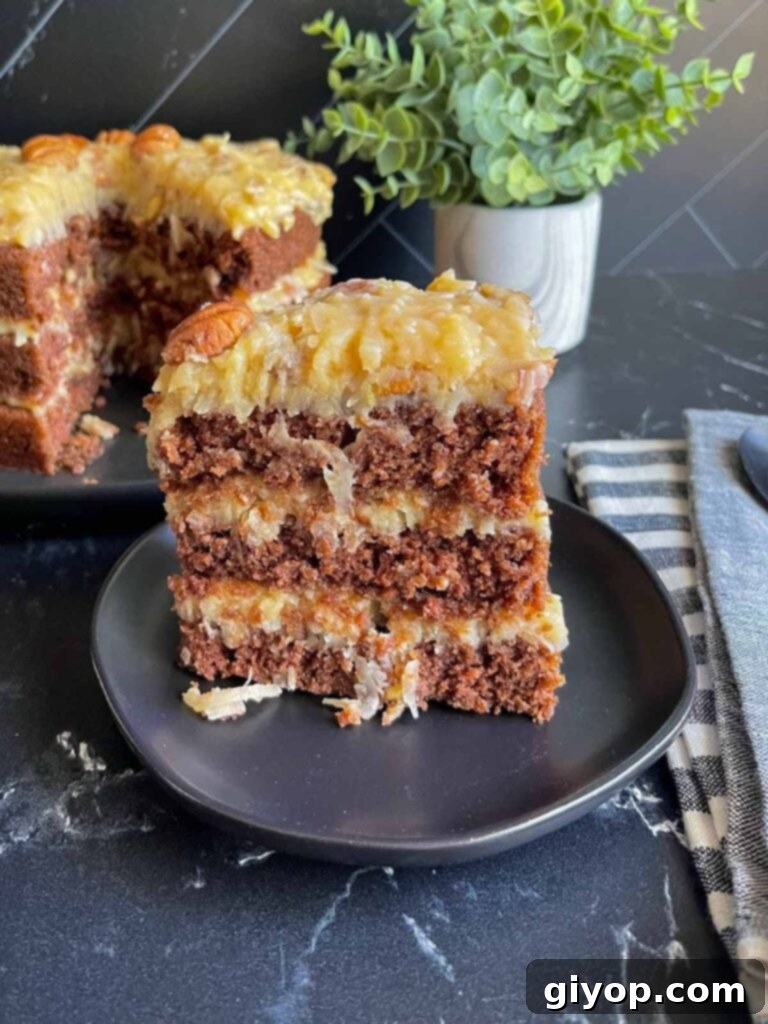
- A Symphony of Textures and Flavors: This cake perfectly marries a moist, tender chocolate crumb with a rich, chewy, and intensely flavorful coconut-pecan frosting. The combination is simply divine, offering a harmonious blend of sweet, nutty, and chocolatey notes that dance on the palate. The mild chocolate cake serves as the ideal canvas for the star of the show – that incredible frosting.
- A True Crowd-Pleaser: From holiday feasts to birthday celebrations, potlucks, or even just a cozy family dessert, this German Chocolate Cake never fails to impress. Its iconic status and undeniable deliciousness make it a guaranteed hit, leaving guests asking for the recipe. It has a nostalgic charm that appeals to all generations.
- Surprisingly Simple to Prepare: While this cake might look elaborate, this recipe has been thoughtfully adapted to be straightforward and enjoyable to make. We’ve streamlined some of the steps from the original method without compromising on flavor or texture. For instance, unlike some traditional recipes that require separating egg yolks and whites and beating the whites to stiff peaks, our approach incorporates whole eggs directly into the batter. This simple change significantly eases the process, saving you time and effort while still resulting in a wonderfully light and fluffy cake.
- Authentic Flavor, Modern Convenience: By making minor, intelligent adjustments, we ensure that you get all the classic, beloved taste of the original Baker’s German Chocolate Cake with less fuss. The focus remains on quality ingredients and foundational baking techniques, guaranteeing a result that tastes just like you remember, or even better.
- A Treat for All Occasions: Whether you’re aiming for a comforting dessert on a cold evening or a showstopper for a special event, this cake fits the bill. It’s robust enough to transport and holds up beautifully, making it an excellent choice for any gathering.
Should you be inclined to explore the traditional method, where egg whites are beaten separately, please refer to the detailed notes in the recipe card at the bottom of this post. For those who appreciate the delightful combination of coconut and cake, you might also enjoy our light and fluffy Coconut Cake Recipe and our delightful Coconut Cupcake Recipe.
Don’t Sweat The Recipe is supported by its readers. We may earn a commission if you purchase through a link on our site. Learn more.
Essential Ingredients for the Perfect Baker’s German Chocolate Cake
Crafting an exquisite Baker’s German Chocolate Cake begins with selecting the right ingredients and understanding their role in achieving that perfect taste and texture. Here’s a detailed look at what you’ll need for both the cake and its signature coconut-pecan frosting:
For the Cake:
- Boiling Water: Not just any water, but boiling water is crucial here. Its high temperature efficiently melts the Baker’s chocolate, creating a smooth, rich chocolate base that infuses the cake with its distinctive flavor and moisture.
- Baker’s German’s Sweet Baking Chocolate: This is the namesake ingredient and a key differentiator. Unlike darker chocolates, this specific baking chocolate contains approximately 46% cacao, along with added sugar. This lower cacao percentage is what gives the cake its characteristic mildly sweet chocolate flavor, preventing it from being overly rich or bitter. It’s essential for the authentic taste.
- All-Purpose Flour, Baking Soda, and Salt: This classic trio forms the structural backbone of the cake. All-purpose flour provides the necessary structure, while baking soda acts as a leavening agent, reacting with the buttermilk to create a light and airy crumb. Salt, though used in small quantities, is vital for balancing the sweetness and enhancing the overall flavor of the chocolate.
- Unsalted Butter: The original recipe calls for butter (or margarine), and unsalted butter is preferred as it allows you to control the total salt content in your recipe. Softened unsalted butter is critical for proper creaming with sugar, contributing to the cake’s tender texture and rich, buttery flavor.
- Granulated Sugar and Vanilla Extract: Granulated sugar provides sweetness and moisture to the cake. Vanilla extract is a flavor enhancer, adding warmth and depth that complements the chocolate beautifully. Always opt for a good quality pure vanilla extract for the best results.
- Eggs (Whole) and Buttermilk: Both should be at room temperature. Room temperature eggs emulsify better with the butter and sugar, creating a smoother batter and a more consistent cake texture. Buttermilk, with its acidic properties, reacts with the baking soda to help the cake rise and contributes to its incredible moisture and tender crumb. In this simplified recipe, we integrate whole eggs, eliminating the need to separate them and beat whites to stiff peaks, making the process much easier without sacrificing quality.
For the Decadent Coconut Pecan Frosting:
This cooked frosting is the crowning glory of the German Chocolate Cake, offering a distinctively rich, creamy, and chewy texture with wonderful nutty undertones.
- Evaporated Milk: The base of the frosting, evaporated milk provides a creamy consistency and a slightly caramelized flavor as it cooks down. It’s crucial for the rich, dense texture of the filling.
- Granulated Sugar: Sweetens the frosting and helps it thicken to the desired consistency during cooking.
- Unsalted Butter: Adds richness, flavor, and contributes to the smooth, luxurious mouthfeel of the frosting.
- Egg Yolks: These are essential for thickening the frosting and giving it a custard-like richness. They cook gently with the other ingredients, creating a stable and incredibly flavorful filling.
- Vanilla Extract: Enhances the overall flavor profile, adding a warm, aromatic note that ties all the ingredients together.
- Salt: Just a pinch of salt helps to balance the sweetness and brings out the deeper flavors of the other ingredients, especially the nuts and coconut.
- Sweetened Coconut Flakes: These provide the distinctive chewiness and tropical sweetness that are hallmarks of German chocolate cake frosting.
- Pecans (Toasted and Chopped): Toasted pecans add a deep, nutty flavor and a satisfying crunch, providing a beautiful textural contrast to the soft cake and chewy coconut. Toasting them beforehand significantly enhances their flavor.
Ensuring all your ingredients are measured accurately and are at the correct temperature (especially for the cake batter) will set you up for success in baking this magnificent dessert.
Step-by-Step: How to Bake the Best Baker’s German Chocolate Cake
Baking this iconic cake is a rewarding experience, and with these detailed instructions, you’ll achieve a perfectly moist and flavorful chocolate cake every time. Follow along closely for each stage of preparation:
Preparation is Key:
Begin by preheating your oven to 350 degrees F (175 degrees C). This ensures the oven is at the correct temperature for even baking from the moment your cake pans go in. Next, prepare your cake pans: you’ll need three 8-inch round cake pans or two 9-inch round cake pans. Line the bottoms of each pan with parchment paper and generously grease them. This critical step prevents sticking and ensures your cake layers release easily after baking. Once prepared, set the pans aside.
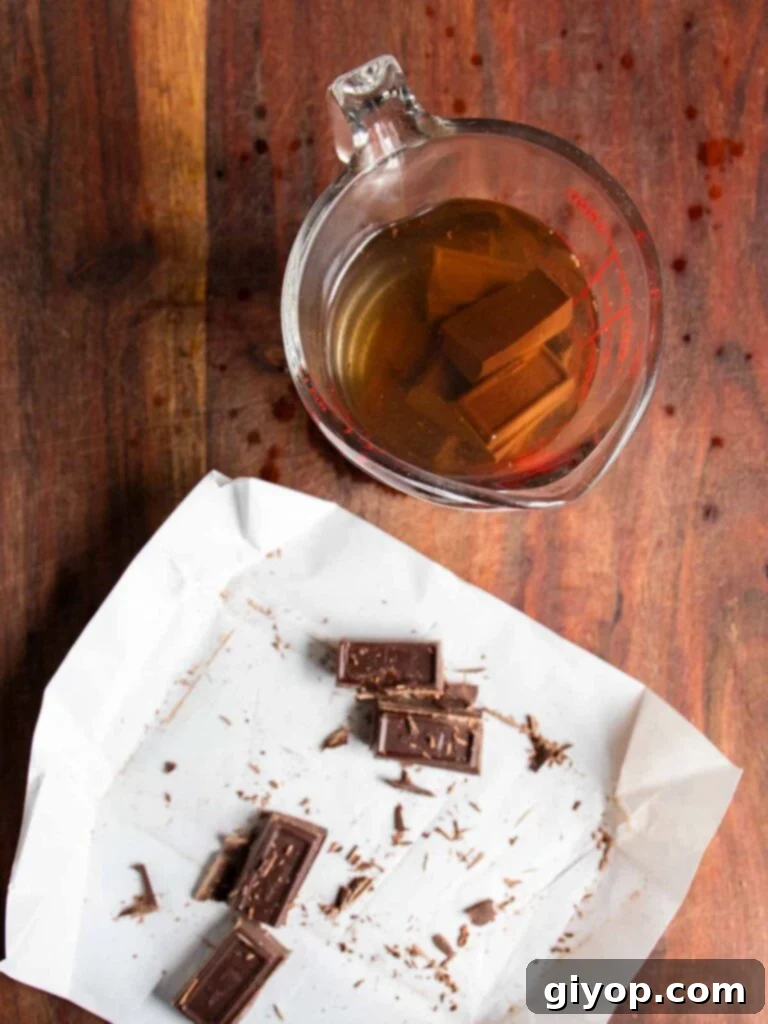
Melting the Chocolate:
In a heatproof glass measuring cup, microwave the specified amount of water until it reaches a rolling boil. Carefully add the Baker’s German’s Sweet Baking Chocolate squares to the boiling water. Stir continuously until the chocolate is completely melted and the mixture is smooth and glossy. This process creates a liquid chocolate base that will be incorporated into the batter, ensuring even distribution of chocolate flavor. Set this mixture aside to cool slightly while you prepare the other ingredients.
Combining Dry Ingredients:
In a medium-sized bowl, whisk together the all-purpose flour, baking soda, and salt. Whisking ensures that the leavening agent and salt are evenly distributed throughout the flour, which is crucial for a consistent rise and flavor in your cake. Set this bowl aside as well.
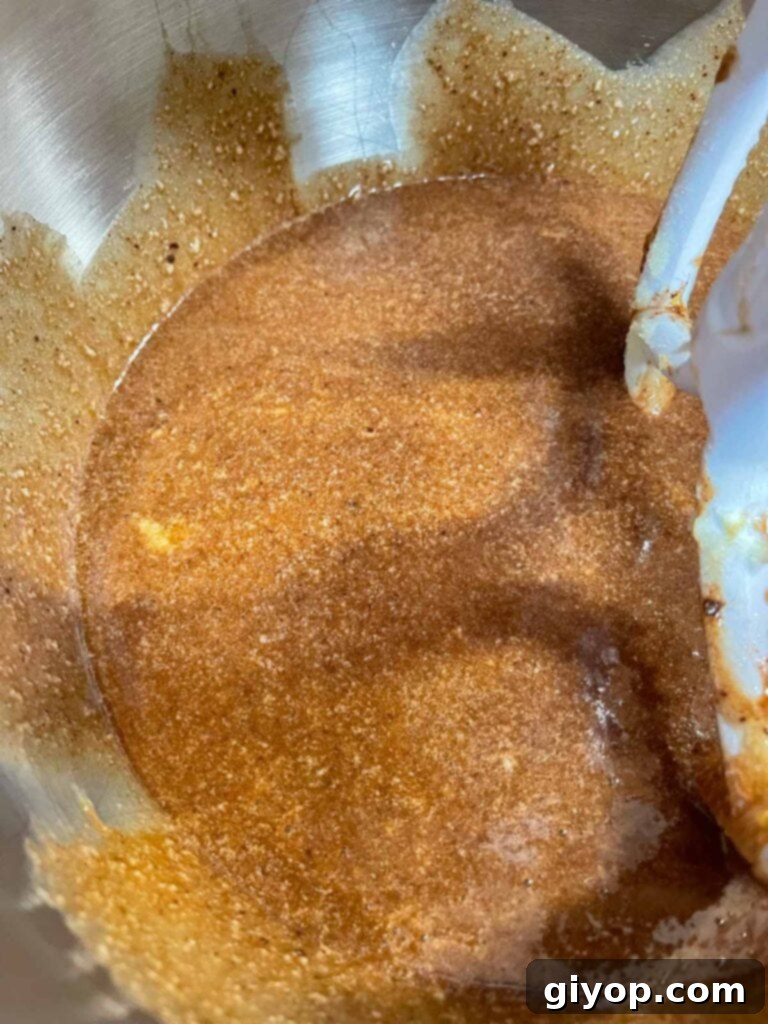
Creaming and Mixing the Batter:
In a large mixing bowl, using an electric mixer on medium speed, cream together the softened unsalted butter and granulated sugar. Beat for about 3-4 minutes, or until the mixture becomes visibly light, fluffy, and pale in color. This creaming process incorporates air into the batter, contributing to the cake’s tender texture. Next, add the room-temperature eggs (whole eggs, not separated) one at a time, beating well after each addition until fully incorporated. Each egg adds richness and helps emulsify the batter, creating a stable structure.
Once the eggs are incorporated, stir in the cooled melted chocolate mixture and the vanilla extract. Mix until just combined. The batter will begin to take on its beautiful chocolate hue.
Now, it’s time to add the dry ingredients and buttermilk. Beat in the flour mixture in thirds, alternating with the room-temperature buttermilk. Begin and end with the flour mixture. Beat on low speed after each addition just until smooth. Be careful not to overmix the batter, as overmixing can develop the gluten in the flour, leading to a tough, dry cake. Mix only until no streaks of flour remain.
Baking the Cake Layers:
Carefully divide the cake batter evenly among all three (or two, depending on your pan size) prepared cake pans. For 8-inch pans, this will be approximately 2 ½ cups of batter per pan. Use a kitchen scale for precision if you have one, to ensure equally sized layers. Gently tap the pans on the counter a couple of times to release any large air bubbles.
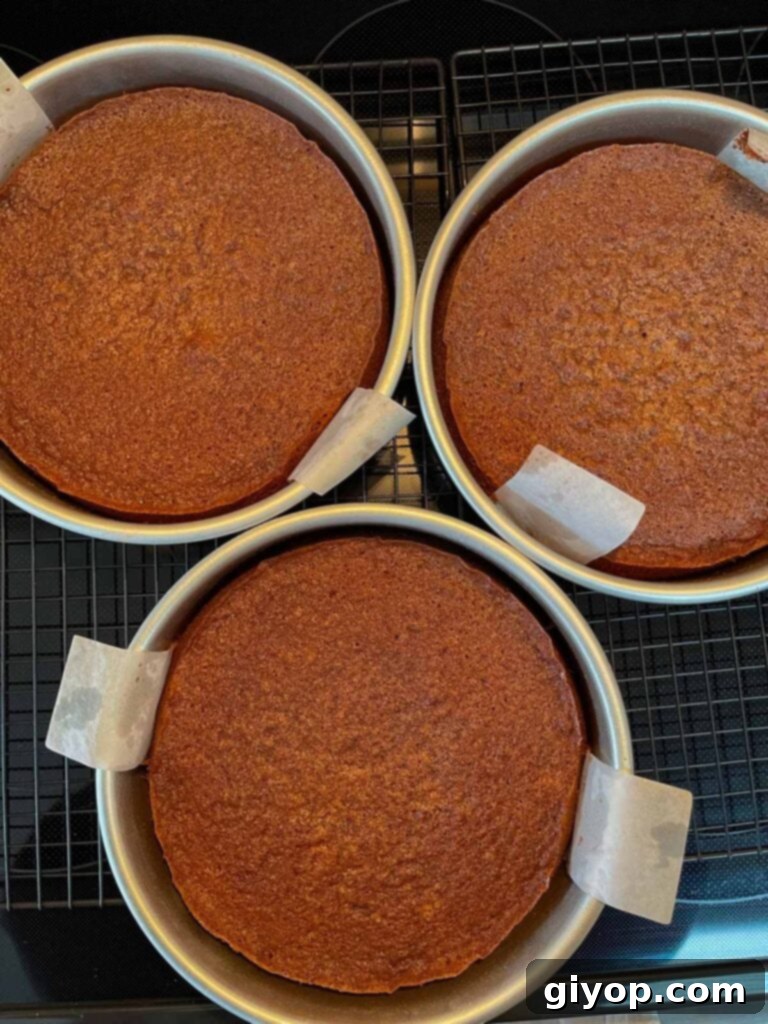
Bake for approximately 30 minutes, or until a wooden skewer or toothpick inserted into the center of the cake comes out clean. Another good indicator of doneness is when the top of the cake springs back lightly when gently pressed in the center. Avoid opening the oven door too frequently during baking, as this can cause the cakes to sink.
Cooling Process:
Once baked, transfer the cake pans to a wire rack to cool in the pan for at least 15 minutes. This allows the cakes to firm up slightly, making them less fragile. After 15 minutes, carefully invert the cakes onto the wire rack, remove the pans, and peel off the parchment paper. Allow the cake layers to cool completely at room temperature before attempting to frost them. Frosting a warm cake will cause the frosting to melt and slide off, so patience here is key!
Crafting the Irresistible Coconut Pecan Frosting
The iconic coconut-pecan frosting is arguably the most distinctive and beloved feature of a German Chocolate Cake. Its rich, creamy, and chewy texture perfectly complements the tender chocolate layers. While it’s a cooked frosting, don’t be intimidated; the process is straightforward and yields spectacular results.
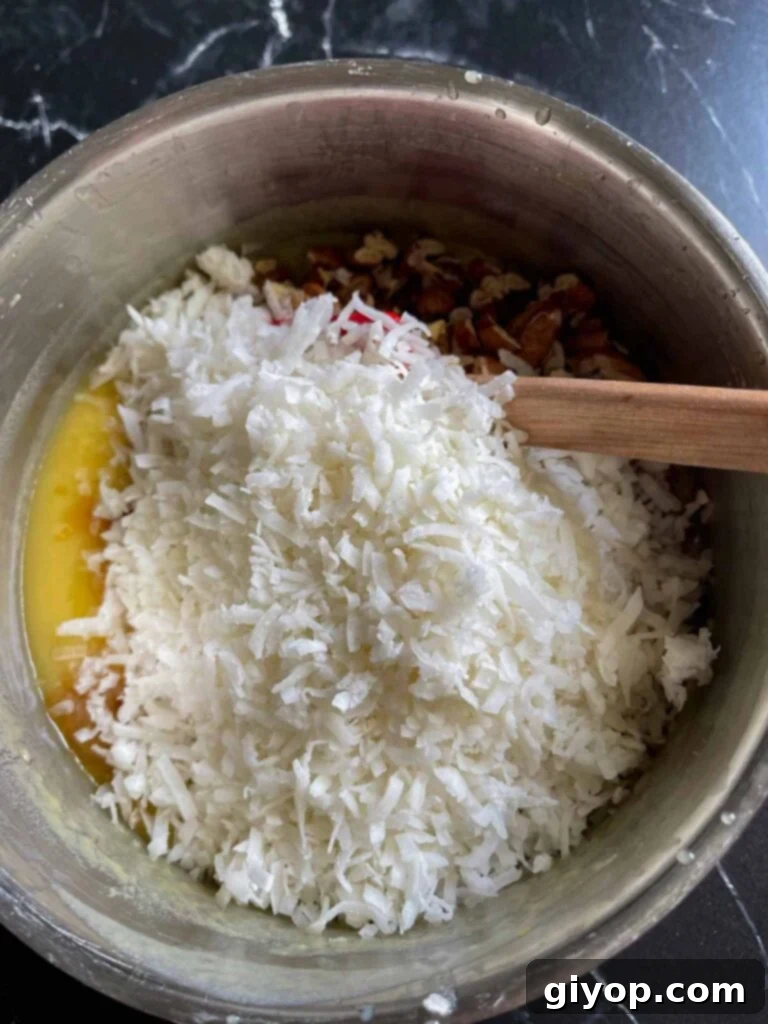
Cooking the Custard Base:
In a large, heavy-bottomed saucepan, combine the evaporated milk, granulated sugar, softened unsalted butter, egg yolks, and a pinch of salt. Place the saucepan over medium heat. It’s crucial to cook this mixture slowly and stir constantly to prevent the egg yolks from scrambling and to ensure even cooking. Use a whisk or a rubber spatula to continuously scrape the bottom and sides of the pan. Continue cooking for about 12 minutes, or until the mixture has significantly thickened and turned a beautiful golden brown color. It should be thick enough to coat the back of a spoon and hold its shape slightly when stirred. This thickening process creates a rich, custard-like base that is the foundation of the frosting.
Adding Flavor and Texture:
Once the mixture has reached the desired consistency and color, remove the saucepan from the heat immediately. Stir in the sweetened coconut flakes, toasted and chopped pecans, and the vanilla extract. Mix everything thoroughly until all the ingredients are well combined and the coconut and pecans are evenly distributed throughout the creamy base.
Cooling the Frosting:
Transfer the frosting to a heatproof bowl and allow it to cool completely to room temperature. This step is essential; if you try to frost the cake with warm frosting, it will melt and slide right off. As it cools, the frosting will continue to thicken and become perfectly spreadable. You can speed up the cooling process by placing the bowl in an ice bath, stirring occasionally, or by refrigerating it for a short period, stirring every 15-20 minutes to prevent a skin from forming and to maintain a smooth consistency. Ensure it’s not too cold and firm before assembling.
Assembly Guide: Bringing Your German Chocolate Cake Layers Together
Now that your cake layers are completely cooled and your luscious coconut-pecan frosting is at the perfect temperature, it’s time to assemble your magnificent Baker’s German Chocolate Cake. This part is where all your hard work comes together beautifully.
First, choose your serving platter or cake stand. Carefully place one of your cooled cake layers onto the plate. This will be your base. Take approximately one-third of the prepared coconut-pecan frosting and spread it evenly over the top of this first cake layer. For a traditional look and easier handling, leave a small 1/4-inch border around the edge of the cake layer exposed; this allows the chocolate cake itself to peek through, creating a beautiful contrast when the cake is sliced.
Gently place the second cake layer directly on top of the frosted first layer. Ensure it’s centered. Then, spread half of the remaining coconut-pecan frosting over this second layer, again leaving a slight border.
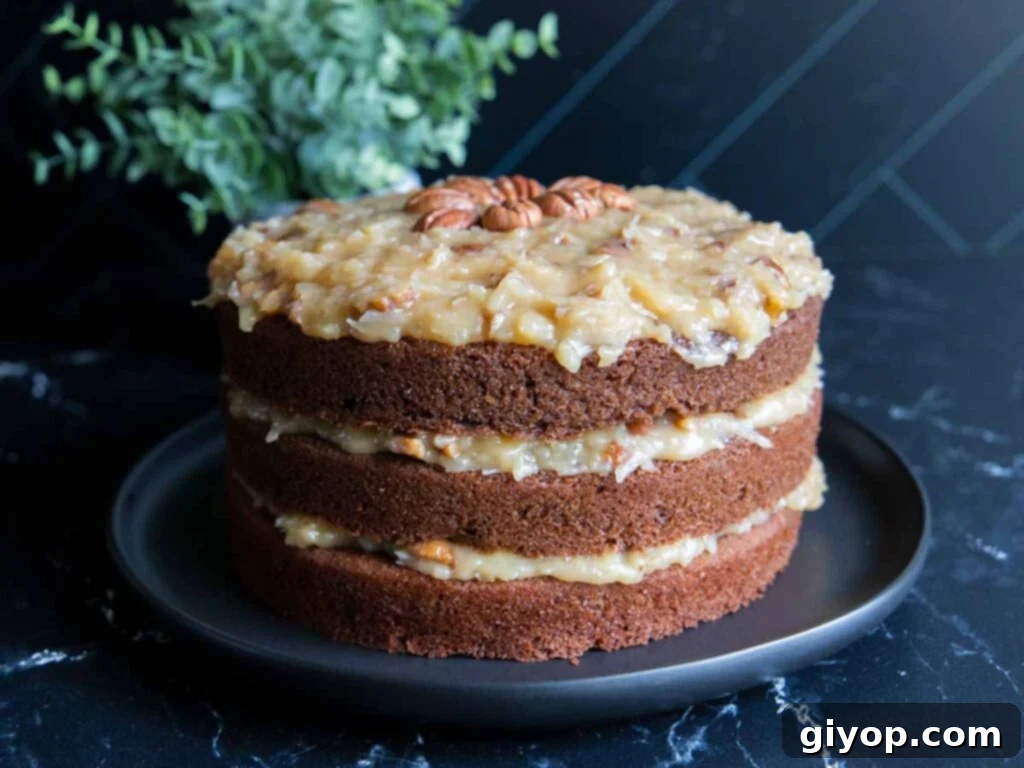
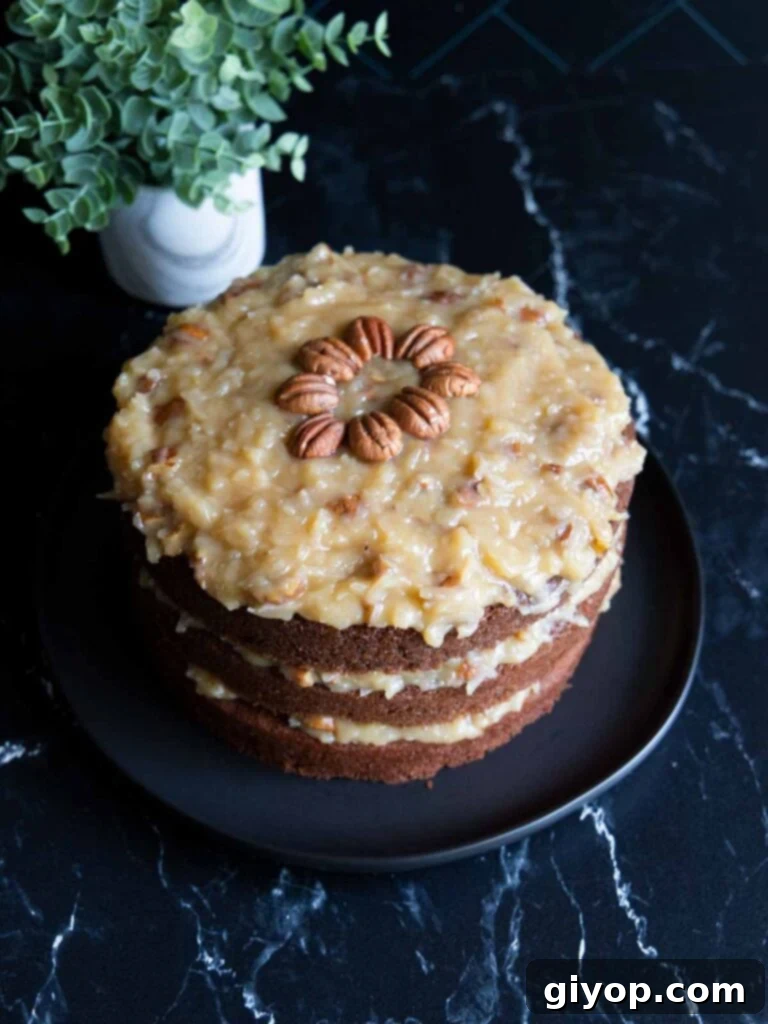
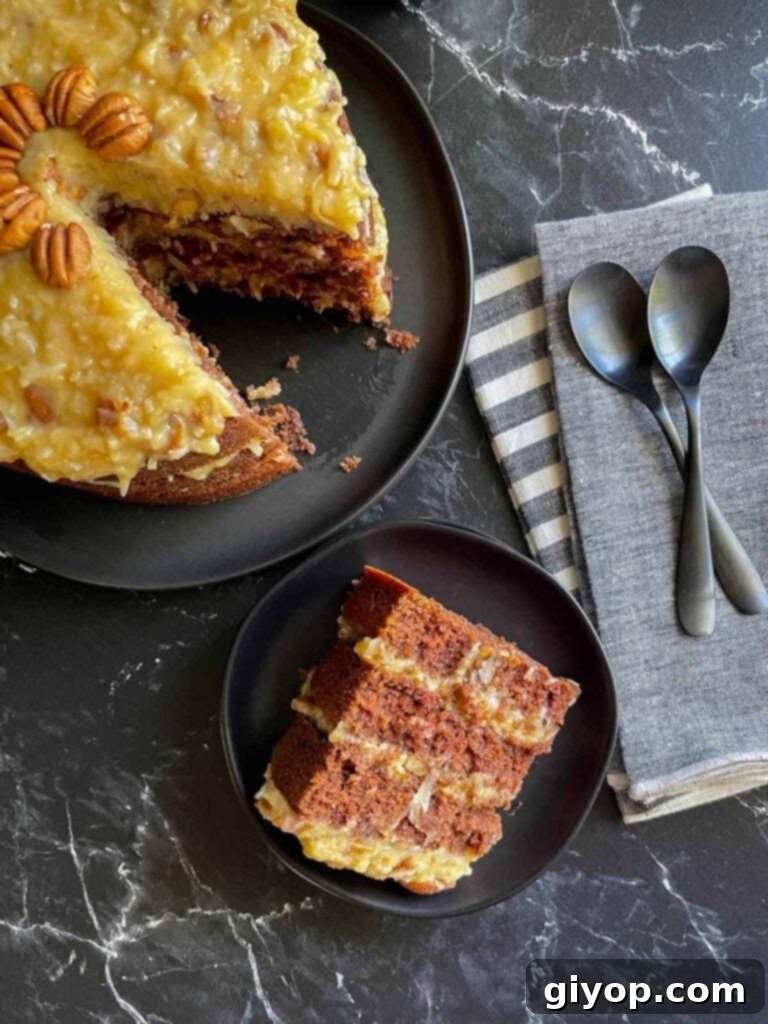
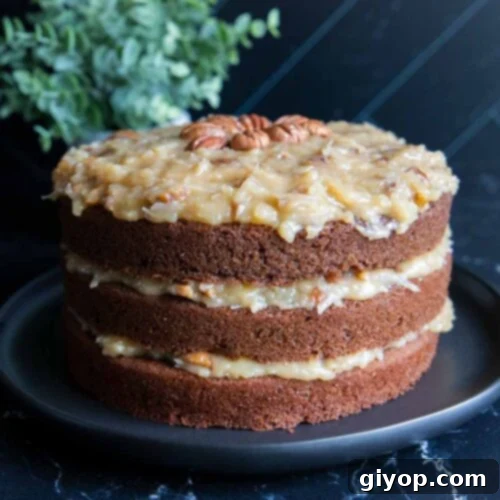
Finally, carefully position the third and final cake layer on top. Spread the remaining frosting evenly over the top of this layer. For the classic German Chocolate Cake aesthetic, the sides of the cake are traditionally left unfrosted, allowing the rich chocolate cake layers to be visible. This creates a stunning “naked” cake effect, emphasizing the contrast between the dark cake and the light, textured frosting.
Once assembled, your cake is ready to be admired and enjoyed. You can chill it briefly to help the frosting set, making for cleaner slices, or serve it immediately.
Pro Tips for Baking a Flawless German Chocolate Cake
Achieving baking perfection often comes down to a few key techniques and knowing the “why” behind each step. Here are some expert tips to ensure your Baker’s German Chocolate Cake turns out beautifully every time:
- Measure Your Flour Correctly: Accuracy in measuring flour is paramount for the cake’s texture. Do not scoop flour directly from the bag with your measuring cup, as this compacts it, leading to too much flour. Instead, aerate the flour by fluffing it with a fork or spoon, then spoon it into your measuring cup until it’s overflowing. Finally, level off the top with a straight edge (like the back of a knife). This method, known as “spoon and level,” ensures you have the precise amount for a tender crumb.
- Utilize Room Temperature Ingredients: This tip is crucial for both the cake batter and, if you’re using the traditional method, the separated egg whites. Room temperature butter creams more smoothly with sugar, incorporating air for a light texture. Room temperature eggs and buttermilk emulsify better into the batter, preventing curdling and resulting in a homogenous mixture and a more tender, moist cake. If you forget to take ingredients out, you can quickly warm eggs by placing them in a bowl of warm water for 5-10 minutes, and milk can be gently warmed in the microwave for a few seconds.
- DIY Buttermilk in a Pinch: If you don’t have buttermilk on hand, it’s incredibly easy to make your own substitute. Simply add 1 tablespoon of white vinegar or lemon juice to a 1-cup measuring cup, then fill the rest with regular milk (dairy or non-dairy works). Let it sit for 5-10 minutes until it slightly curdles. This acidulated milk will mimic buttermilk’s properties, providing tenderness and reacting with the baking soda.
- Chocolate Substitutions: While Baker’s German’s Sweet Baking Chocolate is ideal for its unique cacao content and sweetness, if you can’t find it, don’t despair! You can use semi-sweet chocolate as a substitute. To adjust for the difference in sweetness, add approximately 1 1/2 teaspoons of granulated sugar for every ounce of semi-sweet chocolate you use. This will bring it closer to the mild sweetness of the original.
- Careful with Boiling Chocolate: When melting the Baker’s chocolate in boiling water, exercise caution. Pour the chocolate into the water gently. The mixture may bubble up slightly for a second, so ensure your measuring cup is large enough to contain it safely. Stir immediately and thoroughly to achieve a smooth, lump-free consistency.
- Achieve Flat Cake Layers with Cake Strips: For perfectly even, flat cake layers that are a joy to stack, consider using cake strips. These insulated fabric strips, soaked in water and wrapped around your cake pans, help the edges bake slower, allowing the center to rise more evenly. This prevents the domed tops that often require trimming. If you don’t use them, you may need to level your cake tops with a serrated knife after cooling for a professional presentation.
- Adjusting Frosting Consistency: The coconut-pecan frosting should be thick yet spreadable. If, after cooling, your frosting becomes too stiff or thick to spread easily, you can gently microwave it for very short intervals (5-10 seconds at a time), stirring after each interval, until it softens to the desired consistency. Be careful not to overheat it, as this can alter its texture.
- Don’t Overmix the Batter: After adding the flour and buttermilk, mix the cake batter only until the ingredients are just combined and no streaks of dry flour are visible. Overmixing develops the gluten in the flour, resulting in a tough, dry cake. A light hand will yield a tender, moist crumb.
- Cool Cakes Completely: Resist the urge to frost warm cakes. Even slightly warm cake layers will melt the rich coconut-pecan frosting, causing it to slide off and making assembly a messy affair. Ensure your cake layers are completely cooled to room temperature before applying any frosting.
Frequently Asked Questions About Baker’s German Chocolate Cake
Absolutely! German chocolate cake is an excellent make-ahead dessert. You can bake the cake layers up to two days in advance. Once baked and completely cooled, wrap each layer tightly in plastic wrap and store them at room temperature or in the refrigerator. For longer storage, the wrapped cake layers can be frozen for up to 3 months. When ready to assemble, simply defrost the frozen layers at room temperature, then prepare the frosting/filling and proceed with assembly as directed. You can also assemble the entire cake a day in advance, storing it covered in the refrigerator.
If Baker’s German Sweet Chocolate is unavailable, you can use a good quality semi-sweet chocolate as a substitute. Since Baker’s German Sweet Chocolate has a specific sweetness level (around 46% cacao), you might want to adjust for this. A good rule of thumb is to add approximately 1 1/2 teaspoons of granulated sugar for every ounce of semi-sweet chocolate you use. This will help replicate the mild sweetness characteristic of the original cake.
To maintain its freshness and flavor, store this cake in an airtight container. At room temperature, it will keep well for up to 3 days. For extended freshness, especially in warmer climates, refrigerate the cake for up to 7 days. It’s important to note that the coconut-pecan frosting will firm up significantly when cold. For the best flavor and texture, allow the cake to come to room temperature for at least 30-60 minutes before serving.
Yes, German chocolate cake freezes beautifully. For optimal quality, we recommend cutting the cake into individual slices. Place these slices on a baking sheet lined with parchment paper and freeze them for about 1 hour, or until they are firm. Once frozen solid, wrap each slice tightly in plastic wrap, then place them in a freezer-safe container or a resealable freezer bag. Frozen slices can be stored for up to 2 months. Thaw individual slices at room temperature for several hours before serving. This method helps prevent freezer burn and maintains the cake’s texture and flavor.
No, it is not! This is one of the most common misconceptions about the cake. The “German” in German Chocolate Cake refers to Samuel German, an American baker who developed the specific sweet baking chocolate used in the original recipe for Baker’s Chocolate Company in the mid-19th century. The cake itself is a distinctly American invention, gaining widespread popularity after a recipe was published in a Dallas newspaper in 1957.
For the authentic taste and texture of German chocolate cake frosting, you should use sweetened shredded coconut flakes. The sweetness is integral to the frosting’s flavor balance. For the pecans, always choose raw pecans and toast them lightly before chopping. Toasting brings out their natural oils and enhances their nutty flavor significantly, adding an extra layer of deliciousness to your frosting.
Explore More Irresistible Dessert Recipes
If you’ve enjoyed crafting this classic German Chocolate Cake, you’re sure to love these other decadent dessert recipes perfect for any occasion. Expand your baking repertoire with more delightful treats!
Carrot Cake Cheesecake Dark Chocolate Espresso Cake Best Homemade Carrot Cake
Are you on Pinterest? Click the button below to add this recipe to one of your boards!
Are you on Pinterest? Click the button below to add this recipe to one of your boards!
Original Baker’s German Chocolate Cake Recipe
Baker’s German Chocolate cake is a mildly sweet chocolate cake topped with a decadent coconut pecan frosting.
Print
Pin
Rate
Course: Dessert | Cuisine: American
Prep Time: 30 minutes | Cook Time: 45 minutes
Servings: 12 | Calories: 889kcal
Author: Leigh Harris
Ingredients
For the Cake
- 1/2 cup Water (boiling)
- 4 oz Baker’s German’s Sweet Baking chocolate (1 package)
- 2 cups All-purpose flour
- 1 tsp Baking soda
- 1/2 tsp Salt
- 1 cup Unsalted butter (softened)
- 2 cups Granulated sugar
- 4 large Eggs (room temperature, not separated)
- 1 tsp Vanilla extract
- 1 cup Buttermilk (room temperature)
Coconut Pecan Frosting/Filling
- 12 oz Evaporated milk (1 can)
- 1 1/2 cups Granulated sugar
- 3/4 cup Unsalted butter (1 1/2 sticks)
- 4 large Egg yolks
- 2 tsp Vanilla extract
- 1/8 tsp salt
- 2 1/2 cups Coconut flakes (sweetened)
- 1 1/2 cups Pecans (toasted and chopped)
Instructions
For the Cake
- Preheat the oven to 350 degrees F. Line with parchment paper and grease 3 (8-inch) round cake pans or 2 (9-inch). Set aside.
- In a glass measuring cup microwave the water until boiling. Stir in the chocolate until completely melted and smooth. Set aside.
- In a medium-size bowl whisk together the flour, baking soda, and salt. Set aside.
- In a large mixing bowl beat the butter and sugar together with an electric mixer on medium speed until light and fluffy. About 3-4 minutes. Add the eggs (whole eggs, not separated), one at a time, beating well after each addition.
- Stir in the melted chocolate mixture and vanilla extract.
- Beat in the flour mixture in thirds alternating with the buttermilk, beating after each addition until smooth.
- Divide the cake batter evenly into all three prepared cake pans—about 2 1/2 cups of batter for each pan.
- Bake for 30 minutes or until cake springs back when lightly pressed in the center. Transfer the cakes to a wire rack to cool for at least 15 minutes in the pan. Remove the cakes from the pan back to the wire rack to cool completely before frosting.
Coconut-Pecan Filling/Frosting
- In a large saucepan over medium heat add the evaporated milk, sugar, butter, egg yolks, and salt. Cook stirring constantly for 12 minutes, until thickened and golden brown.
- Remove from the heat and stir in the coconut, pecans, and vanilla. Cool to room temperature.
- Place one cake layer on a cake plate. Spread one-third of the filling over the top of the cake, leaving a 1/4-inch border. Top with the second layer, spread with half of the remaining filling. Place the third layer on top and spread the remaining frosting evenly over the top, leaving the sides of the cake exposed.
Notes
If you choose to stick to the original recipe, you will need to separate the egg yolks from the whites. After creaming the butter and sugar you will add the egg yolks, one at a time, beating well after each addition. Continue with the recipe as stated above until all the dry ingredients and buttermilk have been added. Then in a separate bowl, you will beat the egg whites until stiff peaks form. Gently fold the egg whites into the cake batter.
Storing – Store this cake in an air-tight container at room temperature for up to 3 days or in the refrigerator for up to 7 days. Bring to room temperature before serving, the icing turns firm when cold.
Freezing – I recommend cutting slices, place on a baking sheet lined with parchment paper, and freezing them for about 1 hour or until hard. Wrap the frozen slices tightly in plastic wrap, place them in a freezer-safe container or resealable bag, and freeze for up to 2 months for best quality.