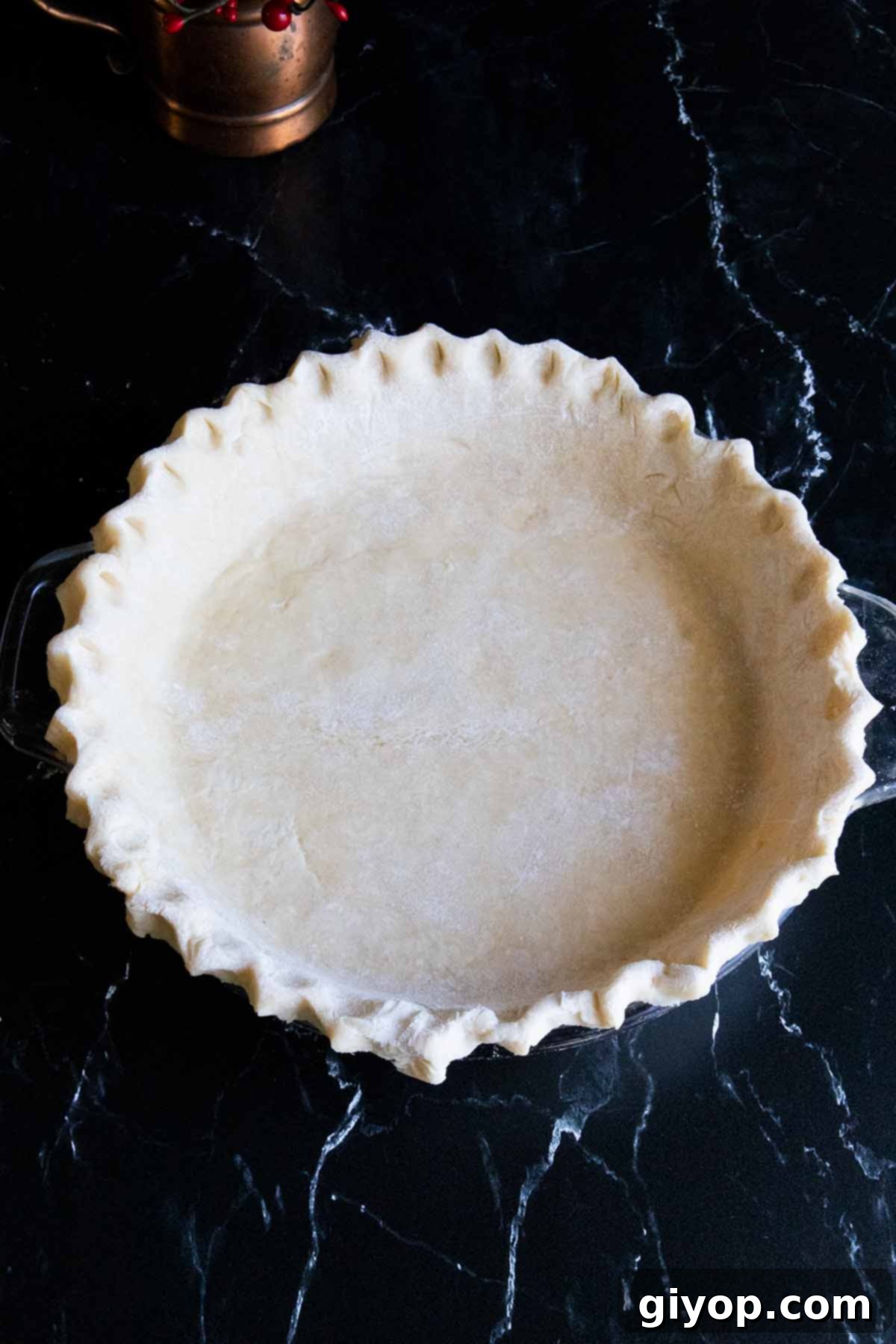
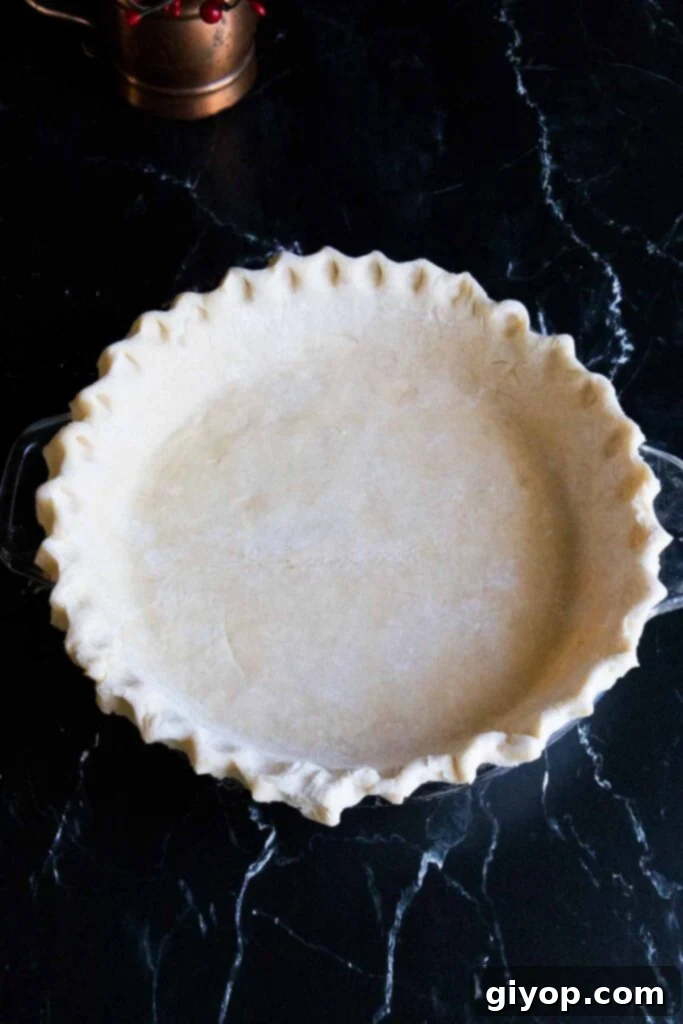
Unlock the secret to baking perfection with this ultimate guide to crafting the most exquisite **Easy All Butter Pie Crust Recipe**. Say goodbye to bland, store-bought crusts and embrace the rich, flaky, and tender texture of a truly homemade masterpiece. This recipe is designed to transform your baking experience, ensuring a delicious foundation for every pie, savory or sweet.
Don’t Sweat The Recipe is supported by its readers. We may earn a commission if you purchase through a link on our site. Learn more.
Why You’ll Love This Homemade Pie Crust
There’s an undeniable satisfaction that comes from creating a truly perfect pie crust from scratch. This isn’t just about baking; it’s about mastering a fundamental skill that elevates any dessert or savory dish. Our **easy all-butter pie crust recipe** empowers you to achieve professional-level results in your home kitchen, making store-bought alternatives a thing of the past.
Forget the intimidation of making homemade pie dough. This streamlined process is designed for success, yielding a crust that’s not only simple and quick to prepare but also superior in every measurable way. Imagine biting into a pie with a crust that’s:
- **Tender:** Melts in your mouth with minimal effort.
- **Buttery:** Infused with the rich, unmistakable flavor of pure butter.
- **Flaky:** Boasting distinct, delicate layers that shatter beautifully with each bite.
- **Crispy:** Providing the perfect textural contrast to your fillings.
This versatile **homemade pie crust** is your go-to for an array of delightful creations. Whether you’re crafting a classic Apple Pie, a comforting Southern Sweet Potato Pie, a vibrant Blueberry Slab Pie, a festive Pumpkin Pie, or a refreshing Fresh Strawberry Pie, this crust delivers. It’s equally fantastic for savory applications, like a hearty Leftover Thanksgiving Pie recipe or a quiche. Once you experience the unparalleled taste and texture of this easy all-butter pie crust, you’ll never look back.
Key Ingredients for the Perfect Butter Pie Crust
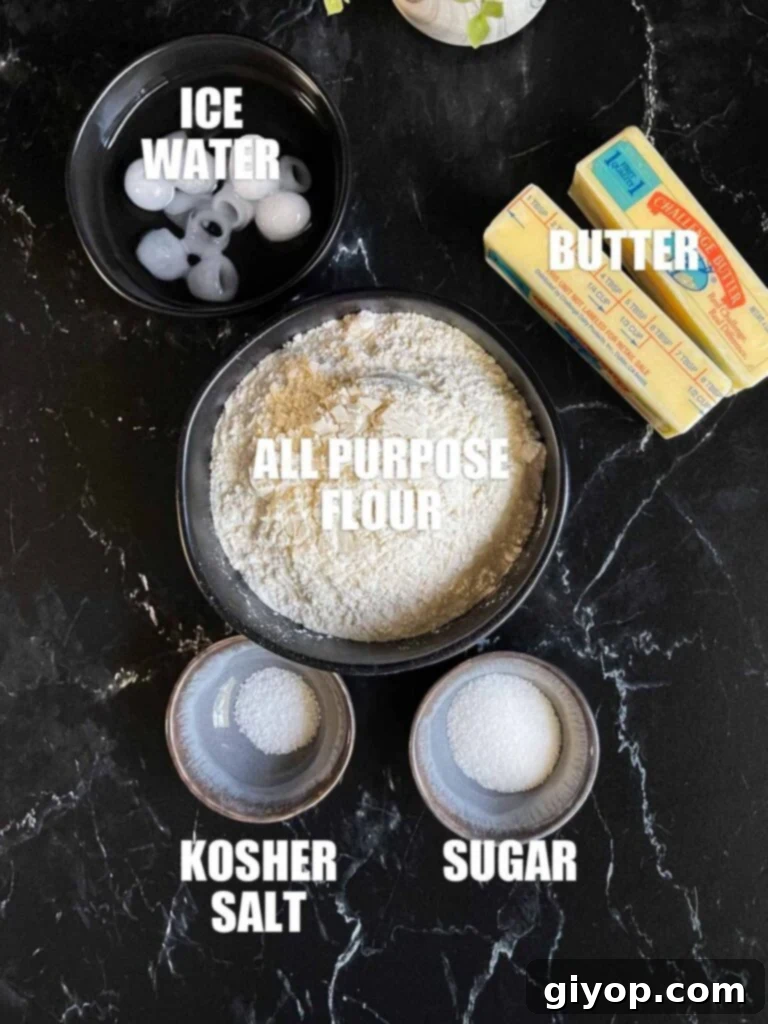
Understanding the role of each ingredient is crucial for achieving that coveted flaky, tender pie crust. Our simple recipe relies on a few high-quality components, all working in harmony to create culinary magic.
- All-Purpose Flour: The foundation of our crust. All-purpose flour is ideal due to its moderate protein content. This allows for just enough gluten development to provide structure without becoming tough, ensuring a wonderfully tender and flaky texture. You can also experiment with pastry flour for an even more delicate crust.
- Unsalted Butter: The star of our **all-butter pie crust**. Using unsalted butter allows you to control the overall saltiness of your dough. More importantly, cold butter is the secret to flakiness. As the pie bakes, the water content within the butter transforms into steam, separating the layers of dough and creating those distinct, airy flakes we all adore. Choose a high-quality butter for the best flavor.
- Kosher Salt and Granulated Sugar: These aren’t just for sweetness. Salt is vital for balancing flavors and enhancing the richness of the butter, while a touch of sugar contributes to browning, adds subtle sweetness, and helps tenderize the dough. Together, they create a well-rounded flavor profile that complements any filling.
- Ice Water: The critical binding agent. The “ice” in ice water is paramount. Keeping the water as cold as possible prevents the butter from melting prematurely, which would hinder the formation of flaky layers. Cold water also minimizes gluten development, ensuring a tender crust. Add it gradually to achieve the perfect dough consistency – just enough to bring it together, but not so much that it becomes sticky.
Essential Tools for Pie Making
While the ingredients are key, having the right tools makes the process smoother and more enjoyable:
- Food Processor: Our recommended tool for speed and efficiency, quickly cutting butter into flour without overworking the dough.
- Pastry Blender/Cutter: An excellent alternative if you don’t have a food processor, allowing you to manually cut in the butter.
- Rolling Pin: Essential for rolling out your dough evenly.
- 9-inch Pie Plate: The standard size for most pies.
- Measuring Cups and Spoons: For accurate ingredient proportions.
- Plastic Wrap: Crucial for chilling and storing your pie dough.
- Parchment Paper or Aluminum Foil: Useful for blind baking.
How to Make This Easy All-Butter Pie Crust
Crafting this **flaky pie crust** is simpler than you might think, especially with the help of a food processor. Follow these steps for a buttery, tender dough every time:
- **Combine Dry Ingredients:** In the bowl of a food processor, combine the all-purpose flour, granulated sugar, and kosher salt. Pulse a few times, about 5-7 short pulses, to ensure they are well mixed. This distributes the salt and sugar evenly, preventing pockets of concentrated flavor.
- **Incorporate Cold Butter:** Add the very cold, cubed unsalted butter pieces to the flour mixture. It’s vital that the butter is as cold as possible, straight from the fridge. Pulse the food processor in short bursts (about 1-second pulses) until the mixture resembles coarse crumbs with some pea-sized pieces of butter remaining. This takes approximately 10-15 pulses. These small butter pieces are what create the flaky layers.
- **Add Ice Water Gradually:** With the food processor running, gradually add ice-cold water, one tablespoon at a time, through the feed tube. Continue processing until the dough just begins to come together and forms a shaggy, clumpy mass. Be cautious not to add too much water; typically, 5-6 tablespoons are sufficient. The dough should not be uniformly smooth but rather look like it’s starting to bind.
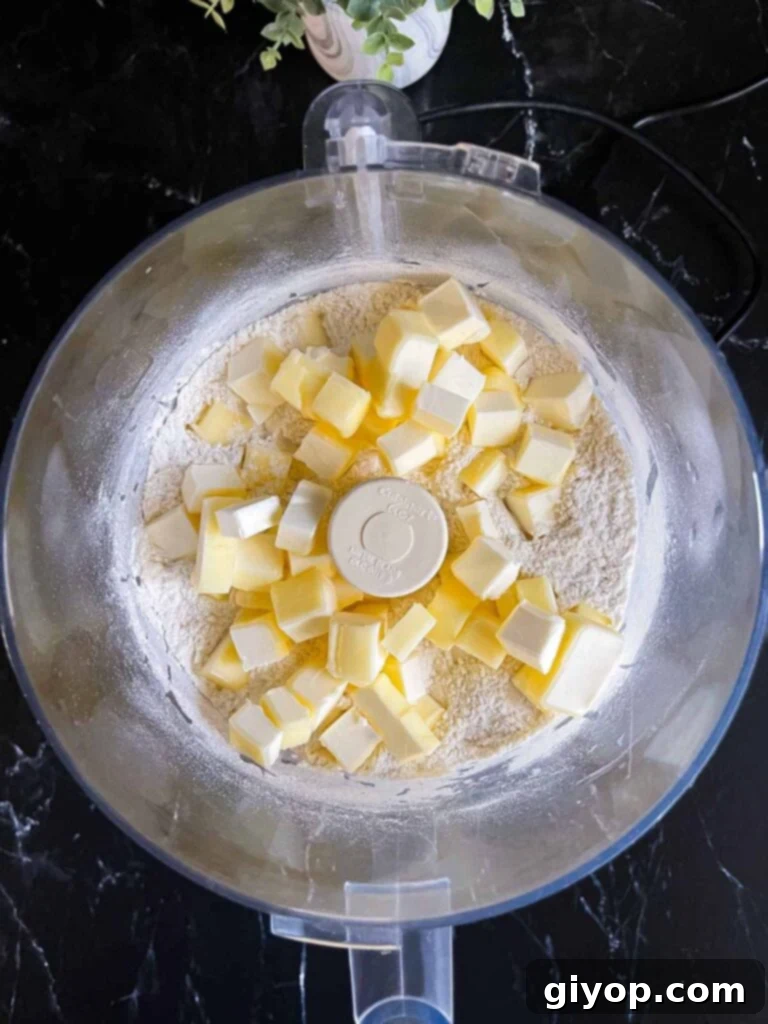
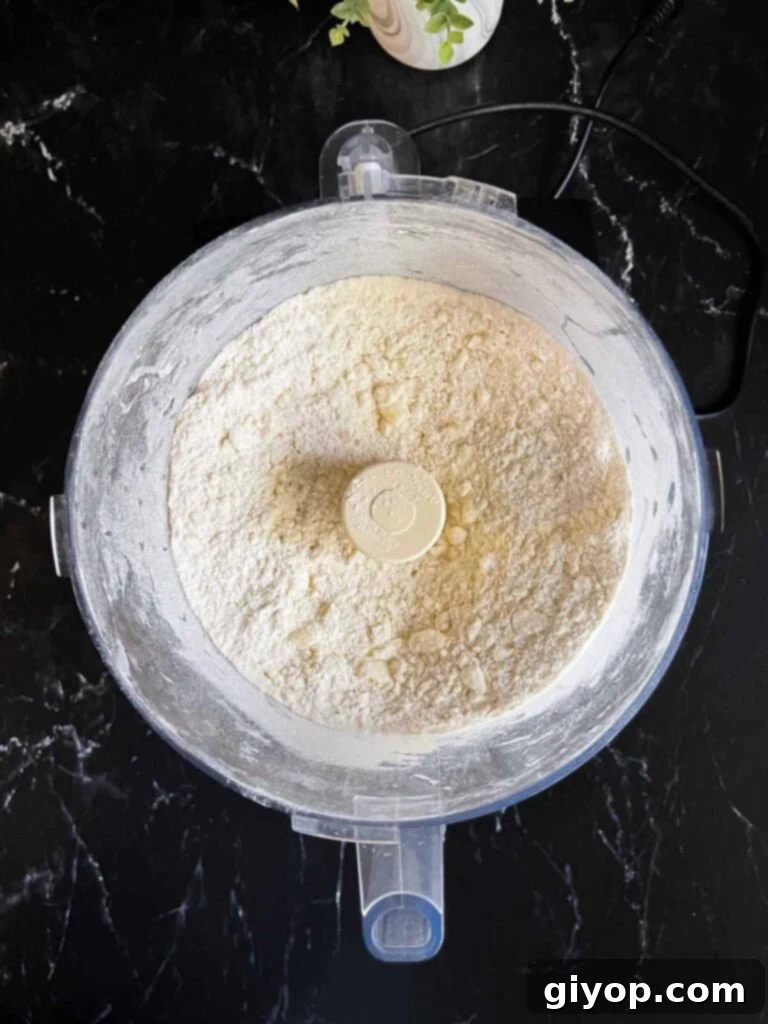
**Important Note:** DO NOT overwork the dough in the processor. Overworked pie dough develops too much gluten, which will result in a tough, hard, and less flaky pie crust. The goal is to bring the ingredients together just enough. You can also make pie crust by hand using a pastry cutter to cut in the butter cubes. While a food processor makes **pie dough** fast and easy, a pastry cutter is a perfectly viable traditional method.
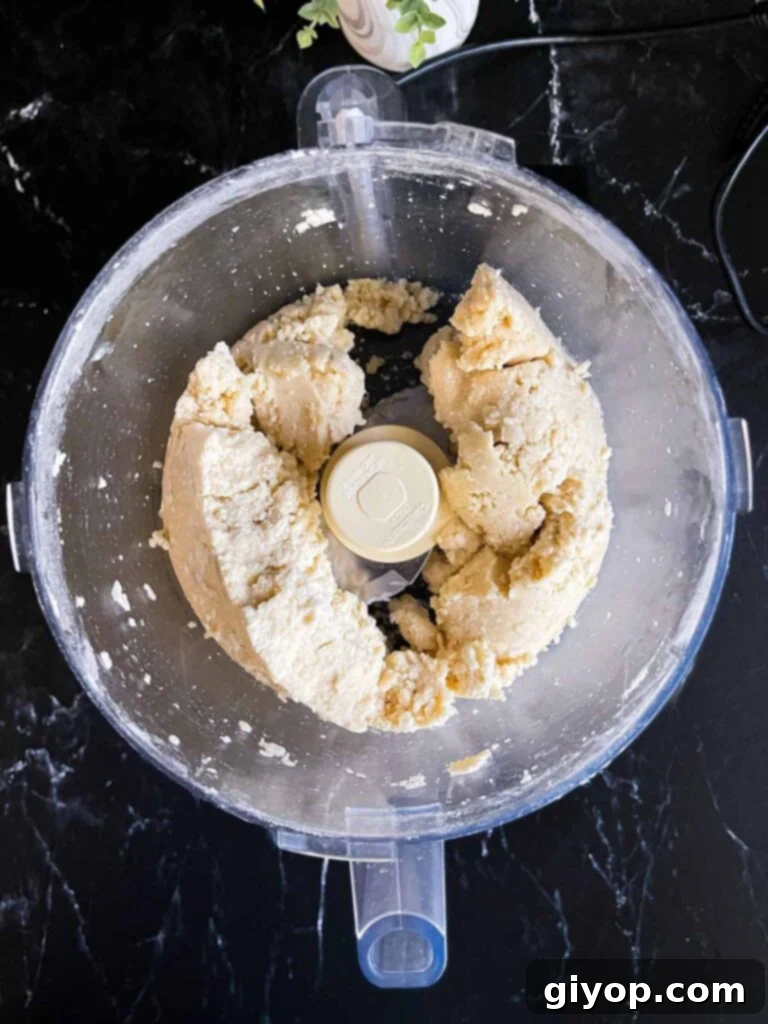
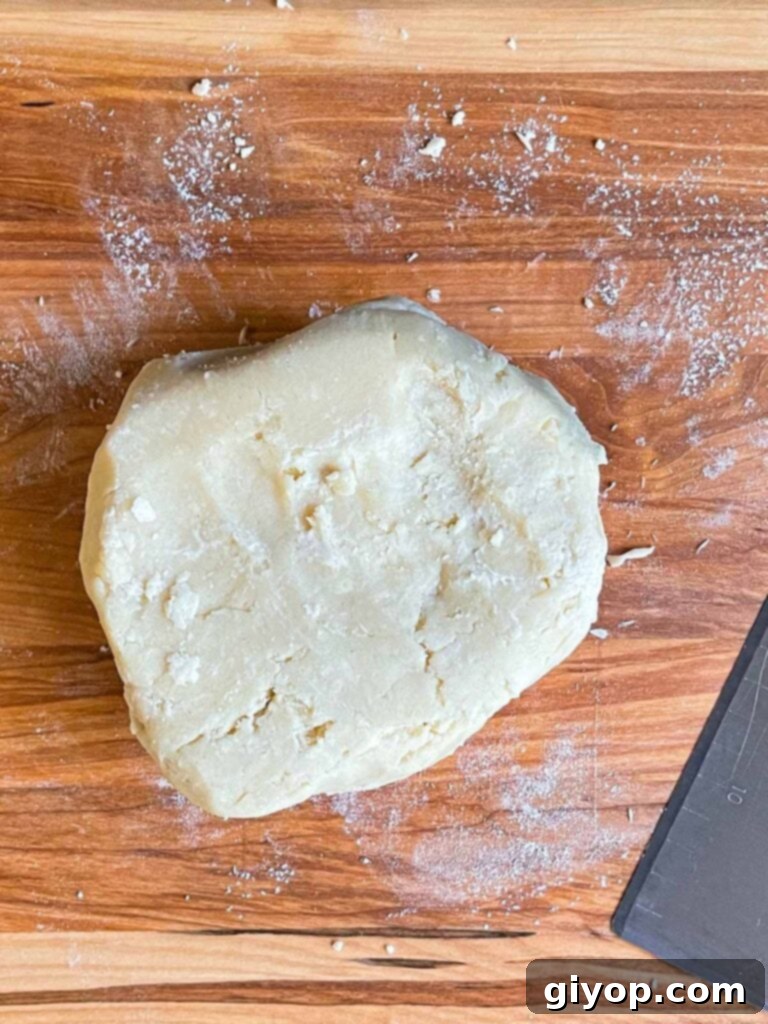
- **Light Kneading and Shaping:** Dump the shaggy dough onto a lightly floured surface. Gently knead it a few times, just enough to bring all the crumbs together into a cohesive ball. Over-kneading here can also lead to a tough crust.
- **Divide and Chill:** This recipe yields approximately 21 ounces of dough, perfect for a double-crust pie or two single crusts. Divide the dough in half, aiming for roughly 10.5 ounces per piece. Shape each half into a ball, then gently flatten each ball into a disk. The disk shape will make rolling out much easier later.
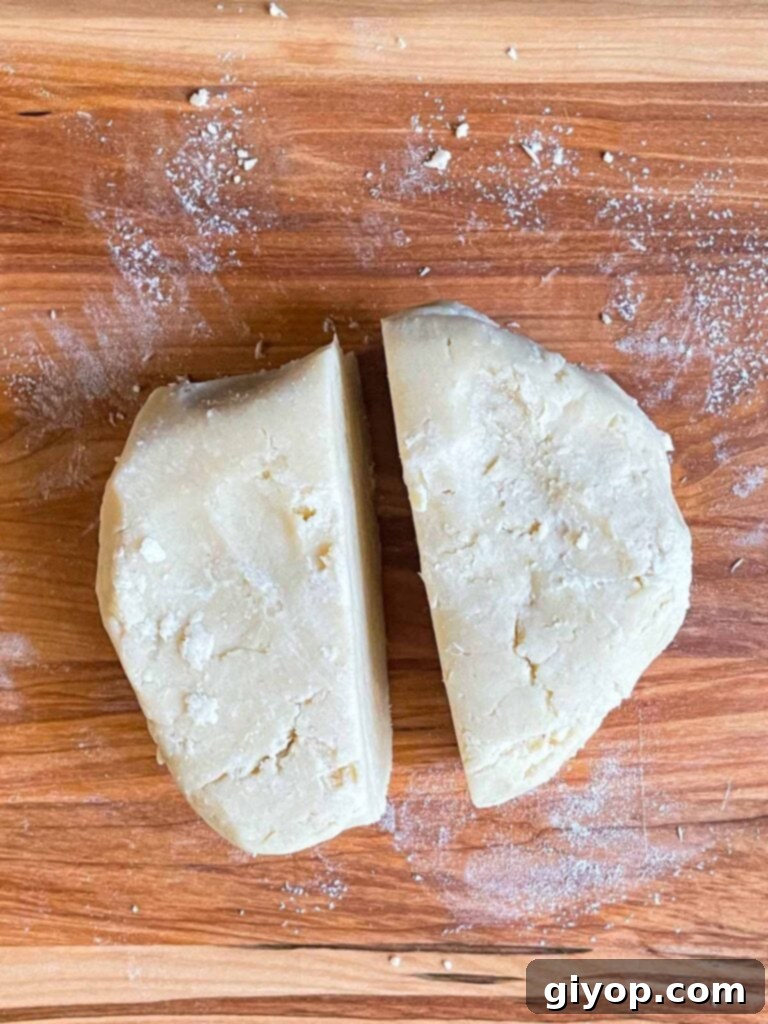
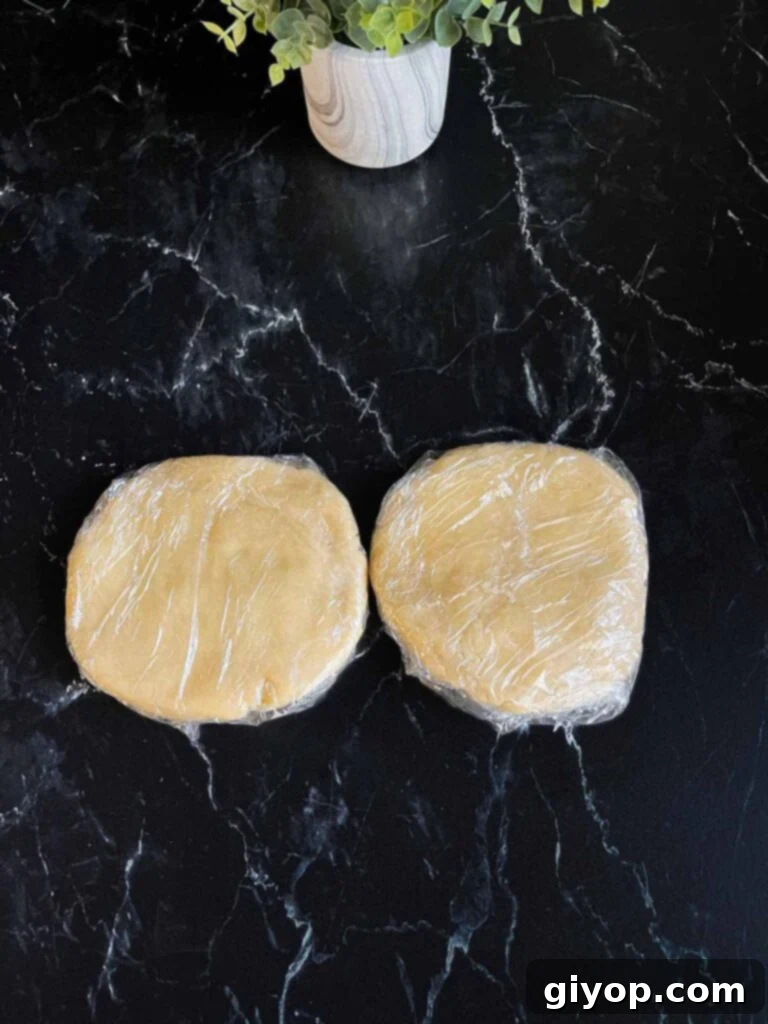
Wrap each disk tightly in plastic wrap to prevent it from drying out. Refrigerate the dough for at least one hour, or preferably for 2-3 hours, to allow the gluten to relax and the butter to firm up. You can store the dough in the refrigerator for up to 3 days.
Why is Chilling the Dough So Important?
Chilling the dough serves several vital purposes. First, it allows the gluten, which develops during mixing and kneading, to relax. This relaxation is what makes the dough tender and prevents it from shrinking excessively during baking. Second, it re-chills the butter, solidifying those crucial fat pockets. These cold butter pieces are the foundation for the spectacularly flaky texture that sets a homemade pie crust apart.
How to Roll Out Pie Dough for a Flawless Crust
Rolling out your chilled **pie dough** requires a gentle touch and a methodical approach to ensure an even, tear-free crust.
- **Prepare for Rolling:** Have your 9-inch pie plate ready. Remove one disk of dough from the refrigerator and let it sit at room temperature for at least 10-15 minutes before rolling. This brief resting period prevents the cold dough from cracking at the edges as you begin to roll. Keep the second disk in the fridge until needed.
- **Roll with Precision:** Lightly flour your work surface and your rolling pin. Place one dough disk in the center. Using a rolling pin, roll out the dough from the center outwards, applying medium, even force. Rotate the dough frequently (about a quarter turn after every few rolls) to maintain a circular shape and prevent sticking. Flip the dough occasionally, re-flouring the surface as needed, to ensure it doesn’t adhere to your counter. Continue rolling and turning until you achieve a 12-inch circle that is approximately 1/4 inch thick, with uniform thickness across the entire circle. A 12-inch circle of dough is the perfect size for a standard 9-inch pie pan, allowing for a nice overhang.
- **Transfer to Pie Plate:** Carefully drape one edge of the rolled-out dough over your rolling pin, then gently lift it and transfer it over the pie plate. Carefully ease the dough down into the pan, making sure it settles into all the crevices without stretching. The dough will be thin at this point, so handle it slowly and with care to avoid tearing.
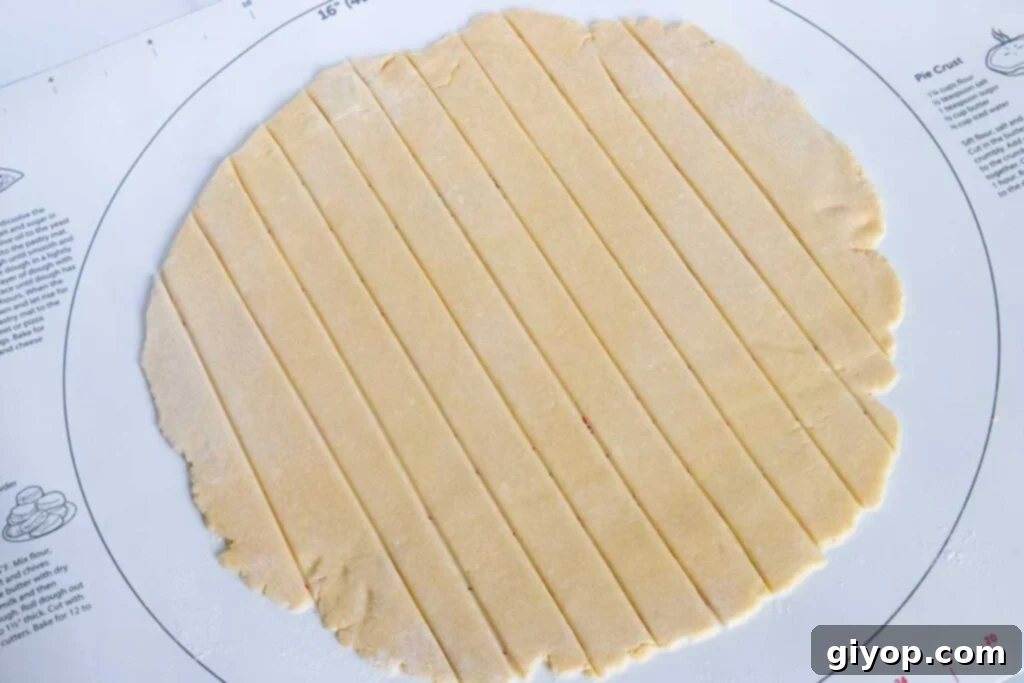
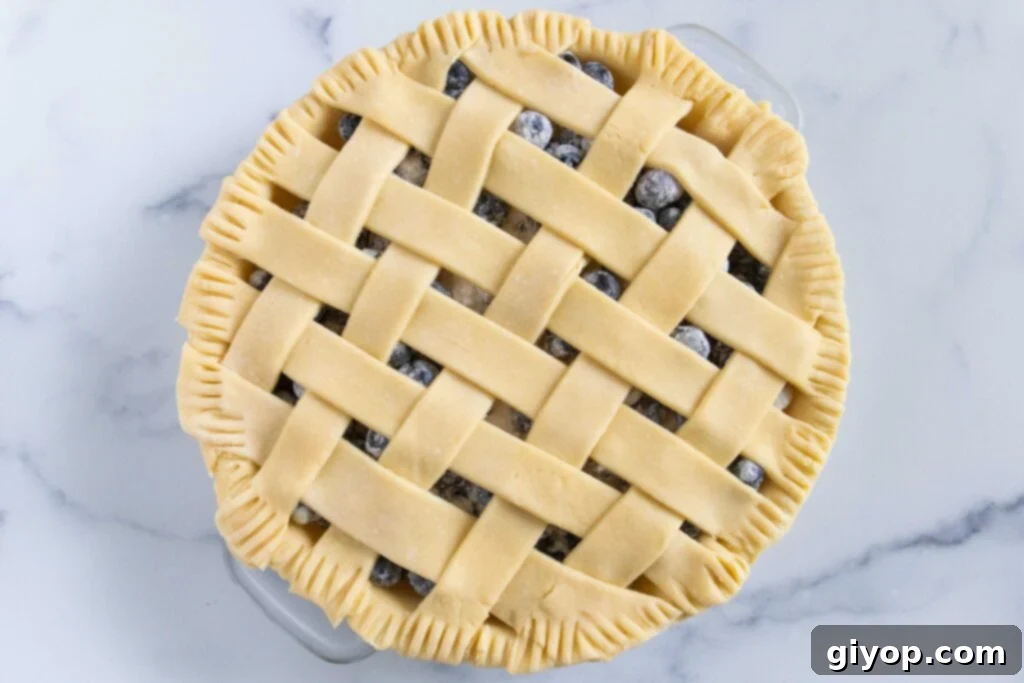
- **Trim and Finish Edges:** Trim any excess dough, leaving about a 1-inch overhang around the edge of the pie plate. At this stage, you can add your chosen pie filling to the bottom crust. If making a double-crust pie, roll out your second dough disk for the top crust.
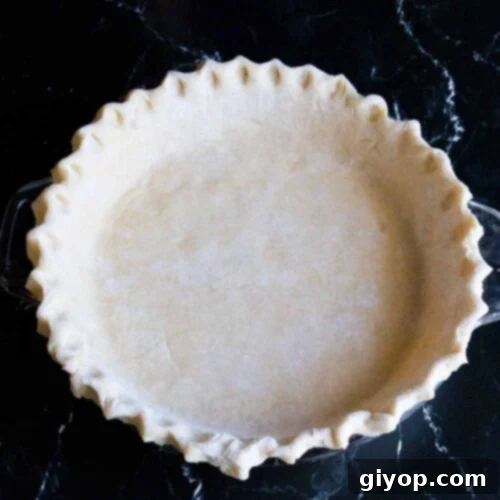
- **Crimp or Flute:** For a decorative edge, fold the 1-inch overhang of the bottom crust back over the top crust (if using), or directly over itself for a single crust. Pinch the top and bottom crusts together to seal, and then crimp or flute the edges.
- **To flute:** Use two fingers of one hand to press the dough inwards, while using the thumb and index finger of your other hand to pinch the dough outwards, creating a beautiful scalloped pattern around the rim of the pie.
- **To crimp:** Simply press the tines of a fork around the entire edge of the pie crust for a classic, rustic look.
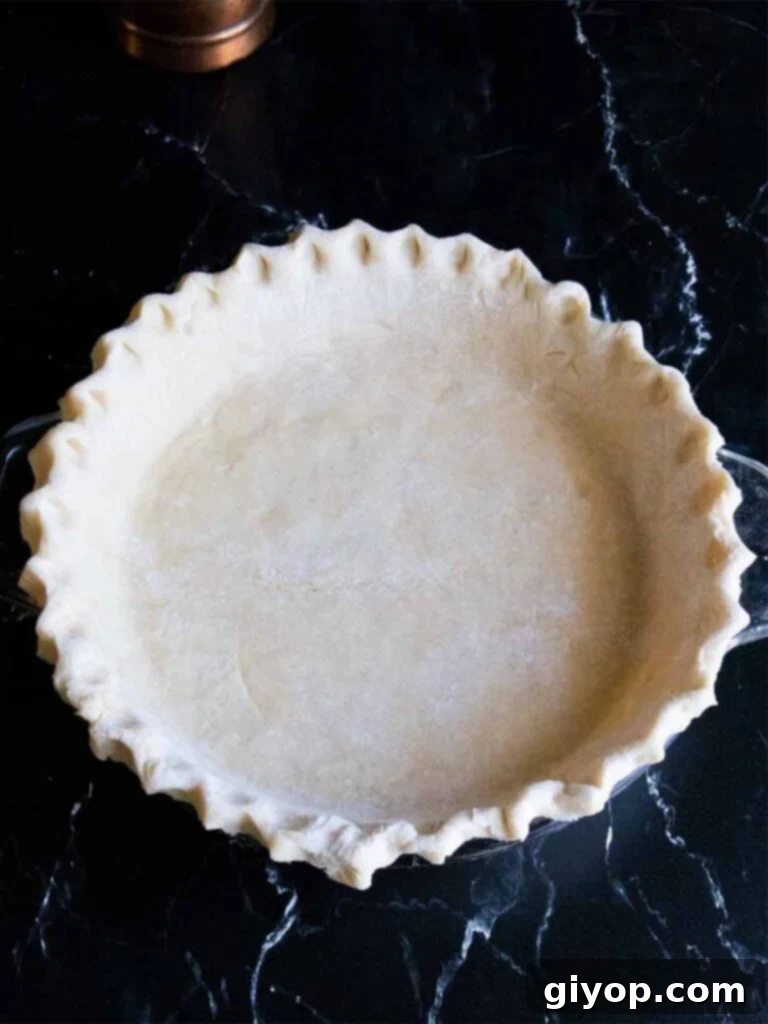
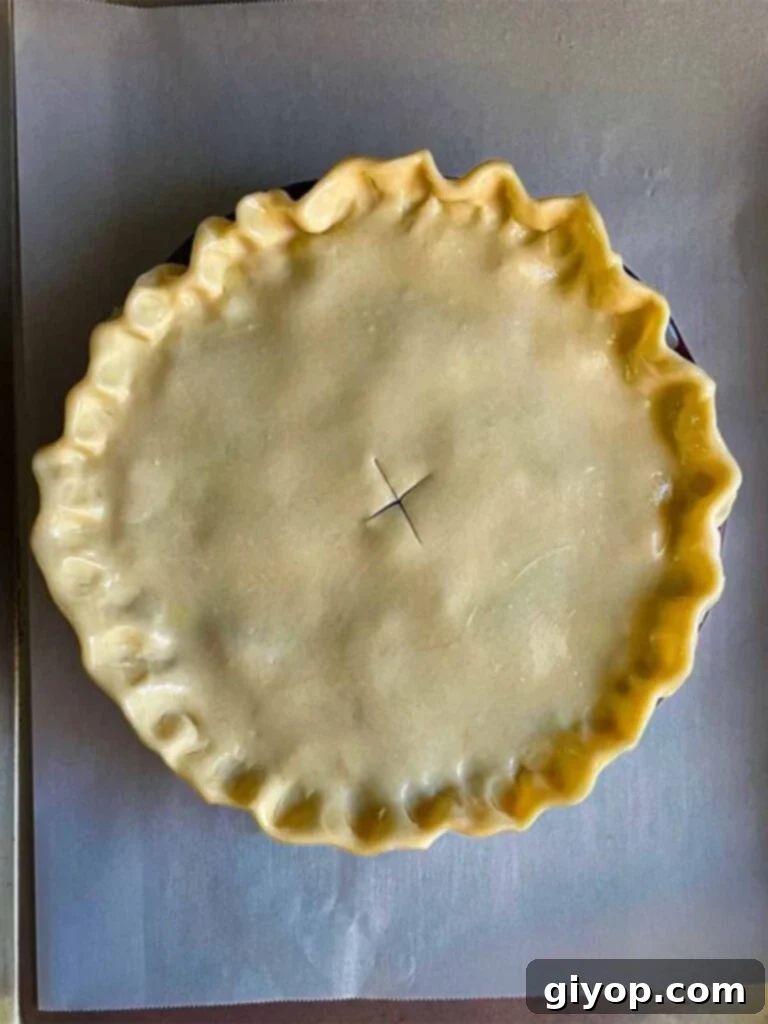
For an extra layer of protection against a soggy bottom, I like to brush an egg wash (one egg whisked with a tablespoon of water) over the bottom crust and refrigerate it while I prepare the filling and top pie crust. This creates a barrier that helps prevent the filling’s moisture from making the crust soggy.
For the top crust, you can either roll out the next disk for a solid top, cutting a few slits to allow steam to escape, or roll it out and cut it into 3/4 to 1-inch strips for an elegant lattice top crust. Before baking, I strongly recommend freezing the formed pie for at least 15 minutes. This ensures the butter remains perfectly cold, which is paramount for achieving those desirable flaky layers in your **homemade pie crust**.
The Science Behind Perfect Flaky Pie Crust
The true secret to a perfect, **flaky pie crust** lies in two fundamental principles: **cold ingredients** and **meticulous chilling** throughout the process. It’s a simple concept with profound effects on the final texture of your pie.
When you start with cold butter and ice water, the fat remains solid and dispersed in small pockets within the flour. As your pie enters the hot oven, the butter begins to melt. The water content within these butter pockets rapidly turns into steam. This steam then forces apart the layers of gluten-developed dough, creating tiny air pockets. As the crust bakes and sets, these air pockets remain, resulting in a beautiful, airy, and unmistakably flaky texture that is the hallmark of a truly great pie crust. If the butter melts before baking (due to warm ingredients or overworking), these layers won’t form, and you’ll end up with a dense, tough crust.
Par Baking (Blind Baking) Your Pie Crust
Some pie recipes, particularly those with very wet fillings (like custard or fresh fruit pies) or no-bake fillings, require the crust to be par-baked (also known as blind baking) before the filling is added. This step prevents a soggy bottom and ensures the crust is fully cooked and crisp.
To par-bake your **pie crust**:
- **Prepare the Dough:** After shaping your pie dough into the pie plate and crimping the edges, line the raw dough with parchment paper or aluminum foil. Make sure the paper/foil extends up and over the crimped edges to prevent them from burning.
- **Add Pie Weights:** Fill the lined crust with pie weights, dried beans, or granulated sugar. The weight prevents the crust from puffing up and shrinking during baking. When using granulated sugar, the cooled, toasted sugar can later be reused in other recipes, adding a delicious, complex flavor profile to your desserts.
- **Freeze and Bake:** For best results, freeze the pie dough formed into the pie plate with the weights for at least 30 minutes before baking. Then, blind bake your **butter pie crust** as instructed in your specific recipe, usually at a higher temperature for a shorter time, then removing the weights and baking until golden.
Troubleshooting Common Pie Crust Problems
Even with the best intentions, baking can sometimes present challenges. Here are solutions to common pie crust issues:
- **Soggy Bottom:** Often caused by a wet filling or insufficient blind baking. Ensure you par-bake when necessary and consider brushing the bottom crust with egg wash.
- **Tough Crust:** The most common culprit is overworking the dough, leading to excessive gluten development. Mix and knead minimally.
- **Shrinking Crust:** This usually happens when the dough isn’t properly chilled or is overworked, causing the gluten to retract during baking. Always chill your dough thoroughly before rolling and baking.
- **Cracking Dough:** Too little moisture or excessively cold dough can cause cracks when rolling. Let the dough warm up slightly at room temperature before rolling, and if it cracks, gently patch it with a little water and a pinch of dough.
- **Dry and Crumbly Dough:** This indicates insufficient liquid. Add ice water a tablespoon at a time until the dough just comes together.
Tips for a Consistently Successful Pie Crust
- **Embrace the Cold:** This cannot be stressed enough. All ingredients (especially butter and water) must be ice cold. Chill the pie dough between every major step—after mixing, before rolling, and ideally for 10-15 minutes in the freezer just before baking. This preserves the butter’s structure for maximum flakiness.
- **Water Wisdom:** Add ice water one tablespoon at a time. Dough can be finicky, and humidity affects how much liquid is needed. Too much water will develop gluten, leading to a tough dough that requires more flour (and more toughness). Too little water results in dry, crumbly dough that won’t come together or roll out properly. Aim for a shaggy consistency that just barely holds when pressed.
- **Avoid Overmixing:** This is crucial. Overmixing, whether by hand or in a food processor, will overdevelop the gluten in the flour. This leads to a hard, dense, and unappealing crust. Mix just until the ingredients are combined and the dough starts to come together.
- **Gentle Kneading:** When gathering the dough on a floured surface to form a ball, knead it only a few times—just enough to make it cohesive. If the dough feels crumbly, slightly dampen your hands, rather than adding more water directly, to introduce a little moisture. If it feels too sticky, sprinkle a tiny bit of flour over the dough and continue forming a ball.
- **No Food Processor? No Problem!** Don’t let a lack of equipment deter you. You can easily use a pastry blender or even two butter knives to cut the cold butter into the flour. Then, use your hands to gently mix in the water until the dough forms. The key is to work quickly to keep the butter cold.
- **Plan Ahead:** Pie dough benefits greatly from resting. Making it a day or two in advance allows flavors to meld and gluten to relax, resulting in an even more tender and flavorful crust.
Exciting Pie Crust Variations
While our **all-butter pie crust** is perfect as is, don’t hesitate to experiment and customize it to suit your taste or specific pie filling:
- **The Vodka Secret:** Substitute some of the ice water (e.g., half) for chilled vodka. Alcohol inhibits gluten development, leading to an exceptionally tender and flaky crust without affecting the taste, as the alcohol evaporates during baking.
- **Sweetness Adjustment:** If you prefer a sweeter pie crust for dessert pies, you can slightly increase the amount of granulated sugar by an extra tablespoon or two.
- **Flavor Infusions:** Get creative with flavorings! Add fresh herbs like rosemary or thyme for savory pies, a teaspoon of lemon or orange zest for a bright, citrusy note, or a splash of vanilla extract, almond extract, or other complementary extracts for dessert pies. A pinch of cinnamon or nutmeg can also add a subtle warmth.
- **Cheese Crust:** For savory pies or quiches, consider adding 1/4 to 1/2 cup of finely grated hard cheese like Parmesan or cheddar to the dry ingredients for a wonderfully savory crust.
Frequently Asked Questions (FAQs) About Pie Crust
Prepared pie dough can be refrigerated for up to 3 days. Ensure it is wrapped very tightly in plastic wrap to prevent it from drying out or absorbing refrigerator odors. When ready to use, set it out at room temperature for 10-15 minutes to soften slightly before rolling out.
Absolutely! Pie crusts are excellent for freezing. Wrap the dough disks tightly in plastic wrap, then place them into a freezer-safe bag. They can be frozen for up to 3 months. To use, thaw the dough in the refrigerator overnight. This recipe makes a double crust pie; if you only need one, freeze the other for later use.
While this is an all-butter recipe, you can substitute half of the butter with vegetable shortening for a slightly different texture. Shortening can produce an even flakier crust because it has a higher melting point and 100% fat content, but it lacks the rich flavor that pure butter provides. For the best flavor and a beautiful flaky texture, we recommend all butter.
If your dough cracks, it might be too cold or a little dry. Let it sit at room temperature for a few more minutes. You can also gently patch cracks by moistening your finger with a tiny bit of ice water and pressing a small piece of excess dough over the crack, smoothing it out.
More Delicious Pie Recipes to Try
Now that you’ve mastered the art of making a perfect **homemade pie crust**, it’s time to put your skills to good use! Explore some of our other favorite pie recipes that are sure to impress:
Old-Fashioned Pecan Pie Recipe (without corn syrup)
Homemade Coconut Cream Pie
Blueberry Pie
Easy All Butter Pie Crust Recipe
Print
Pin
Rate
Ingredients
- 2 1/2 cups All-purpose flour or pastry flour
- 1 cup Unsalted butter very cold, cubed
- 1 tbsp Granulated sugar
- 1/2 tsp Kosher salt
- 5-6 tbsp Ice water (or half chilled vodka for extra flakiness)
Instructions
- In the bowl of a food processor, combine the all-purpose flour, granulated sugar, and kosher salt. Pulse a few times to mix well. Add the very cold, cubed butter pieces. Pulse in short bursts until the mixture resembles coarse crumbs with some pea-sized pieces of butter remaining. With the processor running, gradually add ice-cold water one tablespoon at a time through the feed tube and process until the dough just begins to come together in a shaggy mass.2 1/2 cups All-purpose flour, 1 cup Unsalted butter, 1 tbsp Granulated sugar, 1/2 tsp Kosher salt, 5-6 tbsp Ice water
- Dump the dough onto a lightly floured surface and gently knead a few times until it comes together into a cohesive ball. Divide the dough in half. Shape each piece into a ball, then flatten each ball into a disk. Wrap each disk tightly in plastic wrap and refrigerate for at least one hour or up to 3 days to chill thoroughly.
Notes
If you don’t have a food processor, you can easily make this pie crust by using a pastry cutter or two butter knives to cut in the cold butter cubes. Then, use your hands to gently mix in the ice water.
**Storing and Freezing** – Wrapped tightly in plastic wrap, the dough disks can be refrigerated for up to 3 days. For longer storage, freeze them for up to 3 months. Thaw frozen dough in the refrigerator overnight before use. This recipe yields enough for two 9-inch pie crusts (a double-crust pie); if you only need one, freeze the other disk for later.