Mastering Fresh Herb Storage: Keep Parsley, Cilantro, and More Fresh for Weeks
The culinary world truly comes alive with the vibrant flavors and aromas of fresh herbs. Yet, there’s a common frustration many home cooks face: buying a beautiful bunch of parsley, cilantro, or dill only to find it wilted and yellowed in the refrigerator just a few days later. This cycle of purchase and premature disposal not only leads to unnecessary food waste but also drains your grocery budget and limits your cooking creativity. If you’ve ever felt the disappointment of tossing out perfectly good herbs, you’re not alone.
For years, I struggled with this very issue, constantly throwing away limp sprigs of parsley and cilantro, feeling defeated by their short shelf life. Then, a game-changing tip from Simply Recipes transformed my kitchen routine. This method isn’t just a hack; it’s a fundamental principle of fresh herb preservation that every home cook should adopt. If you regularly purchase fresh herbs, consider this a crucial technique for maximizing their freshness and flavor. It’s incredibly simple, cost-effective, and guarantees your herbs will stay vibrant for significantly longer than conventional storage methods.
Before we dive into the step-by-step guide, imagine having fresh, crisp herbs readily available whenever inspiration strikes. Think of enhancing your dishes with a sprinkle of bright green parsley or a burst of fresh cilantro, knowing they’ve maintained their peak quality for weeks. This guide will walk you through the precise steps to achieve just that, ensuring your herbs remain a source of joy, not a cause for waste. And once you master this, you’ll be ready to whip up delightful dishes like our Fresh Herb Vegetable Dip, bursting with the freshness of your perfectly stored produce!
The Ultimate Guide to Storing Fresh Herbs
This method works by mimicking the way herbs absorb water when they are still growing, while also providing a protective, humid environment that prevents dehydration and slows spoilage. It’s particularly effective for tender, leafy herbs like parsley, cilantro, mint, and dill. By following these steps, you’ll be able to extend the life of your fresh herbs for up to two to three weeks, sometimes even longer.
Step 1: Trim the Stem Ends for Better Water Absorption
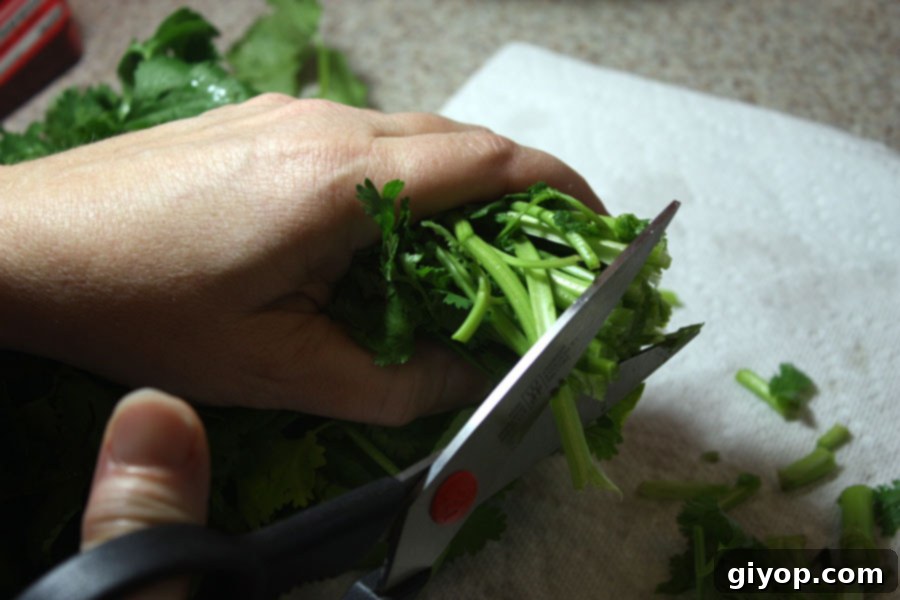
The first crucial step is to prepare your herbs by trimming the very ends of their stems. Just as you would trim fresh flowers before placing them in a vase, this simple action opens up the capillaries of the herb stems, allowing them to absorb water more efficiently. Use sharp kitchen scissors or a clean knife to cut about a half-inch to an inch off the bottom of the stems. This removes any dry or damaged ends that could hinder water uptake and ensures your herbs get a fresh “drink” right from the start. This small preparation makes a significant difference in how long your herbs will stay hydrated and crisp.
Step 2: Gently Wash and Refresh Your Herbs
Next, it’s time to give your herbs a thorough but gentle wash. Fill your salad spinner bowl with cold water and ensure the strainer basket is inserted. Submerge your herbs completely in the cold water. Swish them around gently to dislodge any dirt, sand, or residual pesticides. Cold water helps to perk up slightly wilted herbs, making them feel fresh and vibrant again. After a good soak, lift the strainer basket directly out of the water, allowing any heavy dirt to remain at the bottom of the bowl. Discard the dirty water from the spinner bowl.
Step 3: Thoroughly Dry with a Salad Spinner
This step is absolutely critical for successful herb storage. Excess moisture on the leaves is the enemy of freshness, as it encourages bacterial growth and mold, leading to rapid spoilage. After washing, place your herbs back into the clean salad spinner basket. Give them a really good, vigorous spin. The goal is to remove as much surface water from the leaves as possible without bruising or damaging them. Repeat the spinning process a couple of times if necessary until the herbs feel dry to the touch. If you don’t have a salad spinner, you can gently pat the herbs dry with clean paper towels, but be very careful not to crush the delicate leaves. A salad spinner is highly recommended for its efficiency and gentleness in this process.
Keeping your herbs dry after washing is as important as keeping them hydrated at the stems. This balance is key to preventing decay while ensuring the leaves remain plump and green. Proper drying also means you won’t introduce excess moisture into your storage container, which could lead to mold growth. Once your herbs are sparkling clean and thoroughly dried, they are ready for their new temporary home. With perfectly prepared herbs, you’re well on your way to creating culinary masterpieces, perhaps even our creamy and comforting Tomato Basil Soup.
Step 4: Hydrate in a Water Bath
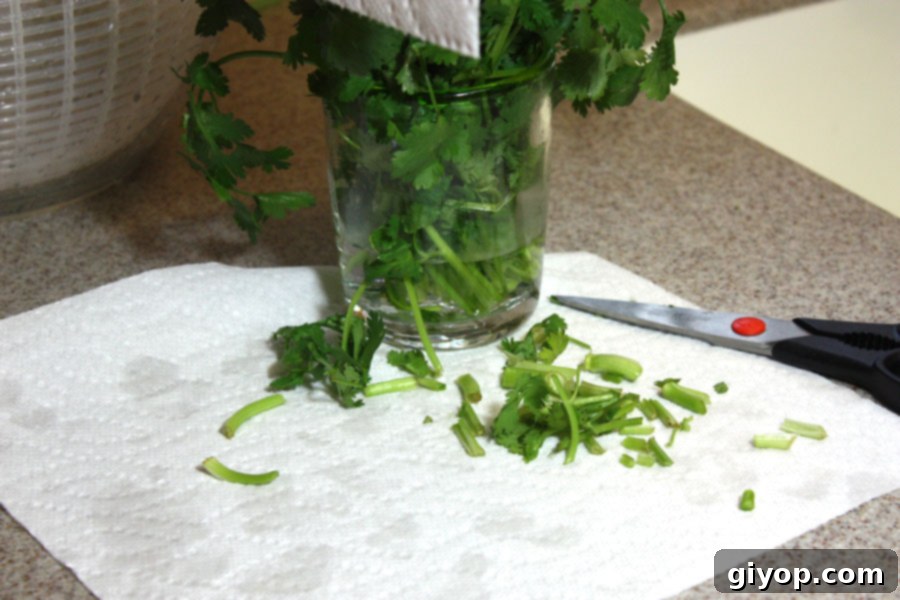
Now, take a clean glass jar, mason jar, or any tall glass. Fill the bottom with about an inch of cold water. Gather your dried and trimmed herbs into a loose bunch and place their stem ends into the water, just as you would a bouquet of flowers. Ensure that only the stems are submerged and the leaves remain above the waterline. This setup allows the herbs to continuously draw water up through their stems, keeping the leaves firm and fresh. Do not overcrowd the glass; allow enough space for air circulation around the herb sprigs. This simple rehydration technique is fundamental to extending their vitality.
Step 5: Create a Protective Microclimate with Paper Towel and Plastic Bag
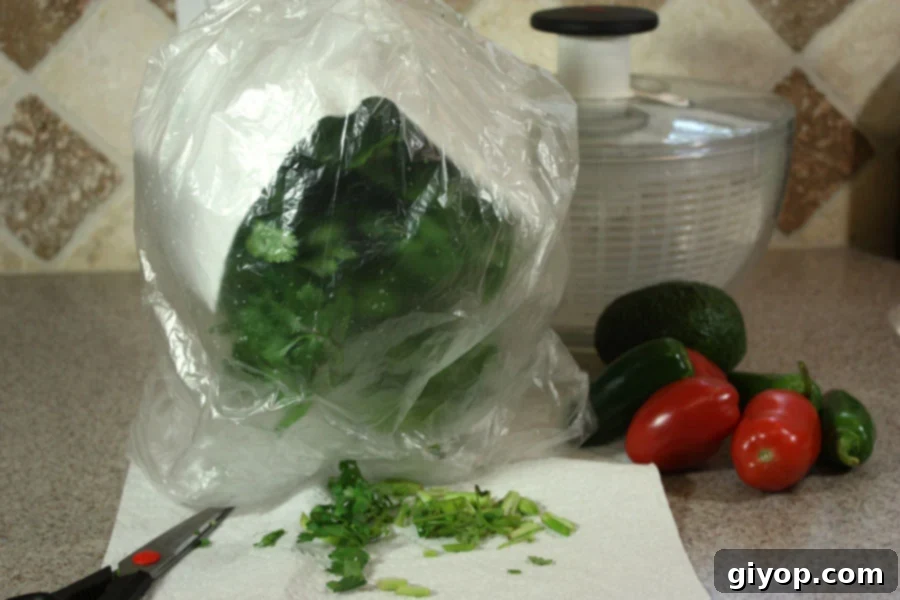
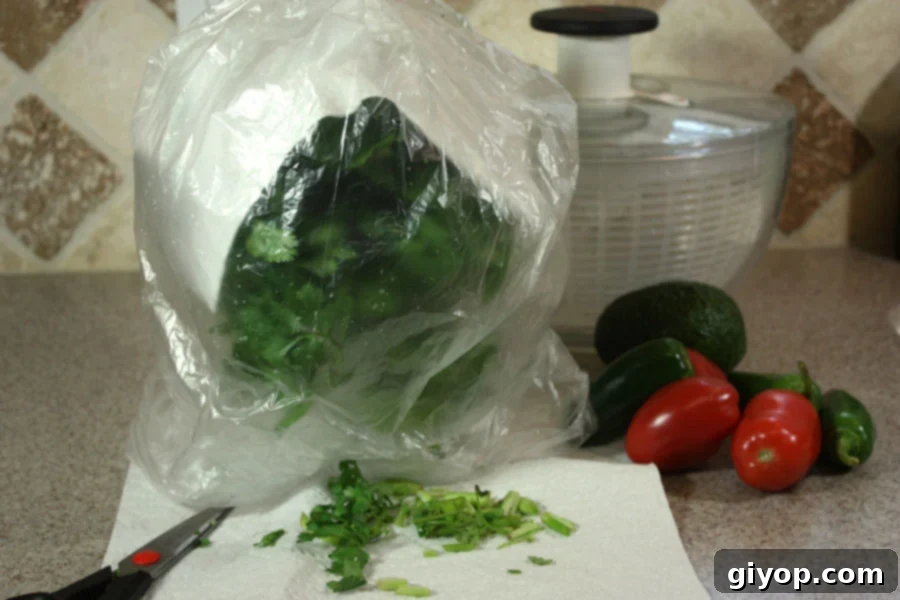
This step is where the magic truly happens for long-term freshness. Once your herbs are comfortably resting in their water bath, gently drape a clean, dry paper towel over the top of the herbs, allowing it to loosely cover the foliage. The paper towel serves a dual purpose: it acts as a breathable barrier that wicks away any excess moisture that might condense inside the bag, preventing mold and rot, and it also helps to regulate humidity. Next, take the plastic bag your herbs came in (or any clean plastic bag, even a gallon-sized freezer bag) and carefully place it over the entire glass, completely enclosing the herbs and the paper towel. Like so.
The plastic bag creates a mini-greenhouse effect, trapping humidity around the herbs without suffocating them. This humid environment is crucial for preventing the leaves from drying out and wilting, which is a common problem in the dry air of a refrigerator. The combination of the water-filled glass and the protective, humidified bag mimics the natural conditions that keep herbs thriving. It’s a remarkably effective system that ensures your herbs stay green, crisp, and full of flavor for a significantly longer period – typically a couple of weeks, sometimes even up to three!
Step 6: Optimal Refrigerator Storage and Maintenance
Place your prepared herb “bouquet” in the refrigerator. A good spot is usually on a shelf where it won’t be easily knocked over, or in the door of the fridge. Avoid placing your herbs near fruits like apples or bananas, as these produce ethylene gas, which can accelerate the ripening and spoilage of other produce, including your precious herbs. Consistency in temperature is also beneficial.
To ensure maximum longevity, a little ongoing maintenance is required:
- Change the Water: Check the water every few days (e.g., every 2-3 days). If it starts to look cloudy or discolored, or if you notice any sliminess, it’s definitely time for a change. Simply lift the herbs out, pour out the old water, rinse the glass, and refill with fresh cold water. This prevents bacterial growth in the water that could contaminate your herbs.
- Re-trim Stems (Optional but Recommended): When you change the water, you can also consider trimming another tiny bit off the stem ends (about 1/4 inch). This refreshes the cut and improves water uptake.
- Replace the Paper Towel: If the paper towel becomes damp or saturated, replace it with a fresh, dry one. A damp paper towel loses its wicking ability and can contribute to unwanted moisture buildup.
- Inspect Regularly: Keep an eye on your herbs. If you notice any sprigs starting to show signs of spoilage (yellowing, sliminess), remove them immediately to prevent the rot from spreading to the rest of the bunch.
Special Considerations for Different Herbs
- Parsley, Cilantro, Dill, Mint, Chives: This method works perfectly for these tender, leafy varieties, extending their freshness significantly.
- Basil: Basil is a bit finicky. While it can benefit from this method, it’s often sensitive to cold and can blacken in the refrigerator. If you live in a warm climate or have a warmer spot in your kitchen, basil often prefers to be stored on the counter, using the same water-in-a-glass method but without the plastic bag, perhaps just a loose paper towel. If you must refrigerate basil, this method is your best bet, but be aware it might not last as long as parsley or cilantro.
- Rosemary, Thyme, Oregano (Woody Herbs): These hardier herbs have different needs. They generally do well wrapped loosely in a slightly damp paper towel, then placed in a resealable plastic bag or airtight container in the crisper drawer. They don’t typically require the water-in-a-glass method as much as their tender counterparts, though it can work in a pinch.
Why This Herb Storage Method is a Game-Changer
Adopting this simple yet highly effective herb storage technique offers a multitude of benefits that extend beyond just having fresh herbs on hand:
- Drastically Reduces Food Waste: No more throwing away expensive, unused herbs. This method ensures you get to enjoy every last sprig.
- Saves Money: By making your herbs last longer, you buy them less frequently, leading to savings on your grocery bill.
- Enhances Culinary Creativity: Having a steady supply of fresh herbs empowers you to experiment more in the kitchen, adding depth and brightness to everyday meals.
- Boosts Flavor: Fresh herbs retain their potent flavors and essential oils much better than dried or wilted ones, making your dishes taste more vibrant and professional.
- Convenience: Imagine reaching into your fridge and always finding crisp, ready-to-use herbs, eliminating last-minute trips to the store.
Embracing this herb preservation strategy is a small change that yields significant results in your kitchen. It’s a testament to how simple techniques can have a profound impact on reducing waste, saving money, and elevating your home cooking. So, the next time you pick up a bunch of fresh herbs from the market, remember these steps. You’ll be amazed at how long they stay fresh, vibrant, and ready to transform your meals. Perhaps you’ll even be inspired to use them in a delightful dessert, like our famous Strawberry Shortcake, garnished with fresh mint for an extra touch of elegance!
Say goodbye to wilted herbs and hello to a kitchen always stocked with vibrant, flavorful ingredients. Happy cooking!