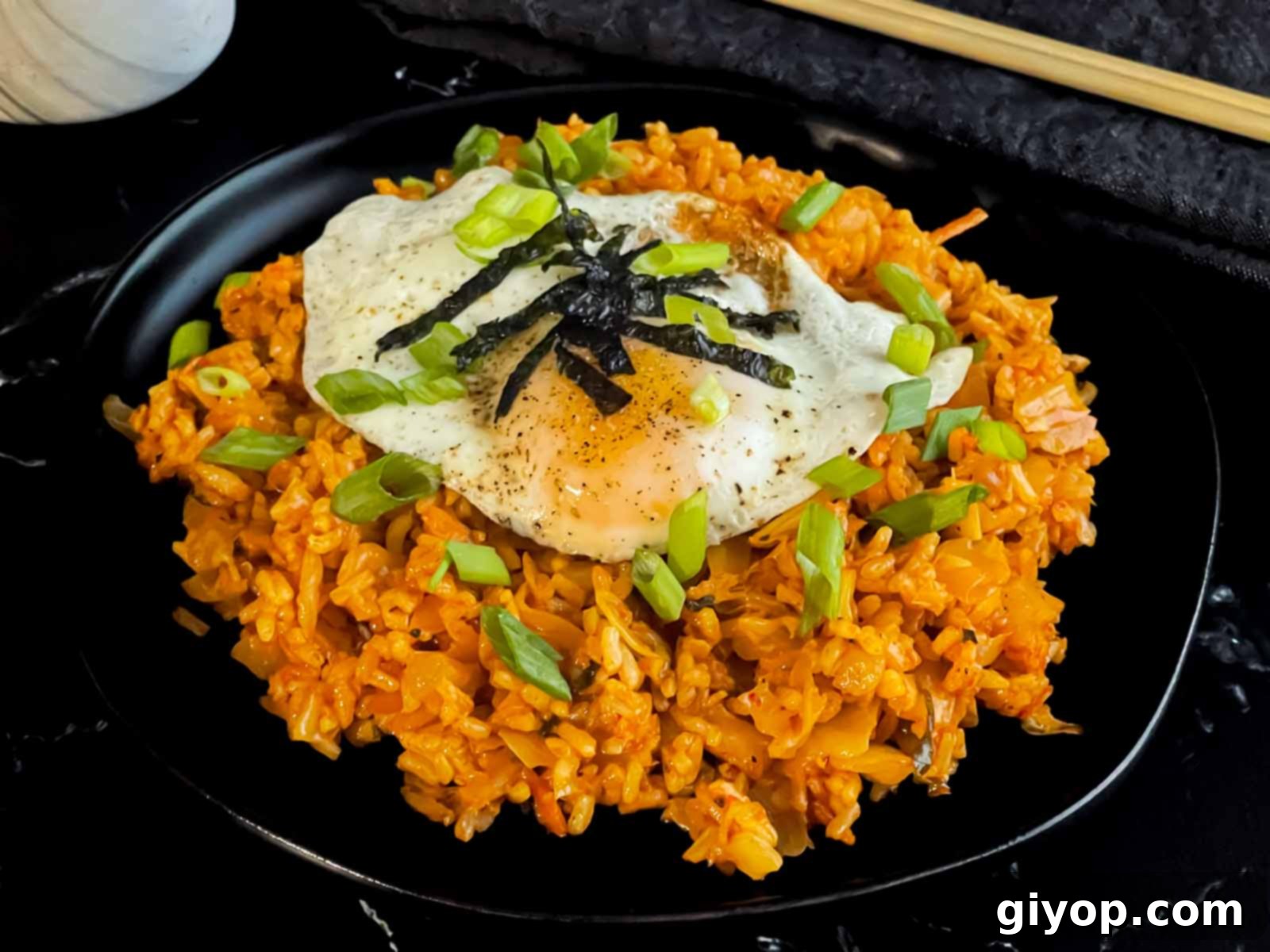
If you’re seeking a dish that explodes with flavor, comes together with impressive ease, and can star as a main course or shine as an exquisite side, then allow us to introduce you to the irresistible world of Kimchi Fried Rice, also known as Kimchi-bokkeumbap. This vibrant Korean culinary delight is an absolute must-try that promises to tantalize your taste buds and simplify your kitchen routine. Get ready to embark on a culinary journey that’s both deliciously satisfying and remarkably straightforward!
Why This Kimchi Fried Rice Recipe Will Become Your New Favorite
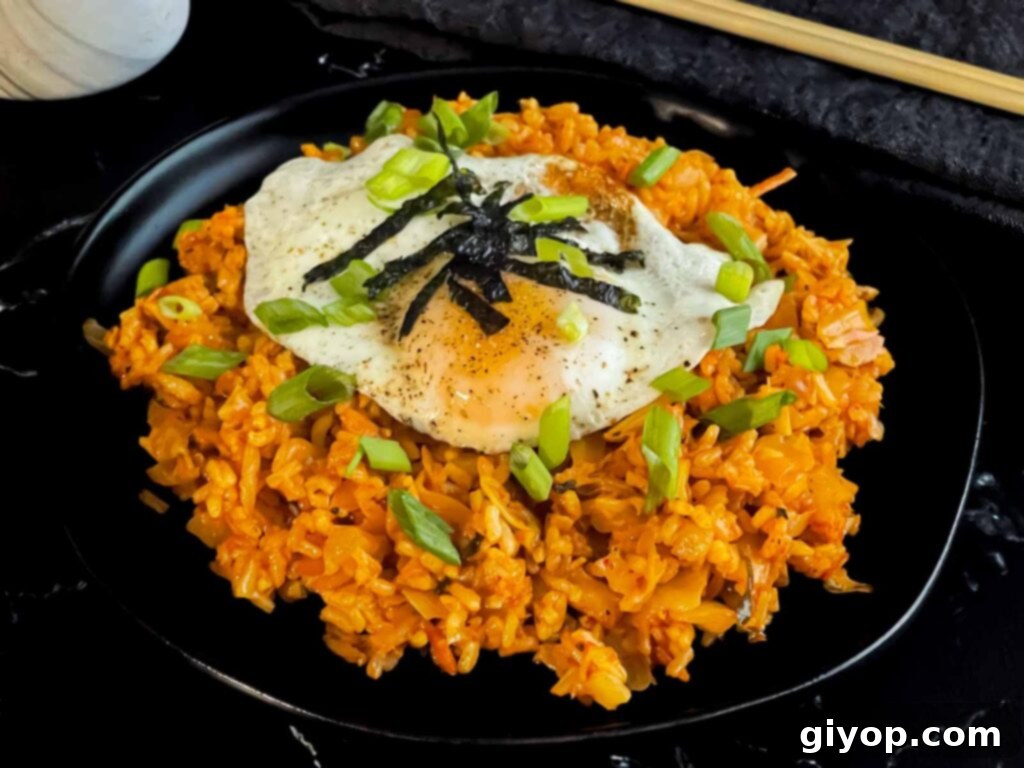
We believe the best recipes combine two essential qualities: they are both effortlessly easy to make and incredibly delicious to eat. This Kimchi Fried Rice (Kimchi-bokkeumbap) recipe perfectly embodies these principles. Forget complicated techniques or hard-to-find exotic ingredients; this dish champions simplicity without sacrificing a single ounce of its amazing flavor. It’s a testament to how humble ingredients can create something truly extraordinary in your kitchen.
What makes this particular recipe so exceptional? Beyond its straightforward preparation, it offers a symphony of textures and tastes that are simply addictive. The star, of course, is the kimchi itself – bringing a delightful punch of spicy, tangy flavor and a satisfying crunch that contrasts beautifully with the soft, comforting grains of rice. The visual appeal is undeniable too; its rich, fiery color is a feast for the eyes before it even reaches your palate. Whether you choose to add a protein, like the diced pork we recommend, or keep it as a vibrant vegetarian option, this dish adapts seamlessly to your preferences.
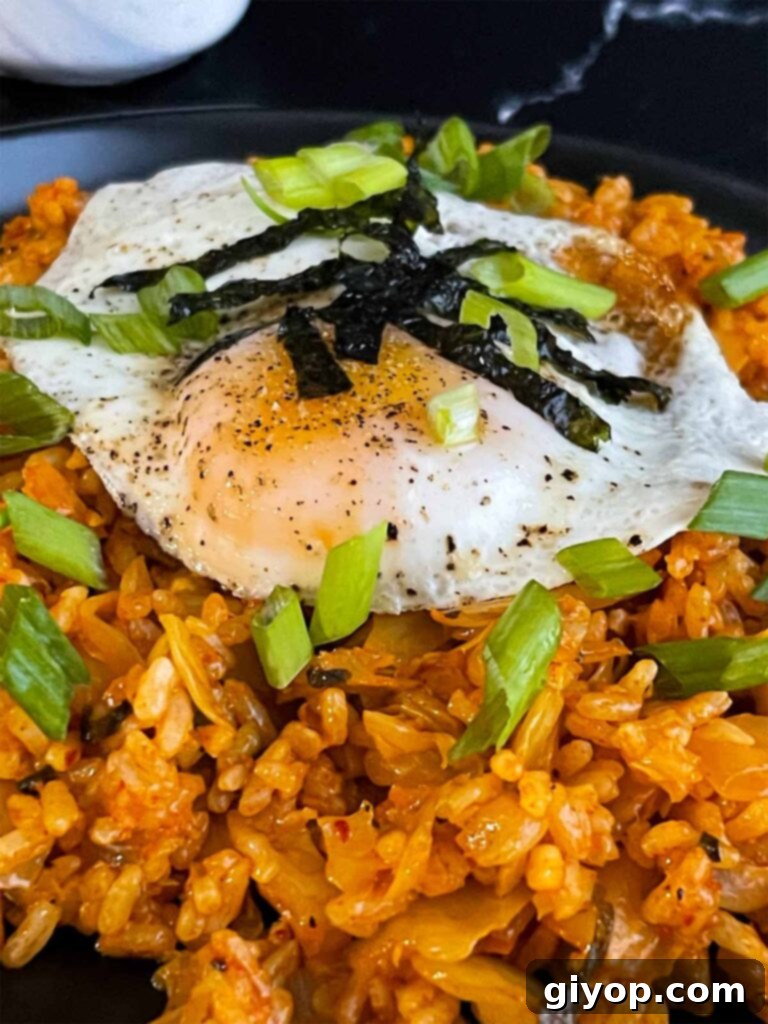
In less than 30 minutes, you can conjure up a fabulous meal that rivals anything you might find in a restaurant, but at a mere fraction of the cost. Imagine the satisfaction of serving a dish so packed with bold, authentic flavors, knowing you created it with minimal effort and maximum reward. This isn’t just a win-win; it’s a culinary triumph that will have you coming back for more, time and time again. It’s the ultimate comfort food with a spicy, savory kick that’s perfect for any occasion.
Unveiling Kimchi: The Heart of Korean Cuisine
To truly appreciate the magic of Kimchi Fried Rice, one must first understand its foundational ingredient: kimchi. Kimchi is more than just a dish; it’s a cultural cornerstone in Korea, a staple that graces virtually every meal. At its essence, kimchi is a traditional Korean side dish made from fermented vegetables, most commonly napa cabbage and Korean radish. These vegetables are seasoned with a vibrant paste of chili powder (gochugaru), garlic, ginger, green onions, and sometimes salted seafood or fish sauce. The result of this meticulous fermentation process is a complex flavor profile that is wonderfully spicy, tangy, savory, and umami-rich – a truly addictive combination.
The history of kimchi dates back centuries, evolving from simple salted vegetables to the diverse and flavorful fermented staple it is today. Its creation was primarily a method of preserving vegetables through the harsh Korean winters. Over time, various regions and families developed their unique kimchi recipes, leading to hundreds of different varieties, each with its own distinct taste and texture, depending on the ingredients used and the fermentation period.
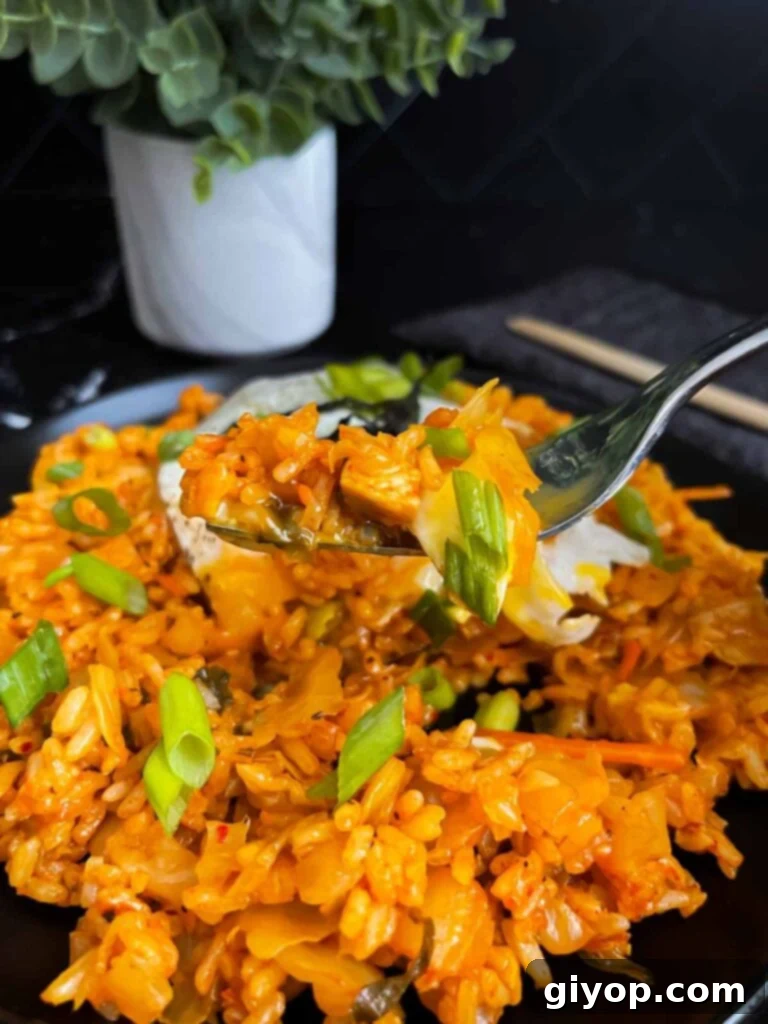
Beyond its incredible taste, kimchi is lauded for its impressive health benefits. The fermentation process naturally produces beneficial probiotics, similar to those found in yogurt, which are excellent for gut health and digestion. Kimchi is also a powerhouse of vitamins, including A, B, and C, and is rich in antioxidants. Regular consumption is believed to boost the immune system and promote overall well-being. So, when you’re enjoying a plate of Kimchi Fried Rice, you’re not just indulging in deliciousness; you’re also nourishing your body.
If you’re new to kimchi and have been hesitant to try it, now is the perfect time to shed those reservations. Its unique flavor profile opens up a world of culinary possibilities, transforming simple dishes into extraordinary meals. You can easily find various types of kimchi at your local Asian grocery store, ranging from mildly spiced to intensely hot, ensuring there’s a perfect match for every palate. Embrace the bold flavors of kimchi, and watch your recipe repertoire expand in exciting new directions!
Essential Ingredients for Your Kimchi Fried Rice
Creating truly outstanding Kimchi Fried Rice hinges on a handful of key ingredients, each playing a crucial role in building its signature flavor profile. While the full list with precise measurements can be found in the recipe card below, let’s explore some of the stars that make this dish shine.
Our recipe includes 5 ounces of diced pork (we used a single pork chop for convenience). This adds a wonderful savory depth and texture to the fried rice. However, one of the beauties of this dish is its versatility. If pork isn’t your preference, or if you’re aiming for a vegetarian meal, feel free to omit it or substitute it with other proteins or vegetables. For alternative ideas, be sure to check out our “Variations” section further down the page.
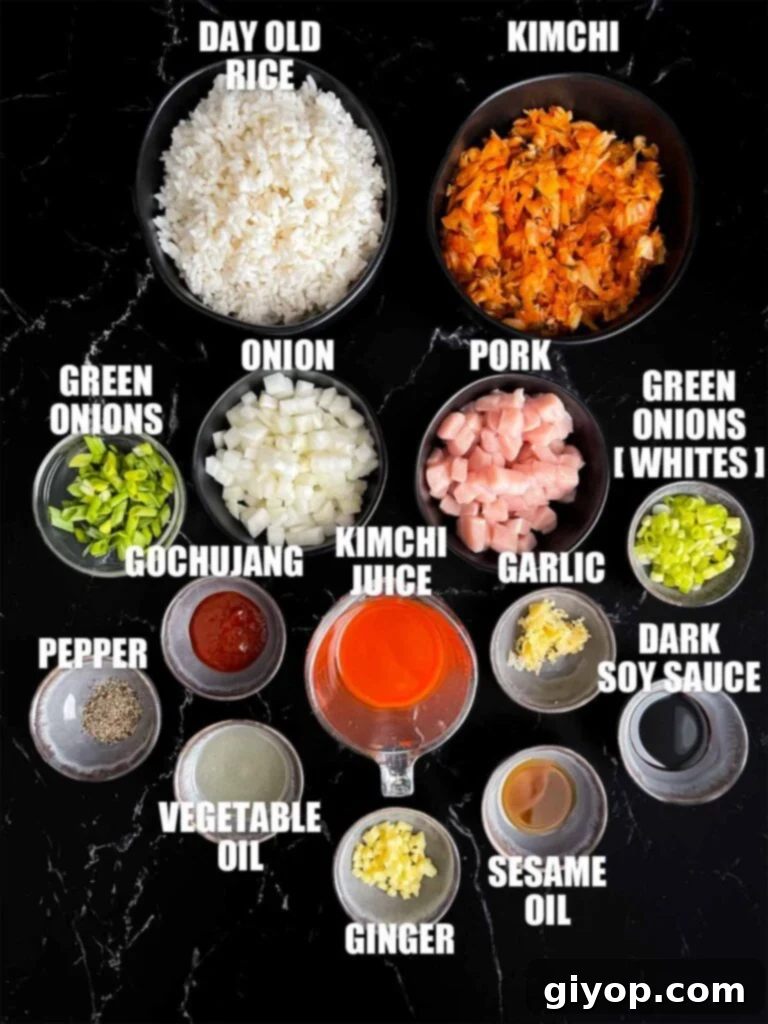
The foundation of any great fried rice is, of course, the rice itself. For optimal texture, we highly recommend using day-old, cooked rice. This is crucial because day-old rice has had time to dry out, making it less sticky and prone to clumping, which is essential for achieving those perfectly separated, slightly crispy grains that define excellent fried rice. Freshly cooked rice, on the other hand, contains too much moisture and can lead to a mushy result.
Beyond the rice and protein, a selection of aromatic ingredients like onion, green onion (whites and greens separated), minced garlic, and fresh ginger forms the aromatic base. These contribute layers of pungent, sweet, and spicy notes. The core flavor enhancers include sliced kimchi and its juice (which adds extra tang and moisture), gochujang (Korean chili paste, providing rich, fermented heat and umami), and dark soy sauce (for depth of color and savory flavor). A touch of black pepper and fragrant sesame oil complete the ensemble, rounding out the dish with their distinctive aromas.
Crafting Your Perfect Kimchi Fried Rice: A Step-by-Step Guide
Making delicious Kimchi Fried Rice is a straightforward process that yields incredibly flavorful results. Follow these steps to create a dish that’s sure to impress:
Begin by heating a large skillet or wok over medium-high heat. Add one tablespoon of a neutral cooking oil, such as canola, avocado, or vegetable oil. Allow the oil to shimmer, indicating it’s hot enough for cooking.
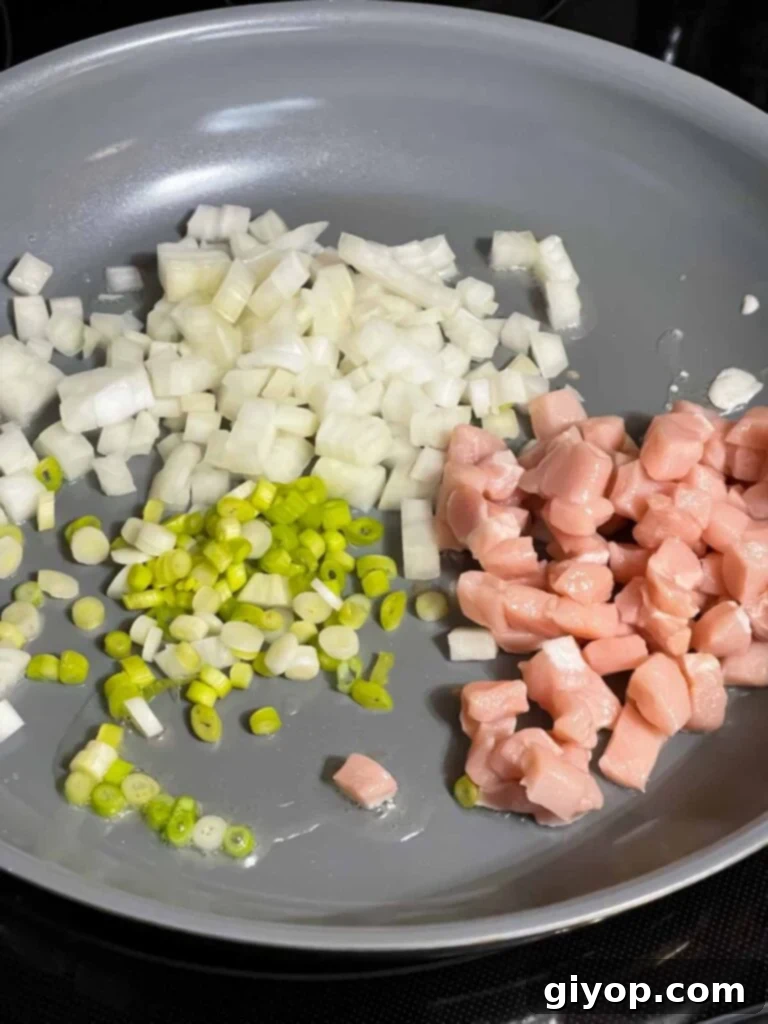
Once the oil is ready, add the diced onion, the thinly sliced white parts of the green onions, and the diced pork to the skillet. Cook these ingredients for approximately 3 minutes, stirring occasionally, until the onions begin to soften and lighten in color. This step helps to render some fat from the pork and sweeten the onions, building a flavorful base.
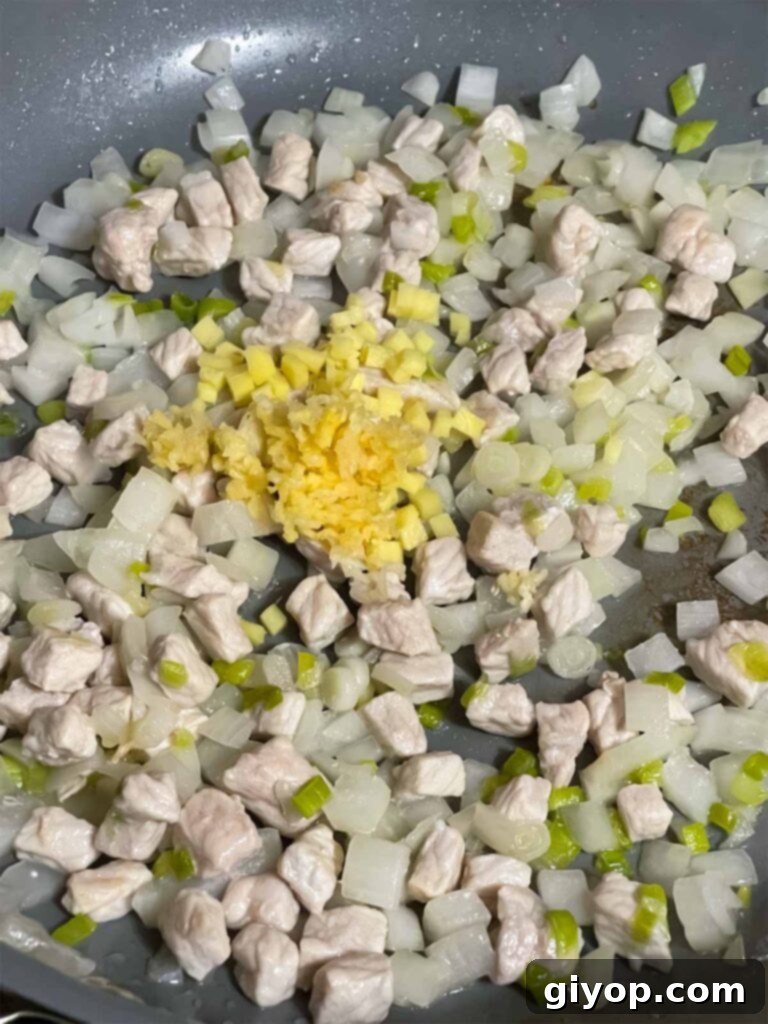
Next, add the minced garlic and fresh ginger to the skillet. Stir constantly to combine these aromatics with the other ingredients, and continue to cook for another two to three minutes. The goal here is for the onions to become translucent and fully softened, and for the garlic and ginger to release their fragrant oils without burning.
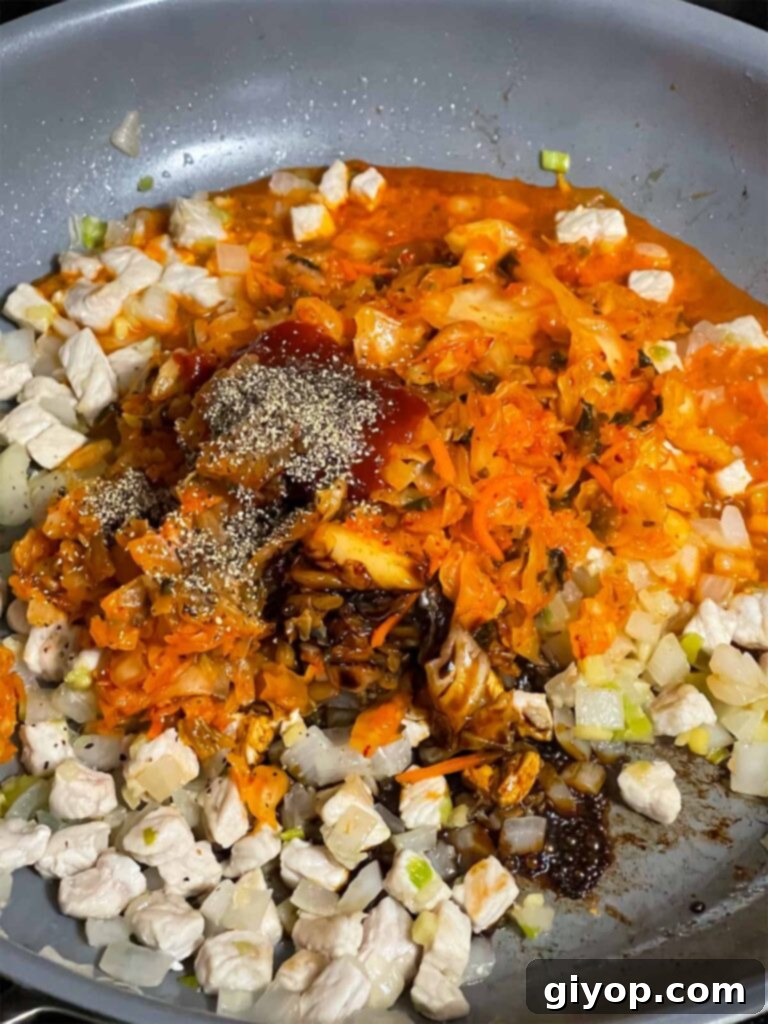
Now, it’s time to introduce the star flavors. Add the sliced kimchi, its tangy juice, the gochujang (Korean chili paste), dark soy sauce, and a dash of black pepper to the skillet. Stir everything together thoroughly. Continue to cook, stirring frequently, until the kimchi softens and becomes slightly translucent, which usually takes about two minutes. This allows the flavors to meld beautifully and the kimchi to release more of its wonderful essence.
Reduce the heat to medium-low, then add your day-old cooked rice to the skillet. Using a spatula or spoon, break up any clumps and mix the rice vigorously with the kimchi mixture until it is evenly coated. Allow this to cook for approximately 3 minutes, giving the rice time to absorb all the flavorful juices and seasonings. This step is crucial for infusing every grain of rice with that irresistible kimchi flavor.
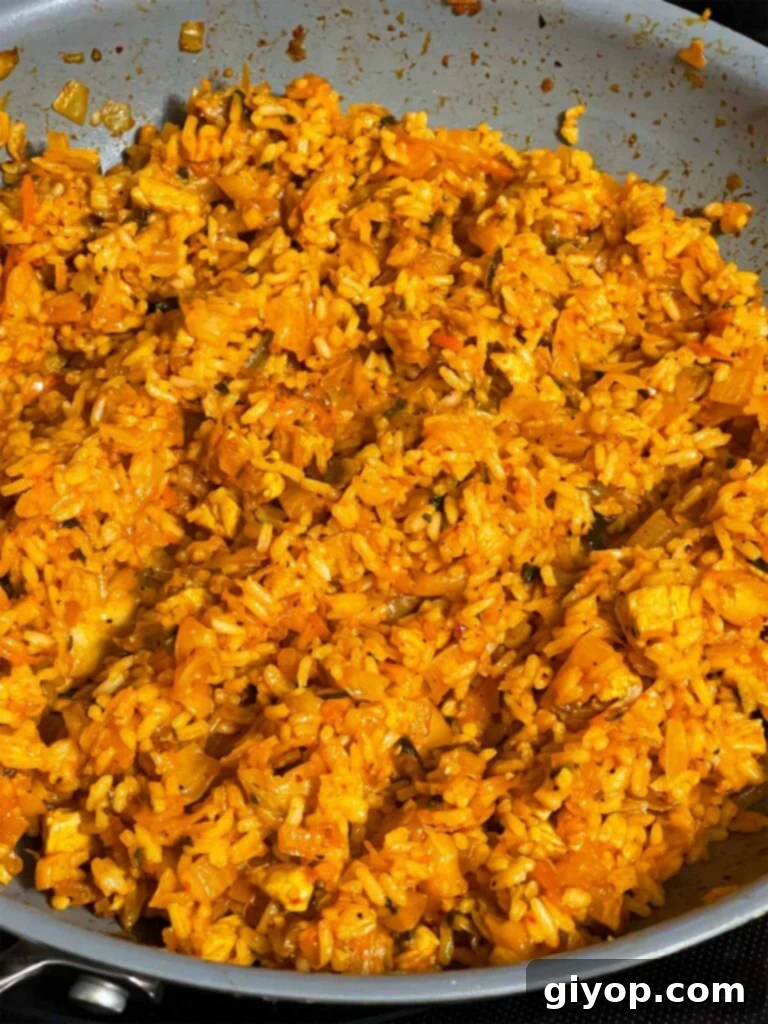
For that perfect fried rice texture, push the rice to one side of the skillet, add another tablespoon of neutral oil and the sesame oil to the cleared area, then spread the rice back out. Increase the heat back to medium-high. Cook, stirring occasionally, for another 4 to 5 minutes, allowing the rice to develop a slightly crispy texture on the bottom. This is where the magic happens, creating those coveted crispy bits that make fried rice so delightful.
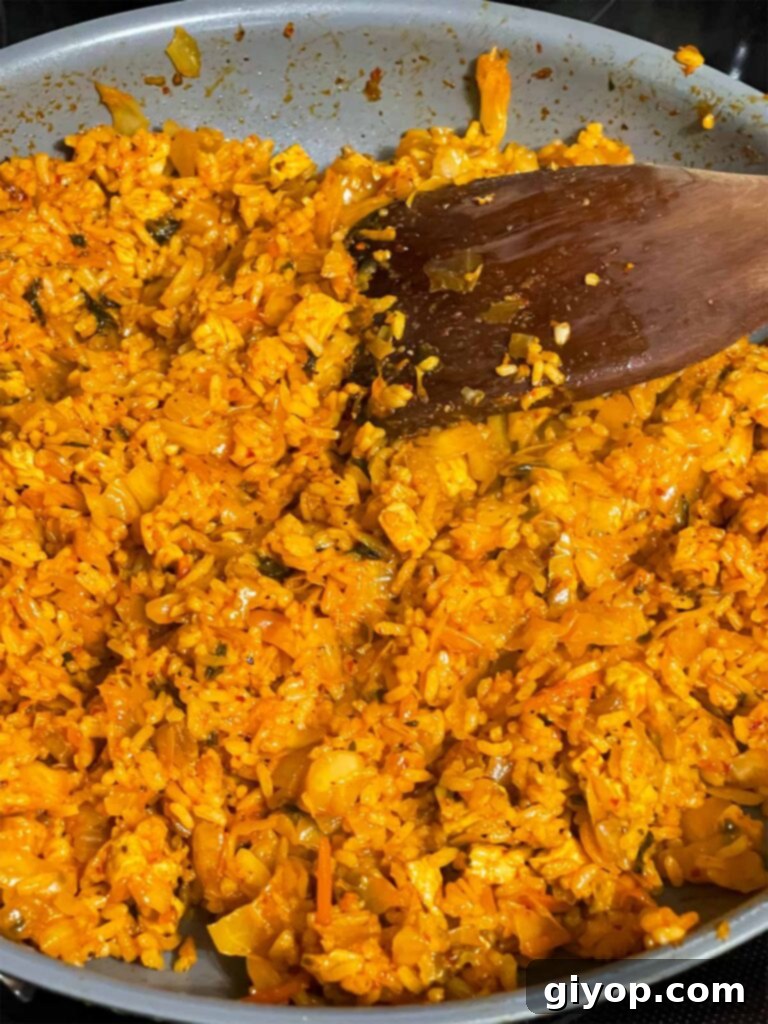
Once your Kimchi Fried Rice has reached its ideal texture and flavor, remove the skillet from the heat. It’s now ready for its grand finale. Garnish generously with the sliced green parts of the green onions. For an extra layer of richness and authenticity, consider adding an optional fried egg (sunny-side up or over easy is classic!) and some torn pieces of gim (roasted seaweed). Serve immediately and savor every delicious bite!
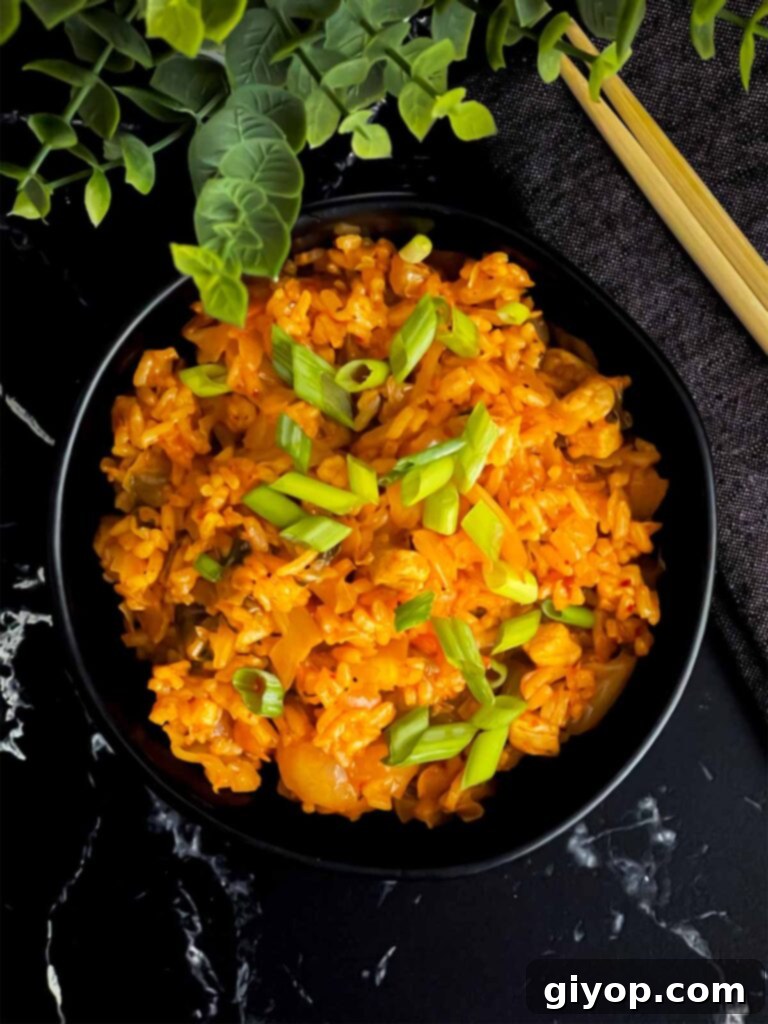
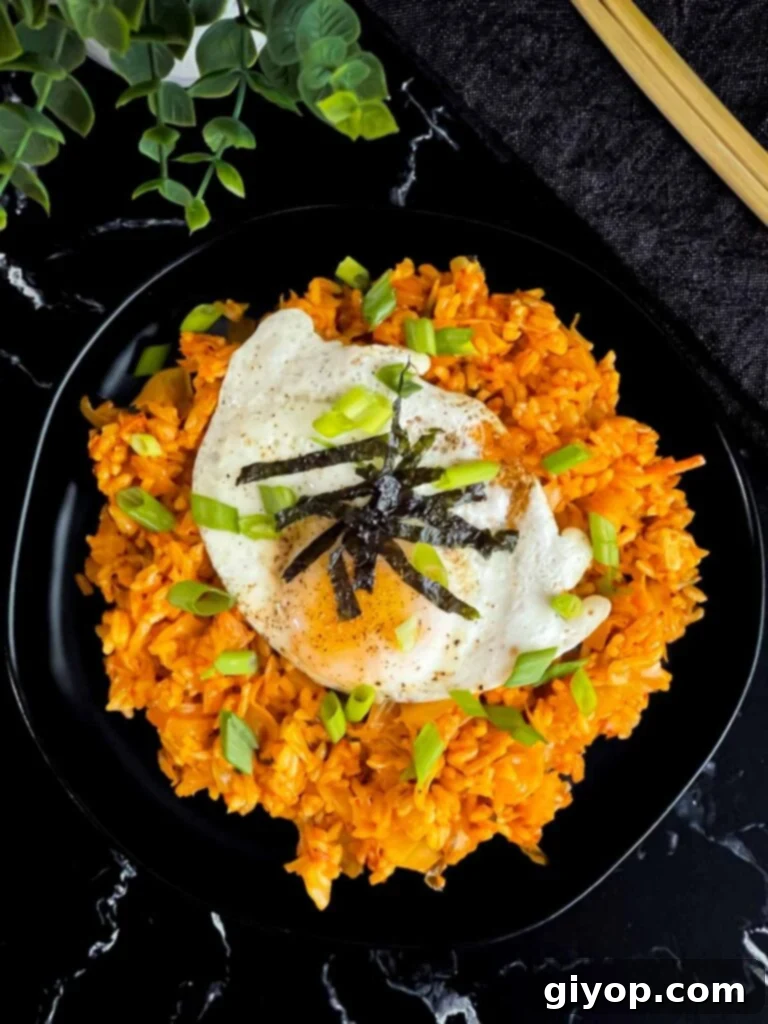
You’ll be hard-pressed to find a dish that delivers such an explosion of flavor and satisfaction for the minimal time and cost invested. This isn’t just any fried rice; it elevates the classic comfort food beyond simple peas and carrots. In our culinary estimation, this Kimchi Fried Rice is truly next level.
Expert Tips for Perfect Kimchi Fried Rice Every Time
Achieving restaurant-quality Kimchi Fried Rice at home is easier than you think, especially with a few insider tips. These simple pointers will help you master the technique and ensure your dish is consistently delicious:
- Embrace Day-Old Rice: This is perhaps the most critical tip for any fried rice recipe. Using cold, day-old cooked rice is non-negotiable for achieving the ideal texture. Freshly cooked rice retains too much moisture, which can make your fried rice soggy and clumpy. Day-old rice, on the other hand, has dried out slightly, allowing the grains to separate beautifully and crisp up nicely in the pan. If you’re in a pinch, you can speed up the drying process by spreading freshly cooked rice on a baking sheet and refrigerating it for at least 30 minutes, or even freezing it for 15-20 minutes.
- Control the Heat: Kimchi Fried Rice is known for its spicy kick, but you’re in control. The amount of gochujang (Korean chili paste) directly influences the spice level. If you prefer a milder flavor, start with half the recommended amount and taste before adding more. You can always add a little more gochujang or a pinch of gochugaru (Korean chili powder) at the end if you desire more heat.
- Master the Mise en Place: “Mise en place” is a French culinary term meaning “everything in its place.” For a fast-moving dish like fried rice, having all your ingredients prepped, chopped, and measured before you start cooking is essential. This includes dicing onions, mincing garlic and ginger, slicing kimchi, and having all your sauces ready. The cooking process is quick, so you won’t have time to chop or search for ingredients once the heat is on.
- High Heat is Your Friend: To achieve that desirable slightly crispy texture and caramelized flavor in your fried rice, cook it over medium-high to high heat. This rapid cooking helps to evaporate moisture and creates a wonderful textural contrast between tender and crispy rice grains. Just be sure to stir frequently to prevent burning. Don’t overcrowd the pan, as this can lower the temperature and steam the rice instead of frying it. If necessary, cook in batches.
- Taste and Adjust Seasoning: Always taste your food as you go! Before serving, take a small spoonful of your Kimchi Fried Rice and check the seasoning. Does it need more salt, pepper, a touch more soy sauce, or a bit more gochujang for extra spice? Adjust to your personal preference for a truly custom and satisfying dish.
Creative Variations & Customizations for Your Kimchi Fried Rice
One of the many joys of Kimchi Fried Rice is its incredible adaptability. While the classic recipe is fantastic, it serves as a perfect canvas for your culinary creativity. Don’t hesitate to experiment with these variations to suit your taste, dietary needs, or what you have on hand:
- Vegetarian Version: Easily transform this dish into a delightful vegetarian meal by swapping out the pork. Firm or extra-firm tofu, pressed and diced, works wonderfully, absorbing the rich flavors of the kimchi and sauces. Alternatively, sliced mushrooms (such as shiitake or cremini) add an earthy depth and meaty texture. You could also try tempeh or a medley of your favorite plant-based proteins. Ensure your kimchi is vegan-friendly if strictly avoiding animal products, as some traditional kimchis use fish sauce.
- Different Proteins, Endless Possibilities: If pork isn’t your protein of choice, the options are vast. Diced chicken breast or thigh, thinly sliced beef (such as sirloin or ribeye), or succulent shrimp all make excellent additions. Leftover rotisserie chicken can be shredded and added at the end for an even quicker meal. Just adjust cooking times accordingly to ensure your chosen protein is cooked through.
- Pack in Extra Veggies: Boost the nutritional value and texture by incorporating more vegetables. Bell peppers (any color!), frozen peas, finely diced carrots, corn, or fresh spinach can be added alongside the onions and kimchi. This not only enhances the flavor and appearance but also makes the dish even more wholesome.
- Explore Kimchi Types: The world of kimchi is incredibly diverse. If you’re sensitive to heat, seek out a milder kimchi variety. Many brands offer different spice levels, or you can find less spicy types like white kimchi (baek kimchi). Conversely, if you crave an intense fiery experience, opt for a spicier, more mature kimchi. The ripeness of the kimchi also affects the tanginess; older, more fermented kimchi will be sourer and more pungent, which is often preferred for fried rice.
- Cheesy Kimchi Fried Rice (Kimchi Bokkeumbap with Cheese): For a decadent and comforting twist, introduce cheese! After the fried rice is cooked, sprinkle your favorite shredded cheese (cheddar, mozzarella, or a Korean melting cheese blend works well) over the hot rice in the skillet. Cover for a minute or two to let it melt into a gooey layer before serving. For an ultimate fusion snack, take some of this cheesy kimchi fried rice, wrap it in a warm tortilla, and prepare for a truly satisfying experience!
Frequently Asked Questions About Kimchi Fried Rice
Here are some common questions about making Kimchi Fried Rice, along with helpful answers to ensure your success in the kitchen:
While you certainly can use freshly cooked rice, it’s generally not recommended for fried rice. Fresh rice contains more moisture, which can lead to a mushy and sticky texture instead of the desirable separated, slightly crispy grains. If you’re short on time and only have fresh rice, spread it out thinly on a baking sheet and place it in the refrigerator for at least 30 minutes, or even in the freezer for 15-20 minutes. This helps to dry it out and cool it down, making it more suitable for frying.
Gochujang (Korean chili paste) offers a unique balance of spicy, sweet, and savory fermented flavors that are hard to replicate exactly. However, a decent substitute can be made by combining sriracha with a touch of miso paste and a pinch of sugar. The sriracha provides the heat, while the miso paste offers umami and a hint of fermentation. Adjust the ratios to achieve a similar flavor profile and consistency.
Absolutely! Making Kimchi Fried Rice vegan is quite simple. First, replace the pork with a plant-based protein such as pressed and diced firm tofu, sliced mushrooms, or crumbled tempeh. Second, ensure that the kimchi you use is vegan-friendly. Some traditional kimchis contain fish sauce or other seafood products. Look for vegan kimchi options at your local Asian market or health food store, or consider making your own vegan kimchi from scratch.
Other Delicious Rice Dishes to Explore
If you’ve fallen in love with the versatility and deliciousness of rice through this Kimchi Fried Rice recipe, you’ll be thrilled to discover many other incredible rice-based dishes that can become staples in your kitchen. From savory sides to hearty mains, rice offers endless culinary possibilities:
How to Make Cajun Dirty Rice
Basmati Rice Risotto (Stick Of Butter Rice)
Cilantro Lime Rice
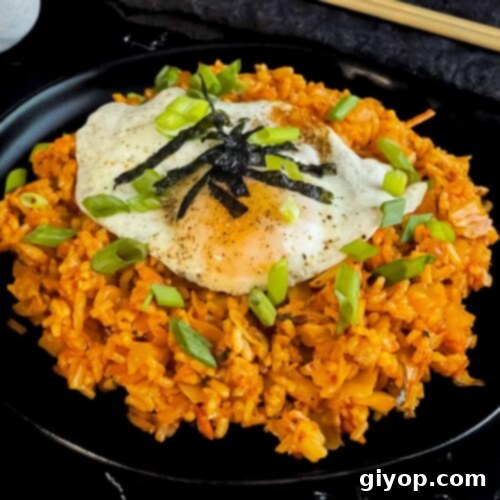
Kimchi Fried Rice (Kimchi-bokkeumbap) Recipe
Enjoy the delicious taste of Kimchi Fried Rice, a quick and easy dish bursting with flavor. Ready in under 30 minutes, it’s perfect for any meal!
Print Recipe
Pin Recipe
Rate This Recipe
Ingredients
- 5 oz Pork diced
- 3 cups Rice cooked, day old.
- 1 1/4 cup Kimchi Sliced
- 1/4 cup Kimchi juice juiced from kimchi
- 2 tbsp Vegetable oil divided, 1 tbsp each
- 1/4 cup Water
- 1 cup Onion diced
- 2 tsp Ginger minced
- 2 cloves Garlic minced
- 6 Green onions White and green separated, whites sliced thinly, greens sliced for garnish
- 1 tbsp Gochujang
- 1 tbsp Dark soy sauce
- 1 tsp Black pepper
- 1 tbsp Sesame Oil
Optional Garnish
- Eggs over easy
- Sesame seeds
- Green onions
- Gim (roasted seaweed)
Instructions
- Add 1 tbsp of vegetable oil to a large skillet over medium high heat.
- Once shimmering, add the onion, the whites of the green onion, and the pork to the skillet. Cook for 3 minutes until the onions just start to lighten up.
- Add the garlic and ginger to the skillet, cooking for an additional 2 to 3 minutes until the onions are translucent and softened.
- Add the kimchi, kimchi juice, water, gochujang, soy sauce, and black pepper. Cook until the kimchi becomes softened and translucent. About 4-5 minutes.
- Reduce the heat to medium low and add the rice. Mix to combine well and allow all the juices to be absorbed by the rice. About 5-7 minutes.
- Add another tbsp of vegetable oil and the sesame oil and increase the heat to medium high. When the rice starts to stick a bit, it’s ready to be served. About 4 to 5 minutes.
- Remove, garnish and serve.
Optional Garnish
- Top with sesame seeds, green onion, gim, and a fried egg.
Notes
Store leftover kimchi fried rice in an airtight container in the fridge for up to 3 days. Reheat in a skillet over medium heat or in the microwave until hot.