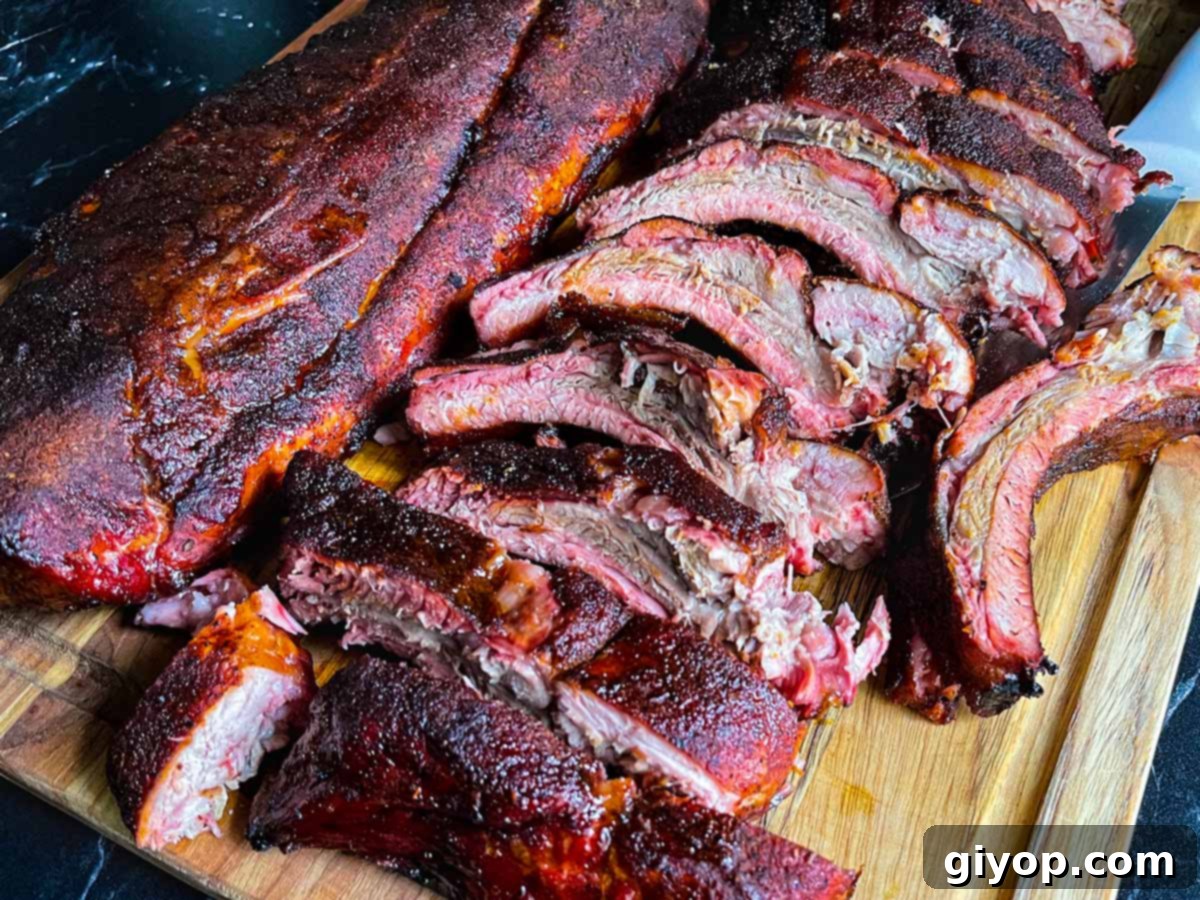
Craving a rack of baby back ribs that boasts a phenomenal smoky flavor and melts in your mouth with every bite? Look no further! This ultimate guide will walk you through crafting authentic Memphis-style smoked baby back ribs, renowned for their perfectly balanced dry rub and tender, juicy texture. Prepare to impress your family and friends with barbecue perfection!
Memphis barbecue is celebrated for its distinctive dry rubs and slow smoking techniques that infuse pork with unparalleled depth. While some regional styles lean heavily on sauce, Memphis often lets the seasoned meat speak for itself. We’ll explore the nuances of this beloved tradition, ensuring your ribs embody the true spirit of a Memphis barbecue joint, right in your backyard.
Why These Smoked Baby Back Ribs Will Be Your New Favorite
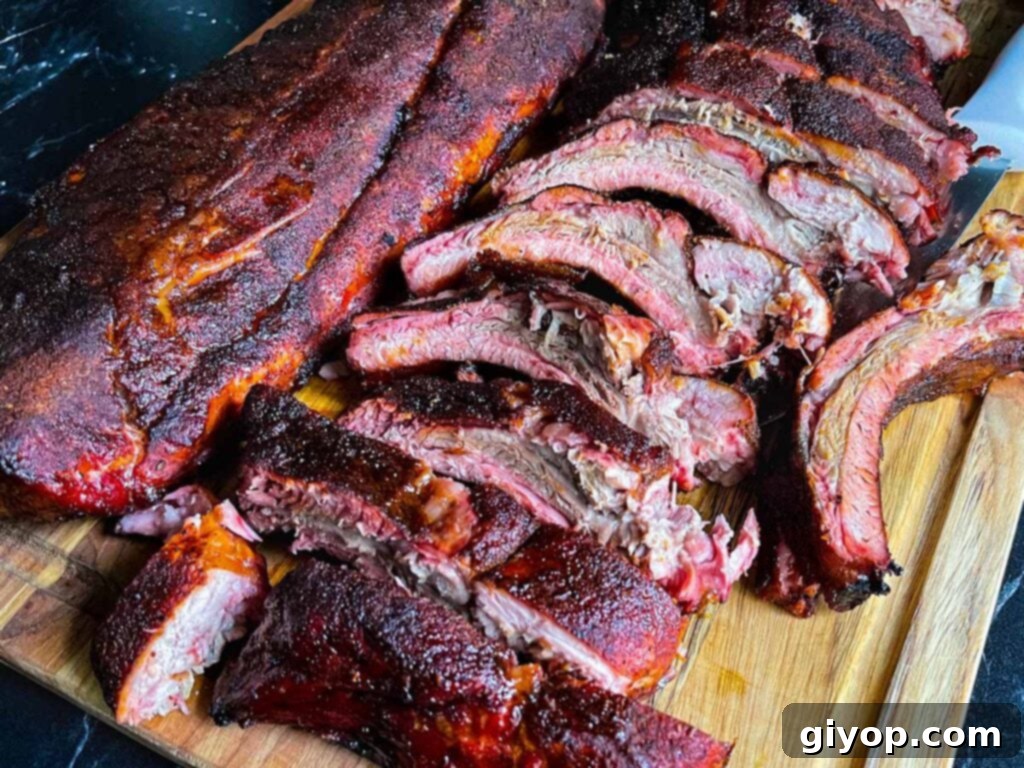
Smoked baby back ribs are a true culinary masterpiece, captivating the senses with their irresistible and deeply satisfying flavors. The magic lies in the slow smoking process, which infuses the succulent pork with an unmatched depth of taste, elevating it to extraordinary heights of deliciousness.
As the delicate meat cooks low and slow over smoldering wood, it absorbs the aromatic essence, creating an irresistible symphony of smoky, sweet, and savory notes that tantalize the palate. This method allows the natural flavors of the pork to shine through, enhanced by the carefully chosen rub and the gentle kiss of smoke.
The tender texture of the meat, combined with the subtle caramelization of the dry rub, creates a harmonious interplay of textures that is simply irresistible. Each bite offers a perfect balance of juiciness and tenderness, making these smoked baby back ribs an indulgence worth savoring. Whether you prefer them dry-rubbed or with a touch of tangy barbecue sauce, these delectable ribs are the epitome of barbecue pleasure, leaving a lasting impression and a craving for more.
This recipe emphasizes achieving that perfect “tug” – a clean bite where the meat releases easily from the bone but doesn’t completely fall off, retaining its structure and moisture. It’s the hallmark of expertly cooked ribs and a testament to the patient art of low-and-slow smoking. Prepare to embark on a flavor journey that will make these Memphis-style baby back ribs a staple in your barbecue repertoire.
Understanding Memphis Style Baby Back Ribs
For many years, barbecue enthusiasts develop their own unique ways to smoke ribs, tailored to satisfy their personal tastes and those of their family and friends. My journey into the world of barbecue has spanned over two decades, during which I’ve smoked countless racks of ribs. However, it wasn’t until recently that I decided to delve deeper into regional barbecue styles, exploring the subtle differences that make each one unique.
Through this exploration, I discovered that my own preferred method has always closely aligned with the Memphis style. This particular tradition offers a fantastic balance of flavors and textures, making it a favorite for many pitmasters.
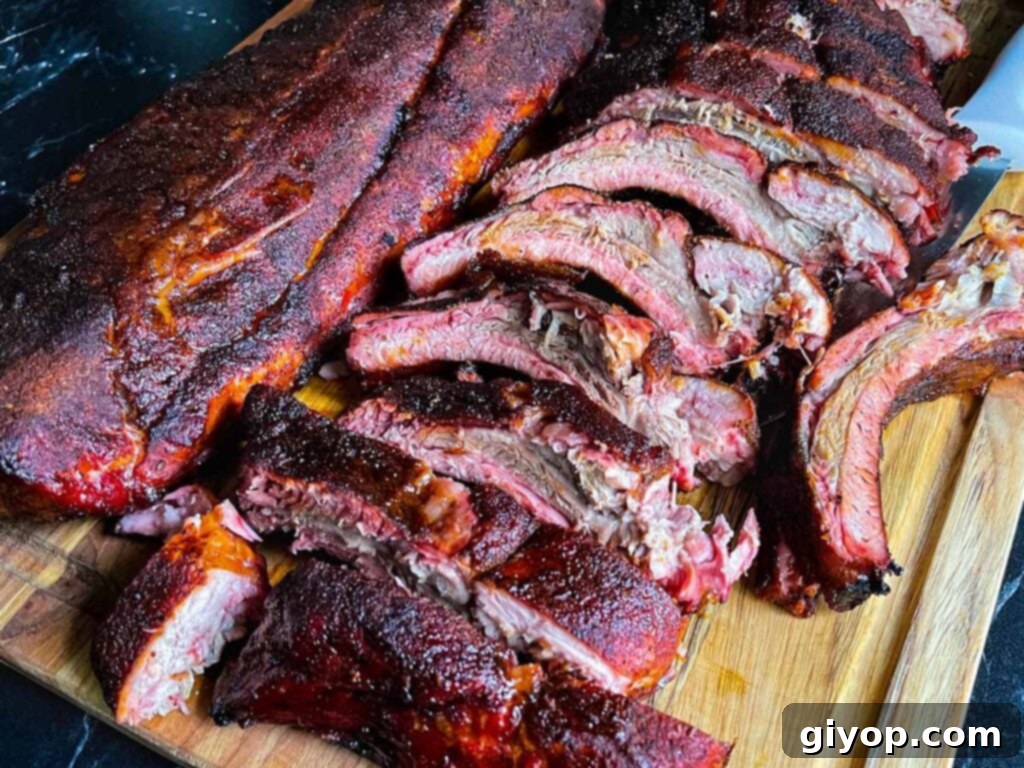
Memphis-style ribs are traditionally prepared in two main ways: “wet” or “dry.” Both methods begin with a similar preparation and smoking process. The key distinction arises in the final stages of cooking on the smoker.
A “dry” rib, which this recipe focuses on, is finished without any sauce, relying solely on the rich flavors of the spice rub and the smoky essence from the wood. This approach allows the quality of the pork and the rub to truly shine, delivering a pure, unadulterated barbecue experience. For those who enjoy a saucier finish, a “wet” rib involves applying a savory barbecue sauce during the last few minutes of smoking, allowing it to tack up and create a delicious glaze. Regardless of your preference, both styles promise a truly memorable meal.
Don’t Sweat The Recipe is supported by its readers. We may earn a commission if you purchase through a link on our site. Learn more.
Crafting the Perfect Memphis Rub for Ribs
The heart of true Memphis-style barbecue lies in its iconic dry rub. This rub is characterized by a generous hand with paprika, often maintaining a two-to-one ratio of paprika to brown sugar. Beyond this foundation, pitmasters typically add a unique blend of additional spices to suit their individual preferences, making each rub a signature creation.
Our Memphis rub is carefully balanced, designed to be savory with a touch of sweetness and a hint of warmth from cayenne pepper, rather than being overly sweet. This specific flavor profile makes it ideal not only for ribs but also for other cuts of pork, such as succulent pork butt (shoulder).
Our perfected dry rub for this recipe incorporates all the classic elements you’d expect: salt, black pepper, garlic powder, onion powder, and more. Each ingredient plays a vital role in creating a complex and balanced flavor profile that enhances the natural taste of the pork without overwhelming it. You’ll experience a delightful interplay of sweet, savory, and a subtle kick of heat that defines authentic Memphis barbecue. This versatile rub is so good, we even use it on our smoked pork shoulder!
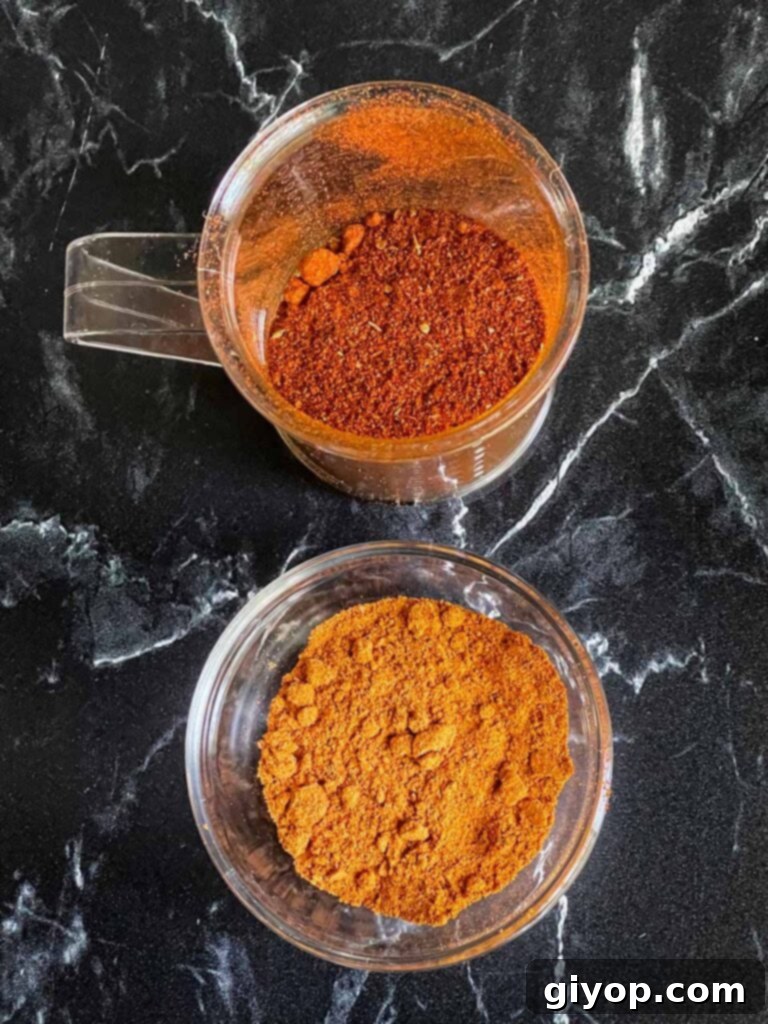
To truly elevate your ribs to competition-winning status, we take a portion of our Memphis rub and process it into a finer “finishing dust” using a spice grinder. Once your ribs are perfectly cooked, a light sprinkle of this magical dust delivers an intense burst of flavor, adding an extra layer of complexity and aroma. If you don’t already own one, consider investing in a spice grinder – they are incredibly affordable and will revolutionize many of your culinary creations, allowing you to fine-tune spice textures for maximum impact.
Baby Back Ribs vs. St. Louis Style Ribs: What’s Your Preference?
The eternal debate among rib enthusiasts often comes down to baby back versus St. Louis style. So, which is superior? The answer truly depends on your personal preference and what you look for in a perfect rib. Understanding the distinctions between these two popular cuts can help you decide which one best suits your craving.
St. Louis style ribs, which are essentially spare ribs, are cut from the belly of the hog. They are flatter and more uniform in shape, making them ideal for even cooking. Spare ribs typically contain less meat but boast a higher fat content compared to baby backs. This fat, as it slowly renders down during the smoking process, contributes to an incredibly juicy and rich rib, often described as having a melt-in-your-mouth quality.
Baby back ribs, on the other hand, are cut from the loin area, near the backbone. They are shorter, curvier, and much meatier than St. Louis style ribs. While they have less intermuscular fat, the abundant lean meat provides a substantial and satisfying bite. It’s important to note that “less fat” doesn’t mean “dry”; when cooked correctly, baby back ribs remain wonderfully moist and tender, offering a different kind of succulent experience.
Ultimately, the choice is yours. Some days, you might crave the rich, fatty juiciness of St. Louis style ribs, perfect for pulling apart. Other times, the meaty bite and elegant presentation of baby back ribs might be exactly what you’re after. Both cuts offer a fantastic canvas for the smoky, savory flavors of Memphis barbecue, allowing you to tailor your smoking experience to your mood.
Essential Rib Preparation for Optimal Flavor and Tenderness
Proper preparation is the first crucial step towards achieving barbecue perfection. Begin by carefully removing the baby back ribs from their packaging. Use paper towels to thoroughly pat them dry – this helps the rub adhere better and promotes the formation of a desirable smoky bark during cooking. Once dry, place the ribs on a large baking sheet, ready for the next steps.
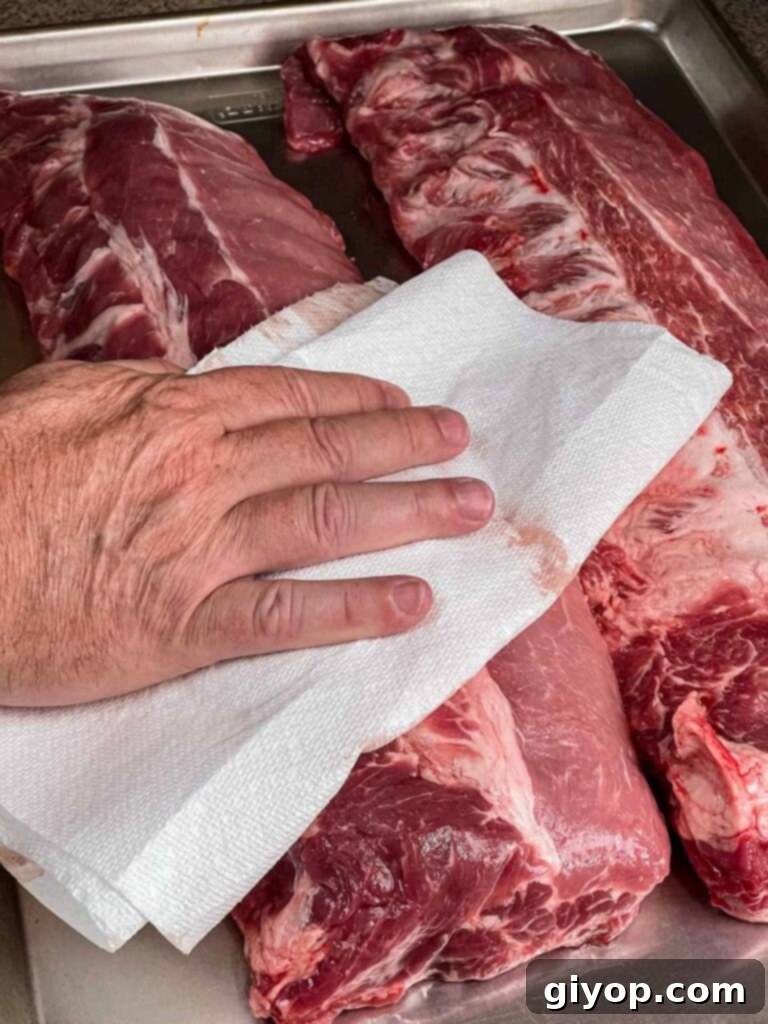
One notable characteristic of baby back ribs, especially when compared to spare ribs, is their relatively lower fat content. This means you’ll likely have minimal trimming to do. However, always inspect the rack for any excess pockets of hard fat or loose, thin pieces of meat hanging off. These smaller bits tend to burn and become chewy during the long smoking process, so it’s best to trim them away for a cleaner, more enjoyable end product. A sharp knife is your best friend here.
Next, flip the ribs over so the bone side is facing up. The most critical step in rib preparation is removing the membrane, also known as silver skin, from the back of the bones. This thin, tough layer, if left intact, can prevent the smoke and rub flavors from penetrating the meat effectively and results in a chewy texture. To remove it, gently work the tip of a butter knife or the edge of a spoon under the membrane at one end of the rack, lifting a small corner. Once you have enough to grasp, use a paper towel for a firm grip and slowly peel the membrane away from the entire rack. It might take a little practice, but it’s a game-changer for rib tenderness. Some pre-packaged ribs may already have this membrane removed, so check thoroughly before you start.
note
You may have heard about using a “binder” like mustard to help the rub stick to the ribs. While this is a common technique, it’s not strictly necessary, especially with a good quality rub and proper drying of the meat. In fact, a thick binder can sometimes hinder the spice rub from fully penetrating the meat. I used to apply binders, but I’ve found that omitting them allows for better flavor absorption and a more direct connection between the rub and the pork.
Once the ribs are trimmed and the membrane is removed, it’s time for the star of the show: the Memphis rub. Apply a generous amount of this flavorful rub to the bone side of the ribs first, pressing it gently into the meat to ensure good adhesion. Then, flip the ribs over so they are bone-side down, exposing the meaty side.
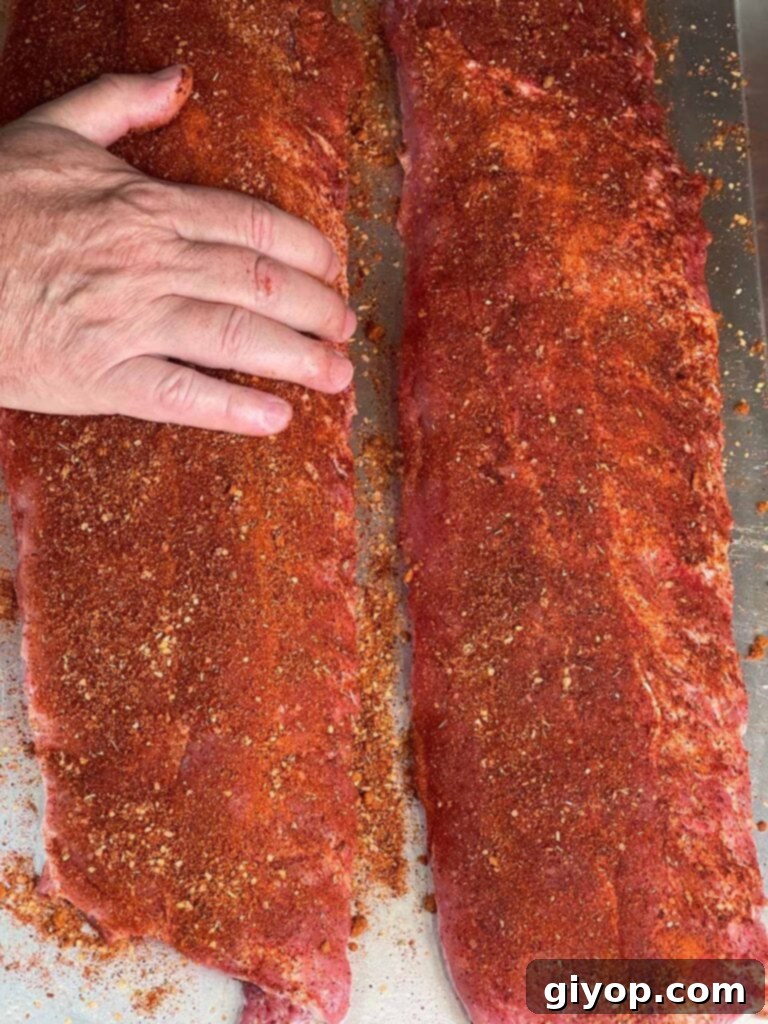
Liberally apply even more rub to the meaty side, again patting it firmly to create a robust, even coating. After applying the rub, allow the ribs to rest at room temperature for at least an hour before placing them in the smoker. This crucial resting period acts as a “quick dry brine,” giving the salt and spices in the rub time to draw out moisture from the meat, dissolve, and then reabsorb, carrying the flavors deeper into the pork. This process not only enhances the flavor but also helps the ribs retain moisture, resulting in a more tender and juicy outcome after hours of smoking.
The Art of Smoking Memphis Style Ribs: Low and Slow Perfection
Smoking ribs is a journey of patience and technique, leading to incredibly tender and flavorful results. Begin by preheating your smoker to a consistent 250 degrees Fahrenheit (121 degrees Celsius). The type of wood you choose is paramount, as it imparts much of the signature flavor. Memphis-style barbecue traditionally favors hickory wood for its strong, distinctive smoke profile, which pairs perfectly with pork. I personally adore hickory for its aggressive yet balanced smokiness, especially on ribs and pork butts. If hickory is unavailable, excellent alternatives include oak and pecan, both of which offer a rich, complementary smoke.
For an added layer of complexity and a beautiful mahogany color, I also like to incorporate a few chunks of cherry wood. Cherry wood imparts a subtle sweetness that harmonizes wonderfully with the savory rub and deep smoke. In general, any fruit wood, such as apple or peach, can add a pleasant, mild sweetness. Ultimately, wood choice is a deeply personal preference, so feel free to experiment with your favorites to find your ideal smoke profile.
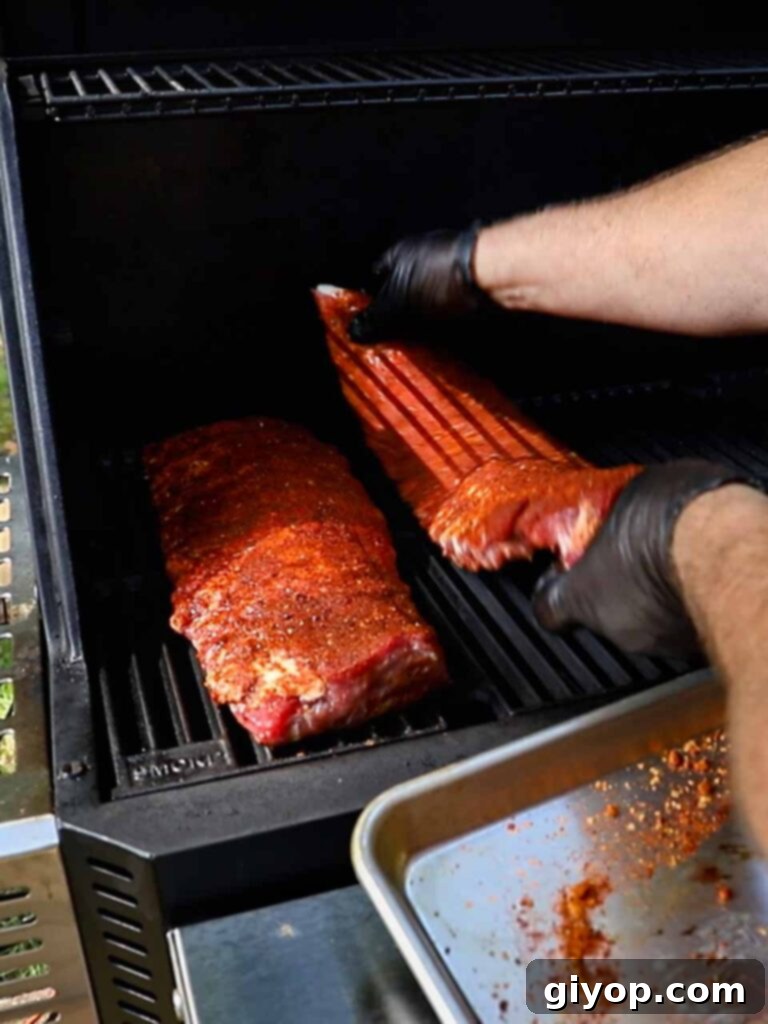
Once your smoker reaches the target temperature and is producing clean, blue smoke, it’s time to introduce the ribs. Arrange the ribs on the smoker grates, ensuring they are placed as far away from the direct heat source as possible. If you are smoking multiple racks, position the smaller, thinner racks further from the heat, as they will cook faster. Close the smoker lid and allow the ribs to smoke undisturbed for the first hour, letting that initial smoke penetrate deeply into the meat.
After the initial hour, it’s time to begin spritzing. Prepare a simple 50/50 mixture of apple cider vinegar and water in a spray bottle. Open the smoker and lightly spritz the surface of the ribs. This serves several purposes: it helps keep the surface moist, prevents it from drying out, and contributes to the formation of that beautiful, flavorful “bark.” Continue to spritz the ribs every thirty minutes for the next two hours, for a total of three hours of initial smoking.

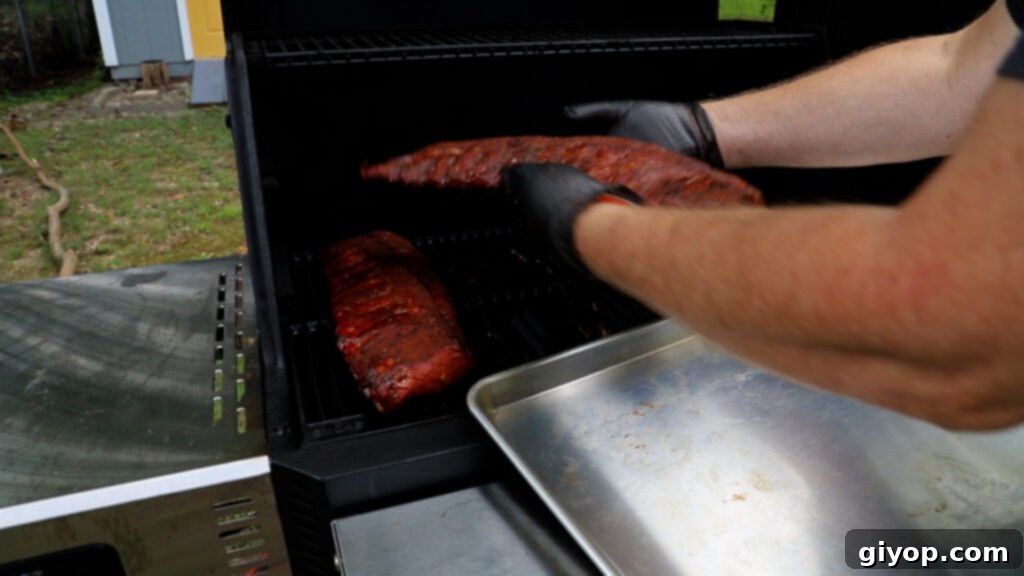
After three hours of smoking and regular spritzing, the ribs should have developed a nice smoky color and a firm bark. Carefully remove the ribs from the smoker. This marks the beginning of the “Texas Crutch” phase – wrapping the ribs to tenderize them.
Prepare two large pieces of heavy-duty aluminum foil for each rack. On each piece of foil, place three pats of butter (approximately 1 tablespoon each), a tablespoon of apple cider vinegar, and a generous squeeze of honey (about 3 tablespoons). This rich mixture will create a braising liquid that will further tenderize the ribs and infuse them with moisture and flavor.
Place the smoked ribs on top of this butter mixture, ensuring they are bone-side up (upside down), so the meaty side is submerged in the flavorful liquid. Wrap the heavy-duty aluminum foil fairly snugly around the ribs, taking care not to rip the foil, which would allow the precious liquids to escape. The tight seal is essential for the braising process.
Return the wrapped ribs (still bone-side up) to the smoker and continue cooking for an additional hour at 250 degrees F (121 degrees C). During this phase, the internal temperature will rise, and the steam trapped within the foil will work its magic, breaking down tough connective tissues and making the ribs incredibly tender.
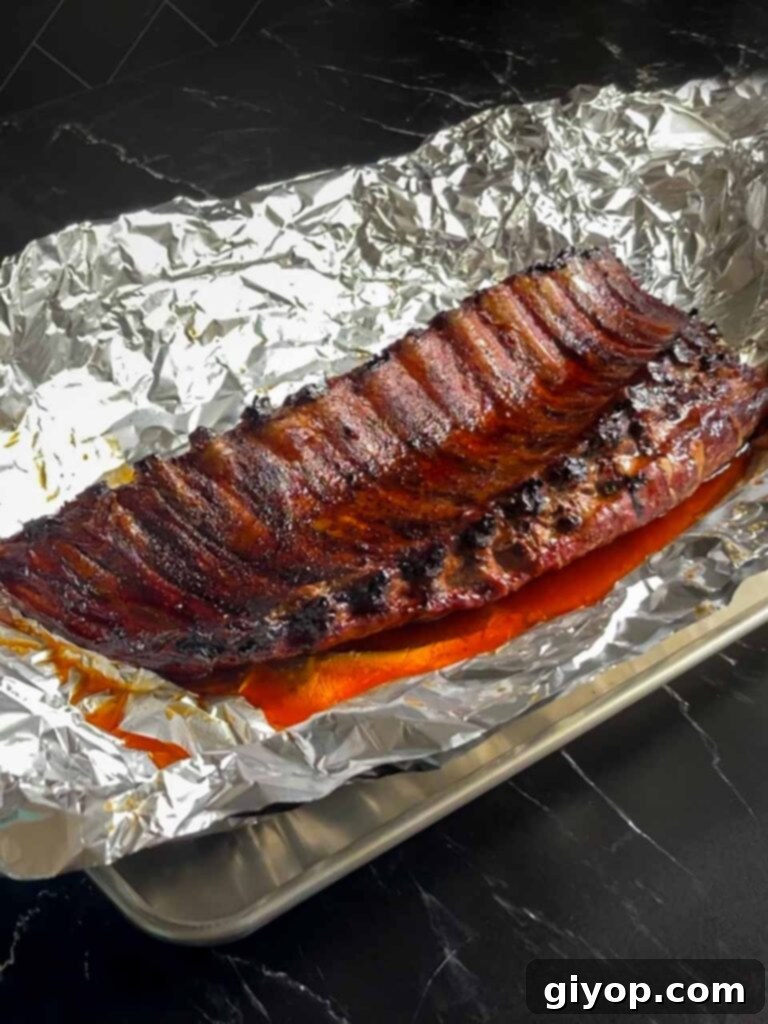
After an hour in the foil, carefully remove the ribs from the smoker and unwrap them. Discard the foil and the liquid. Place the ribs back onto the smoker grates, this time right side up, for their final hour of cooking. This last phase is crucial for firming up the bark and allowing any excess moisture to evaporate, concentrating the flavors.
During this final hour, pay close attention to the ribs’ doneness. Rib sizes can vary significantly, which means cooking times are always an estimate. You’ll want to use both an internal temperature check and the “rib bend” test to determine when they’re perfectly done. The goal for a clean, tender bite – where the meat releases cleanly from the bone but doesn’t simply fall off – is an internal temperature of around 195 degrees Fahrenheit (90 degrees Celsius).
DRY RIB VS. WET RIB
If you’re aiming for a “Memphis wet rib” experience, this is the time to apply your favorite barbecue sauce. When the ribs are nearly done, brush a thin, even layer of sauce across them and allow them to cook for another 15-20 minutes on the smoker. This will allow the sauce to caramelize and “tack up,” forming a delicious glaze without burning. For “Memphis dry ribs,” simply proceed without the sauce.
To ensure a clean, tender bite where the meat pulls effortlessly from the bone without completely falling off, aim to pull your ribs off the smoker when they reach an internal temperature of 195 degrees Fahrenheit (90 degrees Celsius). An instant-read thermometer is an invaluable tool for this precision. In addition to temperature, the “rib bend” test is an excellent indicator of doneness.
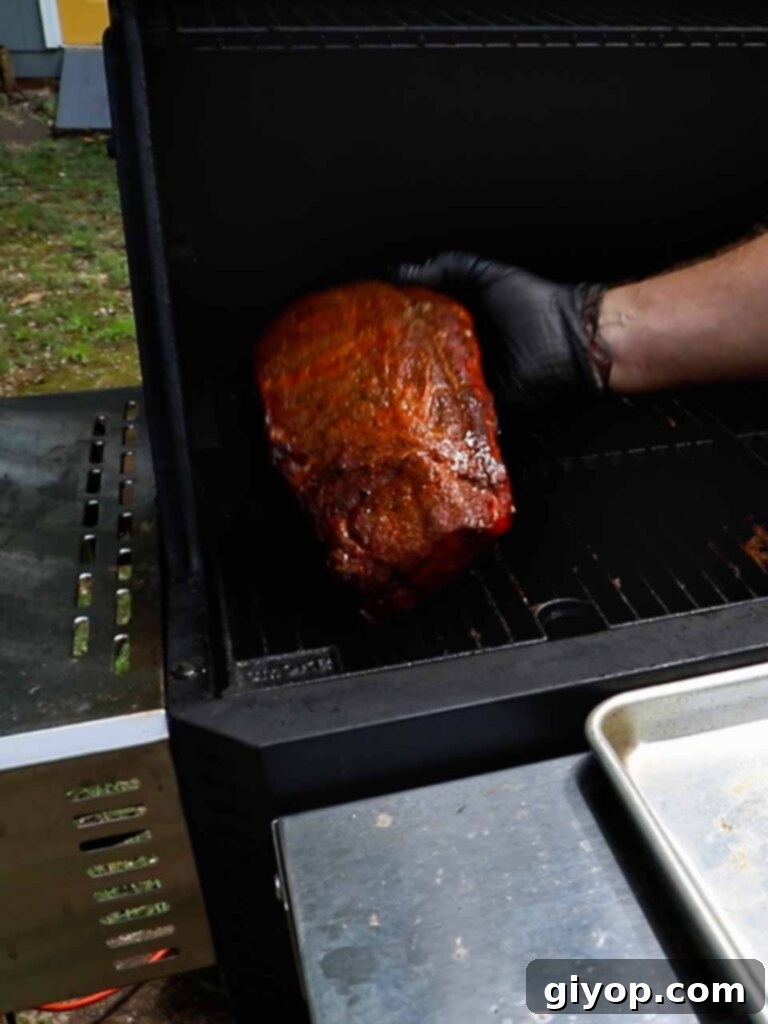
To perform the bend test, pick up the rack of ribs with a pair of tongs, gripping them approximately one-third of the way from one end. Allow the ribs to hang, observing their flexibility. A perfectly cooked rack will bend significantly, forming an angle similar to a half-circle, and the bark will start to crack without the ribs breaking apart. While I always use both the bend test and an internal temperature check, finding the perfect balance for doneness often comes down to personal preference. My partner, for instance, enjoys a bit more “tug” on her ribs than I do, so I strive for a happy medium that satisfies both preferences.
Once your ribs hit that sweet spot of 195 degrees F (90 degrees C) and pass the bend test, carefully remove them from the smoker. If you prepared the ground spice rub finishing dust, now is the moment to sprinkle it generously over the hot ribs. This final flourish will add an extra layer of aromatic flavor that will truly set your ribs apart. Allow the ribs to rest for at least 20 to 30 minutes. Don’t worry, they’ll remain wonderfully warm and juicy. This resting period is crucial, allowing the meat’s juices to redistribute, ensuring every bite is moist and tender.
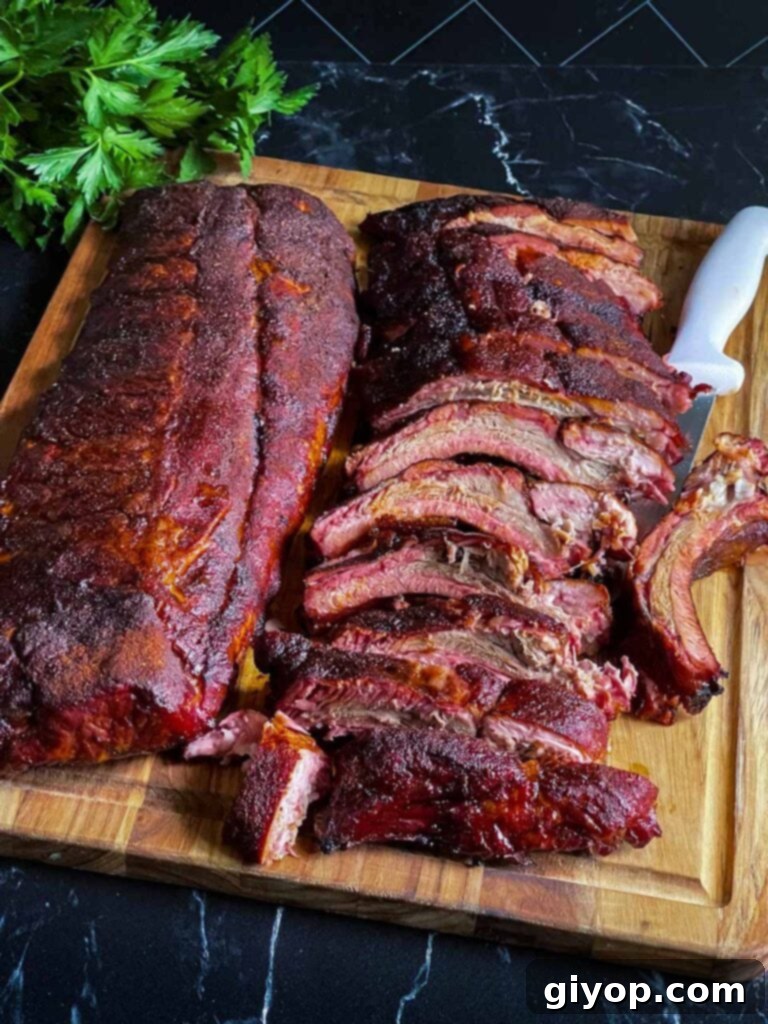
After their well-deserved rest, flip the ribs over to easily locate the bones. Using a sharp knife, carefully slice between the bones to create individual rib portions. Arrange them artfully on a platter, ready to be devoured!
Time To Eat: Serving Your Smoked Baby Back Ribs
The moment you’ve been waiting for has arrived! Serve up these magnificent Memphis-style smoked baby back ribs with an array of your favorite barbecue sides. The possibilities are endless, but here are some classic pairings that perfectly complement the rich flavors of the ribs.
No barbecue feast is complete without classic barbecue baked beans, their sweet and savory notes echoing the essence of the ribs. For a refreshing contrast and a burst of color, consider serving a vibrant summer succotash or a zesty Mexican street corn salad. These lighter sides cut through the richness of the pork beautifully.
Other fantastic options include creamy coleslaw, fluffy cornbread, crisp potato salad, or perfectly roasted vegetables. Whether you go all out with a grand spread or keep it simple, the star of the show will undoubtedly be your perfectly smoked ribs. Of course, you can always follow my lead: simply cut the ribs right on the board and enjoy them directly. Whichever way you choose to indulge, you are guaranteed to love these authentic Memphis-style dry ribs!
Expert Tips And Creative Variations
- Charcoal Grill Adaptation: Don’t have a dedicated smoker? No problem! You can easily adapt this recipe for a charcoal grill. Simply set up your grill for indirect heat, placing coals on one side and the ribs on the other, ensuring a consistent temperature of 250°F. Add wood chunks directly to the hot coals for smoke.
- Generous Seasoning is Key: Always apply your dry rub or marinade liberally to the ribs. For maximum flavor penetration, allow the ribs to rest in the refrigerator for several hours or, ideally, overnight. This extended marination time makes a significant difference in the final taste.
- Maintain Moisture: To prevent your ribs from drying out during the long smoke, regularly spritz them with a liquid mixture as instructed. Alternatively, you can place a water pan inside your smoker to maintain humidity, which helps keep the meat moist and aids in bark development.
- Asian-Inspired Ribs: For a delightful fusion twist, marinate your ribs in a mixture of soy sauce, fresh ginger, minced garlic, and honey. Serve them with a drizzle of homemade teriyaki glaze or a sprinkle of sesame seeds for an irresistible Asian-inspired barbecue experience.
- Bourbon-Glazed Ribs: Add a sophisticated depth of flavor by brushing your ribs with a rich bourbon-based BBQ sauce or glaze during the final hour of smoking. This creates a beautiful, caramelized crust with a subtle, smoky sweetness and a hint of the bourbon’s warmth.
- Carolina-Style Tang: Embrace the tangy side of barbecue by using a vinegar-based marinade or a traditional Carolina “mop sauce” during the smoking process. This style emphasizes acidity and spice. Serve with a refreshing side of tangy Southern mustard coleslaw for an authentic Carolina barbecue experience.
- Experiment with Wood: While hickory is classic for Memphis style, don’t shy away from experimenting with other wood types like apple, pecan, or oak. Each offers a distinct smoke flavor that can subtly alter the character of your ribs.
- The 3-2-1 Method (for fall-off-the-bone): If you prefer ribs that literally fall off the bone, consider the 3-2-1 method: 3 hours smoking unwrapped, 2 hours wrapped (with liquid), and 1 hour unwrapped (with or without sauce). This will push the tenderness further, typically to 200-205°F internal temperature.
Frequently Asked Questions About Smoked Ribs
The 3-2-1 rule is a popular technique for smoking ribs, particularly spare ribs, designed to achieve maximum tenderness. It involves smoking the ribs at a low temperature for three hours, then wrapping them tightly in foil with a liquid (like apple juice or broth) to gently braise in their own juices for two hours. Finally, they are removed from the foil and finished for one hour, often with a layer of sauce or glaze applied.
The 3-2-1 method is excellent if you enjoy ribs that are incredibly tender and literally fall off the bone. However, for a true competition-style bite, many pitmasters (including myself) prefer a slightly firmer texture that offers a gentle “tug” as you bite, leaving the meat on the bone. This recipe aims for that clean-bite tenderness, but you can certainly adapt it to the 3-2-1 method if you prefer a fall-off-the-bone experience.
Yes, wrapping ribs in foil (often referred to as the “Texas Crutch”) is highly recommended after the initial smoking phase, typically around 2-3 hours. This technique helps to accelerate the cooking process, tenderize the meat by braising it in its own juices and added liquids, and prevent the ribs from drying out. You then unwrap them for a final smoking period to firm up the bark.
While pork is technically safe to eat at 145 degrees F (63 degrees C), the magic for ribs happens at higher temperatures, where fats render and collagen breaks down into gelatin. For a clean bite with a slight tug, pull your ribs off around 195 degrees F (90 degrees C). If you prefer your ribs to be truly “fall off the bone,” aim for 200-205 degrees F (93-96 degrees C). Always use an instant-read thermometer for accuracy.
Yes, spritzing your ribs during the initial smoking phase is a beneficial practice. Begin spritzing with a mixture of apple cider vinegar and water after the first hour, and then continue every 30 minutes until you wrap the ribs. This keeps the surface moist, helps create a beautiful bark, and can infuse additional flavor. Alternatively, you can use a barbecue mop sauce for similar benefits.
When wrapping your ribs in foil, adding a flavorful liquid contributes to tenderness and moisture. Popular choices include apple juice, which adds a subtle sweetness; beer for a malty depth; Dr. Pepper for a unique sweet and tangy note; or simply apple cider vinegar for a traditional tangy braise. Water can also be used, but other liquids enhance the flavor profile.
The “best” rub for ribs often depends on the regional barbecue style you’re aiming for and your personal taste preferences. Our favorite is a Memphis-style rub, which offers a robust balance of savory, slightly sweet, and a decent spiciness, without being overly sugary. It highlights the natural flavor of the pork wonderfully.
More Mouthwatering Barbecue Recipes to Explore
Fall Off The Bone St Louis Style Ribs
St. Louis Ribs – Learn How To Do Smoked Ribs Like A Pro
Smoked Pork Shoulder (Pork Butt)
Memphis Style Baby Back Ribs Recipe
Print
Pin
Rate
Equipment
- Smoker We use a Masterbuilt Gravity Series 1050
Ingredients
The Ribs
- 1 rack Pork baby back ribs
Memphis Style Rub
- 1/2 cup Paprika
- 2 tbsp Smoked paprika
- 2 tbsp Garlic powder
- 1/4 cup Chili powder
- 3 tbsp Kosher salt
- 3 tbsp Black pepper
- 3 tbsp Brown sugar packed
- 2 tbsp Onion powder
- 1 tbsp Dried oregano
- 1 tbsp Cumin
- 2 tsp Dried mustard
- 1 tsp Cayenne powder
The Wrap
- 2 tbsp Apple cider vinegar
- 3 tbsp Butter
- 3 tbsp Honey
Instructions
- Remove the membrane (silver skin) from the back side of the ribs for optimal tenderness.
- Trim off any small, loose bits of meat or excess fat that may burn during the smoking process.
- Generously apply the Memphis dry rub on both sides of the ribs, patting it in firmly to ensure a good coating.
- Allow the seasoned ribs to rest for at least one hour before smoking. This dry brine step helps the flavors penetrate the meat and retains moisture.
- Preheat your smoker to a consistent 250 degrees F (121 degrees C) and add your preferred wood chips or chunks (hickory is highly recommended for Memphis style).
- Place the ribs into the smoker, positioning them away from the direct heat source. Smoke for 3 hours, spritzing every 30 minutes after the first hour with a 50/50 mix of apple cider vinegar and water.
- After 3 hours, remove the ribs. Wrap them tightly in heavy-duty aluminum foil with 2 tbsp apple cider vinegar, 3 tbsp butter, and 3 tbsp honey. Ensure the ribs are bone side up inside the foil, allowing the meaty side to braise in the liquids.
- Return the wrapped ribs to the smoker and cook for an additional hour.
- Remove the ribs from the smoker. Carefully unwrap and remove them from the aluminum foil, discarding the foil and liquids.
- Place the unwrapped ribs back onto the smoker, right side up, for an additional hour to firm up the bark.
- Check for doneness using an instant-read thermometer. Pull the ribs off when they reach an internal temperature of 195 degrees F (90 degrees C) for a clean bite. For fall-off-the-bone tender ribs, aim for 200-205 degrees F (93-96 degrees C). You can also use the bend test for visual confirmation.
- Remove from smoker and sprinkle with finishing dust (if using). Allow the ribs to rest for 20 to 30 minutes before cutting into individual ribs. This crucial rest period allows juices to redistribute.
- Serve immediately with your favorite sides and enjoy!
Notes
This recipe is specifically tailored for Memphis Style Dry Ribs, emphasizing the natural flavor of the pork and rub. If you prefer a Memphis Wet rib, apply a thin layer of your favorite barbecue sauce to the ribs during the last 15-20 minutes of smoking, allowing it to tack up and create a delicious glaze before pulling them off the smoker.