
Mastering the art of creating “Fall Off The Bone” St. Louis style spare ribs might initially seem like a formidable task, but by meticulously following our detailed, step-by-step guide, you are guaranteed to consistently produce the most incredibly **tender, succulent, and flavor-packed ribs** that will utterly delight you, your family, and all your friends. Bid farewell to dry, tough ribs, and prepare to serve a BBQ masterpiece that will be talked about long after the plates are clean.

Louis Style Ribs.
Why This Rib Recipe Will Become Your New Obsession
These are not merely ribs; they represent a culinary journey designed to
deliver an unparalleled eating experience. The meat achieves such an
extraordinary level of tenderness that it quite literally melts in your
mouth, effortlessly separating from the bone with the slightest touch. Our
exclusive rub, carefully crafted, strikes a harmonious balance between a
subtle sweetness and a compelling whisper of heat that provides a
delightful finish. While some barbecue aficionados prefer a rib with a
slight “tug” – a clean bite where the meat still offers minimal resistance
– this particular recipe is dedicated to achieving the ultimate
fall-apart tenderness, a characteristic many consider the gold standard of
barbecue ribs.
It’s important to acknowledge the rich diversity within the world of rib
preparation. There are numerous paths to deliciousness, each offering
unique results. Whether you opt for traditional smoking methods, baking in
a conventional oven, or employing various “low and slow” cooking
strategies, and experimenting with countless rubs and sauces, you can
achieve fantastic flavors and textures. However, the method detailed here
is our personal favorite, consistently yielding St. Louis style ribs that
are truly exceptional and embody the fall-off-the-bone ideal.
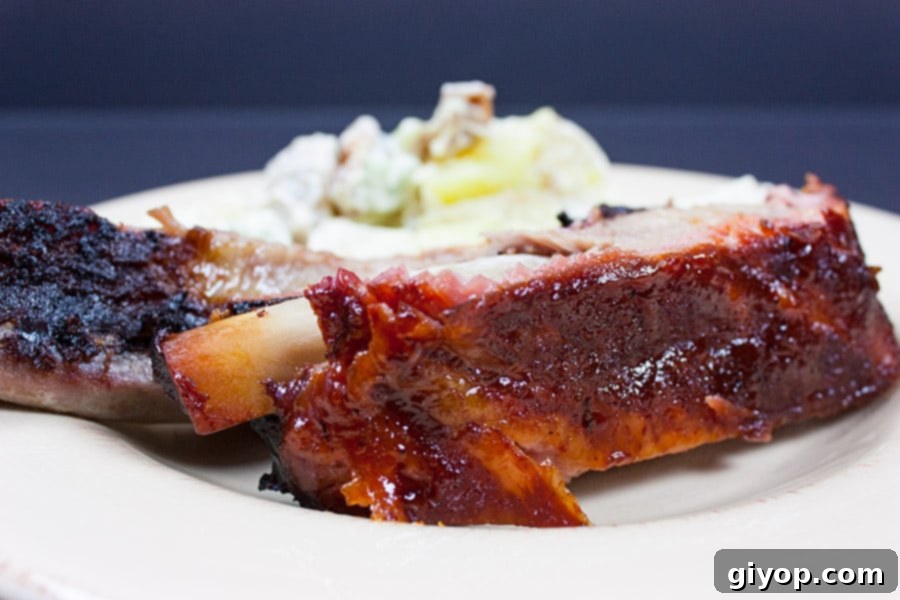
Should your preference lean towards a rib that maintains a bit more
structure and a noticeable “bite” rather than completely falling off the
bone, we highly recommend exploring our alternative St. Louis style ribs
recipe. That method, which foregoes the wrapping stage, still guarantees
superb tenderness but with a satisfyingly clean bite and a slight,
pleasant tug. You can discover that delightful recipe
here.
Planning the perfect accompaniment for these tender and flavorful ribs? We
suggest classic barbecue staples that perfectly complement their rich
taste. Our top picks include sweet and smoky
grilled corn on the cob, refreshing
macaroni salad, and deeply savory
homemade BBQ baked beans. These sides are guaranteed to complete your barbecue feast.
What Others Are Saying: Raves for Our Tender Ribs
Don’t just take our word for the incredible quality of these ribs. The
overwhelmingly positive feedback from those who have tried this St. Louis
style rib recipe speaks volumes about its success. Here’s a small
selection of heartfelt testimonials from delighted home cooks and
barbecue enthusiasts who have experienced the magic of these crazy tender
and undeniably delicious ribs:
“My wife declared these ribs better than those from
Chili’s, even better than her own, and this was my very first attempt
at St. Louis ribs. Thank you for being so generous and sharing your
recipe!”“These are, without a doubt, the best ribs we’ve ever
eaten. The instructions are absolutely spot-on! A massive thank you
for sharing; we’re enjoying them all the way up here in Saskatchewan,
Canada!”“I am 60 years old and in my entire life, I have
NEVER had better, juicier, or more fall-off-the-bone ribs from ANY
restaurant or barbecue joint. This recipe is simply
unbeatable!!!!!!!”“Huge thanks for this. I grew up barbecuing weekly
over an open pit, and I’ve always struggled to get pork ribs just
right. This process absolutely delivered. Delicious!”
Watch the Video: Your Guide to Perfect Fall-Off-The-Bone Ribs
For a comprehensive visual guide to every step of this recipe, be sure to
watch our detailed video. It highlights all the critical techniques,
including the membrane removal, rub application, and the moment of truth
when the meat effortlessly separates from the bone during carving. You’ll
see firsthand just how truly tender these ribs become.
Crafting Fall-Off-The-Bone St. Louis Style Ribs: Your Step-by-Step Guide
Step 1: The Essential Membrane Removal for Better Ribs
The very first and arguably one of the most crucial steps in preparing your
St. Louis style ribs is to remove the tough, silvery membrane
(scientifically known as the peritoneum) from the bone side of the rack.
Unlike the collagen and other connective tissues within the meat itself,
which will beautifully render down and become gelatinous and tender during
the long cooking process, this specific membrane will stubbornly remain
chewy and unappetizing. Leaving it on would significantly detract from the
overall enjoyment of your pork ribs, resulting in a less desirable texture.
St. Louis style ribs are essentially pork spare ribs that have been
meticulously trimmed for a more uniform and appealing presentation.
Typically, when you purchase them, this membrane will still be present on
the back of the ribs. In contrast, pork baby back ribs often have this
membrane conveniently pre-removed by the butcher. While some claim it’s a
matter of personal preference, we strongly advocate for its removal. This
not only dramatically improves the eating experience but also allows your
flavorful rub to penetrate the meat more deeply and enhances smoke
absorption, contributing to a richer, more profound barbecue flavor.
To remove it, simply use the back of a spoon or a dull knife to gently
work your way under a corner of the membrane, lifting it slightly. Once
you have a small flap, grasp it firmly with a paper towel (which provides
a much better grip than bare hands) and slowly, yet steadily, pull it
across the rack until it comes off in one complete piece.
Step 2: Mastering the Application of Our Signature Rub
Once the membrane has been successfully removed, the next exciting step is
to generously apply your chosen rub to both sides of the
ribs. The world of barbecue rubs is incredibly diverse, offering a vast
array of flavor profiles. You have the freedom to craft your own unique
blend from scratch, or select from the myriad of excellent commercial rubs
available on the market. For this particular recipe, we are delighted to
share our tried-and-true “secret” rub – a meticulously balanced blend that
has consistently delivered outstanding results. We wholeheartedly
encourage you to give it a try; we are confident you will not be
disappointed! This versatile rub is not only perfect for St. Louis style
ribs but also works wonders on baby back ribs, pork shoulders, and various
other cuts of pork, making it an invaluable addition to any aspiring grill
master’s repertoire.
The Essential Ingredients for Our Irresistible Rib Rub
- White Sugar: This provides a foundational sweetness that beautifully caramelizes during cooking, contributing to the desirable “bark” on the ribs.
- Dark Brown Sugar: Adding a deeper, molasses-rich sweetness, brown sugar further aids in creating that sticky, dark, and wonderfully caramelized crust.
- Smoked Paprika: A cornerstone ingredient for any truly great barbecue rub, smoked paprika lends a vibrant color and an essential layer of smoky depth.
- Garlic Powder: A fundamental flavor enhancer, garlic powder offers aromatic savory notes that perfectly complement the rich taste of pork.
- Kosher Salt: Crucial for both seasoning the meat and, more importantly, for initiating the dry brining process that tenderizes the ribs from within.
- Oregano: Introduces an earthy, slightly peppery, and aromatic herbal note that adds welcome complexity to the rub’s overall flavor profile.
- Cayenne Pepper: This provides a subtle yet noticeable kick of heat. Adjust the quantity to suit your personal preference: add more for an extra spicy punch, or omit it entirely for a milder experience.
- Cumin: Enhances the rub with its warm, earthy, and slightly smoky aroma, contributing to a complex, savory character.
- Black Pepper: A classic and indispensable seasoning that offers a pungent, sharp contrast to the sweetness, balancing the flavor.
- Dry Mustard: A traditional component in many barbecue rubs, dry mustard is known for its ability to help tenderize meat and adds a distinct sharp, piquant note.
To prepare the rub, simply combine all the listed ingredients thoroughly
in a small bowl, ensuring they are well mixed. Your potent flavor enhancer
is now ready to elevate your ribs.
Apply the rub liberally and evenly, ensuring both sides of the ribs are
completely and generously coated. Do not be timid; a thick, even layer of
rub is paramount to developing a rich, flavorful bark and a deep, complex
taste.
Once seasoned, allow the ribs to rest. For optimal results, place them in
the refrigerator, covered tightly with plastic wrap, for a minimum of 2
hours, or ideally, overnight (up to 24 hours). This extended resting period
is absolutely critical for the dry brining process to take full effect.
Pro Tip / The Science Behind the Rest:
The salt present in your rub acts as a powerful dry brine. Initially, it
draws moisture from the surface of the meat. Subsequently, through the
scientific process of osmosis, this moisture, now infused with all the
delicious rub flavors, is reabsorbed deep into the pork muscle fibers.
This not only infuses the meat with incredible flavor but also
restructures the muscle proteins, preventing the meat from shrinking
and expelling its natural juices during cooking. The cumulative result
is a significantly juicier, more tender, and profoundly flavorful rib.
The longer you allow the ribs to rest, the deeper the flavor
penetration and the more effective the tenderization.
For the most profound and delicious flavor infusion, we cannot stress
enough the benefit of allowing your ribs to rest overnight, if your schedule
permits. This patience will be richly rewarded.
Step 3: Strategizing Your “Low and Slow” Barbecue Cook
As you prepare to embark on this deliciously rewarding culinary adventure,
it’s time to set up your grill or smoker. Our method is designed for
approximately **5 hours of total cooking time**, maintaining a
consistently low and steady temperature range of 225 to 250 degrees
Fahrenheit (107-121°C). This carefully planned duration includes roughly
2 to 2.5 hours for the initial smoking phase, followed by 1.5 to 2 hours
when the ribs are wrapped securely in foil, and a final 30 minutes over
slightly higher heat to achieve that perfect crisp finish. When you factor
in the brief periods required to move the ribs on and off the grill and
for essential handling, a total of about 5 hours is a highly realistic
estimate. We recommend planning your day accordingly to ensure a relaxed,
stress-free, and thoroughly enjoyable cooking experience.
For our setup, we prefer using charcoal as the primary heat source,
complemented by either hickory or pecan wood chips or chunks to impart
that distinctive, deep smoky flavor that defines great barbecue. If your
ribs have been resting in the refrigerator after the rub application, it’s
a good practice to take them out about an hour before you intend to place
them on the smoker. This allows them to come closer to room temperature,
which promotes a more even and consistent cook.
Note on Choosing and Using Smoke Chips:
There are two primary approaches to incorporating wood chips for smoke:
pre-soaking them in water or using them dry. Both methods are effective,
though they yield slightly different results. Soaked chips tend to
produce smoke for a more extended period, releasing a gentler, more
sustained flavor. In contrast, dry chips ignite and burn more quickly,
delivering a more intense burst of smoke in a shorter timeframe. If you
choose the dry method, be prepared to monitor your grill assiduously and
replenish the chips as necessary to ensure a continuous and consistent
flow of smoke throughout the initial cooking phase. You can utilize a
dedicated smoker box or simply create a makeshift pouch from heavy-duty
aluminum foil to contain your wood chips and place them directly on the
hot coals.
Following the resting period, you might observe some visible moisture on the
surface of the ribs, a direct result of the effective dry brining process.
This is entirely normal and indicates that the rub is working as intended.
If you prefer to keep your hands clean, feel free to wear food-safe gloves
when handling the ribs, though any residue washes off quite easily. Before
placing them onto the smoker, apply one final, generous layer of your rub
to both sides. This ensures maximum flavor development and contributes to
that rich, delicious bark. Finally, carefully transfer your beautifully
seasoned ribs to the grill or smoker.
Step 4: The Smoking Process – Infusing Unforgettable Flavor
During this initial smoking phase, it is crucial to maintain a consistent
temperature range of 225-250 degrees Fahrenheit (107-121°C). Position your
St. Louis style ribs over indirect heat – meaning they are placed adjacent
to, rather than directly above, your charcoal or heat source – and smoke
them for approximately 2 to 2.5 hours. This “low and slow” exposure to
the fragrant wood smoke is absolutely essential for developing that iconic
barbecue flavor and creating the coveted, beautiful pink smoke ring just
beneath the surface of the meat.
To ensure the ribs remain incredibly moist and to further enhance their
flavor, we recommend periodically spritzing them. Prepare a simple 50/50
mixture of water and apple cider vinegar (or apple juice) in a clean spray
bottle, and spritz the ribs about every 30-45 minutes. This light misting
not only prevents the surface from drying out but also adds a subtle touch
of acidity that can help tenderize the exterior of the meat and deepen the
color of the bark.
By this point, your ribs should look absolutely fantastic, having developed
a rich, deep smoky color and a budding “bark.” However, this is merely the
first stage of achieving true tenderness. It’s now time to transition to
the next critical phase: the “Texas Crutch,” which involves wrapping the
ribs in foil.
Carefully remove the partially smoked ribs from the grill or smoker. On a
clean counter, lay out two generously sized sheets of heavy-duty aluminum
foil, overlapping them slightly to create a strong seal. Place your ribs
onto the center of this foil. Now, generously drizzle honey over one side
of the ribs and distribute three to four tabs of butter evenly across the
surface. Flip the ribs over and repeat the application of honey and butter
on the other side. Once both sides are treated, meticulously seal the
ribs tightly within the aluminum foil, creating a secure, airtight packet.
will yield truly superior results!
Important Detail for Wrapping:
When you return the tightly wrapped ribs to the grill, ensure they are
placed with the meat side facing down. This strategic positioning allows
the rendered fat, melted honey, and butter to effectively baste the meat
from below, creating an incredibly moist and intensely flavorful
micro-environment within the foil packet. Position the sealed edge of
the foil packet facing upwards to minimize any potential leaks.
Place the foil-wrapped ribs back onto the grill or smoker for an
additional 1.5 to 2 hours, continuously maintaining the same consistent
temperature range of 225-250 degrees Fahrenheit. This extended period of
wrapped cooking is where the true magic of tenderization occurs: the steam
and accumulated liquids work in concert to break down any remaining tough
connective tissues, transforming the ribs into that coveted fall-off-the-bone
consistency, while also effectively halting further smoke absorption,
preventing them from becoming overly smoky.
After this phase, carefully remove the ribs from the grill and gently
unfold the foil. Be prepared, as there will likely be a considerable amount
of hot, flavorful liquid accumulated within the packet. You should now
observe a clear indication of tenderness: the meat will have visibly pulled
back from the ends of the bones. At this crucial juncture, the internal
temperature of the thickest part of the ribs should ideally register around
195 degrees Fahrenheit (90°C) with an instant-read meat thermometer.
Achieving Optimal Rib Tenderness: Temperature is Key!
For truly fall-off-the-bone ribs that are both juicy and tender, aiming
for an internal temperature of 195°F (90°C) and above is ideal. While
pork ribs are technically safe to consume at 145°F (63°C), they will be
noticeably tough and chewy at this point. As the internal temperature
reaches 180°F (82°C), you’ll start to experience a more tender rib, as
the collagen and other connective tissues begin their critical breakdown
process. Pushing the temperature further, into the 195-205°F (90-96°C)
range, ensures that all those tough tissues have fully rendered,
resulting in a lusciously juicy, incredibly tender, and perfectly
fall-apart rib.
Now, for the exhilarating final touch that defines exceptional barbecue:
the char and glaze. Return to your grill and, if necessary, increase the
heat, perhaps by adding more charcoal to create a more direct searing
environment. Our objective is to develop a beautiful, slightly charred
crust and a rich bark on these tender ribs. Depending on the intensity of
your grill’s heat, allow the ribs to cook for approximately 5 minutes on
each side. For those of us who appreciate a pronounced char, don’t shy
away from getting some nice browning and crispy edges.
Finally, generously brush your favorite barbecue sauce onto both sides of
the ribs, ensuring an even and thorough coating. Return them to the grill
for an additional 10 minutes per side, allowing the radiant heat to
caramelize the sauce into a sticky, glossy, and incredibly flavorful glaze.
This step not only infuses an extra layer of sweetness and tang but also
creates that irresistible, slightly tacky texture.
Feel free to use any preferred barbecue sauce, or for an elevated, gourmet
flavor experience, we highly recommend giving our exceptional
Bourbon Chipotle Barbecue Sauce
a try. The magical combination of the sweet honey from the wrapping stage
and the perfectly caramelized BBQ sauce will culminate in wonderfully
sticky, unbelievably tender, and utterly irresistible ribs.
while I was removing them from the smoker!
Once sauced and beautifully caramelized, carefully remove the ribs from
the grill and allow them to rest undisturbed for 5 to 10 minutes. This
crucial resting period permits the internal juices to redistribute
throughout the meat, ensuring that every bite is maximally succulent and
flavorful.
devoured!
Finally, with the utmost satisfaction, slice the ribs into individual
portions and serve them immediately with your favorite complementary side
dishes. Prepare for the accolades – we guarantee you will undeniably be
the culinary hero of the day!
of perfectly smoked ribs!
For a truly complete and satisfying meal, we frequently serve our
fall-off-the-bone ribs alongside our unique and refreshing
herb potato salad (no mayo!)
and classic, creamy
deviled eggs.
delicious ribs!
In the accompanying video, you can witness firsthand the incredible
tenderness of these ribs during the carving process. Even with a sharp
knife, the meat yields effortlessly, practically detaching from the bone
with minimal pressure. My wife herself, a discerning critic, even
remarked that they “might be too tender!” – a true testament to the
success of this method. So, summon your courage, gather your ingredients,
and give this recipe a try. We’d absolutely love to hear about your
experience and see your results, so please share them with us! After
mastering this technique, these St. Louis style ribs are destined to
become your signature dish, making you the undisputed barbecue champion of
your household.
A Detailed Look at the 3-2-1 Method vs. Our Refined Approach
For those who have already ventured into the rewarding world of smoking
ribs, the “3-2-1 method” is a very common and frequently discussed
technique. If this term is new to you, allow us to provide a quick
explanation: the 3-2-1 method involves smoking ribs “low and slow” (at a
temperature of 225-250°F / 107-121°C) for an initial period of three
hours. This is followed by wrapping them tightly in foil and cooking them
for an additional two hours. Finally, they are unwrapped and cooked for
one more hour. This entire process culminates in a total cooking time of
six hours.
However, after countless racks of ribs have passed through our smokers and
onto our tables, we have come to a conclusion: we do not fully endorse
this traditional 3-2-1 method. This perspective is, in fact, shared by a
significant number of experienced backyard barbecue enthusiasts and
professionals. Our primary concern is that the extended cooking time,
particularly the full two hours spent wrapped in foil, often renders the
meat excessively tender. This over-tenderization can lead to the meat
losing its distinct “rib meat” consistency, transforming it into a texture
that is more akin to braised pork rather than a perfectly cooked rib.
Our meticulously refined recipe, by contrast, focuses on achieving that
highly desirable fall-off-the-bone experience within a more optimal and
slightly shorter cook time of approximately 5 hours maximum. This approach
strikes a superior balance between ultimate tenderness and maintaining the
inherent structural integrity and texture of the ribs. The fundamental
difference in our method lies in prioritizing the internal temperature
reached during the wrapped phase, rather than adhering to a rigid, fixed
timeframe.
It’s also crucial to remember that individual preferences for rib
tenderness can vary considerably. For example, my wife enjoys ribs with a
bit more “tug” – a texture where the meat pulls cleanly from the bone but
still offers a satisfying, slight chew. To achieve this specific texture
for her, I would typically remove the ribs from the smoker when they reach
an internal temperature of around 190°F (88°C). Personally, I gravitate
towards the ultimate fall-off-the-bone experience, and for that, I aim for
an internal temperature of 198-200°F (92-93°C). It’s fascinating how even
these relatively small fluctuations in temperature can lead to noticeable
and distinct differences in the final tenderness and texture of the ribs.
Ultimately, the most delicious rib is the one that perfectly caters to
your individual taste. Our primary objective is to equip you with precise
information, detailed techniques, and a deeper understanding so that you
can confidently customize and consistently create your
personal winning rack of ribs, perfectly tailored to your
preferred level of tenderness and flavor.
Expert Tips and Exciting Flavor Variations
-
Always Cook to Temperature, Not Strictly to Time: While
this recipe provides excellent time guidelines, it’s vital to remember
that various external factors can influence cooking duration. Elements
like ambient humidity, the external air temperature, and the specific
characteristics and efficiency of your individual grill or smoker can all
affect how quickly your ribs cook. Therefore, always rely on an accurate
meat thermometer as your ultimate guide. When your ribs reach an internal
temperature of 195°F (90°C) after the wrapped phase, they are perfectly
primed for that final 30-minute to one-hour finishing period, which will
ensure they achieve that coveted fall-off-the-bone perfection. -
Customize and Explore Your Favorite Flavors: Feel
absolutely empowered to experiment with your most beloved rubs and
barbecue sauces! If you choose to use our signature homemade rub, we
highly recommend pairing it with a classic, well-balanced Memphis-style
barbecue sauce to beautifully complement its sweet and savory profile.
For an even more unique and sophisticated flavor dimension, consider
elevating your ribs with our exceptional
Bourbon Chipotle Barbecue Sauce! -
Versatility Across Different Rib Types: This tried-and-true
cooking method is remarkably versatile and is not limited solely to St.
Louis style ribs. It also yields equally fantastic and delicious results
for both succulent pork baby back ribs and larger, full pork spare ribs.
Simply be mindful to adjust your cooking times slightly to account for
any differences in the thickness and overall size of the particular rack
of ribs you are preparing.
Frequently Asked Questions About Achieving Fall-Off-The-Bone Ribs
The ultimate secret lies in a dedicated “low and slow” cooking method.
This gentle, prolonged heat allows all the tough connective tissues
(primarily collagen) within the meat to gradually break down and
transform into rich, tender gelatin. This transformation is what creates
the incredibly tender and succulent meat. An internal temperature of
around 195°F (90°C) is generally the critical point to begin achieving
that highly desired fall-off-the-bone texture.
heat?
While pork ribs are technically safe to eat once they reach an internal
temperature of 145°F (63°C), they will still be quite tough and chewy
at this stage. For a noticeably more tender bite, aim for an internal
temperature of 180°F (82°C), as this is when the breakdown of collagen
and fat truly begins. To achieve truly juicy, luxuriously tender, and
perfectly fall-off-the-bone ribs, you should target an internal
temperature range of 195-205°F (90-96°C).
bone?
The exact time required is less critical than the internal temperature
the ribs reach and the specific cooking method you employ. For ribs to
achieve that sought-after fall-off-the-bone tenderness, they need to
reach an internal temperature of approximately 195°F (90°C). This can
be accomplished in a shorter timeframe, such as 2.5 hours, if using a
slightly higher, consistent cooking temperature. Conversely, a very low
and slow smoking process might take up to 6 hours or even longer. Our
recommended recipe typically achieves this perfect tenderness in about
5 hours.
More Delicious Barbecue Recipes to Expand Your Skills
If you’ve thoroughly enjoyed mastering these incredible St. Louis style
ribs, we warmly invite you to delve into and explore other equally
mouth-watering barbecue recipes from our extensive collection. Expand your
grilling repertoire, hone your smoking techniques, and discover new
culinary favorites that will impress every time!
-
Smoked Baby Back Ribs Recipe
– Discover how to make another fantastic and highly popular rib variation. -
Smoked Pork Shoulder (Pork Butt)
– The ultimate guide to preparing succulent, tender pork perfect for
pulled pork sandwiches and a myriad of other dishes. -
Smoked Shotgun Shells Recipe
– An incredibly fun, creative, and explosively flavorful appetizer that
will be the hit of any gathering.
Are you an avid user of Pinterest? If so, be sure to click the button
below to easily add this incredible Fall-Off-The-Bone St. Louis Style Ribs
recipe to one of your boards and save it for future barbecue adventures!
Pin This Delicious Rib Recipe to Pinterest
Fall Off The Bone St. Louis Style Ribs Recipe
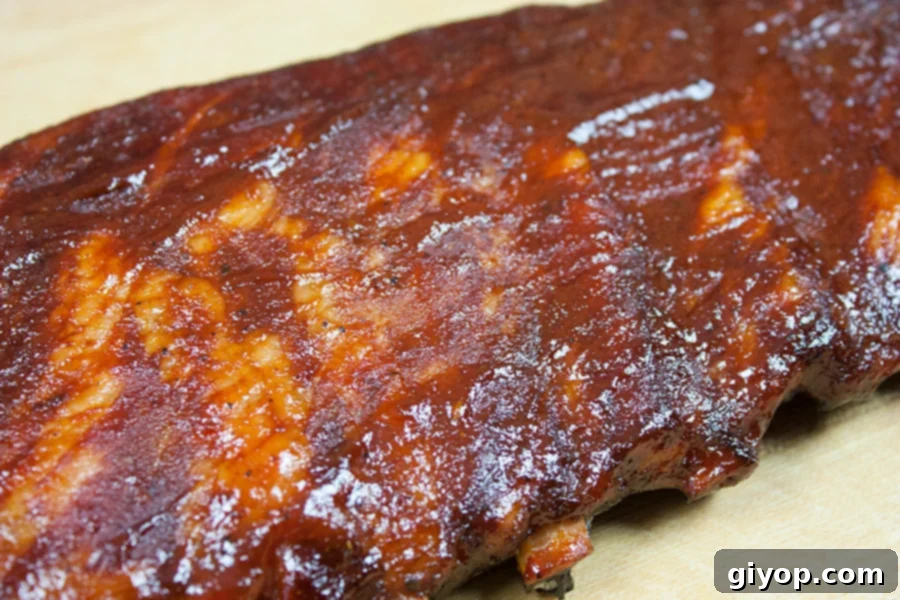
This foolproof technique guarantees perfect St. Louis Style Ribs every
single time, confidently transforming you into the undisputed grill
master of your home!
Rating: 4.87 out of 5 stars based on 53 votes.
Print Recipe
|
Pin Recipe
- Course: Barbeque, BBQ, Grilling
- Cuisine: American
- Prep Time: 15 minutes
- Cook Time: 5 hours
- Total Time: 5 hours 15 minutes
- Servings: 4
- Calories: 684kcal
- Author: Brad Harris
Ingredients
Main Ingredients
- 1 Rack St. Louis Style ribs
- 6-8 Tablespoons butter
- 4 Tablespoons Honey
- 8 Oz BBQ Sauce
Rub Ingredients
- ⅔ C White Sugar
- ⅓ C Dark Brown Sugar
- ½ C Smoked Paprika
- ¼ C Garlic Powder
- ⅓ C Kosher Salt
- 1 tsp Oregano
- 1 tsp Cayenne Pepper
- 1 tsp Cumin
- 1 tsp Black Pepper
- 1 tsp Dry Mustard
US Customary
–
Metric
(Note: Actual unit conversion functionality typically requires JavaScript
implementation.)
Instructions
-
Carefully remove the tough membrane from the back of the St. Louis
style ribs. (Ingredient: 1 Rack St. Louis Style ribs) -
Generously apply a liberal amount of the prepared rub to both sides of
the ribs, ensuring full coverage. -
Wrap the seasoned ribs tightly in plastic wrap and refrigerate them
for a minimum of 2 hours, or ideally, overnight (up to 24 hours), to
allow for effective dry brining. -
After the resting period, unwrap the ribs and apply another generous
and liberal layer of rub to both surfaces. - Begin the preheating process for your smoker or grill.
-
Achieve and meticulously maintain a stable cooking temperature
consistently between 225 to 250 degrees Fahrenheit (107-121°C). - Add your preferred smoking wood chips or chunks (hickory or pecan
are highly recommended for rich flavor). -
Carefully place the ribs onto the smoker/grill grates, ensuring the
meat side is facing up and they are positioned over indirect heat. -
Smoke the ribs for an initial period of 2 to 2.5 hours. During this
phase, spritz the ribs approximately every 30-45 minutes with a 50/50
mixture of water and apple cider vinegar (or apple juice) to keep them
moist and enhance the bark. - Carefully remove the ribs from the grill or smoker.
-
Lay the ribs onto two large sheets of heavy-duty tin foil, placed on a
clean surface. Evenly distribute honey and tabs of butter over both
sides of the ribs. (Ingredients: 6-8 Tablespoons butter, 4 Tablespoons
Honey) -
Seal the ribs tightly within the tin foil packet, ensuring the meat
side is facing down. Place them back on the grill for an additional 1
to 1.5 hours, maintaining the same stable temperature. -
Remove the wrapped ribs from the grill, then carefully unwrap them from
the tin foil, being mindful of accumulated juices. -
If necessary, increase the heat of your grill to create a more direct
and intense searing zone for the final step. -
Place the unwrapped ribs back on the grill, directly over the heat, for
approximately 5 minutes per side, to develop a beautiful char and crisp
bark. - Generously cover both sides of the ribs with your chosen BBQ sauce.
(Ingredient: 8 Oz BBQ Sauce) -
Cook each side for an additional 10 minutes, allowing the barbecue
sauce to caramelize and form a sticky, glossy glaze. -
Remove the ribs from the grill and allow them to rest undisturbed for 5
to 10 minutes before carving. - Cut the ribs into individual portions along the bone and serve immediately.
Notes
Always prioritize cooking to the internal temperature of the ribs, rather
than strictly adhering to time. The cooking duration can vary based on
the specific rack of ribs and the precise temperature fluctuations of
your grill or smoker.
The provided rub ingredients will yield slightly more than 2 cups of rub.
A standard and effective application is approximately 1/4 to 1/3 cup of
rub per individual rack of ribs.
Nutrition Information (per serving)
Calories: 684kcal | Carbohydrates: 111g | Protein: 10g | Fat: 26g |
Saturated Fat: 13g | Polyunsaturated Fat: 3g | Monounsaturated Fat: 7g |
Trans Fat: 1g | Cholesterol: 68mg | Sodium: 10199mg | Potassium: 763mg
| Fiber: 7g | Sugar: 89g | Vitamin A: 7527IU | Vitamin C: 1mg |
Calcium: 110mg | Iron: 5mg