
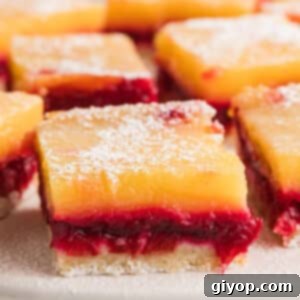
Indulge in the vibrant and irresistible delight of Cranberry Lemon Bars, a truly spectacular dessert that beautifully marries sweet and tart flavors. These dazzling bars feature a rich, buttery shortbread crust, topped with a luscious, tangy cranberry layer, followed by a smooth, creamy lemon filling, all finished with a delicate dusting of powdered sugar. A perfect symphony of textures and tastes, they offer a refreshing zest that brightens any palate. Ideal for holiday gatherings, special occasions, or simply a delightful treat to elevate your everyday, these two-toned beauties are guaranteed to impress with their stunning visual appeal and unforgettable taste. Prepare to be enchanted by a dessert that’s both elegant and effortlessly delicious, a true testament to the magic of simple, fresh ingredients.
For quick navigation, use the links below to jump to specific sections of this recipe:
- Why You’ll Love These Cranberry Lemon Bars
- Essential Ingredients for Success
- Ingredient Notes and Flavor Variations
- Tools You’ll Need for Baking
- Step-by-Step Baking Guide
- Creative Variations to Personalize Your Bars
- Expert Baking Tips for Perfect Bars
- Storage and Make-Ahead Instructions
- Perfect Pairings: What to Serve with Your Bars
- Frequently Asked Questions
- More Delightful Dessert Recipes
Why You’ll Love These Cranberry Lemon Bars
These Cranberry Lemon Bars are more than just a dessert; they are an experience. Here’s why they will quickly become a cherished recipe in your collection:
- Vibrant and Festive Appearance: The stunning combination of bright red cranberry and sunny yellow lemon layers makes these bars a true showstopper on any dessert table, especially during the holidays. They bring a cheerful pop of color that instantly elevates your presentation.
- Perfect Harmony of Flavors: Experience an exquisite dance between sweet and tart. The buttery shortbread crust provides a comforting base, which is then beautifully contrasted by the zesty cranberry and bright lemon fillings. Each bite offers a refreshing burst that satisfies without being overly sweet.
- Effortlessly Elegant: Despite their sophisticated appearance and complex flavor profile, these bars are surprisingly easy to make. The straightforward steps mean that even novice bakers can achieve impressive results, making them an ideal choice for both casual baking and special events.
- Excellent for Planning Ahead: Planning a party or a family meal? These cranberry lemon bars are perfect for preparing in advance. Their flavors meld and deepen beautifully overnight, and they store wonderfully, allowing you to focus on other preparations closer to serving time.
- Crowd-Pleasing Indulgence: With their universally appealing combination of citrus and berry, these bars are a guaranteed hit with guests of all ages. They’re a delightful twist on classic lemon bars, offering a fresh perspective on a beloved dessert that will surely receive rave reviews.
Whether you’re celebrating a special occasion or simply craving a sophisticated yet comforting treat, these two-toned sweet bars are a perfect choice. They are designed to be a crowd favorite, offering a unique blend of flavors that will satisfy any sweet tooth while leaving a lasting impression.
Essential Ingredients for Success
Crafting these delectable Cranberry Lemon Bars requires a selection of fresh, high-quality ingredients. Below is an overview of what you’ll need. Detailed measurements and step-by-step instructions are provided in the full recipe card at the bottom of this page.
Ingredient Notes / Variations
- Cranberries: For the best results and brightest flavor, fresh cranberries are highly recommended. Their natural tartness is essential for balancing the sweetness of the bars. If fresh cranberries are out of season or unavailable, frozen cranberries can be used, but ensure they are thawed completely and any excess liquid is drained before cooking to maintain the right consistency for your cranberry layer.
- Water: A small amount of water is crucial in the cranberry layer to help the berries break down and create a smooth, jam-like consistency. It prevents the mixture from becoming too thick or sticky, ensuring a perfectly spreadable layer.
- Granulated Sugar: This provides the necessary sweetness to balance the intense tartness of both the cranberries and lemons. It’s used in all three layers – the cranberry, shortbread crust, and lemon filling – to achieve a harmonious flavor profile.
- Salt: A pinch of salt enhances all the other flavors in the bars. In the shortbread crust, it balances the sweetness and adds depth, while in the cranberry and lemon layers, it subtly sharpens their tart notes. Regular table salt or kosher salt can be used interchangeably.
- All-Purpose Flour: This is the primary structural ingredient for both the shortbread crust and a thickening agent for the lemon filling. Ensure you measure it correctly using the scoop and level method to avoid a dense crust or overly thick filling.
- Large Eggs: Eggs play a vital role in binding the ingredients together, particularly in the lemon curd layer where they provide structure and a rich, creamy texture. Using room temperature eggs can lead to a smoother, more emulsified filling.
- Fresh Lemon Juice: This is arguably the star of the show! Freshly squeezed lemon juice is absolutely essential for the bright, tangy flavor that defines these bars. Bottled lemon juice will not yield the same vibrant taste, so investing in fresh lemons is key.
- Lemon Zest: Do not underestimate the power of lemon zest! It contains concentrated lemon oils that infuse the bars with a powerful, aromatic citrus punch, far beyond what juice alone can provide. It’s used in both the shortbread crust and the lemon filling for maximum flavor.
- Unsalted Butter: Used generously in the shortbread crust, unsalted butter creates a rich, tender, and incredibly flavorful base. Melting the butter before combining it with dry ingredients ensures an even distribution and helps create that signature crumbly yet firm shortbread texture.
- Vanilla Extract: A touch of vanilla in the shortbread crust adds a warm, sweet aroma that complements the zesty lemon beautifully, adding another layer of complexity to the flavor profile.
- Powdered Sugar: This is the finishing touch, used for a light dusting on top of the cooled bars. It adds a delicate sweetness, a beautiful presentation, and can also elegantly conceal any minor imperfections in the lemon layer.
Tools You’ll Need for Baking
Having the right tools makes the baking process smoother and more enjoyable. Here are the essential items you’ll need for these Cranberry Lemon Bars:
- Large Saucepan: Necessary for cooking down the cranberries into a thick, jam-like consistency. A non-stick saucepan is ideal for easy stirring and clean-up.
- Large Mixing Bowls: You’ll need at least two, one for the dry ingredients of the shortbread and another for the wet ingredients of the lemon filling. Having an extra bowl for the cranberry mixture is also helpful.
- Rubber Spatula or Wooden Spoon: Perfect for mixing the shortbread dough until just combined and for gently folding ingredients into the lemon filling.
- 9×9 Inch Square Baking Pan: This specific size ensures the right thickness for your bars, allowing for distinct, even layers. Lining it with parchment paper is highly recommended for easy removal.
- Whisk: For thoroughly combining dry ingredients and lightly whisking eggs for the lemon layer.
- Fine-Mesh Strainer: An optional but recommended tool for straining the lemon mixture, ensuring a super smooth and lump-free lemon curd.
- Measuring Cups and Spoons: For accurate measurement of all ingredients, critical for successful baking.
- Citrus Zester/Grater: To get that essential fine lemon zest from fresh lemons.
- Sharp Knife: For clean, precise slices once the bars have cooled completely.
Explore my Amazon storefront for some of my favorite bakeware and kitchen essentials to make your baking adventures even more enjoyable!
Step by Step: Instructions
Creating these delightful Cranberry Lemon Bars involves three distinct yet simple stages: preparing the cranberry layer, baking the shortbread crust, and finally, crafting the zesty lemon topping. Follow these detailed steps for a perfect outcome. Remember, the full, printable recipe card with exact measurements is at the bottom of the page.
Preparing the Cranberry Layer
- Preheat Oven and Prepare Pan: Begin by preheating your oven to 350°F (175°C). Lightly spray a 9×9 inch square baking pan with non-stick cooking spray. Line the pan with parchment paper, ensuring the paper extends up the sides to create “handles,” which will make it much easier to lift the cooled bars out later.
- Cook the Cranberries: In a large saucepan, combine the fresh cranberries, water, granulated sugar, and a pinch of salt. Place the saucepan over medium heat on the stove.
- Simmer to Jam-like Consistency: Stir the mixture frequently. As the cranberries begin to pop and the water comes to a boil, usually within 1-2 minutes, reduce the heat to medium-low. Continue to simmer, stirring often, for about 8-10 minutes. The cranberries should fully break down, and the mixture should thicken to a jam-like consistency. It’s important not to leave the stove unattended during this stage to prevent burning. Remove from heat and set aside to cool while you prepare the crust.
Crafting the Shortbread Crust
- Combine Dry Ingredients: In a large mixing bowl, whisk together the all-purpose flour, salt, granulated sugar, and lemon zest. This ensures all the dry ingredients are evenly distributed.
- Add Wet Ingredients: In a separate small bowl, stir the vanilla extract into the melted unsalted butter. Pour this wet mixture into the bowl of dry ingredients.
- Mix to Form Dough: Using a rubber spatula or a wooden spoon, mix the ingredients until they are just combined and no dry clumps of flour remain. The dough will have a crumbly, sandy texture, which is exactly what you’re looking for. Be careful not to overmix, as this can make the crust tough.
- Press into Pan: Transfer the crumbly dough into your prepared 9×9 inch baking dish. Use your fingertips to firmly press the dough evenly across the bottom of the pan, making sure to reach into all corners. For a very compact and uniform crust, you can use the flat bottom of a measuring cup to press the dough down firmly.
- Pre-Bake the Crust: Using the tines of a fork, poke holes randomly across the surface of the pressed shortbread dough. This helps prevent it from puffing up too much during baking.
- Bake Shortbread: Bake the crust in the preheated 350°F (175°C) oven for 18-20 minutes, or until the edges are lightly golden brown and the crust is set.
- Cool the Crust: Once baked, remove the pan from the oven and let the shortbread crust cool in the pan for about 30 minutes. This allows it to firm up before the next layer is added.
Creating the Smooth Lemon Layer
- Prepare Egg Mixture: While the crust is cooling, in a medium bowl, lightly whisk the room temperature large eggs. Then, slowly pour in the fresh lemon juice, continuing to whisk gently until combined.
- Whisk Dry Ingredients: In a separate bowl, whisk together the granulated sugar, all-purpose flour (measured using the scoop and level method), and lemon zest for the lemon layer.
- Combine Lemon Filling Ingredients: Gradually add the dry lemon mixture to the egg and lemon juice mixture. Whisk until thoroughly combined, but be careful not to overmix, as over-aerating the eggs can lead to a bubbly top on your bars.
- Strain for Smoothness (Optional but Recommended): For an exceptionally smooth lemon filling, pour the mixture through a fine-mesh strainer into another clean bowl. This step effectively removes any small clumps of flour or egg that might remain, ensuring a silky-smooth finish.
Assembling and Baking the Bars
- Add Cranberry Layer: Once the shortbread crust has cooled slightly, spoon the cranberry layer evenly over the crust. Use the back of a spoon to spread the cranberry mixture smoothly, pushing it gently into every crevice and against the walls of the pan to create a uniform layer. Ensure the cranberry mixture has cooled sufficiently so it doesn’t melt the butter in the crust.
- Pour Lemon Layer: Very slowly and carefully, pour the lemon layer over the cranberry layer. Start pouring into the center of the pan, allowing the lemon mixture to spread naturally to all sides. Pouring slowly is crucial to prevent the cranberry layer from rising and mixing with the lemon layer, which helps maintain those beautiful distinct layers. If a little mixing occurs, don’t worry, the bars will still taste delicious!
- Final Bake: Place the pan back into the 350°F (175°C) oven and bake for 35-40 minutes. The edges of the lemon layer should be slightly firm and lightly browned, while the center may have a slight jiggle. It will continue to set as it cools.
- Cool Completely: Remove the pan from the oven and let it cool completely on your stovetop or a wire rack for 30 to 60 minutes, or until the pan is no longer warm to the touch. This extended cooling time is vital for the bars to set properly and prevents cracking. For best results, consider refrigerating for a few hours after initial cooling.
- Slice and Serve: Once fully cooled, run a thin knife along the edges of the pan, between the parchment paper and the pan wall, to loosen any stuck lemon batter. Use the parchment paper “handles” to lift the entire slab of bars out of the pan and place it onto a cutting board. Gently peel back the parchment paper and cut the large slab into individual squares. Depending on your desired size, you should yield 12 to 16 beautifully layered bars. Dust with powdered sugar just before serving for a professional and festive finish.
Creative Variations to Personalize Your Bars
While delicious as is, these Cranberry Lemon Bars are wonderfully adaptable. Feel free to experiment with these variations to make them truly your own:
- White Chocolate Infusion: For an extra layer of sweetness and creaminess, fold about ½ cup of white chocolate chips or chopped white chocolate into the cranberry layer before spreading it over the crust. The white chocolate melts slightly during baking, creating pockets of delightful richness that complement the tartness.
- Chocolate Drizzle Finish: Instead of, or in addition to, the powdered sugar, drizzle melted white chocolate or even dark chocolate over the cooled bars. This adds a sophisticated touch and another dimension of flavor. You can create a simple design by drizzling in zigzags or straight lines.
- Nutty Shortbread Crust: For added texture and a nutty flavor, finely chop ½ cup of pecans or almonds and fold them into the shortbread dough. This creates a more complex crust that pairs beautifully with the fruit layers.
- Spiced Cranberry Layer: Enhance the warmth of the cranberry layer by adding ¼ teaspoon of ground cinnamon or a tiny pinch of ground cloves along with the other cranberry ingredients. These spices can bring a cozy, autumnal feel to the bars.
- Coconut Zing: For a tropical twist, add ¼ cup of finely shredded unsweetened coconut to the shortbread crust or sprinkle a small amount over the top of the lemon layer before baking. The toasted coconut notes will add a unique flavor and aroma.
- Berry Mix-Up: While cranberries are traditional, you could experiment with other berries. Try adding a handful of raspberries or blackberries to the cranberry layer for a mixed berry sensation, keeping in mind the sweetness might need slight adjustment.
Expert Baking Tips for Perfect Bars
Achieving perfectly layered and flavorful Cranberry Lemon Bars is easy with these expert tips:
- Cooling the Cranberry Mixture: Ensure the cranberry mixture has cooled sufficiently before spooning it over the baked shortbread crust. Pouring a hot mixture onto the crust can cause the butter in the crust to melt prematurely, making it soggy or causing the layers to bleed together. A lukewarm or room temperature cranberry layer is ideal.
- Parchment Paper is Your Best Friend: Never skip lining your baking dish with parchment paper, leaving an overhang on the sides. This simple step is a game-changer for effortlessly removing the entire slab of bars from the pan. It prevents sticking and allows for clean, easy slicing.
- Use Fresh Lemon Juice: This cannot be emphasized enough. Freshly squeezed lemon juice is paramount for the vibrant, tangy flavor that distinguishes these bars. Bottled lemon juice often contains preservatives and lacks the bright, natural zest that gives the lemon layer its signature taste. The difference is truly noticeable.
- Room Temperature Eggs: For the lemon layer, using room temperature eggs helps them combine more smoothly with the other ingredients, leading to a more homogenous and velvety curd.
- Gentle Mixing for Lemon Layer: When whisking the lemon filling, do so gently. Over-mixing can incorporate too much air, which can lead to bubbles forming on the surface of your lemon layer during baking, or cause it to crack more easily when cooling.
- Clean Slices with a Warm Knife: To achieve impeccably clean slices, especially important for presentation, use a sharp knife that has been run under warm water and then wiped dry. Reheat and wipe the knife after each cut for the best results.
- Don’t Overbake: The lemon layer should still have a slight “jiggle” in the center when removed from the oven. It will continue to set as it cools, resulting in a perfectly creamy texture. Overbaking can lead to a dry, rubbery, or cracked lemon layer.
Storage and Make Ahead Instructions
These Cranberry Lemon Bars are not only delicious but also incredibly convenient for planning. Here’s how to store them and make them in advance:
Refrigeration
Once the bars have completely cooled, transfer them to an airtight container or wrap them tightly with plastic wrap. Store them in the refrigerator, where they will remain fresh and delicious for up to three days. The cold temperature helps to maintain their firm texture and vibrant flavors.
Freezing
For longer storage, these bars freeze beautifully for up to two months. To freeze, first ensure the bars are thoroughly cooled. Place them in a single layer on a baking sheet and freeze for about an hour until firm. This prevents them from sticking together. Then, wrap each bar individually in plastic wrap, followed by a layer of aluminum foil, or place them in a single layer in a freezer-safe airtight container. When you’re ready to enjoy them, simply take them out of the freezer and let them thaw on the counter for a few hours, or overnight in the refrigerator, before serving. Dust with powdered sugar after thawing, if desired.
Make Ahead Benefits
One of the many reasons these bar cookies are a fantastic choice, especially for busy holiday seasons or special events, is their excellent make-ahead capability. You can easily prepare them the night before you plan to serve them. This allows the flavors to meld and deepen, often making them taste even better on the second day. Preparing them in advance frees up valuable kitchen time on the day of your event, reducing stress and allowing you to enjoy your guests or other preparations.
Perfect Pairings: What to Serve with Your Bars
These versatile Cranberry Lemon Bars are fantastic on their own, but they also complement a variety of meals and beverages. Here are some perfect pairings to elevate your dining experience:
- Hearty Fall and Winter Meals: The bright, refreshing flavor of these bars cuts through the richness of heavier savory dishes, making them an ideal palate cleanser. Consider serving them after comforting meals like a Chili Tater Tot Casserole or a nourishing Carrot Lentil Soup.
- Holiday Feast Finale: As a festive dessert, they shine particularly bright after a substantial holiday meal. Imagine them following a succulent Air Fryer Turkey Breast or a roasted ham, providing a light and zesty counterpoint to the savory flavors.
- Coffee or Tea: For a simple yet sophisticated pairing, serve these bars with a freshly brewed cup of coffee, a warm herbal tea, or a robust black tea. The slight bitterness of coffee or the aromatic qualities of tea can beautifully enhance the bars’ sweet and tart notes.
- Sparkling Wine or Prosecco: For an elegant adult pairing, a glass of chilled sparkling wine or prosecco makes a wonderful accompaniment. The bubbles and crispness of the wine will highlight the citrusy brightness of the lemon.
- Vanilla Ice Cream or Whipped Cream: If you desire a slightly richer dessert experience, a small scoop of high-quality vanilla bean ice cream or a dollop of freshly whipped cream can add a delightful creamy contrast to the tangy bars.
- Fruit Platter: Complement the bars with a fresh fruit platter featuring berries, grapes, or melon. This enhances the fruity theme and offers a lighter side to the dessert spread.
Frequently Asked Questions
How do I keep the layers separate?
To ensure distinct cranberry and lemon layers, the most important tip is to pour the lemon mixture very slowly and gently over the cranberry layer. Start pouring in the center of the pan and allow it to spread naturally. Also, make sure your cranberry layer has cooled and set slightly before adding the lemon layer. A cold cranberry layer helps prevent bleeding.
Why do my bars have a layer of bubbles on top?
A bubbly surface on your lemon bars typically indicates that the lemon filling was beaten too vigorously, incorporating too much air, or that the bars were over-baked. To prevent this, whisk the lemon filling gently until just combined. Additionally, keep a close eye on the baking time; the center should have a slight jiggle, firming up completely as it cools.
Can I use frozen cranberries instead of fresh?
Yes, you can use frozen cranberries in a pinch. However, it’s crucial to thaw them completely and drain any excess liquid before cooking them for the cranberry layer. This prevents an overly watery filling that could affect the texture and consistency of your bars.
How can I tell if the lemon layer is properly set?
The lemon layer is properly set when the edges appear slightly firm and a light golden color, and the center still has a slight jiggle when the pan is gently shaken. It will continue to firm up considerably as it cools, so don’t be tempted to overbake it. Overbaking can lead to a dry, rubbery texture or cracking.
Why did my shortbread crust become tough?
A tough shortbread crust is usually a result of overmixing the dough. Once the wet and dry ingredients are combined, mix only until no dry streaks of flour remain and the mixture has a crumbly texture. Overworking the dough develops the gluten, leading to a less tender crust.
More Delightful Dessert Recipes
If you love the zesty, fruity flavors of these Cranberry Lemon Bars, you’ll surely enjoy these other wonderful recipes from my kitchen:
- If you are looking for a simple yet incredibly versatile lemon recipe to satisfy your sweet tooth, then look no further than this Creamy Lemon Curd in the Microwave. It’s quick, easy, and can be used in so many different ways – as a spread, filling, or topping!
- This Raspberry Danish With Lemon Cream is another beautiful dessert that combines flaky pastry with a rich lemon cream and sweet raspberries, perfect for your holiday season or any special brunch.
- Are you a cranberry lover seeking another festive treat? This Cranberry Orange Cheesecake is rich, creamy, and bursting with tangy cranberry and bright orange flavors. It’s an outstanding dessert that will be the centerpiece of your holiday table.
- During busy baking seasons, it’s easy to run out of essential ingredients. Here are some great Nutmeg Substitutes you might need to keep your baking plans on track.
I genuinely can’t wait for you to try this recipe – it’s such a lovely dessert that truly captures the essence of refreshing flavors. If you love it as much as I do, please come back and share your experience by leaving a five-star rating below!
Cranberry Lemon Bars
Buttery shortbread crust with a hint of lemon topped with a layer of tart cranberries and a smooth, sweet lemon curd. A perfect balance of flavors for a delightful dessert.
No ratings yet
Baking, Dessert
American
Halal
15 minutes
1 hour 15 minutes
1 hour 30 minutes
3 hours
16 pieces
Amira
Ingredients
Cranberry layer
- 3 ½ cups cranberries (12 oz bag)
- ½ cup water
- ½ cup granulated sugar
- ⅛ teaspoon salt
Shortbread Crust
- 2 cups all-purpose flour
- ¼ teaspoon salt
- ½ cup granulated sugar
- 1 Tablespoon lemon zest (from 1 large lemon)
- 1 teaspoon vanilla extract
- ¾ cup unsalted butter, melted (1 ½ sticks)
Lemon layer
- 5 large eggs (room temperature)
- 1 ½ cup granulated sugar
- 5 Tablespoons flour (scoop and level method)
- ¾ cup fresh squeezed lemon juice (from 3-4 lemons)
- 1 Tablespoon lemon zest
- Powdered sugar (optional, for dusting)
Instructions
Prep:
- Preheat the oven to 350°F (175°C). Spray a 9×9 inch baking pan with non-stick cooking spray. Line the pan with parchment paper, ensuring the parchment goes up along the sides of the pan to create handles for easy removal.
- Cranberry Layer:
- In a large saucepan over medium heat, add the cranberries, water, granulated sugar, and salt.
- Once the cranberries begin to pop and the water boils (about 1-2 minutes), reduce the heat to medium-low and stir often. Do not leave the stove unattended at this point. Continue cooking for about 8-10 minutes until the cranberries break down and the mixture achieves a jam-like consistency. Remove from heat and set aside to cool while you prepare the crust.
Shortbread Crust:
- In a bowl, whisk together the flour, salt, sugar, and lemon zest for the crust.
- Add the vanilla extract to the melted butter. Pour the wet ingredients into the dry ingredients.
- Using a rubber spatula or wooden spoon, mix until just combined and there are no clumps of dry mixture. The dough should have a crumbly texture.
- Press the dough firmly and evenly into your prepared baking dish using your fingertips. Ensure all corners are filled and the layer is consistent. A measuring cup can be used to press the dough down firmly.
- Using the tines of a fork, poke holes randomly into the shortbread crust.
- Bake at 350°F (175°C) for 18-20 minutes, or until the edges are slightly golden brown.
- Once baked, let the crust cool for about 30 minutes in the pan.
Lemon Layer:
- While the crust is cooling, lightly whisk the eggs in a medium bowl, then pour in the fresh lemon juice and mix gently.
- In a separate bowl, whisk together the dry ingredients for the lemon layer: flour, zest, sugar, and salt.
- Combine the dry ingredients with the egg mixture and mix until just combined. Be careful not to overmix to prevent bubbles.
- For the smoothest lemon curd, run the lemon mixture through a fine-mesh strainer to remove any flour clumps or egg solids.
Assemble Bars:
- Spoon the cooled cranberry layer on top of the shortbread crust, spreading it evenly across the baking pan. Use the back of a spoon to push the cranberries into every crevice and against the walls of the pan.
- Slowly pour the lemon layer over the cranberries. Pour into the center of the pan, allowing it to spread naturally to all sides. Pouring slowly is very important to avoid disturbing the cranberry layer and ensure three distinct layers. If a little mixing occurs, the bars will still be delicious.
- Bake in the center of your preheated oven at 350°F (175°C) for 35-40 minutes. The edges should be slightly firm and the center may still jiggle a tiny bit, but it will set completely as it cools.
- Remove the pan from the oven and let it cool completely on your stovetop or a wire rack for 30 to 60 minutes. Allow the bars to cool fully before attempting to cut them. For best results, refrigerate for at least 2 hours, or until thoroughly chilled and firm.
- When ready to serve, draw a sharp knife between the parchment paper and the wall of the pan to loosen any lemon batter that may have stuck. Then, use the parchment paper overhang to gently lift the entire slab of bars out of the pan and place it onto a cutting board. Peel back the parchment paper and cut the bars into desired squares. Depending on the size of your cuts, you should get either 12 or 16 delicious bars. Dust with powdered sugar just before serving, if desired.
Notes
When cooking the cranberries, you may find it helpful to use the back of a wooden spoon or a potato masher to gently press on the berries, especially near the end of the 10 minutes of simmering, to help them break down more easily and achieve that perfect jam-like consistency.
Powdered sugar is entirely optional, but it serves multiple purposes beyond just adding a touch of extra sweetness. It’s a fantastic way to elegantly cover any small cracks that might appear in the lemon curd surface or to camouflage any cranberries that may have risen slightly into the lemon layer. Moreover, a light dusting of powdered sugar adds a beautiful, festive, and professional finish to your homemade Cranberry Lemon Bars, making them even more appealing.