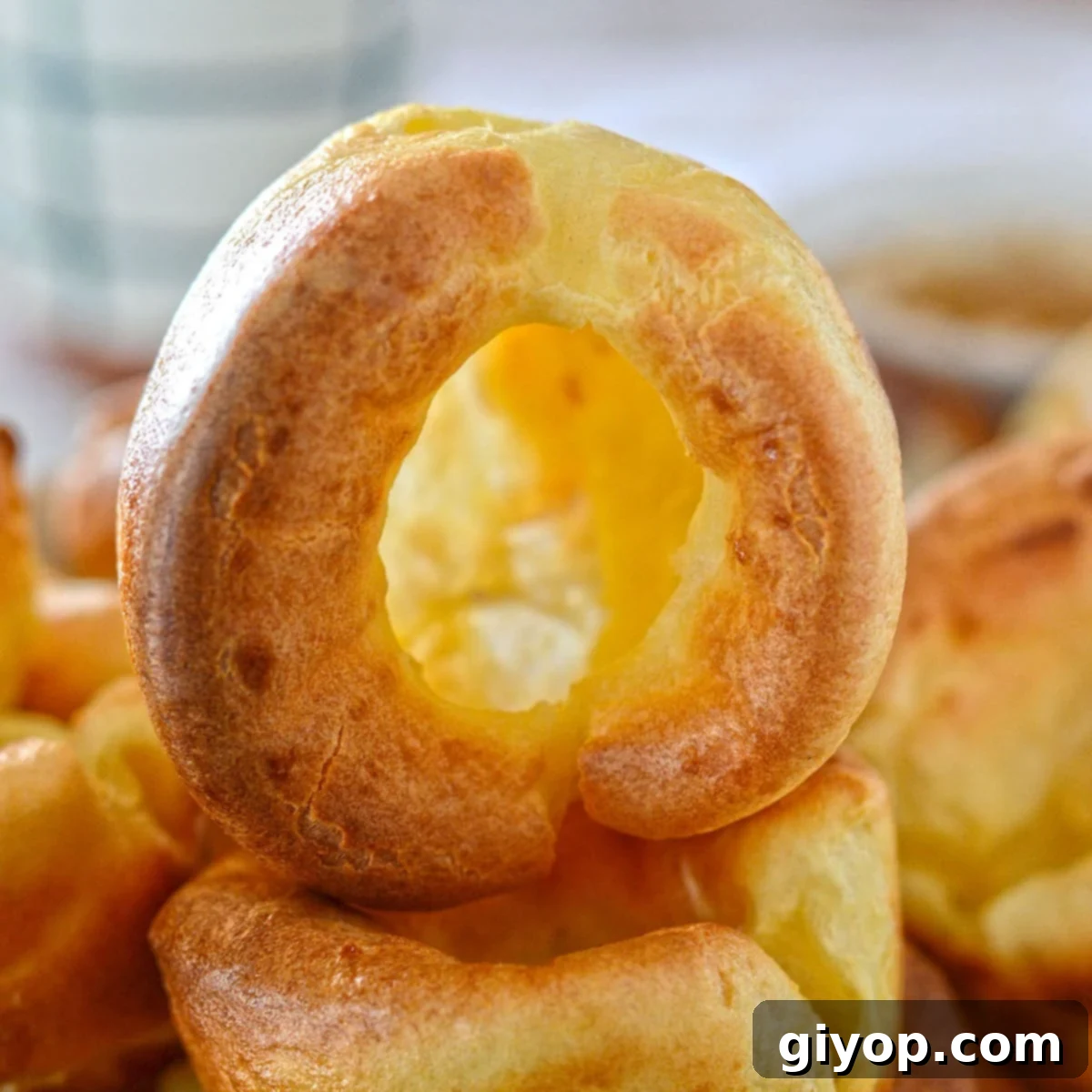
Welcome to the delightful world of Yorkshire puddings, a true cornerstone of British cuisine that has captivated palates across the globe. For those who have yet to experience the sheer bliss of a perfectly risen, golden-brown Yorkshire pudding, prepare to embark on a culinary journey that promises both simplicity and spectacular results. Far more than just a side dish, these airy, savory delights can elevate any meal, from a traditional Sunday roast to an imaginative breakfast or a satisfying lunch. With just a handful of pantry staples, you can create a batch of homemade Yorkshire puddings that boast a wonderfully crispy exterior and a soft, fluffy interior.
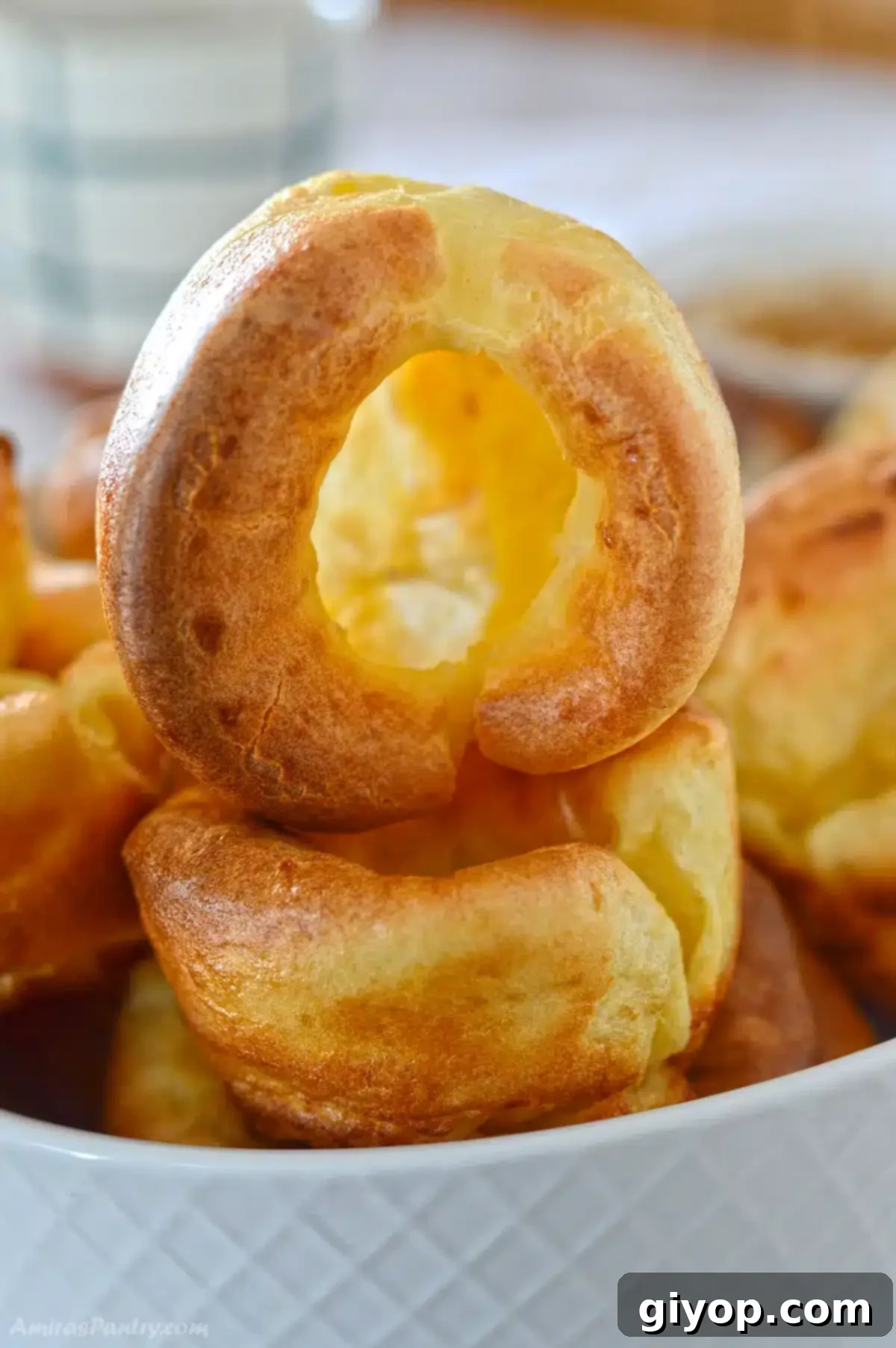
This comprehensive guide will walk you through everything you need to know about crafting the ultimate Yorkshire puddings, ensuring that each bite is a testament to this iconic dish’s enduring appeal. Forget complicated techniques; our straightforward approach will demystify the process, making it accessible for even novice cooks. Get ready to impress your family and friends with these magnificent puffs, suitable for any occasion.
What Makes Yorkshire Pudding So Special?
Yorkshire pudding is a classic British staple, famous for its distinctive airy texture and deep, savory flavor. Traditionally, it’s a vital component of the quintessential Sunday roast, usually served alongside succulent roast beef, rich gravy, and seasonal vegetables. But what truly sets it apart? It’s the magical transformation that occurs when a simple batter meets scorching hot oil, causing it to puff up dramatically, creating a crispy outer shell and a soft, yielding center. This unique characteristic makes it an incredibly versatile dish, capable of holding various fillings, both sweet and savory.
- Effortless Elegance: Despite their impressive appearance, Yorkshire puddings are surprisingly easy to make, requiring minimal ingredients and straightforward steps.
- Pantry Power: Crafted from common ingredients like eggs, flour, milk, and a pinch of salt, this recipe is incredibly budget-friendly and accessible.
- Beyond the Roast: While a perfect partner to a roast dinner, these puddings are remarkably adaptable. Fill them with anything from sweet fruits and cream to savory meats and cheeses for a delightful meal or snack at any time of day.
The contrast of the golden, crunchy edges with the soft, almost custardy interior is what makes Yorkshire pudding an irresistible treat. It’s a dish that embodies comfort and tradition, yet offers endless possibilities for modern culinary creativity.
A Brief History of Yorkshire Pudding
The origins of Yorkshire pudding can be traced back to the 18th century in the northern counties of England, particularly Yorkshire. Originally, it was known as “Dripping Pudding” because it was cooked in the fat (drippings) collected from roasting meat. This ingenious method served a dual purpose: it utilized every last drop of flavorful fat and provided a substantial, inexpensive dish to fill hungry bellies before the more expensive meat course. Eating the pudding first meant people would consume less of the main roast, making the meal stretch further.
Over time, the recipe evolved, and it became a beloved accompaniment to the main roast, eventually adopting the name of its most famous region. The key to its iconic rise and crispy texture has always been the combination of a simple batter and extremely hot fat, a technique perfected over centuries. Today, it remains a cherished part of British culinary heritage, symbolizing warmth, home, and hearty family meals.
Why This Yorkshire Pudding Recipe Will Become Your Go-To
This recipe isn’t just about making Yorkshire puddings; it’s about making *perfect* Yorkshire puddings every single time. Many people are intimidated by the idea of making them from scratch, fearing flat or soggy results. This guide tackles those concerns head-on, providing clear, concise instructions and crucial tips that guarantee impressive, sky-high puddings with that coveted crispy crunch. We’ve optimized the process to ensure maximum rise and flavor, making it incredibly reliable.
My own children devoured these freshly baked puddings in minutes, illustrating their universal appeal. While I had planned to serve them for breakfast, they became an instant hit as an after-school snack. One child enjoyed them sweet, drizzled with honey and butter, while the others preferred a savory twist, filled with creamy Labneh and thinly sliced roast beef. This anecdote perfectly highlights the pudding’s incredible versatility, proving they are delightful no matter how you serve them.
Essential Ingredients for Your Yorkshire Puddings
Crafting perfect Yorkshire puddings begins with understanding the role of each ingredient. The beauty of this dish lies in its simplicity, relying on just a few basic items to create something truly spectacular.
- All-Purpose Flour: Also known as plain flour, this forms the structural backbone of your puddings. Its balanced gluten content allows for sufficient elasticity to stretch and rise dramatically when exposed to high heat. Avoid self-rising flour, as the added leavening agents can interfere with the traditional rise.
- Milk: For the crispiest and puffiest Yorkshire puddings, skim or low-fat milk is highly recommended. The lower fat content in these milks helps achieve a lighter, more ethereal texture. While whole milk can be used, it may result in a slightly denser pudding.
- Eggs: Eggs are crucial for binding the batter and contributing to its rich flavor and golden color. They also play a significant role in the pudding’s impressive rise, as the egg proteins expand and set in the hot oven. Use large eggs for the best results.
- Oil: The type of fat used for cooking is paramount for achieving that signature crispy exterior. Vegetable oil is a neutral and effective choice. However, for an authentic, traditional flavor, many prefer to use beef drippings (fat rendered from roasting beef). The rich flavor from the drippings infuses into the pudding, creating an unparalleled savory depth.
- Salt: A pinch of salt is essential for seasoning the batter, enhancing all the other flavors and ensuring your puddings aren’t bland.
Tools You’ll Need for Yorkshire Pudding Success
Having the right equipment can make all the difference in ensuring your Yorkshire puddings are a roaring success. Fortunately, you likely already own most of these kitchen essentials.
- Large Mixing Bowl: You’ll need a spacious bowl to comfortably whisk your batter, allowing enough room to incorporate all ingredients without spills.
- Whisk: A good whisk is indispensable for achieving a smooth, lump-free batter. Electric hand mixers can also be used for convenience, but a manual whisk works perfectly.
- Measuring Cups and Spoons: Accurate measurements are key in baking, so ensure you have a reliable set for flour, milk, and salt.
- Popover Pan or Muffin Tin: This is where the magic happens! A popover pan with deep, conical cups is ideal for achieving tall, dramatically risen puddings. A standard 12-cup muffin tin also works beautifully and is more commonly found in most kitchens. Ensure your chosen pan is made of metal, as it retains heat much better than silicone, which is crucial for the pudding’s rise.
- Oven Mitts: Safety first! You’ll be handling extremely hot pans, so high-quality oven mitts are essential.
- Basting Brush (Optional): Useful for ensuring each cup in your pan has a thin, even layer of oil, though simply pouring works too.
Step-by-Step Instructions for Perfect Yorkshire Puddings
Follow these detailed steps to create Yorkshire puddings that are golden, crispy, and perfectly hollow every time. Precision and adherence to temperature are key!
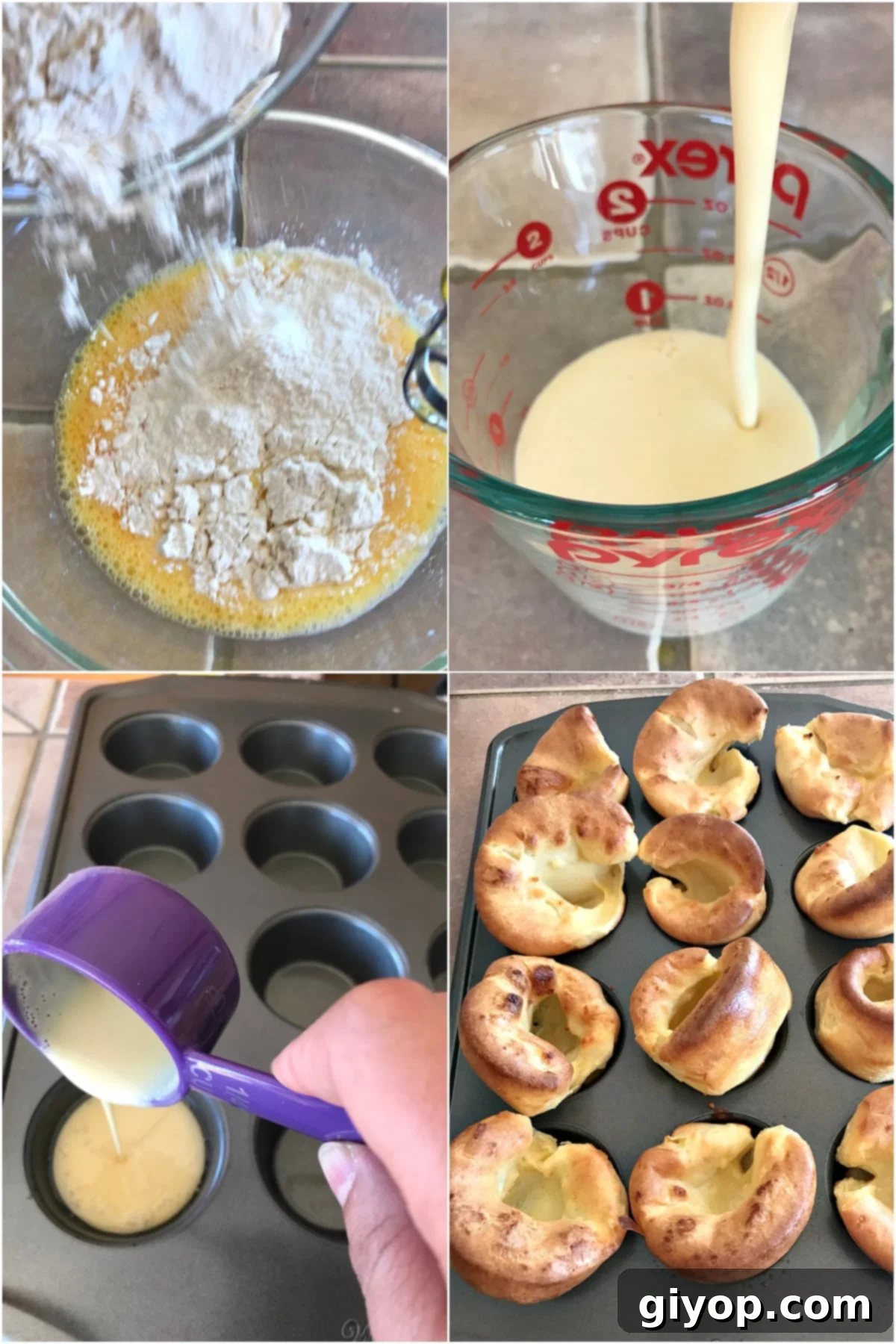
- Prepare the Batter: In a large mixing bowl, whisk together the eggs and salt until they are well combined and slightly frothy. Gradually add the milk, continuing to whisk. Slowly incorporate the all-purpose flour, whisking continuously to ensure a smooth, lump-free batter. The final consistency should be quite runny, similar to thin pancake batter.
- Rest the Batter (Crucial Step): Cover the bowl and refrigerate the batter for at least two hours, but preferably overnight. This resting period is vital. It allows the gluten in the flour to relax and the starch granules to fully hydrate, resulting in a much lighter, crispier, and higher-rising pudding. You can prepare the batter up to three days in advance.
- Preheat the Oven and Pan: Preheat your oven to a high temperature, ideally 425°F (220°C). Position an oven rack in the upper third of your oven, where the heat is most consistent. Place about a teaspoon of vegetable oil or beef drippings into each cup of your popover pan or muffin tin.
- Heat the Oil to Smoking Point: Carefully place the pan with the oil into the preheated oven. Heat the oil until it is almost smoking hot. This usually takes around 15-20 minutes, depending on your oven. You’ll know it’s ready when you see faint wisps of smoke and the oil shimmers intensely. This extreme heat is what creates the instant “puff” when the cold batter hits the hot fat.
- Pour and Bake: With extreme caution, remove the smoking hot pan from the oven. Working quickly, pour approximately ¼ cup of the cold, rested batter into each hot, oiled cup. You should hear a distinct sizzle as the batter hits the hot fat. Immediately return the pan to the hot oven.
- Bake Undisturbed: Bake for 20 minutes without opening the oven door. This is absolutely critical! Opening the door, even for a moment, can cause the temperature to drop, and your puddings may collapse. During this time, the puddings will dramatically puff up and turn a beautiful golden brown, becoming hollow in the middle.
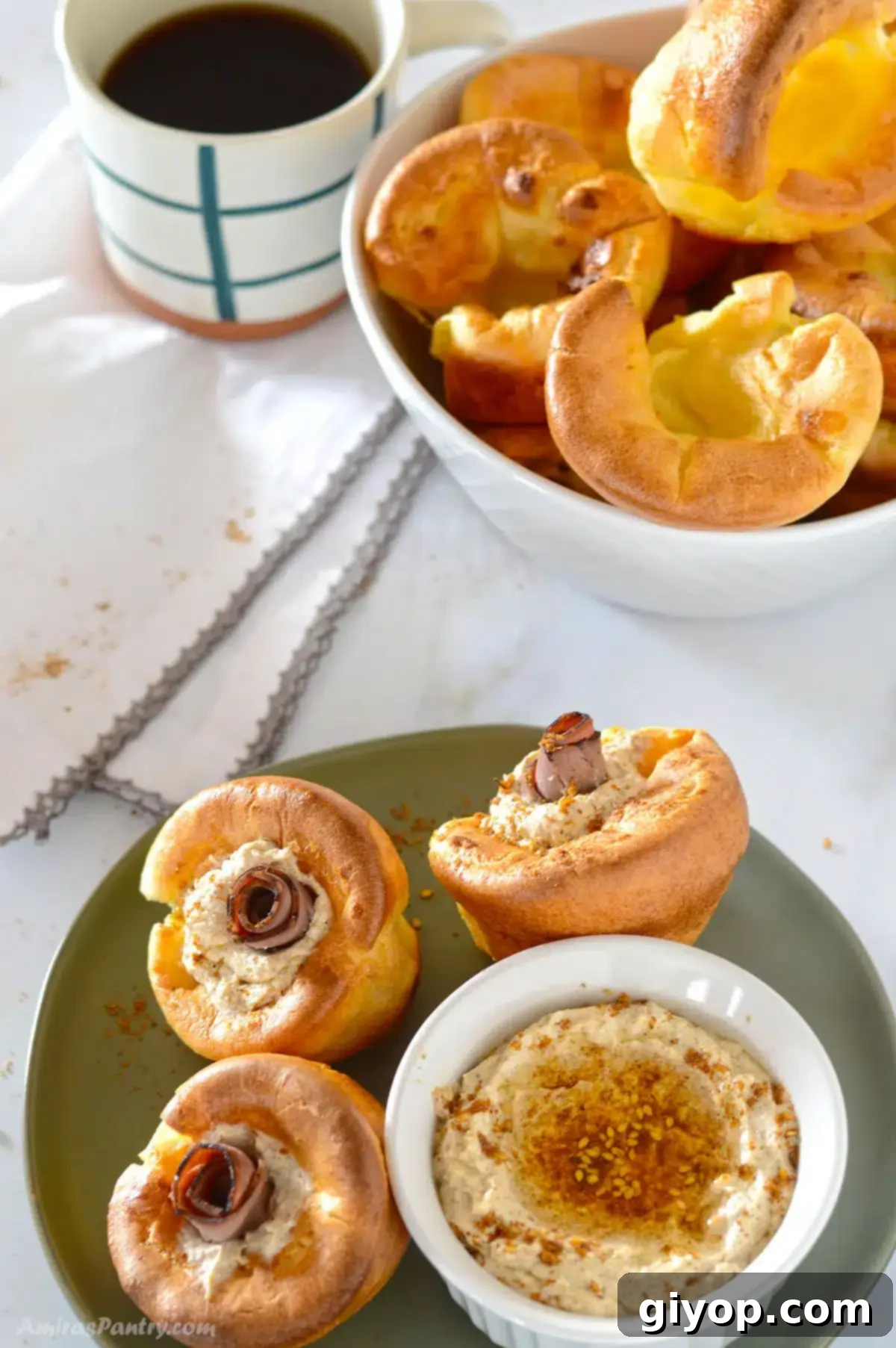
- Prepare Your Filling (Optional): While the Yorkshire puddings are baking, you can prepare any desired fillings. For a savory twist, I mixed creamy Labneh with Za’atar spice, a drizzle of olive oil, and a pinch of salt. I also prepared thin slices of roast beef.
- Serve Immediately: Once baked, carefully remove the Yorkshire puddings from the oven. Let them cool in the pan for a minute or two, then gently remove them. Fill them with your chosen sweet or savory accompaniments and serve immediately for the best crispy texture.
Expert Tips for the Ultimate Yorkshire Pudding
Achieving consistently perfect Yorkshire puddings involves a few key principles. Master these, and you’ll be baking like a pro in no time!
- Smoking Hot Oil is Non-Negotiable: This is perhaps the most critical tip. The oil or drippings *must* be almost smoking hot before you add the batter. The sudden intense heat creates steam from the batter, causing it to rapidly expand and rise dramatically, resulting in that iconic hollow, airy center and crispy crust. You should hear a satisfying sizzle when the cold batter meets the hot fat.
- Do Not Open the Oven Door: Resist the urge to peek! For the first 20 minutes of baking, keep the oven door firmly shut. Any sudden drop in temperature can cause your magnificent puddings to deflate and become soggy.
- The Longer the Batter Rests, the Better: While two hours is the minimum, resting the batter in the refrigerator overnight yields the tallest, crispiest, and most consistently impressive Yorkshire puddings. This extended rest allows the gluten to relax and the flour to fully hydrate, contributing to a superior rise and texture.
- Low-Fat Milk for Max Puff: Opt for skim or low-fat milk in your batter. The reduced fat content contributes to a lighter, more ethereal texture and a puffier, crisper result. Whole milk can be used, but your puddings might be slightly denser.
- Don’t Overfill the Cups: Only fill each muffin cup about three-quarters full with batter. This allows ample space for the puddings to rise without overflowing or creating a dense, heavy texture.
- Maintain Oven Temperature: Ensure your oven is accurately preheated and maintains a consistent high temperature. An oven thermometer can be a useful tool to verify your oven’s temperature.
- Use the Right Fat: While vegetable oil works well, traditional beef drippings impart an unbeatable flavor that’s truly authentic to a Sunday roast experience. Experiment to find your preference!
Storage and Reheating Your Yorkshire Puddings
While Yorkshire puddings are undoubtedly best enjoyed fresh from the oven, you can prepare them in advance or save leftovers. Proper storage and reheating ensure they retain some of their delightful crispiness.
Room Temperature: If you plan to consume them within a day or two, place the completely cooled puddings in an airtight container. They will soften slightly but will still be delicious. Consume within 2 days.
Refrigerate: For longer storage, refrigerate the puddings in an airtight container for up to a week. Again, they will lose their crispiness, but this can be revived with reheating.
Freeze: Yorkshire puddings freeze exceptionally well. To freeze, arrange individual, completely cooled puddings on a baking sheet and freeze until solid. Once hardened, transfer them to a freezer-safe bag or airtight container. They can be frozen for up to 3 months.
Reheat: To restore their crispiness, reheat Yorkshire puddings in a preheated oven at 350°F (175°C) for 5-10 minutes, or until heated through and crisp on the outside. If reheating from frozen, increase the time to 10-15 minutes.
Perfect Pairings and Creative Serving Ideas
While the traditional pairing of Yorkshire puddings with a glorious Sunday roast and rich gravy is undeniably magnificent, their versatility opens up a world of culinary creativity. Don’t limit these delightful puffs to just one meal!
- The Classic Roast: Serve alongside roast beef, lamb, chicken, or pork, with plenty of savory gravy to soak into their hollow centers. Add roasted potatoes and your favorite seasonal vegetables for a complete feast.
- Savory Fillings:
- Meat Lovers: Beyond roast beef, try filling them with pulled pork, shredded chicken, or even leftover stew. Small sausages or sausage meatballs can also be tucked inside.
- Cheesy Goodness: Melted cheese and caramelized onions make for a simple yet incredibly satisfying filling.
- Mediterranean Twist: Our featured Labneh, Za’atar, and roast beef filling offers a delightful, tangy, and aromatic option, perfect for a light lunch or snack.
- Comfort Food: Fill them with chili con carne or a hearty beef stew for a comforting, easy-to-eat meal.
- Sweet Indulgences: Believe it or not, Yorkshire puddings can also shine as a dessert!
- Breakfast Treat: Drizzle with honey or maple syrup and serve with a dollop of butter. They are also fantastic with fresh berries and a dusting of powdered sugar.
- Dessert Delight: Fill with jam, whipped cream, fresh fruit, or even a scoop of ice cream for an unexpected, yet delicious, sweet course.
- Breakfast and Brunch: Transform them into a unique breakfast by serving with scrambled eggs, bacon, and a sprinkle of chives. They make an excellent alternative to toast or pancakes.
The key is to think of Yorkshire puddings as edible cups, ready to be filled with whatever your heart desires. Their neutral, savory base provides a perfect canvas for countless flavor combinations.
Frequently Asked Questions About Yorkshire Puddings
New to making Yorkshire puddings? Here are some common questions and their answers to help you achieve success.
- Why didn’t my Yorkshire puddings rise?
The most common reasons are: 1) The oil wasn’t hot enough when the batter was added. 2) The oven door was opened during the crucial initial baking time, causing a temperature drop. 3) The batter didn’t rest long enough (or at all). Ensure your oil is smoking hot and do not open the oven door for at least 20 minutes. - Can I make the batter ahead of time?
Absolutely, and it’s highly recommended! Preparing the batter 2 hours in advance or even overnight (up to 3 days) in the refrigerator allows the gluten to relax and the flour to fully hydrate, leading to a much better rise and crispier texture. - What kind of oil is best to use?
Vegetable oil is a good, neutral choice. However, for the most authentic and flavorful Yorkshire puddings, use beef drippings. The fat rendered from a roast adds incredible savory depth. Avoid olive oil, as its smoke point is too low for the high temperatures required. - Can I use a different pan if I don’t have a popover pan?
Yes, a standard 12-cup metal muffin tin works perfectly. The key is to use a metal pan, as it retains heat far better than silicone, which is essential for the pudding’s dramatic rise. - Are Yorkshire puddings supposed to be hollow?
Yes! A truly perfect Yorkshire pudding will have a wonderfully crispy, risen exterior and a largely hollow, soft interior. This hollow space is ideal for filling with gravy, meats, or other delicious ingredients. - How can I ensure a crispy exterior?
Besides the smoking hot oil and high oven temperature, using skim or low-fat milk in your batter can contribute to a crispier result. Also, don’t overcrowd the oven, as this can reduce overall oven temperature and steam the puddings instead of baking them crisply.
Bread Baking Inspiration: You’ll Also Love
As an avid bread enthusiast, I confess to a deep love for baking and savoring freshly baked bread. The aroma alone is pure heaven! If you share this passion, you’ll surely enjoy exploring some of my other favorite bread recipes. These remind me so much of the wonderful breads found in Egypt and the Middle East, each offering a unique texture and flavor profile.
- Palestinian Taboon Bread: A traditional flatbread baked in a taboon oven, offering a unique smoky flavor and chewy texture.
- Unleavened Flatbread: A simple, quick-to-make bread that requires no yeast, perfect for those times you need a fresh bread fix without the wait.
- Homemade Hot Dog Buns: Soft, fluffy, and far superior to store-bought, these buns are ideal for elevating your hot dog or sandwich experience.
- Lebanese Pita Bread
- Middle Eastern Flatbread
- Whole Wheat Pita Bread
- Kaiser Rolls Recipe
Easy Yorkshire Pudding Recipe Card
An amazing type of bread roll, very easy to make and even easier to eat. This recipe shows you how to make classic Yorkshire pudding, along with an idea for a non-traditional filling.

Easy Yorkshire Pudding
This recipe yields 12 servings.
Average Rating: 5 out of 5 stars (based on 4 votes)
Course: Bread | Cuisine: English | Diet: Halal
Prep Time: 10 minutes | Cook Time: 20 minutes | Resting time: 2 hours | Total Time: 30 minutes
Calories: 112kcal | Author: Amira
Ingredients
For the Yorkshire pudding:
- 4 Large eggs
- ¼ teaspoon salt
- 1 ½ cups milk (skim or low-fat milk recommended)
- 1 ¼ cups all-purpose flour
- 4 Tablespoon vegetable oil (or beef drippings)
For the Labneh filling:
- 1 cup labneh
- 2 Tablespoons olive oil
- 1 Tablespoon za’atar
- ½ teaspoon salt (or to taste)
- Sliced roast beef (for serving)
Instructions
For the Yorkshire pudding:
- In a bowl, beat eggs and salt until mixed well.
- Beat in milk and flour until well combined, ensuring a smooth, runny batter.
- Refrigerate the batter for at least 2 hours, or up to 3 days, for best results.
- Preheat oven to 425°F (220°C). Position the oven rack in the upper third of your oven.
- Put 1 teaspoon of oil (or beef drippings) into each cup of a 12-cup muffin tin or popover pan.
- Pop the tray in the oven until the oil is almost smoking hot. This usually takes around 15-20 minutes.
- Carefully remove the hot tray from the oven and quickly pour the cold batter, filling each cup ¾ full.
- Bake in the oven for 20 minutes without opening the door. The puddings will puff up dramatically and turn golden brown and hollow in the middle.
To prepare the Labneh filling:
- While the puddings are baking, combine the labneh, olive oil, za’atar, and salt in a bowl. Mix them well until smooth and ready to be scooped.
- Once baked, take the puddings out of the oven and let them cool for a couple of minutes in the tray so you can handle them.
- Fill them with the Labneh mixture and garnish with sliced roast beef right before serving for maximum freshness and appeal.
Notes
- Nutrition values provided are calculated without the filling.
- Please refer to our nutrition disclaimer policy for more information.
Nutrition (per serving, without filling)
Calories: 112kcal | Carbohydrates: 12g | Protein: 4g | Fat: 5g | Saturated Fat: 1g | Polyunsaturated Fat: 1g | Monounsaturated Fat: 3g | Trans Fat: 0.01g | Cholesterol: 66mg | Sodium: 164mg | Potassium: 84mg | Fiber: 0.4g | Sugar: 2g | Vitamin A: 140IU | Calcium: 49mg | Iron: 1mg
There you have it – a comprehensive guide to mastering the art of homemade Yorkshire puddings. From understanding the science behind their impressive rise to exploring creative serving suggestions, this recipe empowers you to bring a touch of British culinary magic into your kitchen. These golden, crispy delights are more than just a side; they are a versatile foundation for countless delicious meals, proving that simplicity can indeed lead to extraordinary results. So, gather your ingredients, follow these steps, and prepare to enjoy the immense satisfaction of biting into your very own perfectly puffed Yorkshire pudding.