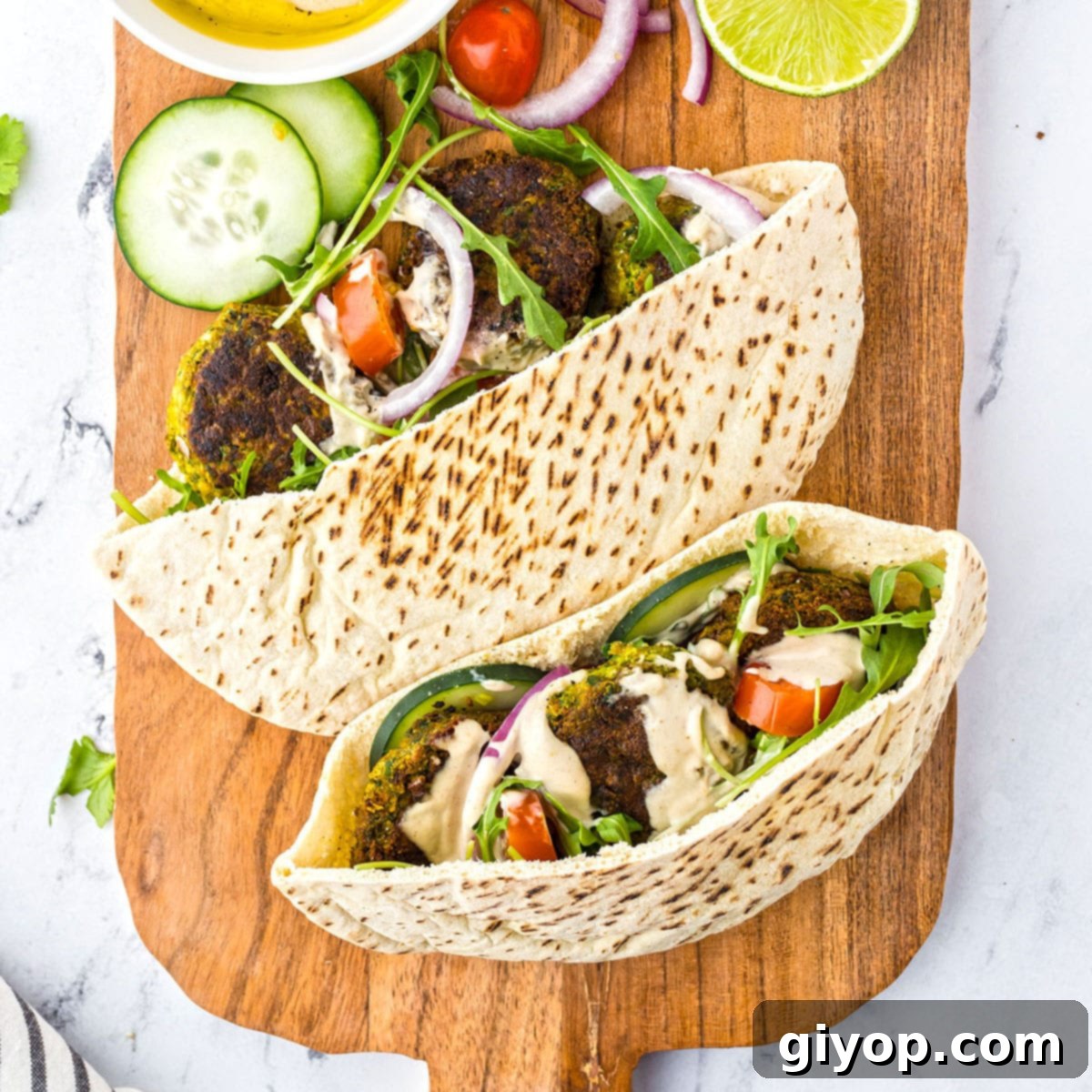
The falafel pita sandwich stands as an iconic cornerstone of Middle Eastern cuisine, a vibrant symphony of flavors and textures that has captivated palates around the globe. This isn’t just a meal; it’s a culinary experience, a tradition often enjoyed for breakfast, lunch, or a satisfying dinner. Imagine warm, pillowy pita bread generously stuffed with freshly fried falafel patties – each bite offering an irresistible crunch followed by a tender, aromatic interior. This delightful plant-based sandwich is then crowned with crisp, refreshing vegetables and drizzled with a rich, creamy tahini sauce, creating a harmonious blend that is both incredibly filling and exquisitely delicious. It’s the quintessential Middle Eastern falafel sandwich, perfected for your home kitchen, promising an authentic taste that transports you straight to the bustling streets of Cairo or Beirut. Whether you’re a seasoned chef or a home cook eager to explore new culinary horizons, this recipe provides all the guidance needed to master this beloved street food. Prepare to delight your family and friends with a truly unforgettable falafel experience.
For an intriguing variation, next time, consider trying the Egyptian falafel, which uniquely incorporates fava beans for a distinct flavor and texture profile.
❤️ Why You’ll Love This Falafel Pita Sandwich Recipe
- Effortlessly Delicious Homemade Falafel: This recipe simplifies the process of making falafel from scratch, allowing you to enjoy this flavorful Middle Eastern staple any time of day. Perfect for a hearty breakfast, a satisfying lunch, or a light yet fulfilling dinner, these homemade falafel patties are incredibly versatile and always a crowd-pleaser.
- Master the Art of Falafel: Beyond just a recipe, this guide teaches you the techniques to craft falafel like a seasoned pro. You’ll achieve that perfect crispy exterior and fluffy interior, far surpassing the quality and freshness of store-bought options. Elevate your culinary skills and impress everyone with authentic, restaurant-quality falafel.
- Convenient & Freezer-Friendly: Designed with convenience in mind, this recipe is ideal for meal prepping. You can prepare a larger batch of falafel mix or pre-shaped patties and freeze them for later. This makes it incredibly easy to whip up a fresh falafel sandwich whenever a craving strikes, saving you time and effort during busy weeknights.
- Naturally Plant-Based and Wholesome: Falafel is inherently a vegan and vegetarian delight, packed with plant-based protein and fiber from chickpeas. This makes it an excellent choice for those seeking nutritious, meat-free meal options that are both flavorful and satisfying. It’s a healthy alternative that doesn’t compromise on taste.
- Highly Customizable to Your Taste: The beauty of a falafel pita sandwich lies in its adaptability. While the falafel itself is a star, the choice of fillings and sauces allows for endless customization. Experiment with different vegetables, pickles, cheeses, and sauces to create a unique sandwich experience tailored precisely to your preferences every time.
- An Economical and Budget-Friendly Meal: Made primarily from dried chickpeas and common pantry staples, falafel is an incredibly cost-effective meal. Preparing falafel at home is significantly cheaper than buying it from restaurants or takeaways, making it an excellent option for delicious eating on a budget.
📝 Essential Ingredients for Perfect Falafel
Crafting the perfect falafel sandwich begins with selecting the right ingredients. This section provides an overview of the key components that come together to create this Middle Eastern masterpiece. For precise measurements and step-by-step instructions, please refer to the comprehensive printable recipe card located at the bottom of this page.
- Dried Chickpeas: The cornerstone of falafel. Using dried chickpeas, soaked overnight, is crucial for achieving the characteristic texture and flavor. Canned chickpeas will result in a mushy falafel that won’t hold its shape or fry properly. The soaking process softens them sufficiently for grinding without cooking, preserving their raw starch for crispiness.
- Fresh Parsley and Cilantro: These vibrant herbs are essential for falafel’s signature green hue and fresh, earthy aroma. They add a depth of flavor that is both refreshing and traditional, elevating the overall taste beyond just the chickpeas and spices. Don’t skimp on the fresh herbs for the best results.
- Small Onion: An aromatic base that provides a subtle sweetness and pungent kick. When finely processed with the chickpeas and herbs, it contributes to the complex flavor profile without overpowering the other ingredients.
- Garlic: Aromatic and indispensable, garlic adds a robust depth and a hint of spiciness that is characteristic of authentic Middle Eastern falafel. Fresh garlic cloves are highly recommended for the most potent flavor.
- Salt, Cumin, and Coriander: These spices are non-negotiable for falafel. Salt enhances all the flavors, while ground cumin provides warmth and earthiness. Ground coriander adds a citrusy, slightly sweet undertone that perfectly complements the chickpeas and herbs. Ensure your spices are fresh for maximum impact.
- Baking Soda: A crucial ingredient that provides aeration, making the falafel light and fluffy on the inside, contrasting beautifully with its crispy exterior. It reacts during frying, contributing to that desirable texture.
- Pita Bread: The traditional vessel for serving falafel sandwiches. Soft, warm pita pockets are perfect for stuffing with the crispy falafel patties and an array of fresh toppings and sauces, creating a portable and satisfying meal.
🥄 Step-by-Step Instructions for Homemade Falafel
Creating your own delicious falafel pita sandwiches is a rewarding culinary journey. This overview highlights the essential steps to guide you through the process, ensuring perfectly crispy and flavorful falafel every time. For comprehensive, detailed instructions and precise measurements, please consult the full recipe card below.
- Prepare the Chickpeas: Begin by placing your dried chickpeas in a large bowl. Cover them generously with cold water, ensuring they are submerged by at least an inch. Allow them to soak for a full 20-24 hours. For optimal results and freshness, consider changing the water halfway through the soaking period. Once adequately soaked, drain the chickpeas thoroughly and give them a quick rinse under cold running water. This crucial step softens the chickpeas without cooking them, which is essential for the falafel’s texture.
- Process the Falafel Mixture: Transfer approximately one-third of the soaked chickpeas, along with a proportional amount of the quartered onion, garlic, fresh parsley, and cilantro, to your food processor. Pulse the ingredients, stopping periodically to scrape down the sides and bottom of the bowl, until you achieve a consistent, finely ground but not overly smooth mixture. The texture should be somewhat coarse, similar to thick sand, allowing for a good bite in the final falafel. Repeat this process in batches with the remaining chickpeas and aromatics, combining all processed ingredients in a large mixing bowl.
- Season and Refine the Mixture: To the ground chickpea mixture, add all your pre-measured spices—salt, ground cumin, and ground coriander—along with the baking soda. Mix these ingredients thoroughly by hand or with a spoon until everything is evenly incorporated. If the mixture appears too crumbly or dry to form patties, gradually add a tablespoon or two of cold water, mixing until it reaches a consistency that can be easily shaped without falling apart. A proper consistency is key to falafel that holds together during frying.
- Shape the Falafel Patties: Lightly wet your hands with cold water to prevent the mixture from sticking. Scoop out about two tablespoons of the falafel mixture and gently shape it into small discs or balls, approximately 4 cm in diameter and 1 cm thick. Aim for uniform shapes to ensure even cooking. You can use a falafel scoop for perfectly consistent patties if you have one.
- Fry to Golden Perfection: Heat about 1.5 inches of cooking oil in a sturdy frying pan or deep pot over medium heat. The ideal temperature for frying falafel is between 330-350°F (165-175°C). Once the oil reaches the correct temperature, carefully lower the shaped falafel patties into the hot oil, ensuring not to overcrowd the pan. Fry them in batches, turning occasionally, until they are deep golden brown and wonderfully crispy on all sides. This usually takes 3-5 minutes per batch. Remove the fried falafel with a slotted spoon and place them on a plate lined with paper towels to drain excess oil.
- Assemble Your Perfect Sandwich: To create your ultimate falafel pita sandwich, gently warm your pita bread. Slice it in half to form a pocket. Fill each pita pocket generously with 3-4 freshly fried, warm falafel patties. Add a medley of fresh, crisp vegetables such as sliced tomatoes, cucumber, arugula, and thinly sliced red onions. Finish with a generous drizzle of creamy tahini sauce. Serve immediately and savor every bite of this homemade Middle Eastern delight.
🥣 Recommended Equipment
Having the right tools can make all the difference in preparing your falafel efficiently and effectively. The following are affiliate links, and as a participant in the Amazon Services LLC Associates Program, we may earn fees by linking to Amazon.com and affiliated sites, helping us to continue providing great recipes.
- Food Processor: Essential for grinding the chickpeas, herbs, and aromatics to the perfect consistency. A powerful food processor ensures a smooth and uniform mixture, which is key to excellent falafel texture.
- Frying Pan or Deep Pot: A sturdy frying pan or a deep pot is necessary for safely deep-frying the falafel patties. Choose one with high sides to minimize oil splatter and ensure even cooking.
- Slotted Spoon or Spider Skimmer: Ideal for safely removing the fried falafel from the hot oil and allowing excess oil to drain before placing them on paper towels.
- Instant-Read Thermometer: While not strictly mandatory, an instant-read thermometer is highly recommended for accurately monitoring the oil temperature. Maintaining the correct temperature is crucial for perfectly cooked falafel that is crispy outside and tender inside.
Don’t forget to check out my Amazon storefront for some of my favorite kitchen products and culinary essentials!
💡 Expert Tips for the Best Falafel
Achieving falafel perfection requires attention to a few key details. I strongly recommend testing one falafel patty before frying the entire batch. Fry a single falafel and observe its behavior: if it crumbles or breaks apart in the oil, it’s a clear sign that your mixture is too wet. To correct this, simply mix in an additional couple of tablespoons of flour, preferably chickpea flour, which will help bind the mixture without altering the flavor. This small test can save your entire batch!
- Keep Your Hands Wet: Always wet your hands with cold water between shaping each falafel patty. This simple trick prevents the mixture from sticking to your hands, allowing the falafel to glide smoothly and effortlessly into the hot oil for frying.
- Maintain Optimal Oil Temperature: The temperature of your frying oil is paramount. If the falafel browns instantly upon hitting the oil, it means the oil is too hot, which can lead to burnt exteriors and undercooked interiors. Conversely, if the falafel sinks to the bottom of the pan and doesn’t sizzle, the oil is not hot enough, resulting in greasy, soggy falafel. The ideal scenario is for falafel to float immediately and be surrounded by a steady stream of small bubbles, indicating perfect frying conditions.
- Add Sesame Seeds for Extra Crunch and Flavor: For an enhanced nutty flavor and an extra layer of textural crunch, consider dipping your shaped falafel patties into sesame seeds just before frying. The sesame seeds toast beautifully in the hot oil, adding a delightful aroma and a visually appealing finish to your falafel.
- Do Not Overcrowd the Pan: When frying, resist the urge to fill your pan with too many falafel patties at once. Overcrowding significantly lowers the oil temperature, leading to less crispy and more oily falafel. Fry in batches, allowing enough space for each falafel to cook evenly and maintain the oil’s heat.
- Process the Mixture Twice: For the finest texture and best binding, process your falafel mixture in the food processor in two stages. First, coarsely grind all ingredients. Then, return the mixture to the processor in smaller batches and process again until it reaches a finer, more uniform consistency. This double-grinding technique ensures the falafel holds its shape perfectly and achieves that desired tender-crisp interior.
- Chill the Mixture (If Needed): If your falafel mixture becomes warm from prolonged processing, it might be too soft to handle. Refrigerate the mixture for 20-30 minutes before shaping. A slightly chilled mixture is easier to form into patties and less prone to breaking apart during frying.
Serve with
The falafel pita sandwich is a versatile canvas, ready to be adorned with a variety of complementary flavors and textures. Here are some of our favorite ways to serve this Middle Eastern delight, transforming it into a complete and unforgettable meal:
- Classic Middle Eastern Spreads: Elevate your falafel pita sandwiches by slathering them with a generous helping of creamy baba ganoush (a smoky eggplant dip) or a smooth, rich tahini sauce. These dips add a layer of luxurious creaminess and traditional flavor that perfectly complements the crispy falafel. Add fresh slices of red onion for a pungent crunch.
- Fresh Vegetable Medley: Keep it light and fresh by stuffing your warm pita with an abundance of crisp vegetables. Think thinly sliced cucumbers, ripe tomatoes, peppery arugula, and finely chopped parsley. For an authentic touch, add some pickled turnips for their tangy kick. This combination adds freshness and a delightful textural contrast.
- My Signature Touch – Feta and Arugula: For an ultimate falafel sandwich experience, I love to add crumbled feta cheese and fresh arugula. The salty, tangy feta melts slightly into the warm falafel, while the peppery arugula adds a fantastic counterpoint. This is a personal favorite that elevates the classic to something truly extraordinary.
- Spice It Up: If you enjoy a bit of heat, serve your falafel sandwich with your favorite hot sauce. For an extra creamy and spicy kick, try this homemade Sriracha Mayo, which blends the richness of mayonnaise with the fiery tang of Sriracha, creating an irresistible condiment.
- A Side of Hummus: While often inside the sandwich, a generous dollop of creamy hummus on the side or spread within the pita adds another layer of chickpea goodness and makes the sandwich even more substantial and satisfying.
🧺 Storage and Reheating Tips for Falafel
Proper storage and reheating are key to enjoying your delicious falafel beyond the initial serving. Whether you have leftovers or are preparing ahead, these tips ensure your falafel remains flavorful and texturally appealing.
- Refrigerate Cooked Falafel: Store any leftover cooked falafel patties in an airtight container in the refrigerator for up to 4-5 days. This will keep them fresh and ready for a quick meal or snack later in the week.
- Freeze Uncooked Falafel: To prepare for future meals, place uncooked falafel balls or patties on a baking sheet lined with parchment paper, ensuring they are not touching. Freeze until they are completely hard (about 1-2 hours). Once frozen solid, transfer them to a freezer-safe container or resealable bag, removing as much air as possible. They can be stored in the freezer for up to 3-4 months. When ready to cook, simply fry them directly from frozen, adding a couple of extra minutes to the cooking time. Remember, only add spices and baking soda to the portion you plan to fry immediately, or just before frying the frozen batches, for best results.
- Reheat Cooked Falafel: For best results, reheat your falafel in an oven or an air fryer. This method helps restore their crispy exterior. Place falafel in a preheated oven at 375°F (190°C) for 10-15 minutes, or in an air fryer at 400°F (200°C) for about 5 minutes, or until thoroughly heated through and crisp. I do not recommend reheating falafel in a microwave, as it tends to make them soft and rubbery, losing their desirable crunch.
📣 Complementary & Related Recipes
Expand your Middle Eastern culinary repertoire with these delightful dishes that pair beautifully with falafel or offer similar cultural tastes and techniques:
- Ful Medames: A traditional Egyptian dish made from slow-cooked fava beans, seasoned with a variety of spices and garnished with fresh toppings. It’s a breakfast and lunch staple in Egypt, offering a hearty and nutritious plant-based meal that complements falafel perfectly.
- Homemade Ricotta Cheese: This ricotta cheese recipe is surprisingly simple, inexpensive, and incredibly delicious to make at home. Customize it with your favorite fresh herbs for an extra burst of flavor. It’s a versatile cheese that can add a creamy touch to many dishes.
- Baghrir (Moroccan Spongy Semolina Pancakes): Discover these unique Moroccan pancakes, known for their distinctive spongy texture and hundreds of tiny holes. Made with semolina flour and traditionally served with a warm honey and butter syrup, Baghrir offers a delightful sweet contrast to savory Middle Eastern meals.
- Potato Shakshuka: A delightful breakfast or brunch dish, this recipe offers a tasty take on the classic Middle Eastern shakshuka. It features crispy potatoes, perfectly poached eggs, and melted cheese, all simmering in a flavorful tomato sauce. A comforting and hearty option.
- Mediterranean Eggplant Recipes: Explore the culinary versatility of eggplant with this collection of simple and flavorful Mediterranean-inspired dishes. From refreshing salads and creamy dips to robust main courses, you’ll surely appreciate this often underrated vegetable in new and exciting ways.
- Dill Cucumber Sandwiches: These crisp and refreshing sandwiches are a summertime staple. Featuring thin slices of cucumber layered on soft bread with a creamy, herbed spread and fresh dill, they offer a light and cool counterpoint to richer flavors, perfect for a picnic or light lunch.
More Falafel Variations to Explore
Falafel is a beloved dish with many regional variations and serving styles. Once you’ve mastered the classic falafel pita sandwich, delve into these other exciting falafel recipes:
- Egyptian Falafel (Ta’ameya): Often considered one of the best falafel varieties, Egyptian falafel distinguishes itself by being primarily made with dried fava beans (broad beans) instead of chickpeas. This gives it a unique green interior, a slightly different texture, and an incredibly rich flavor that is truly authentic and worth trying at home.
- Stuffed Falafel: Take your falafel to the next level by stuffing it with a delicious filling. While I personally enjoy mine stuffed with a savory feta cheese mixture, many prefer them filled with sumac-infused caramelized onions. This adds an unexpected burst of flavor and texture to the center of each crispy patty.
- Baked Falafel: For those looking to enjoy falafel with less oil, these baked falafel are a fantastic alternative. Made with convenient canned chickpeas, they offer a healthier option without sacrificing much of the authentic falafel flavor. Perfect for cutting back on fried foods while still indulging in your favorite Middle Eastern treat.
- What to Serve with Falafel: In the Middle East, falafel is a versatile dish enjoyed for breakfast, lunch, and sometimes even dinner. Explore these great authentic ideas for what to serve with falafel, from various salads and dips to pickled vegetables and bread, to create a complete and delightful meal spread.
If you love this recipe and find it helpful, please consider leaving a ⭐⭐⭐⭐⭐ rating! Your feedback is greatly appreciated and helps others discover wonderful recipes like this. Thank you!
Falafel Pita Sandwich
Print
Pin
Rate
Save
Ingredients
- 5 pita bread
To make the falafel:
- 2 cups dry chickpeas 350g
- 4 cups cold water
- 1 cup fresh parsley leaves about 15g from 6 springs
- 1 cup fresh cilantro leaves about 7g from 10 springs
- 1 small onion 130g quartered
- 3 large garlic cloves
- 1 ¼ teaspoon salt or to taste
- 1 teaspoon ground cumin
- 1 teaspoon ground coriander
- 1 teaspoon baking soda
- 2 Tablespoons water
Instructions
- Wash chickpeas thoroughly and add them to a large bowl.
- Cover the chickpeas with cold water, ensuring they are generously submerged by at least 1 inch (approximately 4-5 cups of water).
- Cover the bowl with plastic wrap and allow the chickpeas to soak on the counter for 20-24 hours. If possible, change the water once during the soaking period for best results.
Make the falafel:
- Drain the soaked chickpeas completely and give them a quick rinse under cold water.
- Working in batches, depending on your food processor’s capacity, add about one-third of the chickpeas along with one-third of all the fresh herbs (parsley and cilantro), quartered onion, and garlic cloves.
- Process the ingredients, stopping frequently to scrape down the sides and bottom of the food processor bowl, until you achieve a consistently ground mixture. It should be coarsely ground but not yet fine.
- Transfer the processed ingredients from the food processor to another large mixing bowl. Continue with the remaining batches of chickpeas, herbs, onion, and garlic until all ingredients have been coarsely ground.
- Once all ingredients are coarsely ground, return about one-third of the mixture to the food processor and process again to achieve a finer, more uniform consistency. Repeat this step with the entire batch until the mixture is consistently fine, resembling thick sand.
- If your mixture becomes warm from the food processor’s operation, refrigerate it for 20-30 minutes to cool down before proceeding.
- Add all the measured spices (salt, ground cumin, ground coriander) and baking soda to the falafel mixture. Mix everything thoroughly by hand until well combined.
- If the mixture still feels very crumbly and won’t hold its shape when pressed, add the water, one tablespoon at a time, and mix by hand until it reaches a workable consistency for shaping.
Frying the falafel:
- In a deep frying pan or pot, add about 1 ½ inches of cooking oil. Heat the oil over medium heat until its temperature reaches between 330-350°F (165-175°C). Use an instant-read thermometer for accuracy.
- Once the oil is hot, reduce the heat to medium-low. Begin shaping your falafel patties.
- Wet your hands with cold water between shaping each falafel to prevent sticking.
- Scoop about two tablespoons of the falafel mixture into your hands and lightly shape it into a disc, approximately 4cm wide and 1cm in height.
- Carefully drop the shaped falafel into the hot oil. Do not overcrowd the pan; fry in batches to maintain oil temperature and ensure even cooking.
- Raise the temperature back to medium and allow the falafel to cook and brown beautifully on all sides, turning occasionally. They should be deep golden brown and crispy.
- Using a slotted spoon or spider skimmer, carefully remove the cooked falafel and transfer them to a plate lined with kitchen paper towels to drain any excess oil.
- Reduce the heat to medium-low again before shaping and frying the next batch of falafel to ensure consistent cooking.
Assemble the sandwich:
- Warm your pita bread. Cut each pita in half to create a pocket. Fill each pita pocket with about 3 falafel patties (or to your desired preference), along with some fresh sliced onions, crisp arugula, and juicy tomato slices. Finish with a generous drizzle of creamy tahini sauce. Serve immediately and enjoy your homemade falafel pita sandwich!
Notes
- This recipe yields approximately 30 falafel patties. If you do not intend to fry all of them at once, only add the spices and baking soda to the portion of the mixture you are going to fry immediately. Store the remaining plain falafel mixture in an airtight container and freeze for later use.
- It is highly recommended to test one falafel patty before proceeding with the entire amount. Fry a single falafel and check if it holds together in the oil. If it breaks apart, the falafel mixture is likely too wet. To correct this, add a couple of tablespoons of flour (preferably chickpea flour) to the mixture and mix well.
- Wet your hands with cold water between shaping each falafel patty. This prevents the mixture from sticking and helps the falafel glide easily into the oil.
- Pay close attention to the oil temperature. When dropping falafel into the oil, they should not brown instantly (indicating the oil is too hot), nor should they dip to the bottom of your pan without sizzling (indicating the oil is not hot enough). Instead, they should float to the surface and be surrounded by small bubbles, which is the perfect frying condition.
- In Egypt, this type of falafel, made with chickpeas, is often referred to as Syrian or Shamy falafel. While traditional falafel recipes might not always include fresh herbs, home cooks, like us, love incorporating green herbs for added flavor and color.
- To serve:
- Serve your falafel pita sandwiches with an assortment of fresh toppings. Classic choices include thinly sliced onion, ripe tomatoes, crisp cucumber, chopped parsley, peppery arugula, and tangy pickled turnips. A generous drizzle of tahini sauce (which we often call tahini salad) is also essential.
- My personal recommendation: I enjoy adding crumbled feta cheese to my falafel sandwich for an extra layer of salty creaminess. Give it a try—you might just love it too!
- Storage: Store cooked falafel in an airtight container in the refrigerator for up to 4-5 days to maintain freshness.
- To reheat: For the best texture, reheat your falafel in a preheated oven or an air fryer. Air fry for about 5 minutes at 400°F (200°C) or bake until they are crisp and heated thoroughly. Avoid using a microwave, as it will make the falafel soft and lose its desired crispiness.
- Please review our nutrition disclaimer policy for additional information.
Nutrition
First published Feb 2, 2015 . Last updated May 10, 2023 with important tips, clear step by step instructions and enhanced readability.