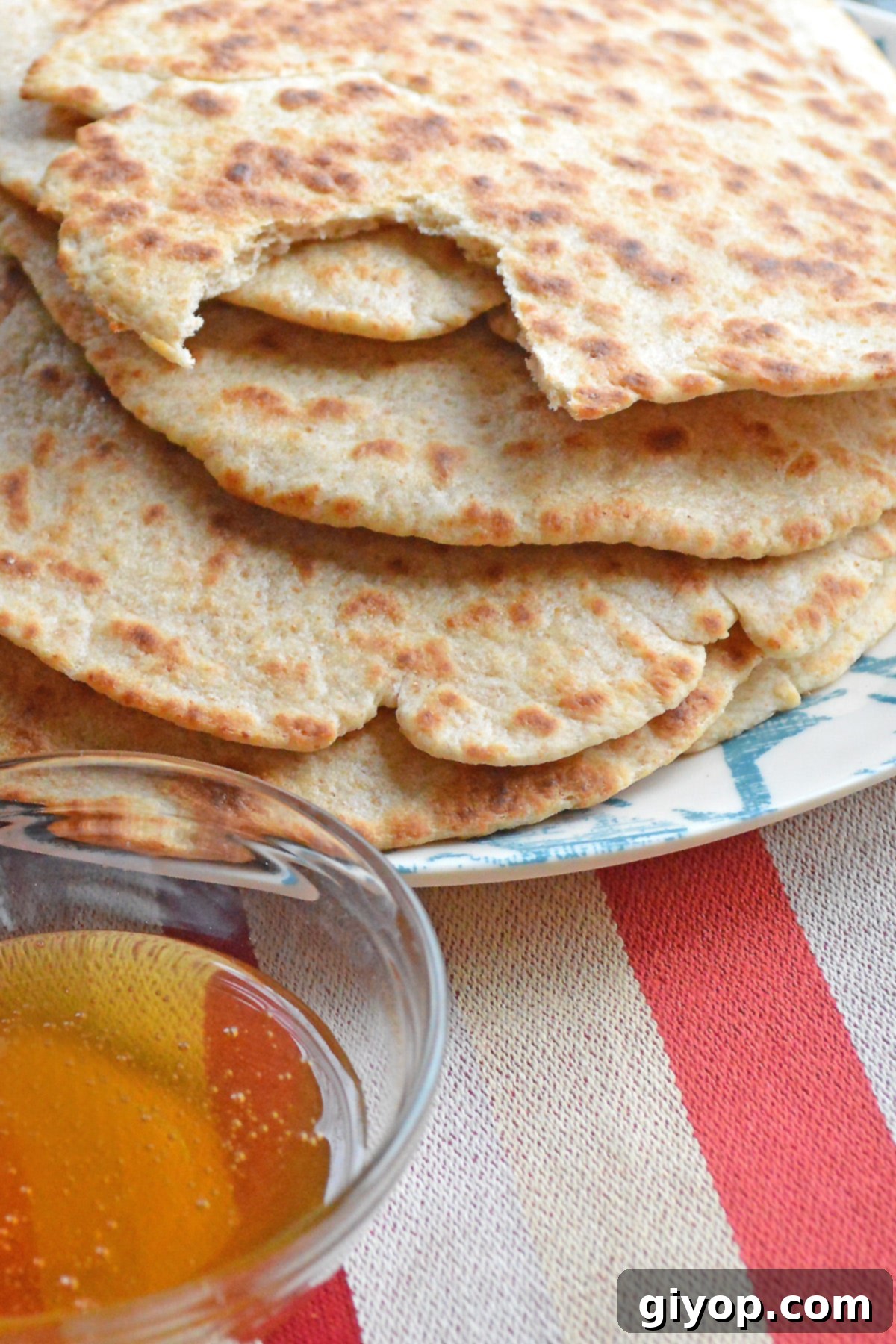
Indulge in the simple yet profound pleasure of freshly made skillet flatbread, a culinary delight that transcends cultures and is perfect for any meal. This recipe promises a rich, chewy flatbread deeply infused with the aromatic essence of olive oil, making it an irresistible addition to your breakfast table or a perfect accompaniment to hearty dishes like a savory beef stew. Forget store-bought options; once you experience the warmth and flavor of homemade flatbread, you’ll never look back. Its versatility knows no bounds, serving as a canvas for various toppings, a scoop for delicious dips, or simply enjoyed on its own.
For those eager to explore the diverse world of Middle Eastern bread, our homemade pita bread recipe is another popular choice that shares the same spirit of traditional baking. While pita offers a classic pocket for fillings, this skillet flatbread presents a distinctively rich and satisfying texture that stands out. We’re inviting you on a journey to create a bread so flavorful and comforting, it’s bound to become a staple in your kitchen.
Exploring the World of Flatbread
Flatbread holds a revered place in cuisines across the globe, particularly in the Middle East, where it serves as a cornerstone of daily meals and communal dining. From the iconic pita bread, known for its distinct pocket, to the rustic and earthy Taboon bread baked in traditional ovens, and even versatile no-yeast flatbreads, the variations are endless and deeply rooted in cultural heritage. Each type offers a unique texture and flavor profile, reflecting the local ingredients and cooking methods. While many flatbreads are designed to complement other dishes, the recipe we’re sharing today for skillet flatbread is exceptionally rich, buttery, and flavorful, making it delightful enough to be savored entirely on its own. This particular bread stands out due to its simple preparation and the depth of flavor imparted by quality olive oil, transforming it from a mere side dish into a star attraction.
Why Make Homemade Skillet Flatbread?
There’s an unparalleled satisfaction that comes with baking your own bread, and skillet flatbread is no exception. Beyond the incredible aroma that fills your kitchen, making flatbread from scratch offers numerous benefits. You have complete control over the ingredients, ensuring no unwanted additives or preservatives find their way into your food. The process itself is surprisingly simple and requires minimal equipment, making it an accessible baking project even for beginners. Furthermore, homemade flatbread is far more economical than its store-bought counterparts, allowing you to enjoy a fresh, wholesome product without breaking the bank. The freshness, superior texture, and rich flavor of a homemade skillet flatbread will elevate any meal, turning an ordinary day into a special culinary experience.
📝 Essential Ingredients for Your Skillet Flatbread
Crafting this flavorful skillet flatbread requires just a few basic ingredients, each playing a crucial role in achieving the perfect texture and taste. The beauty of this recipe lies in its simplicity and the readily available nature of its components. Here’s a closer look at what you’ll need:
- Flours: We combine all-purpose flour and whole wheat flour in a 3:1 ratio. This blend provides a tender crumb from the all-purpose flour, balanced with the nutty flavor and added fiber of whole wheat flour, creating a more wholesome and satisfying bread.
- Olive Oil: This is the secret to an amazingly rich, tender, and flavorful flatbread. Using a good quality extra virgin olive oil will impart a fragrant, earthy depth that truly sets this bread apart.
- Warm Liquid: To bring the dough together, we use a mixture of warm milk and water, typically in a 2:1 milk-to-water ratio. Milk contributes to a softer, richer dough, while warm water helps activate the yeast effectively.
- Instant Yeast and Sugar: Instant yeast is a baker’s best friend for its convenience, requiring no prior proofing. A small amount of sugar acts as food for the yeast, encouraging it to bloom and ensuring a light, airy texture.
- Salt: Just a pinch of salt is essential to enhance all the other flavors in the bread, balancing the sweetness and richness.
🥄 Step-by-Step Instructions for Perfect Skillet Flatbread
Making this skillet flatbread is a straightforward process that yields incredibly rewarding results. Follow these simple steps to create delicious, homemade bread in your own kitchen:
- Prepare the Dough: In the bowl of your stand mixer (or a large mixing bowl if kneading by hand), combine all the dry ingredients: all-purpose flour, whole wheat flour, instant yeast, sugar, and salt. Mix them thoroughly to ensure even distribution. Next, pour in the olive oil and the warm milk. Begin kneading the dough. Gradually add warm water, a tablespoon at a time, until the dough comes together into a firm, cohesive ball that is no longer sticky to the touch. The exact amount of water may vary slightly depending on your flour and humidity, so add it cautiously.
- First Rise: Once the dough is properly kneaded, cover the bowl with plastic wrap or a clean kitchen towel and let it rest in a warm spot for approximately 30 minutes. This resting period allows the yeast to activate and the dough to slightly rise, making it easier to handle and contributing to the bread’s soft texture.
- Divide and Shape: After the resting period, gently punch down the dough to release the air. Transfer it to a lightly floured surface and divide it into 10 equal pieces. For consistent results, you can use a kitchen scale. Take each piece of dough and roll it out into a circle about ¼ inch thick. You can adjust the thickness according to your preference – thinner flatbreads will be crisper, while thicker ones will be chewier and softer.
- Cook the Flatbreads: Heat a cast iron skillet or a non-stick pan over medium heat. Do not add any oil to the pan. Once the pan is hot, place one rolled-out flatbread into it. Cook for about 1 to 1 ½ minutes on the first side, or until you see small bubbles forming on the surface and the underside has golden-brown spots.
- Flip and Finish: Using tongs or a spatula, carefully flip the flatbread and cook the second side for another 1 to 1 ½ minutes, or until it is also golden-brown and cooked through. Continue this process with the remaining dough pieces, cooking one flatbread at a time.
- Keep Them Soft: As each flatbread finishes cooking, stack them on top of each other and cover the stack with a clean kitchen towel. This traps the steam, keeping the flatbreads warm, soft, and pliable until you’re ready to serve.
💡 Expert Tips for the Best Skillet Flatbread
Achieving perfect skillet flatbread is easy with a few simple tips:
- The Magic of Milk: Incorporating milk into your dough, as suggested in this recipe, is a fantastic way to achieve a softer texture and a richer flavor profile. The milk’s fats and sugars contribute to a more tender crumb and a beautiful golden-brown crust. If you prefer to make your flatbread vegan, simply substitute the warm milk with an equal amount of warm water, and the result will still be delicious.
- Thickness Matters: The thickness of your rolled-out dough directly impacts the final texture of your flatbread. A thinner roll will result in a crispier bread, perfect for dipping or for a lighter bite. A slightly thicker roll will yield a chewier, more substantial flatbread that is wonderfully soft and satisfying. Experiment to find your preferred texture!
- Maintaining Softness: To ensure your freshly cooked flatbreads remain soft and pliable, it’s crucial to stack them immediately after they come off the skillet and cover them with a clean kitchen towel. The residual heat and trapped steam will prevent them from drying out, keeping them delightfully soft until serving time.
- Kneading Technique: Proper kneading is key for developing gluten, which gives the bread its structure and chewiness. Knead the dough until it’s smooth, elastic, and no longer sticky. This usually takes about 5-7 minutes in a stand mixer or 8-10 minutes by hand.
- Don’t Overcrowd the Pan: Cook flatbreads one at a time to ensure even cooking and proper browning. Overcrowding the skillet can lower its temperature and lead to unevenly cooked or steamed bread rather than beautifully golden and puffy flatbreads.
- Adjusting Heat: Keep a close eye on your skillet’s temperature. Medium heat is generally ideal, but you might need to adjust it slightly. If your flatbreads are browning too quickly, lower the heat; if they’re not browning at all, increase it slightly.
🍽️ Delicious Ways to Serve Your Skillet Flatbread
This rich and soft skillet flatbread is incredibly versatile and pairs beautifully with a wide array of dishes. My kids lovingly refer to it as “fake feteer” because of its luxurious texture and taste, reminiscent of traditional Egyptian layered pastry bread like Feteer Meshaltet. Sometimes, for an extra touch of decadence, I brush the warm flatbreads with melted butter. This bread truly shines when served with traditional Egyptian breakfast or dinner foods, but its appeal extends far beyond. Here are just a few serving suggestions:
- Traditional Egyptian Breakfast: Serve it alongside staple dishes such as Ful Medames (fava bean stew), crispy falafel, creamy labneh, or scrambled eggs.
- Sweet Pairings: For a delightful sweet treat, spread your flatbread with a generous dollop of molasses, honey, or your favorite jam. It’s also fantastic with a sprinkle of sugar and cinnamon.
- Savory Accompaniments: Use it to scoop up savory sauces from hearty stews, such as our recommended beef stew, or classic Mediterranean dishes like shakshuka. Its sturdy yet soft texture makes it ideal for soaking up every last drop of flavor.
- Cheese and Herbs: Top it with crumbled feta cheese, fresh herbs like parsley or mint, and a drizzle of olive oil for a simple yet elegant appetizer.
- Dips and Spreads: It’s the perfect vehicle for hummus, baba ghanoush, tzatziki, or any other dip you fancy.
- Mini Pizzas: Use the flatbreads as a base for quick and easy mini pizzas by adding tomato sauce, cheese, and your favorite toppings, then baking or broiling until bubbly.
Storage and Reheating Your Flatbread
To keep your skillet flatbread fresh, store it in an airtight container or a plastic bag at room temperature for up to 2-3 days. For longer storage, you can freeze the cooked flatbreads for up to 2-3 months. Simply wrap them tightly in plastic wrap and then aluminum foil before placing them in a freezer-safe bag. To reheat, you can warm them gently in a dry skillet over medium-low heat until soft and pliable again, or briefly microwave them. If reheating from frozen, allow them to thaw slightly at room temperature before warming on the skillet for best results.
Frequently Asked Questions (FAQ)
Here are some common questions about making skillet flatbread:
Q: Can I use only one type of flour?
A: While the recipe suggests a mix for optimal texture and flavor, you can certainly use 100% all-purpose flour for a lighter, softer flatbread. Using 100% whole wheat flour might result in a denser bread, but it will be higher in fiber.
Q: What if my dough is too sticky or too dry?
A: Dough consistency can vary based on flour type and humidity. If your dough is too sticky, add a tablespoon of flour at a time until it’s firm and not sticky. If it’s too dry and crumbly, add a tablespoon of warm water or milk until it comes together smoothly. Adjust gradually.
Q: Can I prepare the dough ahead of time?
A: Yes! You can prepare the dough, let it complete its first rise, then punch it down, shape the individual flatbreads, and refrigerate them, covered, for up to 24 hours. Let them come to room temperature for about 15-20 minutes before cooking for best results. Alternatively, you can freeze the dough balls for up to a month and thaw them overnight in the refrigerator before rolling and cooking.
Q: My flatbread isn’t puffing up, what went wrong?
A: There could be a few reasons: your yeast might not be active, the liquid wasn’t warm enough (or too hot), or your pan wasn’t hot enough. Ensure your yeast is fresh and your water/milk is warm to the touch (around 105-115°F or 40-46°C), and that your skillet is properly heated before adding the dough.
More Delightful Bread Recipes to Try
If you’ve enjoyed making this skillet flatbread, you might be interested in exploring other homemade bread recipes from our collection:
- Unleavened bread offers a quick and easy alternative that doesn’t require yeast, perfect for when you’re short on time. All you need are flour, water, olive oil, and salt to create this simple yet satisfying bread.
- For those who love grilling, this hot dog bun recipe yields incredibly soft and fluffy buns, ideal for elevating your favorite hot dogs or burgers. Enjoy the taste of freshly baked buns made right in your own kitchen with just a few common ingredients.
- Discover the charm of Turkish Simit, a beloved traditional street bread distinguished by its unique sesame-crusted exterior. Often described as a Turkish sesame bagel, this bread is a fantastic companion to a cup of tea or served with creamy feta cheese.
Don’t want to miss a recipe? Sign up for the FREE Amira’s Pantry newsletter delivered to your inbox with lots of tips and surprises! And stay in touch with me on Facebook, Twitter, Pinterest, and Instagram for all the latest updates.
If you like this recipe, do not forget to give it a ⭐⭐⭐⭐⭐ star rating and attach a photo of your finished dish. It is always a pleasure of mine to see your photos and check your own take of the recipe. Thank you.
Middle Eastern Skillet Flatbread
Flatbread is a staple in the Middle East. This is an easy recipe for a rich and heavenly flatbread flavored with olive oil, perfect for any meal.
Print Recipe |
Pin Recipe |
Rate This Recipe |
Save Recipe
Course: bread | Cuisine: Greek, Mediterranean, Middle East | Diet: Halal
Prep Time: 15 minutes | Cook Time: 15 minutes | Resting Time: 30 minutes | Total Time: 1 hour
Servings: 10 Loaves | Calories: 297 kcal | Author: Amira
Ingredients
- 3 cups all-purpose flour
- 1 cup whole wheat flour
- ½ cup olive oil
- 1 teaspoon active dry yeast
- 1 teaspoon granulated sugar
- ½ teaspoon salt
- 1 cup warm milk
- ½ cup warm water (more or less, depending on dough consistency)
Instructions
- In your mixer bowl, add all the dry ingredients (flours, yeast, sugar, salt) and mix well.
- Add the olive oil and the warm milk. Start kneading and gradually add warm water until you get a firm dough that is not sticky.
- Cover the bowl and let the dough rest for 30 minutes in a warm place.
- Cut the dough into 10 equal pieces. Roll each piece into a ¼ inch thick circle. You can make it thinner or thicker depending on your desired crispiness.
- Heat a non-stick pan or cast iron skillet over medium heat. Place each dough circle in the pan and cook for about 1 to 1 ½ minutes per side until golden brown and cooked through.
- Continue cooking the remaining loaves until all are done.
- Stack the cooked flatbreads on top of each other and cover with a kitchen towel to keep them soft and warm.
Notes
- Milk makes the bread softer and increases its rich flavor. For a vegan option, simply use warm water instead of milk.
- The thinner you roll the bread, the crisper it will become when cooked.
- Storage: Store cooked flatbread in an airtight container at room temperature for up to 3 days, or freeze for up to 3 months.
- Serving Suggestions:
- Pairs wonderfully with any Egyptian breakfast food like ful, falafel, and eggs.
- Excellent with honey and molasses, or perfect for scooping up delicious stews.
Please check the nutrition disclaimer policy.
Nutrition Information (per serving)
- Calories: 297 kcal
- Carbohydrates: 40g
- Protein: 7g
- Fat: 13g
- Saturated Fat: 2g
- Polyunsaturated Fat: 2g
- Monounsaturated Fat: 8g
- Cholesterol: 2mg
- Sodium: 129mg
- Potassium: 129mg
- Fiber: 3g
- Sugar: 2g
- Vitamin A: 41IU
- Vitamin C: 1mg
- Calcium: 38mg
- Iron: 2mg
Tried this Recipe? Pin it for Later!
Mention @AmirasPantry or tag #AmirasPantry!
First published April, 2013. Last updated June 15, 2021 with important tips, clear step by step instructions and enhanced readability.