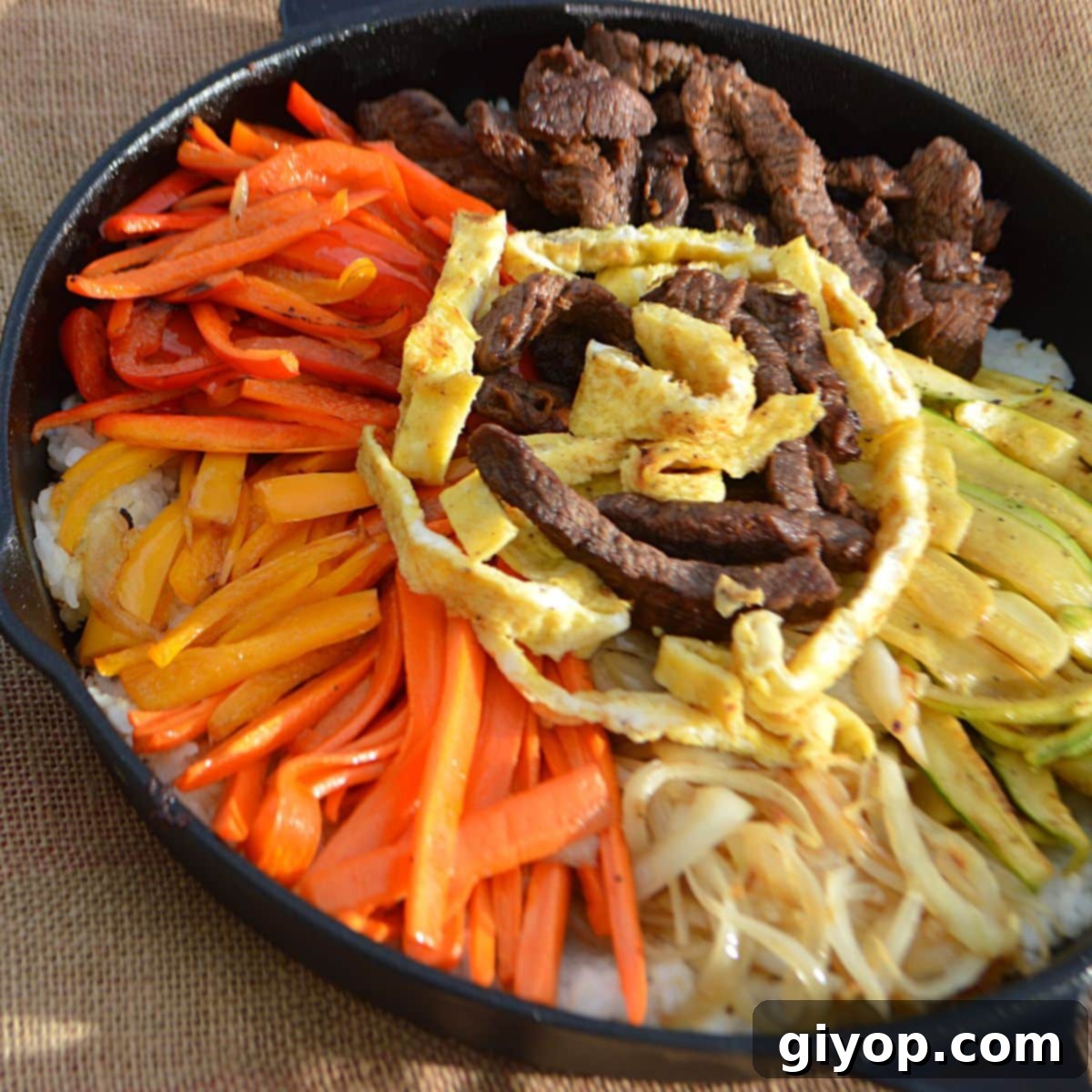
Experience the Vibrant Flavors of Korea: An Easy & Authentic Bibimbap Recipe
Looking for a dish that’s both visually stunning and deeply satisfying? Korean Bibimbap is an iconic one-bowl wonder that perfectly balances taste, texture, and nutrition. This wholesome meal, meaning “mixed rice,” is a symphony of fresh, crisp vegetables, savory meat (or a plant-based alternative), and a perfectly cooked egg, all artfully arranged over a bed of warm rice. It’s not just food; it’s an experience, a comfort meal champion that your family and friends will absolutely adore for its rich flavors and vibrant presentation.
Discovering Bibimbap: A Culinary Journey
My introduction to the delightful world of Bibimbap came through a culinary adventure – the Daring Cooks’ challenge. This challenge, back in July, invited participants on a virtual trip to South Korea to recreate this authentic dish. It was an opportunity to explore new flavors and techniques, pushing the boundaries of my home cooking. While the journey across continents can be long and tiring, the exploration of global cuisines from my kitchen is always invigorating. This particular dish quickly earned a spot as a family favorite, a testament to its universal appeal and the joy it brings to the dinner table.
Originally, this post was intended for publication a few days earlier, but some technical hiccups delayed its debut. Nevertheless, sharing this incredible recipe with you now feels even more rewarding. Bibimbap truly is a versatile culinary masterpiece, offering endless variations. Whether you’re a seasoned chef or a home cook, it provides a canvas for creativity, allowing you to tailor it to your family’s preferences and dietary needs. You can effortlessly transform it into a fantastic vegetarian or vegan option by simply omitting the beef and/or egg, showcasing its remarkable adaptability and appeal to diverse diets.
What Makes Bibimbap So Special?
At its core, Bibimbap is a harmonious blend of textures and tastes. It typically features warm white rice topped with an array of *namul* (sautéed and seasoned vegetables), often accompanied by marinated meat (most commonly beef), a fried egg, and a dollop of *gochujang* (Korean chili paste). The beauty lies in its freshness and the individual preparation of each component, which, when combined, creates an unforgettable flavor profile. The nutty aroma of sesame oil permeates every bite, elevating the dish to a truly heavenly experience, making it a staple in Korean cuisine and a beloved dish worldwide.
While the preparation might seem intricate due to the individual cooking of each vegetable, the process itself is straightforward and incredibly rewarding. The most time-consuming part is often the julienne cutting of the vegetables – carrots, zucchini, bell peppers, and onions – which ensures they cook quickly and maintain a delightful crunch. But trust me, the effort invested in preparing each element separately is well worth it, as it contributes to the vibrant colors and distinct flavors that define authentic Bibimbap. Each component is cooked just enough to retain its natural sweetness and texture, providing a delightful contrast when mixed with the soft rice and spicy sauce.
The Art of Assembling and Enjoying Bibimbap
The presentation of Bibimbap is almost as important as its taste. Each ingredient is meticulously arranged on top of the rice, creating a visually stunning mosaic of colors. This beautiful arrangement makes it incredibly tempting, even for the pickiest eaters, often sparking curiosity and excitement at the dinner table. The vibrant hues of orange carrots, green zucchini, red bell peppers, and golden egg yolks beckon you to dive in. However, the true Korean way to enjoy Bibimbap is to thoroughly mix all the ingredients together with the Korean red pepper sauce before eating. Some might think, “Why not just throw everything in a pot from the start?” But the visual feast, the anticipation, and the ultimate act of mixing are all part of the unique Bibimbap experience, making the mission of creating an inviting meal truly accomplished. The contrast between the initial perfect plating and the eventual delightful medley is a charming ritual that adds to the enjoyment of this dish, ensuring every bite is a complete blend of flavors and textures.
Essential Ingredients for Your Homemade Bibimbap
Crafting the perfect Bibimbap begins with quality ingredients. This recipe provides a foundational guide, but feel free to adjust according to your taste and what’s available. Freshness is key to unlocking the full potential of this dish, so select the best produce you can find. Here’s a detailed list of what you’ll need for this delicious Korean classic, serving as a comprehensive checklist for your culinary adventure.
Simple Korean Bibimbap Recipe
Print
Pin
Rate
Save
Saved!
Main Course
Korean
4
servings
358
kcal
Amira
Ingredients
For the meat:
- ¼ pound Beef strips
- 1 Tablespoon sesame oil
- 1 Tablespoon soy sauce
- 1 teaspoon sugar
- 2 garlic cloves minced
- salt and pepper to taste
For the vegetables mix:
- ½ cup onion julienne cut
- ½ cup carrots julienne cut
- ½ cup zucchini julienne cut
- ½ cup bell pepper julienne cut
- ½ cup mushroom sliced
- salt and pepper to your liking
- sesame oil
- 3 cups cooked rice
- 2 Large Eggs lightly beaten with salt and pepper.
Bibimbap sauce:
- 3 Tablespoons gochujang
- 1 Tablespoon sesame oil
- 1 garlic clove
- 1 teaspoon sugar
- 1 teaspoon sesame seeds toasted
- 1 teaspoon soy sauce
Instructions
Marinate the meat:
- In a bowl, mix beef strips with all the marinade ingredients and coat well.
- Set aside until you are done cooking the vegetables.
Cook the vegetables:
- In a skillet over medium-high heat, add a little sesame oil and cook carrots for 2 minutes, sprinkling with salt and pepper. Take them out and set aside.
- Do the same with any other vegetables you have – onions, zucchini, mushrooms, bell pepper, or any other vegetables you like.
- Cook each vegetable separately and do not overcook; we need them with a little crunch to maintain their texture and distinct flavors.
- In the same skillet, add some more oil and cook the marinated beef strips until done and lightly browned.
Cook eggs:
- Cook eggs however you like. Sunny-side up is the most common, but we liked ours omelet style, sliced into strips, for easier mixing.
Make the sauce:
- In a small bowl, mix all the sauce ingredients together until well combined.
To serve:
- You can serve in bowls by putting rice at the bottom, then topped with meat, a bit of every vegetable, bibimbap sauce, and topped with eggs.
- Or serve it skillet style as I did for a crispy rice bottom. Heat a bit of sesame oil in the same skillet (or a traditional Dolsot stone pot).
- Spread the cooked rice over, pressing gently to fry a bit from the bottom until lightly crispy.
- Top with the arranged vegetables, then the meat.
- Cut eggs into strips and add them in the middle of the arranged ingredients.
- Serve the skillet with the sauce on the side, allowing diners to mix everything together just before eating.
Nutrition
Calories:
358
kcal
|
Carbohydrates:
46
g
|
Protein:
12
g
|
Fat:
14
g
|
Saturated Fat:
4
g
|
Polyunsaturated Fat:
4
g
|
Monounsaturated Fat:
6
g
|
Trans Fat:
0.01
g
|
Cholesterol:
110
mg
|
Sodium:
428
mg
|
Potassium:
386
mg
|
Fiber:
3
g
|
Sugar:
6
g
|
Vitamin A:
3498
IU
|
Vitamin C:
32
mg
|
Calcium:
48
mg
|
Iron:
2
mg
Tried this Recipe? Pin it for Later!
Mention @AmirasPantry or tag #AmirasPantry!
Tips for an Unforgettable Bibimbap Experience
To truly elevate your homemade Bibimbap, consider these expert tips that will ensure a delicious and authentic result:
- **Mise en Place is Key:** Since many components are cooked separately, having all your ingredients prepped and ready (julienned, marinated, etc.) before you start cooking will make the process much smoother and more enjoyable. This methodical approach is a cornerstone of efficient cooking, particularly for a dish with multiple elements like Bibimbap.
- **Don’t Rush the Veggies:** Cooking vegetables individually ensures they cook evenly and retain their distinct flavors and textures. Overcrowding the pan can steam them instead of sautéing, leading to soggy results that diminish the overall quality of your dish. Take your time to achieve that perfect crisp-tender bite for each vegetable.
- **Adjust Spice to Taste:** Gochujang is fantastic, but its spice level can vary significantly depending on the brand. Start with a smaller amount in your sauce and add more gradually if you prefer a spicier kick. You want a balance of sweet, savory, and spicy, not just overwhelming heat.
- **Consider a Variety of Vegetables:** Beyond the core ingredients, feel free to experiment with other vegetables like blanched spinach, seasoned bean sprouts, thinly sliced cucumbers, or even a small portion of fermented kimchi for added depth and probiotic benefits. Each addition can bring a new layer of flavor and nutrition.
- **For Crispier Rice:** If opting for the skillet style (often referred to as Dolsot Bibimbap when served in a hot stone bowl), allow the rice to sit on the hot surface for a few extra minutes before mixing. This creates a wonderful, slightly toasted and crispy rice layer at the bottom, adding a delightful textural contrast.
Nutritional Insights
Understanding the nutritional value of your meal is always beneficial, especially when preparing wholesome dishes like Bibimbap. This dish offers a balanced profile of macronutrients and essential vitamins, making it a healthy choice for any meal. Here’s a breakdown for one serving of this delicious Bibimbap recipe:
Calories: 358kcal
|
Carbohydrates: 46g
|
Protein: 12g
|
Fat: 14g
|
Saturated Fat: 4g
|
Polyunsaturated Fat: 4g
|
Monounsaturated Fat: 6g
|
Trans Fat: 0.01g
|
Cholesterol: 110mg
|
Sodium: 428mg
|
Potassium: 386mg
|
Fiber: 3g
|
Sugar: 6g
|
Vitamin A: 3498IU
|
Vitamin C: 32mg
|
Calcium: 48mg
|
Iron: 2mg
Final Thoughts on This Korean Delight
Bibimbap is more than just a meal; it’s a celebration of colors, flavors, and textures, all harmoniously blended in one nourishing bowl. It’s a testament to the incredible depth of Korean cuisine and a dish that offers endless possibilities for customization, making it perfect for any occasion and any palate. Whether you’re making it for a special weekend gathering or a healthy weeknight dinner, this recipe will guide you to create a truly authentic and satisfying Bibimbap experience. Give it a try, and let the vibrant flavors transport you directly to the heart of Korea!
Loved this recipe? Share your creation!
Pin it for later and mention @AmirasPantry or tag #AmirasPantry on social media. We’d love to see your beautiful Bibimbap!
First published July 17, 2014. Last updated October 18, 2022, with important tips, clear step-by-step instructions, and enhanced readability.