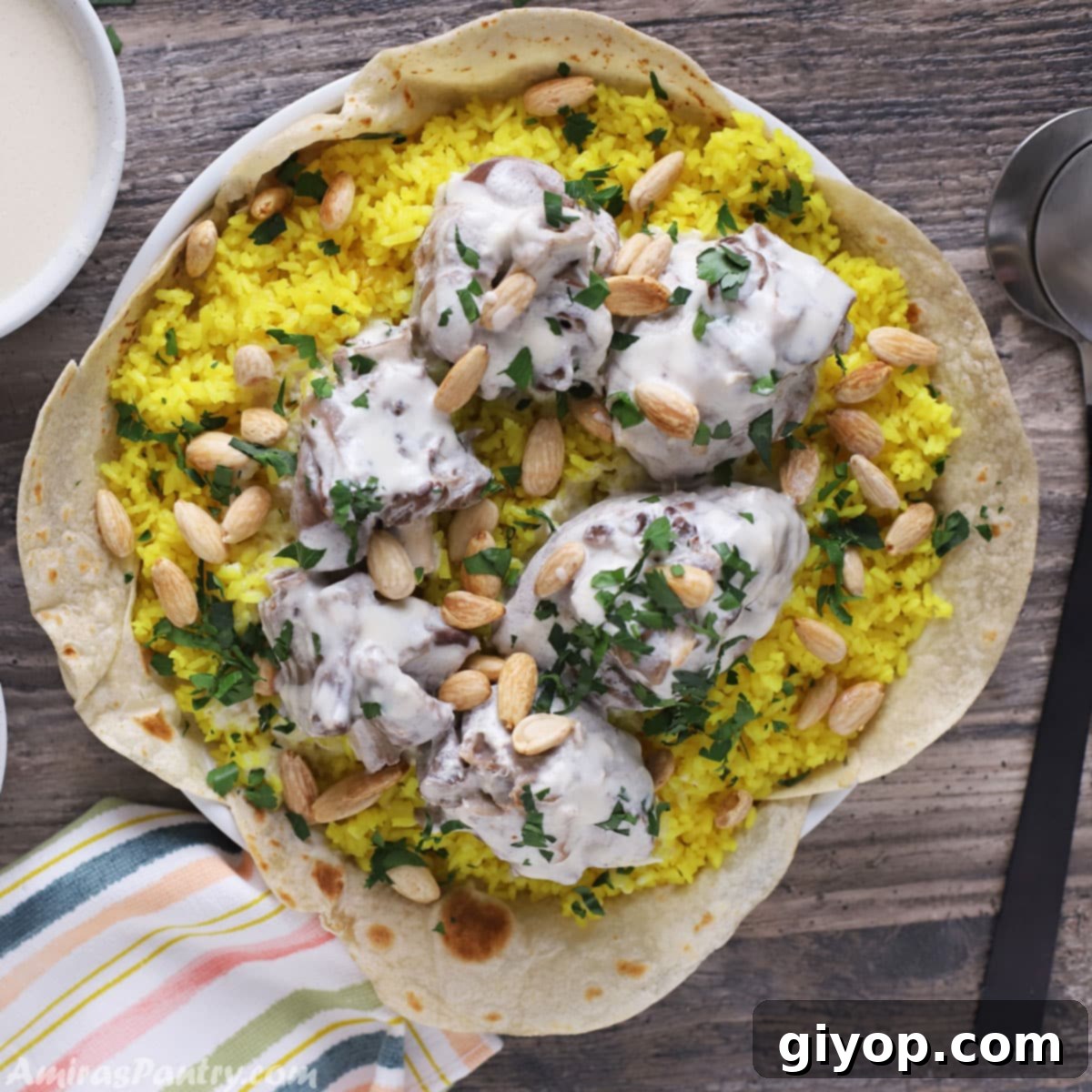
Embark on a culinary journey to the heart of Jordan with Mansaf, a dish that transcends mere sustenance to embody hospitality, tradition, and profound flavor. Recognized as the national dish of Jordan, Mansaf is a magnificent ensemble of tender lamb, aromatic rice, and a unique, tangy yogurt sauce known as Jameed, all artfully layered over thin bread. More than just a meal, Mansaf is a celebration, a centerpiece at family gatherings, weddings, and national holidays, reflecting the warmth and generosity of Jordanian culture.
Across the rich tapestry of Middle Eastern cuisine, meat and rice dishes hold a cherished place. Similar to the vibrant flavors found in Yemeni Mandi, Saudi Kabsa, or Palestinian Maqluba, Mansaf distinguishes itself with its signature Jameed sauce, offering an unparalleled taste experience. If you’ve ever dreamt of experiencing authentic Jordanian gastronomy, learning to prepare Mansaf at home is the perfect starting point. This comprehensive guide will walk you through every step to create a truly unforgettable Mansaf.
The soul of Mansaf lies in its distinctive yogurt sauce, Jameed. Traditionally, Jameed is a hard, dried, fermented yogurt made from sheep or goat milk. This ancient preservation method, originating from Bedouin traditions, allowed milk to be stored without refrigeration for extended periods. The process involves fermenting and salting the milk, straining it to remove whey, and then shaping the concentrated yogurt into balls, which are sun-dried until they harden to a rock-like consistency. This unique ingredient imparts a deeply rich, tangy, and savory flavor to Mansaf that cannot be replicated by ordinary yogurt.
For those outside Jordan, sourcing traditional hard Jameed balls can be challenging. Fortunately, modern culinary advancements offer a convenient solution: liquid Jameed, often marketed as “Jameed soup starter.” This ready-to-use liquid form captures the authentic essence of traditional Jameed, making it accessible for home cooks worldwide. It’s typically created by crushing dried Jameed balls and blending them with oil and other ingredients to achieve a smooth, pourable consistency, ready to transform your dish into an authentic Jordanian masterpiece.
Why This Mansaf Recipe Works So Well
Creating an authentic Jordanian Mansaf at home might seem daunting, but this recipe is designed to be approachable and highly successful. One of its greatest strengths lies in the accessibility of most ingredients, particularly the use of liquid Jameed. This modern convenience allows you to capture the traditional, distinctive flavor of Mansaf without the arduous process of preparing Jameed from scratch, ensuring an authentic taste even outside of Jordan.
While the recipe involves a few distinct stages—cooking the lamb, preparing the rice, and crafting the Jameed sauce—each step is straightforward and manageable. We’ve streamlined the process without compromising on flavor or authenticity, making it a rewarding experience for cooks of all levels. You don’t need a special occasion to enjoy this magnificent dish; it’s a perfect hearty meal for any day. With the detailed instructions and invaluable tips provided here, you’ll be able to prepare lamb that is incredibly fork-tender and a Jameed sauce that is as rich and flavorful as any found in a Jordanian home.
Essential Recipe Ingredients for Authentic Mansaf
Ingredient Notes and Expert Variations
- Lamb Meat: Traditionally, Mansaf calls for bone-in lamb pieces, which impart a richer flavor to the broth and a more tender texture to the meat as it cooks slowly. Cuts like lamb shoulder, shank, or leg are ideal. If lamb is not readily available or preferred, high-quality beef cuts can be used as an alternative, though the flavor profile will differ slightly from the authentic lamb Mansaf.
- Jameed: As discussed, liquid Jameed (soup starter) is highly recommended for convenience and authenticity in the US and other regions. If liquid Jameed is absolutely unavailable, you can create a substitute sauce by mixing Greek yogurt with buttermilk to achieve a similar tang and consistency, or simply use Greek yogurt for a milder, creamier version. Bear in mind that while these substitutes will yield a delicious yogurt-based sauce, the unique depth and tang of true Jameed will be difficult to replicate entirely.
- Rice: Short-grain rice is the traditional choice for Mansaf, as its starchy texture helps it absorb the Jameed sauce beautifully and contributes to the dish’s comforting mouthfeel. However, if short-grain rice is not on hand, medium or even long-grain rice can be used. Adjust cooking liquid slightly as needed, and ensure the rice is fully cooked but not mushy.
- Bread: Shrak bread, also known as Markook, is the authentic thin, unleavened flatbread used as the base for Mansaf. It’s known for its large size and delicate texture. To simplify the recipe for home cooks, uncooked flour tortillas can serve as an excellent substitute. Briefly pan-fry them for about 30 seconds on each side in a non-stick pan to soften and warm them. Traditionally, Shrak is sometimes cooked on only one side to retain a slightly doughy texture underneath, which you might also prefer with tortillas.
- Aromatics: A large onion and fresh garlic cloves form the flavorful base for both the lamb and the Jameed sauce. These foundational ingredients contribute essential depth and aroma to the entire dish.
- Ghee (Clarified Butter): Ghee is crucial for Mansaf, offering a rich, nutty flavor that olive oil cannot fully replicate. It’s used to sauté the lamb and also in the rice and Jameed sauce. If ghee is unavailable, clarified butter is an excellent substitute, or you can use regular butter, though it may contain milk solids that can burn at higher temperatures. Olive oil can be used in a pinch, but be prepared for a slightly different flavor profile.
- Spices: A careful blend of spices like cinnamon stick, bay leaves, turmeric, and black peppercorns infuses the lamb and rice with layers of warm, earthy aromas, creating the distinctive Middle Eastern essence of Mansaf. Turmeric is also responsible for giving the rice its beautiful golden hue.
- Cornstarch: A small amount of cornstarch is used to slightly thicken the Jameed sauce, ensuring it clings beautifully to the lamb and rice without being overly heavy.
Recommended Equipment and Products
The following are affiliate links. As an Amazon Associate, we earn from qualifying purchases.
- Large Pot or Dutch Oven: Essential for cooking the lamb and later simmering the Mansaf sauce. A heavy-bottomed pot ensures even heat distribution.
- Liquid Jameed or Soup Starter: A convenient way to incorporate the authentic Jameed flavor.
- Whisk: Important for smoothly incorporating cornstarch into the yogurt and Jameed mixture, preventing lumps.
- Large Serving Platter: Mansaf is traditionally served communally on a grand platter, making presentation a key part of the experience.
Step-by-Step Instructions to Make Mansaf
- Prepare the Lamb: Begin by placing the lamb pieces in a large Dutch oven or a deep saucepan. Cover the meat generously with water and bring it to a rolling boil over medium-high heat. Once the water boils, let the lamb cook for about 5 minutes. This initial blanching step helps to remove impurities and ensures a cleaner, more flavorful broth later. After 5 minutes, carefully remove the lamb pieces and discard the water.
- Brown the Lamb Base: In the same cleaned pot, melt 2 tablespoons of ghee over medium heat. Add the chopped onions and sauté them gently for a couple of minutes until they begin to soften and become fragrant. Stir in the cinnamon stick, bay leaves, and black peppercorns, allowing their aromas to release for about 30 seconds. Now, add the blanched lamb cubes and brown them on all sides for approximately 5 minutes, sealing in their juices and developing a rich flavor.
- Simmer the Lamb: Cover the browned lamb and aromatics with hot water, ensuring the meat is fully submerged. Bring the mixture to a boil, then reduce the heat to low, cover the pot, and let it simmer gently until the lamb is exquisitely tender. This slow cooking process will likely take around 75 minutes, allowing the flavors to meld beautifully and the meat to become wonderfully succulent.
- Prepare the Aromatic Rice: While the lamb simmers, start on the rice. In a separate pot, melt 2 tablespoons of ghee over medium heat. Add the short-grain rice (or your chosen variety) and stir continuously until each grain is coated with the ghee, giving it a slightly translucent appearance. Mix in the turmeric, which will give the rice its signature golden color, and season with salt to taste. Pour in the specified amount of water (2½ to 2 ⅔ cups, adjust based on rice type). Bring the water to a boil, then reduce the heat to low, cover the pot tightly, and cook until all the water is absorbed and the rice is tender and fluffy.
- Craft the Jameed Sauce: Once the lamb is cooked and incredibly tender, it’s time to create the heart of Mansaf – the Jameed sauce. In a large bowl, combine the yogurt with cornstarch, whisking thoroughly to ensure there are no lumps. Pour in the liquid Jameed (soup starter) and whisk again until the mixture is smooth and well-combined. Next, gradually whisk in about 1 ½ cups of the flavorful meat broth from the cooked lamb, ensuring a homogenous sauce.
- Simmer the Jameed Sauce with Lamb: In a separate pot, melt 2 tablespoons of ghee over medium heat. Add the minced garlic and sauté for just about 30 seconds until fragrant, being careful not to burn it. Immediately pour in the Jameed mixture, whisking continuously to prevent curdling, and bring it to a gentle boil. Add the cooked lamb pieces directly into the simmering Jameed sauce. Taste the sauce and adjust seasoning as needed. Let everything cook together for approximately 10 minutes over medium heat, allowing the lamb to fully absorb the rich Jameed flavors.
- Assemble and Garnish Mansaf: Just before serving, assemble your grand Mansaf platter. Arrange the warmed Shrak bread (or pan-fried tortillas) generously across a large serving dish. Ladle a good amount of the fragrant Jameed sauce over the bread, allowing it to soak up the rich flavors. Evenly spread the turmeric-infused rice over the sauce-soaked bread. Carefully place the tender lamb pieces on top of the rice. Finally, ladle more Jameed sauce over the lamb and rice, ensuring every component is drenched in its distinctive tang. Garnish generously with toasted almonds and freshly chopped parsley for both texture and visual appeal. Serve immediately and watch your guests delight in this authentic Jordanian feast!
Expert Tips for a Perfect Mansaf
- Lamb Cooking Method: Some cooks prefer to partially cook the lamb in water and then finish it directly in the Jameed sauce. Others cook the lamb entirely in the Jameed from the start. My method of cooking the lamb until tender in water first and then simmering it in the Jameed sauce ensures the lamb is perfectly cooked and allows the Jameed to maintain its distinct flavor without becoming diluted or overcooked. This also gives you a rich lamb broth to add to the Jameed sauce.
- Garlic in Jameed: While not strictly traditional in all Mansaf recipes, the addition of sautéed garlic to the Jameed sauce, a tip I learned from a friend, significantly enhances the sauce’s depth and aroma. Feel free to include it for an extra layer of flavor.
- Bread Preparation: For a truly authentic experience, some traditionalists prefer to tear the Shrak bread into smaller, bite-sized pieces before arranging them on the serving platter. This makes it easier to scoop up the Mansaf with your hands, as is customary.
- Garnish Variations: Toasted pine nuts can be used interchangeably with or in addition to toasted almonds for garnishing. Both add a delightful crunch and nutty flavor.
- Extra Sauce for Dipping: Always serve extra Jameed sauce on the side in a separate bowl. Guests will appreciate having additional sauce to ladle over their portions, especially if they enjoy a very moist Mansaf.
Frequently Asked Questions About Mansaf
For the most authentic Mansaf experience, set aside your utensils and prepare to use your hands! Traditionally, Jordanian Mansaf is eaten communally from a large platter, using only the right hand. The left hand is kept behind the back to avoid confusion. The art involves skillfully tearing off a piece of bread, scooping up some rice and a tender piece of lamb, rolling it into a small ball (called a “kabseh”), and carefully bringing it to your mouth without your fingers touching your lips. It’s a delightful custom, though using a spoon is perfectly acceptable if you prefer.
Shrak bread is indeed very similar to thin tortillas in its flat, round shape. However, traditional Shrak is typically much larger and considerably thinner, almost translucent, designed to cover a large communal Mansaf platter. Shrak is usually homemade, baked on a convex griddle called a saj. While tortillas are a convenient and excellent replacement for home cooks, they are generally smaller and slightly thicker. For an authentic Shrak texture, some people prefer to cook their tortillas only on one side when pan-frying, leaving the other side softer and doughier.
While Mansaf is best served fresh, you can prepare some components in advance. The lamb can be cooked and even stored in its broth for a day or two in the refrigerator. The rice can also be cooked ahead of time. However, the Jameed sauce should ideally be made closer to serving, and the final assembly should be done just before the meal to ensure the bread doesn’t become overly soggy and the dish is served warm and vibrant.
Leftover Mansaf should be stored in an airtight container in the refrigerator for up to 3-4 days. When reheating, it’s best to gently warm the lamb and rice separately. You can reheat the Jameed sauce on the stovetop over low heat, stirring occasionally, adding a splash of water or broth if it has thickened too much. Reassemble individual portions for the best texture and flavor.
Serving Suggestions for Your Mansaf Feast
- The Foundation of Flavor: Mansaf is traditionally served on a large platter with Shrak bread forming the base. This bread is crucial for soaking up the rich, tangy Jameed yogurt sauce that is generously poured over it, creating a delightful foundation for every bite. Always be sure to keep any extra Jameed sauce in a separate bowl for dipping or for those who desire an extra dose of its unique flavor.
- Refreshing Beverages: To complement such a hearty and flavorful meal, I highly recommend serving a salty yogurt drink like Ayran. Its refreshing, slightly tart profile helps cut through the richness of the Mansaf and aids in digestion.
- A Sweet Ending: After indulging in this savory, aromatic feast, a traditional sweet treat like authentic Maamoul cookies makes the perfect conclusion. Their delicate pastry and date or nut fillings offer a delightful contrast to the main course.
Discover More Middle Eastern Delights
- Mandi: Experience a taste of Yemeni tradition with Mandi, a fragrant one-pot baked rice and chicken recipe that embodies comfort and flavor, often shared at family tables.
- Chicken and Yellow Rice: A frequent and beloved meal on many dinner tables, this recipe for tender chicken served with vibrant yellow rice is a testament to simple, delicious home cooking.
- Kabsa: Explore another intensely flavorful rice dish with Kabsa, a Saudi Arabian staple featuring spiced chicken and aromatic rice, a dish that will transport your taste buds.
- Mahshi: Discover the art of Arabic stuffed vegetables with Mahshi, where various vegetables are lovingly filled with a fragrant rice and meat mixture and slow-cooked in a rich tomato sauce.
- Musakhan: A cornerstone of Palestinian cuisine, Musakhan features sumac-spiced roasted chicken served over traditional Taboon Bread, caramelized onions, and garnished with toasted nuts – a true feast.
- Koshari: Dive into Egypt’s national vegetarian dish, Koshari, a delightful blend of rice, pasta, lentils, and chickpeas, topped with a flavorful tomato sauce and crispy fried onions.
- Stuffed Onions: Enjoy a deeply comforting and hearty dish with this recipe for tender onion layers rolled around a delicious rice and meat filling, all simmered in a simple yet rich tomato and broth mixture.
If you love this recipe, please leave a ⭐⭐⭐⭐⭐ rating! Thank you.
Mansaf – The Iconic Jordanian Lamb and Yogurt Dish
Jordanian cuisine is renowned for its delicious recipes, and Mansaf stands proudly at the top of that list. This traditional dish is a harmonious blend of textures and flavors, created by layering soft bread, fragrant rice, and succulent, tender pieces of lamb, all generously bathed in a rich, tangy Jameed yogurt sauce. A truly festive and popular meal, Mansaf is reserved for special occasions and communal celebrations, embodying the spirit of sharing and hospitality.
Dinner, Main Course
Jordanian, Middle Eastern
Halal
15 minutes
2 hours 15 minutes
2 hours 30 minutes
6 servings
Amira
Ingredients
- 2 pounds lamb meat, preferably bone-in cuts for richer flavor
- 2 Tablespoons ghee, or clarified butter
- 1 large onion, cut into chunks or sliced
- 1 cinnamon stick
- 2 whole bay leaves
- 1 teaspoon black peppercorns
For the Rice:
- 2 Tablespoons ghee
- 2 cups short-grain rice
- ½ teaspoon turmeric
- Salt to taste
- 2½ to 2 ⅔ cups water (adjust based on rice type)
For the Jameed Sauce:
- 1 cup plain yogurt (whole milk preferred)
- 1 Tablespoon cornstarch
- 2 Tablespoons ghee
- 2 cloves garlic, minced
- 1 packet liquid Jameed (or soup starter)
- 1½ cups lamb broth (reserved from cooking the lamb)
For Garnishing:
- ½ cup toasted almonds (or pine nuts)
- ½ bunch fresh parsley, finely chopped
- 4-5 pieces Shrak bread (or large, thin tortillas, lightly pan-fried)
Instructions
- Fill a deep pot or Dutch oven with enough water to fully cover the lamb meat and bring it to a vigorous boil. Carefully add the lamb pieces and allow the water to return to a boil.
- Let the lamb boil in the water for 5 minutes. Then, remove the meat pieces from the pot and discard the initial boiling water. This step helps to clean the meat and clarify the broth for later use.
- In the same pot (cleaned), melt 2 tablespoons of ghee over medium heat. Add the chopped onions and sauté them for a couple of minutes until they become translucent and fragrant.
- Add the cinnamon stick, bay leaves, black peppercorns, and the blanched lamb cubes. Brown the lamb on all sides for about 5 minutes to develop a rich, savory crust.
- Cover the browned lamb with hot water, ensuring it’s completely submerged. Bring the mixture to a boil, then reduce the heat to low, cover the pot, and simmer until the lamb is exceedingly tender, approximately 75 minutes. Reserve about 1½ cups of this flavorful lamb broth for the Jameed sauce.
Meanwhile, Prepare the Rice:
- In a separate pot, melt 2 tablespoons of ghee over medium heat. Add the short-grain rice and stir continuously until each grain is well coated with ghee, becoming slightly translucent.
- Stir in the turmeric and salt. Then, pour in 2½ to 2 ⅔ cups of water (adjusting slightly based on your rice type).
- Bring the water to a boil, then reduce the heat to low, cover the pot tightly, and cook until the rice is tender and all the water has been absorbed.
Prepare the Jameed Sauce:
- Once the lamb is tender, begin preparing the Jameed sauce. In a large bowl, combine the yogurt with the cornstarch, whisking vigorously until smooth and free of any lumps.
- Pour in the liquid Jameed (soup starter) and whisk thoroughly to combine. Then, gradually whisk in the reserved 1½ cups of lamb broth until the mixture is uniform.
- In a clean pot, melt 2 tablespoons of ghee over medium heat. Add the minced garlic and sauté for just 30 seconds until fragrant, being careful not to burn it.
- Pour the Jameed mixture into the pot with the garlic, whisking constantly as it heats to prevent curdling. Bring the sauce to a gentle boil.
- Add the cooked lamb pieces into the simmering Jameed sauce. Taste the sauce and adjust seasonings as desired.
- Allow everything to cook together for about 10 minutes over medium heat, letting the lamb absorb the rich flavors of the Jameed.
To Assemble the Mansaf:
- Just before serving, arrange the warmed Shrak bread (or pan-fried tortillas) on a large, communal serving platter.
- Generously ladle some of the warm Jameed sauce over the bread, allowing it to soak through.
- Spread the turmeric-infused rice evenly over the sauce-soaked bread, creating a golden layer.
- Arrange the tender lamb meat pieces on top of the rice. Ladle additional Jameed sauce generously over the lamb and rice.
- Finally, sprinkle the entire dish with toasted almonds and freshly chopped parsley for garnish and added texture. Serve immediately with extra Jameed sauce on the side.
Notes
- The traditional meat for Mansaf is lamb, but beef can be used as an alternative if lamb is unavailable or not preferred.
- If liquid Jameed cannot be found, you can substitute by making the sauce with a mixture of Greek yogurt and buttermilk, or simply Greek yogurt for a milder flavor.
- Traditional Jameed consists of dried, hard balls made from ewe or goat’s milk. The liquid Jameed found in many markets acts as a convenient soup starter that replicates its authentic taste.
- While short-grain rice is traditionally used, any rice you have on hand can work, though cooking times and liquid amounts may need slight adjustments.
- The method of cooking lamb separately before adding it to the Jameed sauce is recommended to ensure optimal tenderness and flavor integration without overcooking the delicate Jameed.
- Adding garlic to the Jameed sauce is a flavorful addition, though it’s not present in all traditional recipes. It adds a wonderful depth.
- If using tortillas as a substitute for Shrak bread, lightly pan-fry them for about 30 seconds per side in a non-stick pan to soften them. For a more authentic texture, you can cook them on only one side to keep the other side doughy.
- Some prefer to tear the bread into smaller pieces before arranging it on the serving platter, especially when eating Mansaf by hand.
- Toasted pine nuts are an excellent alternative or addition to almonds for garnishing, offering a different nutty flavor and crunch.
Nutrition
Carbohydrates: 58g |
Protein: 37g |
Fat: 25g |
Saturated Fat: 13g |
Cholesterol: 142mg |
Sodium: 127mg |
Potassium: 592mg |
Fiber: 2g |
Sugar: 2g |
Vitamin A: 466IU |
Vitamin C: 7mg |
Calcium: 85mg |
Iron: 6mg