
Authentic Turkish Coffee (Qahwa): A Comprehensive Guide to Brewing Perfection
Have you ever experienced the rich, captivating aroma and robust flavor of a perfectly brewed cup of Turkish coffee, known as Qahwa in many regions? If not, you’re truly missing out on a centuries-old tradition and a deeply satisfying beverage. This thick, full-bodied coffee offers a unique sensory journey, making it the ideal way to awaken your senses and start your day. If you’re eager to learn how to make authentic Turkish coffee at home and master this distinctive brewing method, you’ve come to the right place. This guide will walk you through every step, from selecting the finest ingredients to achieving that coveted rich foam, ensuring you can enjoy this cultural cornerstone in your own kitchen.
Turkish coffee is more than just a drink; it’s an integral part of Middle Eastern and Balkan culture, embodying hospitality, community, and tradition. Its preparation is a ritual, and its consumption a moment of mindfulness. Legend has it that coffee was first introduced to Istanbul in the 16th century, quickly becoming a staple in Ottoman palaces and homes before spreading throughout the world. Recognized by UNESCO as an Intangible Cultural Heritage of Humanity, Turkish coffee holds a special place in history and modern life. Its unique brewing style, which involves boiling finely ground coffee with water in a special pot called a cezve (or ibrik), results in a distinctive thick foam on top and a rich, unfiltered brew at the bottom. This method unlocks a depth of flavor and a velvety texture unmatched by other coffee preparations.
Why You’ll Love Authentic Turkish Coffee
- Unforgettable Flavor Profile: It’s a remarkably rich, full-bodied coffee that delivers an intense and deeply satisfying taste, perfect for truly waking you up in the morning or as an invigorating afternoon treat. The unfiltered grounds contribute to its unique texture and robust flavor.
- Aromatic Experience: Beyond its taste, Turkish coffee boasts an incredibly pleasant aroma that fills your kitchen, setting a soothing and inviting atmosphere. It also offers the potential for personalization with your favorite spices, adding another layer to its fragrant appeal.
- Cultural Connection & Versatility: Enjoy this exquisite beverage with friends and family, sharing stories and creating memories, or savor it in peaceful solitude for a moment of personal reflection. It’s an experience that transcends mere consumption, offering a connection to history and culture.
- Sustained Energy: Unlike some coffees that can cause jitters, the slow brewing process of Turkish coffee often provides a more sustained and gentle energy boost, thanks to its higher caffeine extraction.
This traditional coffee offers a delicious taste and an aromatic journey you’ll never forget. If you consider yourself a true coffee lover, then adding this timeless recipe to your repertoire is an absolute must. Prepare to be enchanted by its depth and complexity.
Essential Ingredients for Turkish Coffee
Making authentic Turkish coffee requires just a few simple ingredients, but their quality and preparation are paramount. Below is an overview; you’ll find precise measurements and detailed instructions in the printable recipe card at the bottom of the page.
Ingredient Notes
- Turkish Coffee Grounds: This is the cornerstone of the recipe. Turkish coffee is characterized by its extremely fine grind, resembling flour or powdered sugar. This ultra-fine grind is crucial for the unique brewing process and the formation of the prized foam. Look for dark-roasted Arabica beans specifically labeled “Turkish coffee” or “finely ground coffee.” You can often find it in specialty grocery stores, Middle Eastern markets, or larger chain grocery stores. If you grind your own beans, ensure your grinder can achieve this powder-like consistency.
- Water: Use cold, fresh filtered water for the best flavor extraction. The quality of your water significantly impacts the final taste of your coffee.
- Sugar: The amount of sugar is entirely customizable to your preference. Traditional granulated sugar works perfectly. In many Middle Eastern cultures, coffee sweetness levels are named and prepared to order. For instance, “sada” means no sugar, “az şekerli” (lightly sweet), “orta şekerli” (medium sweet), and “çok şekerli” (very sweet). You might also encounter sugar cubes, which are sometimes served alongside for individual sweetening, though typically the sugar is added during brewing.
- Optional Spices: While not mandatory, adding a dash of ground cardamom is a popular tradition in many regions, lending a fragrant and slightly floral note. Ground cinnamon, cloves, or even a hint of mastic can also elevate the experience.
Step-by-Step Turkish Coffee Instructions
Mastering Turkish coffee requires a keen eye and a bit of patience, but the process is incredibly rewarding. The detailed instructions are in the recipe card below, but here’s an overview to guide you.
- Combine Ingredients: Pour the precise amount of cold water into your Turkish coffee pot (cezve). Add the finely ground Turkish coffee and your desired amount of sugar. Stir gently 3-4 times to ensure everything is well combined and the coffee grounds are thoroughly moistened.
- Gentle Heat: Place the cezve over medium-low heat. It’s crucial not to stir the mixture anymore once it’s on the heat. The magic happens as the coffee slowly heats and the grounds settle.
- Watch for the Foam: As the coffee heats, you’ll notice small bubbles forming around the edges of the cezve, and a rich, dark foam will begin to rise towards the center. This foam, known as “wesh” in Arabic, is highly prized and a hallmark of well-made Turkish coffee.
- Prevent Boiling: As the foam rises significantly, almost reaching the rim of the pot, immediately lower the heat to the absolute minimum. Keep a very watchful eye for about 30 seconds, ensuring it doesn’t come to a full, rolling boil. If it threatens to boil over, briefly remove the pot from the heat for a couple of seconds, then return it. The goal is to heat it just below boiling to preserve the foam and prevent burning the coffee.
- First Pour (Foam First): Carefully and slowly pour a portion of the coffee into your small serving cups, making sure that each cup receives a generous layer of the thick, frothy foam. This initial pour is essential for sharing the “wesh” equally among servings.
- Second Heat & Pour: Return the cezve to the low heat and allow the remaining coffee to foam up again. This second round of heating helps to extract more flavor and create additional foam.
- Final Pour: Once the second foam rises, remove the pot from the heat and slowly pour the rest of the coffee into the cups. Be careful to pour gently to maintain the foam and leave the fine coffee grounds settled at the bottom of the cezve and cup.
- Serve Immediately: Turkish coffee is best enjoyed piping hot, immediately after brewing.
Expert Tips for Perfect Turkish Coffee
The true secret to brewing exceptional Turkish coffee lies in patience and practice. Never rush the process; allow the coffee to slowly develop that magnificent, thick foam on top.
- The “Wesh” is Key: The thick layer of foam on top is highly valued in Turkish coffee culture, known as “wesh” (which literally means “face” in Arabic). Serving coffee without this foam is often considered impolite in many traditions.
- Practice Makes Perfect: If this is your first time making Turkish coffee, start by preparing one cup at a time. This allows you to closely monitor the process and perfect your technique before scaling up.
- Even Foam Distribution: When brewing multiple cups, ensure you divide the initial foam layer equally among all the cups before pouring the rest of the coffee. This ensures every guest enjoys the full experience.
- Serving Vessels: Turkish coffee is traditionally served in small, demitasse-style cups. If you don’t have specific Turkish coffee cups, espresso cups are a perfectly suitable alternative due to their similar size.
- Coffee Ground Varieties: In the US, you’ll commonly find two types of Turkish coffee grounds: plain and “gourmet” varieties, often featuring cardamom. In the Middle East, the array is much wider, with many shops boasting their own secret blends of exotic spices for an unparalleled aromatic and flavorful coffee experience.
- Cezve Selection: A good quality copper or brass cezve with a narrow neck helps in creating and retaining the foam. The material also conducts heat evenly.
- Avoid Stirring Post-Heat: Once the cezve is on the heat, refrain from stirring. This allows the fine grounds to settle at the bottom and the foam to form properly on the surface.
Serving Suggestions for Turkish Coffee
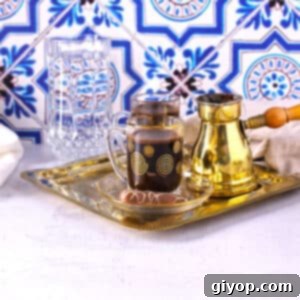
Turkish coffee is typically served with a tall glass of cold water and a piece of Turkish Delight (Lokum). The water serves to cleanse the palate before sipping the rich coffee, enhancing its flavor. Turkish Delight, with its sweet, chewy texture, provides a perfect counterpoint to the coffee’s intensity.
Beyond these traditional pairings, you could also serve it with these Rhubarb Scones, chocolate-covered dates, or any small candies or cookies you prefer. Small, delicate pastries or a simple piece of dark chocolate also complement its strong flavor beautifully.
Arabic Coffee vs. Turkish Coffee: Understanding the Differences
While both Arabic coffee (often referred to as Saudi Arabian coffee) and Turkish coffee share roots in Middle Eastern hospitality, they possess distinct characteristics in preparation, flavor, and serving traditions.
- Flavoring and Roasting: Arabic coffee is almost always flavored with cardamom and sometimes saffron, giving it a unique aromatic and slightly spicy profile. It often uses a lighter roasted bean, contributing to its distinct color. In contrast, while cardamom is a popular addition to Turkish coffee in some regions, it is not a mandatory element, and Turkish coffee typically uses dark-roasted beans.
- Color: Arabic coffee has a light, almost yellowish hue due to its lighter roast and often more sparse grounds. Turkish coffee, brewed from dark-roasted, finely ground beans, results in a rich, dark brown color.
- Brewing Method and Time: Brewing Arabic coffee is often a prolonged process, prepared in a large, distinctively shaped pot called a “Dallah,” designed for continuous brewing and serving over extended periods. Turkish coffee, on the other hand, is made relatively quickly in a small, individual serving pot called a “cezve” (or ibrik), making it a faster, more personal preparation.
- Serving Style: Arabic coffee is typically served unsweetened in small, handle-less cups (finjan), often refilled multiple times as a gesture of generosity. Turkish coffee is prepared with sugar to taste and served in small cups with handles, usually not refilled during a single sitting.
Turkish Coffee Etiquette and Traditions
The ritual of serving Turkish coffee is steeped in tradition and etiquette, particularly in the Middle East. One of the most fascinating aspects is the practice of serving it with a glass of water.
It’s a long-held belief that if a guest drinks the water before taking a sip of the coffee, it signals that they are hungry, prompting the host to prepare a substantial meal. Conversely, if the guest reaches for the coffee first, it indicates they are not particularly hungry, and a lighter repast would suffice. This simple gesture demonstrates the profound connection between coffee, hospitality, and attentiveness to guests’ needs.
In addition to this, traditionally, Turkish coffee should be sipped slowly and gracefully, without stirring the grounds at the bottom. The foam is an important part of the experience, and disturbing the settled grounds can ruin the texture and taste. In some cultures, particularly in Egypt, unsweetened Turkish coffee (Sada) is exclusively served during solace gatherings, a tradition still observed in many communities as a sign of respect and solemnity.
A more mystical tradition associated with Turkish coffee is “Tasseography,” or coffee fortune-telling. After finishing their coffee, people traditionally flip their cups onto the saucer, allowing the remaining grounds to create patterns. Experienced readers, often older women, interpret these patterns to foretell the future. While this practice is less common today and often viewed as entertainment rather than a serious belief, it remains a charming part of Turkish coffee’s rich cultural tapestry.
Creative Variations of Turkish Coffee
While traditional Turkish coffee is a timeless classic, there are several delightful variations you can explore to suit different tastes and occasions:
- Turkish Coffee with Milk: For a creamier, milder experience, you can add milk along with the coffee grounds and sugar to the cezve. Bring it to a gentle boil, similar to the traditional method. This version is typically served in a regular-sized coffee mug (around 8 oz) and does not emphasize the signature foam as much. A dash of ground cinnamon can be a wonderful addition here.
- Spiced Turkish Coffee: Elevate the aroma and flavor by incorporating spices directly into the brew. Add a dash of ground cinnamon, cardamom, cloves, or even a blend like pumpkin spice during the brewing process. This is particularly delightful during colder months.
- Sweetener Alternatives: If you prefer to avoid traditional sugar, feel free to use your favorite sweetener instead, adjusting the quantity to achieve your desired level of sweetness.
- Custom Blends: Purchase plain Turkish coffee grounds, like those from Mehmet Efendi, and experiment with creating your own signature spice blend. Imagine a warm pumpkin spice blend for autumn or a hint of ginger for a refreshing twist.
- Unsweetened (Sada): For the experienced coffee connoisseur who appreciates the pure, unadulterated flavor of the beans, brewing without any sugar (Sada) is a popular and traditional option.
Frequently Asked Questions About Turkish Coffee
Turkish coffee offers a strong, intense, and full-bodied flavor experience. It’s characterized by its unfiltered nature, meaning all the finely ground coffee particles remain in the cup, contributing to its rich texture. It often has a distinctively bitter taste compared to regular filtered coffee, which is why many beginners choose to add more sugar. The unique brewing process creates a thick, creamy foam on top that is a signature part of its taste and mouthfeel. Remember to only drink the liquid portion and avoid consuming the muddy, paste-like sediment at the bottom, as these are the coffee grounds themselves.
Absolutely! The sweetness level of Turkish coffee is highly customizable and traditionally prepared to order. For a very sweet cup, use about 3 teaspoons of sugar per 1 teaspoon of coffee. For a medium sweetness, 2 teaspoons of sugar is common. If you prefer it lightly sweet, half a teaspoon of sugar might be enough. For a completely unsweetened version, omit the sugar entirely. These variations are often known by specific names in Arabic: “Sada” (no sugar), “Al Reha” (very lightly sweet, for experienced drinkers), “Mazboot” (just right sweet), “Manoo” (medium sweet), “Zeyada” (extra sweet), and “Sarya’osee” (super sweetened, beginner’s level). More details on these are available in the recipe card notes.
Yes, Turkish coffee is generally considered stronger than regular filtered drip coffee. This is primarily because it is unfiltered; all the finely ground coffee, essential oils, and dissolved solids remain in the cup, leading to a more concentrated and intense flavor. Additionally, its longer brewing time, albeit at a lower heat, allows for a greater extraction of caffeine from the beans. While the serving size is small, the potency per ounce is significant, delivering a powerful and lasting caffeine kick.
For the most authentic experience, use 100% Arabica beans that are dark roasted. The crucial factor is the grind: it must be extremely fine, almost like flour or powdered sugar. Many brands specifically label their coffee as “Turkish coffee” to indicate this ultra-fine grind. If you grind your own, ensure your grinder can achieve this consistency, as a coarse grind will not produce the characteristic foam or texture.
To preserve its freshness and potent aroma, store Turkish coffee grounds in an airtight container in a cool, dark place. Avoid refrigeration or freezing if the container is not perfectly sealed, as coffee can absorb odors. For best flavor, purchase small quantities and consume them relatively quickly, as the fine grind exposes more surface area to air, leading to faster oxidation.
Related Beverage Recipes
- If you’re looking for another comforting and flavorful coffee recipe, next time give this Ginger Latte a try. It offers a unique spice-infused twist on a classic.
- Tea with Milk has been a beloved beverage in the Middle East for centuries. Steep your favorite black tea with a splash of milk and a touch of sweetener for an exquisite, quick, and easy beverage experience.
- Bring delicious fall flavors into your home with this easy Homemade Pumpkin Spice Latte Recipe. Loaded with real pumpkin and sweetened to your preference, this pumpkin latte delivers full flavor without unnecessary calories.
Delightful Coffee & Dessert Recipes
- Coffee Milkshake
- Moist Coffee Cupcakes with Coffee Buttercream
- Classic Tiramisu Recipe (Without Alcohol)
- Creme Brulee Latte
More Authentic Turkish & Middle Eastern Recipes
- Tulumba is a widely popular street food found throughout the Middle East. These delightful pastries are fried to a golden brown perfection and then immediately drenched in cold syrup, resulting in an exquisite sweet fritter that is wonderfully crunchy on the outside yet incredibly fluffy on the inside.
Turkish Coffee (Qahwa) Recipe
Print
Pin
Ingredients
- ▢ 1 heaping teaspoon Turkish coffee 4 g, ultra-fine grind
- ▢ 2 ½ fl. Oz. cold tap water
- ▢ 1 teaspoon sugar (adjust to taste, see notes for sweetness levels)
Instructions
- Pour water into a Turkish coffee pot (cezve). Add coffee and sugar, then stir gently 3-4 times to combine.
- Place the pot over medium-low heat. Do not stir anymore after placing it on the heat.
- Observe as the coffee begins to bubble at the edges and a rich foam starts to rise.
- Lower the heat to minimum and keep a watchful eye for about 30 seconds. It is crucial not to let it come to a full boil, as this will destroy the foam. If it starts to boil vigorously, remove it from the heat for a couple of seconds, then return it.
- Slowly pour a portion of the coffee into your serving cup(s), ensuring all the foam (wesh) is distributed.
- Return the pot to the low heat and let it foam up again for a second rise.
- Remove from heat and slowly pour the remaining coffee into the cup(s), ensuring any remaining foam is added.
- Serve immediately with a glass of cold water and Turkish Delight.
Notes
- The goal is to achieve a foamy, thick layer on top of the coffee cup, known as “wesh” (literally translated as face) in Arabic. It is considered a sign of poor hospitality to present coffee to guests without this distinguishing foam.
- Mastering Turkish coffee requires patience and practice. Don’t be discouraged if your first attempts aren’t perfect.
- When making multiple cups, divide the initial foam layer carefully between all cups for even distribution.
- If you are a beginner, it is highly recommended to make only one cup at a time to better monitor the brewing process.
- Turkish coffee is traditionally served in small, demitasse-style cups. If you don’t have these, espresso cups work as a great substitute.
- In the US, Turkish grind coffee typically comes in plain or gourmet (often with cardamom) flavors. In the Middle East, you’ll find a vast array of gourmet coffees, with many local shops featuring their own secret spice blends for unique aromatic experiences.
- Sweetness Variations: Turkish coffee sweetness is prepared to order, each with its own traditional name:
- Sada (سادة): Zero sugar. For experienced coffee drinkers who appreciate the pure, bold flavor.
- Al Reha (على الريحة): Very lightly sweetened, typically 0.5 teaspoon of sugar per 1 teaspoon of coffee.
- Mazboot (مضبوط): “Just right” sweet, with 1 teaspoon of sugar per 1 teaspoon of coffee.
- Manoo (مانو): Medium sweetened, using 1 ½ teaspoons of sugar to 1 teaspoon of coffee.
- Zeyada (زيادة): Extra sweetened, with 2 teaspoons of sugar per 1 teaspoon of coffee.
- Sarya’osee (صريحة): Super sweetened, often 3 teaspoons of sugar per 1 teaspoon of coffee, a good starting point for beginners.
- Serving and Etiquette:
- Turkish coffee is traditionally served on a tray with a tall glass of cold water. In Arab culture, serving water first is believed to gauge if a guest is hungry; drinking water first implies hunger, prompting a banquet, while drinking coffee first suggests less hunger, requiring a lighter meal.
- In Egypt, it is customary to serve only unsweetened Turkish coffee (Sada) during condolence visits as a sign of respect. This tradition is still upheld in many parts of Egypt.
- When drinking, sip lightly and avoid stirring the coffee, as this will disturb the settled grounds at the bottom of the cup.
- An old tradition in many countries involves flipping the empty coffee cup onto the saucer after drinking. Older women or grandmothers would then “read” the patterns left by the grounds to tell fortunes. Note that this practice is not typically observed by Muslims as it goes against Islamic beliefs.
- Please check the nutrition disclaimer policy for detailed information.