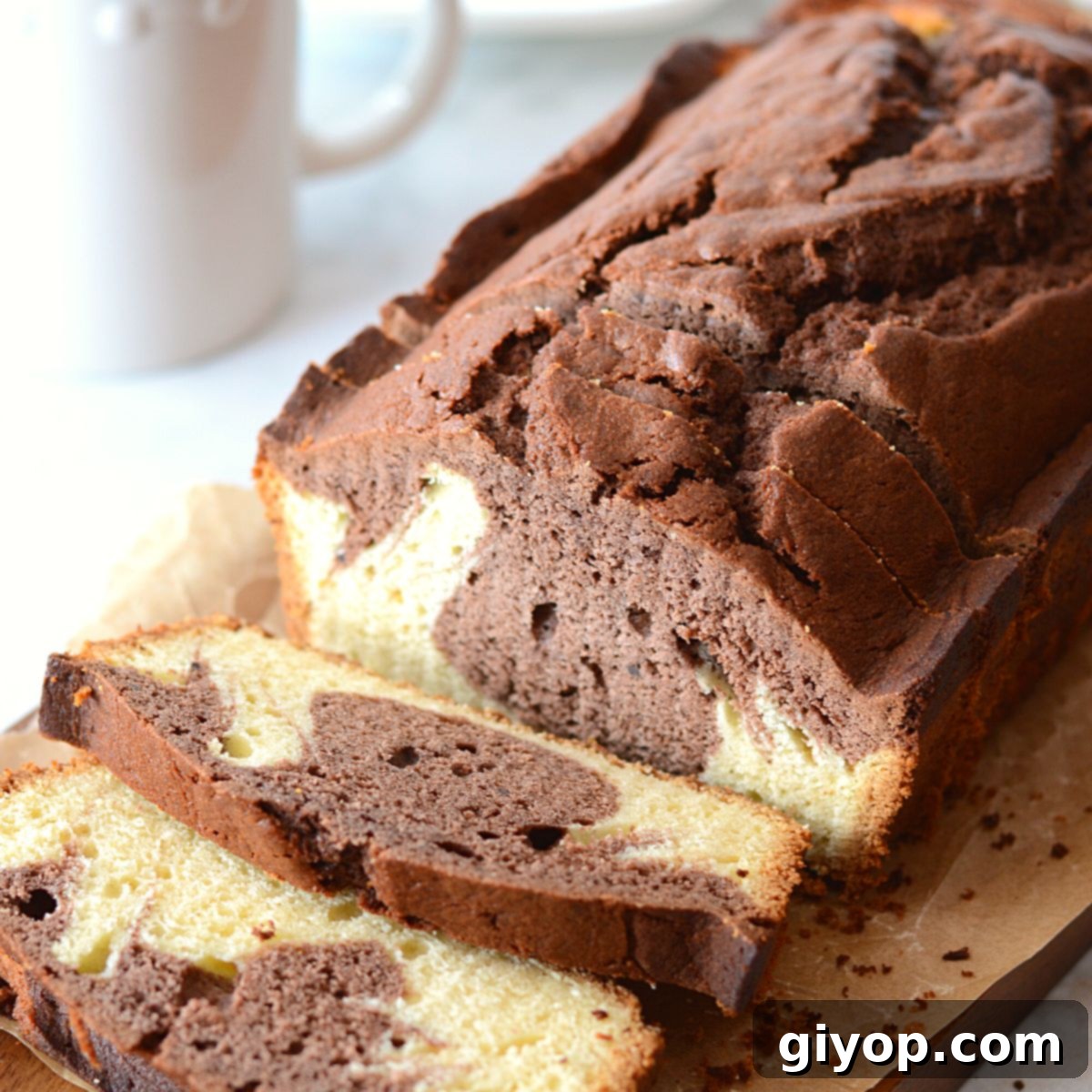
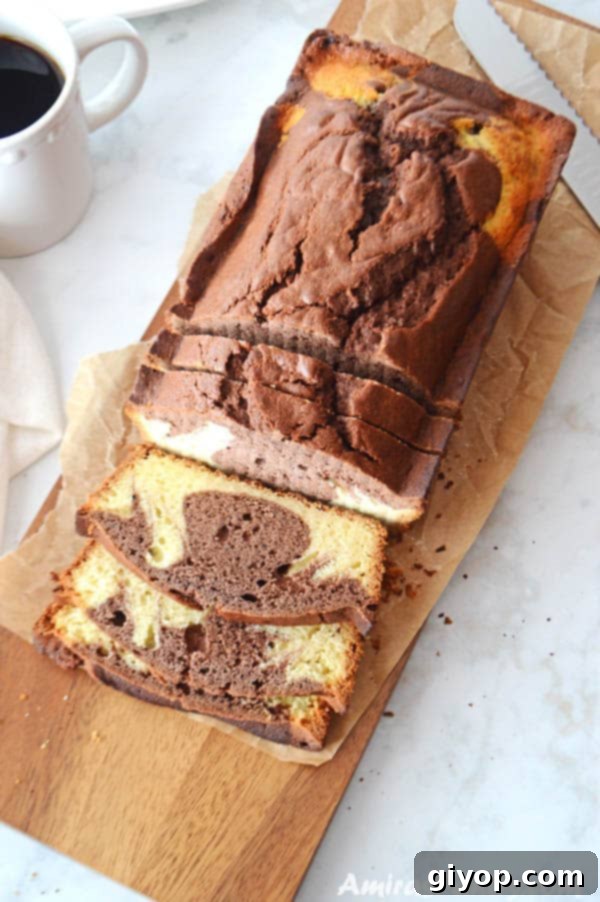
Discover the ultimate **Marble Cake Recipe** that combines rich chocolate and classic vanilla in a beautifully swirled, moist loaf. Perfect for **beginner bakers**, this easy-to-follow recipe guarantees a delightful treat every time. Whether baked in a simple loaf pan or an elegant bundt, this **homemade marble cake** is sure to impress with its stunning appearance and irresistible flavor. It’s more than just a dessert; it’s a nostalgic journey back to comforting, homemade goodness.
Looking for another delightful baking project? Don’t miss this incredibly simple yet delicious orange cake recipe.
This effortless **butter marble cake** holds a special place in my family’s culinary history, passed down through generations. Its rich, buttery texture and balanced sweetness ensure everyone finds something to love. It masterfully satisfies both **chocolate and vanilla cake lovers**, making it a versatile choice for any occasion. This cherished recipe, originating from my late grandma, has become a beloved staple. The distinct chocolate and vanilla batters are artfully swirled together, creating a beautiful pattern and a harmonious blend of flavors in every slice of this delicious loaf. It’s incredibly straightforward to prepare, and with the addition of your favorite frosting, it transforms into an amazing **birthday cake** that looks and tastes gourmet.
Why You’ll Love This Easy Marble Cake Recipe
There are countless reasons why this **easy marble cake recipe** has captivated so many hearts. From its simplicity to its crowd-pleasing taste, it truly stands out:
- Perfect for Beginners: This recipe is incredibly forgiving and simple to follow, making it far superior to any store-bought mix. It’s an ideal starting point for anyone new to baking, offering a rewarding experience with minimal fuss.
- Potluck Perfection: Its sturdy yet moist structure ensures it travels beautifully, making it an excellent choice for potlucks, picnics, or any gathering where you need a reliable, delicious dessert.
- Generations of Love: This **classic marble pound cake** has been a firm favorite among my family and friends for decades. Its enduring popularity is a testament to its consistent taste and texture, tested and approved by countless happy eaters over the years.
- Balanced Flavor: Let me emphasize that this is my most requested recipe! My children, my friends, and my husband’s colleagues all rave about this **chocolate vanilla swirl cake**. It strikes the perfect balance of sweetness, ensuring it’s never overly rich but always deeply satisfying. It’s a dessert that truly never disappoints.
Essential Ingredients for Your Homemade Marble Cake
Creating this delightful **homemade marble cake** requires a few basic ingredients, most of which you likely already have in your pantry. The quality of these ingredients contributes significantly to the final taste and texture of your cake, so choose wisely!
Note: This section provides an overview of the ingredients. You’ll find the full measurements and detailed instructions in the printable recipe card at the bottom of the page.
- Unsalted Butter: The foundation of our rich, buttery cake. Ensure it’s at room temperature for optimal creaming.
- Granulated Sugar: Provides sweetness and helps create that light, fluffy texture when creamed with butter.
- Eggs: Act as a binder and add moisture, richness, and structure. Also best at room temperature.
- Vanilla Extract: Enhances the classic vanilla flavor in the lighter batter and adds aromatic depth.
- Milk: Contributes to the cake’s moisture and tender crumb.
- All-Purpose Flour: The primary dry ingredient, giving the cake its structure.
- Baking Powder: Our leavening agent, ensuring the cake rises beautifully and has a light texture.
- Unsweetened Cocoa Powder: Used to create the distinct chocolate portion of the marble batter, providing a rich, deep flavor without added sweetness.
- Salt: A pinch of salt balances the sweetness and enhances all the other flavors.
Step-by-Step Instructions for a Perfect Marble Loaf Cake
Baking this **moist marble cake** is a straightforward process, even for novice bakers. Follow these detailed steps to achieve a perfectly swirled and utterly delicious cake.
Note: This is an overview of the instructions. The detailed steps are in the recipe card below.
- In a large mixing bowl, begin by creaming the softened unsalted butter for about 1 minute on medium speed until it’s smooth and creamy. Gradually add the granulated sugar and continue beating on medium speed for an additional 3-4 minutes. The mixture should become light, pale, and fluffy, indicating proper aeration.
- Introduce the eggs one at a time, ensuring each egg is fully incorporated before adding the next. This prevents the batter from curdling. After all eggs are mixed in, stir in the vanilla extract for a fragrant base.
- Pour in the milk and mix gently until just combined. Be careful not to overmix at this stage.
- In a separate, medium-sized bowl, sift together the all-purpose flour, baking powder, and a dash of salt. Sifting helps to remove lumps and evenly distribute the leavening agent.
- Gradually add the sifted dry ingredients to the wet ingredients, one cup at a time. Mix on low speed or by hand with a spatula until just incorporated after each addition. Overmixing the flour can lead to a tough cake, so mix until no streaks of flour remain.
- Carefully divide the prepared vanilla batter equally into two separate bowls. One bowl will remain as your classic vanilla batter.
- To the second bowl, add the unsweetened cocoa powder. Gently mix until the cocoa is fully incorporated, transforming it into your rich chocolate batter.
- Evenly distribute the vanilla cake batter into your prepared baking pan(s), forming the first layer.
- Next, spoon dollops of the chocolate cake batter over the vanilla layer. Using a butter knife or a skewer, gently create an “S” shape or swirling pattern through both batters. This technique creates the beautiful marbled effect without overmixing the distinct flavors.
Bake the cake in a preheated oven until it’s golden brown and a toothpick inserted into the center comes out clean. It’s crucial not to open the oven door before the 30-minute mark, as this can cause the cake to sink.
Amira’s Expert Tips for a Flawless Marble Cake
Expert Tip: Patience is key! Resist the urge to open your oven door for at least the first 30 minutes of baking. This allows the cake to set properly and prevents it from sinking.
- Room Temperature Ingredients: For the best results, ensure all cold ingredients like butter, eggs, and milk are at room temperature. This allows them to emulsify properly, creating a smooth, uniform batter and a perfectly textured cake. Plan ahead by taking them out of the fridge at least an hour before you start baking.
- Quick Room Temp Butter Hack: If you’re short on time and your butter isn’t quite soft enough, cut it into 1-inch cubes. Spreading out the surface area helps it reach room temperature more quickly, speeding up your prep process.
- Avoid Overmixing: Overmixing the batter, especially after adding the flour, can develop the gluten too much, resulting in a tough, dense cake. Mix only until the ingredients are just combined. Overmixing is also a common culprit for cakes sinking in the middle.
- Gentle Marbling: When creating the marble swirl with a butter knife or skewer, do so gently and sparingly. Overworking the batter at this stage can cause the chocolate and vanilla to blend entirely, diminishing the distinct marbled effect. You want clear streaks, not a uniform light brown color.
- Egg Substitutions: If you’re looking for egg-free baking options or need a substitute, explore various vegan egg substitutes for baking that can work wonderfully in this recipe.
- Don’t Forget to Grease: Always generously grease and flour your baking pans or use a nonstick cooking spray to ensure your beautiful marble cake releases cleanly and easily after baking.
Recommended Baking Equipment for Marble Cake
Having the right tools can make all the difference in your baking experience. Here’s the essential equipment for making this delicious **marble cake loaf**:
- Handheld or Stand Mixer: Fitted with a paddle attachment, this will make creaming butter and sugar significantly easier and more effective.
- Nonstick Cooking Spray with Flour: I highly recommend a spray that includes flour, such as Wilton or Baker’s Joy, to ensure your cake releases flawlessly from the pan.
- Large Mixing Bowls: You’ll need at least two – one for the wet ingredients and one for sifting dry ingredients, plus an extra one for dividing the batter.
- Loaf Pans or Bundt Pan: For perfect loaf cakes, loaf pans are ideal. Alternatively, for a more decorative cake, a bundt pan works beautifully (just remember to adjust baking time).
- Rubber Spatula: Essential for scraping down the sides of the bowl and gently folding in ingredients.
- Sifter: To ensure your dry ingredients are lump-free and evenly combined.
Delicious Variations of the Marble Pound Cake
While this **classic marble cake** is perfect as is, it’s also wonderfully adaptable. Feel free to experiment with these variations to suit your taste or occasion:
- Sugar Content Adjustment: I’ve experimented with reducing the sugar from the original recipe. Decreasing it to 2 cups still yields a delicious cake with great texture and structure. However, when I cut it down to just 1 cup, the cake became too bland for our family’s preference, so I recommend staying within the 2-3 cup range.
- Fat Content Experimentation: My sister tried baking this recipe using all vegetable oil on one occasion and a 50/50 mix of oil and butter on another. She reported that both versions were still rich and delicious. I personally tried the half oil, half butter version, and while it was good, I remain a true “butter girl” at heart for that classic, unbeatable flavor.
- Bundt Pan Baking: This recipe bakes beautifully in a bundt pan, resulting in an elegant and impressive cake. Just be mindful to adjust the baking time, as bundt cakes typically require a bit longer due to their shape and size. Always use the toothpick test to confirm doneness.
- Make it a Birthday Cake: For a show-stopping **birthday cake**, simply prepare your favorite chocolate ganache or frosting and use it to fill and frost the cooled cake. The rich marble interior combined with a decadent topping makes for an unforgettable celebration treat.
- Add a Glaze: A simple vanilla or chocolate glaze drizzled over the top adds an extra layer of sweetness and a professional finish without much effort.
- Coffee or Citrus Swirl: For an interesting twist, replace some of the vanilla batter with a coffee-flavored batter or a citrus-infused batter (lemon or orange zest) for a different kind of swirl.
Storage and Make-Ahead Tips for Your Marble Cake
One of the many advantages of this **homemade marble cake** is its excellent shelf life and freezer-friendliness, making it perfect for planning ahead or enjoying leftovers.
- Countertop Storage: Leftover slices or an entire loaf can be stored in an airtight container on your kitchen countertop for up to 3 days. This helps maintain its moisture and freshness.
- Refrigeration: While it can be stored in the refrigerator, I generally don’t recommend keeping it there for more than 5 days, as the cold air can tend to dry out the cake’s delicate crumb. If refrigerating, ensure it’s tightly wrapped to minimize moisture loss.
- Freezing for Longevity: My absolute best advice for long-term storage is to freeze it. Once the cake has cooled completely, wrap it tightly in plastic wrap, then double-wrap it in aluminum foil. This dual layer protection prevents freezer burn.
Make Ahead Instructions: Freeze Your Marble Cake
This **butter marble cake** freezes exceptionally well, allowing you to prepare it in advance for future events or simply to have a delicious treat on hand. After baking, ensure the cake cools down completely to room temperature. Wrap it snugly in plastic wrap, then double-wrap it securely with aluminum foil. Place the wrapped cake in a freezer-safe zip-top bag to provide an extra layer of protection against freezer odors and burn. When properly stored, your marble cake can be frozen for up to 2-3 months. To thaw, simply unwrap and let it come to room temperature on your countertop or gently warm it in the oven.
Recipe FAQs: Common Questions About Baking Marble Cake
A sinking cake can be frustrating, but it’s often due to common baking missteps. Reasons range from using too much baking powder or not enough moisture in the batter, to an incorrect oven temperature or opening the oven door too early. The two most common reasons I’ve personally encountered are overmixing the batter and opening the oven door before the 30-minute mark. To prevent the latter, simply exercise patience and keep the oven door closed for at least the first half-hour of baking. For overmixing, try incorporating the dry ingredients in four parts. Mix the first two parts with an electric mixer on low speed, then switch to a spatula or wooden spoon to gently fold in the remaining dry ingredients until just combined. This minimal mixing prevents excessive gluten development, leading to a lighter, more stable crumb.
Both sponge cakes and pound cakes are incredibly delicious and popular, but they differ significantly in their composition and texture. A sponge cake is typically light and airy, primarily made from eggs, sugar, and flour. Its characteristic spongy texture comes from whipped eggs (often separated into yolks and whites) that incorporate a lot of air. A pound cake, on the other hand, is denser and richer. It traditionally gets its name from using a pound each of butter, sugar, eggs, and flour. While it uses the same core ingredients as sponge cake (eggs, sugar, flour), the addition of butter and a leavening agent like baking powder gives it a finer, more tender, and moist crumb that’s less airy than a sponge cake.
If your pound cake turns out heavy or dense, it’s often related to how the butter, sugar, and eggs were creamed. The key is to beat these ingredients at a medium or even lower speed. When you cream the butter and sugar, avoid using high speed, as this can over-aerate the mixture initially, leading to a collapse later. A steady medium speed allows for the proper incorporation of air, creating a light and fluffy base. Similarly, when adding eggs, incorporate them one at a time on medium speed. Over-beating at these stages can sometimes lead to a tougher, heavier cake. Also, ensure your ingredients are at room temperature, as this greatly aids in proper emulsification and a lighter final texture.
Explore More Related Recipes
If you loved this **easy marble cake recipe**, you might enjoy these other delicious baking creations from my kitchen:
- Revani (Egyptian Rawani Cake) is a delightful Greek semolina cake drenched in simple syrup – a must-try for a unique flavor.
- This incredibly easy orange cake can be made entirely in one bowl with just a whisk, perfect for a quick and zesty dessert.
- Indulge in a guilt-free treat with our healthy carrot cake, featuring less sugar and a delectable honey frosting.
- Our apple cinnamon crumb cake is one of the easiest and tastiest cakes to whip up, especially when apples are in season.
- Here’s a fancy yet surprisingly simple Lemon Poke Cake recipe that comes together with ease. If you’re a fan of tangy and refreshing desserts, this zesty treat is sure to become a favorite in your household.
- When a craving for a simple, quick bake strikes, this recipe for Banana Bread without Butter will become your go-to. It’s a straightforward recipe for inexperienced bakers, requiring just a blender and a mixing bowl.

My Personal Journey with This Beloved Marble Cake
The word “grandma” instantly brings to mind her sweet smile, her kind, round face, and the warmest hugs. I vividly recall the irresistible aroma that always wafted from her kitchen. Whatever she created, she did it with an incomparable touch, making it better than anyone else’s – even her own daughters! It’s often said that grandmas are simply moms with frosting, and I couldn’t agree more with that beautiful sentiment.
If you’ve been a longtime follower of my culinary adventures, you might already know that my true passion for cooking only truly ignited after I moved to the USA. Back in Egypt, I was a dedicated 9-to-5 corporate professional, and my cooking skills were limited to the absolute basics, sometimes even less. It wasn’t until my first child arrived – a wonderfully stubborn eater – that I was truly challenged in the kitchen. A friend suggested I try feeding him simple, plain pound cake with milk to encourage him to eat, which was, of course, once he was over 18 months old.
In a conversation with my sister, she gently suggested that I attempt to bake grandma’s cake. At the time, the idea completely overwhelmed me. My internal reaction was, “WHAT?!” For someone who barely cooked, venturing into baking felt like an insurmountable task. I quickly dismissed the idea, convinced my sister had lost her mind, and settled back into my routine of store-bought pound cakes, preservatives and all 🙄.
However, when I arrived in the USA, I found myself with a newfound abundance of time. I thought, “Why not give it a try?” To my absolute astonishment, it was a success from the very first attempt! This was a monumental achievement for me – truly HUGE – considering I had never baked anything from scratch before. This initial triumph profoundly encouraged me, pushing me to venture beyond my comfort zone and explore the wonderful world of other baked goods. This **easy marble cake recipe** has never once failed me. People consistently get excited when they see my perfectly marbled loaves, and they are always the first dessert to disappear from any gathering. It’s a testament to its simple charm and delicious appeal.
I genuinely hope you’ll cherish this recipe as much as my family and I do. If you decide to make this **homemade marble cake**, please snap a picture and share it with me using the hashtag #amiraspantry. I absolutely adore seeing your creative culinary endeavors on Instagram, Facebook, and Twitter!
Don’t want to miss out on any new recipes? Sign up for the FREE Amira’s Pantry newsletter, delivered directly to your inbox with plenty of exclusive tips and surprises! And remember to stay connected with me on Facebook, Twitter, Pinterest, and Instagram for all the latest updates and delicious inspiration.
If you enjoy this recipe, please don’t forget to give it a ⭐⭐⭐⭐⭐ star rating and attach a photo of your finished dish in the comments. It’s always a pleasure for me to see your creations and discover your unique take on the recipe. Thank you so much for your support!
Marble Loaf Cake
Ingredients
- 2 cups unsalted butter (4 sticks/ 454g, room temperature)
- 2-3 cups granulated sugar (400-600 grams, adjust to taste, see notes)
- 6 large eggs (room temperature)
- 1 teaspoon vanilla extract
- 1 cup milk (235ml, room temperature)
- 4 cups all-purpose flour (528g)
- 1 Tablespoon baking powder
- A dash of salt
- 4-6 Tablespoons unsweetened cocoa powder (adjust to desired chocolate intensity)
Instructions
- Preheat your oven to 350°F (177°C). Prepare two 9×5-inch loaf pans by lightly greasing and flouring them, or by using a nonstick cooking spray with flour.
Make the Cake Batter:
- In a large mixing bowl, using either a handheld electric mixer or a stand mixer fitted with the paddle attachment, beat the room temperature butter for about 1 minute until it is smooth and creamy.
- Gradually add the granulated sugar to the creamed butter. Continue to beat on medium-high speed for 3-4 minutes until the mixture becomes significantly lighter in color (pale yellow) and fluffy in texture. This step incorporates air, crucial for a tender cake.
- Beat in the eggs one at a time, ensuring each egg is fully incorporated into the batter before adding the next. Once all eggs are mixed, stir in the vanilla extract until just combined.
- Pour in the milk and mix on low speed until just combined. Be careful not to overmix the batter at this stage.
- In a separate, large mixing bowl, sift together the all-purpose flour, baking powder, and a dash of salt. Sifting helps to aerate the dry ingredients and prevent lumps.
- Add the sifted dry ingredients to the wet mixture, approximately 1 cup at a time. Mix gently after each addition, either on low speed with your mixer or by hand with a spatula, until the flour is just incorporated and no dry streaks remain. Avoid overmixing.
Assemble and Bake:
- Divide the prepared vanilla batter equally into two separate portions. Carefully spoon one of these portions into your prepared baking pan(s), forming the base layer.
- To the other half of the divided batter, add the unsweetened cocoa powder. Using a wooden spoon or spatula, gently mix until the cocoa is fully incorporated, creating your chocolate batter.
- Spoon dollops of the chocolate batter evenly over the vanilla batter in your loaf pans.
- With a butter knife, skewer, or a thin stick, gently swirl through the batters in an “S” shape or zigzag pattern to create the beautiful marbled effect. Be careful not to overmix, as you want distinct swirls rather than a fully blended color.
- Bake in the preheated oven for approximately 35-50 minutes. Baking time can vary depending on your oven and pan size.
- The cake is done when a wooden toothpick inserted into the very center comes out clean or with moist crumbs attached, but not wet batter.
- Once baked, remove the cakes from the oven and allow them to cool in their pans on a wire rack for about 30 minutes. Then, carefully invert the cakes onto the wire rack to cool completely before slicing and serving.
Notes
- For optimal results, ensure all your cold ingredients (butter, eggs, milk) are at room temperature. This allows them to combine more smoothly and creates a finer, more even cake crumb.
- If you’re in a hurry for your butter to soften, cut it into 1-inch cubes. Spreading it out will help it come to room temperature much quicker than a solid block.
- Always check your cake for doneness after the 30-minute mark. If you notice the top of the cake browning too quickly while the center is still uncooked, loosely cover the pans with aluminum foil. This helps prevent over-browning while the interior finishes baking.
- Variations:
- This recipe works beautifully when baked in a bundt pan. Just be sure to adjust your baking time as bundt cakes typically require longer. Always perform the toothpick test for doneness.
- Transform this into a decadent birthday cake by adding your favorite chocolate ganache, filling, and frosting. It’s a guaranteed crowd-pleaser!
- For more detailed tips, variations, and storage advice, please refer to the sections above in the post.
- Please review our nutrition disclaimer policy for information regarding dietary values.
Nutrition
First published December 2012. Last updated August 10, 2023 with important tips, clear step-by-step instructions, and improved readability.